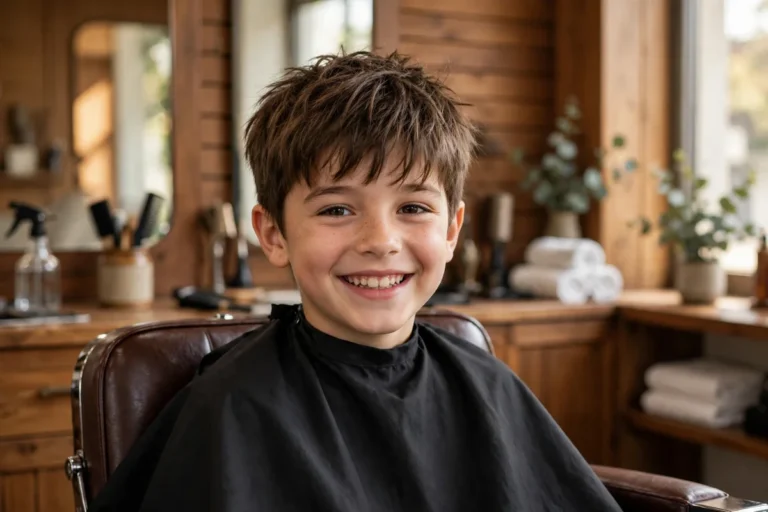
What Is a Fringe Haircut? 30 Best Fringe Haircuts for Men That Look Sharp and Modern
Reviewed by Daniel Morgan
A fringe haircut is a men’s haircut where the front hair falls forward over the forehead. That front section is the fringe. It can be short, long, straight, choppy, or swept to one side.
If you have ever wondered what is a fringe haircut, the answer is simple. It is not one single cut. It is a front shape that can sit on almost any men’s hairstyle, from a short crop to a long shaggy cut.
This guide explains the fringe in plain words. You will learn the types, the lengths, and how to ask your barber for one. Then you will see 30 best fringe haircuts for men, each with a barber script you can read out loud.

What Is a Fringe Haircut?
A fringe haircut keeps length at the front of the head and directs it forward. The hair at the front covers part of the forehead. The sides and back can be short, tapered, faded, or left longer.
The fringe is also called bangs in the United States. In the UK and Australia, people say fringe far more often. Both words mean the same front section of hair.
A fringe haircut for men works on straight, wavy, curly, and coily hair. The shape changes with your hair type. Straight hair gives a clean line. Wavy and curly hair gives soft movement.
Fringe vs Bangs vs Taper vs Fade
Fringe and bangs are the same thing. Fringe is the British word. Bangs is the American word. Your barber will know both, so use the word that feels natural to you.
The taper is about the sides, not the front. A taper shortens the hair slowly around the ears and neckline. It keeps some length, so the edge looks soft and natural.
A fade is sharper than a taper. A fade blends the sides down to very short hair or skin. It gives strong contrast between the sides and the fringe on top.
You can pair any fringe with a taper, a fade, or natural sides. The fringe is the star. The sides set the mood, clean or bold.
How Long Should a Fringe Be?
Fringe length changes the whole look. A short fringe shows more forehead and feels bold. A long fringe covers more forehead and feels softer.
| Fringe length | Where it ends | Best for |
|---|---|---|
| Micro fringe | High on the forehead | Bold, low-effort looks |
| Short fringe | Upper forehead | Clean, work-friendly cuts |
| Classic fringe | Just above the brows | Most face shapes |
| Long fringe | At or below the brows | Soft, statement styles |
Tell your barber exactly where you want the front to end. Say “just above my brows” or “at my brows, no shorter.” That one line prevents most fringe regrets.
Bring a photo too. Fringe names vary from shop to shop. A photo shows the length and shape better than any word can.
30 Best Fringe Haircuts for Men
Here are 30 fringe haircuts for men, grouped by style family. Each one has a simple barber script, a styling tip, and honest effort and trim ratings.
Classic Fringe Foundations
1. Classic Blunt Fringe

What it is: A straight, even fringe cut right across the forehead. It ends just above the brows and looks sharp and clean.
Best for: Straight, thick hair and oval or heart-shaped faces. It frames the eyes and gives a strong, tidy outline.
Ask your barber: “Keep a blunt fringe straight across, just above my brows, with neat tapered sides.”
Style it: Blow-dry forward with a vent brush. Use a pea-sized amount of matte paste to keep the line smooth.
Morning effort: low. Trim every 3 to 4 weeks.
2. Side-Swept Fringe

What it is: A fringe brushed to one side for a soft, angled look. It adds movement without a hard line.
Best for: Round and square faces. The angle makes the face look longer and less wide.
Ask your barber: “Cut a side-swept fringe about 2 to 3 inches long, swept to my left, with a low taper.”
Style it: Part slightly off-center while damp. Dry forward, then sweep to the side with your fingers.
Morning effort: low. Trim every 4 weeks.
3. Short Neat Fringe
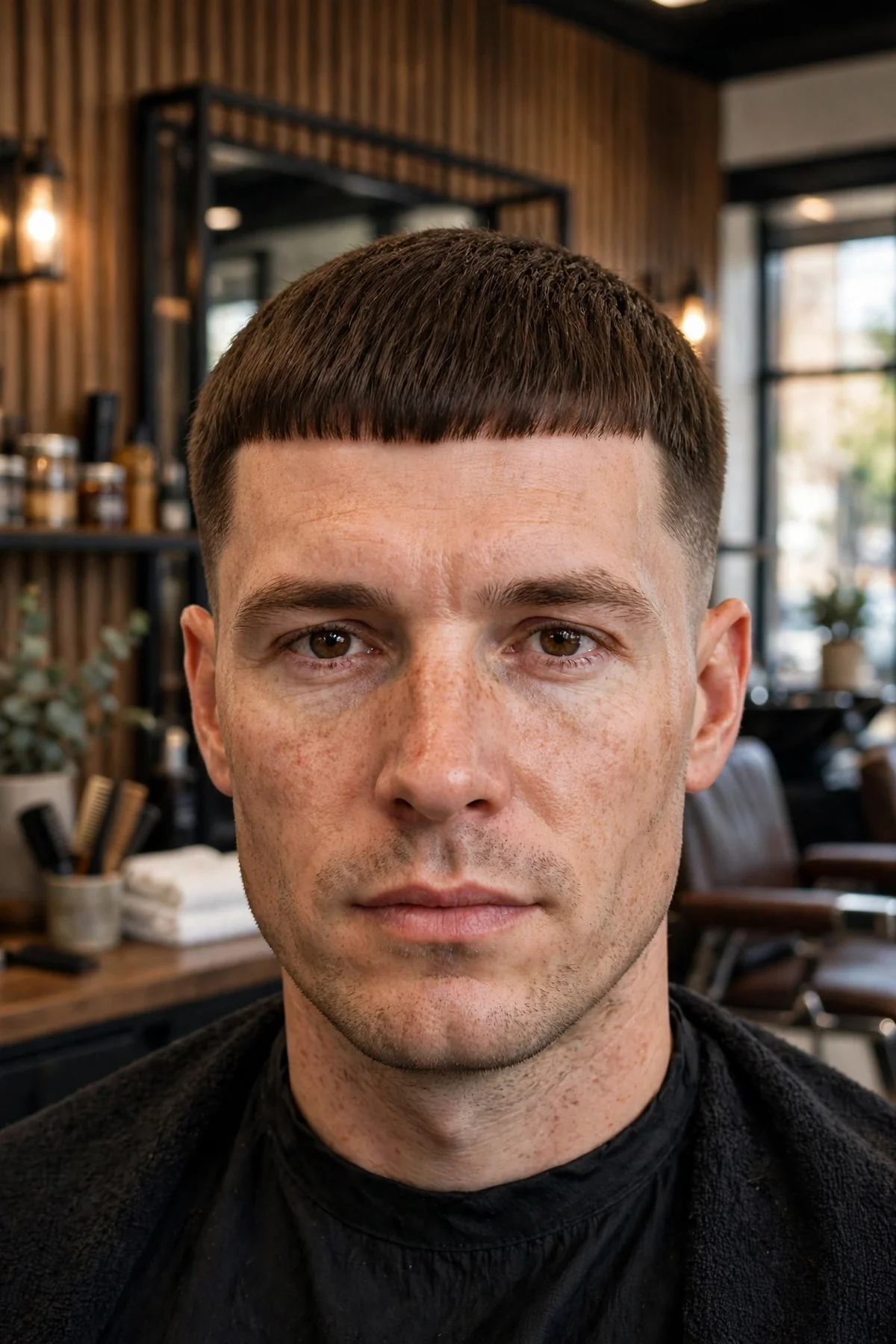
What it is: A short fringe that sits high on the forehead. It looks tidy and feels easy every day.
Best for: Straight or slightly wavy hair and men who want a work-friendly cut. It suits most face shapes.
Ask your barber: “Give me a short neat fringe, about 1 to 2 inches, with clean tapered sides.”
Style it: Comb forward while damp and let it dry. A dab of light cream keeps flyaways down.
Morning effort: very low. Trim every 3 to 4 weeks.
4. Wispy Soft Fringe

What it is: A light, feathery fringe with soft, separated ends. It looks gentle and never heavy.
Best for: Fine or medium hair and oval or heart-shaped faces. It adds softness without bulk.
Ask your barber: “Cut a wispy fringe with point-cut ends, about 2 inches, so it falls soft and light.”
Style it: Use sea salt spray on damp hair. Let it air-dry for a soft, natural finish.
Morning effort: very low. Trim every 4 to 5 weeks.
5. Curtain Fringe

What it is: A longer fringe parted in the middle. It falls on both sides of the face like curtains.
Best for: Round, heart, and square faces. The center part balances the face and softens the forehead.
Ask your barber: “Leave a curtain fringe about 3 to 4 inches, parted in the middle, with layered sides.”
Style it: Part in the middle while damp. Blow-dry each side away from the face with a round brush.
Morning effort: medium. Trim every 4 to 6 weeks.
Textured and Messy Fringes
6. Classic Textured Fringe
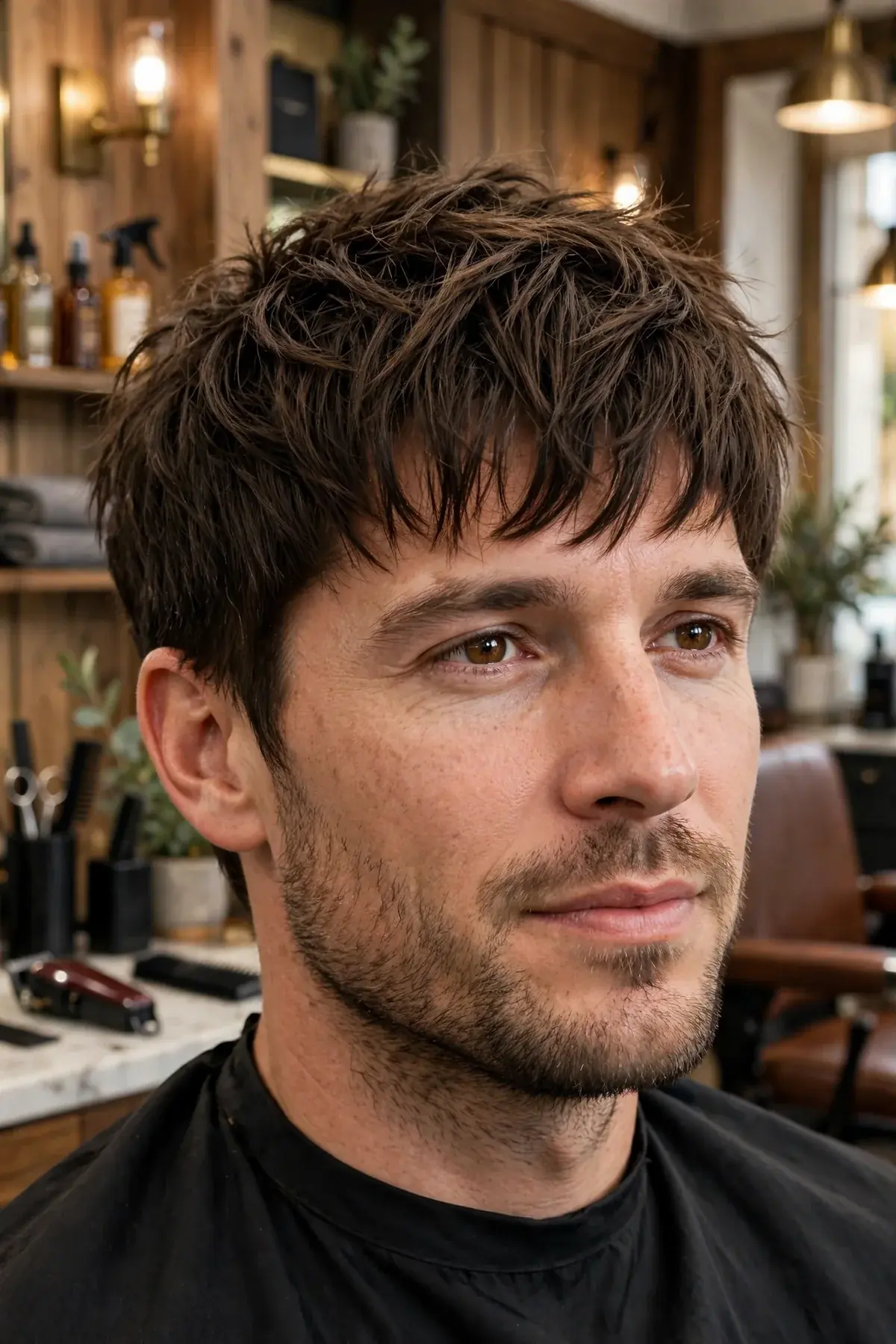
What it is: A fringe cut in uneven layers for natural texture. It looks lived-in, not stiff or flat.
Best for: Straight, wavy, and medium-density hair. It is the most flexible fringe of all.
Ask your barber: “Leave a textured fringe about 2 to 3 inches, point-cut for separation, with a low taper.”
Style it: Work matte clay through damp hair. Pinch the fringe into pieces with your fingers.
Morning effort: low. Trim every 4 weeks.
7. Messy Choppy Fringe

What it is: A deliberately uneven fringe with choppy ends. It looks relaxed and full of movement.
Best for: Thick or wavy hair and men who like a casual look. It hides cowlicks well.
Ask your barber: “Cut a messy choppy fringe, 2 to 3 inches, with lots of texture and a low taper.”
Style it: Dry with your fingers, not a brush. Add a little texture powder for grip and lift.
Morning effort: low. Trim every 4 weeks.
8. Layered Fringe

What it is: A fringe built from stacked layers. The layers add volume and soft shape.
Best for: Oval and square faces and thick hair that needs weight removed. It moves well.
Ask your barber: “Cut a layered fringe, 2 to 4 inches, with soft layers through the front.”
Style it: Blow-dry forward with a round brush. Finish with light styling cream for control.
Morning effort: medium. Trim every 4 to 5 weeks.
9. Angular Fringe

What it is: A fringe cut on a diagonal across the forehead. One side sits longer than the other.
Best for: Straight or wavy hair and men who want an edgy shape. It draws attention to the eyes.
Ask your barber: “Cut an angular fringe, longer on one side, about 2 to 3 inches, with tapered sides.”
Style it: Dry the fringe across the forehead at an angle. Use matte paste to hold the shape.
Morning effort: low. Trim every 3 to 4 weeks.
10. French Crop Fringe
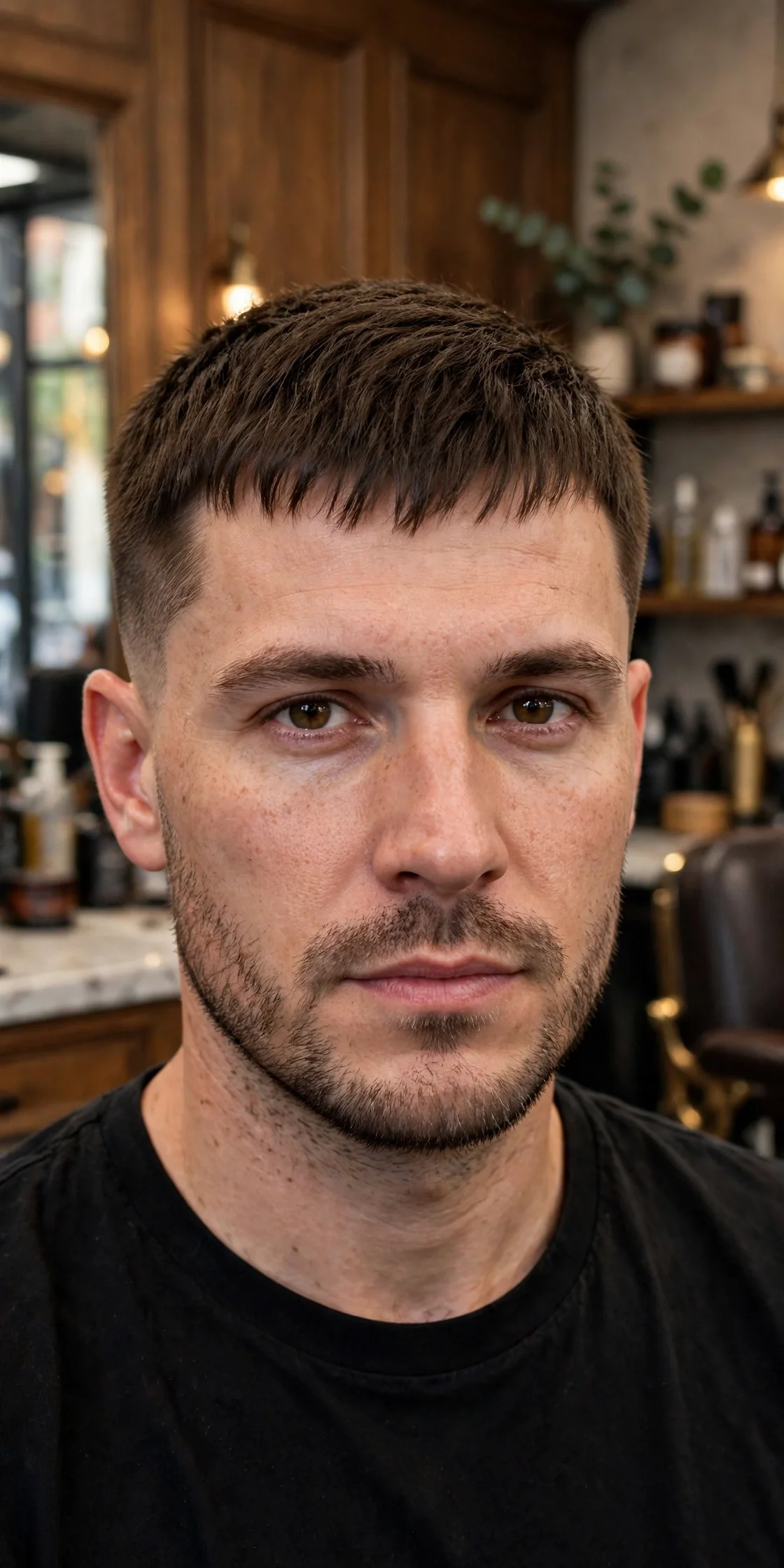
What it is: A short, forward-combed fringe on a compact crop. It is neat, modern, and very easy.
Best for: Straight, thick, or slightly wavy hair. It suits men who want a short cut with shape.
Ask your barber: “Give me a French crop with a short forward fringe, 1 to 2 inches, and a low taper.”
Style it: Push forward while damp. A small amount of matte paste gives texture without stiffness.
Morning effort: very low. Trim every 3 to 4 weeks.
For more short forward styles, see our textured French crop guide and our fringe haircut guide.
Sharp Fades and Tapers
11. Low Taper Fringe

What it is: A fringe paired with a low taper. The shortest hair stays near the ears and neckline.
Best for: A first fringe. It keeps side fullness and grows out softly.
Ask your barber: “Leave a textured fringe, 2 to 3 inches, with a low taper around the ears and neckline.”
Style it: Style the fringe forward with matte paste. The taper needs no daily work.
Morning effort: low. Trim every 4 weeks.
12. Mid Fade Fringe

What it is: A fringe with a mid fade that starts around the temples. It gives clear, balanced contrast.
Best for: Straight or wavy hair with good density. It makes the fringe stand out more.
Ask your barber: “Cut a textured fringe, 2 to 3 inches, with a mid fade on the sides.”
Style it: Dry forward, then pinch the fringe into pieces. Keep the fade line clean between cuts.
Morning effort: low. Trim every 2 to 3 weeks to keep the fade sharp.
13. Skin Fade Fringe

What it is: A fringe with sides faded down to skin. It is crisp, bold, and high-contrast.
Best for: Square and oval faces and men who like a sharp finish. It needs regular upkeep.
Ask your barber: “Give me a textured fringe, 2 to 3 inches, with a skin fade on the sides.”
Style it: Use matte clay for the fringe. Book fade clean-ups every 2 weeks to stay sharp.
Morning effort: low. Trim every 2 weeks.
14. Drop Fade Fringe
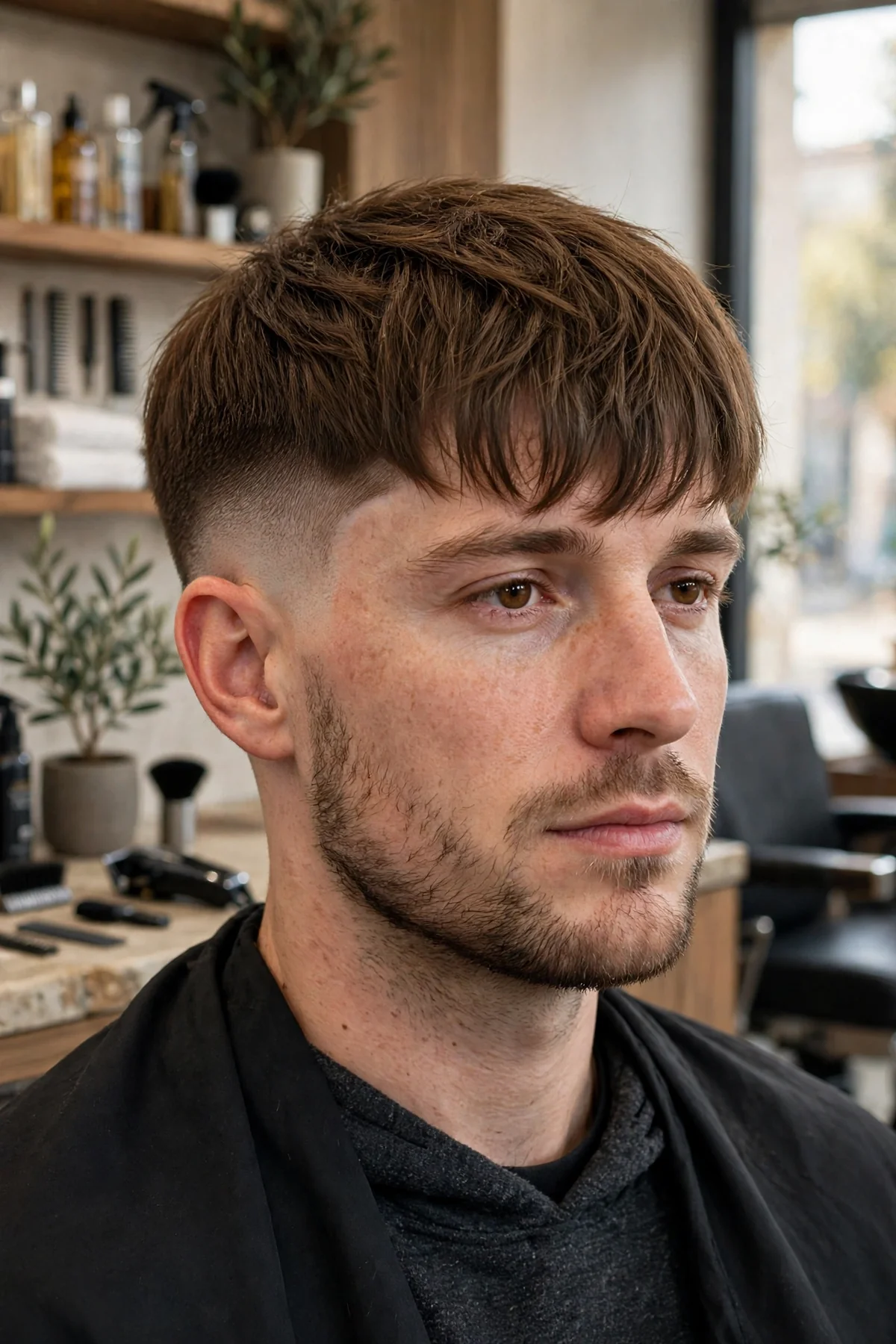
What it is: A fringe with a fade that dips behind the ear. It follows the curve of the head.
Best for: Men who want a fade with personality. It looks clean from the front and smart from the side.
Ask your barber: “Cut a forward fringe, 2 to 3 inches, with a drop fade curving behind the ears.”
Style it: Style forward with light paste. The drop shape holds up well as it grows.
Morning effort: low. Trim every 2 to 3 weeks.
15. Burst Fade Fringe

What it is: A fringe with a burst fade that wraps around the ear. It leaves more length at the back.
Best for: Bold, modern looks and men who like a strong outline. It pairs well with a choppy fringe.
Ask your barber: “Give me a choppy fringe, 2 to 3 inches, with a burst fade around the ears.”
Style it: Add texture powder for lift. Keep the burst curve clean with regular trims.
Morning effort: low. Trim every 2 to 3 weeks.
To compare side finishes, read our fade haircut guide and our taper haircut guide.
Curly, Wavy, and Coily Fringes
16. Curly Fringe

What it is: Natural curls left to fall forward over the forehead. It looks soft, full, and effortless.
Best for: Curly hair and round or heart-shaped faces. It adds volume without styling tricks.
Ask your barber: “Leave a curly fringe, 3 to 4 inches when dry, cut curl by curl, with a low taper.”
Style it: Use curl cream on damp hair. Scrunch forward and let it air-dry.
Morning effort: very low. Trim every 5 to 6 weeks.
17. Wavy Fringe
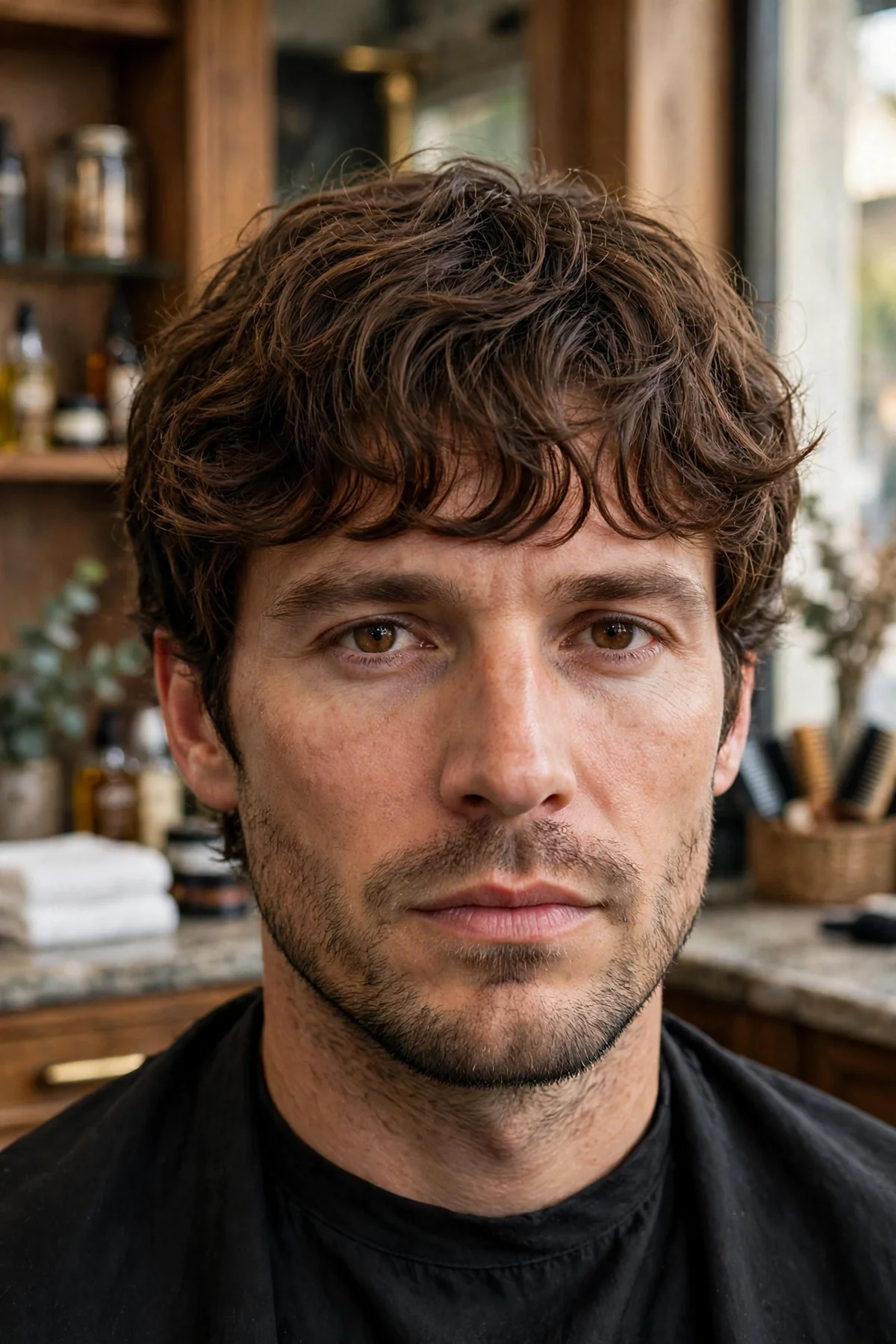
What it is: A fringe shaped by natural waves. It bends softly across the forehead.
Best for: Wavy hair and men who want movement without effort. It suits most face shapes.
Ask your barber: “Cut a wavy fringe, 2 to 4 inches, with light layers so the waves fall forward.”
Style it: Apply sea salt spray to damp hair. Scrunch and let it dry naturally.
Morning effort: very low. Trim every 4 to 5 weeks.
18. Coily Fringe

What it is: Tight coils shaped forward into a fringe. It has clear definition and a bold shape.
Best for: Coily hair types and men who want a defined front. It frames the face well.
Ask your barber: “Shape a coily fringe forward, 3 to 4 inches stretched, with a clean taper.”
Style it: Use curl-defining cream on damp hair. Twist small sections forward for definition.
Morning effort: low. Trim every 4 to 6 weeks.
19. Fluffy Fringe
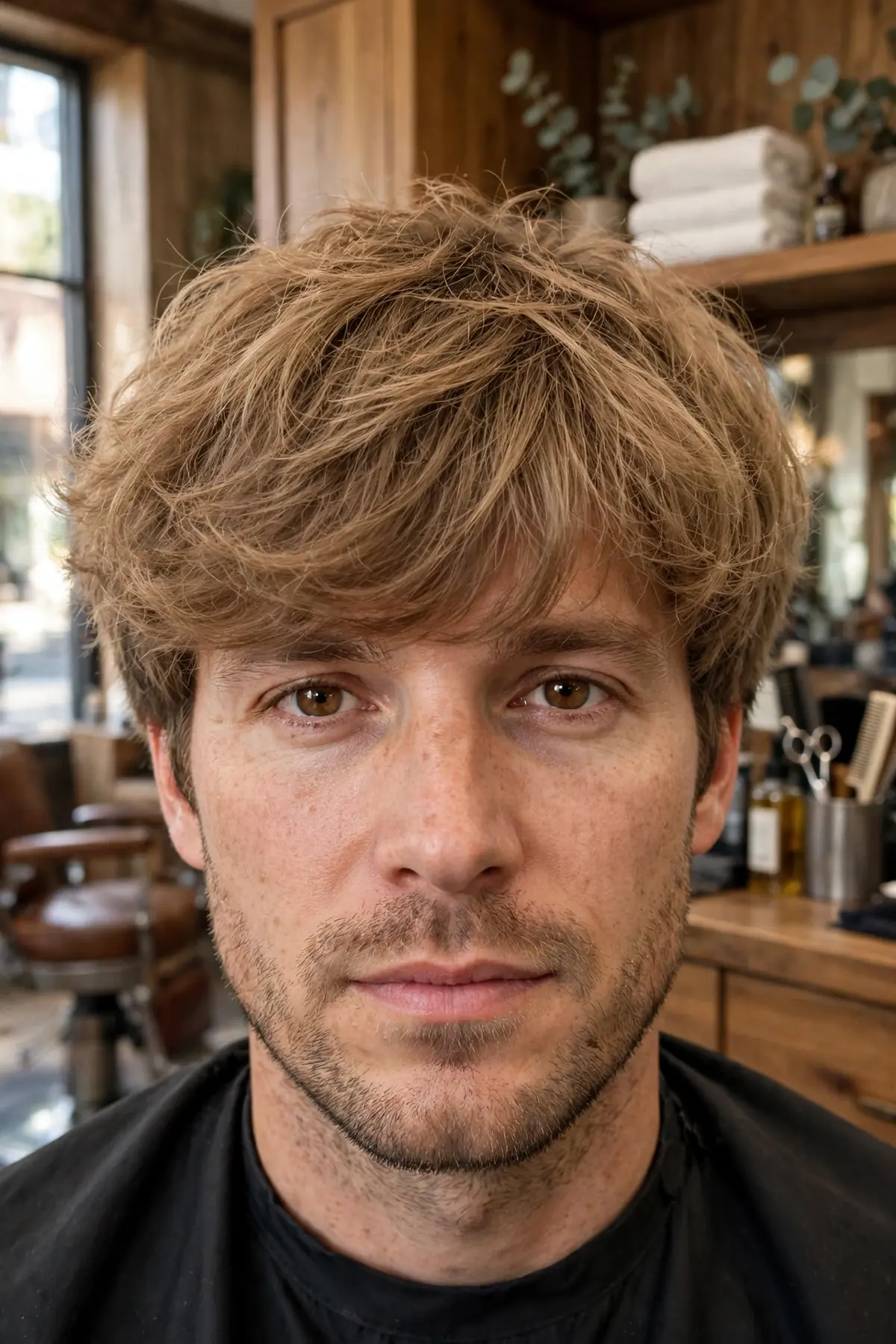
What it is: A soft, airy fringe with lots of volume. It looks light, full, and relaxed.
Best for: Thick or wavy hair and men who like a bigger silhouette. It softens strong features.
Ask your barber: “Leave a fluffy fringe, 3 to 4 inches, with light layers and a low taper.”
Style it: Blow-dry forward with your fingers for lift. Use texture powder, not heavy wax.
Morning effort: medium. Trim every 4 weeks.
20. Afro Fringe
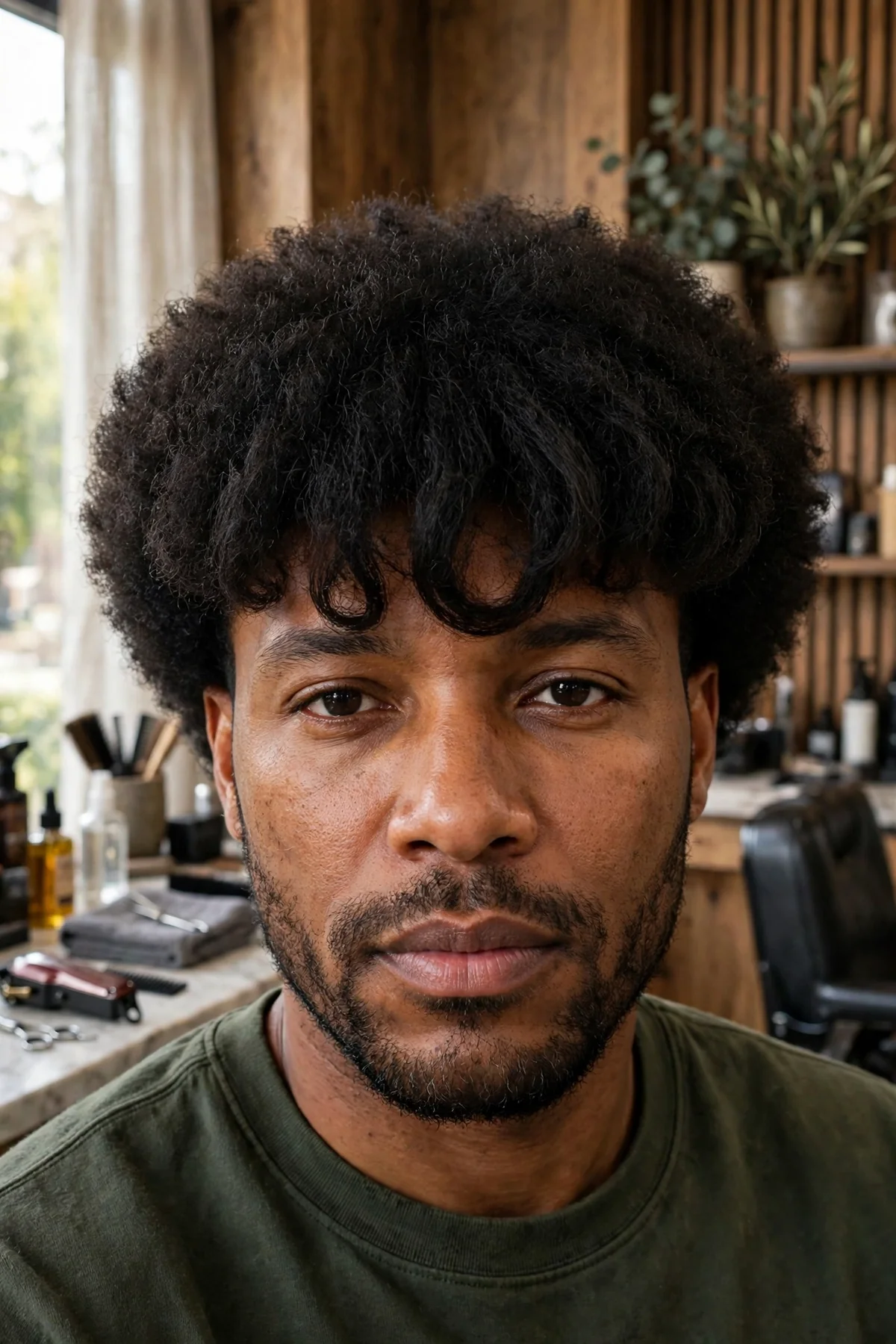
What it is: A rounded afro shape with a fringe at the front. It is bold, full, and proud.
Best for: Afro-textured hair and men who want a strong, natural shape. It suits oval and round faces.
Ask your barber: “Shape a rounded afro with a forward fringe, keeping the front full, with a light taper.”
Style it: Pick out the shape after moisturizing. Use a light oil to keep the hair soft.
Morning effort: low. Trim every 4 to 6 weeks.
Long and Statement Fringes
21. Long Eye-Grazing Fringe

What it is: A long fringe that reaches the brows or just past them. It is dramatic and soft.
Best for: Straight or wavy hair and men who like a statement look. It covers a high forehead well.
Ask your barber: “Leave a long fringe to my brows, with soft layers, and tapered sides.”
Style it: Blow-dry forward with a round brush. Use light cream so it moves, not sticks.
Morning effort: medium. Trim every 4 to 5 weeks.
22. Asymmetrical Fringe

What it is: A fringe with one side clearly longer than the other. It looks edgy and modern.
Best for: Oval and square faces and men who want a fashion-forward cut. It adds instant angles.
Ask your barber: “Cut an asymmetrical fringe, short on one side and 3 inches on the long side.”
Style it: Dry the long side across the forehead. Hold it with a little matte paste.
Morning effort: low. Trim every 3 to 4 weeks.
23. Piecey Long Fringe
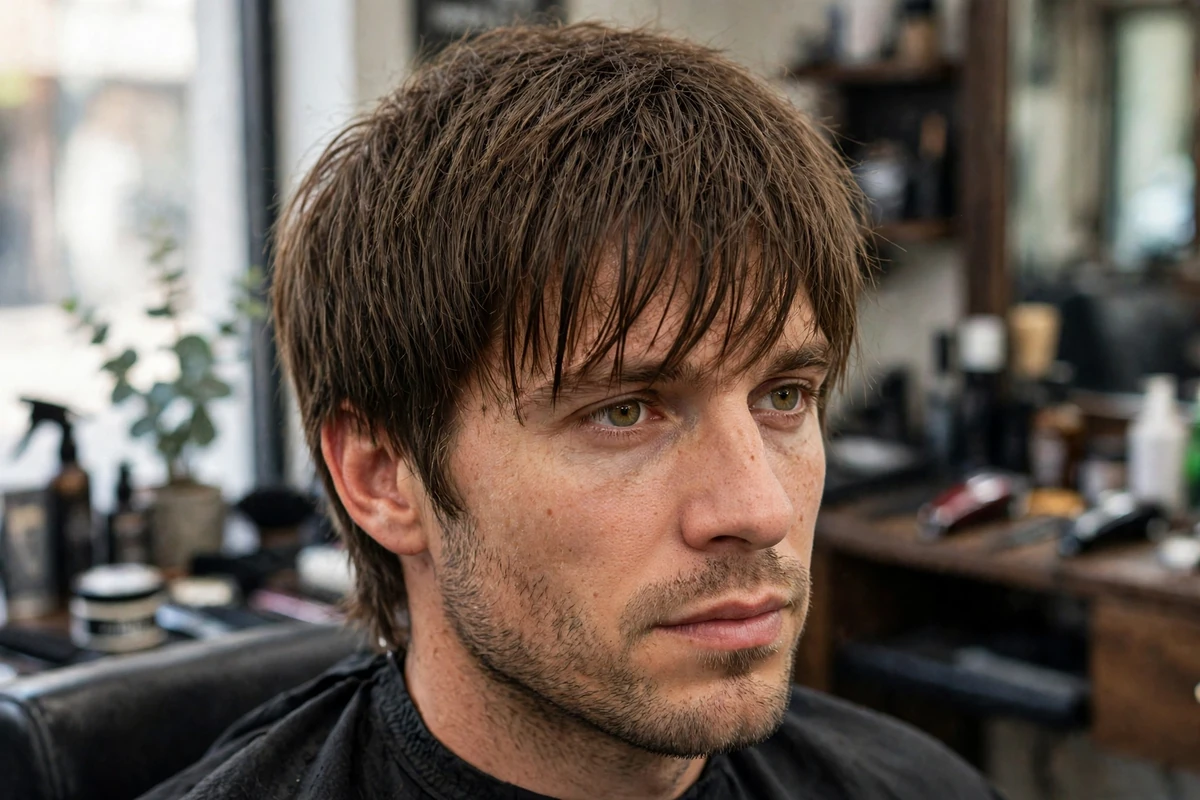
What it is: A long fringe split into clear, separated pieces. It looks textured and light.
Best for: Medium to thick hair and men who hate a solid, heavy front. It moves with you.
Ask your barber: “Cut a long piecey fringe, 3 to 4 inches, with point-cut ends for separation.”
Style it: Work a little clay through the ends. Pull the pieces apart with your fingers.
Morning effort: medium. Trim every 4 to 5 weeks.
24. Middle-Part Long Fringe

What it is: A long fringe parted down the middle. It frames the face on both sides.
Best for: Longer hair and oval or heart-shaped faces. It is soft and a little retro.
Ask your barber: “Leave a long middle-part fringe, 4 to 5 inches, with face-framing layers.”
Style it: Part in the middle while damp. Dry each side outward for a soft fall.
Morning effort: medium. Trim every 5 to 6 weeks.
25. Shaggy Fringe

What it is: A long, layered fringe with a shaggy finish. It looks relaxed and a little wild.
Best for: Wavy or thick hair and men who like a carefree look. It suits casual styles.
Ask your barber: “Cut a shaggy layered fringe, 3 to 5 inches, with lots of movement.”
Style it: Use sea salt spray and let it air-dry. Do not over-brush it.
Morning effort: very low. Trim every 5 to 6 weeks.
For longer front styles, see our layered curtain bangs guide and our messy hairstyles guide.
Short and Easy Fringes
26. Micro Fringe
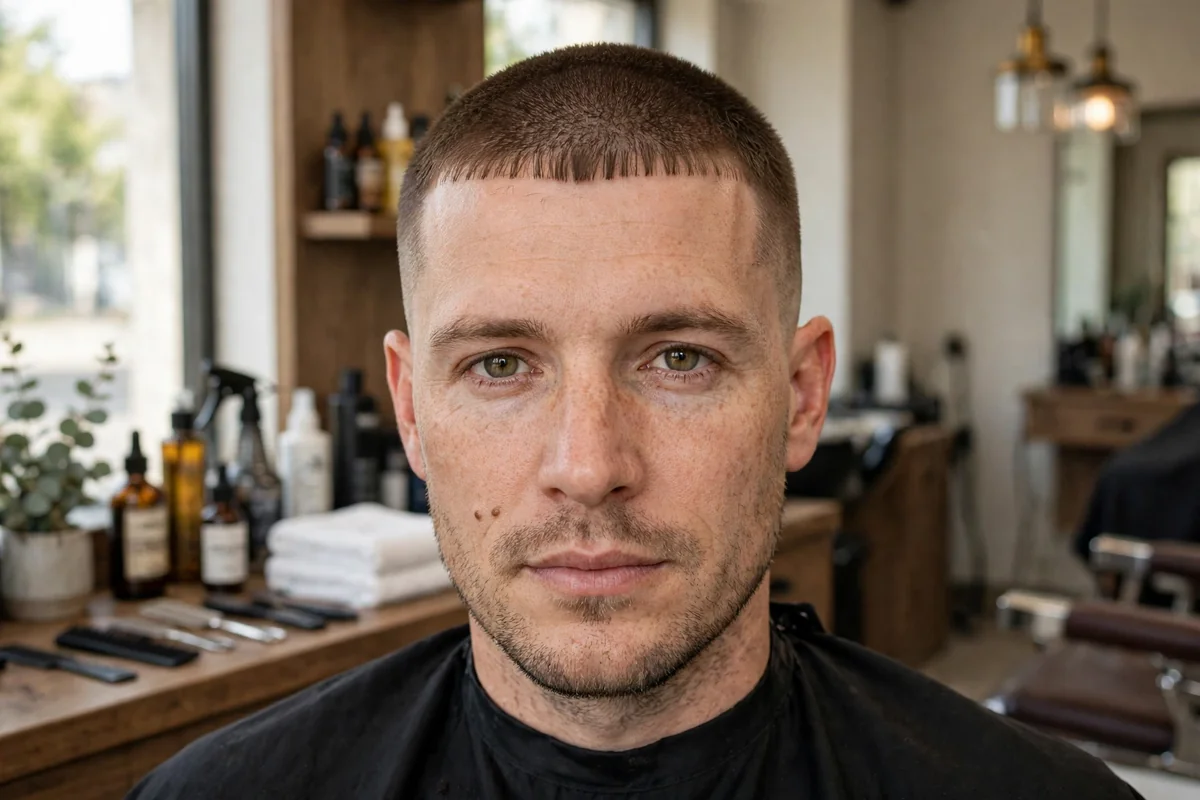
What it is: A very short fringe that ends high on the forehead. It is bold and simple.
Best for: Straight hair and men who want a striking, low-effort cut. It shows the brows and forehead.
Ask your barber: “Cut a micro fringe high on the forehead, about 1 inch, with a clean taper.”
Style it: Comb forward and go. It needs almost no product.
Morning effort: very low. Trim every 3 weeks.
27. Caesar Fringe

What it is: A short, even fringe combed forward on a compact top. It is tidy and timeless.
Best for: Short straight hair and men who want more shape than a buzz cut. It suits work and school.
Ask your barber: “Give me a short Caesar fringe, about 1 inch, with an even top and a subtle taper.”
Style it: Comb forward while damp. Add light cream if you want a little hold.
Morning effort: very low. Trim every 3 to 4 weeks.
28. Buzzed Sides Fringe
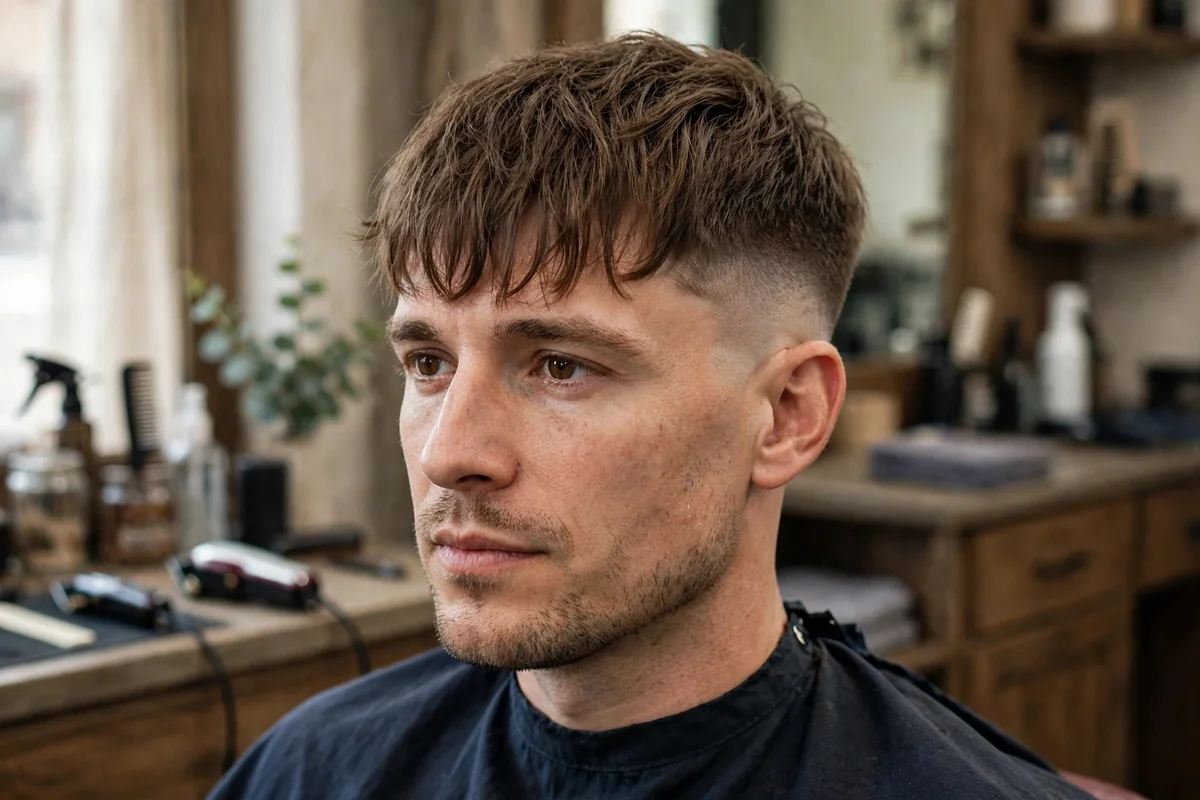
What it is: A fringe on top with very short, buzzed sides. It is clean, sporty, and simple.
Best for: Active men and straight or wavy hair. It keeps the focus on the fringe.
Ask your barber: “Keep a forward fringe, 2 inches, with buzzed sides on a number 2 guard.”
Style it: Style the top forward with matte paste. The sides need no daily care.
Morning effort: very low. Trim every 2 to 3 weeks.
29. Side-Part Fringe

What it is: A fringe paired with a neat side part. It looks polished and grown-up.
Best for: Straight or slightly wavy hair and professional settings. It suits oval and square faces.
Ask your barber: “Cut a side-part fringe, 2 to 3 inches, parted to my left, with tapered sides.”
Style it: Part while damp and comb forward. Use a little pomade for a neat finish.
Morning effort: low. Trim every 3 to 4 weeks.
30. Low-Maintenance Everyday Fringe

What it is: A simple fringe that falls where your hair wants to fall. It is the easiest fringe of all.
Best for: Any hair type and men who do not want a morning routine. It just works.
Ask your barber: “Cut an easy everyday fringe, about 2 inches, that falls forward on its own.”
Style it: Towel-dry and go. Add nothing, or a dab of cream on dry days.
Morning effort: very low. Trim every 4 to 5 weeks.
For more easy options, see our fringe haircuts for boys guide and our textured fringe guide.
How to Pick the Right Fringe for You
Start with your face shape. Then check your hair type. The best fringe fits both, not just one. Whether you call it a men’s fringe haircut or a fringe hairstyle for men, the same fit rules apply.
| Face shape | Best fringe picks |
|---|---|
| Oval | Almost any fringe — blunt, textured, curtain, angular |
| Round | Side-swept, angular, curtain, layered |
| Square | Wispy, textured, curtain, side-swept |
| Heart | Curtain, wispy, textured, long fringe |
| Oblong | Blunt, short neat, French crop, micro fringe |
| Hair type | Best fringe picks |
|---|---|
| Straight | Blunt, angular, French crop, side-swept |
| Wavy | Textured, messy, wavy, shaggy |
| Curly | Curly, fluffy, layered, curtain |
| Coily | Coily, afro, fluffy, textured |
| Fine or thin | Wispy, textured, short neat, side-swept |
If you have a high forehead, a longer fringe helps. It covers more forehead and balances your face. If you have a short forehead, keep the fringe shorter.
If your hairline is receding, a textured or side-swept fringe works well. It breaks up the hairline instead of drawing a hard line across it.
How to Style a Fringe Haircut
Most fringes take under five minutes in the morning. The key is to style the front first, while the hair is still damp.
- Wash or dampen the front. Wet hair is easier to shape than dry hair. Focus on the fringe, not the whole head.
- Comb the fringe forward. Use your fingers or a vent brush. Set the direction you want before it dries.
- Blow-dry forward on low heat. Dry the fringe down and forward. This stops it from flicking up.
- Add a small amount of product. Use matte paste, clay, or cream. Start with less than you think you need.
- Shape the pieces. Pinch textured fringes into pieces. Sweep side fringes to one side. Leave curly fringes alone to dry naturally.
- Check the shape from the side. The fringe should sit flat and even. Fix any stray pieces with a little water.
For hold without stiffness, use matte products. Shiny pomade can make a fringe look greasy fast. A light touch always looks better.
Fringe Problems, Fixed
Cowlicks: A cowlick is hair that grows in a swirl. Cut the fringe a little longer over the cowlick. Weight holds it down better than short hair.
Glasses: A long fringe can brush your frames. Ask for a fringe that ends above the top of your glasses. Side-swept fringes work well with glasses.
Fringe in your eyes: If the fringe keeps falling into your eyes, it is too long or too heavy. Ask your barber to point-cut the ends or shorten it slightly.
Flat fringe: Fine hair can fall flat. Use texture powder at the roots. Blow-dry forward with your fingers for lift.
Frizzy fringe: Dry air and humidity cause frizz. Use a little curl cream or light oil. Do not over-brush a textured fringe.
Growing out a fringe: Grow it out in stages. Sweep it to the side as it gets longer. A curtain part hides the awkward stage well.
Trim Cadence and Cost
Fringes grow out fast because the front shows every change. Short fringes and fades need the most upkeep. Longer fringes are more forgiving.
| Cut type | Trim every | Typical US cost |
|---|---|---|
| Short fringe or French crop | 3 to 4 weeks | $25 to $45 |
| Textured or messy fringe | 4 weeks | $30 to $50 |
| Fade or skin fade fringe | 2 to 3 weeks | $30 to $55 |
| Long or curtain fringe | 5 to 6 weeks | $30 to $50 |
| Curly or coily fringe | 4 to 6 weeks | $35 to $60 |
A fringe-only trim between full cuts costs less in many shops. Ask your barber if they offer a quick front tidy-up. It keeps the shape sharp for little money.
7 Fringe Mistakes to Avoid
- Cutting it yourself when wet. Wet hair hangs longer than dry hair. A wet cut can end up far too short once dry.
- Going too short on the first try. You can always cut more. You cannot glue hair back. Start longer and adjust next visit.
- Ignoring your cowlick. A cowlick fights a short, blunt line. Work with it, not against it, with length and texture.
- Using too much product. Heavy wax flattens a fringe and makes it look greasy. Use a pea-sized amount first.
- Skipping trims. A fringe loses its shape in weeks. Regular trims keep the line clean and the length right.
- Copying a photo without checking your hair type. A style made for thick straight hair may not work on fine curly hair. Pick the version that fits your hair.
- Forgetting the sides. The fringe is only half the cut. Tapered or faded sides make the front look finished.
Frequently Asked Questions About the Fringe Haircut
What is a fringe haircut for men?
A fringe haircut for men is a cut where the front hair falls forward over the forehead. The fringe can be short or long, straight or textured, and it pairs with tapered, faded, or natural sides.
Is a fringe the same as bangs?
Yes. Fringe and bangs mean the same front section of hair. Fringe is the common word in the UK and Australia. Bangs is the common word in the United States.
What face shapes suit a fringe haircut?
Almost every face shape suits some kind of fringe. Oval faces suit nearly all fringes. Round faces suit side-swept and angular fringes. Square faces suit soft, wispy fringes. Heart faces suit curtain and longer fringes.
How do I ask my barber for a fringe haircut?
Tell your barber where the fringe should end, such as just above your brows. Name the shape you want, like textured or side-swept. Add the side finish, like a low taper or mid fade, and bring a photo.
How often should I trim a fringe haircut?
Most fringes need a trim every 3 to 4 weeks. Fades and skin fades need a trim every 2 to 3 weeks. Longer and curly fringes can go 5 to 6 weeks between cuts.
Does a fringe haircut work for curly hair?
Yes. Curly, wavy, and coily hair all make great fringes. The fringe falls forward in natural curls or waves. Cut it curl by curl and keep a little extra length, since curls spring up when dry.
Conclusion
A fringe haircut is one of the simplest ways to change your look. The front shape does most of the work. The sides just set the tone.
Pick a fringe that fits your face shape and your hair type. Tell your barber exactly where it should end. Then keep it trimmed and styled with a light hand.
Try one of the 30 styles above at your next visit. A good fringe should feel easy, look sharp, and suit your everyday life. For more on the front section itself, see Bangs (hair) on Wikipedia and the general Haircut guide on Wikipedia.
📌 Pin now, read later — save this guide for your next barbershop visit!

Reviewed by Daniel Morgan
Daniel Morgan is the Founder and Editorial Director of Barber’s Groom. He oversees the editorial review of the guides on this site, checking each one for accuracy, clarity, and practical value before it reaches readers.