30 Best Toddler Girl Haircuts Without Bangs for a Sweet, Easy Look
Reviewed by Daniel Morgan
Looking for a toddler girl haircut without bangs that stays cute, stays out of her eyes, and stays easy on busy mornings? You are in the right place. This guide shares 30 sweet no-bang styles for little girls, from classic bobs to long layers, playful braids, and soft curls.
A toddler girl haircut without bangs skips the fringe across the forehead. The front hair falls to the side, tucks behind the ears, or blends into soft face-framing pieces. The result looks fresh and sweet, and it grows out with far less fuss than bangs.
Many parents pick no-bang toddler girl haircuts for one simple reason: less upkeep. Bangs need trims every few weeks, and they can bother a child who hates hair on her forehead. A no-bang cut can go weeks longer between trims and still look neat.
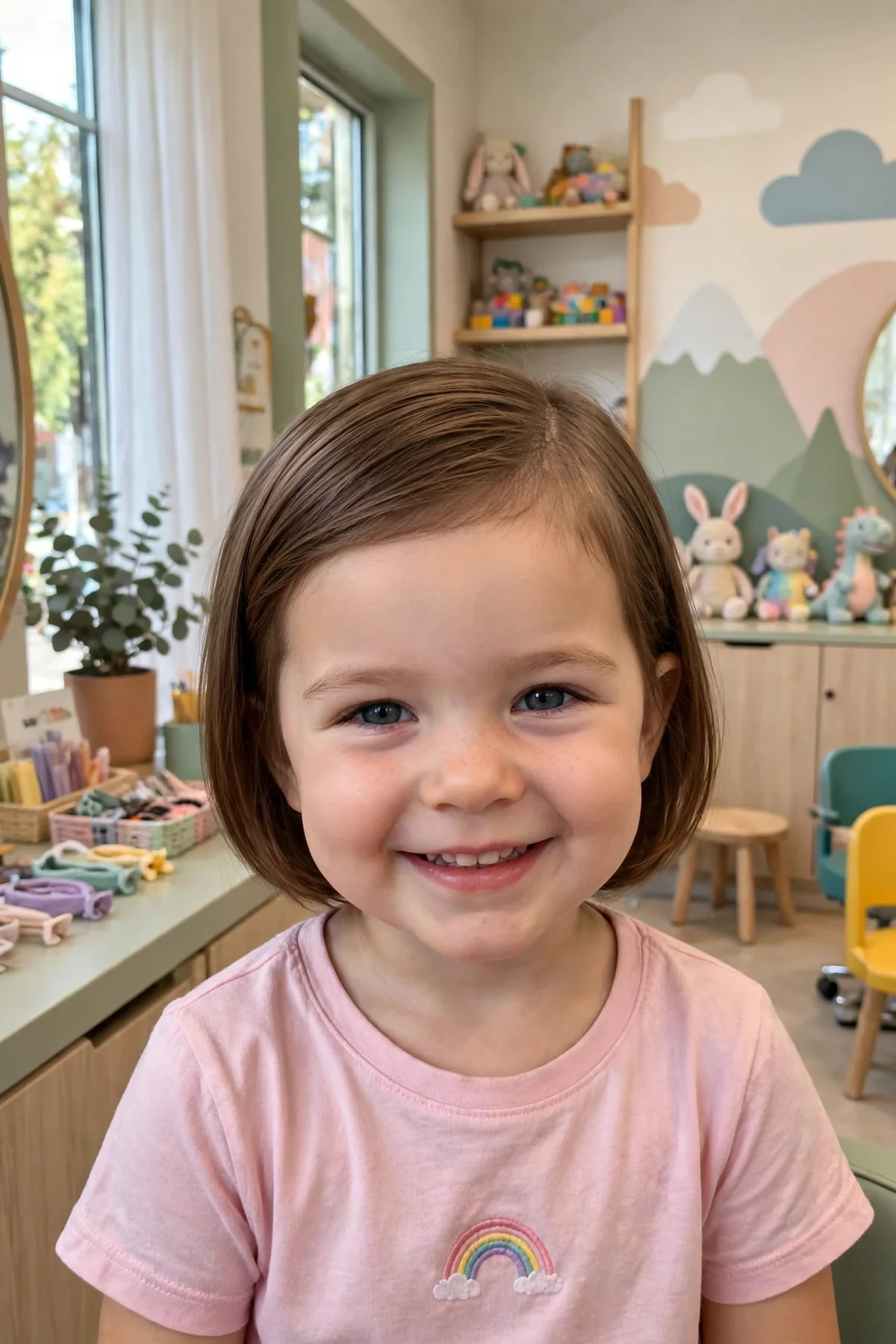
Every style below comes with a photo, a short “what it is” note, who it suits best, and the exact words to say to your stylist. Use the quick-pick table near the end to find your match in seconds.
What Does a Toddler Girl Haircut Without Bangs Mean?
A no-bang cut leaves the forehead clear. There is no fringe cut straight across, no wispy pieces on the forehead, and no curtain fringe. The front hair is long enough to part, sweep, or clip back. A haircut like this works because the shape comes from the length and the part, not from the fringe.
The front can fall in a side part, a center part, or soft pieces that frame the cheeks. Clips and headbands do the work that bangs used to do. They keep hair out of her eyes without a single snip across the forehead.
This style family suits almost every hair type. Straight, wavy, curly, fine, and thick hair all work. The cut changes with the texture, but the no-bang idea stays the same.
Why Parents Choose No-Bang Haircuts for Toddler Girls
Fewer trims top the list. A fringe grows into the eyes in a few weeks, so bangs mean extra salon trips. A no-bang cut holds its shape for 8 to 12 weeks in most cases.
Comfort comes next. Some toddlers hate the feel of hair on their forehead. They push it away, rub their eyes, or fuss in the chair. No bangs means nothing to push away.
Grow-out is graceful too. When a child outgrows a style, a no-bang cut blends into the next length with ease. There is no awkward fringe-growing phase with clips and headbands doing damage control.
Styling stays simple. A quick brush, a side part, and one clip is often the whole morning routine. That matters on school mornings and daycare days.
No Bangs vs Bangs: A Quick Comparison
| What matters | Without bangs | With bangs |
|---|---|---|
| Trim schedule | Every 8 to 12 weeks | Every 4 to 6 weeks |
| Morning effort | Brush and go, one clip | Brush, smooth, and shape the fringe |
| Hair in the eyes | Managed with parts and clips | Fringe covers the forehead |
| Grow-out | Smooth and simple | Takes months, needs clips |
| Best for | Kids who hate forehead hair | Kids who love a classic fringe look |
| Cowlick at the hairline | Easy to hide with a side part | Can split or stand up |
If your little one has bangs right now and you want to grow them out, this guide doubles as a grow-out plan. Pick a style below that matches her current length, then follow the grow-out tips near the end. If you are still deciding between fringe styles, our toddler girl haircuts with curtain bangs guide shows the softest fringe option.
30 Best Toddler Girl Haircuts Without Bangs
Here are 30 no-bang styles, grouped by length and hair type. Each one works with no fringe at all. Find her length, find her texture, and pick a favorite.
Classic No-Bang Bobs for Everyday
These five bobs are the workhorses of toddler girl haircuts without bangs. They are short, neat, and easy to brush. Start here if you want a simple first cut.
1. Classic Chin-Length Bob
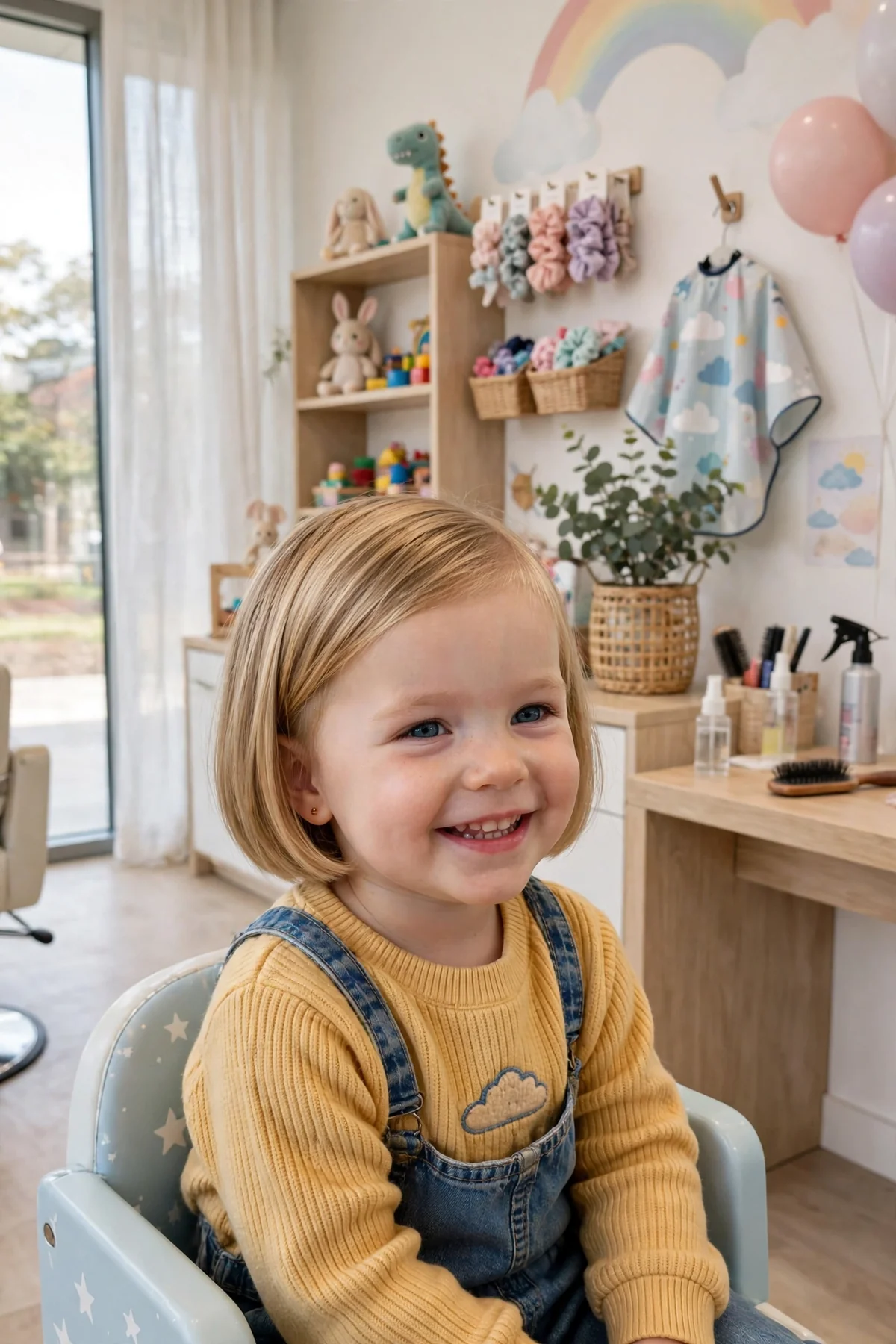
What it is: One clean line that ends right at the chin. The front falls in a soft side part, and the back sits neat and even. It is the simplest toddler girl bob without bangs you can ask for.
Best for: First haircuts, fine hair, and busy mornings. It dries fast and brushes out in seconds.
Ask your stylist: “A chin-length bob with no bangs, please. A soft side part, and keep the ends blunt so it looks full.”
Style it: Brush it smooth after washing. Add one small clip on the heavy side if the front falls forward.
Trim note: Every 8 to 10 weeks keeps the line crisp.
2. Ear-Length Bob
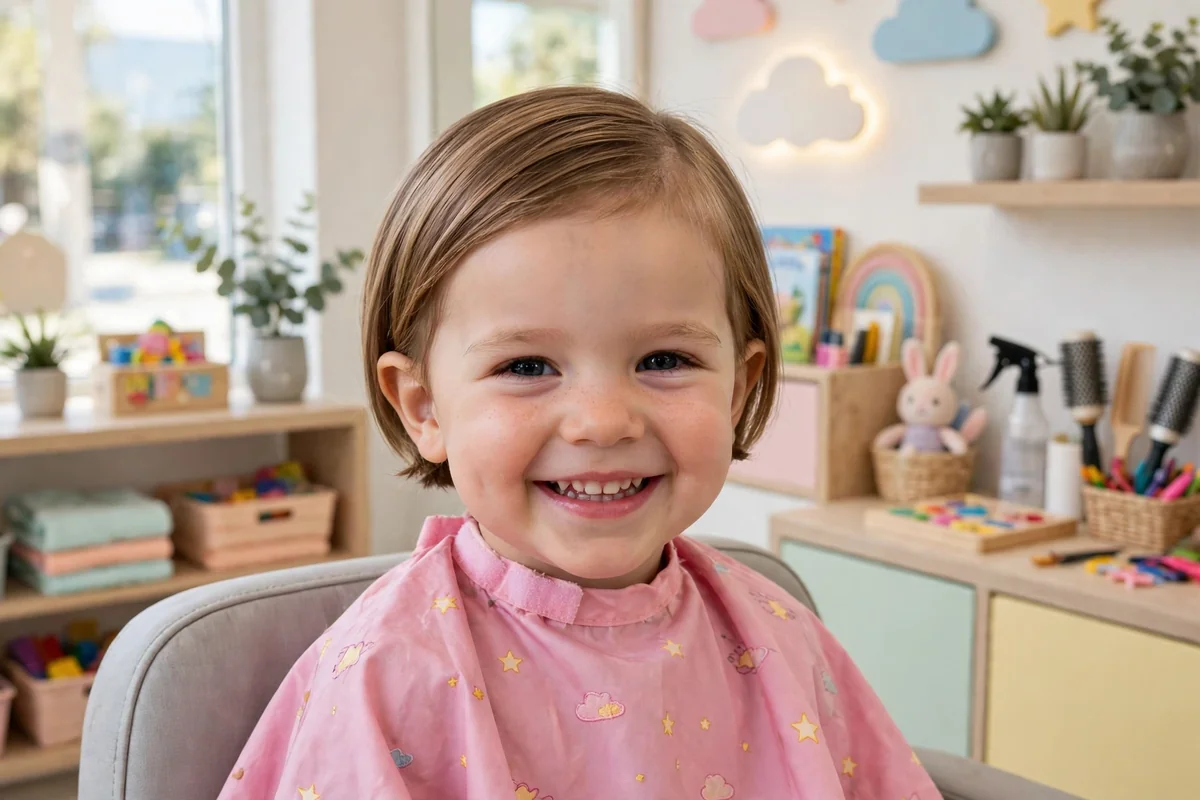
What it is: A short bob that ends at the ears. It is the shortest bob in this guide, and it keeps hair off the neck on hot days.
Best for: Very active toddlers, hot weather, and kids who hate brushing. It barely tangles at all.
Ask your stylist: “An ear-length bob with no bangs, please. Keep the front long enough to tuck behind her ears.”
Style it: A quick finger-comb is often enough. A tiny bit of detangling spray helps after baths.
Trim note: Every 6 to 8 weeks, since short shapes show growth sooner.
3. Long Bob (Lob)
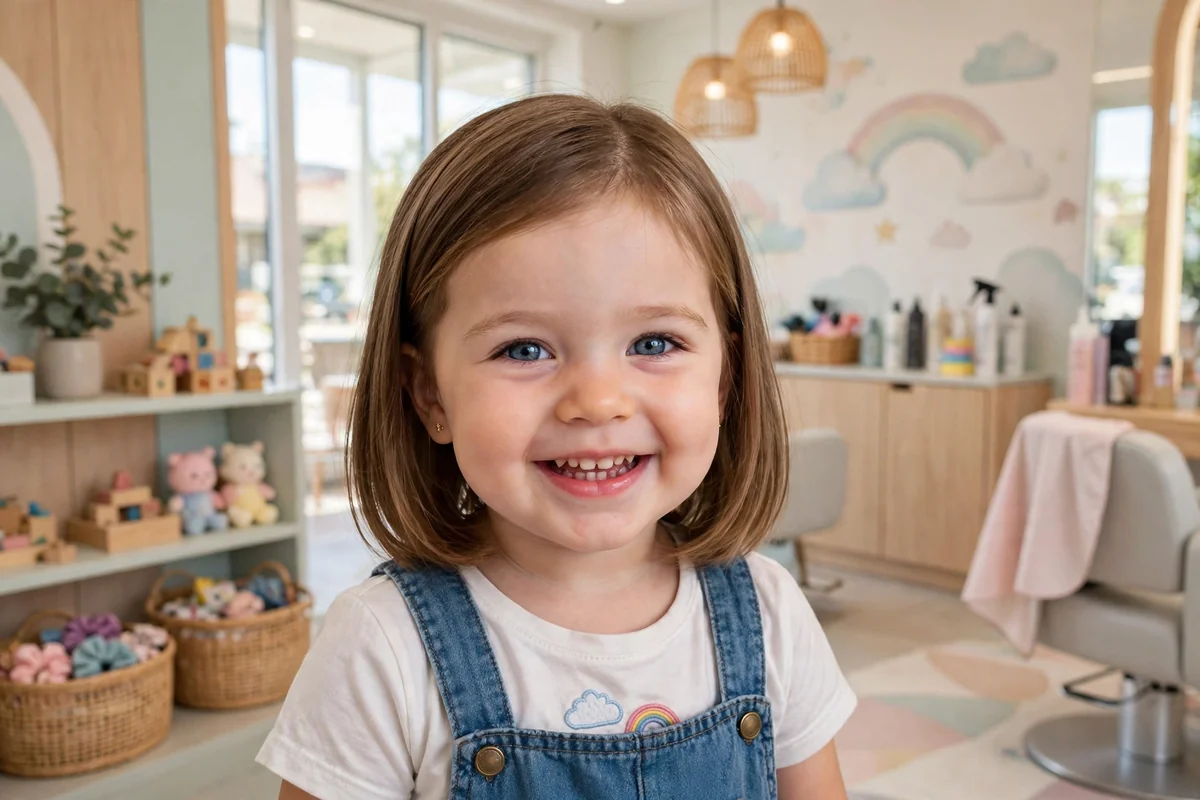
What it is: A bob that falls between the chin and the shoulders. It keeps the neat bob shape with more length to play with.
Best for: Girls who are nervous about going short, and parents who still want ponytail options.
Ask your stylist: “A long bob with no bangs, please. Shoulder length, with a side part so the front sweeps back.”
Style it: Air-dry and brush. Pull the top half into a tiny ponytail for playtime.
Trim note: Every 10 to 12 weeks is usually plenty.
4. Shoulder-Grazing Bob
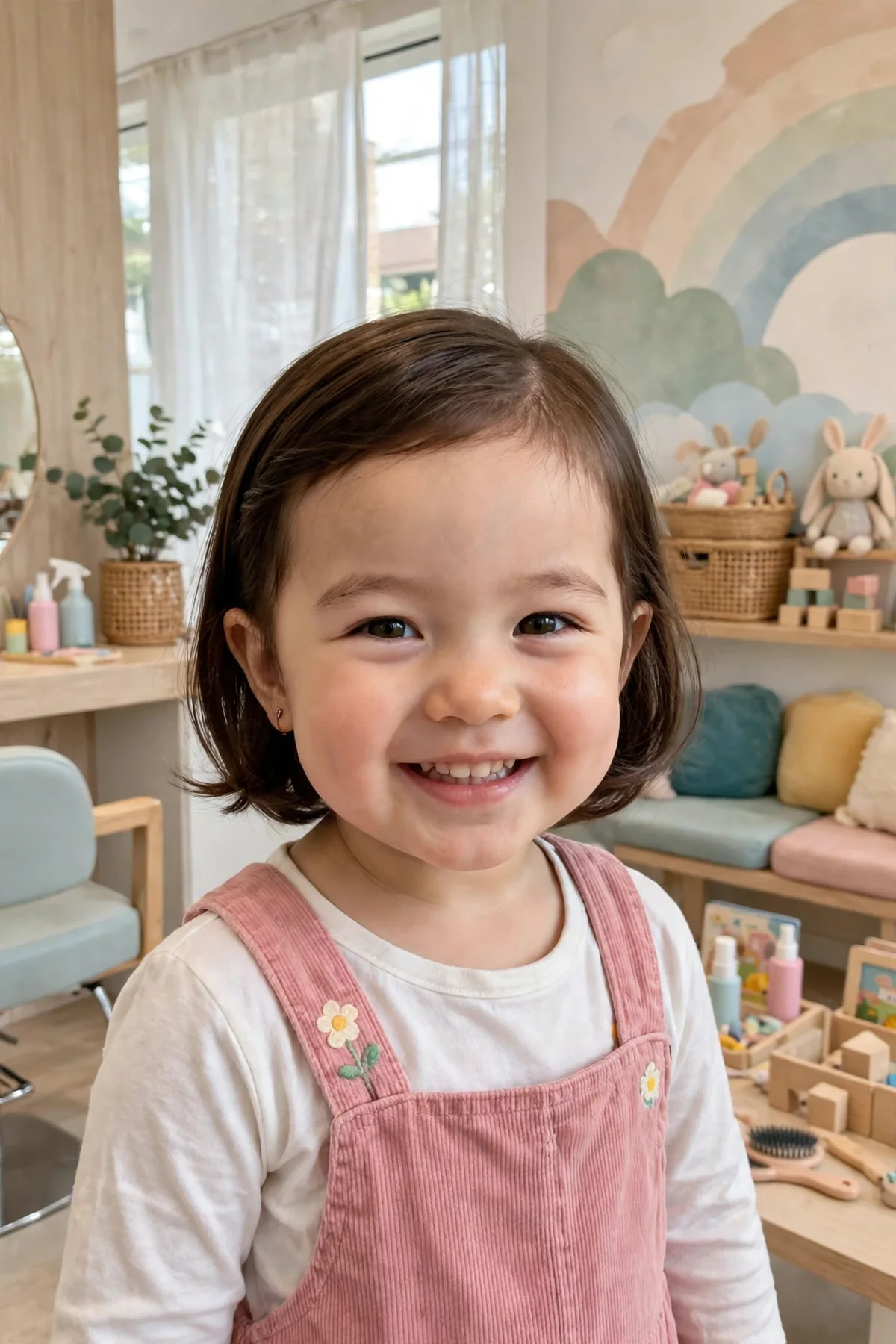
What it is: A gentle bob that just touches the shoulders. It is a soft step down from long hair, not a big chop. For more medium-length ideas, see our toddler girl shoulder length haircuts guide.
Best for: Girls growing out a shorter cut, and first-time salon visits where a big change feels scary.
Ask your stylist: “A shoulder-length bob with no bangs, please. Just grazing the shoulders, with a soft side part.”
Style it: Brush and let it fall. A headband keeps the front back on windy days.
Trim note: Every 10 to 12 weeks keeps the ends healthy.
5. Soft A-Line Bob
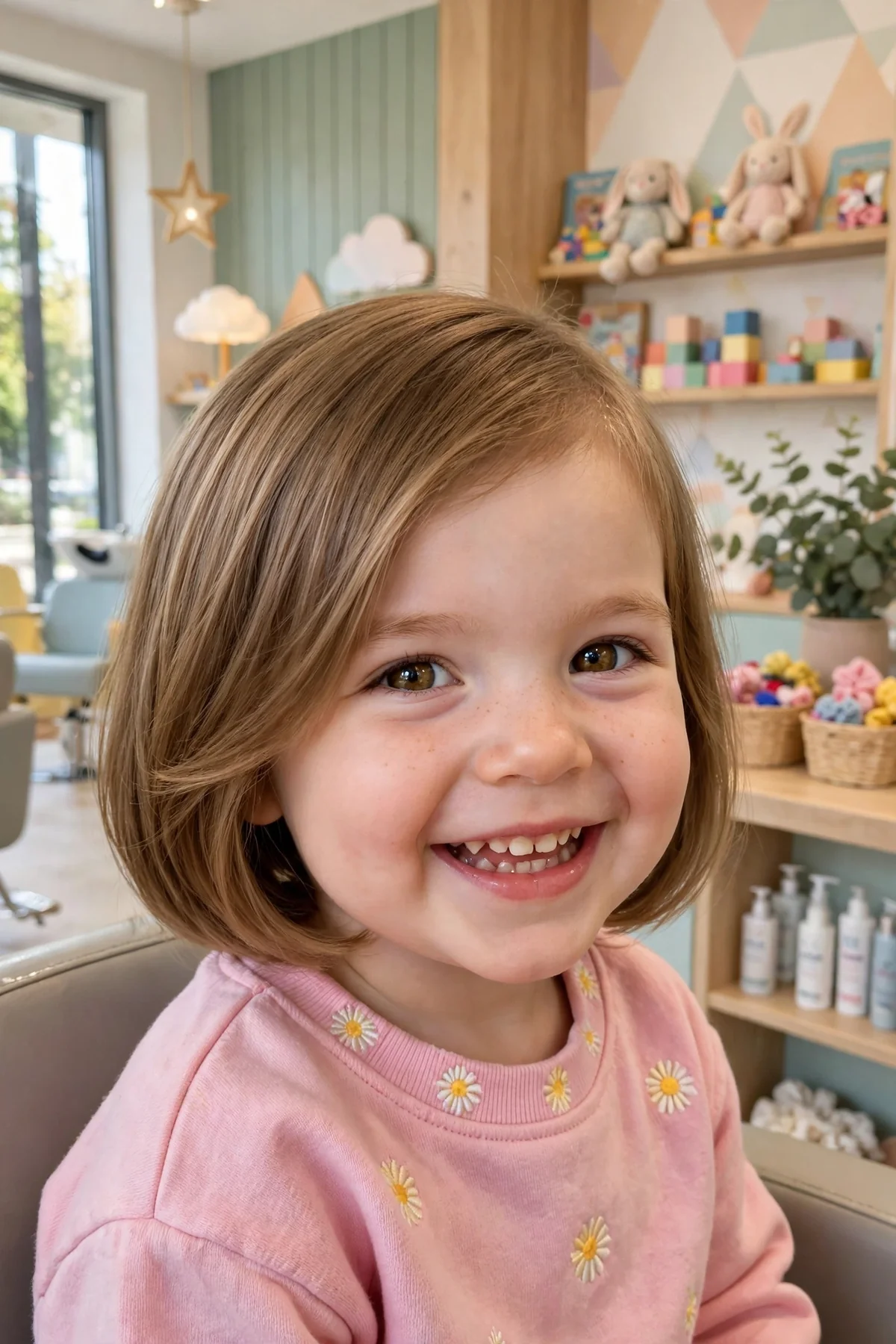
What it is: A bob that is a touch shorter in the back and longer toward the face. The angle is soft, not sharp, so it looks sweet on a little girl.
Best for: Round faces and fine hair. The longer front pieces slim the cheeks and add shape.
Ask your stylist: “A soft A-line bob with no bangs, please. Slightly shorter in the back, longer at the front, gentle angle.”
Style it: Brush the front pieces forward and let them frame her face. No heat needed.
Trim note: Every 8 to 10 weeks keeps the angle neat.
Bobs with Soft Front Pieces (No Fringe)
These five styles use the part and the front pieces to shape the face. They give the softness of bangs with none of the upkeep.
6. Side-Part Bob
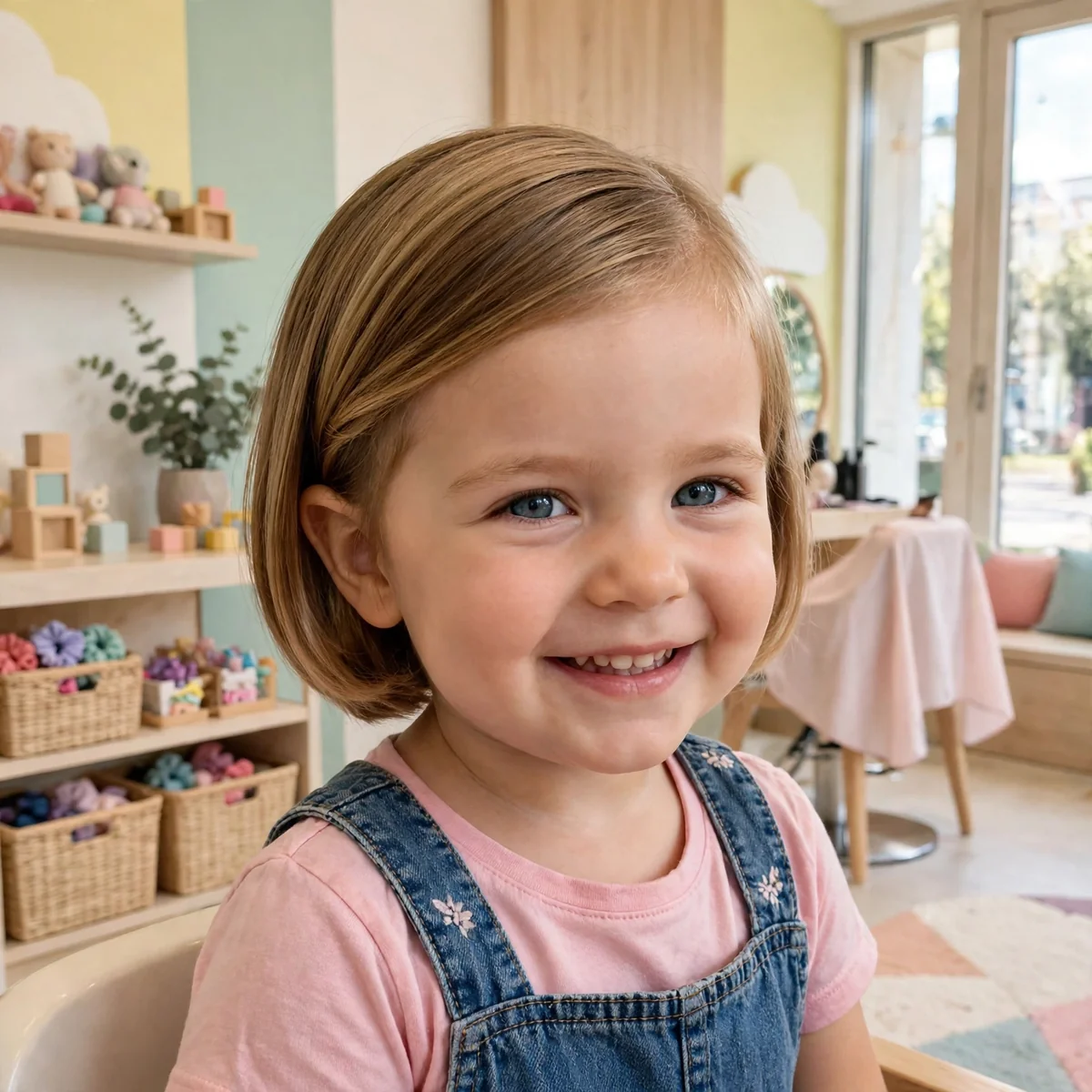
What it is: A chin-length bob with a clear side part. The front sweeps across the forehead and tucks neatly behind one ear.
Best for: Girls with a cowlick at the hairline. A side part works with the cowlick instead of fighting it.
Ask your stylist: “A chin-length bob with a deep side part and no bangs, please. The front should sweep to the side, not fall forward.”
Style it: Comb the part in while the hair is damp. It will dry right into place.
Trim note: Every 8 to 10 weeks.
7. Face-Framing Bob
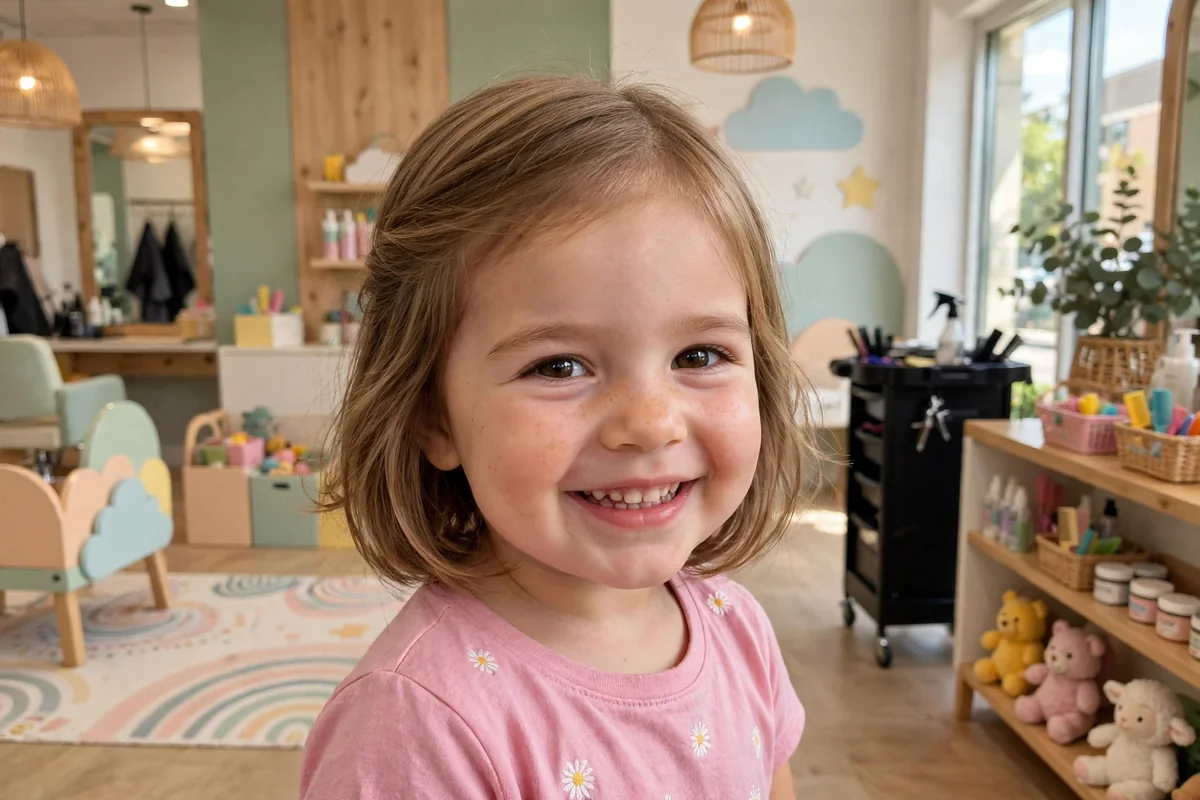
What it is: A bob with slightly longer, softer pieces around the cheeks. The face looks framed and sweet, with no fringe on the forehead.
Best for: Girls who want softness near the face but hate hair touching the forehead.
Ask your stylist: “A bob with soft face-framing pieces and no bangs, please. Keep the pieces at cheek length.”
Style it: Brush the front pieces forward a touch. They will fall right where they belong.
Trim note: Every 8 to 10 weeks.
8. Rounded Bob
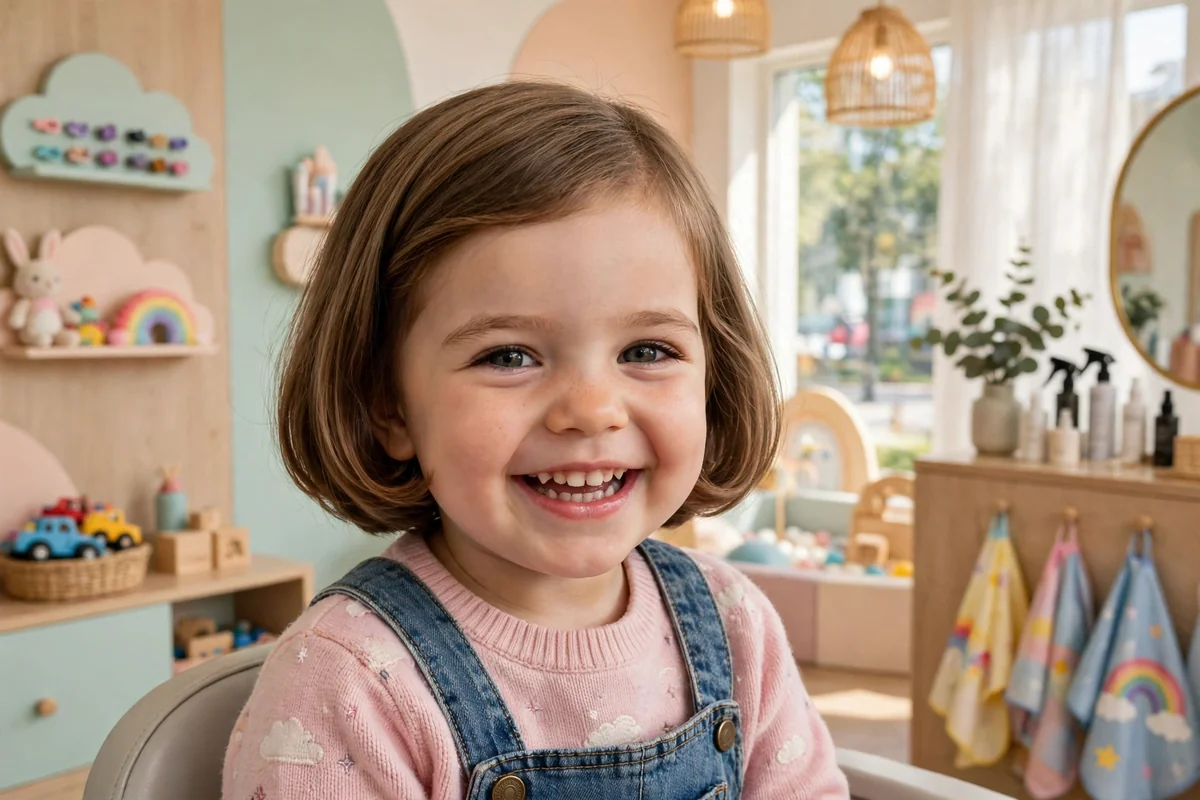
What it is: A bob with a soft, rounded shape that bends under at the ends. It looks polished with almost no styling.
Best for: Straight hair that bends under on its own. It is one of the easiest toddler girl hairstyles without bangs to live with.
Ask your stylist: “A rounded bob with no bangs, please. Soft shape, ends curving under, side part.”
Style it: Blow-dry on the lowest setting with a round brush, or just let it air-dry. The shape holds either way.
Trim note: Every 8 to 10 weeks.
9. Stacked Bob
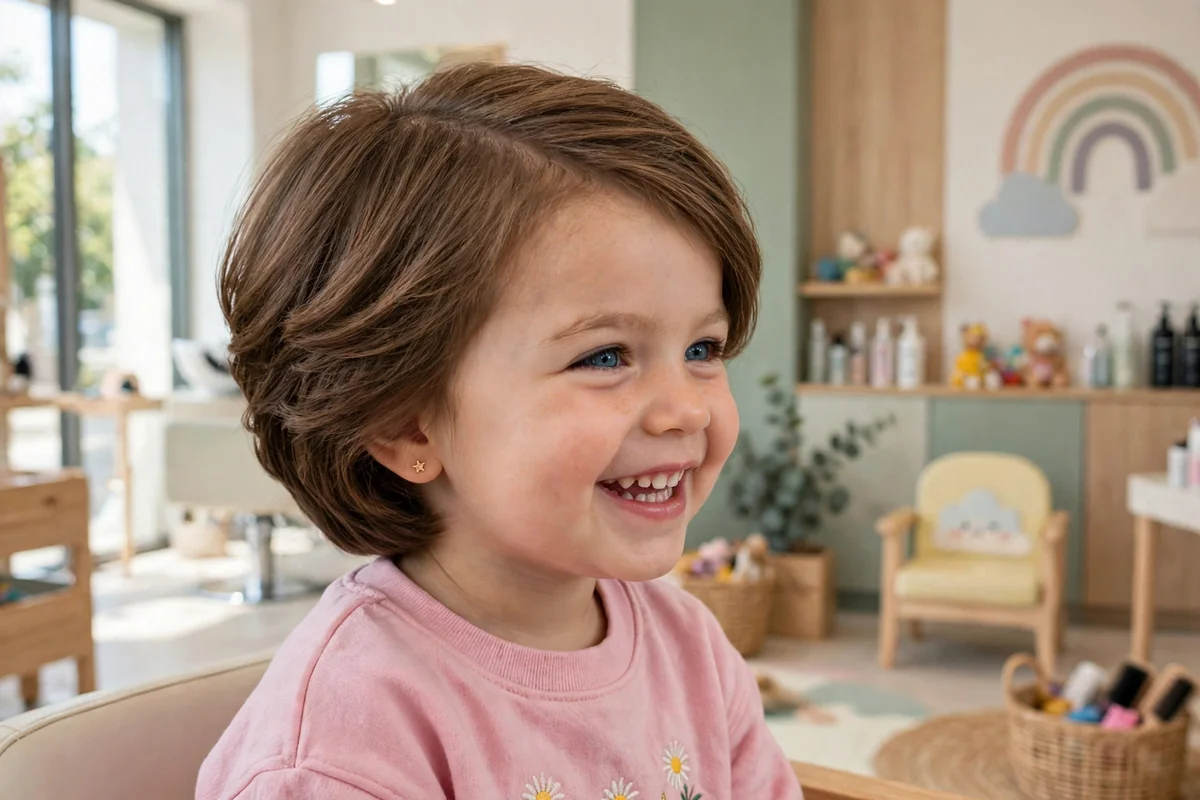
What it is: A bob with gentle graduation through the back. The back sits a little rounder and fuller, while the front stays longer.
Best for: Flat-looking hair that needs shape at the back. The stack adds lift without layers all over.
Ask your stylist: “A soft stacked bob with no bangs, please. Gentle graduation at the back, longer front, side part.”
Style it: Brush the back smooth and let the front fall forward. A pea-size drop of leave-in conditioner adds shine.
Trim note: Every 8 weeks, since a stack shows growth sooner.
10. Textured Bob
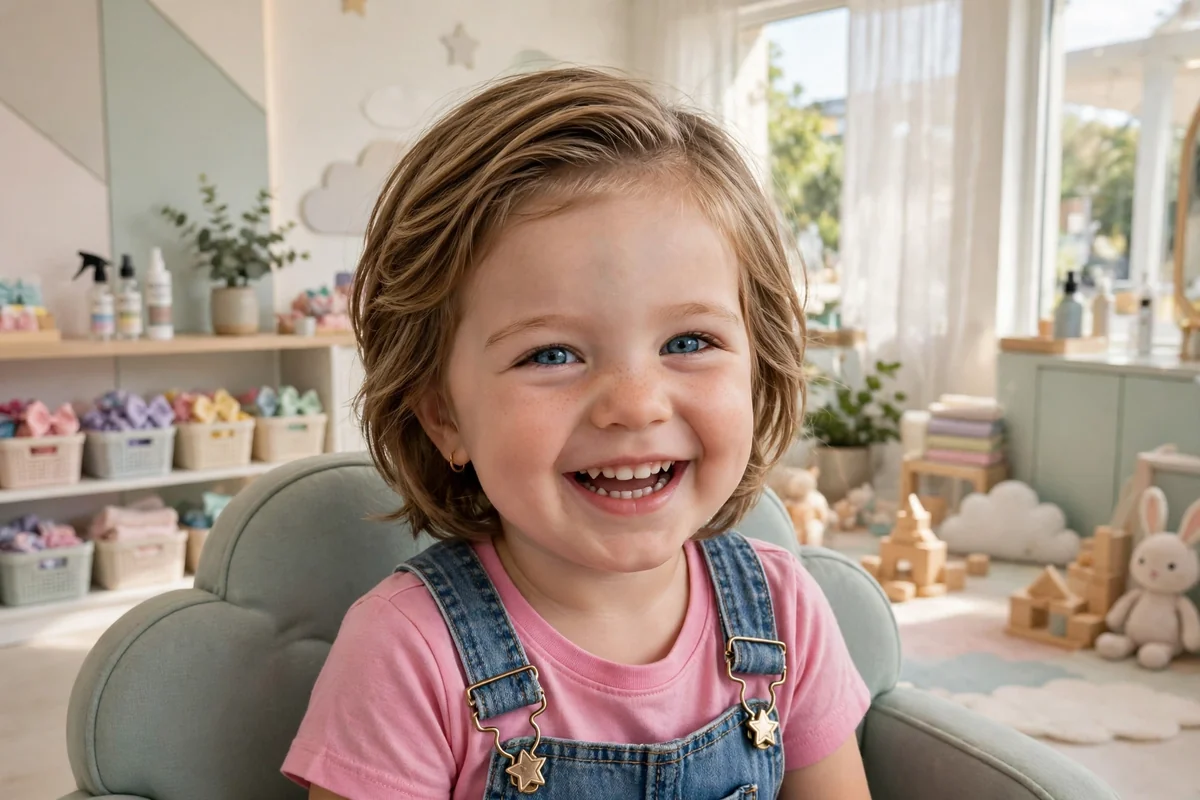
What it is: A bob with softly point-cut ends. The finish looks loose and playful instead of sharp and perfect.
Best for: Wavy hair and girls who move a lot. The texture hides uneven growth between trims.
Ask your stylist: “A textured bob with no bangs, please. Soft point-cut ends, side part, nothing too blunt.”
Style it: Scrunch the ends lightly while damp. Let it air-dry for a soft, lived-in finish.
Trim note: Every 10 to 12 weeks, since texture forgives growth.
Long Hair Without Bangs
Long hair and no bangs are a natural pair. The length gives you ponytails, braids, and clips, while the open forehead keeps mornings calm.
11. One-Length Shoulder Cut
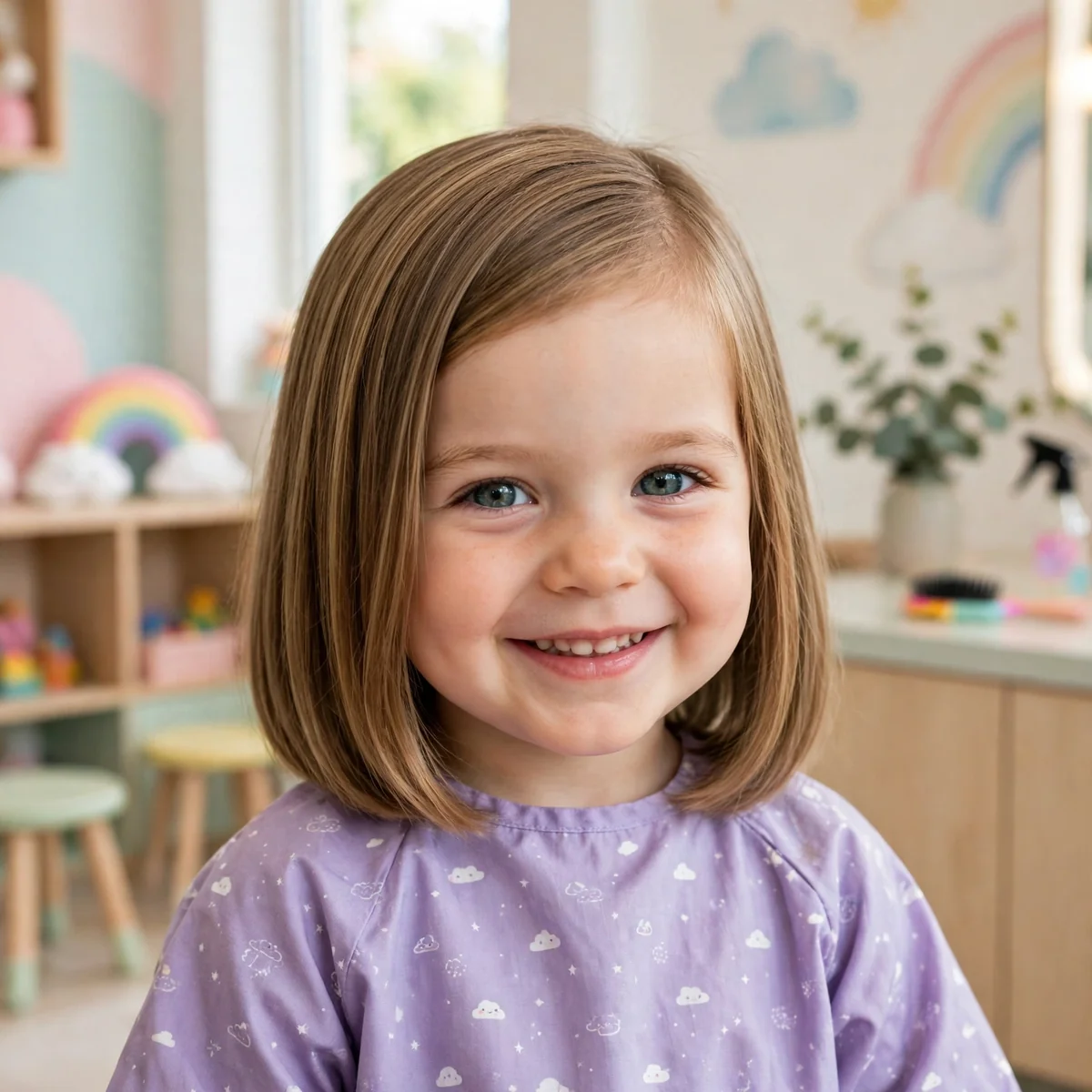
What it is: Hair cut to one even length at the shoulders. The edge is strong and blunt, which makes fine hair look fuller.
Best for: Fine hair and girls who love ponytails. One length ties back cleanly with no short pieces escaping.
Ask your stylist: “A one-length cut at the shoulders with no bangs, please. Blunt ends, side part.”
Style it: Brush and go, or pull into a low ponytail. A wide-tooth comb keeps tangles away.
Trim note: Every 10 to 12 weeks.
12. Long Layers
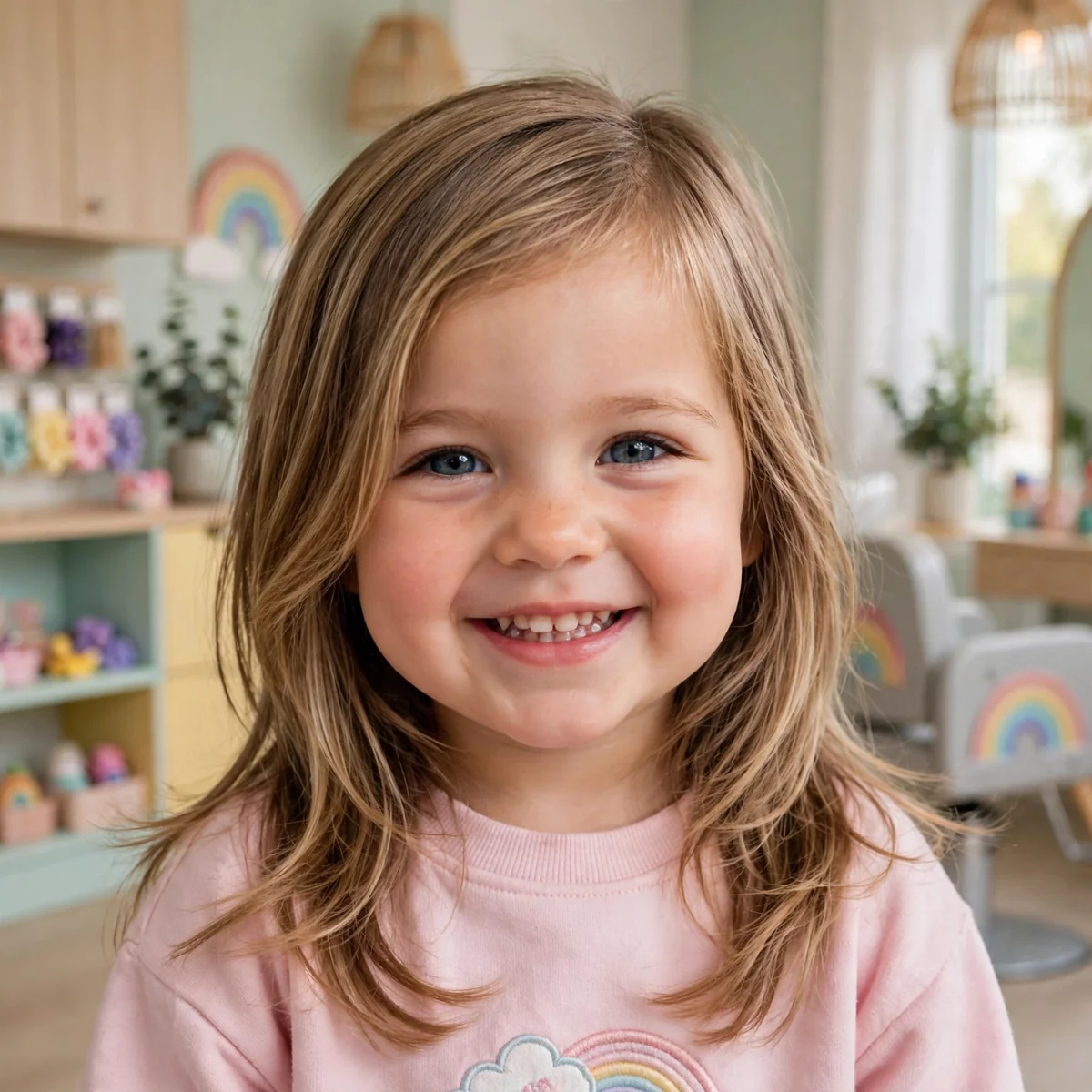
What it is: Long hair with soft, long layers through the ends. The layers remove weight so thick hair moves and brushes with ease. Our toddler girl long layered haircuts guide has more long-layer ideas.
Best for: Thick hair that feels heavy. Long layers keep the length while making mornings faster.
Ask your stylist: “Long layers with no bangs, please. Keep the layers long so her ponytail still holds.”
Style it: Detangle from the ends up with a wide-tooth comb. A light detangling spray helps a lot.
Trim note: Every 10 to 12 weeks.
13. Long Hair with Face-Framing Pieces
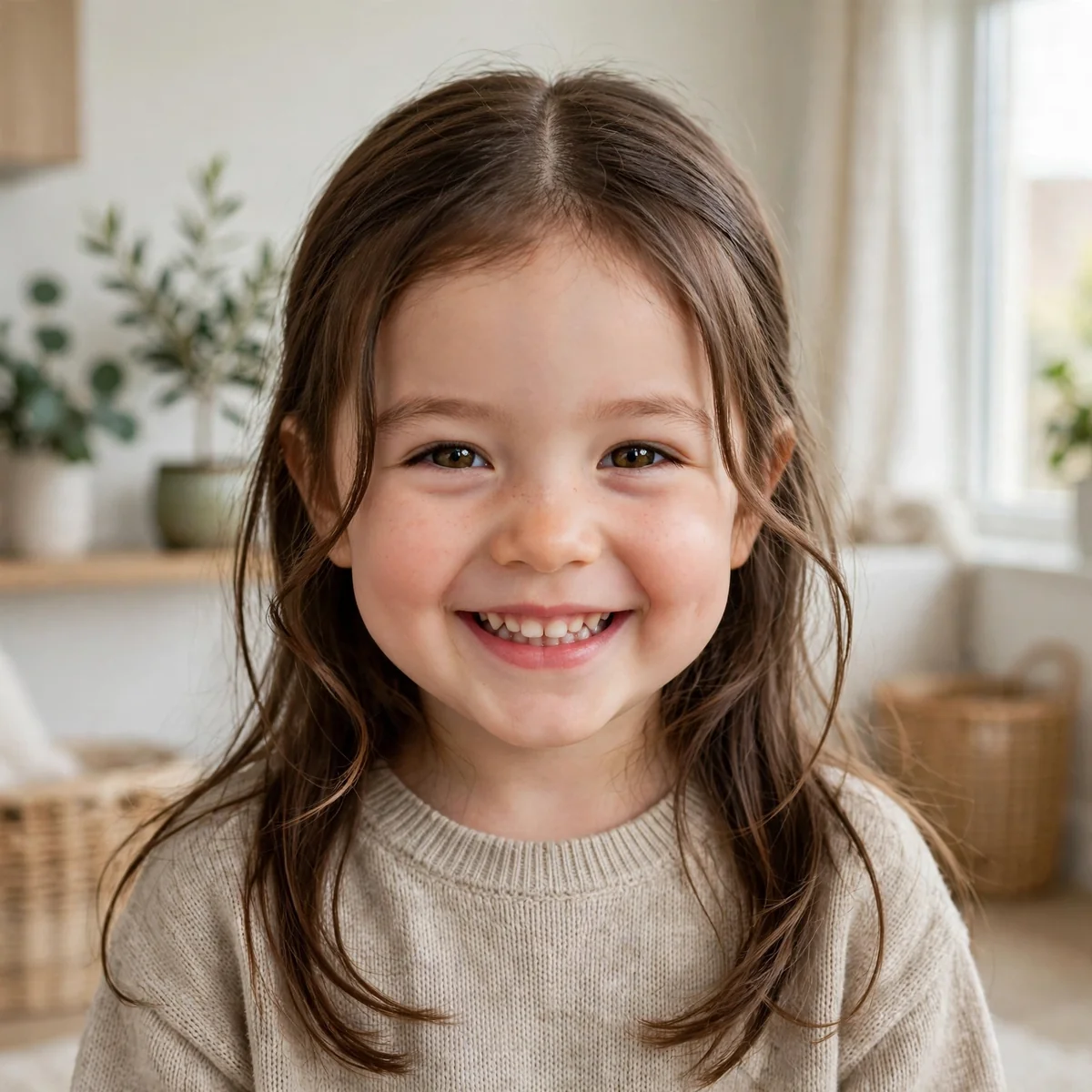
What it is: Long hair with slightly shorter pieces around the face. The pieces soften the look and keep hair out of the eyes.
Best for: Girls growing their hair long who still want shape near the face.
Ask your stylist: “Long hair with face-framing pieces and no bangs, please. Pieces starting at the chin, side part.”
Style it: Brush the front pieces back or let them frame her cheeks. Both look sweet.
Trim note: Every 10 to 12 weeks.
14. Long Straight-Across Cut
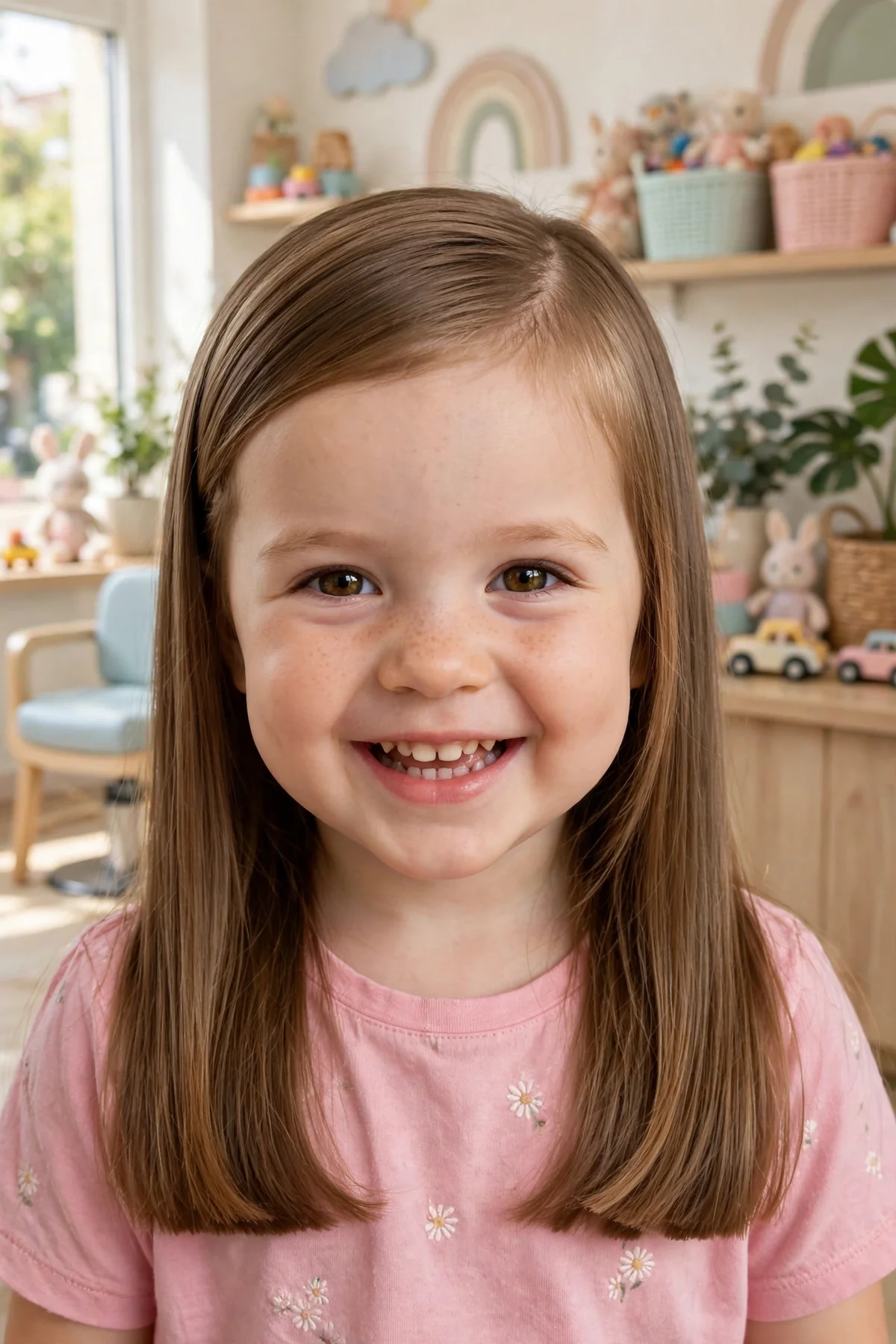
What it is: Long, straight hair cut straight across at the bottom. The line is clean and strong, and the forehead stays clear.
Best for: Straight, fine hair. The blunt edge makes the ends look thick and healthy.
Ask your stylist: “A long straight-across cut with no bangs, please. Blunt ends, side part, no layers.”
Style it: Brush straight down and let it fall. Trim split ends on time to stop tangles.
Trim note: Every 10 to 12 weeks.
15. Long Wavy Cut
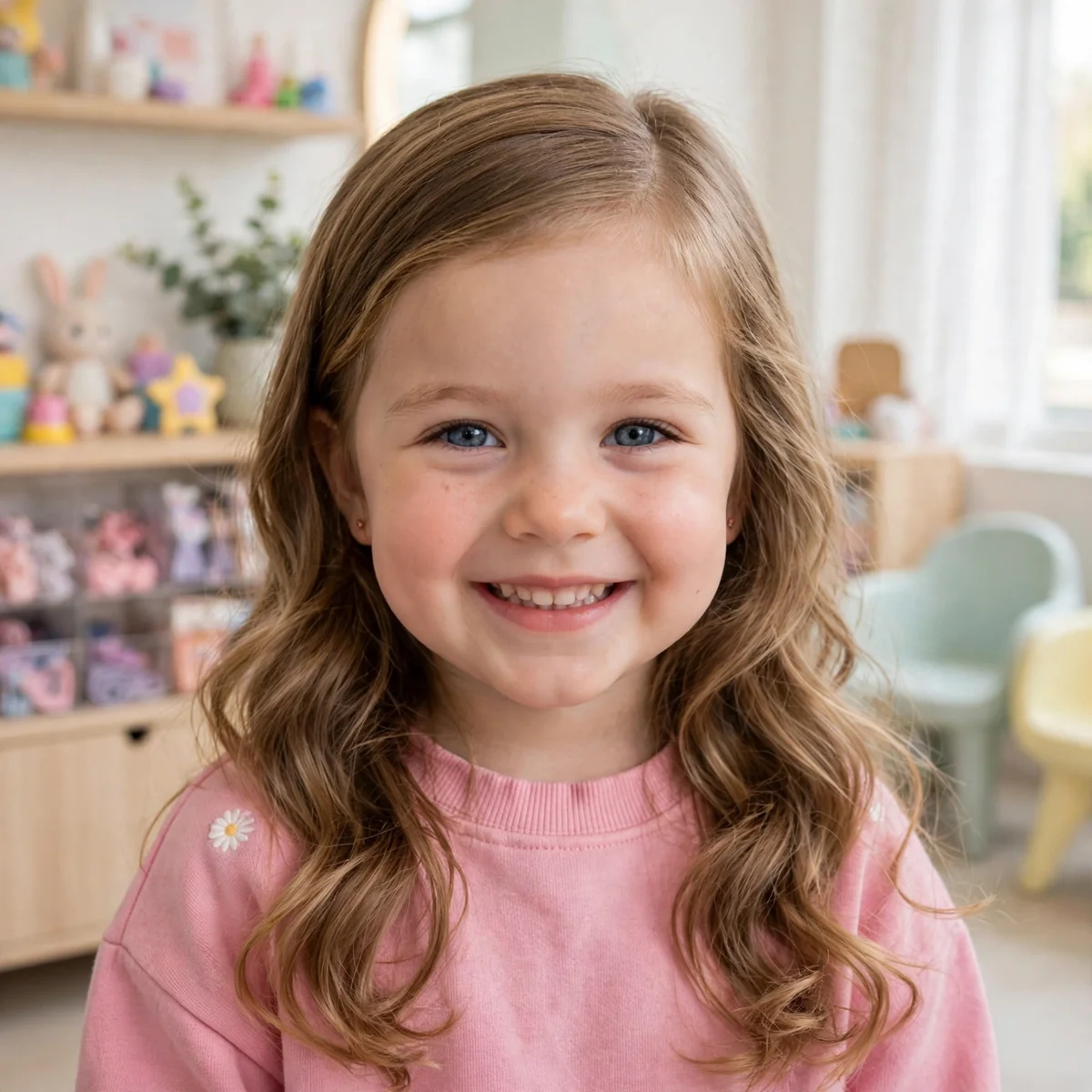
What it is: Long hair shaped to let natural waves form. Light layering follows the wave pattern instead of fighting it.
Best for: Wavy hair that needs room to move. The cut works with the wave, so styling takes seconds.
Ask your stylist: “A long wavy cut with no bangs, please. Light layers that follow her natural wave, side part.”
Style it: Scrunch lightly with a drop of curl cream while damp. Air-dry for soft waves.
Trim note: Every 10 to 12 weeks.
No-Bang Styles by Hair Texture
Hair texture should pick the cut, not the other way around. These five styles match the cut to the hair in the chair.
16. Fine-Hair One-Length Bob
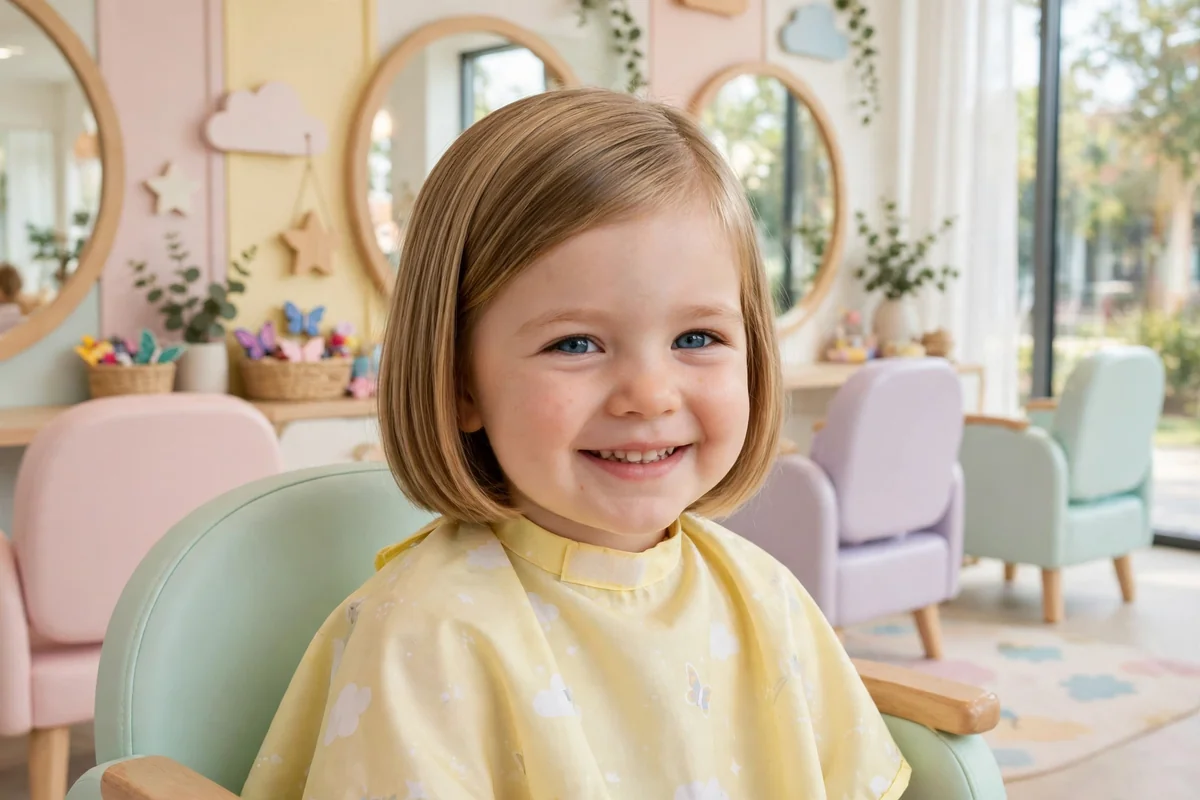
What it is: A one-length bob with no layers at all. The strong edge keeps fine hair looking full from root to tip.
Best for: Fine, straight hair with wispy ends. Skip layers here, since they can make fine hair look thinner.
Ask your stylist: “A one-length bob with no bangs and no layers, please. Blunt edge, side part, chin length.”
Style it: Brush smooth and add a small clip. A pea-size drop of light conditioner keeps it soft.
Trim note: Every 8 to 10 weeks to keep the edge strong.
17. Thick-Hair Layered Bob
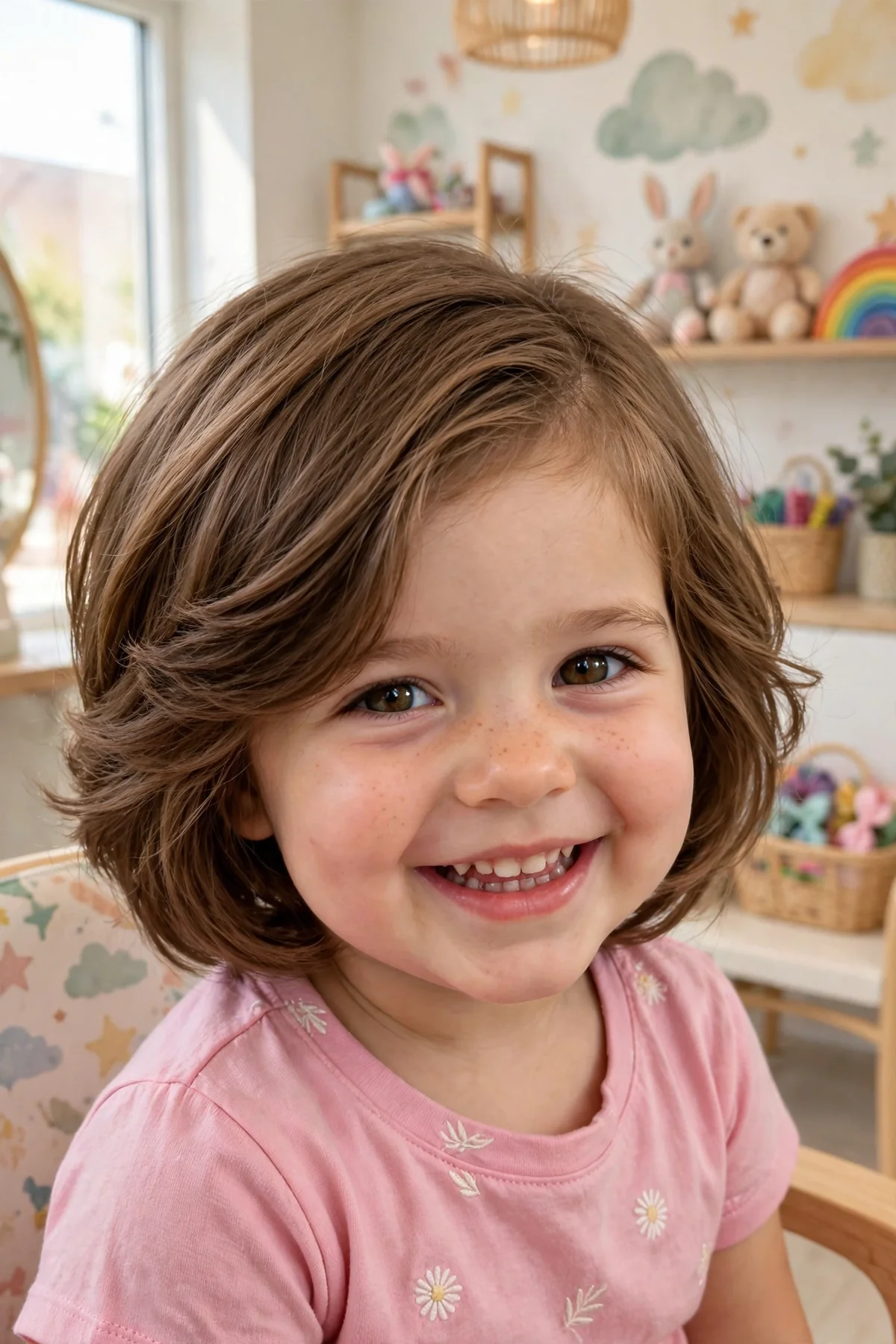
What it is: A bob with soft internal layers that remove bulk. The outside shape stays neat while the inside feels lighter.
Best for: Thick hair that puffs out or feels heavy. Layers make brushing faster and the shape neater.
Ask your stylist: “A layered bob with no bangs, please. Remove weight from underneath but keep the outside shape strong.”
Style it: Brush in sections after washing. A detangling spray saves time on thick hair.
Trim note: Every 8 to 10 weeks.
18. Wavy Bob
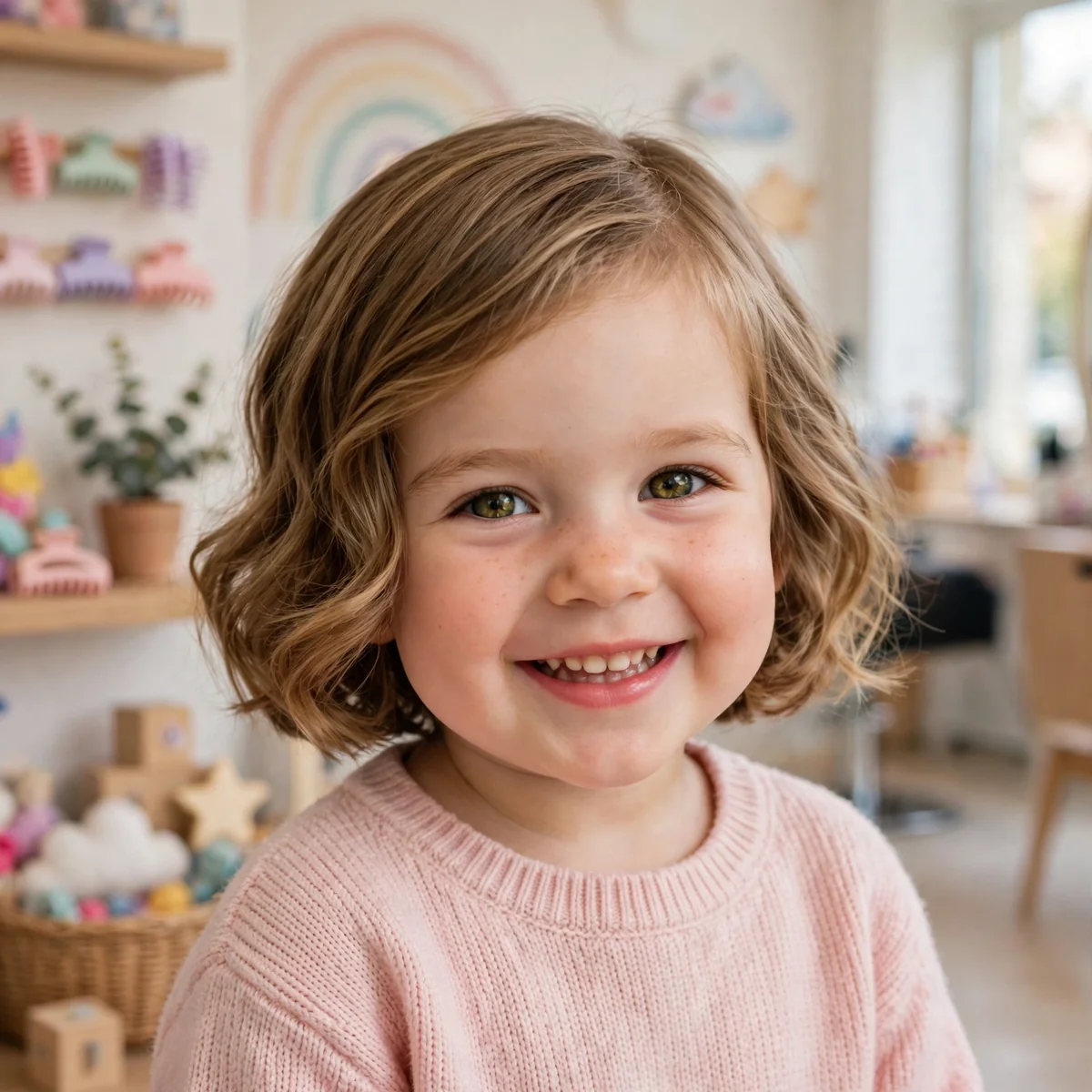
What it is: A bob shaped around the natural wave. The amount of layering matches the wave pattern, so the cut moves on its own.
Best for: Wavy hair that goes flat with a blunt cut and frizzy with too many layers.
Ask your stylist: “A wavy bob with no bangs, please. Light layers that follow her wave, side part, chin to shoulder length.”
Style it: Scrunch while damp and air-dry. A wide-tooth comb, not a brush, keeps waves soft.
Trim note: Every 10 weeks.
19. Curly Bob
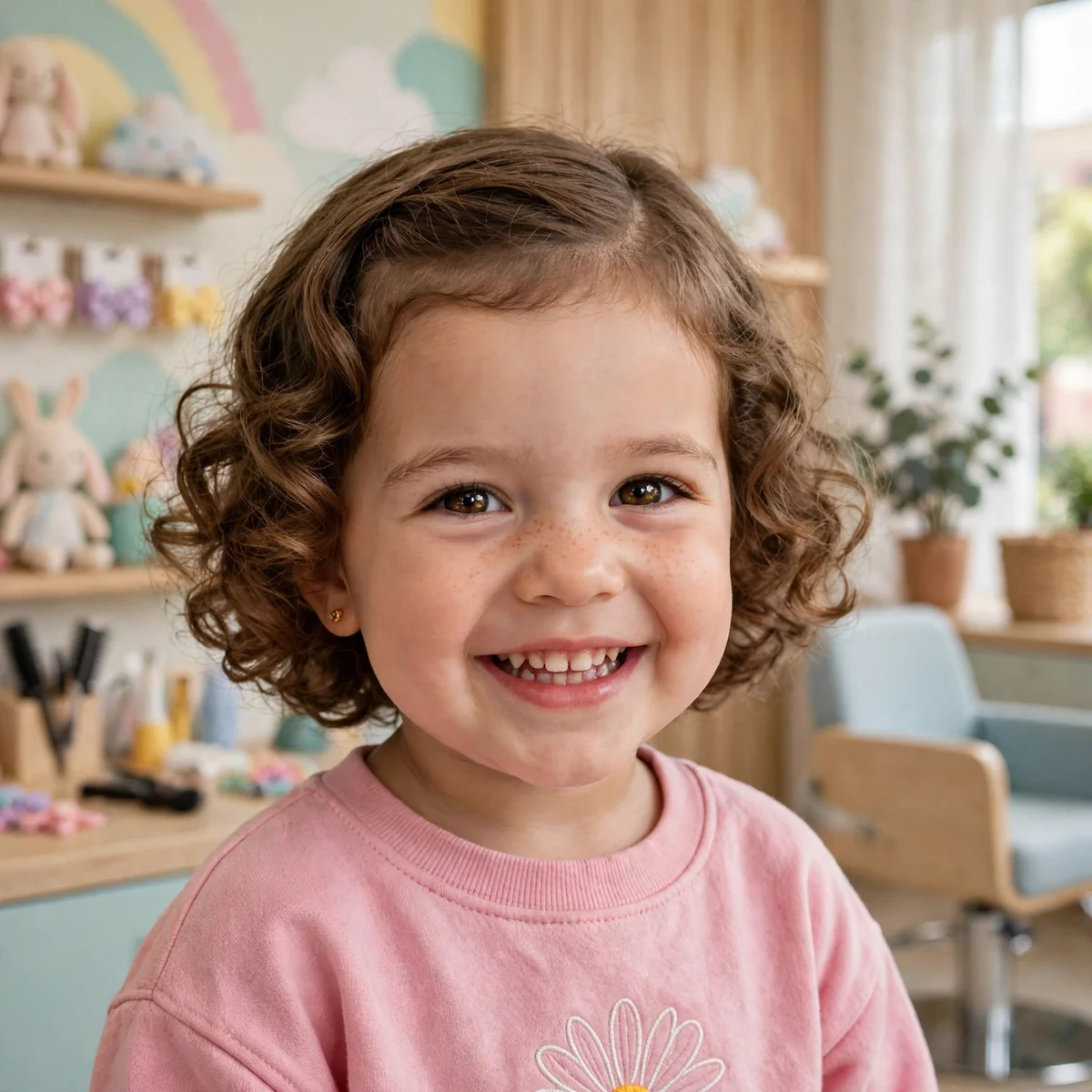
What it is: A rounded bob cut to let curls sit evenly. It needs enough length for shrinkage, so it is shaped dry, curl by curl.
Best for: Curly hair that needs shape without losing bounce. A curly bob is a classic toddler girl haircut for curly hair with no bangs.
Ask your stylist: “A curly bob with no bangs, please. Cut it dry, curl by curl, and keep enough length for shrinkage.”
Style it: Finger-comb with a little curl cream. Never brush curls dry, or they turn to frizz.
Trim note: Every 10 to 12 weeks.
20. Coily Rounded Cut
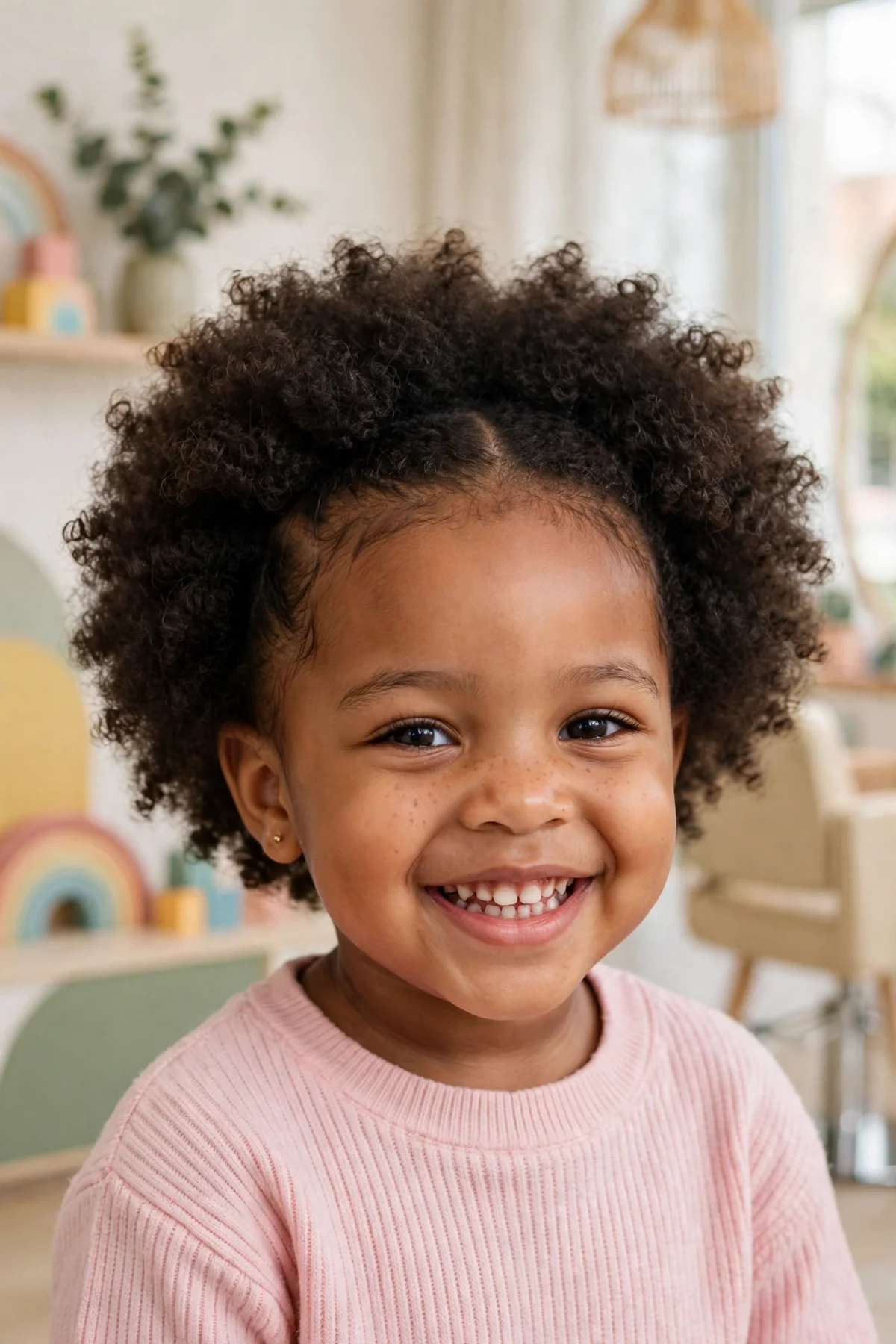
What it is: A soft, rounded shape that honors tight coils. The cut follows the coil pattern and keeps the silhouette even all around.
Best for: Coily hair that needs shape and moisture. Find a stylist who cuts textured hair often.
Ask your stylist: “A rounded cut for her coils with no bangs, please. Shape it dry and keep the silhouette soft and even.”
Style it: Moisturize with a kid-safe leave-in, then finger-shape the coils. A satin pillowcase helps at night.
Trim note: Every 10 to 12 weeks, or when the ends feel dry.
Playful No-Bang Styles: Braids, Ponytails, and Clips
No bangs does not mean no fun. These five styles use ponytails, braids, and clips to dress up a simple no-bang cut.
21. Mini Ponytail Bob
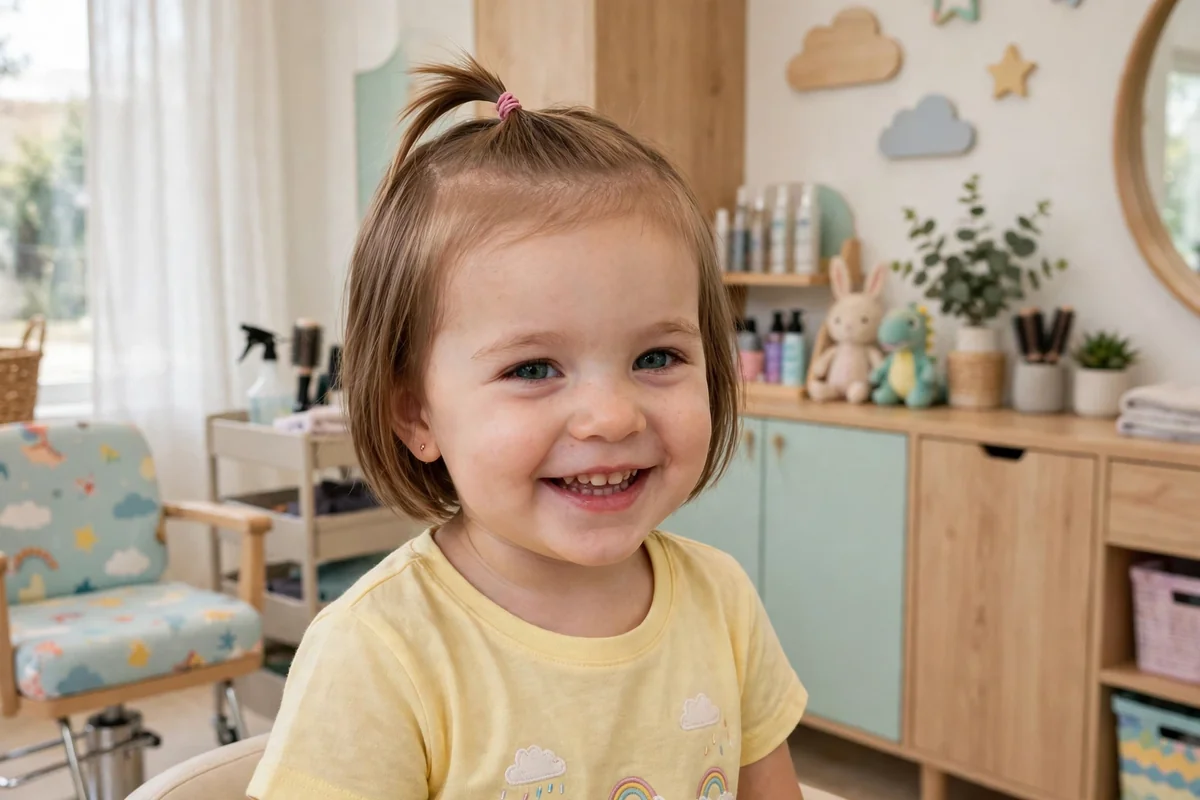
What it is: A chin-length bob with a tiny ponytail on top. The ponytail pulls the front back, so nothing falls in her eyes.
Best for: Playtime and meals. It keeps the front out of the way without any bangs.
Ask your stylist: “A chin-length bob with no bangs, please. Long enough on top for a tiny ponytail.”
Style it: Gather the top section and tie it with a soft, snag-free band. Keep it loose so it never pulls.
Trim note: Every 8 to 10 weeks.
22. Tiny Pigtails Bob
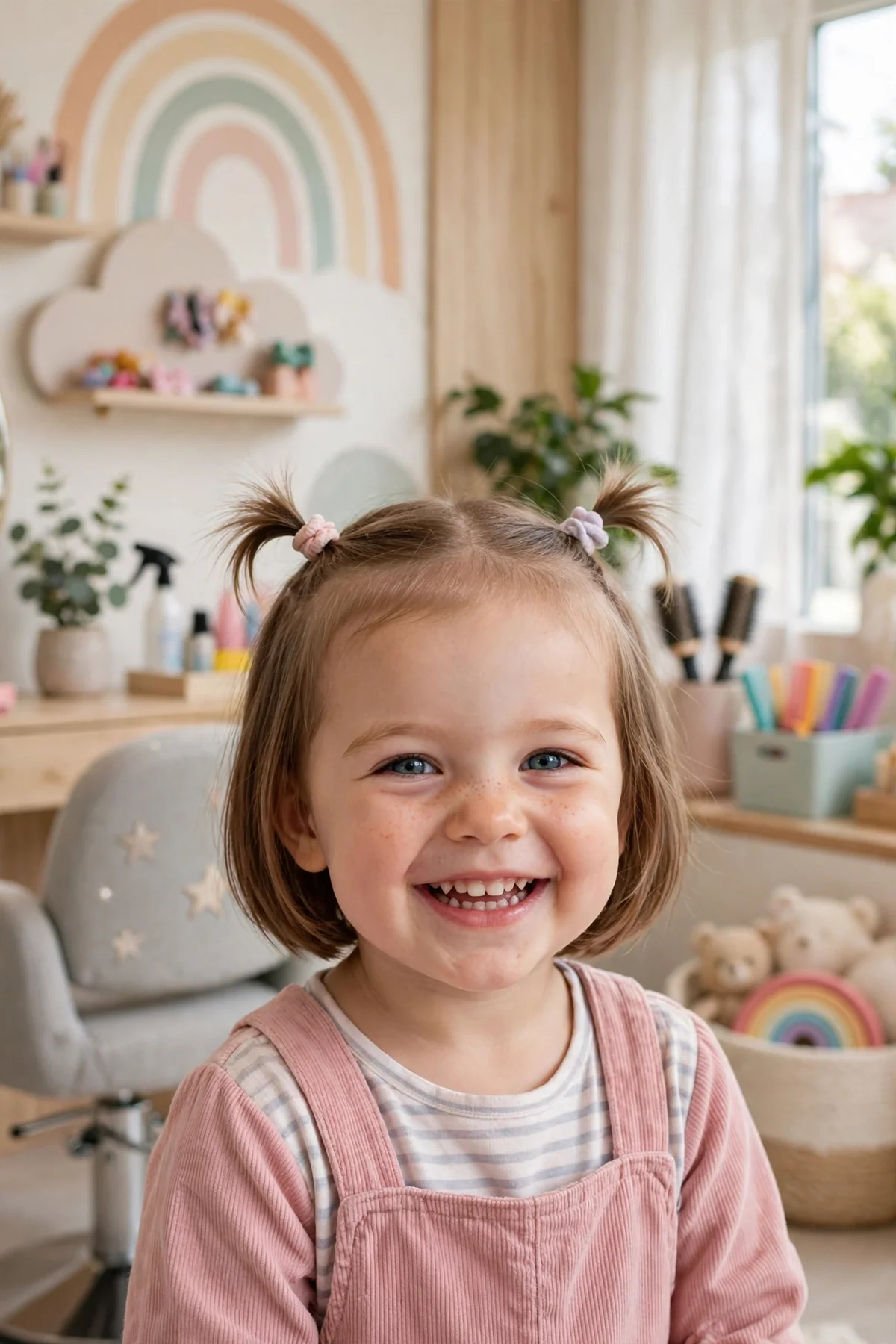
What it is: A short bob worn in two tiny pigtails. It is one of the sweetest toddler girl haircuts without bangs for picture day.
Best for: Short hair that can still tie back, and girls who love bows.
Ask your stylist: “A bob with no bangs, please. Just long enough for two tiny pigtails.”
Style it: Part down the middle, gather each side, and tie with soft bands. Add a small bow if she likes.
Trim note: Every 8 to 10 weeks.
23. Side Braid Bob
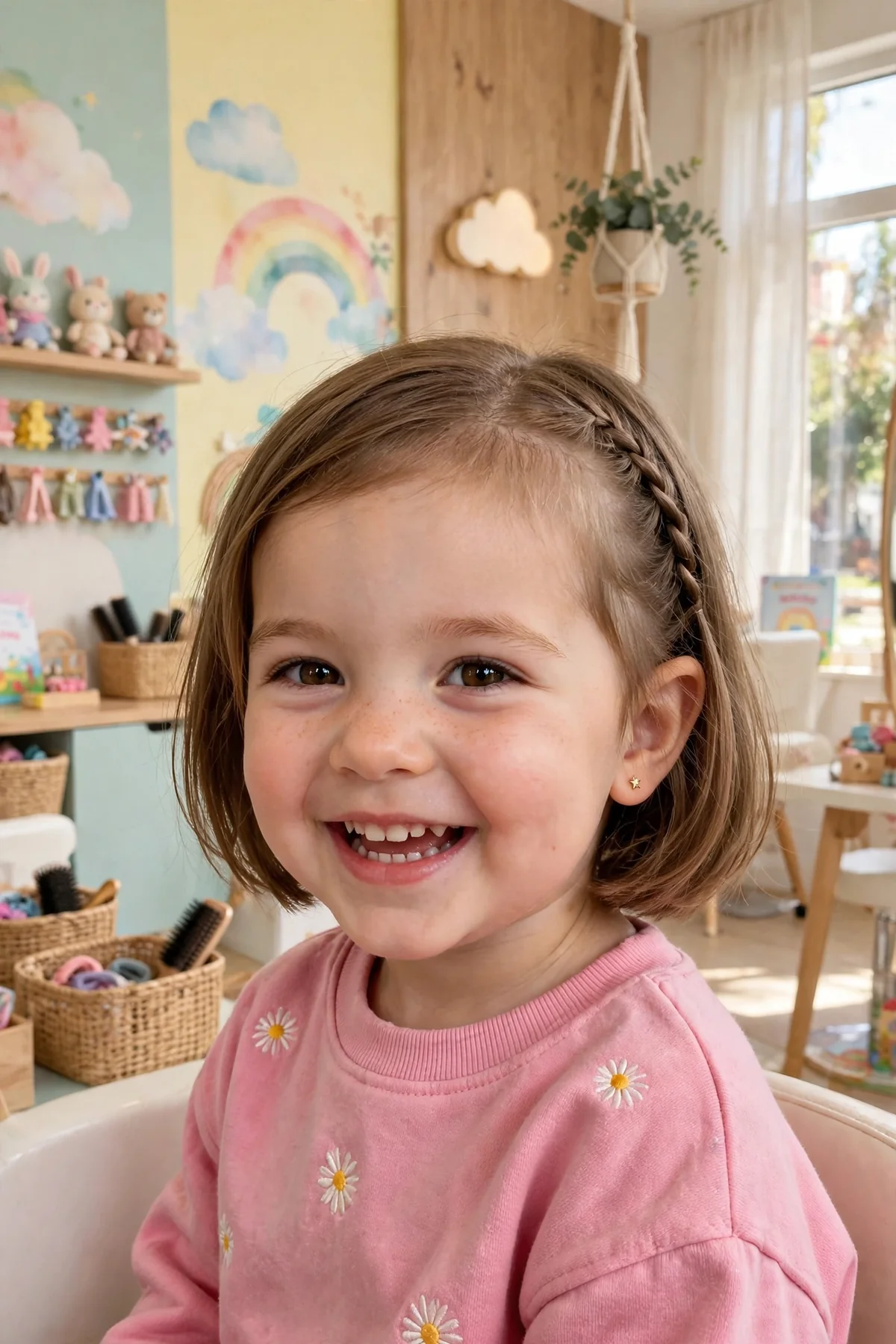
What it is: A bob with one small braid along the side. The braid pulls the front hair back and keeps it out of her face.
Best for: Girls who fidget with loose front hair. The braid does the job of bangs, minus the trims.
Ask your stylist: “A bob with no bangs, please. Keep the front long enough for a small side braid.”
Style it: Braid a small section from the part down to the ear. Secure it with a tiny clear band.
Trim note: Every 8 to 10 weeks.
24. Half-Up Bob
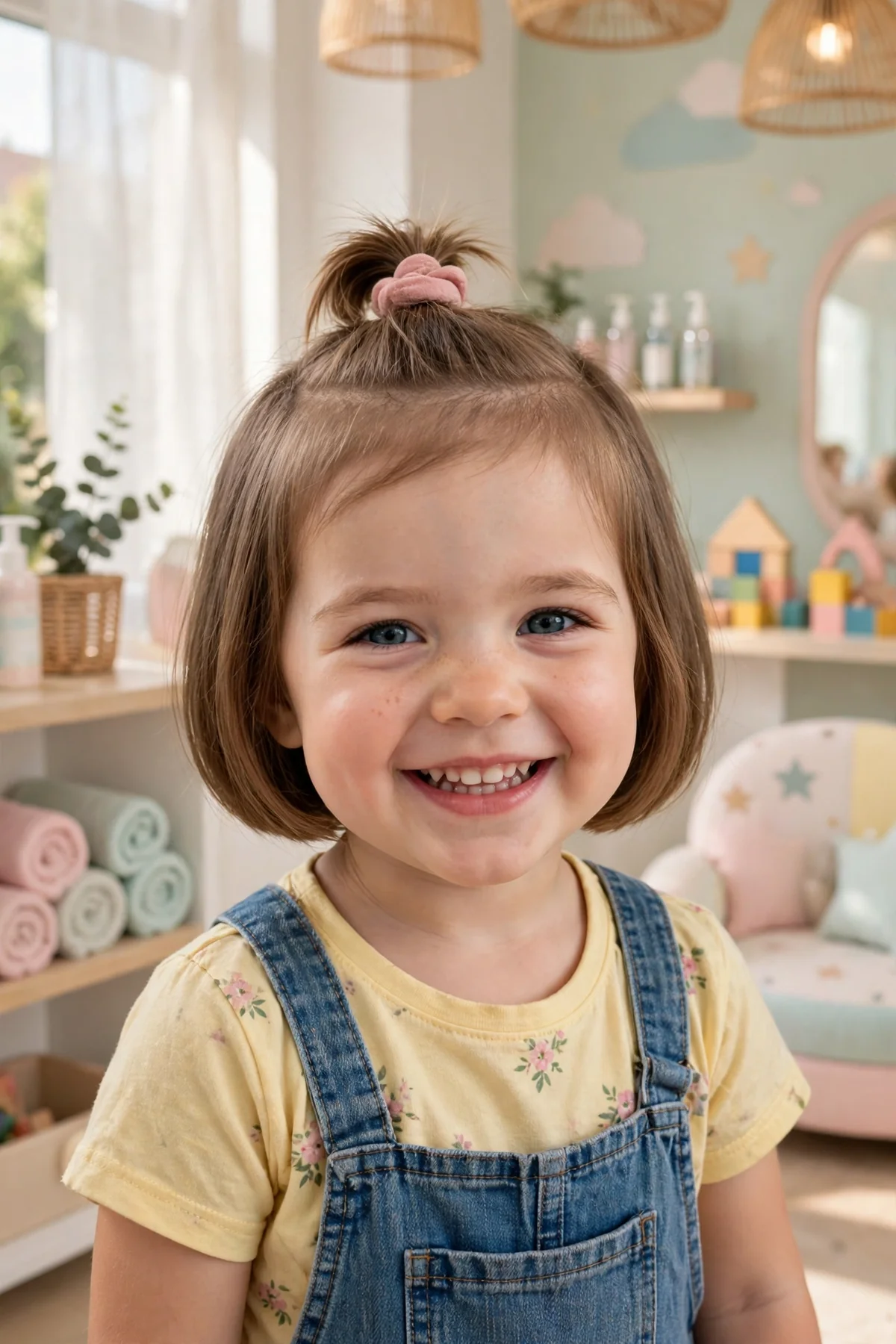
What it is: A bob with the top half pulled back and the rest left down. It is tidy on top and soft below.
Best for: Meals, crafts, and swimming lessons. The top stays back while the bob still shows.
Ask your stylist: “A bob with no bangs, please. Long enough on top for a half-up style.”
Style it: Gather the top half from ear to ear and tie it loosely. A soft band or a clip both work.
Trim note: Every 8 to 10 weeks.
25. Clip-Back Bob
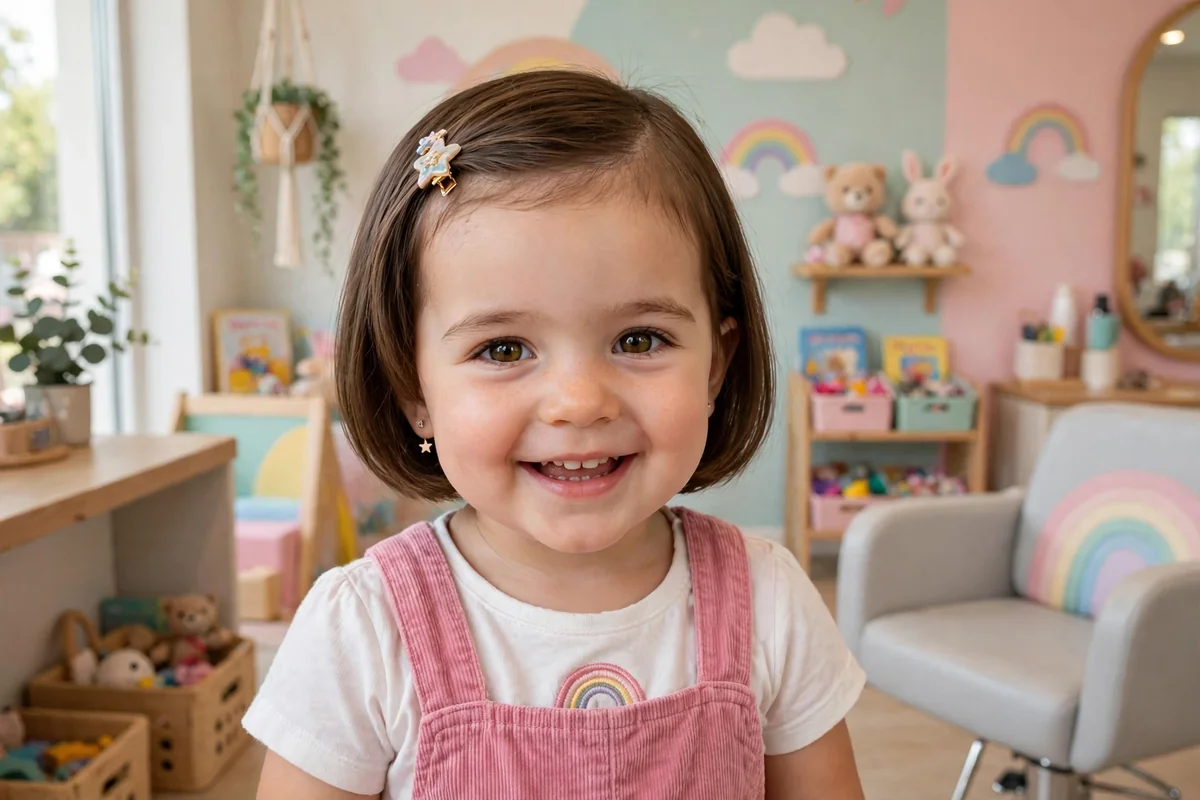
What it is: A bob with the front sections clipped back on each side. Two small clips do all the work.
Best for: Growing out bangs. Clips hold the growing front pieces back while they catch up in length.
Ask your stylist: “A bob with no bangs, please. Keep the front long enough to clip back.”
Style it: Sweep each front section back and clip it flat. Snap clips hold best on fine hair.
Trim note: Every 8 to 10 weeks.
Special Moments and Easy Parts
Some cuts earn their place on photo day, birthdays, and first haircuts. These five cover the moments parents remember.
26. School-Photo Bob
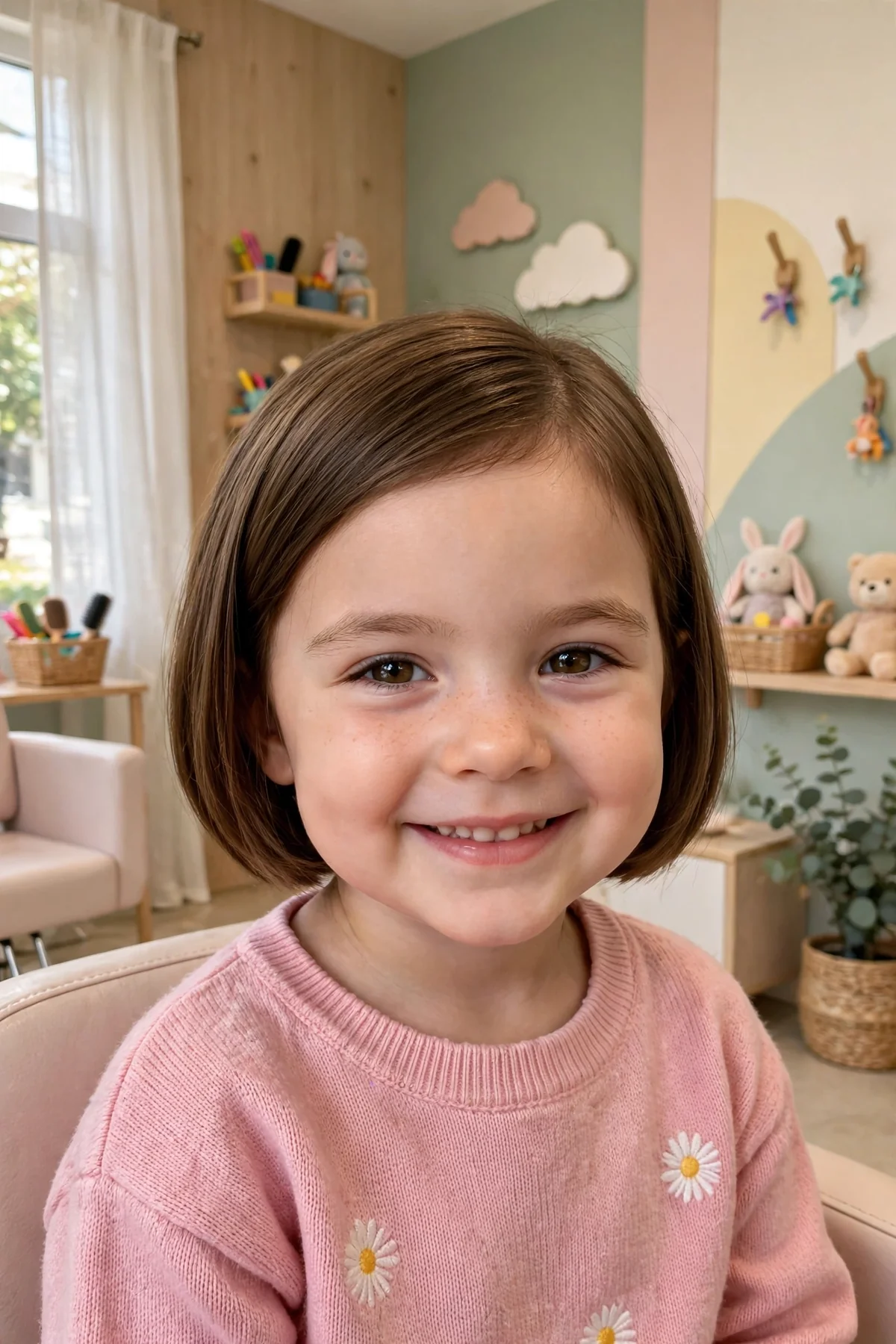
What it is: A neat, smooth bob made for picture day. The line is clean, the part is crisp, and the front stays put.
Best for: School photos and family portraits. Book the trim one to two weeks before photo day so the cut settles.
Ask your stylist: “A neat chin-length bob with no bangs, please. Smooth finish, side part, photo-ready.”
Style it: Brush smooth the morning of the photo. One clip on the heavy side keeps the part crisp.
Trim note: Book 1 to 2 weeks before photo day.
27. Birthday Bob
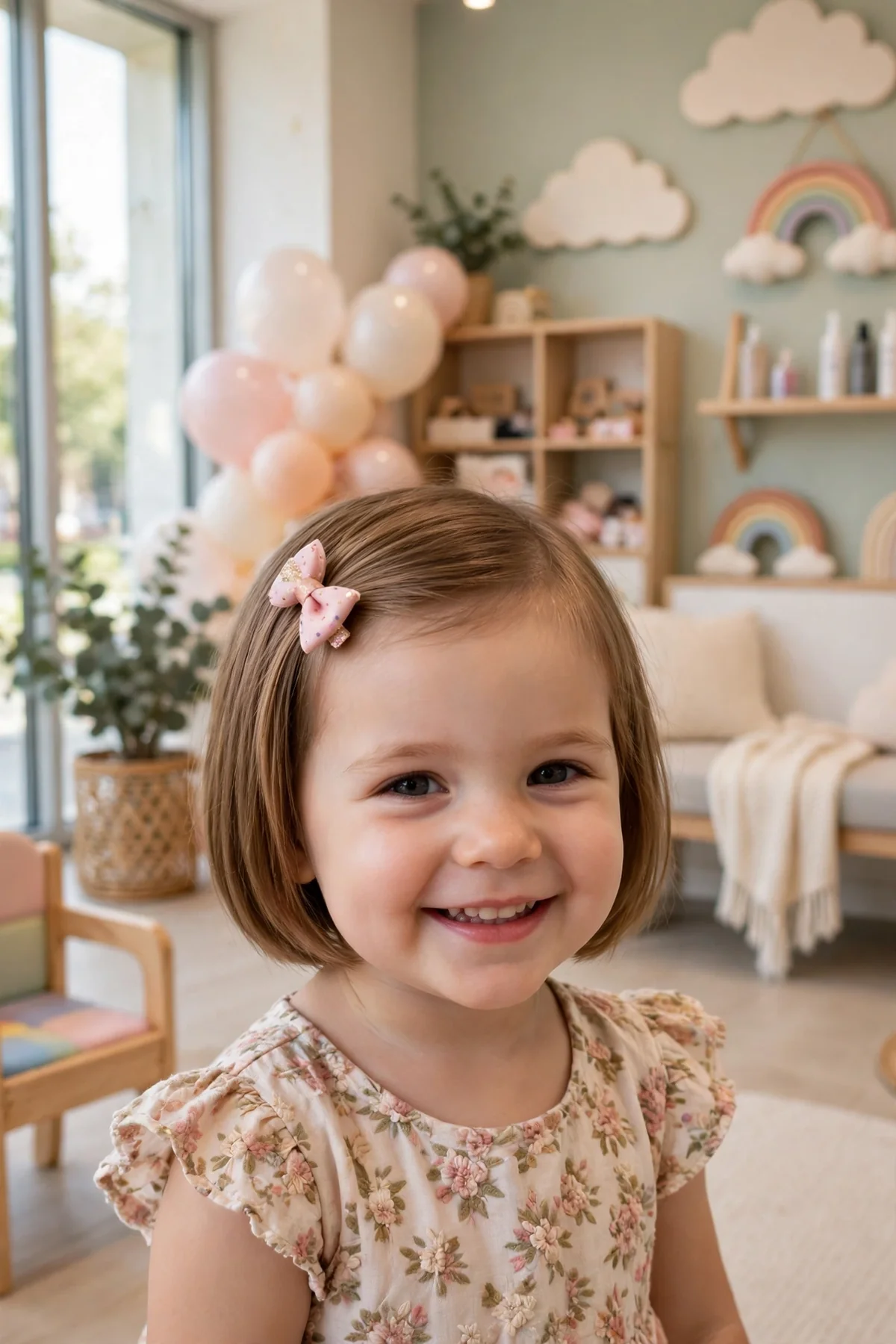
What it is: A bouncy bob with a soft finish and one pretty clip. It looks party-ready with almost no effort.
Best for: Birthday parties and holiday photos. Add a bow clip and the look is done.
Ask your stylist: “A soft bob with no bangs, please. Bouncy ends, side part, easy to dress up with a clip.”
Style it: Brush, add a bow clip, and go. A little detangling spray keeps the ends soft.
Trim note: Every 8 to 10 weeks.
28. Holiday Bob
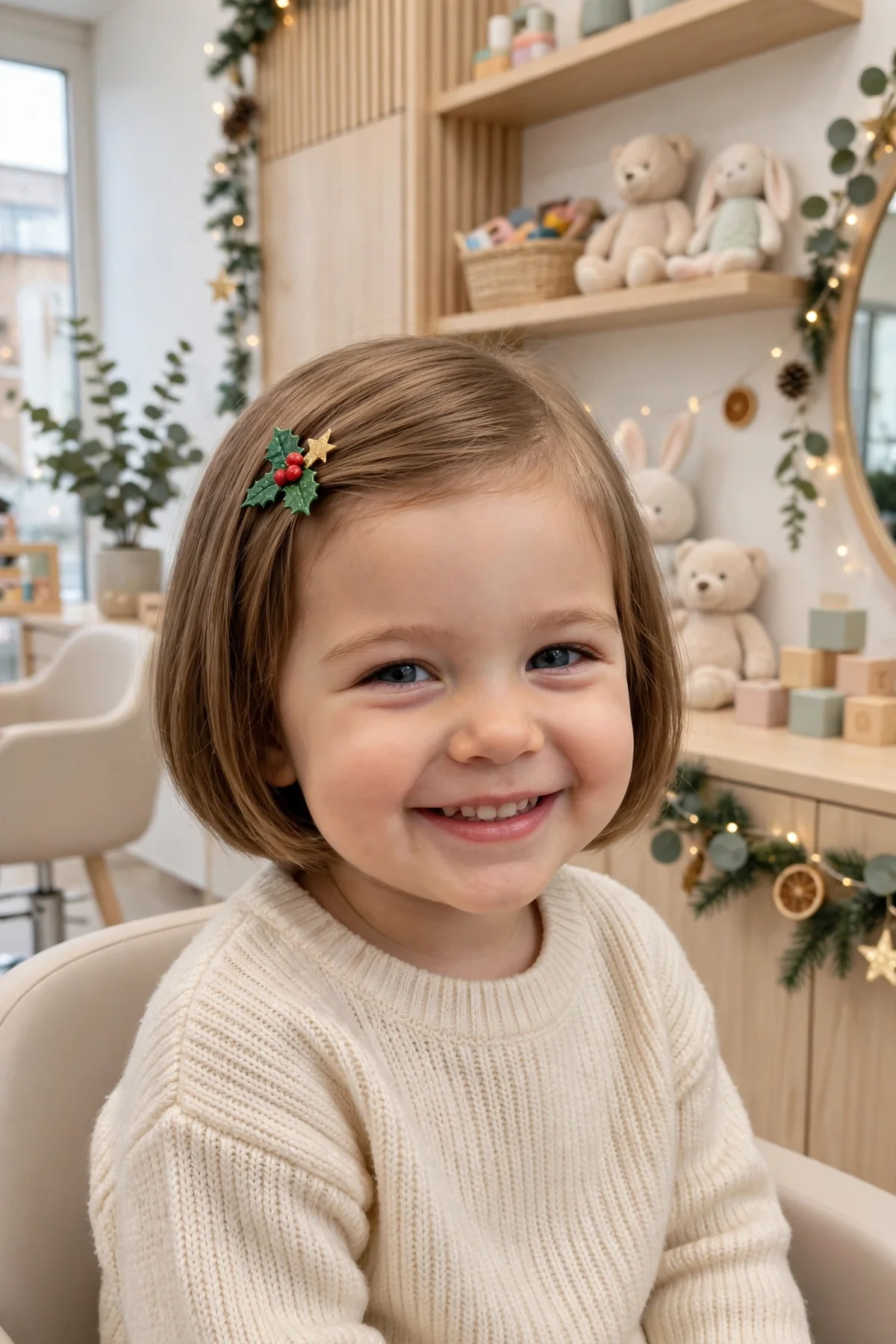
What it is: A polished bob with a neat part and a festive clip. It photographs well and survives a long family day.
Best for: Holiday photos and family gatherings. The clip keeps the front tidy all day.
Ask your stylist: “A polished bob with no bangs, please. Neat side part, smooth finish.”
Style it: Brush smooth, clip the front back, and add a festive bow if she likes.
Trim note: Every 8 to 10 weeks.
29. First-Haircut Trim
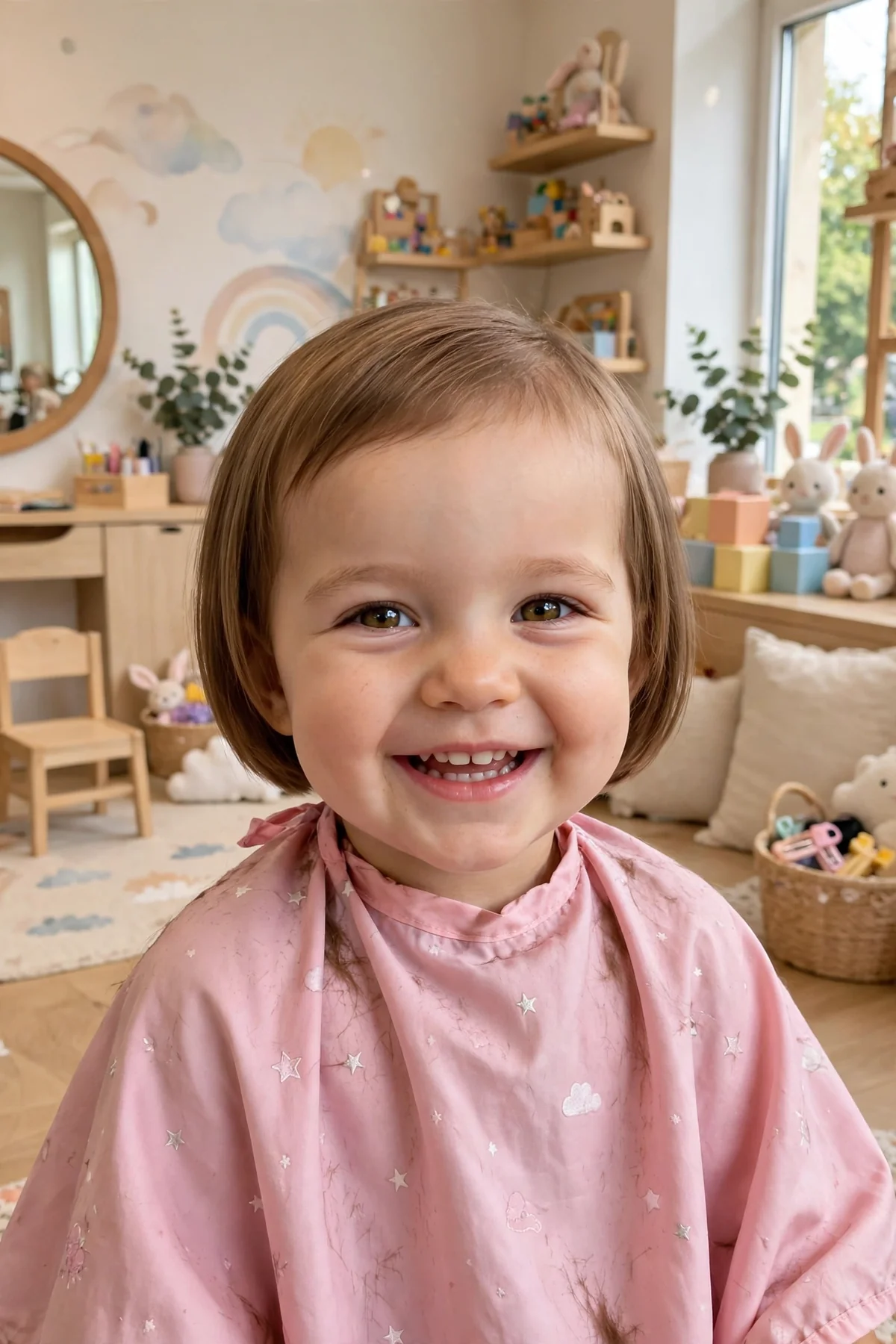
What it is: A light trim that evens out uneven baby hair. The goal is a calm first visit and a cleaner shape, not a big change.
Best for: First haircuts, usually between 18 months and 2 years. It is the gentlest start in this guide.
Ask your stylist: “Just a light trim, please. Even out the ends, no bangs, and keep it quick and calm.”
Style it: Nothing needed. A soft brush after the bath is the whole routine.
Trim note: The next trim can wait 10 to 12 weeks.
30. Pixie Without Bangs
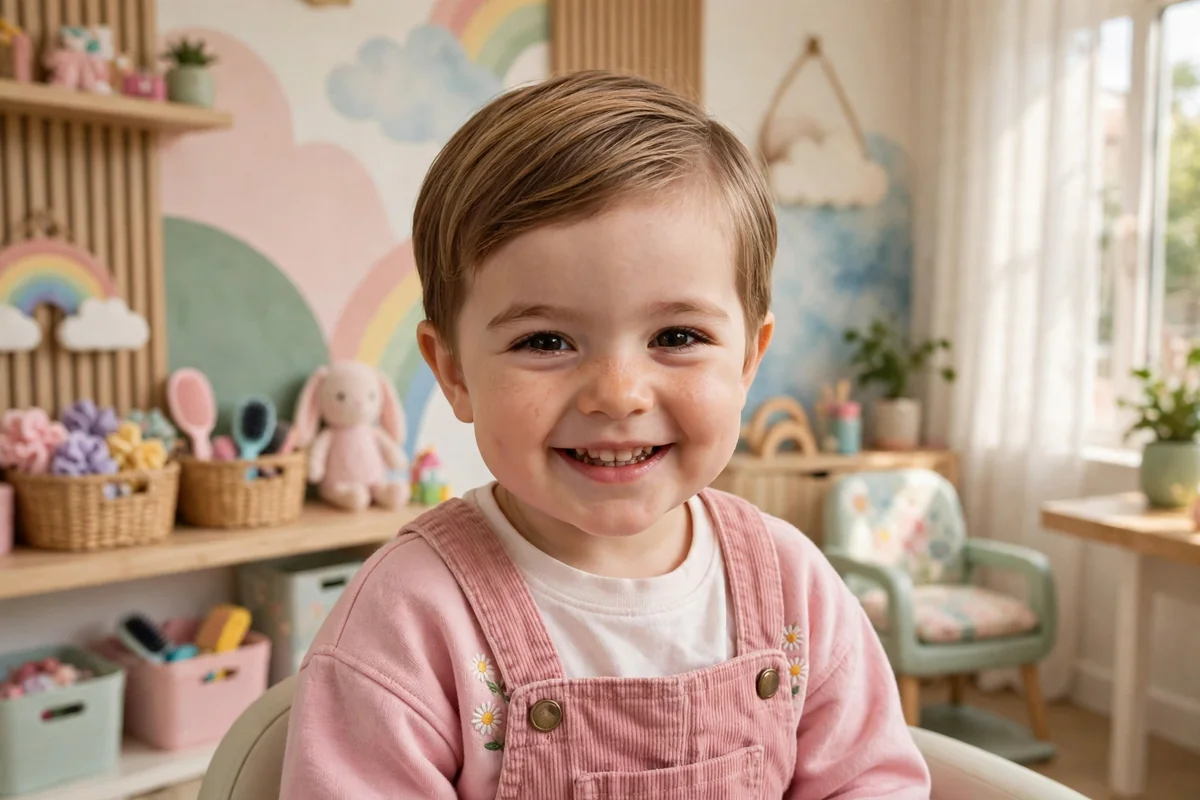
What it is: A short pixie with the top swept to the side. No fringe, no fuss, and almost nothing to brush. For more short pixie ideas, see our toddler girl pixie haircuts guide.
Best for: Very active girls, fine hair, and kids who hate having their hair done. It is the lowest-maintenance style here.
Ask your stylist: “A pixie with no bangs, please. Short on the sides, top swept to the side, soft finish.”
Style it: Finger-comb the top to the side. A tiny bit of water is all it needs.
Trim note: Every 6 to 8 weeks, since short shapes grow out fastest.
How to Keep Hair Out of Her Eyes Without Bangs
Parents ask this more than any other no-bang question. The answer is simple: the part, the clip, and the length do the work.
A side part moves the front hair away from the eyes by itself. Comb the part in while the hair is damp, and it dries right into place. A center part works too, with the front falling to each side.
Snap clips are the easiest tool. Sweep the front section back and clip it flat. They hold best on fine hair and cost almost nothing.
Headbands work for longer front pieces. A soft fabric band keeps the front back without pulling. Pick one she likes, and she will want to wear it.
Face-framing pieces help as well. Slightly shorter pieces near the cheeks pull the eye away from the forehead and keep the front tidy.
For swimming and sports, a low ponytail or a half-up style pulls everything back. No bangs means nothing falls forward when she moves.
How to Pick the Right No-Bang Cut
Three things decide the best cut: length, hair type, and face shape. Match all three and the style picks itself. Every one of these haircuts for toddler girls without bangs follows the same idea: an open forehead, a part that works, and a clip when needed.
By length: Short means bobs and pixies, which dry fast and brush in seconds. Medium means lobs and shoulder cuts, which still tie back. Long means layers and one-length cuts, which suit braids and ponytails.
By hair type: Fine hair loves blunt, one-length edges, which make the ends look full. Thick hair loves soft layers, which remove weight. Wavy hair loves light layers that follow the wave. Curly and coily hair loves rounded shapes cut dry.
By face shape: Round faces suit A-line bobs and longer front pieces, which slim the cheeks. Longer faces suit chin-length bobs, which add width at the cheeks. A side part suits almost every face and hides a cowlick too.
By age: Ages 1 to 2 suit a light trim or a short bob. Ages 3 to 4 suit any bob in this guide. Ages 4 to 5 suit longer cuts, braids, and half-up styles as well.
Quick-Pick Table: All 30 Styles at a Glance
| # | Style | Length | Best hair type | Morning effort |
|---|---|---|---|---|
| 1 | Classic Chin-Length Bob | Short | Fine, straight | Very low |
| 2 | Ear-Length Bob | Very short | All types | Very low |
| 3 | Long Bob (Lob) | Medium | All types | Low |
| 4 | Shoulder-Grazing Bob | Medium | All types | Low |
| 5 | Soft A-Line Bob | Short | Fine, straight | Low |
| 6 | Side-Part Bob | Short | All types | Low |
| 7 | Face-Framing Bob | Short | All types | Low |
| 8 | Rounded Bob | Short | Straight | Low |
| 9 | Stacked Bob | Short | Fine, straight | Low |
| 10 | Textured Bob | Short | Wavy | Low |
| 11 | One-Length Shoulder Cut | Medium | Fine | Low |
| 12 | Long Layers | Long | Thick | Medium |
| 13 | Long Hair with Face-Framing Pieces | Long | All types | Low |
| 14 | Long Straight-Across Cut | Long | Straight, fine | Low |
| 15 | Long Wavy Cut | Long | Wavy | Low |
| 16 | Fine-Hair One-Length Bob | Short | Fine | Very low |
| 17 | Thick-Hair Layered Bob | Short | Thick | Medium |
| 18 | Wavy Bob | Short | Wavy | Low |
| 19 | Curly Bob | Short | Curly | Low |
| 20 | Coily Rounded Cut | Short | Coily | Low |
| 21 | Mini Ponytail Bob | Short | All types | Low |
| 22 | Tiny Pigtails Bob | Short | All types | Low |
| 23 | Side Braid Bob | Short | All types | Medium |
| 24 | Half-Up Bob | Short | All types | Low |
| 25 | Clip-Back Bob | Short | Fine | Low |
| 26 | School-Photo Bob | Short | All types | Low |
| 27 | Birthday Bob | Short | All types | Low |
| 28 | Holiday Bob | Short | All types | Low |
| 29 | First-Haircut Trim | Short | All types | Very low |
| 30 | Pixie Without Bangs | Very short | Fine | Very low |
How to Style These Haircuts
Styling a toddler girl haircut without bangs takes minutes. Follow these six steps every morning.
- Brush gently. Start at the ends and work up. A wide-tooth comb or a soft detangling brush works best on toddler hair.
- Spray if needed. A light mist of detangling spray loosens knots without weighing the hair down.
- Set the part. Comb the side part or center part in while the hair is slightly damp. It will dry right into place.
- Sweep the front back. Brush the front sections back and away from her eyes. Let them fall to the sides.
- Clip or tie. Add one snap clip on the heavy side, or pull the top into a mini ponytail for playtime.
- Check the eyes. Ask her to look up. If any hair touches her eyes, clip it back and you are done.
The 2-Minute Morning Routine
Busy mornings need a routine that fits in two minutes. Here is the one that works for most no-bang cuts in this guide.
Minute one: brush from the ends up, then set the side part with a quick comb. Minute two: sweep the front back, add one clip, and check her eyes. That is the whole routine.
On wash days, add 30 seconds for a light detangling spray. On curly days, finger-comb with a drop of curl cream instead of brushing. Keep the clips in a small cup by the mirror so they are always in reach.
Keeping Your Toddler Calm in the Chair
A calm toddler means a better haircut. Book the visit when she is rested and fed, not tired or hungry.
Bring a small toy or a tablet to hold her attention. Let her sit on your lap if the salon allows it. Talk her through each step in a calm voice.
Show the stylist a photo of the style you want before the cut starts. Agree on the length together, and ask the stylist to cut a little at a time. A first cut should be short and sweet, never rushed.
If she gets upset, pause. A snack, a short break, or a hug can save the visit. The haircut can wait a few minutes.
7 Mistakes to Avoid with No-Bang Toddler Cuts
- Cutting the front too short. Short front pieces fall into her eyes and cannot be clipped back. Keep the front at cheek length or longer.
- Skipping the part. Without a part, the front falls straight forward. Always set a side or center part.
- Over-layering fine hair. Lots of layers can make fine hair look thin. Keep fine hair blunt and one-length.
- Brushing curls dry. A dry brush turns curls into frizz. Finger-comb curls with a little cream instead.
- Using adult products. Adult shampoos and gels can irritate a toddler’s scalp. Use tear-free, kid-safe products only.
- Waiting too long between trims. Split ends tangle fast on little girls. Stick to the trim schedule for her style.
- Forcing a style she hates. If she pulls clips out or hates the part, try another option. A happy child wears the cut better.
Trim Cadence and Cost
| Style group | Trim every | Typical US cost |
|---|---|---|
| Short bobs and pixies | 6 to 10 weeks | $20 to $35 |
| Medium bobs and lobs | 8 to 12 weeks | $20 to $35 |
| Long hair and layers | 10 to 12 weeks | $25 to $40 |
| Curly and coily cuts | 10 to 12 weeks | $30 to $45 |
| First-haircut trim | 10 to 12 weeks | $15 to $25 |
Prices vary by city and salon. Kids’ salons often charge less than adult salons, and many offer a first-haircut package with a keepsake lock of hair and a photo.
Growing Out Bangs? A Simple Plan
If your little one has bangs now and you want to grow them out, expect it to take a few months. The front needs time to reach cheek length, where it can blend into the rest of the cut.
Start with the clip-back bob. Sweep the growing fringe back and clip it flat each morning. Snap clips hold fine hair best, and a soft headband works for thicker hair.
Ask your stylist to blend the fringe into the front pieces at each trim. The stylist can angle the growing bangs into face-framing pieces so they look planned, not grown out.
Keep trims on schedule. Regular trims stop split ends and keep the shape neat while the front catches up. In a few months, the bangs will be gone and the no-bang cut will be complete.
Kid-Safe Products for No-Bang Styles
Keep products simple. A tear-free shampoo, a light conditioner or detangling spray, and a wide-tooth comb cover almost every style in this guide. Gentle hair care matters most on young scalps, so skip anything with harsh scents or strong chemicals.
For curly and coily hair, add a kid-safe leave-in conditioner or a small drop of curl cream. Use it sparingly so the curls stay bouncy, not weighed down.
Skip heat tools entirely. No blow-dryer on high heat, no flat iron, no curling iron. Toddler hair dries fast on its own and stays healthier without heat.
Pick soft, snag-free hair bands and smooth snap clips. Tight bands can pull and hurt, and rough clips can snag fine hair.
Trimming at Home: What Parents Can Do
Small trims at home are fine for simple jobs, like evening out the ends of a long cut. Use sharp hair-cutting scissors, never kitchen scissors, and cut tiny amounts at a time.
Cut the hair dry so you can see where it really falls. Wet hair looks longer than it is, and it is easy to cut too much. Stop if she wriggles or gets upset.
Leave precise shapes to a professional. Bobs, A-lines, stacks, and pixies need a trained eye and a steady hand. A home trim should only tidy the ends, never reshape the cut.
If a home trim goes wrong, do not keep cutting to fix it. Book a salon visit and let the stylist even it out.
Related Keywords for Toddler Girl Haircuts Without Bangs
Parents search for this topic in many ways. A toddler girl bob without bangs is the most common ask, and a toddler girl haircut no bangs is the simplest way to say it. A little girl haircut without bangs covers the same idea for slightly older girls, while a toddler girl no fringe haircut is how many parents describe skipping the fringe.
A toddler girl bob no bangs suits first haircuts and fine hair, and an easy toddler girl haircut is what busy mornings need most. A low maintenance toddler girl haircut is the goal for most families in this guide, and a toddler girl haircut for fine hair needs a blunt edge to look full.
A toddler girl haircut that keeps hair out of eyes is the real test of any no-bang style, and a toddler girl haircut for growing out bangs helps families move past the fringe phase. A toddler girl haircut with side part uses the part to do the work of bangs, and a toddler girl haircut for curly hair needs a rounded shape cut dry.
Frequently Asked Questions About Toddler Girl Haircuts Without Bangs
Why should I choose a toddler girl haircut without bangs?
No bangs means fewer trims, calmer mornings, and a graceful grow-out. Bangs need trims every 4 to 6 weeks and can bother a child who hates hair on her forehead. A no-bang cut holds its shape for 8 to 12 weeks and stays out of her eyes with a simple part and one clip.
How do I keep hair out of my toddler’s eyes without bangs?
Set a side part while the hair is damp, sweep the front back, and add one snap clip on the heavy side. For longer front pieces, a soft headband or a half-up style works too. Keep the front at cheek length or longer so it can be clipped back.
If you want more ideas for styles that frame the face without a fringe, see our guide to toddler girl haircuts with face framing layers.
What is the best no-bang haircut for fine toddler hair?
A one-length bob with a blunt edge is best for fine hair. The strong edge makes the ends look full, and skipping layers keeps the hair from looking thin. The classic chin-length bob and the fine-hair one-length bob in this guide are both great picks.
Can a toddler girl with curly hair go without bangs?
Yes. A curly bob or a coily rounded cut works well with no bangs. The curls frame the face on their own, and the forehead stays clear. Cut the shape dry, curl by curl, and finger-comb with a little curl cream instead of brushing.
For more curly options, see our toddler girl curly bob haircuts guide.
When should I add bangs later if we skip them now?
You can add bangs any time her hair is long enough and she wants them. Many parents wait until age 4 or 5, when a child can sit still for fringe trims and tell you if the hair bothers her. Until then, a no-bang cut keeps things simple.
If you do want fringe styles later, our guides to toddler girl haircuts with blunt bangs and toddler girl haircuts with wispy bangs cover the gentlest options.
How old should my toddler be for her first no-bang haircut?
Most girls are ready between 18 months and 2 years, when the baby hair has thickened and the ends look uneven. A light first-haircut trim is enough at that age. A full bob can wait until age 2 or 3, when she can sit in the chair for a few minutes.
For a full list of first-cut ideas, see our toddler girl haircut ideas guide.
Conclusion
A toddler girl haircut without bangs is one of the easiest choices a parent can make. It looks sweet, it stays out of her eyes, and it asks almost nothing of busy mornings. Pick a length she likes, match the cut to her hair type, and let the part and one clip do the work.
Start with a classic bob if you want simple, try long layers if she loves her length, or go for a pixie if she hates brushing. Show your stylist the photo, say the words from this guide, and enjoy a cut that grows out gracefully. The right no-bang style is the one she feels happy wearing.
📌 Pin now, read later — save this guide for your next salon visit!

Reviewed by Daniel Morgan
Daniel Morgan is the Founder and Editorial Director of Barber’s Groom. He oversees the editorial review of the guides on this site, checking each one for accuracy, clarity, and practical value before it reaches readers.