30 Best Julius Caesar Haircuts for Men That Look Sharp and Timeless
Reviewed by Daniel Morgan
Some haircuts come and go with the seasons. The julius caesar haircut is not one of them. It has survived emperors, empires, and every trend cycle since ancient Rome. A man walked into a barbershop two thousand years ago with this cut, and men still walk in asking for it today.
What makes it last? It is simple, sharp, and honest: short hair on top, brushed straight forward, a clean straight fringe, and short sides and back. No fuss, no long morning routine.
This guide covers the julius caesar haircuts that work best right now: 30 modern versions of the emperor’s cut, the exact words to say to your barber for each one, and clear styling tips. We also cover face shapes, thinning hair, fades, costs, and mistakes to avoid.

What Is a Julius Caesar Haircut?
A caesar haircut is a short men’s style built on one clear rule. The hair on top is cut to one even, short length, usually between half an inch and two inches. Then it is brushed straight forward to form a short, straight fringe across the forehead.
The sides and back stay short too. They can match the top, taper gently, or fade into the skin. The fringe is the star: straight across, never swept up, never parted.
The cut is named after Gaius Julius Caesar, the Roman general and ruler. His busts and coins show the same shape: short hair, combed forward, with a straight line across the brow.
A modern caesar haircut keeps that Roman shape but adds textured tops, skin fades, sharp line-ups, and soft tapers. The bones stay the same.
The Julius Caesar Haircut: A History
The story starts with a problem every man knows. Julius Caesar was losing his hair at the front, and in Rome that was seen as a flaw. So he grew the hair on top just long enough to comb it forward over the thin spots.
The forward comb created a straight fringe that hid the hairline. It looked neat, strong, and deliberate, and soon the whole Roman world copied it.
Centuries later, the cut kept coming back. Marlon Brando played the emperor himself on film, fringe and all, and George Clooney made it famous again in the nineties.
Today the caesar haircut for men is a barbershop staple. It suits the office, the gym, and a night out, and it still does the job it was born to do: it makes a receding hairline look like a style choice. You can read more about the man behind the cut on Wikipedia’s Julius Caesar page.
Why the Fringe Is Straight
The straight fringe is the whole point of the cut. A straight line across the forehead creates a new, clean hairline and softens one that has started to move back.
Other short cuts push hair up or to the side, which shows the hairline. The Caesar does the opposite: it brings hair forward and lays it flat.
The fringe also keeps the cut simple: no part, no volume, no cowlick to fight. A short caesar haircut takes about a minute to style.
Julius Caesar vs Classic Caesar vs Textured Crop vs Buzz Cut
Men mix these cuts up all the time. They look close, but they feel very different in the chair.
| Cut | Top length | Fringe | Sides | Best for |
|---|---|---|---|---|
| Julius Caesar haircut | Half inch to 2 inches, even | Straight across, brushed forward | Short, tapered or faded | Receding hairline, classic Roman look |
| Classic Caesar haircut | About 1 inch, even all over | Straight across, brushed forward | Same length as top | Low upkeep, timeless simple style |
| Textured crop | 1 to 3 inches, choppy layers | Textured, piece-y, often longer | Faded or undercut | Thick hair, modern messy finish |
| Buzz cut | Under half an inch, one guard | None at all | Same short length | Zero styling, strong jawlines |
The Julius Caesar is the true Roman original: ruler-straight fringe, even top. The classic Caesar is nearly the same cut with a softer finish. A textured crop adds choppy layers and a longer fringe. A buzz cut drops the fringe entirely.
If you want history and a clean hairline, pick the Julius Caesar. If you want zero styling, pick the buzz. If you want texture, look at a textured crop haircut. Our general Caesar haircut guide covers the wider family.
The Emperor’s Originals: Classic Julius Caesar Haircuts
These five cuts stay closest to the original Roman shape: short, even, and straight across.
1. The Original Roman Caesar
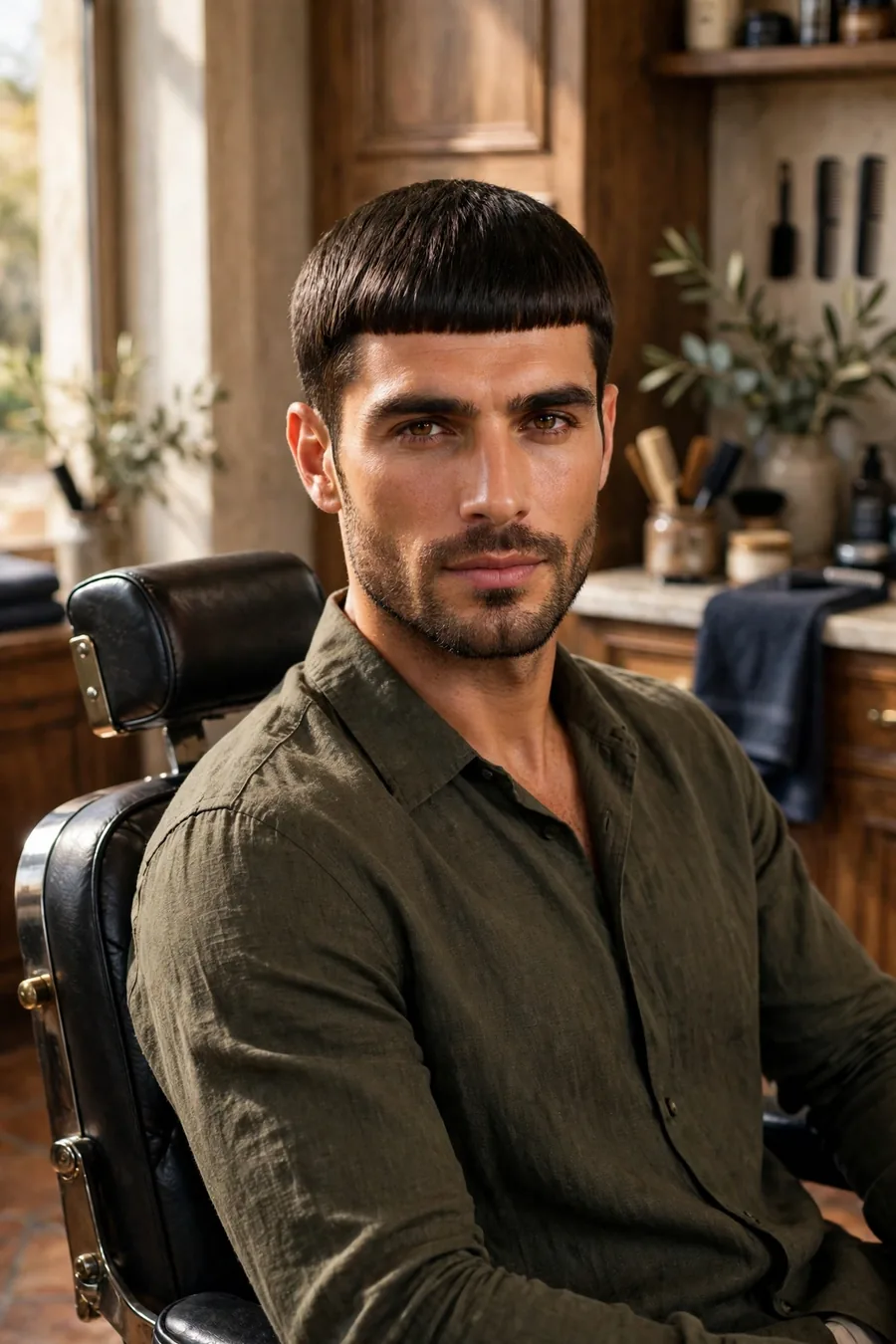
What it is: The cut as Julius Caesar wore it. One even length all over, about an inch on top, with a straight fringe brushed forward. No fade, no taper, no drama.
Best for: Men who want the true Roman look and the lowest upkeep of any Caesar. It suits oval and square faces best.
Ask your barber: “Give me the original Roman Caesar. One inch all over, scissor cut, straight fringe forward. No fade, just clean around the ears and neckline.”
Style it: Towel dry, comb forward, and add a pea-sized dab of light cream. Done in under a minute. Upkeep: Trim every 3–4 weeks.
2. Emperor’s Laurel Caesar
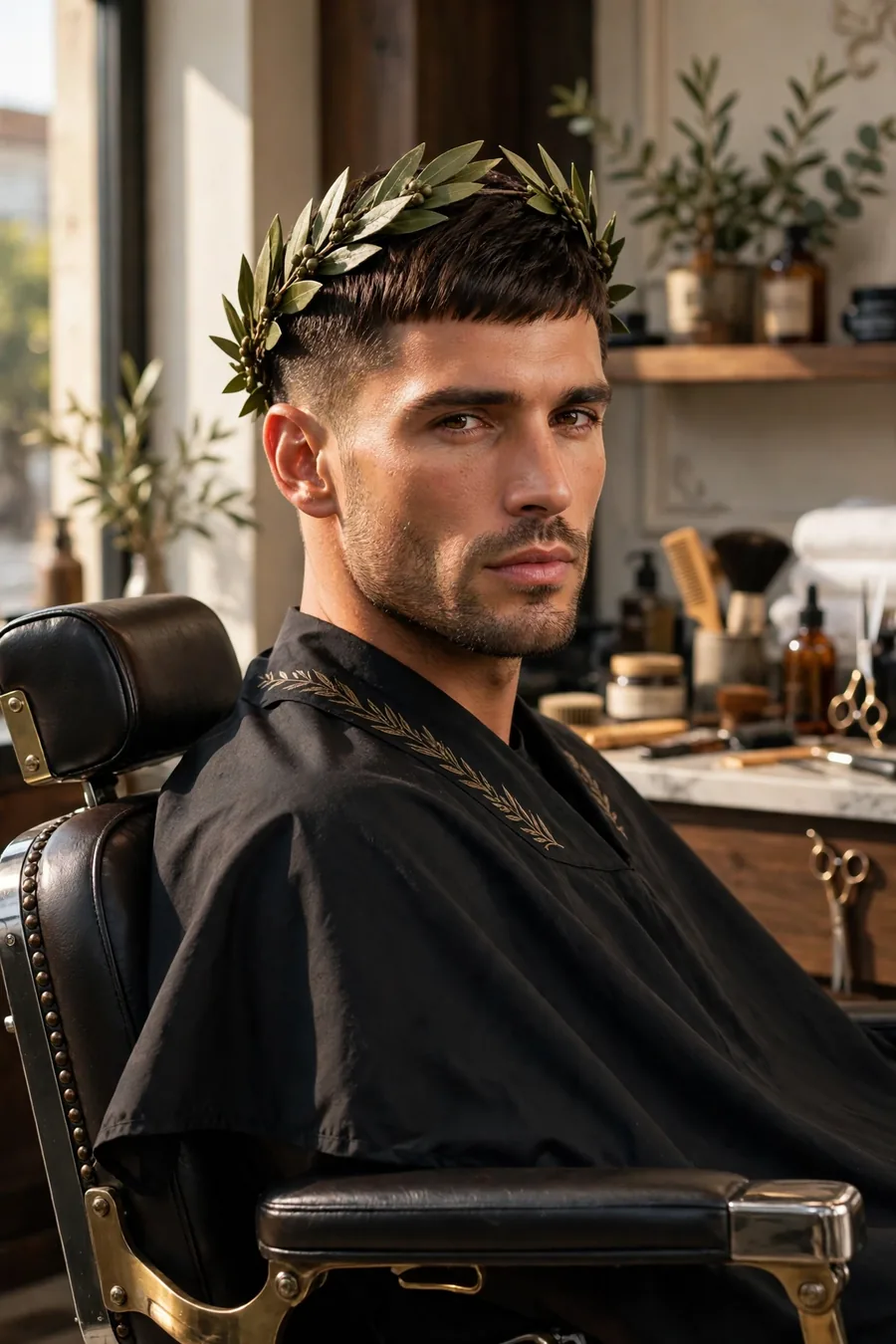
What it is: A neat, regal take on the Roman original. The fringe sits a touch longer, like a laurel crown line across the brow, with softly tapered sides.
Best for: Men who want a polished, statesman-like finish. Great for the office and formal days.
Ask your barber: “Laurel Caesar for me. Top about an inch and a quarter, fringe straight across, soft taper on the sides and back.”
Style it: Comb forward while damp with a little light pomade for a clean sheen. Upkeep: Trim every 3 weeks to keep the fringe line sharp.
3. Marble Bust Caesar

What it is: A very short, sculpted Caesar that looks carved, not cut. The top is under an inch, even all over, with a crisp straight fringe edge.
Best for: Men with strong features and thick hair. The short length sharpens the jaw and cheekbones.
Ask your barber: “Marble bust Caesar. Number 3 guard on top, about three-eighths of an inch, straight fringe, clean edges all round.”
Style it: Almost nothing needed. A touch of matte clay keeps the fringe in place. Upkeep: Trim every 2–3 weeks, since short cuts show growth fast.
4. Gaius Julius Caesar

What it is: The namesake cut, true to the busts. Short top brushed forward, straight fringe, and tapered sides that keep the shape Roman and neat.
Best for: Men who want the authentic emperor style with a little more polish than the raw original.
Ask your barber: “Gaius Julius Caesar. Top one inch, fringe straight forward, taper on the sides, keep the back neat and square.”
Style it: Finger-comb forward with a dab of cream, then press the fringe flat. Upkeep: Trim every 3 weeks; ask for the taper to stay tight.
5. Roman Legion Caesar
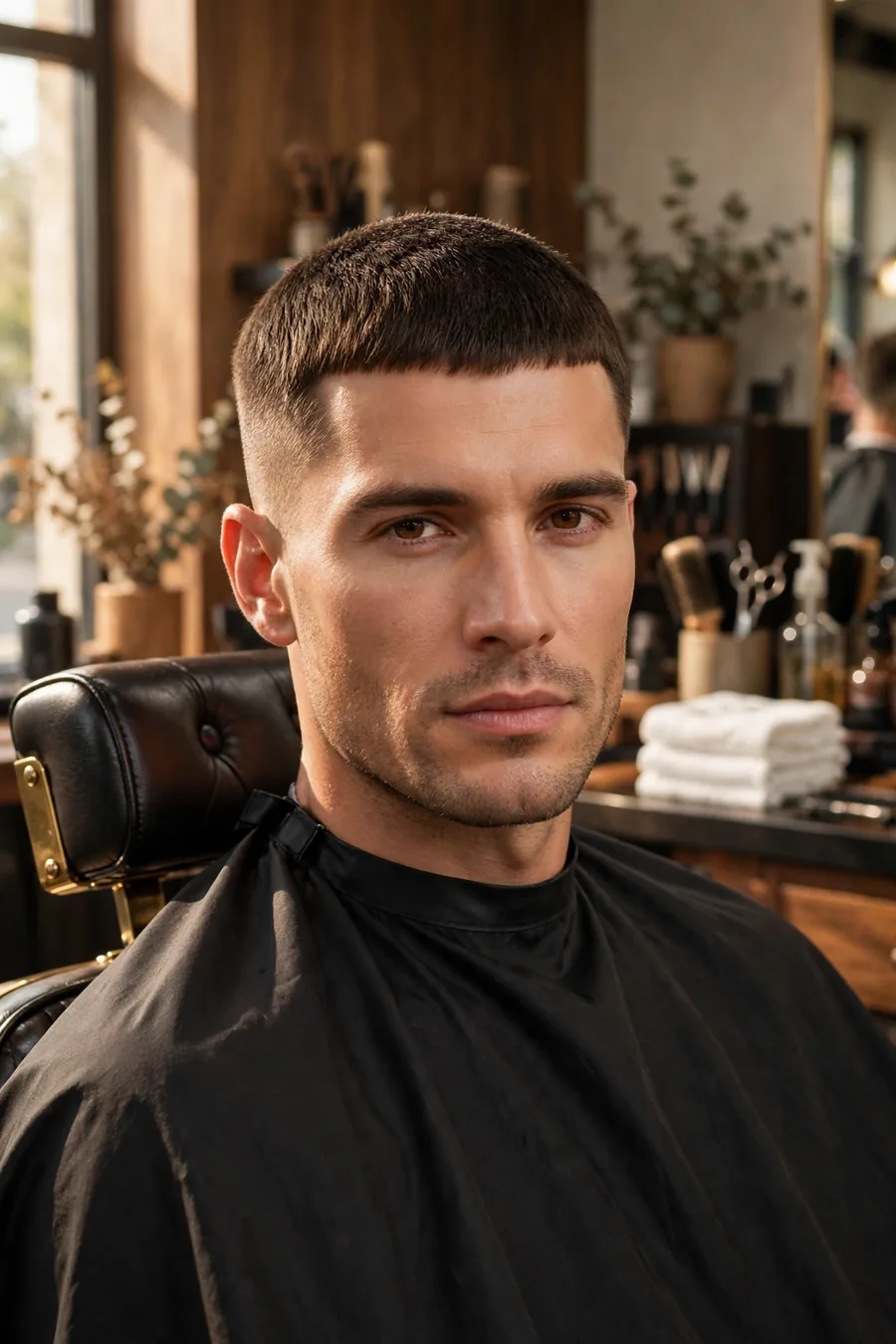
What it is: A military-tough Caesar. Uniform short length, straight fringe, and a clean, squared neckline. Built for men who want a cut that never looks messy.
Best for: Active men, gym goers, and anyone who wants a cut that survives wind, sweat, and long days.
Ask your barber: “Roman legion Caesar. Number 4 guard all over, half an inch, straight fringe, squared neckline, no fade.”
Style it: Wash and go. If you want hold, use a tiny amount of matte paste. Upkeep: Trim every 2–3 weeks.
Fade Heights: Julius Caesar Haircuts with a Fade
The fade decides how bold your Caesar looks. Low is quiet and professional. High is loud and sharp.
6. Julius Caesar with Low Fade
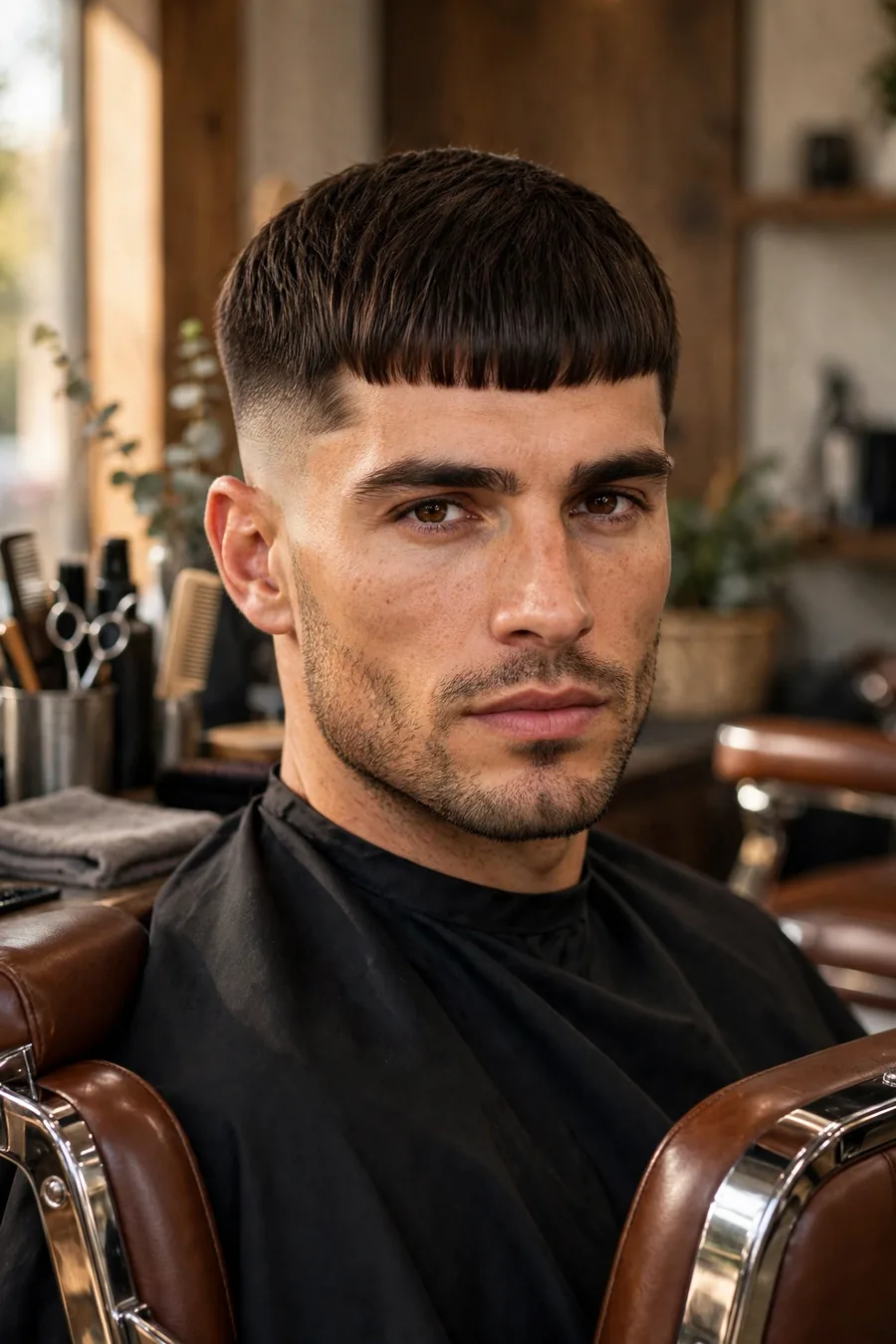
What it is: The classic Caesar top with a low fade caesar finish. The fade starts just above the ears, so the change is subtle and clean.
Best for: Office workers and men who want a modern edge without shouting about it. It grows out smoothly too.
Ask your barber: “Caesar on top, about an inch, fringe forward, with a low fade on the sides and back. Blend it soft.”
Style it: Comb forward with light pomade while damp. Upkeep: Trim every 2–3 weeks to keep the fade fresh.
7. Julius Caesar with Mid Fade
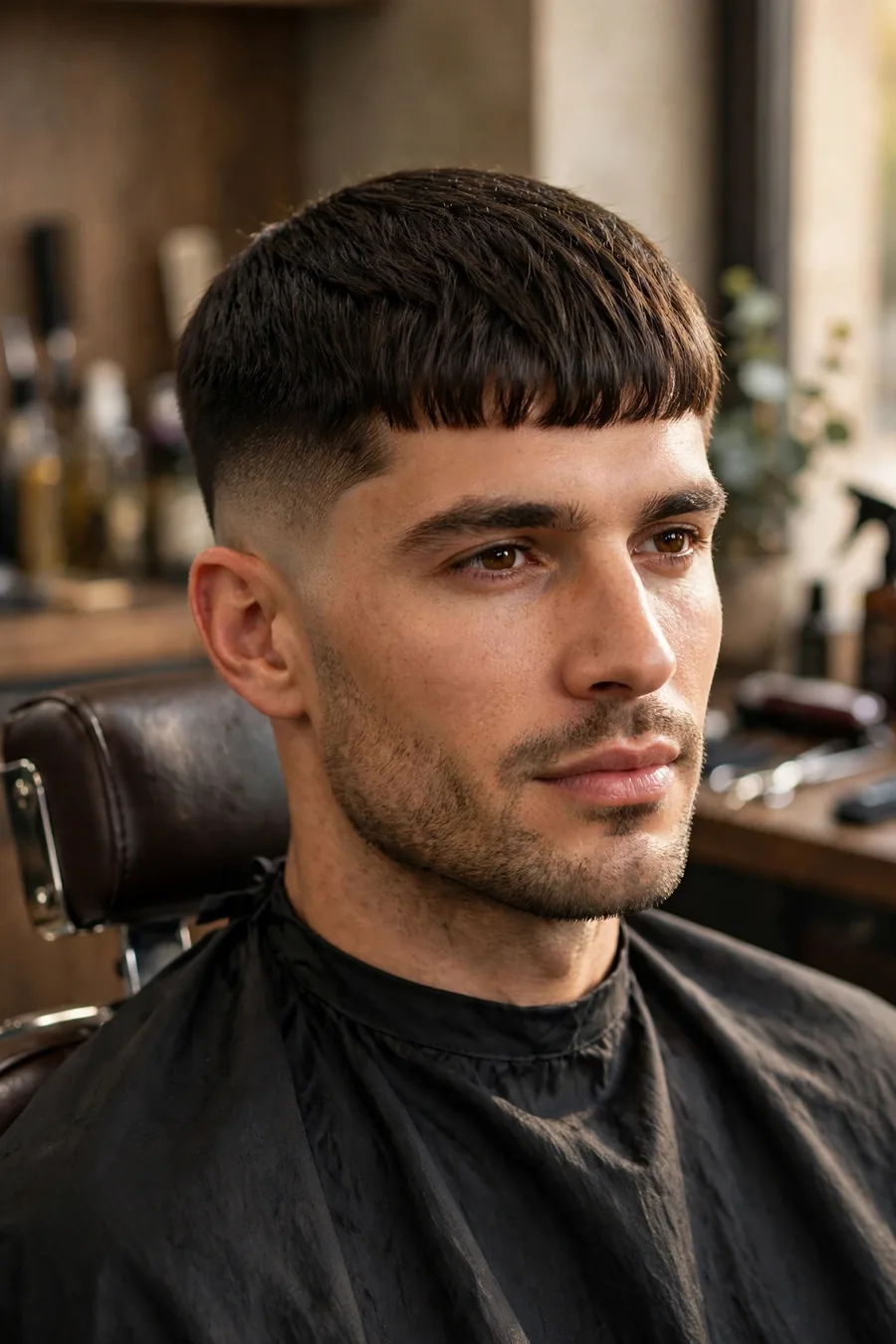
What it is: A caesar haircut with fade at mid height. The fade starts at temple level, giving a smooth gradient that makes the fringe look fuller.
Best for: Most men, most faces. The mid fade is the most versatile fade height for a Caesar.
Ask your barber: “Caesar with a mid fade. Keep the fringe about an inch and a half, textured on top, fade starting at the temples.”
Style it: Sea salt spray on damp hair, then matte paste once dry. Upkeep: Trim every 2–3 weeks.
8. Julius Caesar with High Fade

What it is: Maximum contrast. The high fade strips the sides up near the temples, so the short fringe becomes the star of the cut.
Best for: Men who want their haircut to look sharp from across the room. Great for younger men and bold dressers.
Ask your barber: “High fade Caesar. Take the fade high, keep about an inch of fringe on top, straight across, sharp blend.”
Style it: Keep the top matte and dry. Shine on top fights the clean lines. Upkeep: Trim every 2 weeks; high fades blur fast.
9. Julius Caesar with Skin Fade

What it is: The boldest caesar haircut with fade. The sides go all the way down to bare skin, and the short fringe sits on top like a crown.
Best for: Men who love razor-sharp contrast and do not mind frequent barber visits. Add a line-up and it is the crispest short cut around.
Ask your barber: “Caesar with a skin fade. Bald on the sides, fringe about an inch, and line up the hairline.”
Style it: Almost nothing needed. A touch of clay keeps the fringe in place. Upkeep: Trim every 1–2 weeks to keep the skin fade clean.
10. Julius Caesar with Drop Fade

What it is: A drop fade that curves down behind the ear, following the shape of the head. The Caesar top stays classic while the sides get a modern curve.
Best for: Men with a flatter back of the head or a rounder skull. The drop shape adds balance and flow.
Ask your barber: “Caesar top, inch and a half, fringe forward, with a mid drop fade that follows the curve behind my ears.”
Style it: Matte clay on dry hair, pushed forward with your fingers. Upkeep: Trim every 2–3 weeks.
Texture and Fringe: Modern Julius Caesar Haircuts
The caesar fringe is where the modern versions play: blunt for a Roman look, or textured for a softer finish.
11. Textured Julius Caesar

What it is: A textured caesar with point-cut layers on top. The barber snips into the ends at an angle, so the fringe keeps its straight line but gains movement.
Best for: Thick, heavy hair that looks like a helmet when cut blunt. Texture breaks the bulk and adds life.
Ask your barber: “Textured Caesar. Point-cut the top for texture, fringe forward, about an inch and a half, low taper on the sides.”
Style it: Matte clay or paste, scrunched in with fingers. The messier, the better. Upkeep: Trim every 3–4 weeks.
12. Choppy Fringe Julius Caesar

What it is: The caesar cut with textured top taken further. The fringe edge is cut choppy and uneven on purpose, so the line looks soft, not ruler-straight.
Best for: Men who find a blunt fringe too severe. The choppy edge suits round and softer faces well.
Ask your barber: “Choppy fringe Caesar. Keep the fringe about an inch, break up the edge with point cutting, mid fade on the sides.”
Style it: Work a little paste through with your fingertips for separation. Upkeep: Trim every 3 weeks.
13. Wispy Fringe Julius Caesar

What it is: A light, airy Caesar. The fringe is thinned at the ends so it falls soft and wispy across the forehead instead of sitting heavy.
Best for: Fine hair and men with softer features. The wispy edge keeps the cut gentle and easy to wear.
Ask your barber: “Wispy fringe Caesar. Thin the ends of the fringe so it falls light, top about an inch and a half, taper on the sides.”
Style it: A drop of light cream, combed forward. No heavy product. Upkeep: Trim every 3–4 weeks.
14. Blunt Fringe Julius Caesar
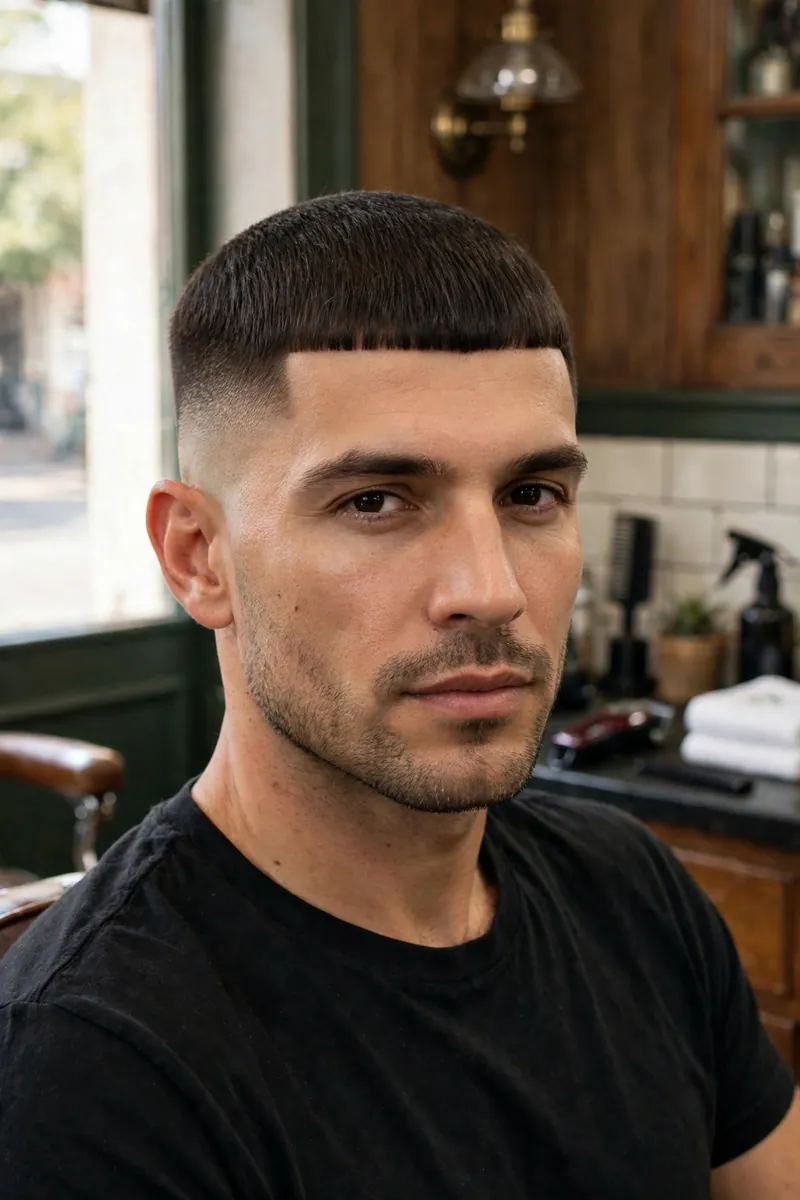
What it is: The sharpest caesar fringe you can get. The fringe is cut dead straight, like a ruler line across the brow, with no softening at all.
Best for: Strong jaws and straight hair. The blunt line looks best when the hair lies flat and smooth.
Ask your barber: “Blunt fringe Caesar. Cut the fringe dead straight across, top one inch, skin taper on the sides, sharp edges.”
Style it: Comb forward and press flat with a little pomade. Upkeep: Trim every 2 weeks; a blunt line shows growth fast.
15. Messy Julius Caesar

What it is: A relaxed Caesar with a deliberately tousled top. The fringe still points forward, but the texture is loose and casual, not pressed flat.
Best for: Men who want the Roman shape without the stiff, combed look. Great for weekends and creative workplaces.
Ask your barber: “Messy Caesar. Top about two inches, textured, fringe forward but piece-y, low fade on the sides.”
Style it: Sea salt spray, then scrunch with your fingers. Upkeep: Trim every 3–4 weeks.
Hair Types: Julius Caesar Haircuts for Every Texture
The Caesar works on every hair type, but the cutting method changes with texture.
16. Wavy Julius Caesar

What it is: A Caesar that lets wavy hair do its thing. The waves are brushed forward into the fringe, giving the straight line a soft, natural bend.
Best for: Wavy hair of any thickness. The wave adds texture for free, so you need less product.
Ask your barber: “Wavy Caesar. Top about two inches so the wave shows, fringe forward, low taper on the sides.”
Style it: Sea salt spray on damp hair, then let it air dry. Upkeep: Trim every 3–4 weeks.
17. Curly Julius Caesar
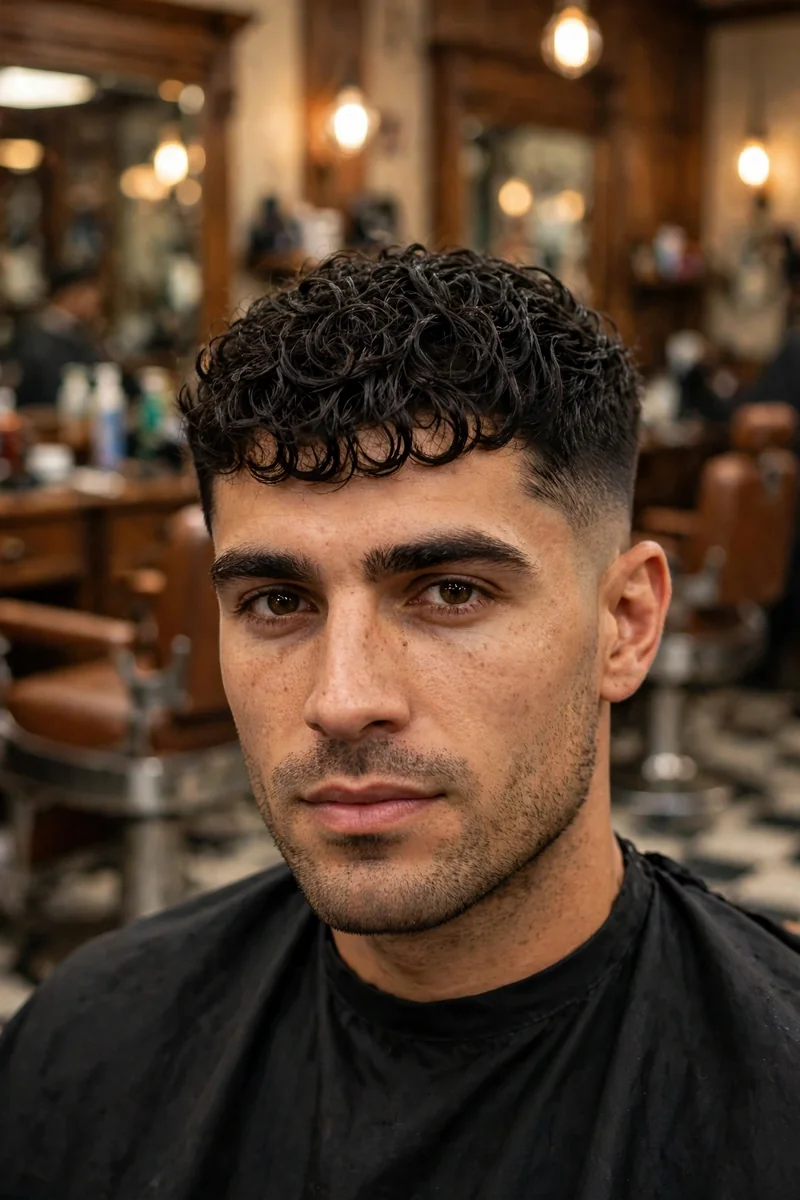
What it is: A Caesar cut for curls. The top stays a little longer, about two to three inches, so the curls can form, then they are combed forward into the fringe.
Best for: Curly hair that is hard to manage at longer lengths. The short cut tames the volume while keeping the curls visible.
Ask your barber: “Curly Caesar. Cut it dry so you see the curl pattern, top two inches, fringe forward, taper on the sides.”
Style it: Curl cream on damp hair, combed forward with fingers. Upkeep: Trim every 3–4 weeks.
18. Straight Julius Caesar
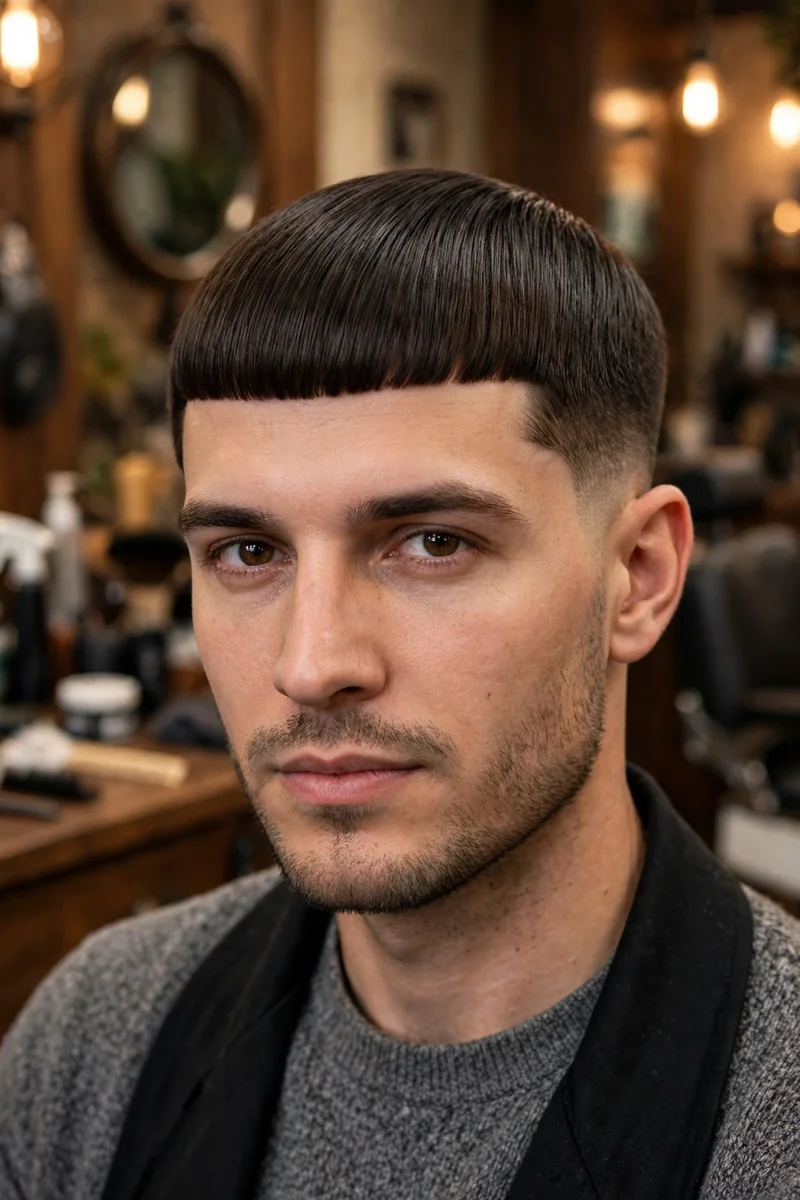
What it is: The cleanest Caesar of all. Straight hair lies flat, so the fringe line looks razor sharp and the whole cut reads neat and polished.
Best for: Straight, fine to medium hair. This is the version most people picture when they think of the emperor’s cut.
Ask your barber: “Straight Caesar. Top one inch, scissor cut, fringe dead straight forward, taper on the sides.”
Style it: Comb forward with a little light pomade for a clean finish. Upkeep: Trim every 3 weeks.
19. Coily Julius Caesar

What it is: A caesar haircut black men often choose as a base cut. The top is clipper-cut even, usually with a number 1 or 2 guard, then lined up with a trimmer for a straight fringe edge.
Best for: Coily and coarse hair. The short, even top lies flat and gives a clean surface for 360 waves too.
Ask your barber: “Coily Caesar. Number 2 guard on top, cut with the grain, line up the front, low taper on the sides.”
Style it: Light moisturizer and a soft brush forward. Upkeep: Trim every 1–2 weeks to keep the line-up sharp.
20. Thick Hair Julius Caesar

What it is: A Caesar built for thick, heavy hair. The barber thins the top with texturizing shears so the fringe sits flat instead of puffing up like a helmet.
Best for: Men whose thick hair fights every cut. Thinning and texture make the Caesar sit right.
Ask your barber: “Thick hair Caesar. Thin the top with shears, keep it about an inch and a half, fringe forward, mid fade on the sides.”
Style it: Matte clay, worked in with fingers for separation. Upkeep: Trim every 3 weeks.
Face Shapes and Hairlines: Julius Caesar Haircuts That Solve Problems
This is where the Caesar earns its keep: no other short cut hides a moving hairline this well.
21. Julius Caesar for Receding Hairline

What it is: The original reason the cut exists. The caesar haircut for receding hairline brings every hair forward over the temples, so the fringe sets a new, lower hairline.
Best for: Men with temple recession or a hairline that has started to move back. It works at every stage of early hair loss.
Ask your barber: “Caesar for my receding hairline. Top about an inch and a half, fringe forward to cover the temples, low fade on the sides.”
Style it: Comb forward and keep the fringe flat. Never push it up. Upkeep: Trim every 2–3 weeks.
22. Julius Caesar for Thinning Hair

What it is: The caesar haircut for thinning hair keeps the top short and even, so thin spots blend in instead of standing out. Texture on top adds the look of fullness.
Best for: Men with diffuse thinning on top. The short length cuts the contrast between thick and thin areas.
Ask your barber: “Caesar for thinning hair. Keep the top short and textured, about an inch, fringe forward, taper on the sides. No heavy thinning.”
Style it: Matte clay or texture powder at the roots for lift. Upkeep: Trim every 3 weeks.
23. Julius Caesar for Round Face

What it is: A caesar haircut for round face shapes uses a higher fade to slim the sides. The flat top keeps the face from looking wider.
Best for: Round faces that need a little length and structure. The high fade adds angles where the face is soft.
Ask your barber: “Caesar for my round face. High fade on the sides, fringe about an inch, keep the top flat, no extra width.”
Style it: Keep the fringe flat and the sides tight. Upkeep: Trim every 2–3 weeks.
24. Julius Caesar for Square Face
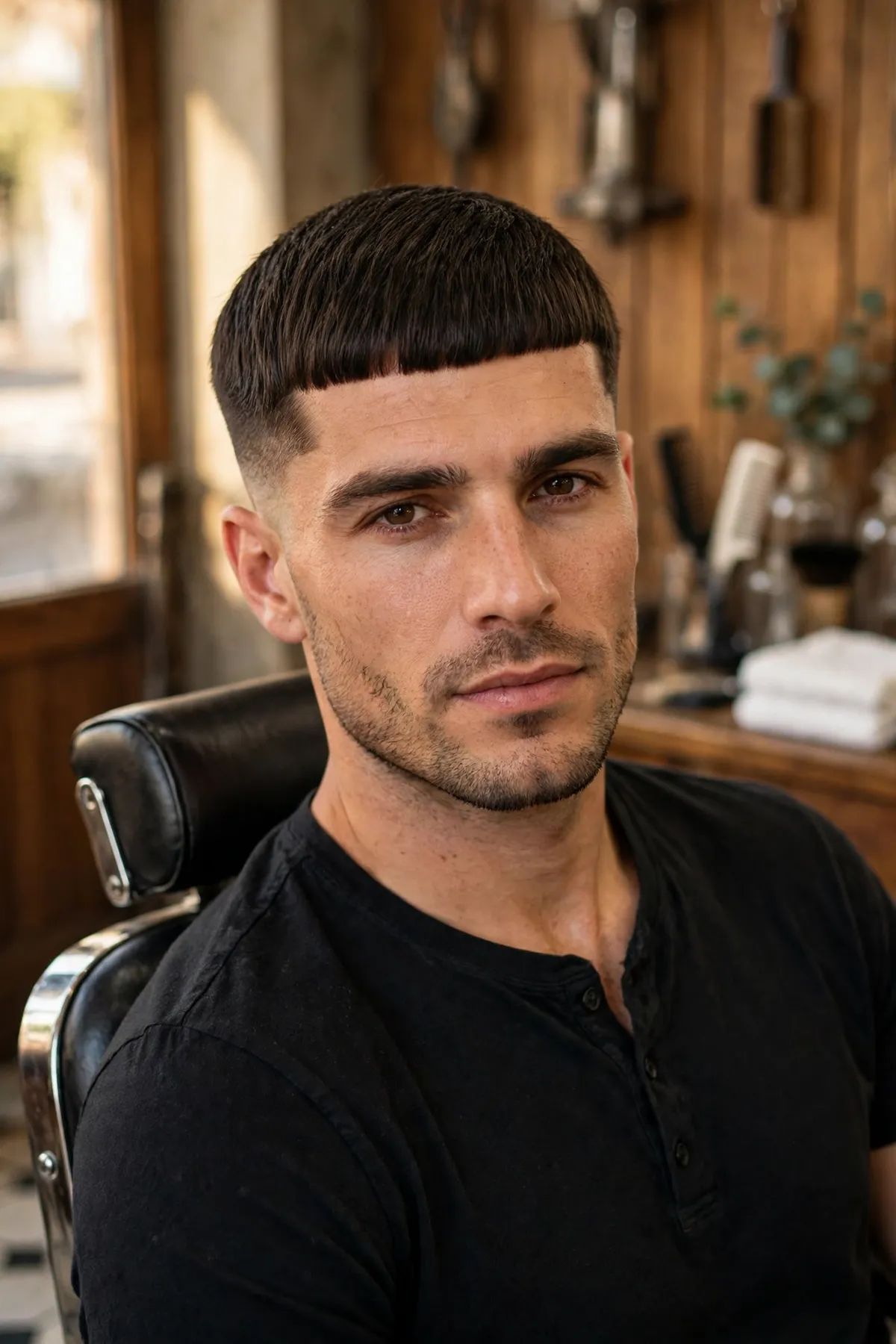
What it is: A Caesar that softens a strong jaw. The straight fringe adds a horizontal line that balances the angles of a square face.
Best for: Square and angular faces. The cut frames the jaw without making it look harder.
Ask your barber: “Caesar for my square face. Top one inch, fringe straight across, low taper, keep the corners soft.”
Style it: Comb forward with a little cream for a smooth finish. Upkeep: Trim every 3 weeks.
25. Julius Caesar for Long Face

What it is: A Caesar with a slightly longer fringe that shortens a long forehead. The fringe covers more brow, so the face looks shorter and more balanced.
Best for: Long, oblong, and rectangular faces. The fringe is the tool that fixes the proportions.
Ask your barber: “Caesar for my long face. Fringe a little longer, about an inch and a half down the forehead, low fade on the sides.”
Style it: Brush the fringe down and forward, never up. Upkeep: Trim every 3 weeks.
Modern and Bold: Julius Caesar Haircuts with an Edge
Once the Roman base is set, add a beard, a line-up, a hard part, or an undercut. These five versions take the emperor’s cut into modern territory.
26. Julius Caesar with Full Beard
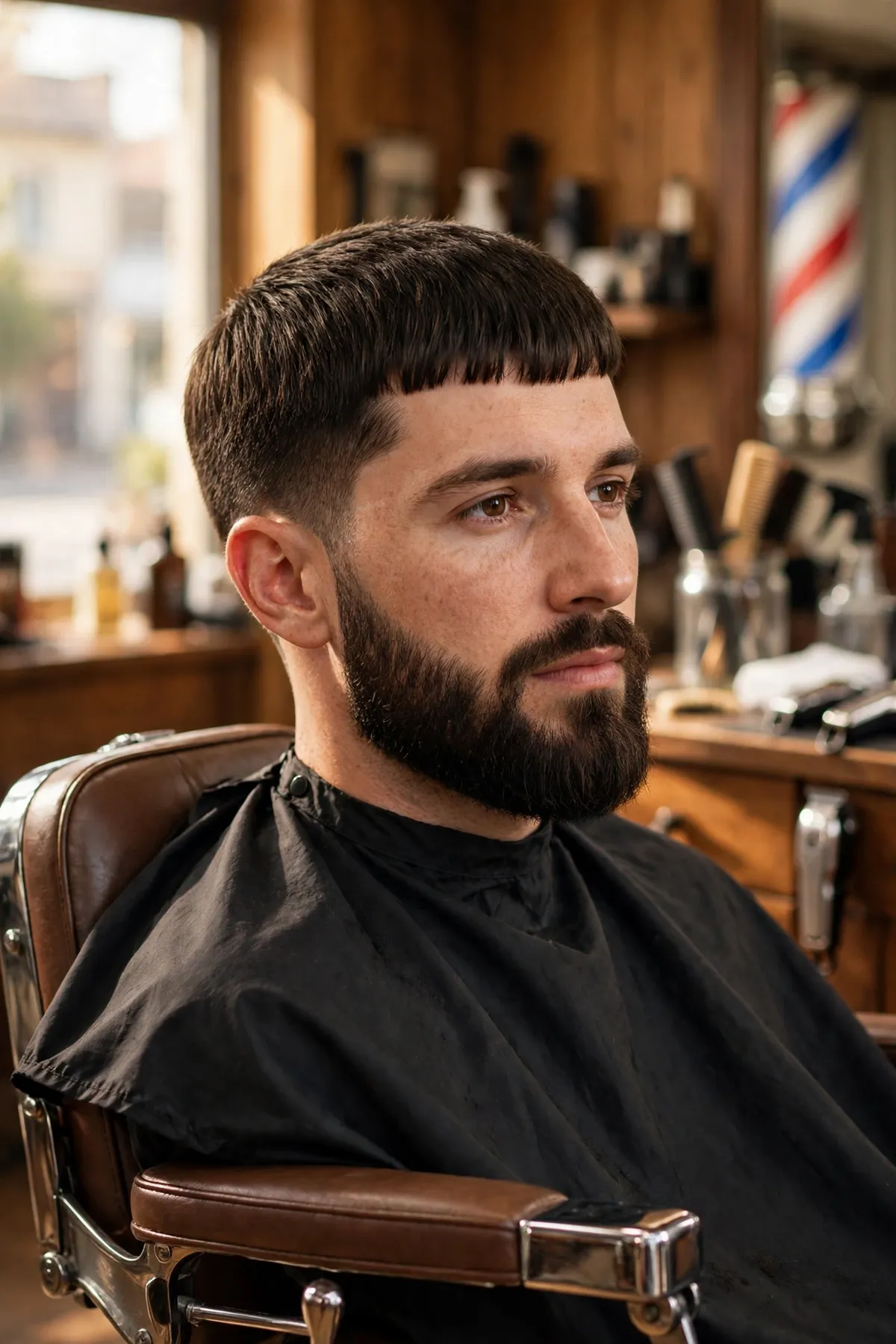
What it is: A caesar haircut with beard pairing. The short Caesar top meets a full, groomed beard, and the two balance each other like a frame.
Best for: Men who wear a beard and want their hair and beard to feel like one look. It suits strong jaws and fuller faces.
Ask your barber: “Caesar with a full beard. Top one inch, fringe forward, mid fade, and blend the beard into the sideburns.”
Style it: Beard oil on the beard, matte clay on the top. Upkeep: Trim hair every 3 weeks, beard every 1–2 weeks.
27. Julius Caesar with Line-Up
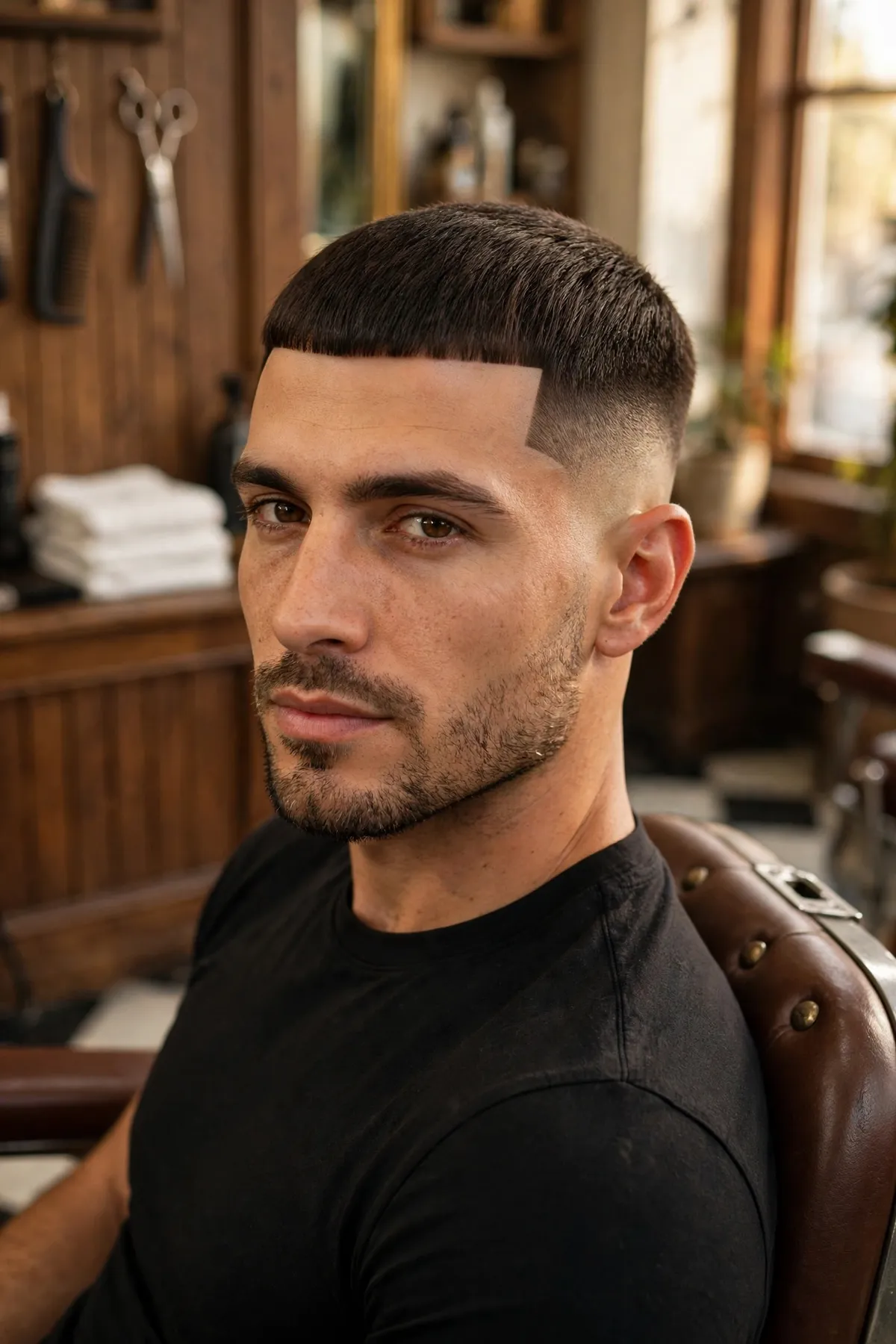
What it is: A Caesar with a razor-sharp line-up along the forehead and temples. The crisp edges make the soft fringe look even cleaner.
Best for: Men who love sharp, defined lines. It looks best on straight and coily hair that holds an edge well.
Ask your barber: “Caesar with a line-up. Follow my natural hairline, do not push it back, fringe one inch, skin taper on the sides.”
Style it: Almost nothing needed. Keep the edges clean between visits. Upkeep: Line-up touch-up every 1–2 weeks.
28. Julius Caesar with Hard Part

What it is: A Caesar with a shaved hard part on one side. The line adds definition and a permanent part that never shifts during the day.
Best for: Men who want a sharp, intentional detail. It suits thick hair and clean, classic styling.
Ask your barber: “Caesar with a hard part. Shave the part on my natural side, top an inch and a half, fringe forward, mid fade.”
Style it: Comb forward and let the part line do the work. Upkeep: Trim every 2 weeks; the part grows out fast.
29. Julius Caesar with Undercut

What it is: A disconnected Caesar. The sides are undercut short with no blend, while the top stays longer and textured, brushed forward over the sharp line.
Best for: Bold dressers and men with thick hair. The contrast makes thin hair look denser on top too.
Ask your barber: “Caesar with an undercut. Disconnect the sides, top two inches textured, fringe forward, no blend.”
Style it: Matte clay, pushed forward with fingers for texture. Upkeep: Trim every 2–3 weeks.
30. Sleek Side-Swept Julius Caesar

What it is: The most polished Caesar in this guide. The fringe is swept slightly to one side and smoothed flat, giving the Roman cut a sleek, gentleman’s finish.
Best for: Formal days, weddings, and men who want the Caesar to look dressed up rather than casual.
Ask your barber: “Sleek side-swept Caesar. Top two inches, fringe swept slightly to the side, low taper, clean neckline.”
Style it: Pomade on damp hair, combed forward and slightly to the side. Upkeep: Trim every 3 weeks.
Pick Your Julius Caesar: Face Shape Guide
Not every Caesar fits every face the same way. Use this picker to find the version that flatters your bone structure.
| Face shape | Best Julius Caesar version | What to ask for | What to avoid |
|---|---|---|---|
| Oval | Any version | Your pick, classic or faded | Nothing, oval suits them all |
| Round | Julius Caesar for Round Face (#23) | High fade to slim the sides | Wide, bulky sides |
| Square | Julius Caesar for Square Face (#24) | Soft corners, low taper | Overly sharp, boxy edges |
| Long / oblong | Julius Caesar for Long Face (#25) | Longer fringe down the forehead | Height on top, short fringe |
| Heart | Textured Julius Caesar (#11) | Texture to widen the forehead line | Very short, tight sides |
| Diamond | Messy Julius Caesar (#15) | Soft texture, low fade | Hard blunt lines |
Oval faces can wear any Caesar in this guide. Round faces need the sides slimmed, long faces need the fringe to cover more forehead, and square faces need soft corners. If you are unsure of your shape, ask your barber.
Pick Your Julius Caesar: Hair Type Guide
Your hair type decides the cutting method. Tell your barber your texture before they pick up the clippers.
| Hair type | Best version | Cutting method | Styling product |
|---|---|---|---|
| Straight | Straight Julius Caesar (#18) | Scissor cut, blunt fringe | Light pomade |
| Wavy | Wavy Julius Caesar (#16) | Scissor cut, 2 inches on top | Sea salt spray |
| Curly | Curly Julius Caesar (#17) | Cut dry, 2 to 3 inches on top | Curl cream |
| Coily | Coily Julius Caesar (#19) | Clipper cut, number 1 or 2 guard | Light moisturizer |
| Thick | Thick Hair Julius Caesar (#20) | Thinning shears, textured top | Matte clay |
| Fine / thin | Julius Caesar for Thinning Hair (#22) | Short, textured, no heavy thinning | Texture powder |
Coily hair is clipper-cut so the top lies flat. Curly hair should be cut dry. Fine hair needs light products, and thick hair needs thinning shears.
Julius Caesar for Receding Hairline and Thinning Hair
This cut was invented for a receding hairline, and it still does the job better than almost any other style. Here is why it works and how to get the most from it.
First, every hair points forward. There is no part and no swept-back shape to expose the temples, so the fringe sets a new visual hairline lower than your natural one.
Second, the short length cuts contrast. When the top is short and even, thinning reads as a style, not a gap.
Third, texture helps. A textured caesar top makes thin hair look thicker. Ask for light texture, not heavy thinning.
If your hairline has moved back a long way, keep the fringe about an inch and a half long with a low fade. A skin fade works too, but only if the top still has enough density.
One warning: do not let the barber push your hairline back with a line-up. A good line-up follows your natural hairline exactly.
Quick-Pick Table: All 30 Julius Caesar Haircuts
Scan this table, pick your number, and show it to your barber. It lists every style in this guide with its best fit, styling effort, and trim timing.
| # | Style | Best for | Effort | Trim |
|---|---|---|---|---|
| 1 | The Original Roman Caesar | True Roman look | None | 3–4 weeks |
| 2 | Emperor’s Laurel Caesar | Formal, polished days | Low | 3 weeks |
| 3 | Marble Bust Caesar | Strong features | None | 2–3 weeks |
| 4 | Gaius Julius Caesar | Authentic emperor style | Low | 3 weeks |
| 5 | Roman Legion Caesar | Active, gym lifestyle | None | 2–3 weeks |
| 6 | Julius Caesar with Low Fade | Office, subtle modern edge | Low | 2–3 weeks |
| 7 | Julius Caesar with Mid Fade | Most men, most faces | Low | 2–3 weeks |
| 8 | Julius Caesar with High Fade | Bold, sharp contrast | Low | 2 weeks |
| 9 | Julius Caesar with Skin Fade | Maximum sharpness | None | 1–2 weeks |
| 10 | Julius Caesar with Drop Fade | Flatter back of head | Low | 2–3 weeks |
| 11 | Textured Julius Caesar | Thick, heavy hair | Low | 3–4 weeks |
| 12 | Choppy Fringe Julius Caesar | Softer, broken fringe line | Low | 3 weeks |
| 13 | Wispy Fringe Julius Caesar | Fine hair, soft features | Low | 3–4 weeks |
| 14 | Blunt Fringe Julius Caesar | Straight hair, sharp line | Low | 2 weeks |
| 15 | Messy Julius Caesar | Relaxed, casual days | Low | 3–4 weeks |
| 16 | Wavy Julius Caesar | Wavy hair, natural texture | Low | 3–4 weeks |
| 17 | Curly Julius Caesar | Curly hair, easy control | Low | 3–4 weeks |
| 18 | Straight Julius Caesar | Straight hair, cleanest look | Low | 3 weeks |
| 19 | Coily Julius Caesar | Coily hair, waves base | Low | 1–2 weeks |
| 20 | Thick Hair Julius Caesar | Thick hair that puffs up | Low | 3 weeks |
| 21 | Julius Caesar for Receding Hairline | Temple recession | Low | 2–3 weeks |
| 22 | Julius Caesar for Thinning Hair | Diffuse thinning on top | Low | 3 weeks |
| 23 | Julius Caesar for Round Face | Round faces, slimming sides | Low | 2–3 weeks |
| 24 | Julius Caesar for Square Face | Square jaws, soft balance | Low | 3 weeks |
| 25 | Julius Caesar for Long Face | Long faces, shorter forehead | Low | 3 weeks |
| 26 | Julius Caesar with Full Beard | Beard wearers | Medium | 3 weeks |
| 27 | Julius Caesar with Line-Up | Sharp, defined edges | None | 1–2 weeks |
| 28 | Julius Caesar with Hard Part | Clean, intentional detail | Low | 2 weeks |
| 29 | Julius Caesar with Undercut | Bold, disconnected look | Low | 2–3 weeks |
| 30 | Sleek Side-Swept Julius Caesar | Formal, dressed-up days | Medium | 3 weeks |
How to Style a Julius Caesar Haircut
Styling a Caesar takes about a minute. Follow these six steps every morning.
- Wash or dampen. Start with clean, slightly damp hair. Too wet and the product slides off. Too dry and the fringe will not lie flat.
- Use a pea-sized amount of product. Take a small dab of matte clay, light cream, or pomade. Rub it between your palms until it warms up and turns clear.
- Work it through the top. Push the product through the top with your fingers, from the crown toward the front. Keep it light and even.
- Comb the fringe forward. Use a fine comb or your fingers to brush every hair forward onto the forehead. Set the straight line across the brow.
- Press the fringe flat. Smooth the fringe down with your palm so it lies flat. If you want texture, pinch a few ends apart with your fingertips.
- Check the sides. Smooth the sides down with your hands. Step back, check the mirror, and you are done. Add nothing else.
Less product is more with this cut. Start with half of what you think you need.
How to Ask Your Barber for a Caesar Cut
Knowing how to ask barber for caesar cut styles is half the battle. Most barbers know the Caesar by name, but the details get you the exact version. Bring a photo, then say four things.
First, the fringe length: half an inch is subtle, an inch or more makes a statement. Second, the guard number on top: a number 4 guard is half an inch, a number 6 is three-quarters of an inch.
Third, the fade type: low, mid, high, skin, or classic taper. Fourth, the neckline: blocked is straight across, rounded is softer, tapered is cleanest.
Also mention cowlicks, thin spots, and sensitive skin before the cut starts. If you get razor bumps, say so before a skin fade goes too close.
7 Mistakes to Avoid with a Julius Caesar Haircut
A good Caesar is hard to ruin, but these seven mistakes do it every day. Skip them and the cut stays sharp.
1. Cutting the fringe too short. A fringe cut above the hairline defeats the whole point. Keep at least half an inch.
2. Cutting the fringe too long. A fringe that hangs in your eyes looks messy and blocks your vision. One to two inches on top is the sweet spot.
3. Bad blending on the sides. If the sides do not blend into the top, the cut looks uneven and cheap.
4. Using too much product. The Caesar should look natural, not wet or stiff. Start with a pea-sized amount.
5. Pushing the fringe up. The fringe goes forward, never up. Comb it down and forward.
6. Ignoring your hair type. What works for straight hair may fail on curly hair. Tell your barber your texture first.
7. Waiting too long between trims. The fringe edge softens within a week. Book the next visit before you leave the shop.
Trim Cadence and Cost in the US
Caesar haircut maintenance is simple, but the cut shows growth fast. Here is what to expect at a typical American barbershop.
| Version | Trim every | Typical US cost |
|---|---|---|
| Classic / Roman original | 3–4 weeks | $20–$35 |
| Low or mid fade Caesar | 2–3 weeks | $25–$40 |
| High or skin fade Caesar | 1–2 weeks | $30–$50 |
| Textured or messy Caesar | 3–4 weeks | $25–$40 |
| Caesar with line-up | 1–2 weeks | $30–$50 |
| Caesar with beard work | 2–3 weeks | $35–$60 |
Prices vary by city and shop. A basic cut runs about $20 to $35. A fade adds $5 to $15. A high-end salon can charge $40 to $80.
Between visits, clean up the neckline at home with a trimmer. Do not touch the fringe or the fade yourself.
Growing Out a Julius Caesar Haircut
Sooner or later you may want longer hair. Growing out a Caesar takes patience, because the cut goes through an awkward stage. Here is the plan.
Weeks one to four feel easy. Just keep the sides trimmed so the cut does not turn into a mushroom shape.
Weeks six to eight are the hard part: the top gets heavy and the fringe flops. Ask your barber to thin the top lightly and keep the sides tight.
After about two months, you have options. Grow toward a French crop with a longer textured fringe, or toward a crew cut haircut by styling the top up instead of forward.
The key rule: trim the sides every two to three weeks while the top grows. Never just stop cutting everything at once.
Products for Your Julius Caesar Haircut
You do not need a shelf full of products. Three cover every Caesar in this guide. Pick by your hair type, not by the prettiest jar.
Matte clay is the default: medium hold, no shine, good for textured, messy, and thick hair. Sea salt spray adds grip to fine hair. Light pomade gives a clean sheen for sleek versions, but use it sparingly.
For thin hair, texture powder at the roots adds lift. For curly hair, curl cream defines the pattern. For coily hair, light moisturizer and a soft brush keep the top flat.
Wash two to three times a week, not every day. Rinse with cool water to close the cuticle and add shine. For more short styles, see our short haircuts for men and fade haircut guides.
Roman Haircut Men: Why This Ancient Style Still Wins
The roman haircut men wore two thousand years ago still wins today: it hides a receding hairline, tames thick hair, makes thin hair look fuller, and takes a minute to style.
No other short cut does all of that at once. The buzz cut for men shows the hairline. The French crop haircut needs more styling. The low taper fade has no fringe to fix the front.
The Julius Caesar sits in the middle: short enough to be easy, long enough to have a fringe, classic enough for the office, sharp enough for a night out.
For older men, the Caesar is one of the kindest cuts there is. It keeps the shape neat, hides gray at the temples, and never looks like you are trying too hard. See our best haircuts for men guide for more styles that work at any age, and our men’s haircuts hub for the full library.
FAQs About the Julius Caesar Haircut
How do I ask my barber for a Julius Caesar haircut?
Bring a photo of the style you want from this guide. Then say the fringe length, the guard number on top, the fade type, and the neckline. For a classic version, say: “Julius Caesar, one inch on top, straight fringe forward, low taper on the sides.”
Mention your hair type and thin spots too. A photo plus those four details gets you the right cut.
Is a Julius Caesar haircut good for a receding hairline?
Yes, it is one of the best cuts for a receding hairline. The forward fringe covers the temples and sets a new visual hairline lower than your natural one. The short, even top also cuts the contrast between thick and thin areas.
Keep the fringe an inch to an inch and a half long with a low fade.
How long is a Julius Caesar haircut?
The top is usually between half an inch and two inches long. The classic Roman version sits around one inch all over. Longer versions reach two to three inches on top for more styling choice.
The fringe should fall just onto the forehead. The sides are shorter, tapered or faded.
What face shape suits a Julius Caesar haircut?
Oval faces suit every version of the cut. Square faces suit it with soft corners and a low taper. Round faces suit it with a high fade to slim the sides. Long faces suit it with a longer fringe to shorten the forehead.
Round faces need a higher fade. High foreheads need a longer fringe.
How often should I get a Julius Caesar haircut trimmed?
Most men need a trim every 2–4 weeks. Classic and textured versions last 3 to 4 weeks. Fades and skin fades need a trim every 1–2 weeks, since growth shows fast in the blend.
The fringe edge softens within a week, so book your next visit early.
How much does a Julius Caesar haircut cost?
A basic Julius Caesar haircut costs about $20 to $35 at a typical American barbershop. A version with a fade runs $25 to $50, and a cut with beard work runs $35 to $60. High-end salons in big cities can charge $40 to $80.
The real cost is frequency: a skin fade needs weekly visits, a classic Caesar lasts a month.
Conclusion
The julius caesar haircut has lasted two thousand years for a reason. It is short, sharp, and honest: it hides a receding hairline, tames thick hair, and makes thin hair look fuller.
Pick one style from this guide, save its photo, and bring the barber script with you. Start with the original Roman Caesar for the true emperor look, a fade version for a modern edge, or a textured version for thick hair.
Whatever you choose, keep the fringe forward, keep the product light, and keep the trims regular. For the wider history of the craft, see haircuts on Wikipedia.
📌 Pin now, read later — save these styles for your next barbershop visit!

Reviewed by Daniel Morgan
Daniel Morgan is the Founder and Editorial Director of Barber’s Groom. He oversees the editorial review of the guides on this site, checking each one for accuracy, clarity, and practical value before it reaches readers.