30 Best Black Boy Haircuts
Finding the right black boy haircuts can feel harder than it should. Type 3 and Type 4 hair has its own texture, growth pattern, and care needs, so the cuts that work for straight hair don’t always translate. Add in school dress codes, sports schedules, and a little boy who squirms in the chair, and picking a style becomes a real mission for any parent.
The good news: boys’ barbering has never had more great options. From crisp low fades to sponge twists, cornrows to 360 waves, today’s lineup of haircuts for black boys covers every age, every texture, and every personality — the shy toddler getting his first trim, the grade-schooler who wants to look sharp for picture day, and the teenager chasing waves. This guide walks you through 30 of the best picks, with exact “ask your barber” scripts, at-home upkeep tips, a kids’ hair-care routine, and honest advice on cost and timing. If you’re browsing our wider boys’ haircuts collection, consider this the textured-hair deep dive.
Classic & Clean Cuts
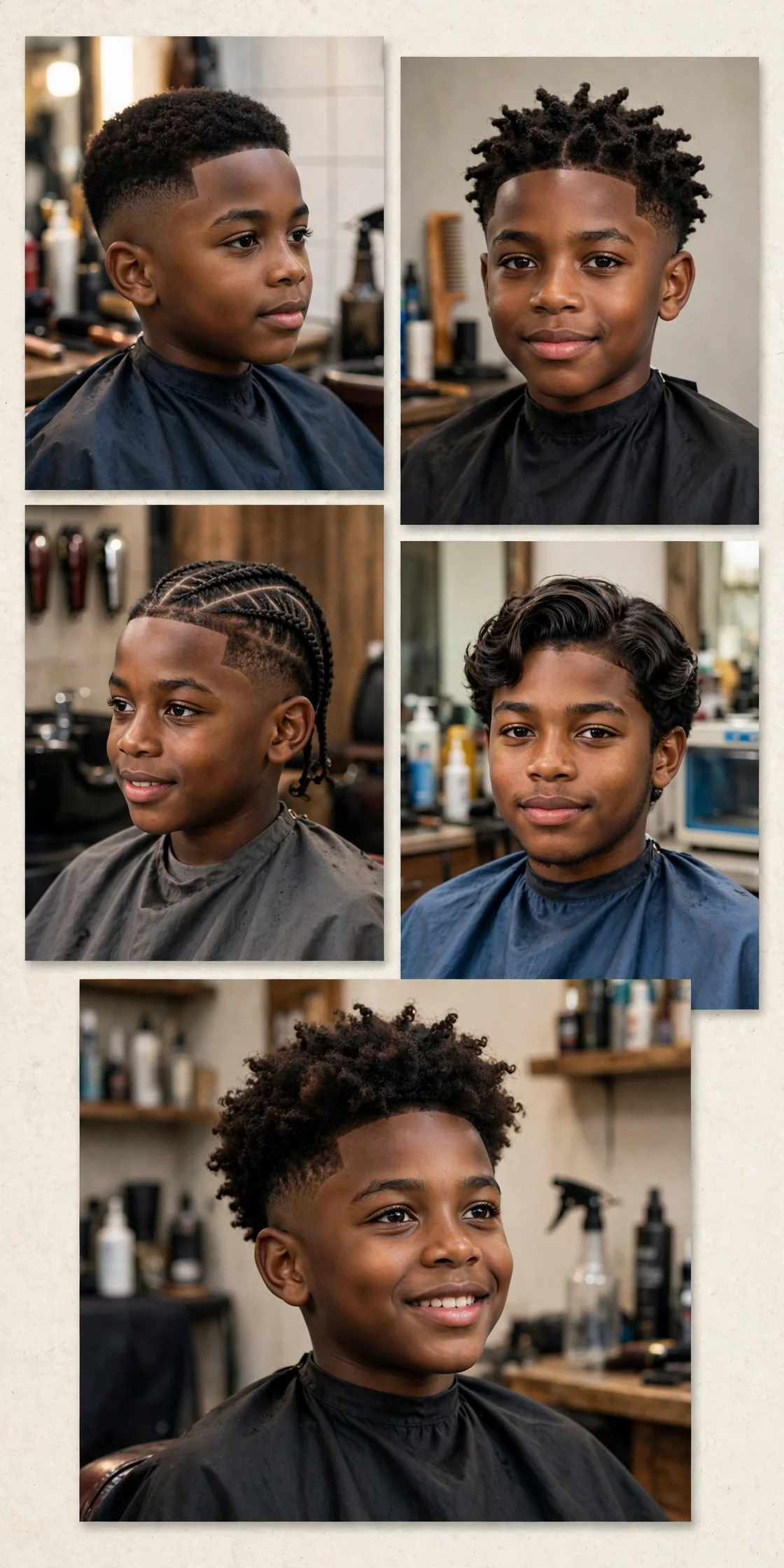
Timeless cuts that always look neat — the safest bets for school, church, and family photos. These black boy haircut staples work on nearly every head shape and need the least daily effort.
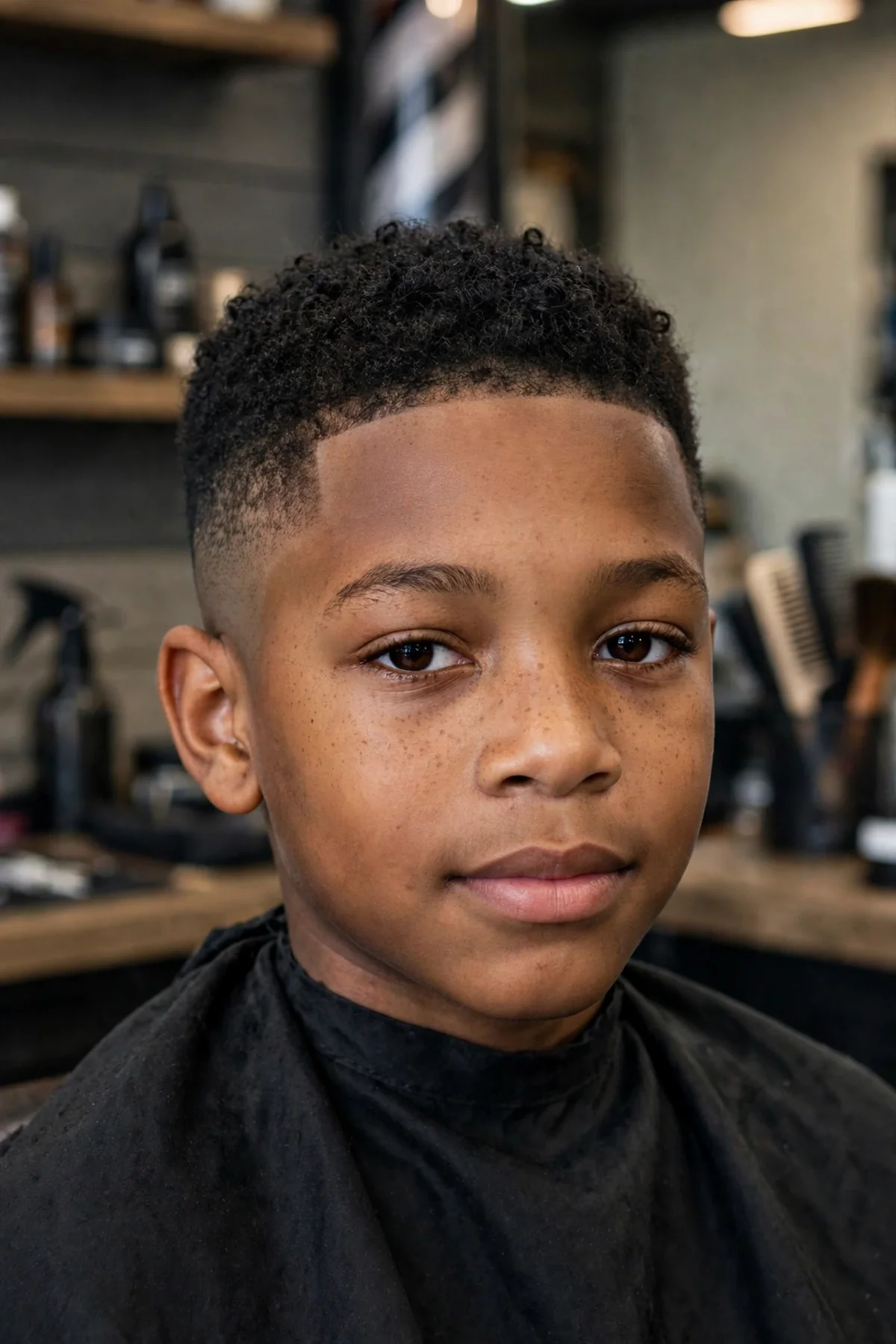
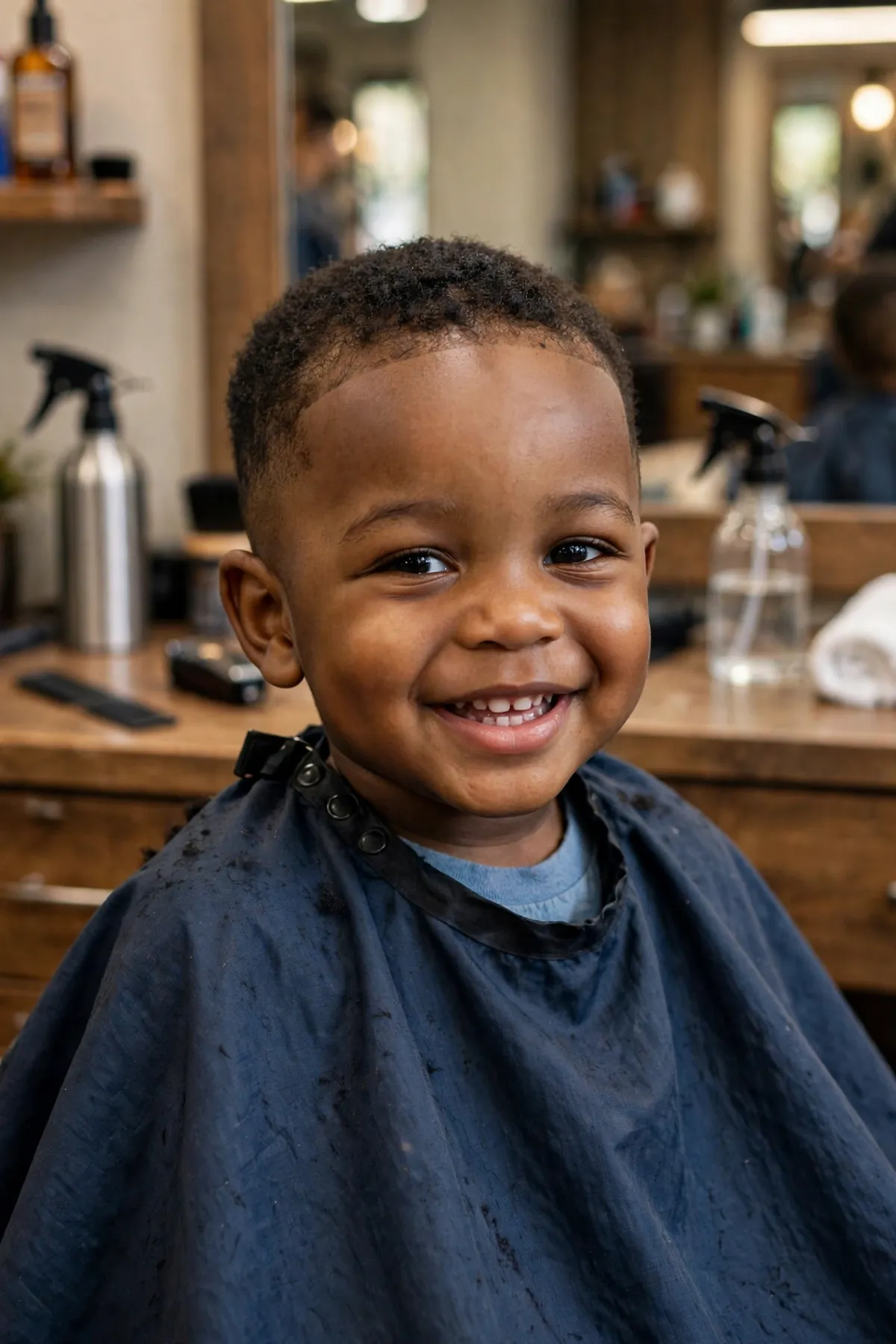
1. Classic Low Fade With Short Top
The low fade is the quiet workhorse of black boys haircuts. It keeps the sides and back tight while leaving enough length on top to show off natural curl pattern. It photographs well, grows out gracefully, and no teacher will ever object to it.
For boys transitioning from a full buzz to something with more style, the low fade is the perfect middle step — clean but not severe.
Ask your barber: “Low fade, skin at the bottom blended up to a #2 on the sides, leave the top about an inch and a half with texture. Keep the fade low — just above the ear.”
Style it: A dab of curl cream on damp hair, then let it air-dry. Brush the top forward once while damp to set the direction.
2. Taper Fade With Curly Top
A taper keeps the natural hairline and sideburns intact while gently narrowing the hair toward the neckline and temples. Paired with a curly top, it looks polished without that “fresh out of boot camp” severity a full fade can give.
This cut is a favorite for boys whose parents want something neat but not too short. The curls up top give it personality, and a classic taper grows out more softly than a skin fade, so it stretches longer between visits.
Ask your barber: “Taper fade around the edges — temples and neckline only — #1 guard on the taper, leave the top long enough to curl, about two inches. Clean up the lineup but keep the hairline natural.”
Style it: Moisturize with a leave-in conditioner, then define curls with a small amount of curl-defining cream. A pick lifts the roots for extra volume.

3. Short Even Buzz Cut
Simple, cool, and honest — the even buzz is the easiest of all hairstyles for black boys to maintain. One guard all over, and the morning routine is basically nothing. For active boys who play football, basketball, or just live outside, nothing beats it.
The buzz also shows off a well-shaped head and a crisp lineup beautifully. Pair it with a sharp shape-up and even the simplest cut looks intentional. See our full breakdown of buzz cut variations for how guard length changes the look.
Ask your barber: “All over with a #2 guard, #1 on the sides if he wants it tighter. Crisp lineup on the forehead and temples, natural neckline in the back.”
Style it: Almost zero styling. A light moisturizer on the scalp after a wash keeps it from looking dry, and a soft brush pass smooths everything down.
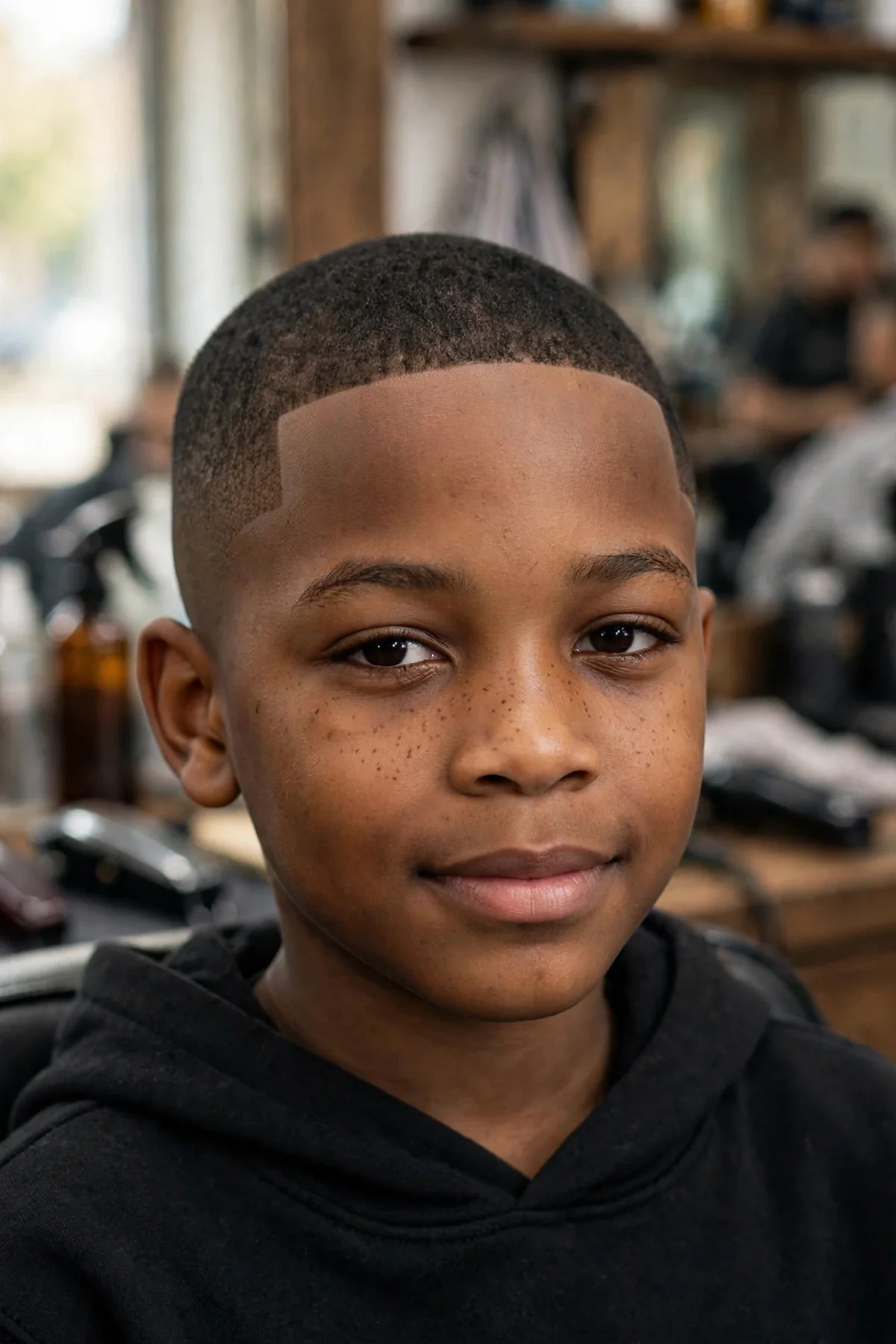
4. The Shape-Up (Lineup) Special
Sometimes the cut isn’t the star — the lineup is. A precise shape-up turns any basic cut into a statement by squaring off the hairline, sharpening the temples, and defining the beard area on older teens. It’s the detail that makes a cut look expensive.
For boys, ask the barber to keep the hairline natural rather than pushing it back too far — an aggressive lineup on a young hairline can look harsh and may encourage pushing the line back over time. A gentle, clean edge is the goal.
Ask your barber: “Just a lineup today — square the front hairline but don’t push it back, clean the temples, and edge the neckline. Keep it natural-looking.”
Style it: Lineups look best fresh. A light edge-up at home is risky — leave touch-ups to the barber every 1–2 weeks to keep it sharp.
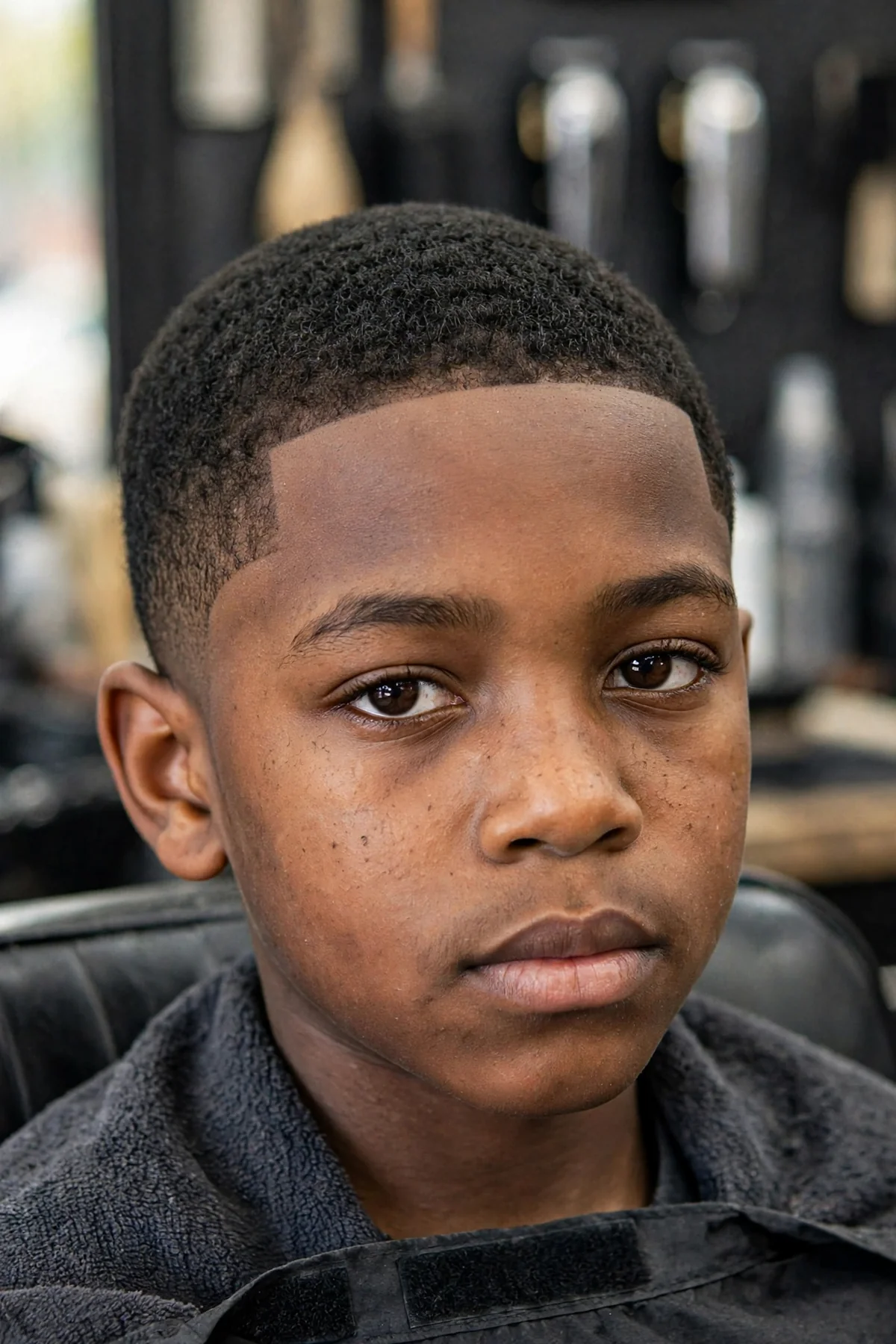
5. Low Skin Fade With Waves
Waves paired with a low skin fade is a legendary combination in african american boy haircuts. The fade drops low and tight around the ears while the top stays long enough to brush into deep, glossy waves that catch the light.
Waves are built at home, not in the chair — but the payoff is huge, and the full routine is in the styling guide below.
Ask your barber: “Low skin fade — bald at the bottom, blended to a #1.5 by the temple. Leave the top at about an inch and a half, even all over, cut with the grain so it lays down for waves.”
Style it: Brush sessions daily with a medium brush, durag at night. Keep hair moisturized — dry hair won’t wave. See the 6-step wave routine below.

Fades With Edge & Designs
For boys who want their cut to say something. Fades are the canvas of modern black kid haircuts — and a sharp design takes them from neat to unforgettable. These work best on kids old enough to sit still (usually 6 and up).
6. High Skin Fade With Hard Part
The high skin fade brings the blend line up near the crown for maximum contrast, and a hard part — a shaved line where the hair naturally parts — adds a razor-sharp detail. It’s bold, clean, and unmistakably cool.
One caution: a high skin fade grows out visibly fast, so plan on a barber visit every 2 weeks — or explore the skin fade family for lower-maintenance cousins.
Ask your barber: “High skin fade, bald to a #2 blend. Hard part on the left side where his natural part is — thin line, about two inches long. Leave the top an inch, textured.”
Style it: A pea-sized amount of pomade or styling cream combed along the part keeps the top neat and the hard part visible.

7. Fade With Lightning Bolt Design
A lightning bolt shaved into the fade is the design that never gets old. Barbers carve it with a trimmer into the faded area — usually above the ear or at the temple — and it reads instantly from across the room.
Designs last about 1–2 weeks before the hair grows enough to blur the lines, so time this cut for events: birthdays, first day of school, holidays, or picture day. Many barbers charge a small add-on fee for the artwork.
Ask your barber: “Mid fade on the sides, and shave a lightning bolt design into the fade above the right ear — one clean bolt, medium width so it shows clearly.”
Style it: Keep the design visible by keeping the surrounding fade tight. No product needed on the design itself.

8. Starburst Fade With Freestyle Lines
Freestyle line designs let the barber improvise — curved lines, swirls, and geometric accents radiating through the fade like a starburst. No two are exactly alike, which is exactly the point for a boy who wants something nobody else has.
Bring a reference photo — showing the barber beats describing, and most experienced kids’ barbers have a design portfolio. Ask to see it.
Ask your barber: “Low-to-mid fade with freestyle line designs through the fade on both sides — curved lines radiating back from the temple. Keep the top short and textured.”
Style it: Designs are temporary art. Enjoy them for a week or two, then let the next cut bring a fresh canvas.

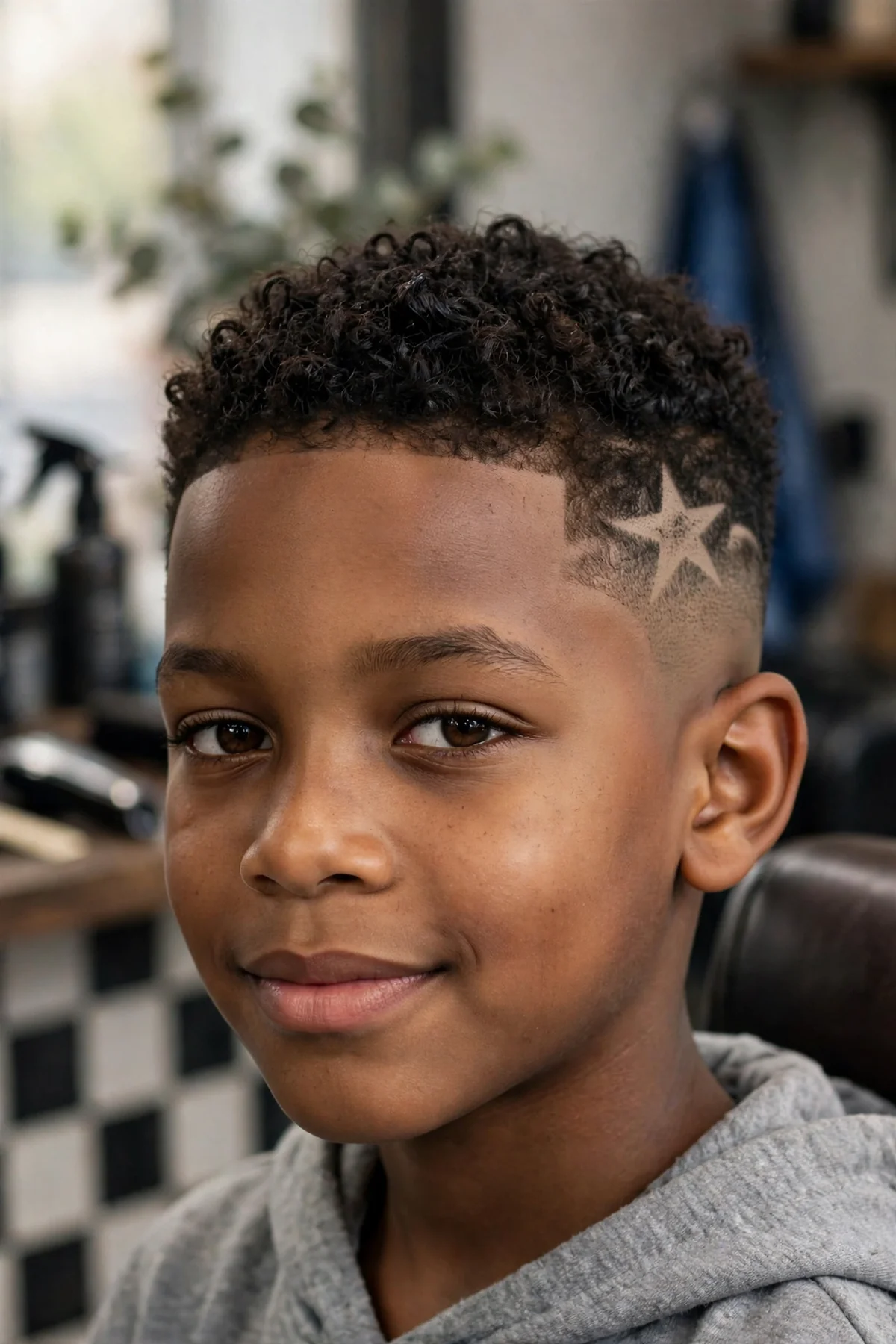
9. Mid Fade With Star Design
The mid fade sits between low and high — versatile, balanced, and flattering on most head shapes. Add a single star shaved into the fade and it becomes a signature look without going over the top. It’s also the most forgiving fade height for growing out (see our mid fade guide).
Ask your barber: “Mid fade, blended from skin to a #2. Shave one star design into the fade on the left side — clean five-point star, about an inch wide. Top stays an inch long.”
Style it: Moisturize and brush as usual. The star stays sharp longest if you avoid picking at it — kids, hands off!
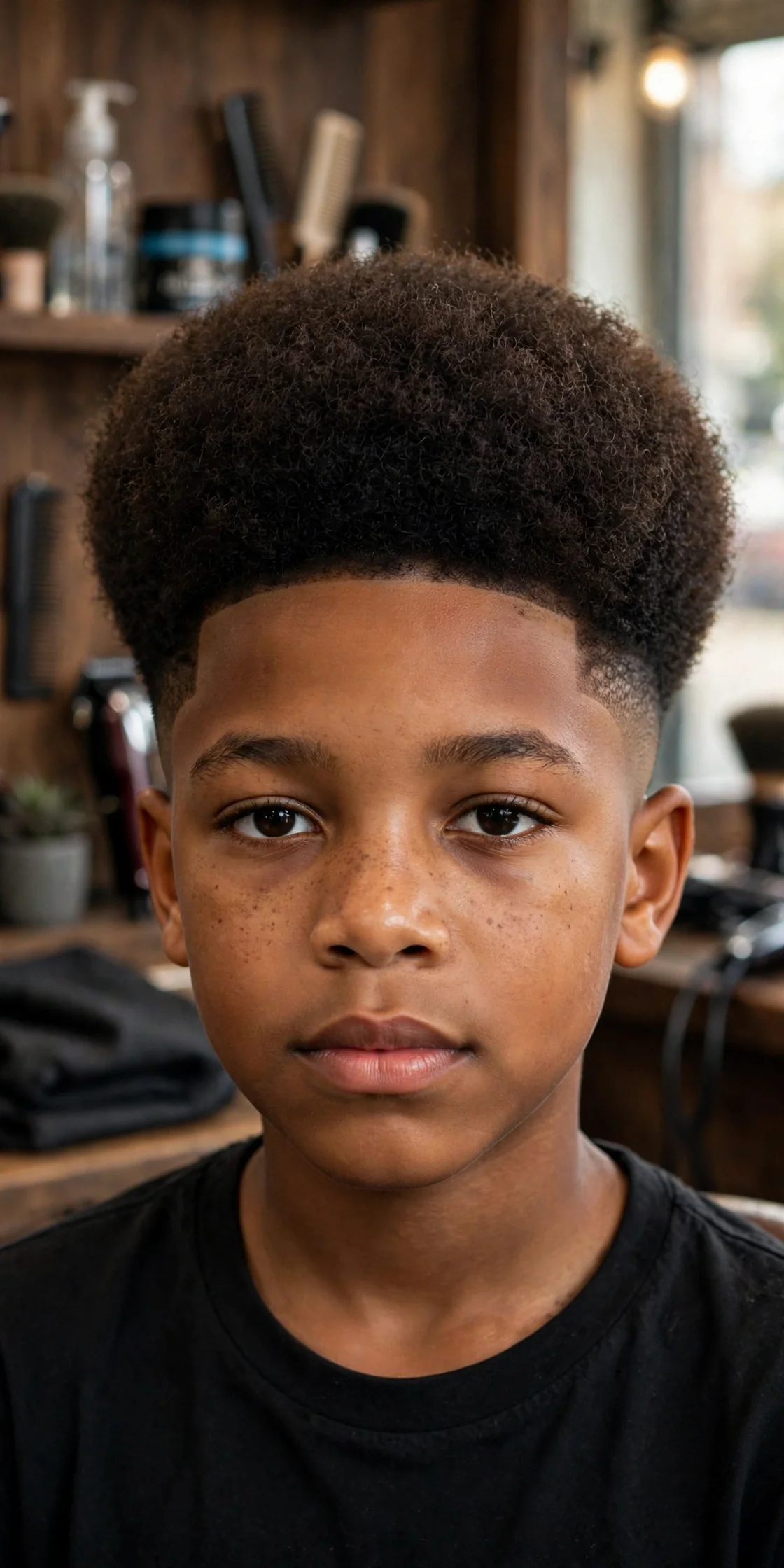
10. Tapered Afro With Temple Fade
A rounded afro on top with a clean temple fade on the sides is a beautiful blend of heritage and modern barbering. The afro keeps its full, proud shape while the faded temples give it structure and a fresh edge.
Shape matters more than length here. Ask for the afro to be shaped round and even — an uneven afro reads messy, while a shaped one looks deliberate. A pick at home keeps it perfectly rounded.
Ask your barber: “Keep the afro on top, shape it round and even — about three inches. Temple fade on the sides down to skin at the temples, blended up. Lineup on the front.”
Style it: Pick the afro out daily from the roots to keep it full and even. Moisturize well — bigger hair drinks more product.
Curls, Twists & Texture
This is where Type 3 and Type 4 hair truly shines. These hairstyles for black boys work with the natural curl pattern instead of fighting it — less heat, less tension, and a look that celebrates the texture.
11. Sponge Twists (Twist Sponge Curls)
The twist sponge is a small tool with a big payoff: rub it in circles over short, damp, moisturized hair and it coils the curls into defined little twists in minutes. It’s the fastest way to get a textured, finished look on short natural hair.
Perfect for school mornings: keep a sponge in the bathroom drawer — a five-minute rub on moisturized hair is all it takes. Works best on hair between half an inch and two inches long.
Ask your barber: “Even cut all over, about an inch long — cut it so a twist sponge will work. Clean up the edges and give him a lineup, but keep enough length on top for the sponge.”
Style it: On damp hair, apply leave-in conditioner, then rub the sponge in small circles in one direction for 2–3 minutes. The full sponge-twist method is in the how-to section below.

12. Two-Strand Twist Curls
Two-strand twists are a protective style and a look in one. The barber or a braider sections damp hair and twists two strands around each other from root to tip. Worn for a week or two, then unraveled, they leave behind gorgeous twist-out curls.
Twists are gentle on the hair — no heat, no chemicals — and they keep little hands from picking at the hair all week. Just make sure they’re not installed too tight at the roots (more on traction safety below).
Ask your barber: “I want two-strand twists — medium-size parts, twists hanging about two to three inches. Not too tight at the roots. Clean lineup around the edges.”
Style it: Mist with water and light oil every couple of days to keep twists from drying out. Sleep with a satin durag or bonnet to prevent frizz.
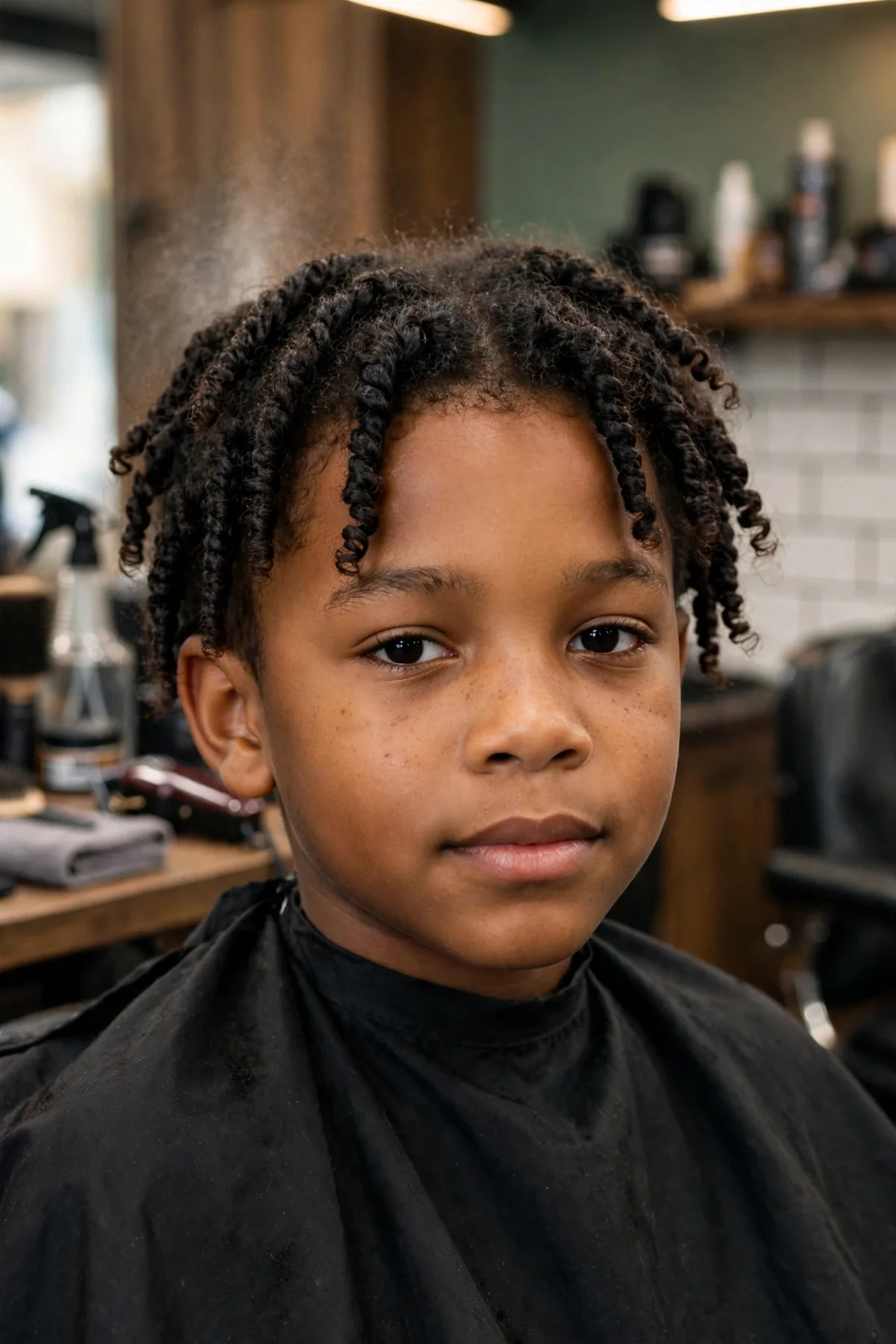
13. Freeform Curly Top
The freeform look lets curls do whatever they want — no sponge, no twist-out, just healthy, moisturized curls living their best life on top with clean sides. It’s low-effort in the best way and looks effortlessly cool on teens.
The secret is all in the care, not the cut. Well-moisturized curls clump into defined coils; dry curls turn into frizz. This style rewards boys who actually follow a routine — a good habit to build young.
Ask your barber: “Leave the top long and natural — three to four inches, just even up the ends. Low fade on the sides, keep the curls’ natural shape on top. No thinning shears.”
Style it: Wash, deep-condition weekly, apply leave-in and curl cream to damp hair, and let it air-dry. Scrunch gently — never rake curls apart when dry.

14. Mini Finger Coils
Finger coils are made by twirling small sections of damp, gelled hair around a finger until each section springs into a perfect coil. The result is incredibly defined, uniform curls that last for days — a showstopper for picture day or family events.
Installation takes 30–60 minutes depending on density, so save this for weekends — but the definition is unmatched.
Ask your barber: “Even cut on top, about two inches, so finger coils will hold. Lineup and low taper on the sides. I’ll do the coils at home — just give me the right length.”
Style it: Section damp hair, apply curling custard or gel to each section, and twirl tightly around your finger from root to tip. Air-dry completely before touching.
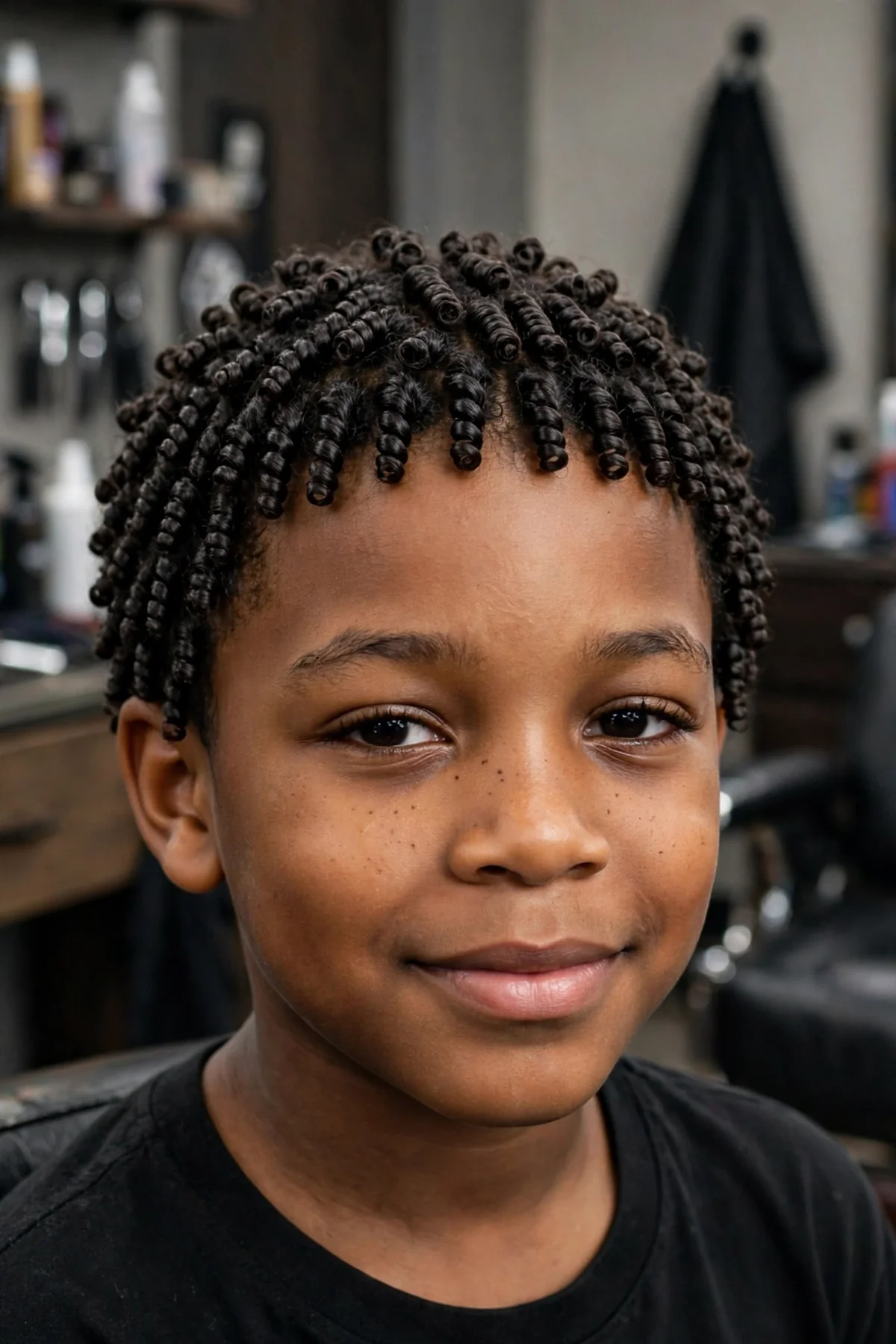
15. Frohawk With Tapered Sides
The frohawk takes a strip of natural hair down the center and tapers the sides tight — all the attitude of a mohawk with none of the shaving. It’s bold but school-appropriate in most dress codes since nothing is shaved to skin.
This is a great “first bold cut” for a boy who’s outgrown the basic fade but isn’t ready for a full mohawk. The width of the center strip changes the vibe — wider reads classic, narrower reads edgy.
Ask your barber: “Frohawk — leave a wide strip of natural hair down the center, about three inches wide and two inches tall. Taper the sides down tight, #1 to skin at the bottom. Shape the top round.”
Style it: Pick the center strip up and out for height. A little curl cream keeps the strip defined without weighing it down.

Braids, Locs & Protective Styles
Protective styles tuck the ends away, cut daily styling time to nearly zero, and last for weeks — a lifesaver for busy parents and tender-headed kids. The golden rule: they must never hurt. Pain at the roots means they’re too tight, and tight braiding over time can cause traction alopecia — real, sometimes permanent hair loss along the hairline.
16. Cornrow Braids With Fade
Cornrows braided straight back into a faded nape is a sharp, sporty combination. The braids handle the top, the fade handles the sides, and the whole thing stays neat through practices, games, and playground chaos.
Cornrows are one of humanity’s oldest hairstyles, and on boys they look both classic and current. They typically last 2–4 weeks with proper night care. Ask the braider for medium (not micro) parts — smaller braids mean more tension and longer install time.
Ask your barber: “Fade the sides and back — mid skin fade. Leave the top long for cornrows, about three to four inches. I’ll get the braids done separately — just shape the fade to meet the braids cleanly.”
Style it: Oil the scalp every 2–3 days, sleep in a durag, and don’t keep them in past 4 weeks. Take them down gently with conditioner, never dry.
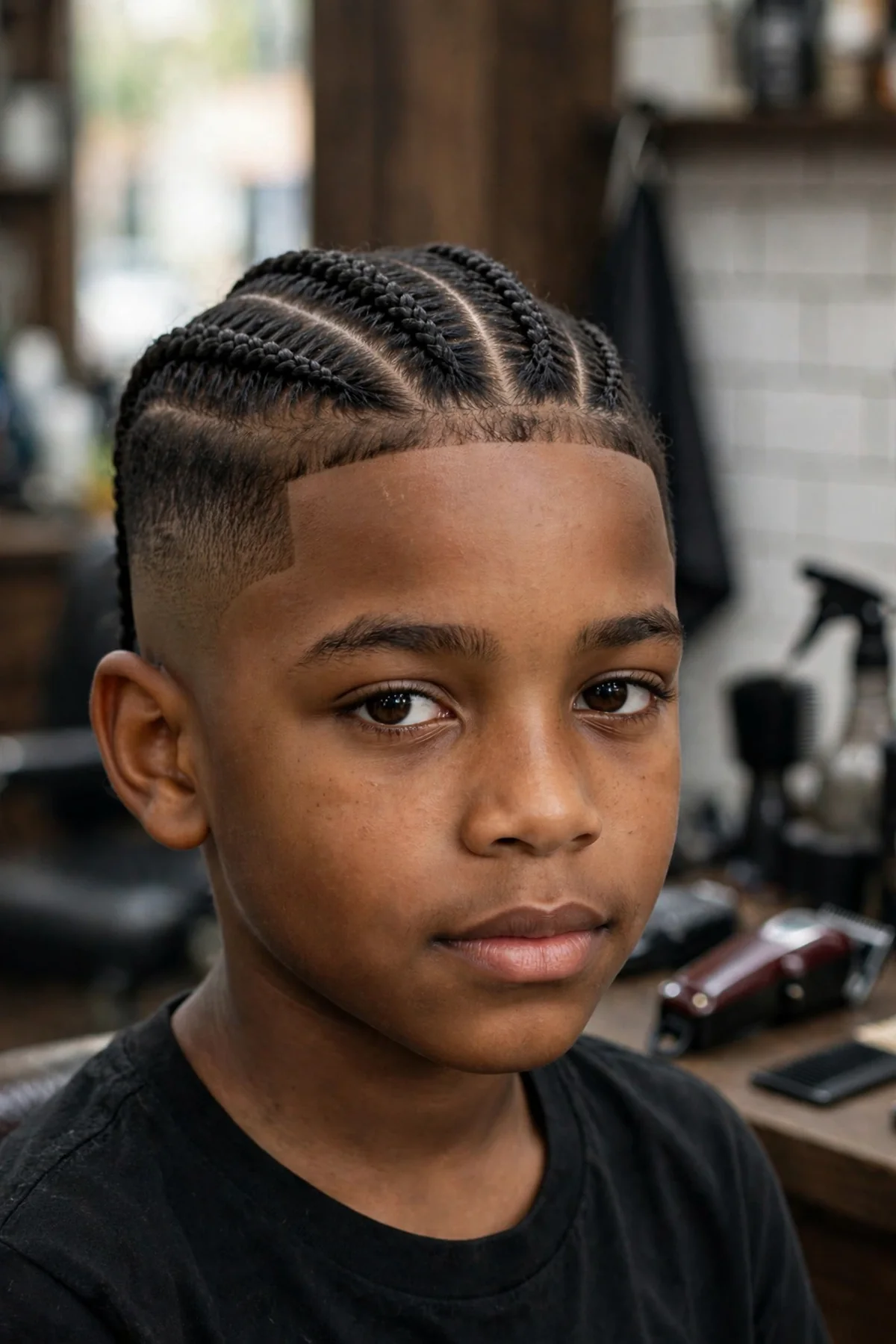
17. Box Braids For Boys
Box braids — individual braids sectioned in squares — give boys length, movement, and endless styling options: wear them loose, tie them back for sports, or pull them into a top knot. Shoulder-length box braids on a teen look fantastic.
Installation takes 3–6 hours with a skilled braider, but they last 4–6 weeks — a month of zero morning hair battles.
Ask your barber: “Just clean up the edges and nape — I’m getting box braids installed. Keep the hairline natural, don’t cut any length off the top.”
Style it: Keep the scalp moisturized with a light oil spray, wash braids gently every 1–2 weeks with diluted shampoo, and always protect them at night with satin.

18. Simple Plait Braids
Before a boy is ready for cornrows or box braids, simple three-strand plaits are the perfect starter protective style. A parent can learn to do them at home in an evening, they take 20 minutes, and they keep hair stretched and tangle-free for several days.
Plaits are also the gentlest entry point for tender-headed toddlers — no pulling at the roots, no long salon sits, and they come out easily at bath time.
Ask your barber: “Even trim all over to keep the length healthy — about two to three inches. I’ll plait it at home. Just even up any uneven ends and clean the hairline.”
Style it: On damp, moisturized hair, section into 6–10 parts and braid each into a simple three-strand plait. Secure ends with small ouchless bands — never rubber bands.
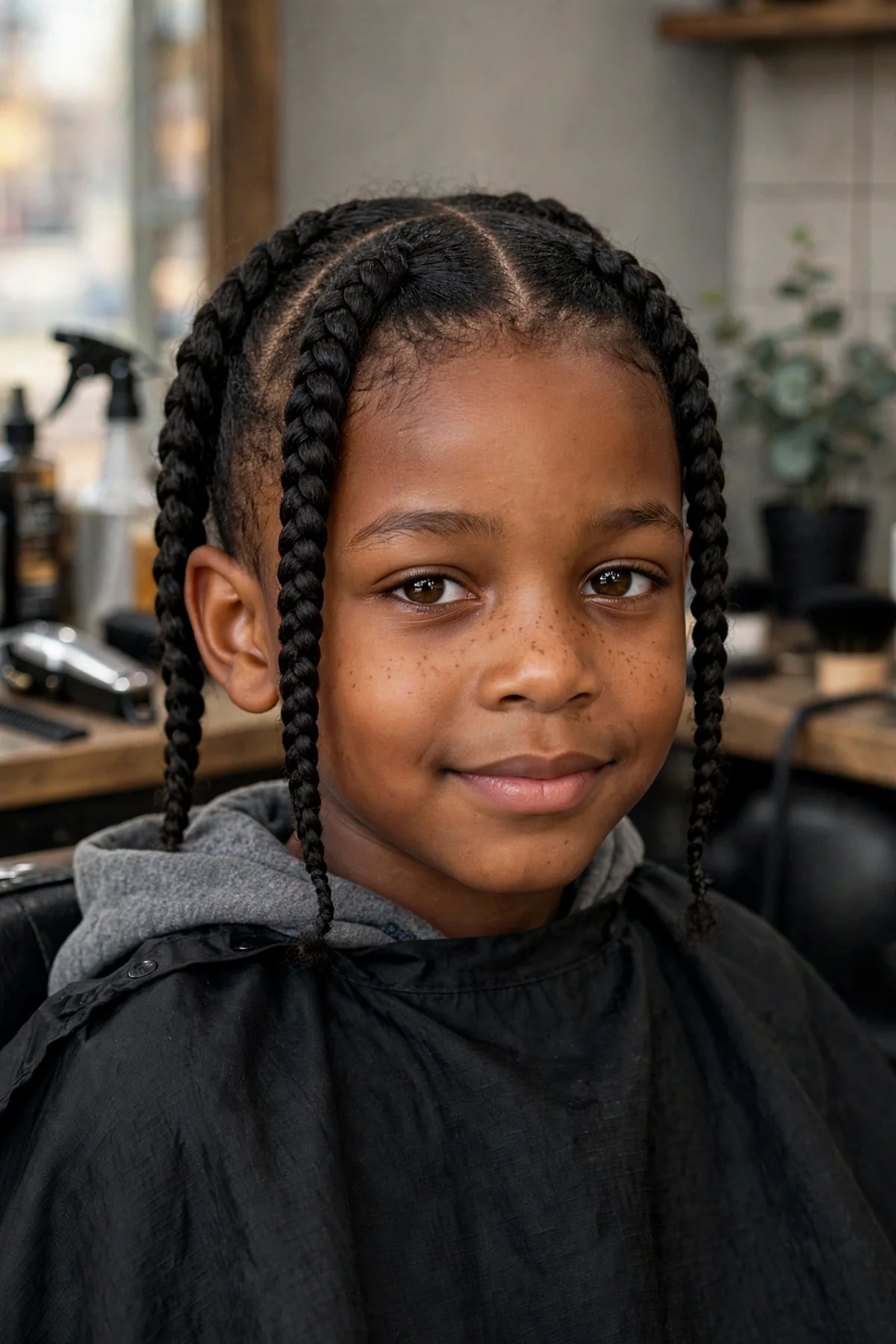
19. Starter Locs For Boys
Locs are a journey, not a haircut — and starting them young means a teen can have mature, beautiful locs by high school. Starter locs begin as coils, twists, or braids that are maintained until they lock over 6–12 months.
This is a commitment the whole family should discuss. Locs need regular retwisting, can’t be combed out once mature, and some schools still have outdated policies — check the dress code first. But for the right family, they’re deeply meaningful and stunning.
Ask your barber: “I’m starting his locs — just give him a clean shape-up and even the ends. No fade on top where the locs will form. I’ll have a loctician do the starter installation.”
Style it: Retwist new growth every 4–6 weeks, wash regularly (clean scalp locks faster), and resist the urge to fuss with them daily — locs form best when left alone.

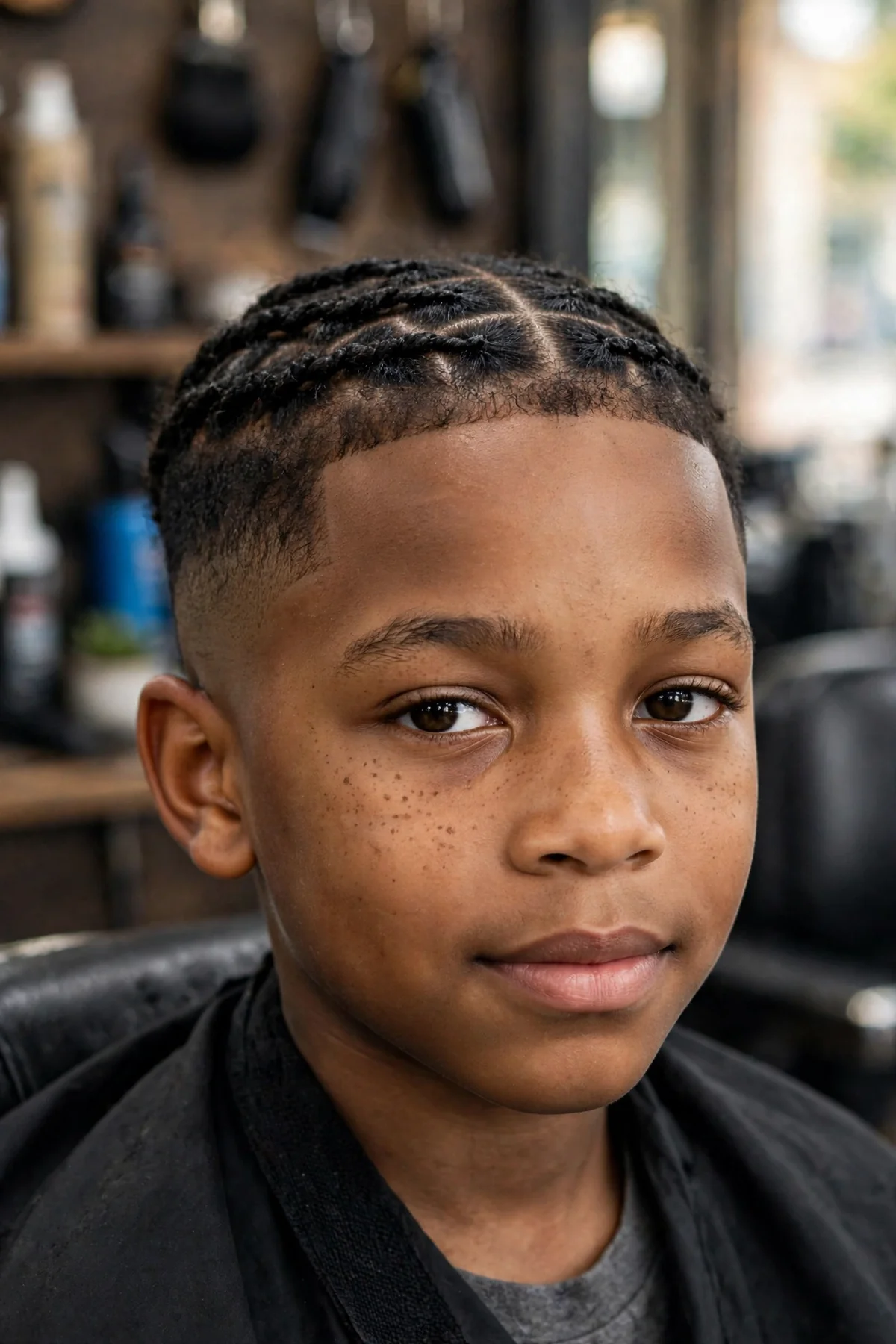
20. Flat Twists With Low Fade
Flat twists lie flat against the scalp like cornrows but are twisted instead of braided — gentler on the hairline and quicker to install. Paired with a low fade, they make a neat, sporty style that lasts 1–2 weeks.
They’re also a great “braid alternative” for boys whose edges are sensitive. Because each twist covers less scalp tension than a tight cornrow, tender-headed kids tolerate them much better.
Ask your barber: “Low fade on the sides and back, leave the top at three inches for flat twists. Keep the fade low so it meets the twists without a harsh line.”
Style it: Moisturize the twists lightly every other day and cover with satin at night. When you take them down, you get a beautiful twist-out as a bonus second style.
Bold & Statement Looks
For the confident kid — the one who picks his own cut and owns it. These black boys haircuts turn heads, and they suit tweens and teens who can handle the upkeep and the attention.
21. 360 Waves
Waves are a rite of passage. Those deep, rippling rings circling the whole head don’t happen by accident — they’re built with weeks of brushing, duragging, and discipline. For a teen, earning his waves is a genuine point of pride.
Waves work best on hair with a natural curl pattern and at least an inch of even length. The cut itself is simple; the routine is everything. Our 6-step wave method below covers exactly how to build them.
Ask your barber: “Cut for waves — even all over at about an inch and a half, cut with the grain. Low taper on the edges, not a full fade. Keep the hairline natural and full.”
Style it: Brush 15–20 minutes daily in the wave pattern, moisturize, and durag every night without fail. Consistency beats products every time.

22. Mohawk With Faded Sides
The mohawk is the ultimate statement cut: a bold strip of hair down the center with the sides faded tight. On textured hair it can be worn tall and picked out, twisted, or even braided down the strip for extra flair.
Check the school dress code first — some restrict shaved sides (the frohawk, style #15, is the safer cousin). For teens with more freedom, see our mohawk guide.
Ask your barber: “Mohawk — leave a two-inch strip down the center, about two inches tall. Skin fade the sides right up to the strip. Line up the front edge of the strip sharp.”
Style it: Pick the strip upward for height, or twist it for texture. A little styling cream keeps it standing through the day.

23. Flat Top
The flat top is a legend — the high, level, box-shaped silhouette that defined an era and still turns heads today. It takes a skilled barber and regular upkeep, but nothing says confidence like a perfectly level flat top.
It needs 3–5 inches on top and a barber who truly knows the shape — ask to see their flat tops first. Our flat top deep dive covers the technique.
Ask your barber: “Flat top — level it off at about four inches high, box shape, sharp corners. Fade the sides up into the top, #1 to skin at the bottom. This needs your best clipper-over-comb work.”
Style it: Pick it up and out daily to keep the shape boxy. Sleep in a durag to preserve the level top overnight.

24. Bleached Tip Curls
For the teen who wants color without full commitment: bleached or colored tips on natural curls. The roots stay natural, the ends get the color, and the grow-out is graceful since you’re only ever trimming the colored part away.
Caution: bleach is harsh on Type 4 hair — use a professional colorist (never a home kit), deep-condition after, and keep color to the tips only, never on young roots.
Ask your barber: “Curly top, three inches, even ends — I’m getting the tips colored professionally afterward. Low fade on the sides. Keep the curls healthy, no thinning.”
Style it: Bleached ends need extra moisture — deep-condition weekly and use a leave-in every day. Trim the tips regularly to prevent breakage from traveling up.

25. Faux Hawk With Twist Texture
The faux hawk gives mohawk energy without shaving anything — the center is styled upward while the sides are simply cut shorter. Add twist texture through the center strip and it becomes a rich, dimensional style with real personality.
It’s also wonderfully reversible. Unlike a true mohawk, a bad faux-hawk day just means combing it down. That flexibility makes it a smart bold choice for younger teens testing the waters.
Ask your barber: “Faux hawk — center strip left long at three inches, sides tapered short but not bald. I’ll twist the center at home. Shape the strip so it stands up in the middle.”
Style it: Twist small sections of the center strip with curl cream, then push everything upward and slightly forward. The twists give it grip and definition.

Toddlers & Little Kids
The under-6 crowd has different needs: short attention spans, tender heads, and parents doing most of the styling. These black kid haircuts are quick in the chair, gentle on little scalps, and easy for mom or dad to maintain at home.
26. Toddler Curly Crop
A soft, even curly crop is the perfect first “real” haircut for a toddler. It tidies the baby curls without taking them away — just evening up the shape so it looks intentional instead of wild.
Keep the first cuts conservative. A toddler’s hair texture can change a lot in the early years, so avoid dramatic shapes and let the natural pattern lead. For more little-kid inspiration, browse our little boy haircuts collection.
Ask your barber: “Toddler trim — just even up the curls all over, take off about half an inch. No fade, no lineup — keep it soft and natural. He’s little, so quick and gentle please.”
Style it: A little leave-in conditioner after bath time is the whole routine. Finger-comb gently — never brush dry toddler curls.

27. Little Boy Buzz With Lineup
When a little guy is always on the move, a short buzz with a soft lineup is pure practicality. It’s cool in summer, zero-fuss on school mornings, and the lineup keeps it looking sharp instead of plain.
Ask for a soft lineup on young kids — squared but not aggressively edged. Little hairlines are still maturing, and a gentle edge now protects the hairline later. Pair it with ideas from our short boys’ haircuts guide for variety.
Ask your barber: “Buzz all over with a #3 guard, #2 on the sides. Soft lineup — square it gently, don’t push the hairline back. Quick and calm, he’s young.”
Style it: Moisturize the scalp lightly after washing. That’s it — this cut takes care of itself.
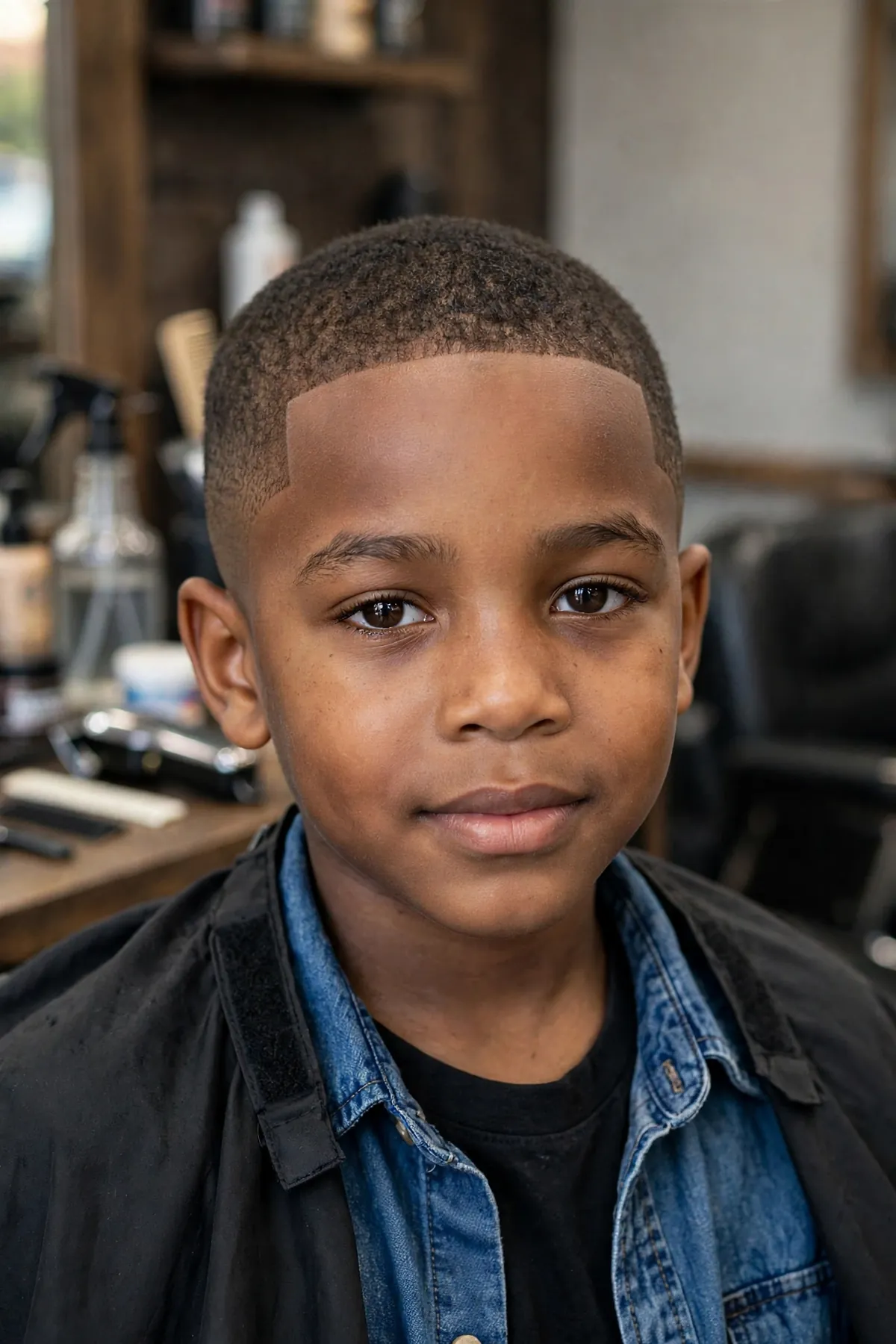
28. Mini Afro Puff
A small, round afro is pure joy on a little kid — soft, full, and full of personality. It celebrates natural texture at its most adorable and needs nothing more than moisture and a pick.
Little afros tangle fast — a satin pillowcase and regular detangling with conditioner keep it fluffy, not matted.
Ask your barber: “Shape his afro round and even — just a trim to even the shape, about two inches. No fade. Keep it soft and kid-like.”
Style it: Pick it out gently from the ends upward every morning. Moisturize daily — small afros dry out quickly.
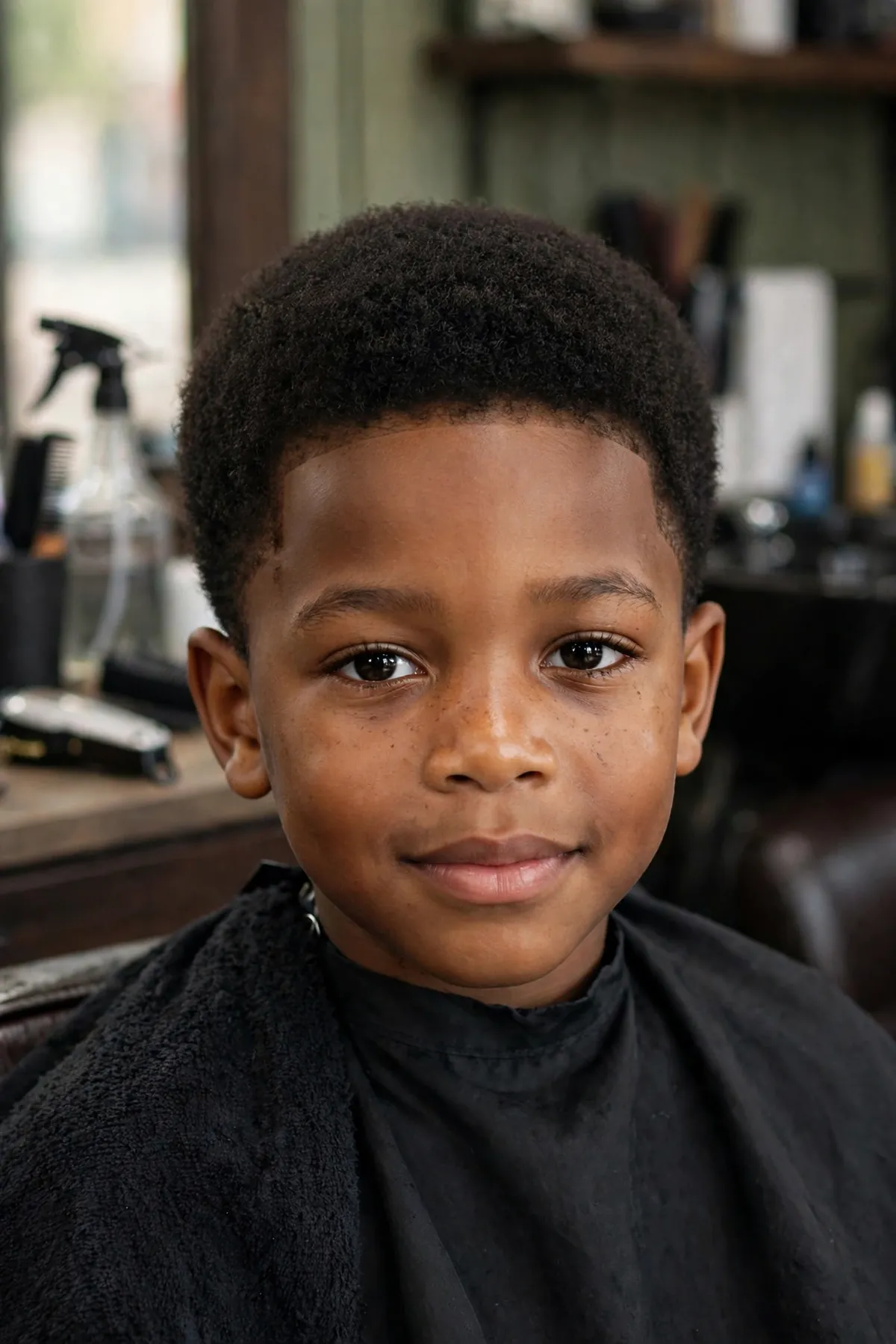
29. Kiddie Sponge Curls
The twist sponge is a parent’s secret weapon for little boys. Two minutes of circular rubbing on damp, conditioned hair produces adorable defined curls — no braiding skills required, no salon visit needed.
It also works as a between-cuts refresher — a quick sponge session makes overgrown hair look freshly styled.
Ask your barber: “Keep the top at about an inch so the sponge works — even all over on top. Light taper on the sides, soft lineup. Nothing drastic.”
Style it: Dampen, apply kids’ leave-in conditioner, and rub the sponge in circles. Let him help — kids love doing it themselves.
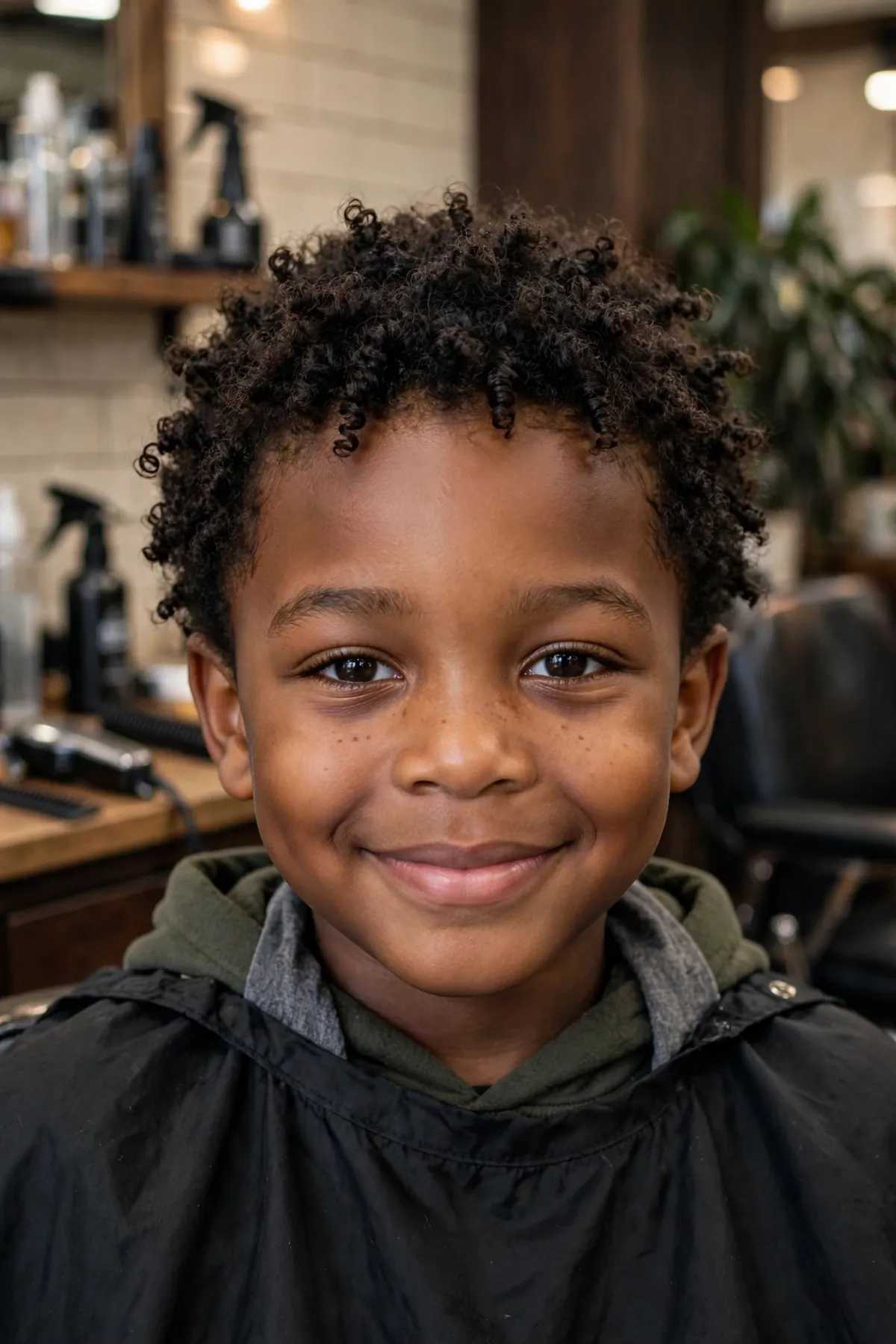
30. First-Haircut Gentle Trim
The first haircut is a milestone — and it should feel like a celebration, not an ordeal. The goal is simply to tidy the baby hair: even up straggly ends, clean the neckline softly, and keep every curl that makes him him.
Choose a barber who specializes in kids (or a kids’ salon), bring snacks and a comfort toy, and schedule it for a time of day when he’s rested and fed — never right before nap time. Many shops save a little curl in an envelope as a keepsake. Ask!
Ask your barber: “This is his first haircut — just a gentle tidy. Even up the ends, soft-clean the neckline, no clippers near his ears if we can avoid it. Take your time with him.”
Style it: No styling needed. Take the photo, save the curl, and enjoy the milestone.
Age-by-Age Haircut Picker
Match the cut to the kid — a design-heavy fade a 14-year-old loves can be a 45-minute nightmare for a 3-year-old:
- Toddlers (1–3): Toddler curly crop (#26), mini afro puff (#28), first-haircut gentle trim (#30). Priorities: speed, gentleness, zero fuss. Skip designs, skip anything needing daily styling.
- Little kids (4–7): Little boy buzz with lineup (#27), kiddie sponge curls (#29), classic low fade (#1), short even buzz (#3), simple plaits (#18). They can sit ~20 minutes. Light designs are okay for special occasions.
- Big kids (8–12): Everything opens up — fades with designs (#6–#9), sponge twists (#11), cornrows with fade (#16), flat twists (#20), frohawk (#15). They care about looking cool now, so let them pick from options you approve.
- Tweens & teens (13+): 360 waves (#21), box braids (#17), starter locs (#19), mohawk (#22), flat top (#23), bleached tips (#24). They can handle real routines and longer appointments. For more teen-focused ideas, see our teenage guys’ haircuts guide.
Type 4 Hair-Care Routine for Kids
Great black boy haircuts start before the barber chair — with healthy hair. Afro-textured hair is naturally drier than other hair types because scalp oils travel slowly down tight curls. Kids’ hair needs moisture first, everything else second. Here’s a simple routine any parent can follow:
Wash Day (every 7–10 days)
Shampoo with a sulfate-free kids’ shampoo, focusing on the scalp. Follow with a deep conditioner — leave it on 10–15 minutes under a shower cap. Detangle gently with conditioner still in, working from ends to roots with a wide-tooth comb. Never detangle dry hair.
The LOC/LCO Method (after every wash, and 2–3 times a week)
LOC stands for Liquid, Oil, Cream — the layering order that locks moisture in. On damp hair: first a water-based leave-in conditioner (Liquid), then a light natural oil like jojoba or grapeseed (Oil), then a creamy moisturizer or curl cream to seal it all (Cream). For very dry, high-porosity hair, flip it to LCO — cream before oil seals even better. Kids’ products should be gentle, fragrance-light, and free of sulfates and parabens.
Night Routine (every night)
Cotton pillowcases steal moisture and cause breakage. Every boy with textured hair should sleep in a satin or silk durag, bonnet, or on a satin pillowcase — no exceptions. For braids and twists, this also prevents frizz and extends the style by weeks.
Protective-Style Care
While braids, twists, or locs are in: oil the scalp every 2–3 days, wash gently every 1–2 weeks with diluted shampoo (focus on the scalp, rinse well), and never leave a protective style in longer than 6–8 weeks. Old styles cause matting at the roots, which leads to breakage during takedown.
Traction Alopecia Warning
This matters: braids, cornrows, or ponytails pulled too tight can damage hair follicles along the hairline, causing thinning or bald edges — sometimes permanently. Warning signs are bumps, tenderness, or headache after braiding. A style should never hurt. Tell the braider “not too tight around the edges” every single time, and if your son complains of pain, take the style down — no style is worth his hairline.
How to Style It: 360 Waves & Sponge Twists, Step by Step
Two of the most-requested techniques in black boy haircuts — done right, at home. Follow these exactly and be patient: both reward consistency.
- Start with the right length. For waves, hair should be an even 1–1.5 inches, cut with the grain. For sponge twists, half an inch to 2 inches works. Wash and condition first — both techniques start on clean, damp hair.
- Moisturize generously. Apply a water-based leave-in conditioner all over, then a light oil. Dry hair will not wave and will not twist — moisture is the foundation of both styles.
- Waves: brush with intent. Using a medium-bristle brush, brush the top forward, the sides down toward the chin, and the back down toward the neck — the classic wave pattern. Brush for 15–20 minutes. The pattern trains the hair to lay in ripples; short sessions don’t build waves.
- Sponge twists: rub in circles. Apply curl cream to damp hair, then press the twist sponge flat against the head and rub in small, firm circles — always the same direction — for 2–3 minutes per section. The sponge’s holes coil each curl into a defined twist.
- Lock it in overnight. Waves: tie a durag snugly (not painfully) every single night — this is where waves are actually made, as the fabric trains the pattern while he sleeps. Sponge twists: a satin bonnet or durag preserves the coils.
- Maintain the routine. Waves: brush daily, moisturize daily, durag nightly — visible waves typically appear in 2–4 weeks, deep waves in 6–8. Sponge twists: re-rub every 2–3 days after re-moisturizing; wash weekly and redo. Get a shape-up or edge-up every 2 weeks to keep either style looking fresh.
7 Common Mistakes Parents and Boys Make
- Shaving it all off at the first sign of trouble. Dry scalp, a little flaking, or uneven growth doesn’t mean the hair has to go. Usually it means the routine needs fixing — better moisture, gentler products. The buzz is always there as a choice, not a punishment.
- Braids installed too tight. The #1 cause of traction alopecia in kids. If he has bumps, soreness, or a headache after braiding, it’s too tight — take it down and find a gentler braider.
- Skipping moisturizer. The most common reason textured hair looks dull and breaks. If the routine has only one step, make it the LOC method after washing — water-based leave-in, oil, cream.
- Keeping a protective style in too long. Past 6–8 weeks, new growth mats at the roots and takedown causes breakage. Set a calendar reminder the day the braids go in.
- Using harsh adult products on kids. No relaxers on children, no heavy adult gels with drying alcohols, no home bleach kits. Kids’ scalps are more sensitive — keep products gentle and age-appropriate.
- Sleeping without protection. Cotton pillowcases undo a week’s worth of moisture overnight. A $5 satin durag or bonnet is the highest-value hair purchase you’ll ever make.
- Copying a grown man’s cut onto a little boy’s head. A skin fade that looks sharp on a 25-year-old can look severe on a 6-year-old. Scale the intensity to the age — softer fades, gentler lineups, natural hairlines for young kids.
Trim Cadence & Realistic Cost Guide
Budgeting for haircuts for black boys is easier when you know the rhythm. Prices below are typical US ranges — they vary by city, but the pattern holds everywhere:
| Style family | How often | Typical US cost |
|---|---|---|
| Basic cuts (buzz, taper, low fade) | Every 2–3 weeks | $25–$40 |
| Fades with designs / hard parts | Every 2 weeks (designs blur fast) | $35–$55 (+$10–$20 for design) |
| Lineup / edge-up only | Every 1–2 weeks | $10–$20 |
| Sponge twists / finger coils (at home) | Redo every 1–2 weeks | $0 (DIY) / $20–$35 at a shop |
| Cornrows / flat twists | Every 3–4 weeks | $40–$80 |
| Box braids | Every 4–6 weeks | $60–$120+ |
| Starter locs (installation) | One-time install, retwist every 4–6 weeks | $70–$150 install / $40–$70 retwist |
| Waves maintenance cut | Every 2–3 weeks | $25–$40 |
Money-saving tip: at-home basics (sponge twists, simple plaits, nightly duragging) cost nothing and stretch time between appointments — and one loyal barber beats shop-hopping.
School Dress Codes & Sports Picks
Before booking the bold cut, check the student handbook — most schools allow fades, twists, and braids, but some restrict shaved designs, mohawks, or unnatural colors. A two-minute check saves a forced re-cut; when in doubt, the classic cuts in the first section pass everywhere.
Sports picks: for football, basketball, and track, low-maintenance wins — buzz cuts, low fades, cornrows with a fade, and flat twists stay put through sweat and helmets. Long box braids can be tied back; loose long hair under a helmet gets matted. Swimmers: braids or twists tucked under a swim cap protect hair from chlorine far better than loose hair.
Face & Head Shape Notes for Boys
A cut that flatters the head shape looks twice as good. Round faces: add height on top (frohawk, flat top, picked-out curls), keep sides tight. Oval faces: nearly everything works. Square/wide faces: softer edges — textured tops, tapered (not skin-tight) sides. Bumpy head shapes: buzz cuts reveal every ridge, so keep a little more length on top (a #3 instead of a #1). When unsure, ask the barber.
Frequently Asked Questions
How often should a black boy get a haircut?
Most black boy haircuts look their best with a barber visit every 2–3 weeks. Fades and lineups grow out visibly fast, so boys with skin fades or sharp designs do best every 2 weeks. Longer styles — twists, curls, afros — can stretch to 3–4 weeks, with a quick edge-up in between if needed. Protective styles like braids follow their own rhythm: reinstall every 3–6 weeks depending on the style.
Are braids safe for kids?
Yes — when done correctly. Braids are one of the healthiest options for textured hair because they protect the ends and reduce daily manipulation. The safety rules are simple: they should never hurt, never pull the hairline tight, and never stay in longer than 6–8 weeks. Watch for bumps, tenderness, or headaches after braiding — those are warning signs of traction alopecia. A good braider prioritizes the health of the edges over a super-sleek look.
What products should I use for my son’s Type 4 hair?
Keep it simple and gentle: a sulfate-free shampoo, a rich conditioner (plus a deep conditioner for wash day), a water-based leave-in conditioner, a light natural oil (jojoba, grapeseed, or sweet almond), and a curl cream for styling. Choose products labeled for kids or for curly/coily hair, and avoid sulfates, parabens, drying alcohols, and adult chemical treatments. The LOC method — leave-in, oil, cream on damp hair — matters more than any single brand.
What age should a black boy get his first haircut?
There’s no magic number — most boys get their first real trim between 12 and 24 months, when the baby hair starts looking uneven. Readiness matters more than age: he should be able to sit (with help) for 10–15 minutes. Before that, gentle trims of straggly ends at home are plenty. Make the first shop visit a happy experience: a kids’ barber, a rested and fed toddler, and zero pressure.
How do I ask the barber for waves?
Say: “Cut for waves — even all over, about an inch and a half, cut with the grain. Low taper on the edges.” The cut is only the starting point; waves are built at home with daily brushing (15–20 minutes in the wave pattern), moisturizing, and a durag every night. Tell your son the truth up front: waves take 2–8 weeks of consistency. Boys who commit get the ripples; boys who skip the durag don’t.
Do fades damage hair?
No — a fade is just a haircut, and clippers don’t damage hair. What can cause problems is everything around the cut: lineups pushed too far back over time, skipping moisturizer on the exposed scalp, or going too long between cuts so the blend grows out unevenly. Keep the hairline natural (don’t let it get pushed back), moisturize the scalp, and maintain the schedule — and fades are completely safe for boys of all ages.
Conclusion
The best black boy haircuts match the cut to the kid — his age, texture, routine, and personality. Crisp low fade for picture day, sponge twists for easy mornings, cornrows for sports season, waves earned one brush session at a time: the right cut makes a boy stand taller.
Start with healthy hair, pick a barber who knows textured hair, use the “ask your barber” scripts above so nothing gets lost in translation, and protect the style at night. Do that, and any of these 30 cuts will look fantastic. For the grown-up versions of these classics, explore our fade haircuts for Black men guide — and if you found this helpful, share it with another parent navigating the barber chair.