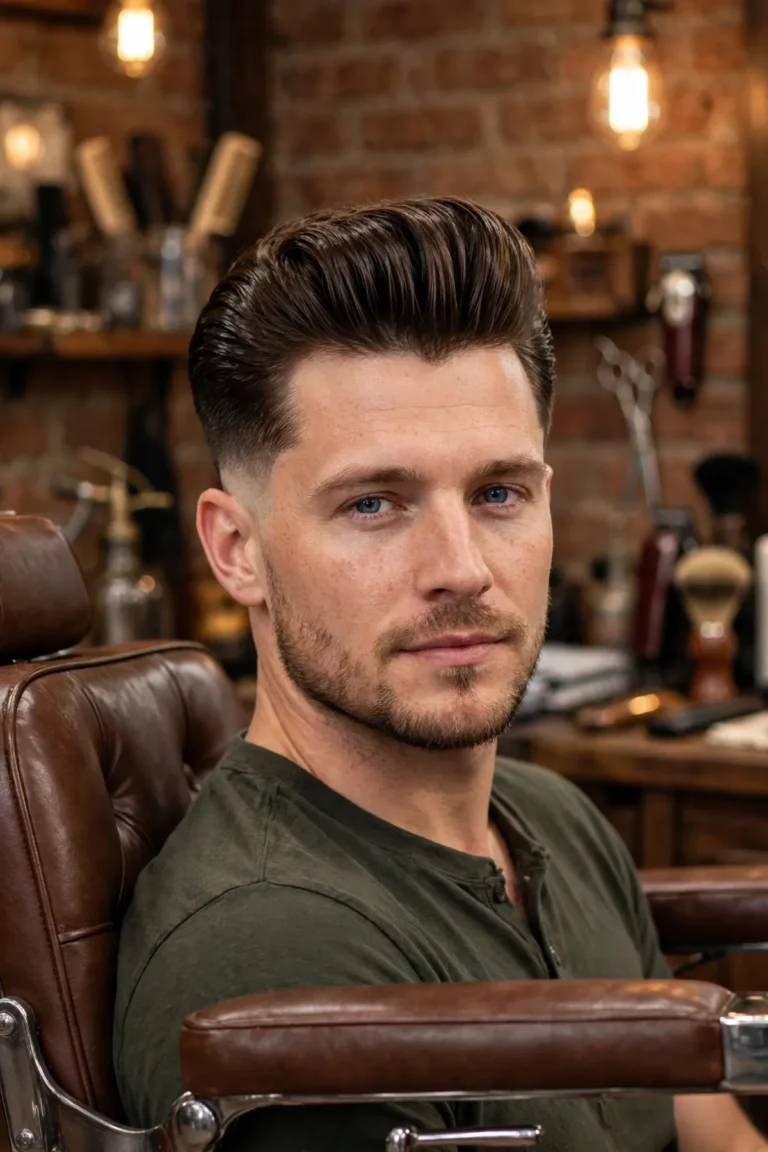
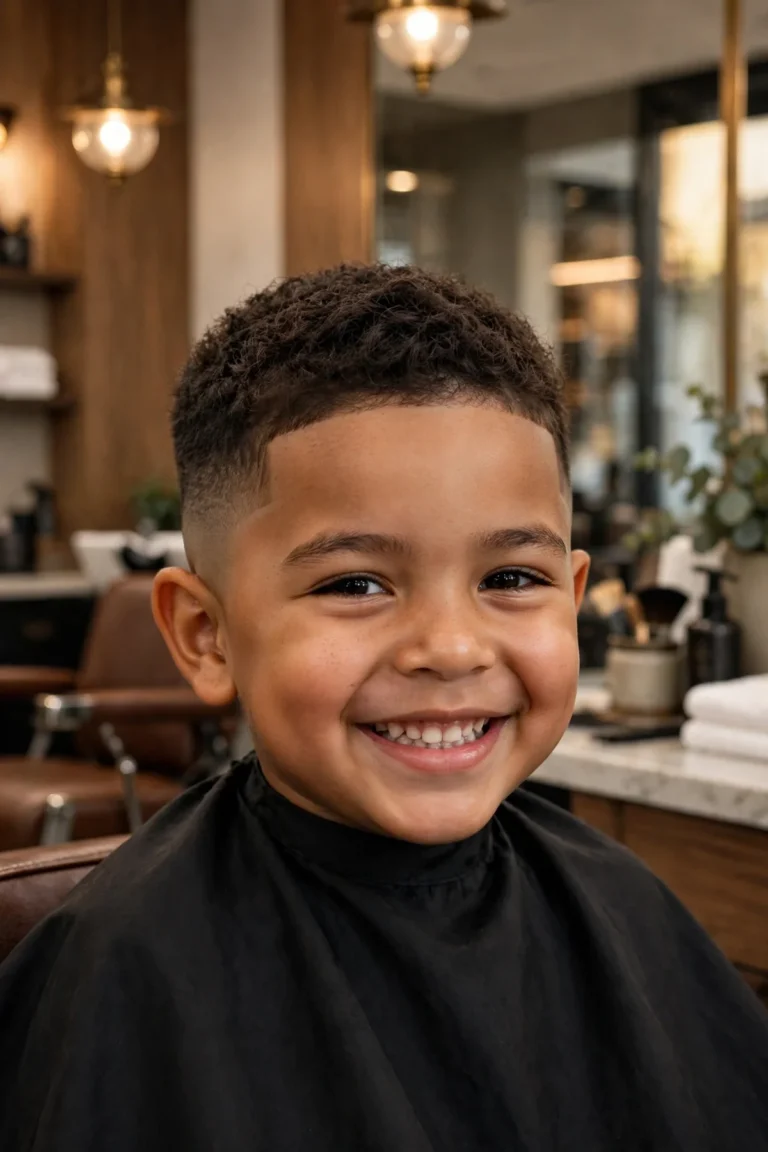
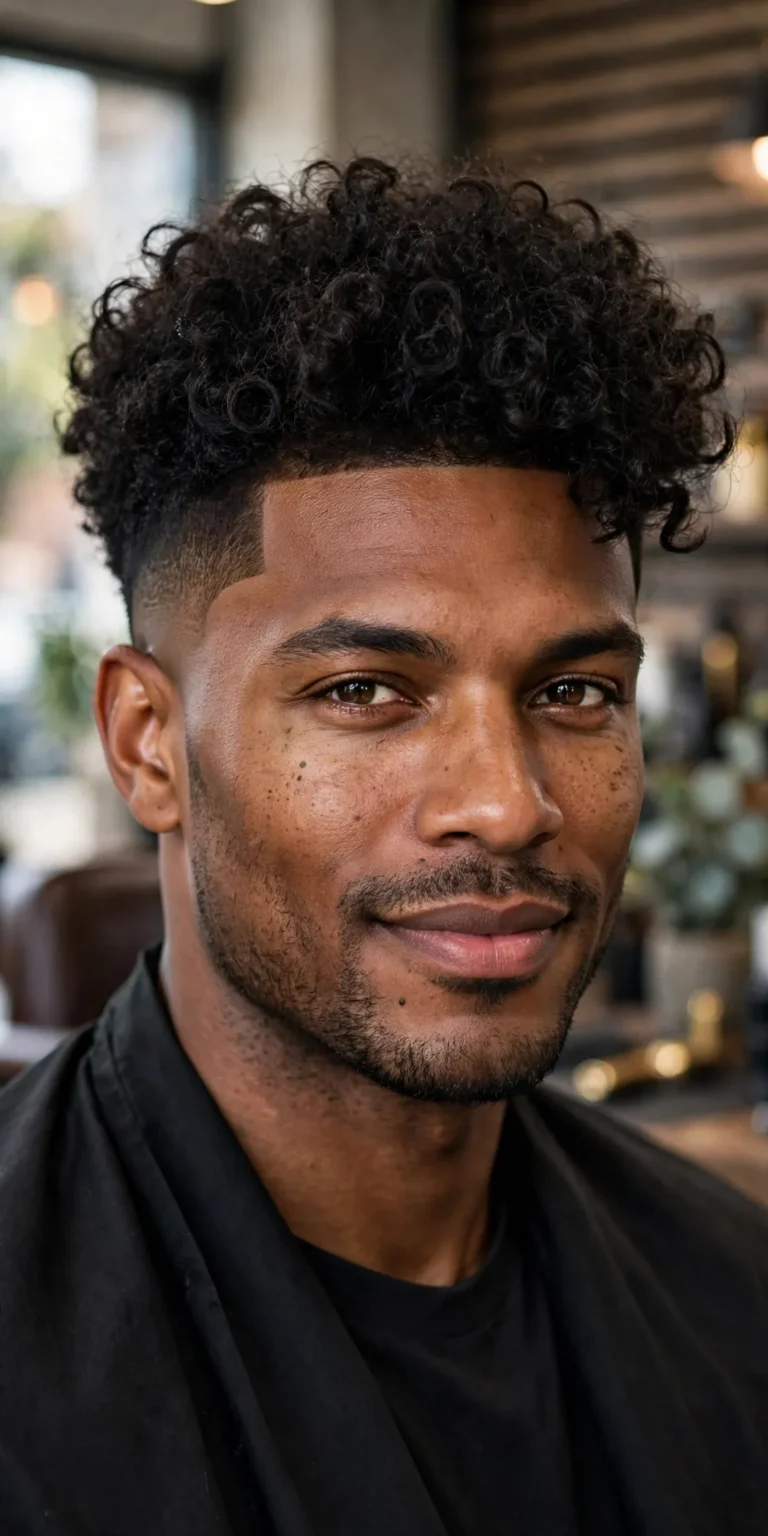
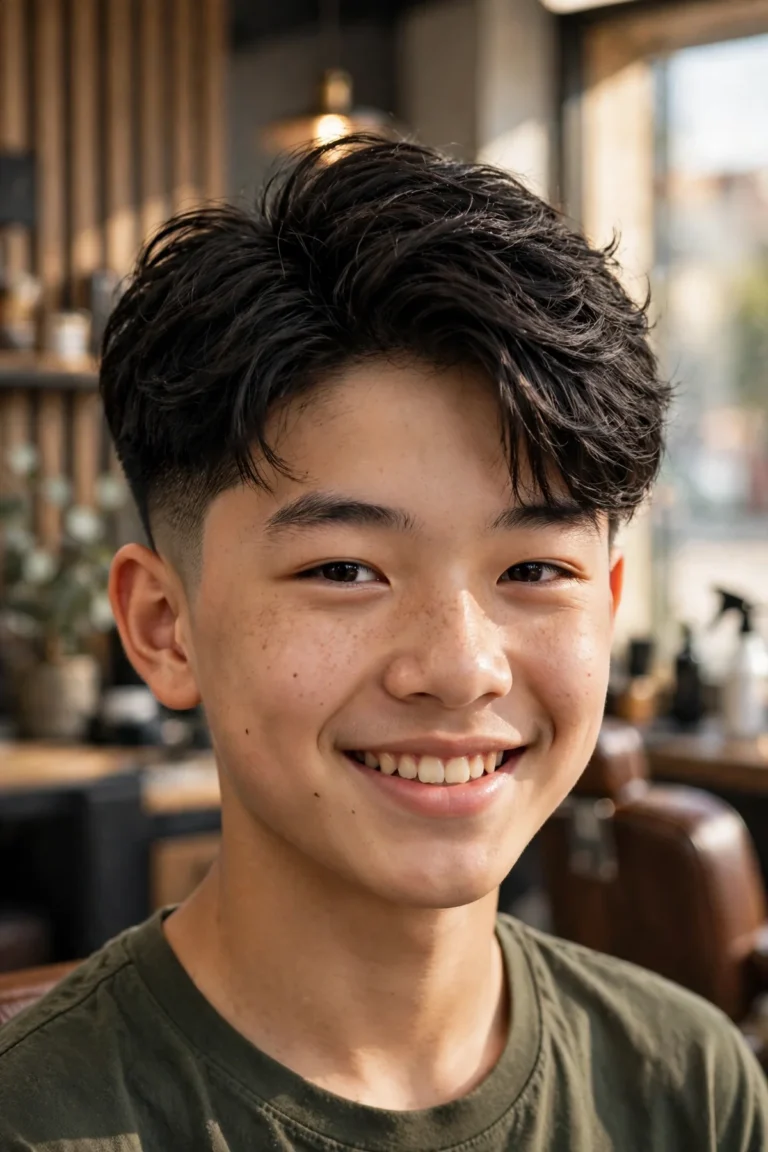
30 Best High and Tight Haircuts for Men That Command Respect
Some haircuts are pure fashion. The high and tight haircut is something tougher than that. Born in military barracks and perfected by Marines, it is the definition of a sharp, disciplined look — sides and back shaved clean and high, a slightly longer top standing at attention. And yet this old soldier of a haircut has quietly become one of the most versatile mens haircuts you can ask for today. From the classic military buzz to textured modern takes with beards and fades, there is a version of the high and tight for nearly every man. In this guide, you will find 30 of the best high and tight haircuts for men, plus exactly what to tell your barber, which version suits your face shape, and how to keep it razor-sharp between cuts.
What Is a High and Tight Haircut?
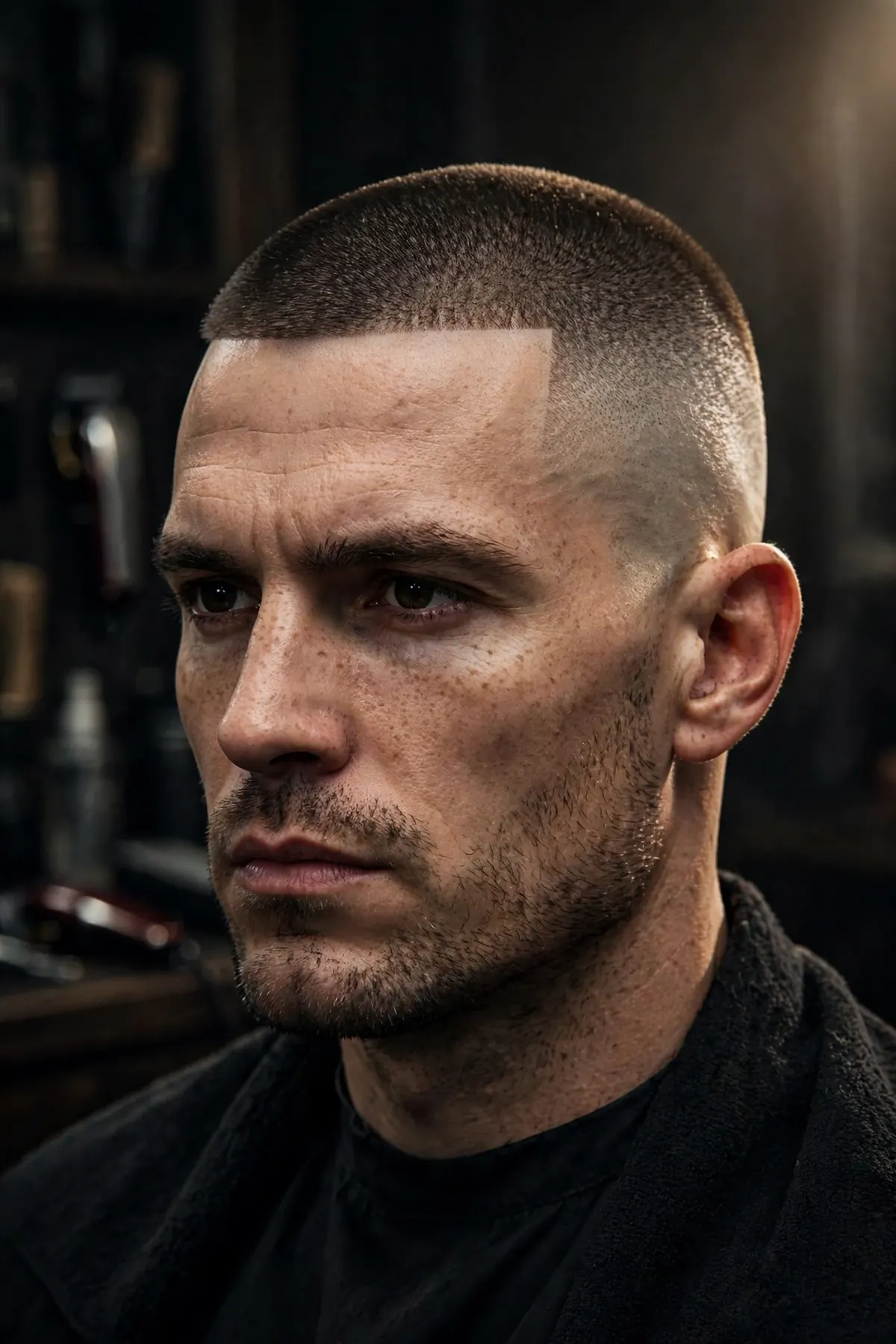
A high and tight haircut is a military-style short haircut where the back and sides are clipped extremely short — usually a #0 or #1 guard, sometimes down to bare skin — up to a line high above the temples. That high cut line is where the “high” comes from. The top is kept slightly longer than the sides, separated by a sharp, clean boundary, which gives the cut its “tight” finish.
The top can be anything from barely-there stubble to a short crew length of one to two inches, depending on the version you pick. The style is most famous as the signature look of the U.S. armed forces, where it is prized because it is quick to cut, keeps the head cool, and grows out neatly. Police officers, athletes, and men with active jobs adopted it for the same reasons. Today, the high and tight has broken out of its uniform roots and sits comfortably next to modern fade haircut styles in barbershops everywhere.
The single detail that separates it from other short haircuts for men is the placement of the fade. A regular fade sits low or mid on the head, while the high and tight pushes the blend line high — well above the temples — which is what gives it that bold, structured, unmistakably sharp look.
If you are new to the style, it helps to think of the high and tight fade as the modern, barbershop-polished cousin of the classic military haircut. The bones are the same — short sides cut high, slightly longer top — but the faded version softens the hard line into a smooth gradient, which is why so many men ask for it by name today.
The 30 Best High and Tight Haircuts for Men
From the original military version to modern textured and faded takes, here are the 30 best high and tight haircuts for men — pick the one that matches your face, hair type, and lifestyle.
1. Classic Military High and Tight
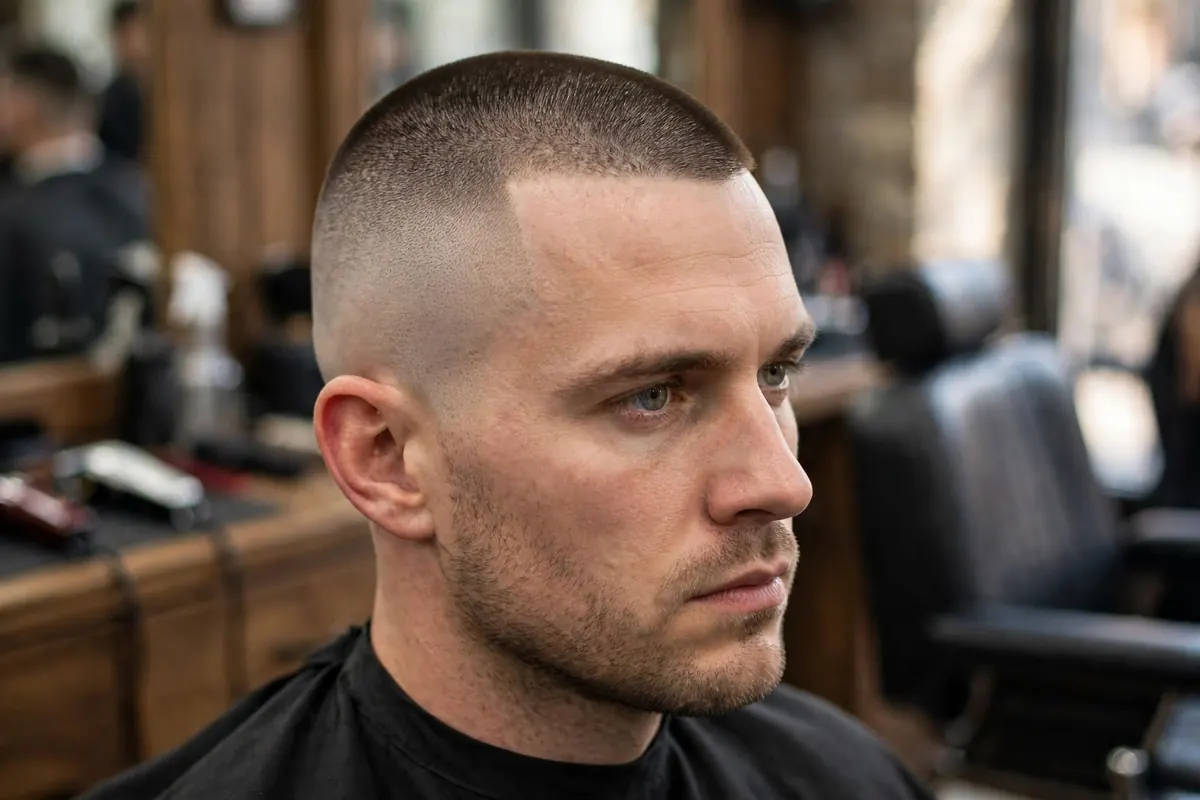
This is the original — the cut that started it all. The sides and back are clipped down to a #0 or #1 guard right up to the top of the head, with a slightly longer buzz across the crown. The contrast between the near-bare sides and the short top is bold and unmistakable. It takes minutes to cut, needs zero styling, and looks just as sharp on day one as it does on day fourteen. If you want the true high and tight haircut in its purest form, start here.
Best for: men with strong jawlines and oval or square face shapes who want a no-fuss, masculine look.
2. High and Tight Skin Fade

The skin fade version is the modern favorite — and the most requested high and tight in barbershops right now. Instead of a flat clipper line, the sides melt from bare skin at the bottom into the short top, with the blend sitting high above the temples. The result is cleaner and sharper than the classic version, with a crisp fade that makes facial features pop. It is the perfect middle ground between military discipline and modern barber style.
Best for: men who want maximum sharpness and do not mind trims every two to three weeks to keep the fade crisp.
3. High and Tight Recon
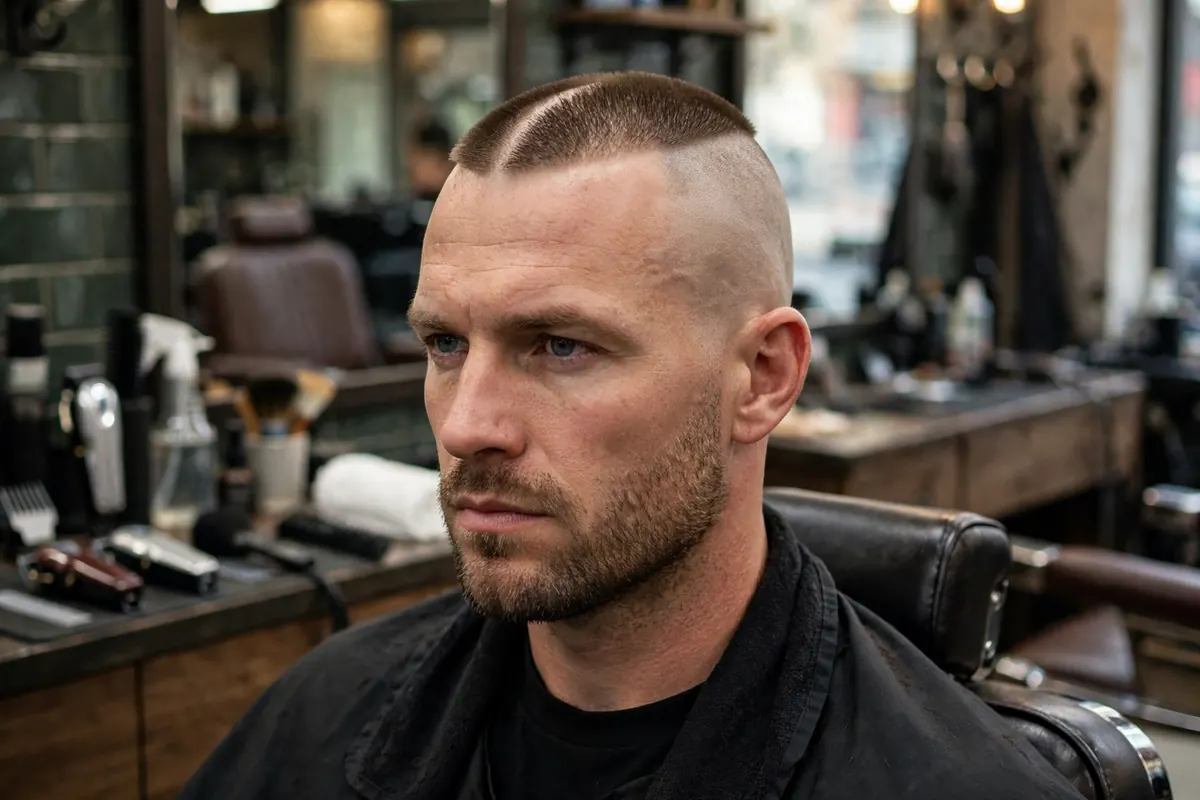
The recon is the most extreme version of the high and tight — a haircut with real attitude. The sides and back are shaved down to the skin, leaving only a narrow strip of short hair running across the top of the head, almost like a wider, shorter cousin of a mohawk. There is nothing subtle about it. This version is for men who want their haircut to make a statement and are comfortable turning heads. Pair it with a clean neckline and sharp lineup for the full effect.
Best for: bold personalities who want the most dramatic high and tight variation.
4. Buzz-Cut High and Tight

This version takes the high and tight back toward simplicity. Both the top and the sides are clipped short — usually between a #1 and #2 guard — with only a slight contrast between them. It reads as a buzz cut, but the high placement of the sides keeps it firmly in high and tight territory. It is the fastest haircut a barber can give you, costs the least in maintenance, and suits men who want to look clean without thinking about their hair at all.
Best for: men with active lifestyles, strong bone structure, or thinning hair — the uniform shortness hides sparseness well.
5. High and Tight with a Longer Top

Not every man wants a buzzed top, and this version proves the high and tight can be versatile. The sides stay high and short, but the top is left one to three inches long — long enough to style. You can wear it textured and messy for a casual day, or comb it neat for the office. It is the ideal compromise: all the practicality of a high and tight on the sides, with real styling freedom on top. This is the version most style-conscious men end up choosing.
Best for: straight or thick hair, and men who want one haircut that works for both casual and formal settings.
6. Textured High and Tight

Texture is what turns a military cut into a modern hairstyle. In the textured high and tight, the barber point-cuts the top into choppy, uneven layers that catch the light and move naturally. The sides stay tight and high as always, but the top suddenly looks relaxed and current instead of rigid. A small amount of matte paste scrunched through the top is all it takes to bring the texture to life. If the classic version feels too stiff for you, this is the update you want.
Best for: men who like a low-effort but visibly styled look, especially with straight or slightly wavy hair.
7. High and Tight Crew Cut
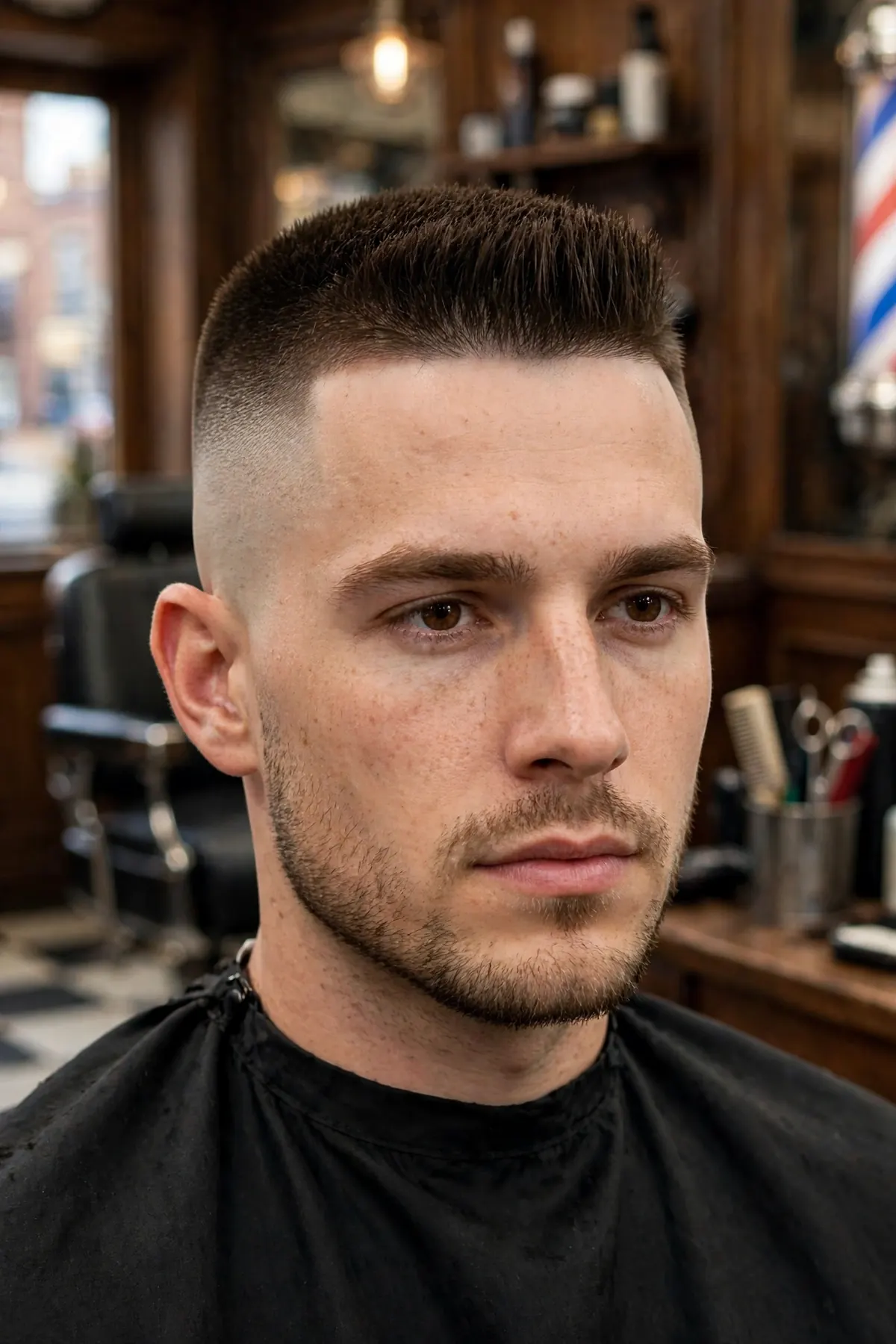
The crew-cut version borrows from another military classic. Here the top is cut to a uniform length of about an inch, trimmed evenly across the crown so it stands up neatly. The sides are kept high and tight as ever. The result is tidier and more polished than a buzzed version, with a classic American look that works in any setting — from the gym to a wedding. It is also one of the easiest versions to maintain at home with a single guard size on top.
Best for: men who want a bit more length than a buzz but still need a neat, uniform finish.
8. High and Tight with a Side Part

Adding a side part gives the high and tight an unexpected touch of old-school class. The top is left slightly longer so it can be parted cleanly to one side, while the sides stay clipped high and sharp. The part adds structure and a touch of formality that the military original never had, making this one of the most office-friendly versions on the list. A dab of pomade keeps the part crisp all day without looking stiff.
Best for: professionals who want a military-inspired cut that still fits a dress code.
9. High and Tight Flattop
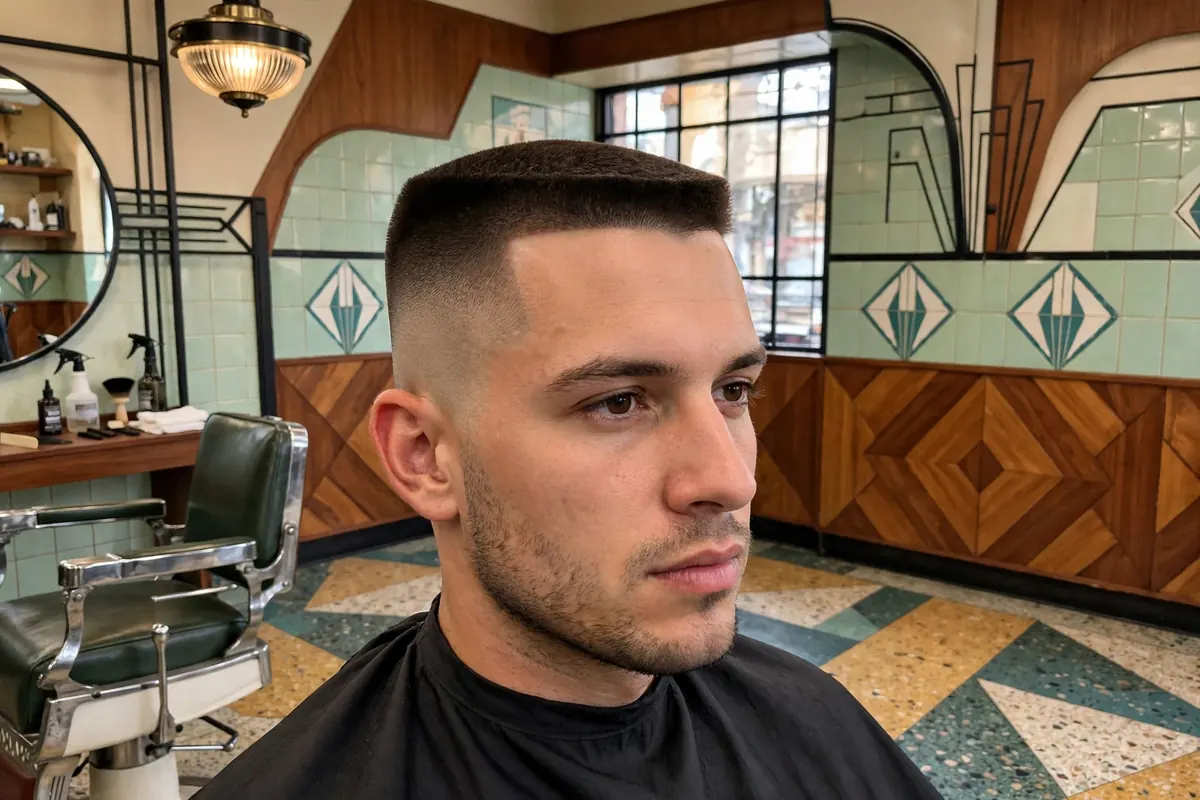
The flattop is the retro heavyweight of the high and tight family. The top is trimmed perfectly level into a flat, square shape while the sides fade down to the skin. It is a bold, architectural look that takes real skill from your barber — the flat surface has to be dead even. This style turns heads and pairs beautifully with a strong taper fade on the sides. It is not subtle, but it is unforgettable.
Best for: thick, straight hair and men who love a confident, vintage-inspired statement.
10. High and Tight with a Beard

One of the smartest modern pairings in men’s grooming: a high and tight on top with a full beard below. The ultra-clean sides make the beard look thicker and more intentional by contrast, and the sharp fade line balances the weight of the facial hair. The key is keeping the beard’s cheek line neat and connecting the fade into the beard smoothly. This combination has become a signature look for barbershop-regulars everywhere.
Best for: men with solid beard growth who want the full barbershop look.
11. Curly High and Tight

Curly hair and the high and tight are a natural match. The short sides take away all the bulk and weight that make curls hard to manage, while the top is left long enough for the curls to form and show off their texture. The contrast between tight sides and lively curls looks fantastic. Your barber should cut the top dry or stretched so the curl pattern is respected — never fight the curls, let them be the star of the show.
Best for: naturally curly hair of any length on top; a curl cream keeps the top defined.
12. Afro High and Tight

This version is built for coily and afro-textured hair. The sides are taken high and tight — often with a skin fade — while the natural coils are left standing on top in a shaped, rounded form. It is clean, structured, and celebrates texture all at once. A lineup along the forehead and temples adds razor-sharp definition. Finish with a moisturizing cream or light oil to keep the coils healthy and the top looking intentional.
Best for: coily or afro-textured hair; pairs perfectly with a beard or lineup.
13. Wavy High and Tight
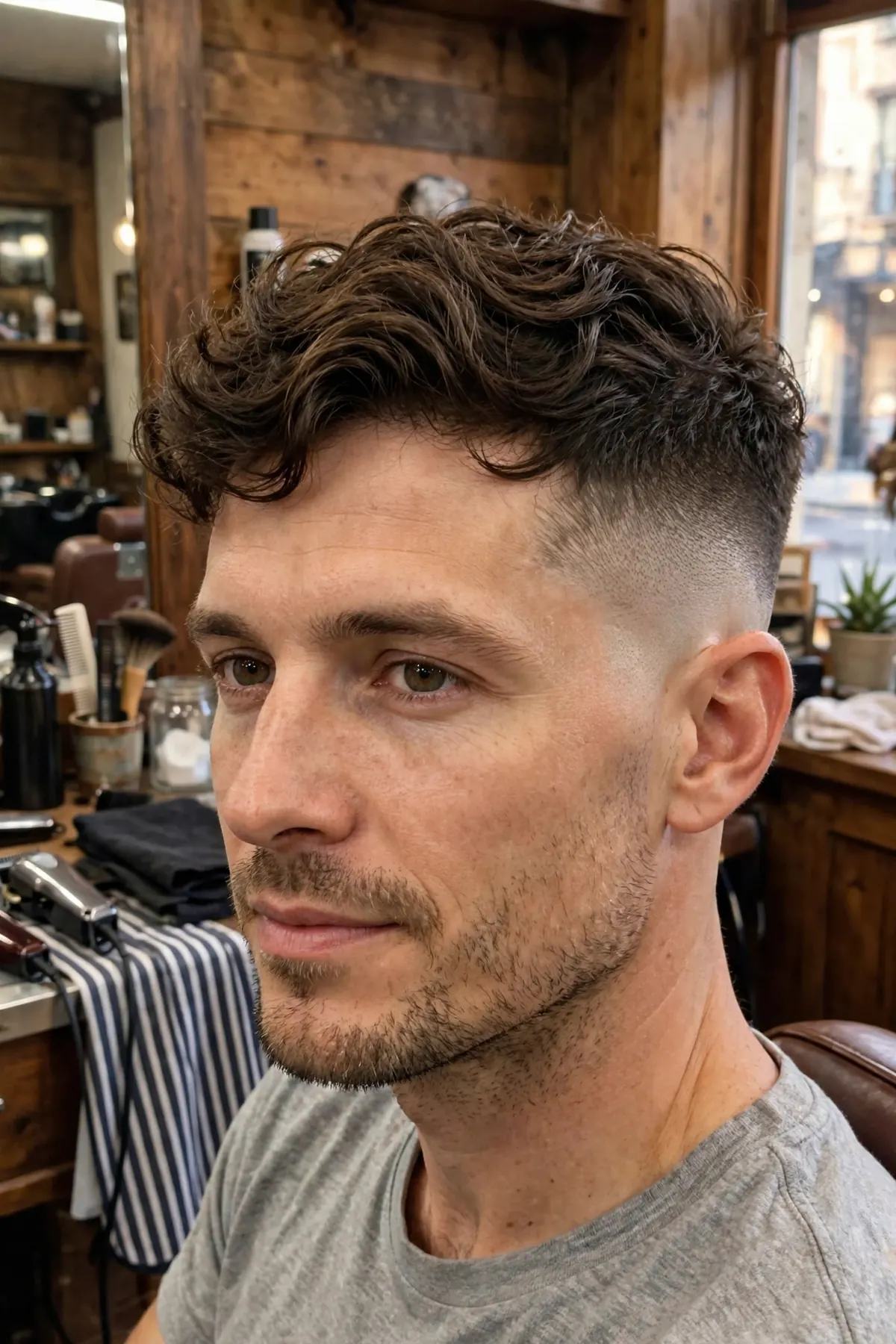
Wavy hair gives the high and tight a relaxed, beachy energy that straight hair cannot copy. The sides stay clipped high and clean, and the waves on top are left long enough to show their movement — usually an inch or two. Let the waves air-dry for a natural finish, or add a touch of sea-salt spray for extra texture. It is one of the most effortlessly stylish versions on this list.
Best for: naturally wavy hair; minimal product needed for maximum effect.
14. Disconnected High and Tight

The disconnected version skips the blend entirely. The top is left distinctly longer and cut with no fade connecting it to the shaved sides — just a bold, clean line where the two lengths meet. It is dramatic, edgy, and very modern. Because there is no graduation to grow out, this one actually looks intentional for longer between cuts, though the shaved sides still need regular touch-ups.
Best for: men who want maximum contrast and an edgy, fashion-forward look.
15. High and Tight with a Hard Part

A hard part takes the side-part version and turns up the precision. Instead of a natural part, the barber razors a crisp, thin line into the hair where the part sits. Against the tight sides, that razor line looks razor-sharp — pun intended. It is a small detail that makes the whole haircut look more expensive and deliberate. Ask your barber to keep the line thin; a wide hard part can look dated.
Best for: men who love precision and detail in their haircuts.
16. Slicked-Back High and Tight

Leave the top a couple of inches long, comb it straight back with some pomade, and the humble high and tight suddenly looks like a boardroom haircut. The tight sides keep it from looking like a full slick-back, giving you a cleaner, more modern silhouette. This version proves the style can be dressed up — it is sharp enough for formal events while still being wash-and-go on lazy days.
Best for: straight hair with some length on top; use a medium-hold pomade for a polished finish.
17. Brushed-Up High and Tight
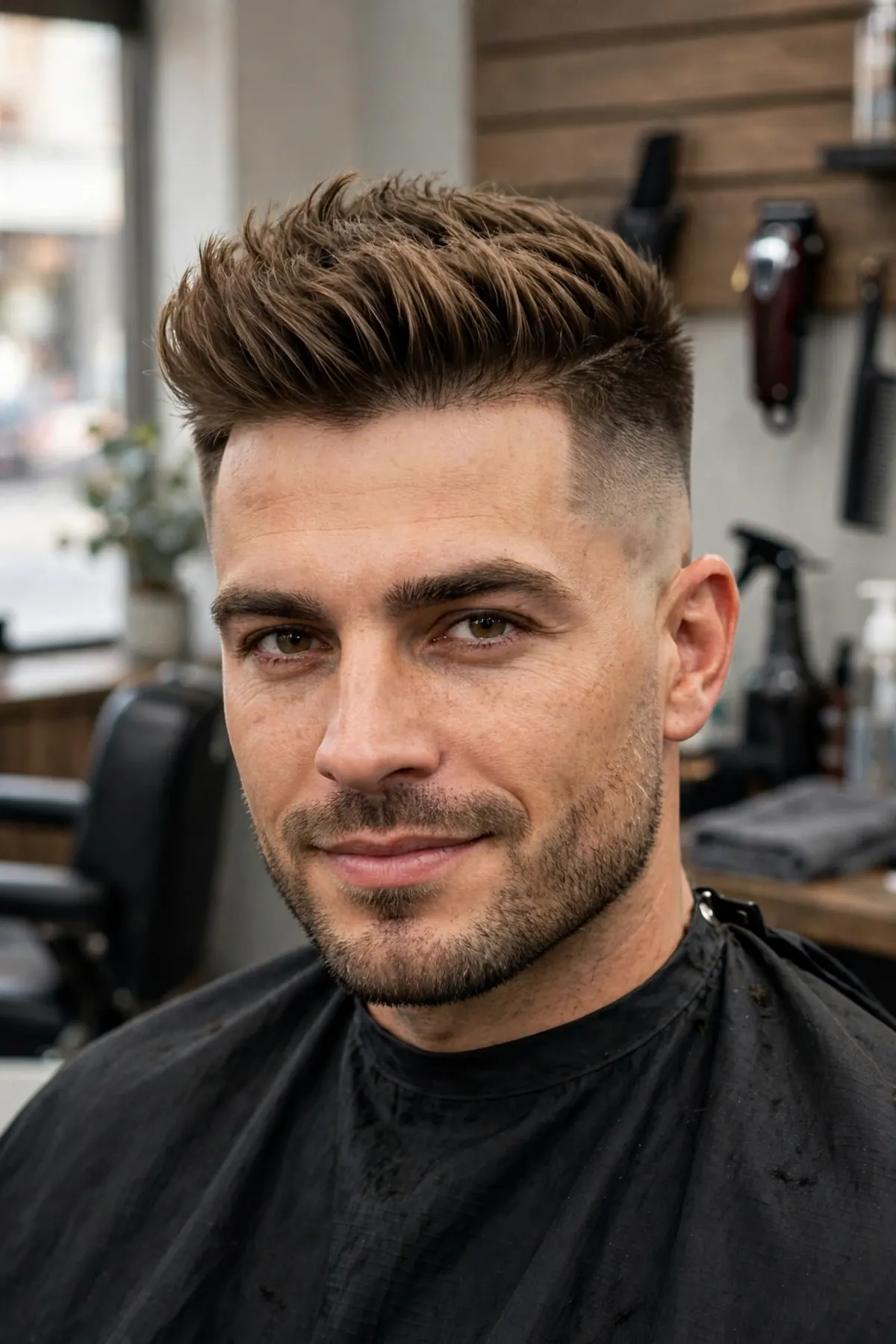
Brushing the top up and back adds height and confidence to the high and tight. With the sides sitting high and tight, the lifted top creates a strong vertical line that makes the face look longer and leaner — great news for men with round faces. A blow dryer pointed upward plus a little clay or wax is all you need to lock in the lift. This is one of the most flattering versions you can ask for.
Best for: round or wide faces; the added height slims and lengthens the face.
18. Spiky High and Tight
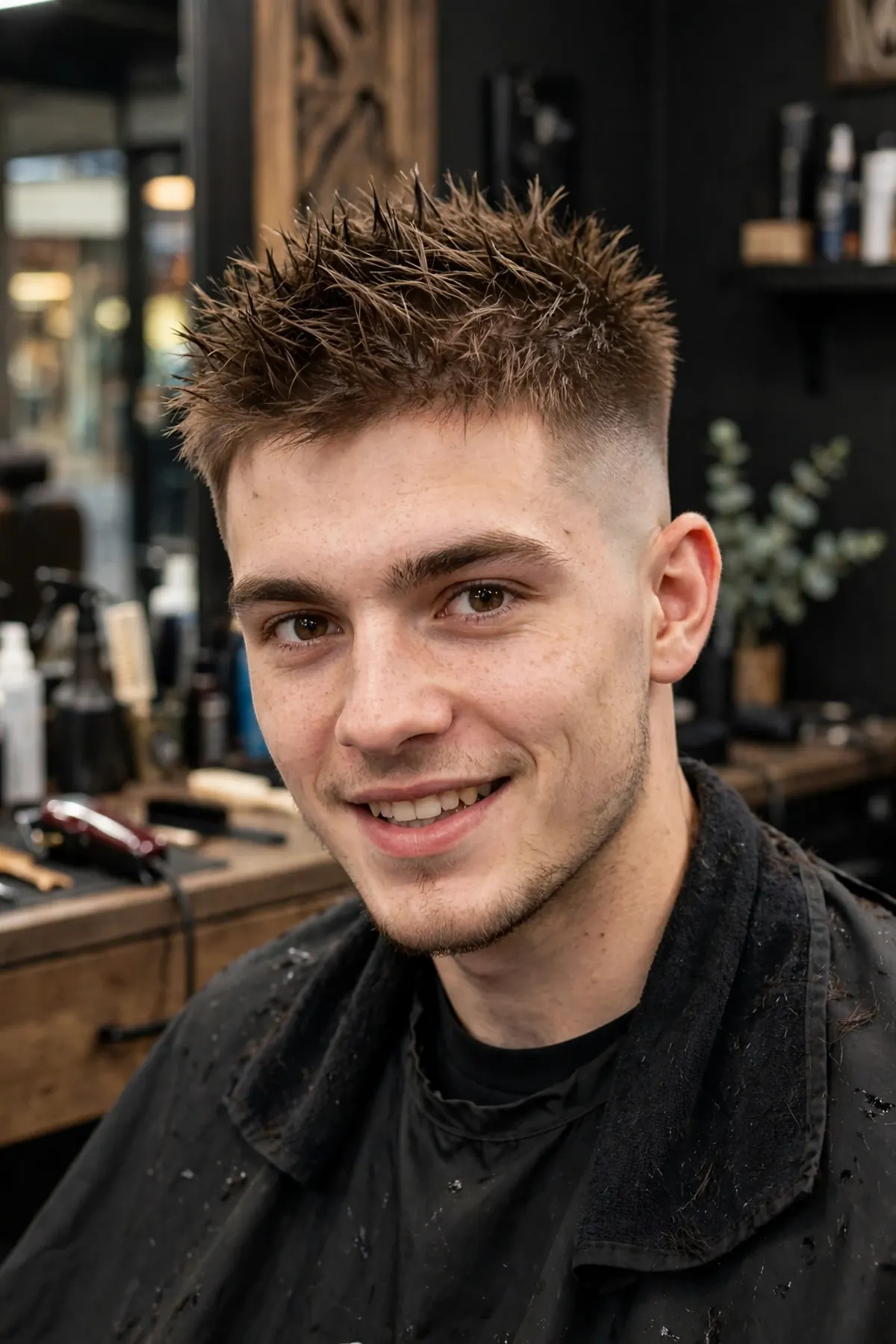
Spikes are not just for teenagers. A spiky top on a high and tight base looks grown-up and intentional — short, defined spikes that add texture and personality without going overboard. The key is keeping the spikes short and piece-y rather than long and stiff. A pea-sized amount of strong-hold wax worked through dry hair gives you spikes that last all day.
Best for: men who want a playful, youthful edge on a classic cut.
19. Messy-Top High and Tight

The messy-top version is the high and tight gone casual. The top is point-cut for texture and worn tousled — like you just ran your hands through it — while the sides stay military-clean. The contrast between the carefree top and the disciplined sides is exactly what makes it work. It is the easiest styled version on this list: towel-dry, add a little matte paste, mess it up, and walk out the door.
Best for: men who want style with near-zero morning effort.
20. Faux Hawk High and Tight
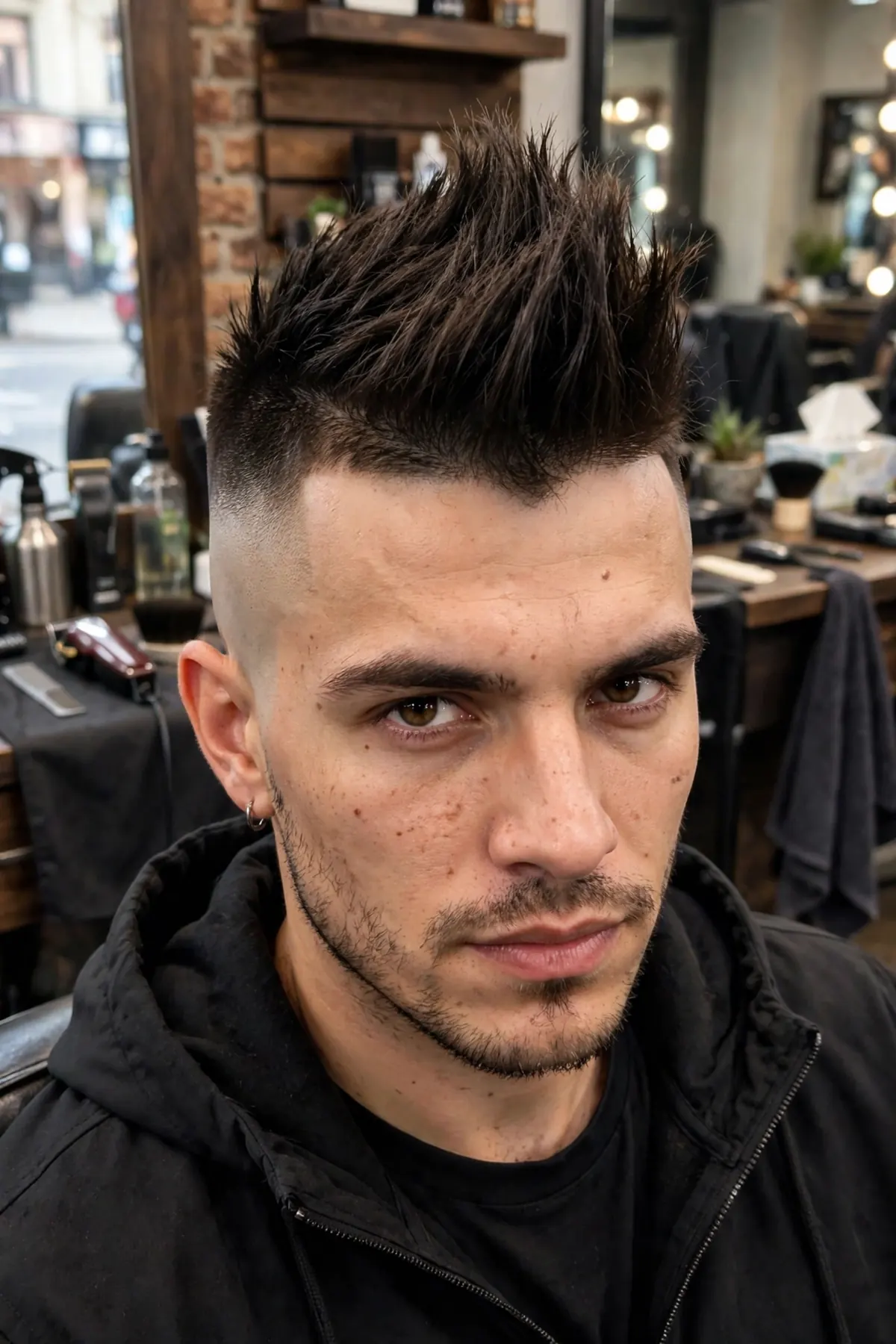
The faux hawk borrows the attitude of a mohawk without the commitment. The top is left longer in a strip down the center and styled upward, while the sides are taken high and tight — almost shaved. It is edgy but wearable, and you can flatten the center strip on days you want to tone it down. A strong-hold product keeps the center standing tall.
Best for: men who want an edgy look that can still be dialed back for work.
21. High and Tight with a Lineup

A lineup — also called an edge up — takes the high and tight’s clean finish to the next level. The barber uses trimmers to carve razor-straight lines along the forehead, temples, and sideburns, framing the face with geometric precision. Against the already-tight sides, a lineup looks incredibly crisp. It does need touching up every week or two as the hairline grows, but for that fresh-from-the-chair look, nothing beats it.
Best for: men who love a razor-sharp finish; especially popular paired with the Afro and curly versions.
22. High and Tight with Hair Design
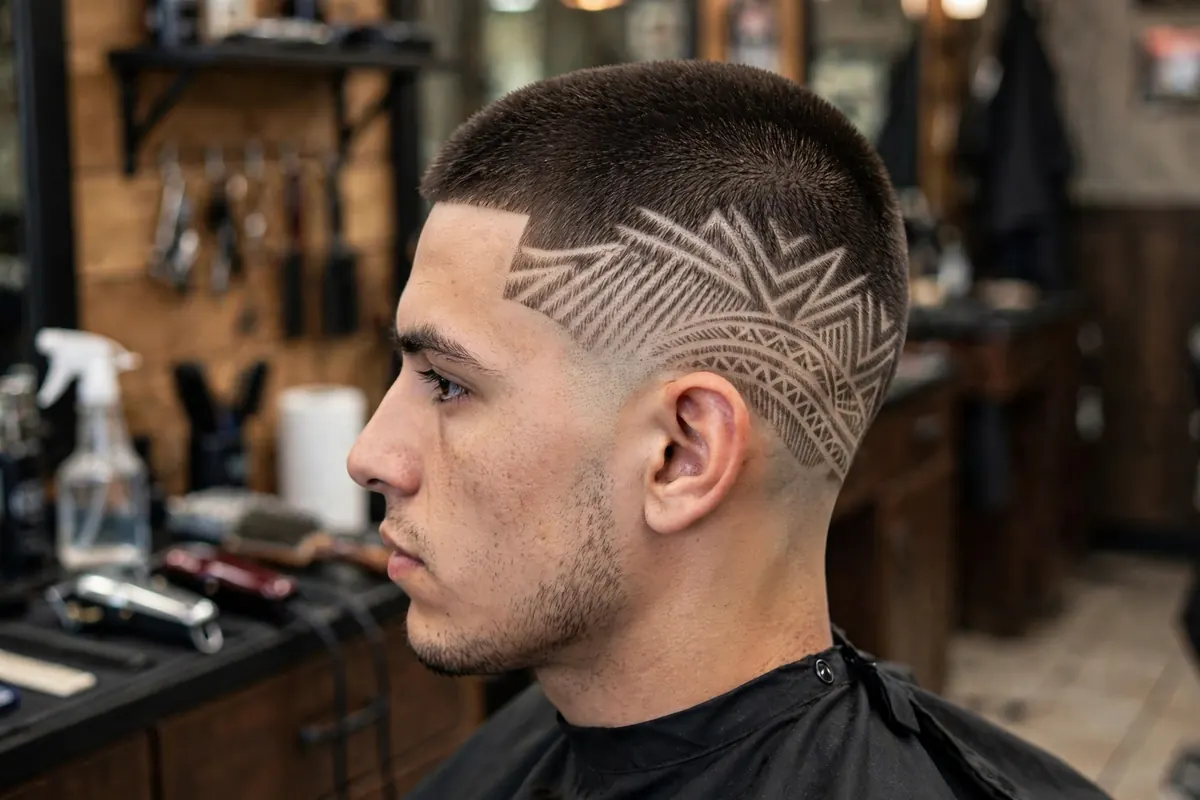
For men who treat their haircut as a canvas, hair designs add art to the high and tight. With the sides clipped short, the barber etches lines, curves, or geometric patterns into the fade with a razor or trimmer. The design can be as simple as two parallel lines or as detailed as your barber’s skill allows. It grows out in a couple of weeks, so you can change the design every visit — or let it fade out quietly if you change your mind.
Best for: creative men and anyone who wants a truly one-of-a-kind haircut.
23. Professional High and Tight

The professional version tones down the military edge for the office. The sides are kept short but blended a little softer — think a taper haircut feel rather than a skin fade — and the top is neat and conservative, around an inch long. Nothing about it screams for attention; it just looks clean, competent, and put-together. It is proof that the high and tight can be a perfectly respectable corporate haircut.
Best for: office workers and professionals who need a conservative, dress-code-safe cut.
24. High and Tight for Older Men
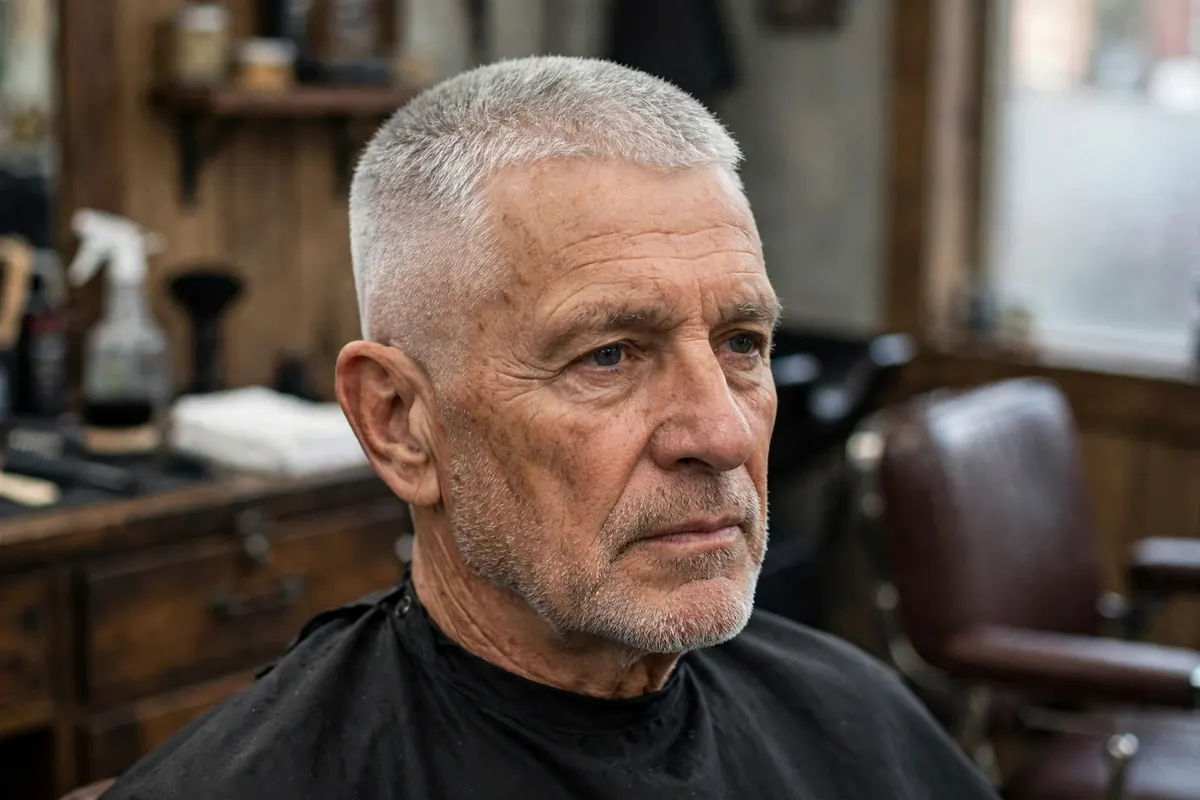
The high and tight is one of the most flattering haircuts for men getting older. The short sides draw attention away from thinning on top, the clean lines look distinguished with silver or gray hair, and the low maintenance suits a busy life. Many older men pair it with a well-kept gray beard for a look that is confident and current. There is a reason this cut has loyal fans in every generation.
Best for: mature men who want a distinguished, easy-to-maintain haircut.
25. Athletic High and Tight
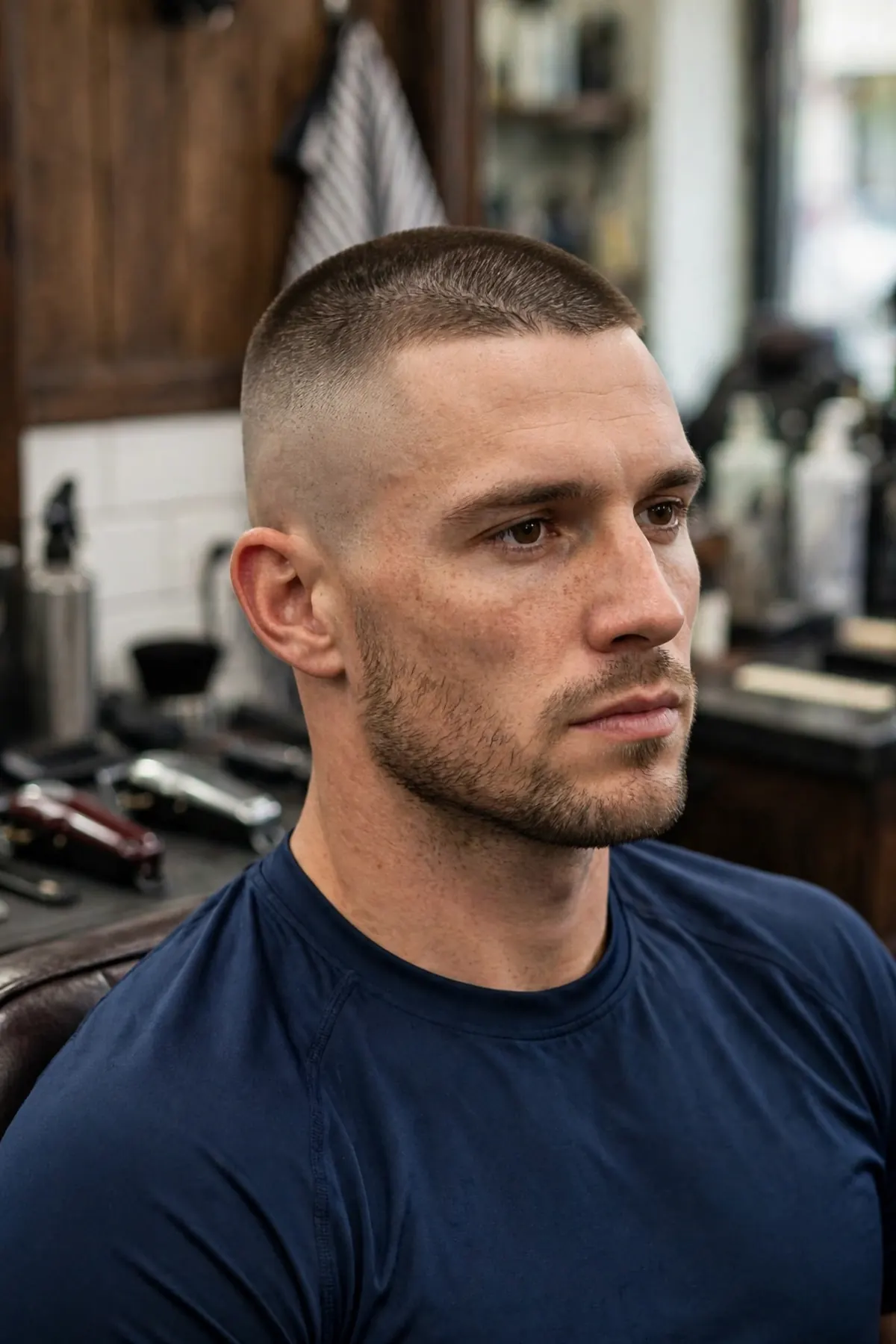
Ask any athlete why they wear a high and tight and the answer is always the same: it never gets in the way. Sweat, helmets, wind, contact — this cut handles all of it. The athletic version keeps everything practical: short buzzed top, tight sides, clean neckline. It looks sharp in uniform and needs nothing more than a towel after a shower. Whether you play sports or just live an active life, this is the most functional haircut on the list.
Best for: athletes, gym-goers, and anyone with a physically demanding lifestyle.
26. High and Tight for Thick Hair
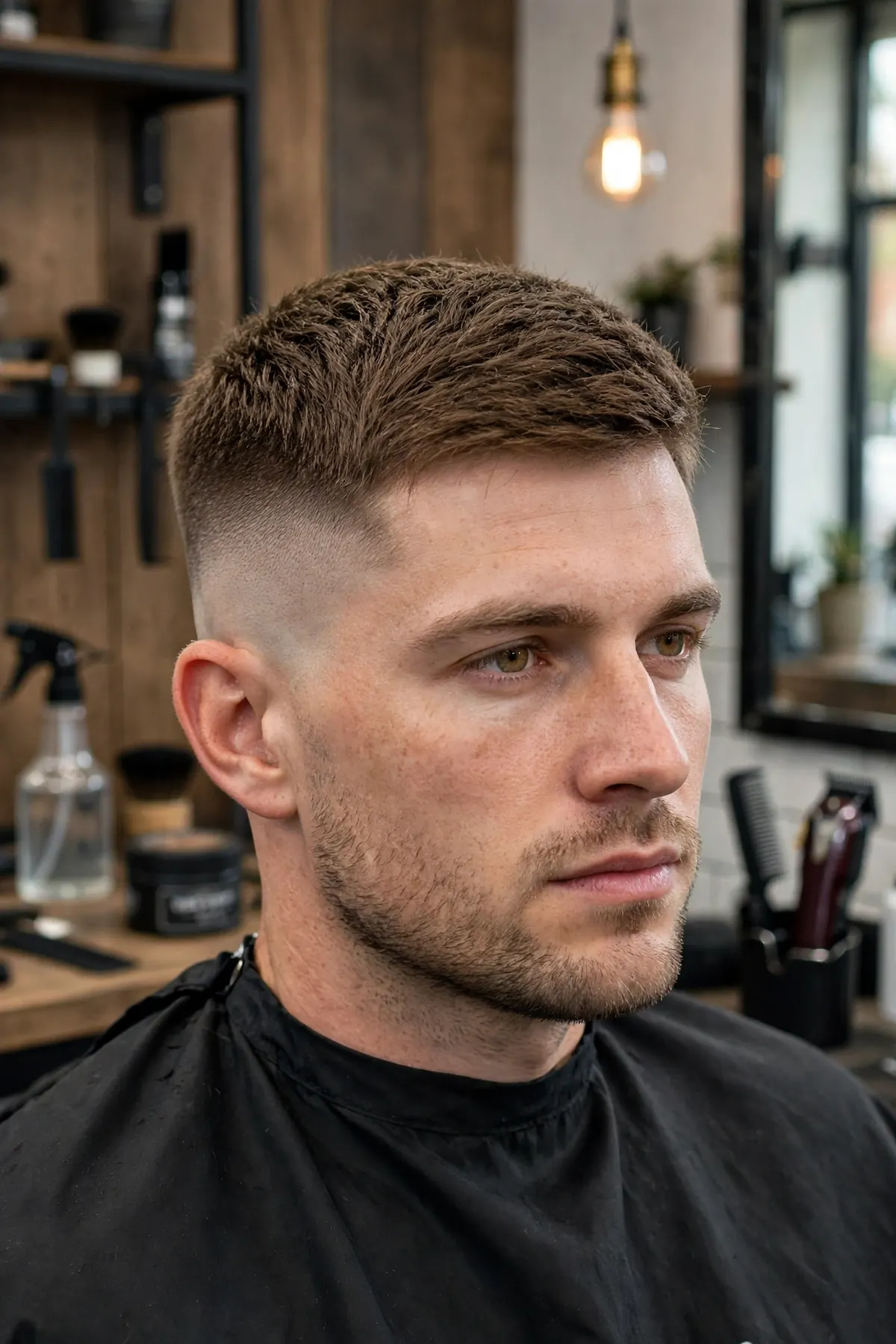
Thick hair can be a blessing and a curse — it has body, but it can also turn into a helmet. The high and tight solves this by removing the bulk from the sides entirely, so all that thickness lives on top where it looks good. Ask your barber to thin and texture the top so it lies properly instead of puffing up. The result is thick hair that finally behaves.
Best for: men with dense, heavy hair that needs bulk removed from the sides.
27. High and Tight for Thin Hair

Here is a secret barbers know: short hair makes thin hair look thicker. When the sides are tight and the top is buzzed short, there is less length to expose the scalp, and the hair looks denser overall. The buzz-cut or classic military versions work best here — keep the top short enough that the scalp does not show through, and skip heavy products that can clump thin hair together.
Best for: men with fine or thinning hair who want to maximize the look of fullness.
28. High and Tight for a Receding Hairline
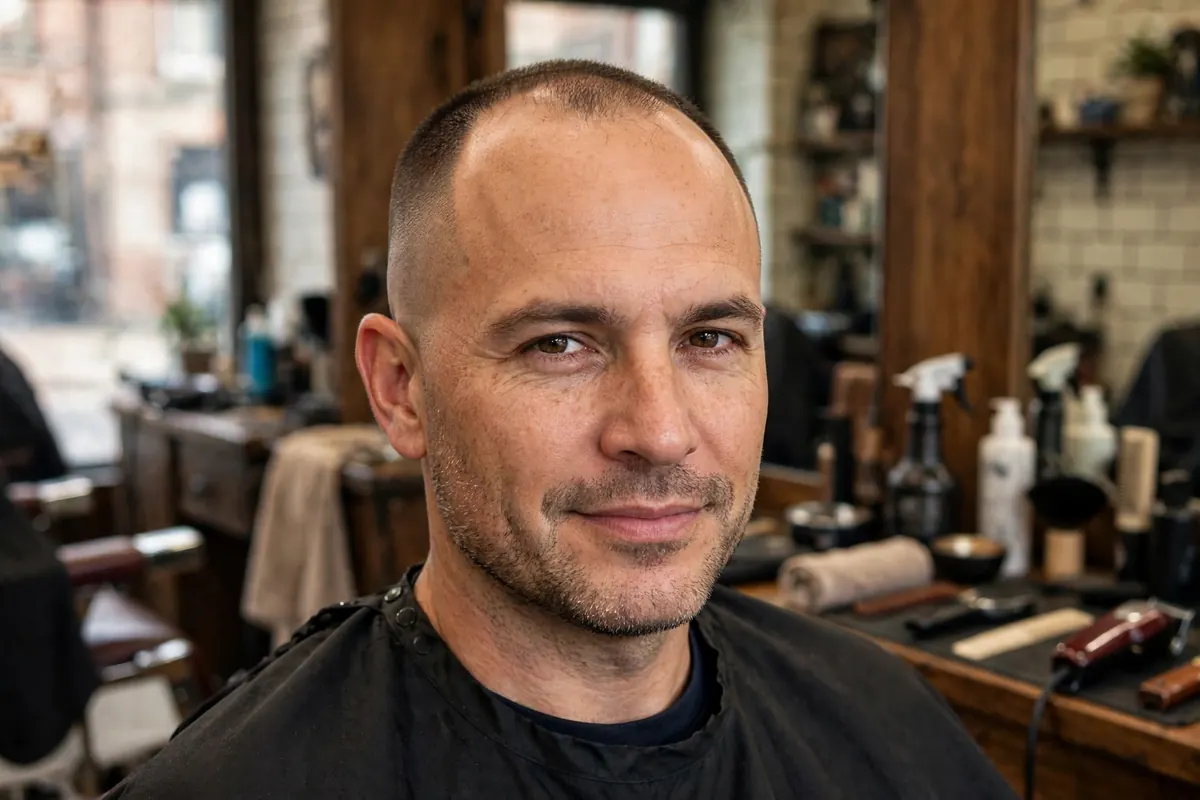
A receding hairline and a high and tight are surprisingly good partners. Because the whole cut is short, there is no long hair up top drawing attention to where the hairline has moved — the contrast simply disappears. The eye goes to the sharp fade and clean shape instead of the hairline. Keep the top short and the sides tight, and wear it with confidence. Many men find this cut takes years of worry off their shoulders.
Best for: men with a receding hairline who want a confident, low-drama solution.
29. Undercut-Style High and Tight

This version borrows the undercut’s signature move: the top is left noticeably longer — two to three inches — and swept to the side or back, while the sides are shaved high and disconnected with no blend. It is the most fashion-forward take on the high and tight, sitting somewhere between military and runway. The styling takes a minute longer in the morning, but the payoff is a striking, modern silhouette.
Best for: trend-aware men who want the boldest blend of classic and modern.
30. Soft High and Tight
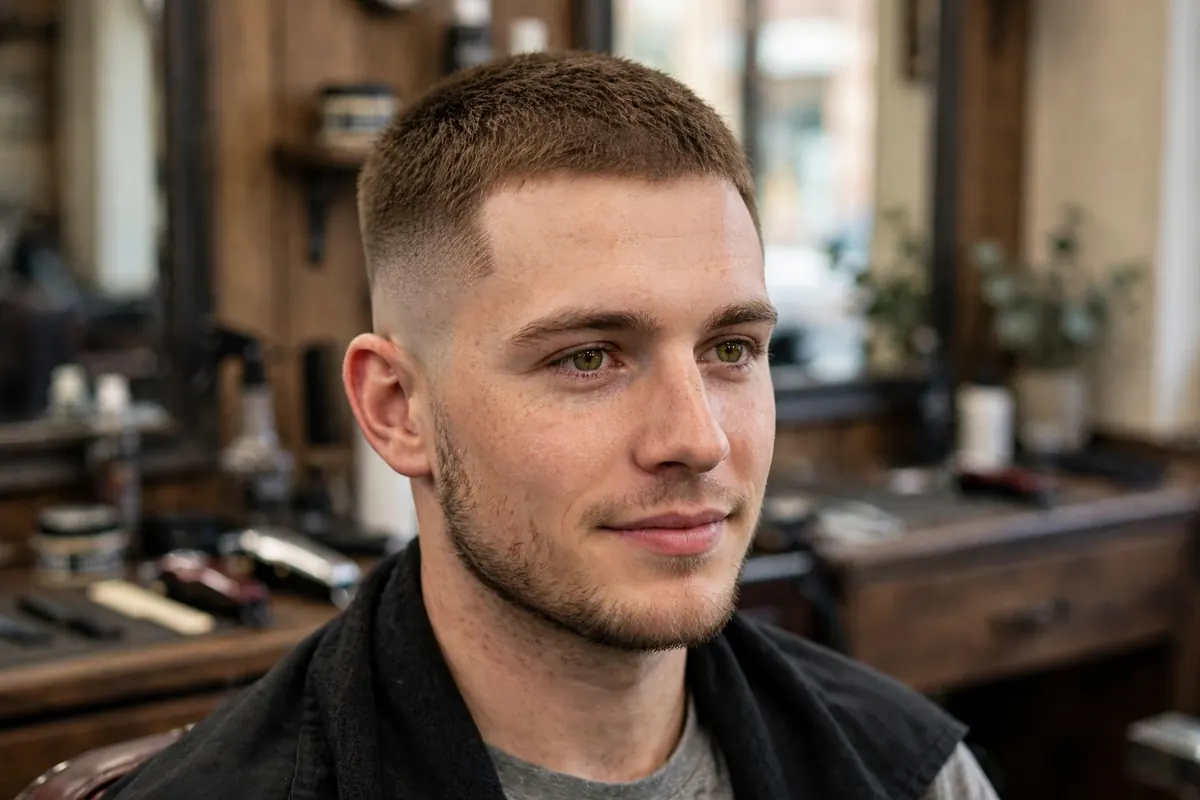
Not everyone wants maximum contrast. The soft high and tight keeps the high placement and short sides but blends them gently into the top for a subtler, more natural transition. It still reads as a high and tight — the sides are short and high — but without the hard line. It is the friendliest, most approachable version on this list, and it grows out more gracefully than the sharper versions.
Best for: men trying the high and tight for the first time, or anyone who prefers subtle over bold.
High and Tight vs Buzz Cut vs Crew Cut
The high and tight gets confused with its short-haired cousins all the time. Here is how the three actually differ:
| Feature | High and Tight | Buzz Cut | Crew Cut |
|---|---|---|---|
| Fade placement | High above the temples | Even all around | Lower, more gradual |
| Top length | Slightly longer than sides | Same as the sides | Longer, styled up |
| Contrast | Sharp, bold | Minimal, uniform | Soft, blended |
| Maintenance | Trims every 2–3 weeks | Trims every 3–4 weeks | Trims every 4–6 weeks |
| Vibe | Military-sharp, bold | Minimal, low-key | Classic, versatile |
The short version: the buzz cut is the simplest, the crew cut is the most versatile, and the high and tight is the sharpest and boldest of the three.
Which High and Tight Suits Your Face Shape?
The high and tight works on most faces, but picking the right version makes a real difference:
- Round face: go for a version with height on top — brushed-up, spiky, or faux hawk styles add length and make the face look slimmer. The high sides already remove width, which helps.
- Square face: you are in luck — the high and tight was practically made for strong jawlines. The classic military or skin fade versions enhance your natural angles.
- Oval face: the most balanced shape suits every version on this list. Pick based on your hair type and lifestyle instead.
- Oblong face: avoid too much height on top, which can stretch the face further. The buzz-cut or classic versions with a shorter top keep proportions balanced.
- Diamond face: a slightly longer or textured top adds width at the forehead and balances narrower cheeks — the longer-top or messy-top versions work well.
How to Ask Your Barber for a High and Tight (Exact Script)
Most bad haircuts come from vague instructions. Here is exactly what to say so you walk out with the right cut:
- Name the style: “I want a high and tight.”
- Pick the sides: “Take the sides high — up above the temples — with a high fade.” Then give a guard number: #0 for skin-close, #1 for very short, #2 for a touch softer. If you want it shaved to the skin, say “skin fade on the sides.”
- Pick the top: give a guard number or length — “#3 on top” for a classic buzz, “about an inch, scissor-cut” for a crew version, or “leave two inches so I can style it” for a longer top.
- Pick the blend: “blend it” for a smooth fade, or “keep it disconnected” if you want the bold hard line.
- Finish details: “clean up the neckline” and, if you want it, “give me a lineup on the hairline.”
Bring a photo from this article on your phone. Even the best verbal description is no match for a picture — it removes all guesswork and guarantees you and your barber are picturing the same haircut.
5 Mistakes to Avoid with a High and Tight
1. Placing the fade too low. A fade that sits at mid-head is just a regular fade, not a high and tight. The blend line must sit high above the temples — that placement is the whole point of the cut.
2. Leaving the top too long without a plan. A long top with tight sides only works if you actually style it. An unstyled two-inch top on shaved sides looks accidental, not fashionable.
3. Skipping the neckline cleanup. The neckline grows out fastest and ruins the clean look first. Ask for it cleaned up every visit, and touch it up at home between cuts if you can.
4. Using the wrong product — or too much. Heavy, shiny pomades can make a short top look greasy. For most versions, a small amount of matte paste or clay is all you need.
5. Waiting too long between trims. The high and tight lives on precision. Once the sides grow past two or three weeks, the sharp lines soften and the cut loses its character. Book the next trim before you leave the chair.
How to Style and Maintain Your High and Tight
The high and tight is famously low maintenance, but “low” does not mean “none.” A little routine keeps it looking intentional instead of overgrown.
Daily styling (2 minutes)
- Wash with a gentle shampoo — short hair shows buildup fast, and the scalp is more exposed than with longer cuts.
- Towel-dry, then work a pea-sized amount of product through the top: matte paste for texture, clay for lift, pomade for a polished finish.
- Style as your version needs — brush up, spike, part, or just tousle and go.
- If your scalp gets dry or itchy, massage in a few drops of lightweight oil once or twice a week.
Trim schedule
- Skin fade or recon versions: every 2 weeks — the fade line softens fast.
- Classic or buzz versions: every 2–3 weeks.
- Longer-top versions: every 3–4 weeks for the top; tidy the sides in between if needed.
At-home touch-ups
If you own clippers, you can stretch the time between barber visits by cleaning up the neckline and the area around the ears with a trimmer every week or two. Do not try to re-cut the fade yourself unless you really know what you are doing — a botched blend is harder to fix than an overgrown one. When in doubt, see your barber.
High and Tight Haircut FAQs
What exactly is a high and tight haircut?
A high and tight is a military-style haircut where the back and sides are clipped very short — usually a #0 or #1 guard, sometimes to bare skin — up to a line high above the temples, with a slightly longer top. The “high” refers to how far up the short sides go, and the “tight” refers to the sharp, clean boundary between the sides and the top. It is a variant of the crew cut most famously worn by the U.S. armed forces.
What is the difference between a high and tight and a buzz cut?
A buzz cut is one uniform length all over the head, while a high and tight has two distinct lengths: very short sides cut high up the head, and a slightly longer top. The high and tight also has a deliberate, sharp transition line, where a buzz cut blends evenly. In short, the high and tight is sharper and more structured than a buzz cut.
What face shapes look best with a high and tight?
The high and tight flatters most face shapes. Square and oval faces suit every version. Round faces benefit from versions with height on top — like brushed-up or spiky styles — which make the face look slimmer. Oblong faces should keep the top shorter to avoid stretching the face, and diamond faces look best with a slightly longer or textured top to balance the cheekbones.
How do I ask my barber for a high and tight haircut?
Say: “I want a high and tight — take the sides high above the temples with a [skin fade / #1 guard], leave [#3 guard / one inch / two inches] on top, and [blend it / keep it disconnected].” Always specify the guard numbers for the sides and the top, mention whether you want a fade or a hard line, and bring a reference photo from this article so your barber sees exactly what you want.
How often should I trim a high and tight?
Most men need a trim every 2–3 weeks to keep a high and tight looking sharp. Skin fade and recon versions need attention every 2 weeks since the fade line softens quickly. Longer-top versions can stretch to 3–4 weeks on top, though the sides may need tidying sooner. Booking your next appointment before you leave the barbershop keeps the cut consistently clean.
Can I cut a high and tight at home?
Yes — it is one of the more DIY-friendly haircuts for men. You need clippers with guards, a hand mirror, and trimmers for the edges. Buzz the sides up to the temples with your chosen guard, trim the top to your desired length, blend where the two meet with a flicking motion, and clean up the neckline and around the ears. That said, skin fades and sharp lineups are tricky; for those, a skilled barber is worth the money.
Final Thoughts
The high and tight haircut has survived decades of trends for a simple reason: it works. It is sharp without being fussy, masculine without being dated, and practical without being boring. Whether you go for the classic military version, a modern skin fade, or one of the textured and bearded takes on this list, you are getting a haircut that looks intentional every single day with almost no effort. Show your barber the version you like, learn your guard numbers, keep up with trims every few weeks — and enjoy one of the most reliable haircuts for men ever created.