30 Best Taper Fade Haircuts for Men
The taper fade haircut is the most requested style in American barbershops for a reason: it gives you the sharp, blended sides of a fade without taking everything down to skin. It works on straight, wavy, curly, and coily hair. It grows out gracefully. And it pairs with almost anything on top — a quiff, curls, a pompadour, a buzz, even a beard. If you are hunting for the best taper fade haircuts for men, this guide walks you through 30 of them, from a whisper-quiet low taper to a bold high fade, with exactly what to say in the chair for each one.
Whether you call it a men’s taper fade, a taper fade haircut for men, or a mens taper fade haircut, the idea is the same: hair that gradually gets shorter as it moves down the sides and back, ending in a clean, natural blend at the ears and neckline. Below you will find 30 taper fade hairstyles for men — low, mid, high, curly, and bold — plus a barber-talk cheat sheet, face-shape advice, styling steps, and answers to the questions guys actually ask.
What Is a Taper Fade Haircut?
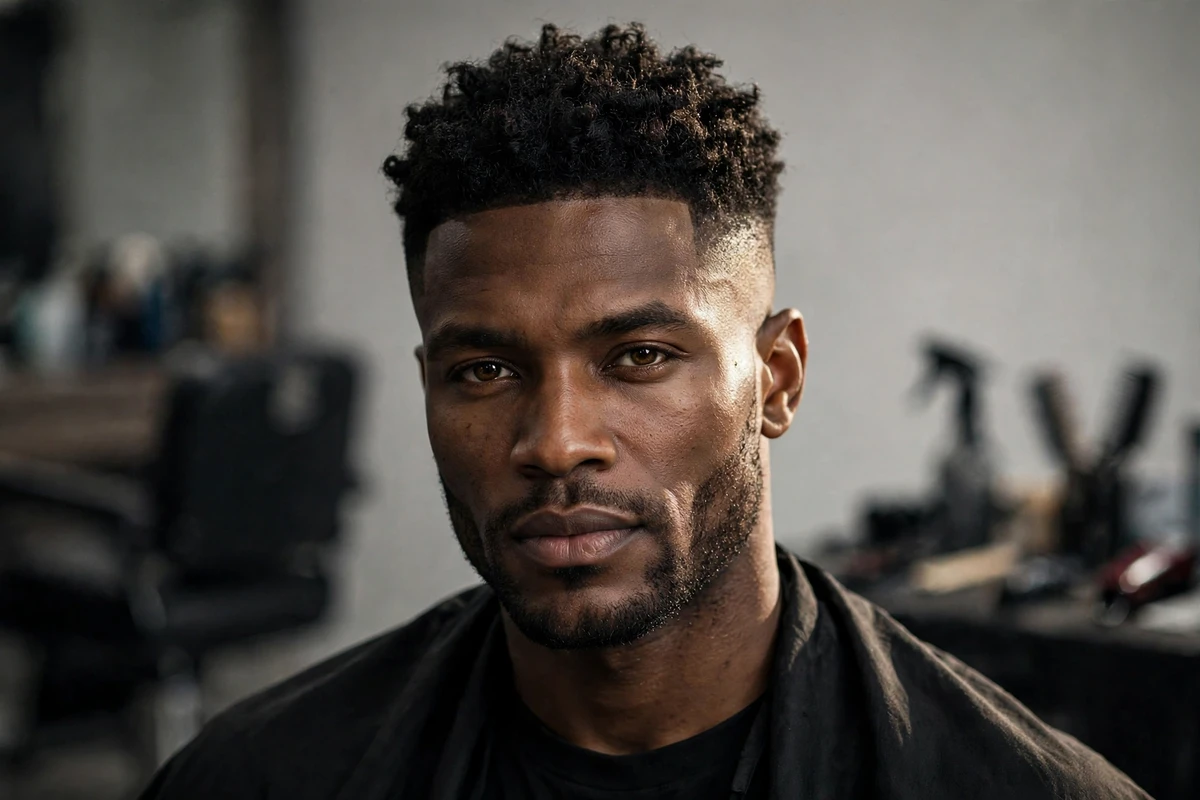
A taper fade haircut is a cut where the hair on the sides and back gradually shortens as it moves down toward the ears and the neckline, blending smoothly into the skin or into very short hair. The key word is gradual: unlike a hard fade that climbs high and exposes a lot of skin, a true taper fade stays concentrated around the edges — the sideburns, temples, and nape — and leaves more length through the sides.
Think of it this way. A taper shortens the hair at the edges. A fade shortens the whole side. A taper fade sits between the two: it uses the smooth blending technique of a fade, but starts it low and keeps it close to the natural hairline. That is why it looks neat without looking aggressive, and why it works in an office, a classroom, and everywhere in between.
Most guys ask for one of three heights. A low taper fade starts just above the ears and is the subtlest option — it grows out cleanly and suits conservative workplaces. A mid taper fade starts around temple level and is the most popular height in barbershops today, balancing sharpness with softness. A high taper fade starts a couple of inches above the ears, creates strong contrast, and reads bold and modern. All three count as taper fades, and all three appear in the 30 styles below.
A quick note on the name: barbers and customers say it a dozen different ways — a taper fade haircut men love, a tapered fade, a fade with a taper. They all describe the same thing: short, blended sides that graduate into skin or near-skin at the edges, paired with whatever you want on top. Once you know the height, depth, and top length you want, the name on the tip jar does not matter.
Low Taper Fade Haircuts
The low taper fade is the quiet confidence of the fade world. It keeps the blend right where it belongs — at the ears and neckline — so the sides stay full and the cut looks intentional rather than drastic. These are the styles to pick when you want to look sharp without a dramatic transformation.
1. Classic Low Taper Fade
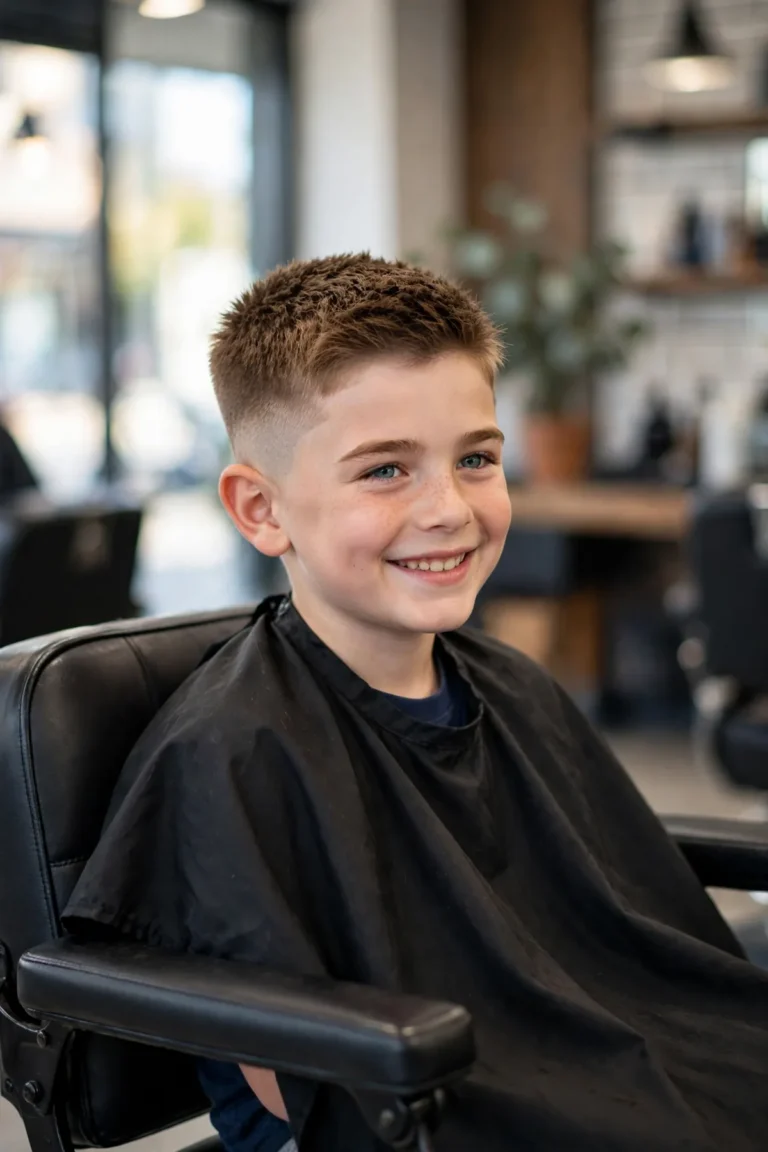
The classic low taper fade is the foundation every barber learns first. The sides stay at a medium length while the hair tapers down gradually at the ears and the nape, finishing in a soft, natural blend. The top can be anything from an inch of texture to a few inches of length — the taper is what makes it look finished. It suits every face shape and every hair type, which is exactly why it never goes out of style.
What to ask for: “Low taper at the ears and nape, number 2 on the sides, about an inch and a half on top with some texture.”

2. Low Taper Fade Blowout
The low taper fade blowout takes the volume trend and grounds it with a clean, low blend. The top is grown out to three or four inches and blow-dried up and away from the face for lift, while the low taper keeps the sides tight so the silhouette never turns into a mushroom. You will need a hairdryer and a dab of matte clay each morning, so it suits guys who enjoy a few minutes in front of the mirror.
What to ask for: “Low taper at the sideburns and nape, three to four inches on top left heavy at the front for the blowout.”

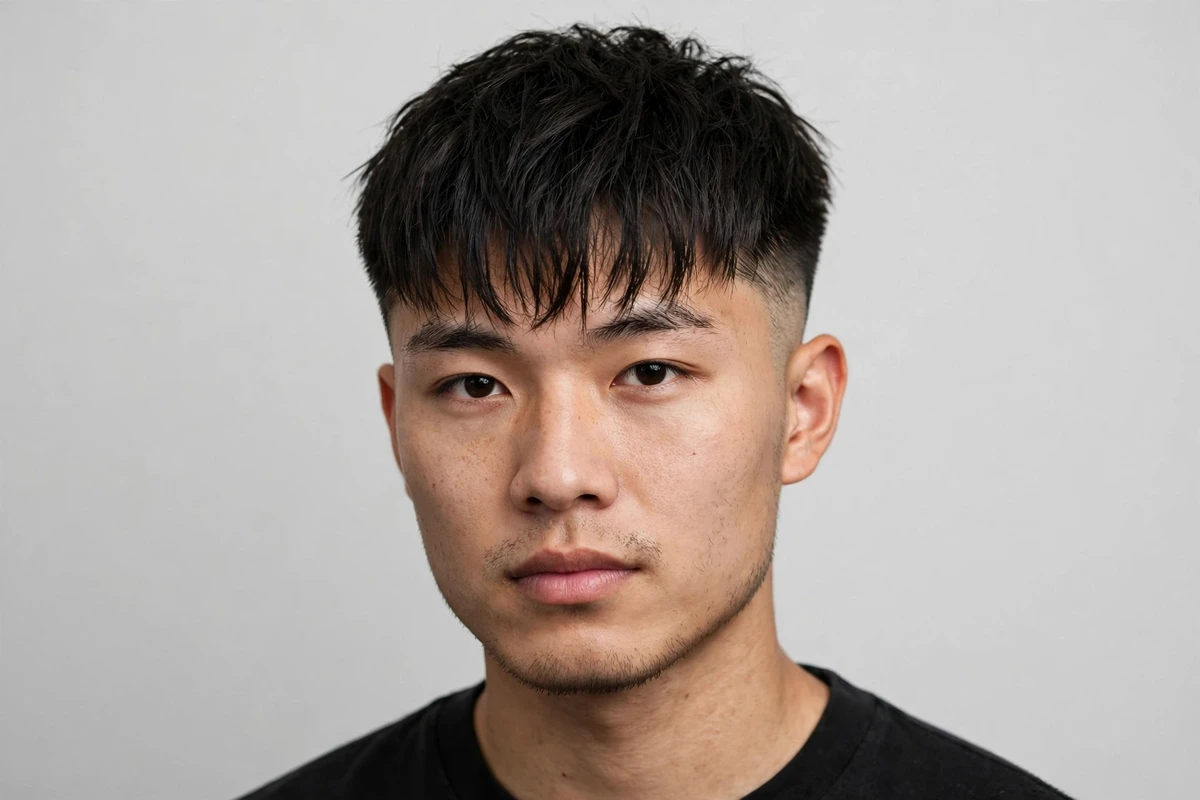
3. Low Taper Fade with Textured Fringe
A choppy fringe falls forward over the forehead while a low taper keeps everything underneath clean. This is one of the most forgiving men’s taper fade styles because the texture on top comes from point cutting rather than product — rough-dry it with your fingers and a little sea salt spray and walk out the door. It flatters straight and wavy hair best, and it is a smart pick if you want to soften a high forehead.
What to ask for: “Point-cut the top to about two inches with a textured fringe, then a low taper, number 2 into the neckline.”
4. Low Taper Fade with Pompadour
Pairing a pompadour with a low taper fade gives you the height and drama of the pomp without the aggression of a skin fade. Because the taper sits low, the sides carry enough weight to balance all that volume up top, and the whole thing reads classic rather than costumey. Blow-dry the top back and up, then lock it in with a medium-hold pomade. This is a date-night cut — polished, confident, and a little bit old-school cool.
What to ask for: “Four inches on top swept up and back, low taper at the sides with a number 2, tapered neckline.”

5. Temple Taper Fade
The temple taper fade is the closest thing on this list to a pure taper. Instead of fading the whole side, the barber cleans up only the temples and the sideburns, fading them down to a low number while the rest of the side stays at a number 3 or longer. Add a crisp line-up at the front and you have a cut that looks sharp in photos and even sharper in person. It is a favorite among Black men with waves and coils, but it works on any hair type.
What to ask for: “Taper the temples and sideburns only, keep the sides at a number 3, crisp line-up at the front.”

6. Low Skin Taper Fade
The low skin taper fade keeps the height low but takes the blend all the way down to bare skin at the edges. You get the contrast and the crispness of a skin fade without committing the whole side to it — the hair above the ears still carries weight, so it never looks harsh. It is sharp on day one and softens gracefully over two to three weeks, which makes it one of the best taper fade haircuts for men who like a clean finish.
What to ask for: “Low skin taper at the sideburns and nape, number 1 above it, short textured top.”

Mid Taper Fade Haircuts
The mid taper fade is the sweet spot — and the most requested height in American barbershops right now. Starting around temple level, it gives you real contrast and a modern edge without the drama of a high fade. If this is your first taper fade haircut, start here.
7. Classic Mid Taper Fade
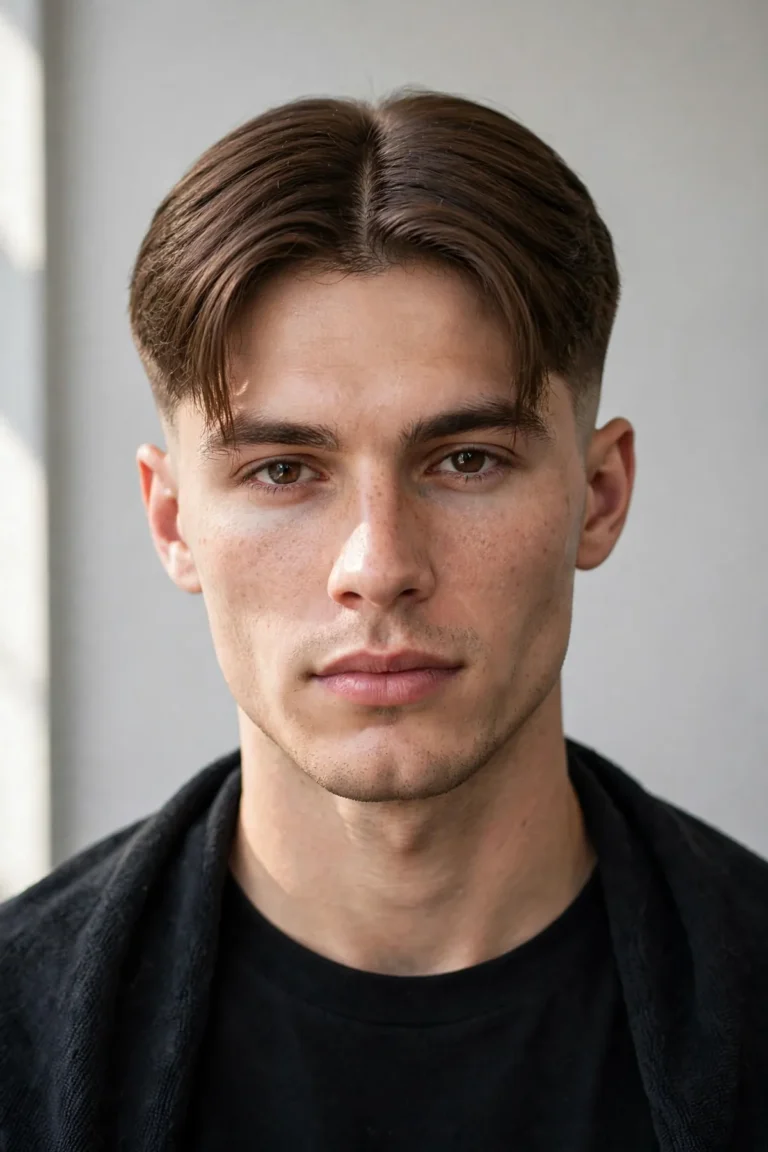
The classic mid taper fade blends the sides from about temple height down to a number 1 or 2 at the bottom, keeping the top at a couple of inches with natural texture. It is the haircut equivalent of a navy suit: appropriate everywhere, flattering on everyone, and impossible to get wrong. Ask your barber for it as a baseline and build from there as you learn what you like.
What to ask for: “Mid taper starting at temple level, number 1 at the bottom blended up to a 3, two inches on top.”

8. Mid Taper Fade with Quiff
A quiff is a pompadour’s more relaxed cousin — the front lifts up, the rest flows back, and nobody gets hurt. Put a mid taper underneath it and the contrast makes the height pop even more. This pairing is a staple in modern barbershops because it photographs beautifully and suits square and oval faces especially well. Blow-dry the front upward with a round brush, then finish with a light matte paste.
What to ask for: “Low-to-mid taper, number 2 on the sides, three inches at the front tapering shorter toward the crown for the quiff.”

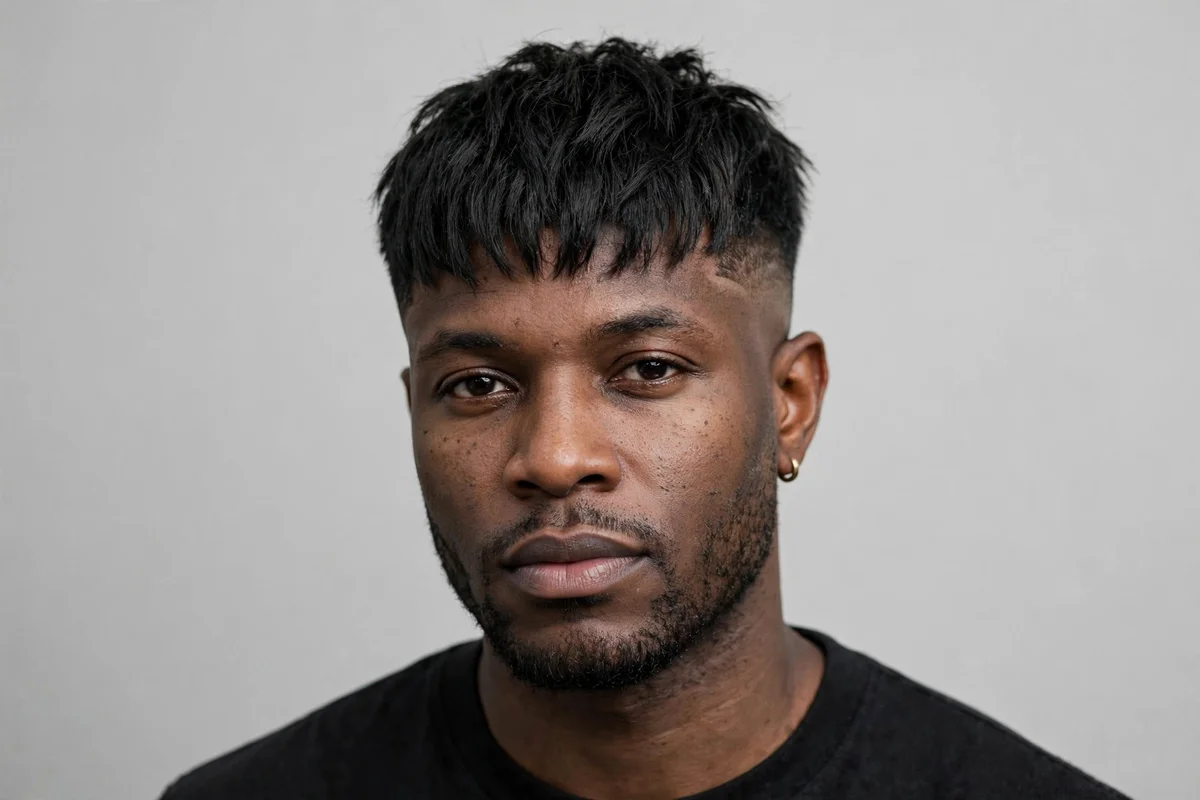
9. Mid Taper Fade with Textured Crop
The textured crop is the low-maintenance king of men’s hairstyles, and the mid taper fade is its perfect partner. The top is point-cut short — about an inch and a half — and pushed forward with a short fringe, while the mid fade keeps the sides crisp. It needs almost nothing in the morning: a pinch of clay, a rough tousle, done. Thick and wavy hair types get the best texture out of this one.
What to ask for: “Point-cut the top to an inch and a half with a short fringe, mid fade to a number 1.”
10. Slicked Back Mid Taper Fade
The slicked back mid taper fade is a Wall Street classic that never really leaves. Four inches on top combed straight back with a wet-look wax or shine pomade, sides blended in a clean mid fade. It reads powerful and groomed — the kind of cut that works as well in a boardroom as it does at a wedding. Keep the taper mid rather than low so the sides stay controlled under all that top.
What to ask for: “Mid fade, number 1 into a 3, top left at four inches cut to comb straight back.”

11. Side Part Mid Taper Fade
A side part adds a layer of old-school polish to a mid taper fade. Part it where your hair naturally wants to fall — usually to the left — comb it into place with a light pomade, and let the taper keep the sides looking deliberate. For extra staying power, ask for a hard part: a shaved line that keeps the part crisp between cuts. It is the most office-friendly style in this section.
What to ask for: “Hard part on the left, low-to-mid skin taper at the sides, two and a half inches on top.”

12. Brushed Up Mid Taper Fade
Brush the top up and back over a mid fade and you get instant height and energy. This one suits thick, straight hair that holds its shape once blow-dried upward — use your fingers rather than a comb for a brushed-but-not-combed finish. It is a great choice for round faces, since the vertical volume makes the face look longer and leaner.
What to ask for: “Mid fade, number 1 into a 3, three inches on top to brush up.”

High Taper Fade Haircuts
The high taper fade is for guys who want their cut to make a statement. With the blend starting a couple of inches above the ears, the short part takes up most of the side — maximum contrast, maximum edge. Fair warning: a high fade shows growth fast, so plan on seeing your barber every two to three weeks.
13. Classic High Taper Fade
The classic high taper fade takes the basic formula higher: the tapering starts well above the ears and blends down tight, while the top stays short and textured. It is bold but not reckless — the taper keeps it cleaner than a full high skin fade would be. This is the style athletes and entertainers keep coming back to, and it suits oval and square faces beautifully.
What to ask for: “High taper starting a couple of inches above the ears, taken down to a number 1, textured top at two inches.”

14. High Taper Fade with Curls
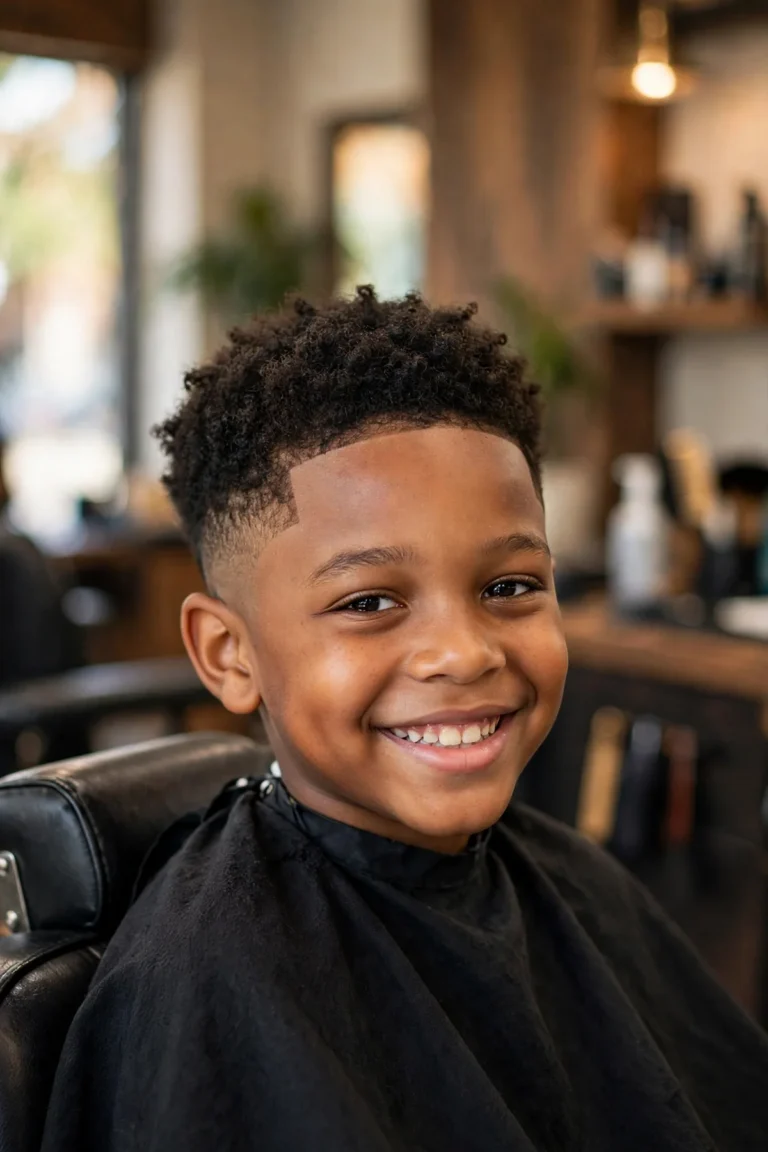
Curls and a high taper fade are a perfect match: the tight sides make the curls on top look even bigger and more defined by contrast. Leave at least two to three inches of curl up top so they can do their thing, and ask the barber to trim for shape rather than length. A dab of curl cream on damp hair keeps everything defined without crunch. This is one of the most popular taper fade haircuts for men with natural curls.
What to ask for: “High taper fade to a number 1, two to three inches of curls on top, trimmed for shape only.”

15. High and Tight Taper Fade
The high and tight is the shortest style on this list: a high fade with the top clipped to about a number 2. It is a military classic that needs nothing in the morning except a mirror — and it is brutally honest about your head shape, so it suits guys with strong jawlines and confident hairlines. Expect a touch-up every two weeks to keep it crisp.
What to ask for: “High fade to skin, number 2 on top, no blending on the crown.”

16. High Taper Fade with Line Up
Add a razor-sharp line up to a high taper fade and every edge turns geometric: the forehead, the temples, even the beard if you wear one. The line-up frames the fade and gives the whole cut a designed, architectural feel. It is a signature look in many urban barbershops, especially paired with waves or short coils on top.
What to ask for: “High taper fade to a number 1, sharp razor line-up at the hairline and temples.”

17. High Top Taper Fade
The high top taper fade is a golden-age hip-hop classic that still turns heads today. The top is cut flat and square, brushed straight up to serious height, while the high taper keeps the sides tight and clean. Your barber needs a steady hand and some patience for this one — but when it is done right, there is nothing else like it. Best on tight, coily hair types that can hold the height.
What to ask for: “Flat top cut level on the crown, high taper fade to a zero at the sides.”

18. High Volume Taper Fade
If your hair is thick, the high volume taper fade lets you show it off while keeping the sides under control. Three to four inches on top cut heavy for body, sides taken tight in a high taper — the contrast is an optical illusion that makes the top look even bigger. Blow-dry with a round brush for maximum lift, and finish with a volumizing mousse or matte clay.
What to ask for: “High taper fade from mid height, three to four inches on top, cut heavy for volume.”
Curly and Wavy Taper Fade Styles
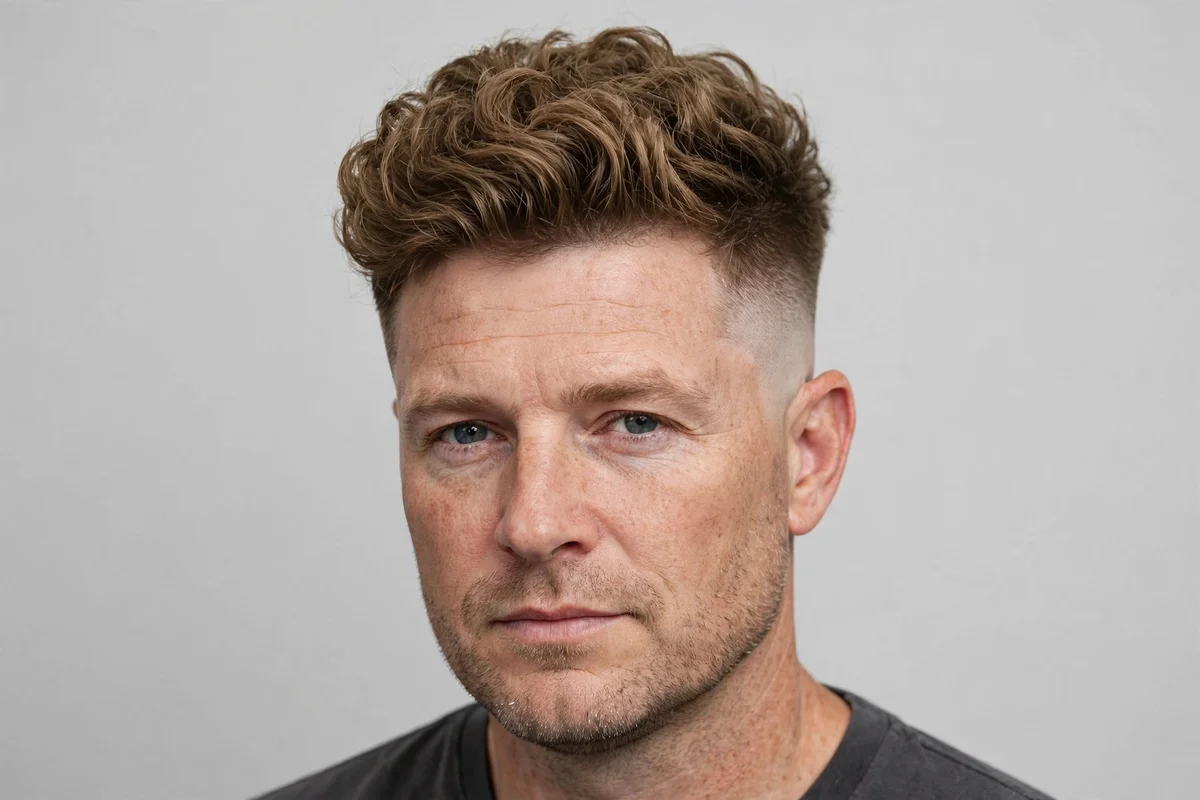
Curly and wavy hair was made for the taper fade. The low taper keeps the neckline and ears clean while the texture on top does all the talking — no heat tools required. A dab of curl cream on damp hair is usually all the styling these need.
19. Curly Taper Fade
The classic curly taper fade: a low taper around the ears and neckline, at least two inches of curl on top left to do its thing. The fade gives the cut its shape so the curls can stay loose and natural. Scrunch, do not brush — brushing is how frizz happens. This is the easiest great-looking cut a curly-haired guy can ask for.
What to ask for: “Low taper, number 2 into the neckline, leave at least two inches on top for the curls.”

20. Curly Fringe Taper Fade
Keep the curls long at the front so they fall forward into a fringe, and put a fade underneath to stop the whole shape from turning round. The fringe softens the forehead and gives the cut a youthful, modern feel. Works beautifully on 3A to 3C curl types — the curls just need enough length to drape.
What to ask for: “Low fade, number 1 at the bottom, curls left long at the front so the fringe reaches the eyebrows.”

21. Messy Curls Taper Fade
The messy curls taper fade is the curly taper’s wilder sibling: the fade climbs a little higher and the curls are left loose, separated, and a little undone. It is the cut for guys whose hair has personality and who are done fighting it. Sea salt spray or a light curl mousse, scrunched in with your hands, is the entire routine.
What to ask for: “Mid fade to a number 1, two to three inches of curls on top, trimmed for shape only.”
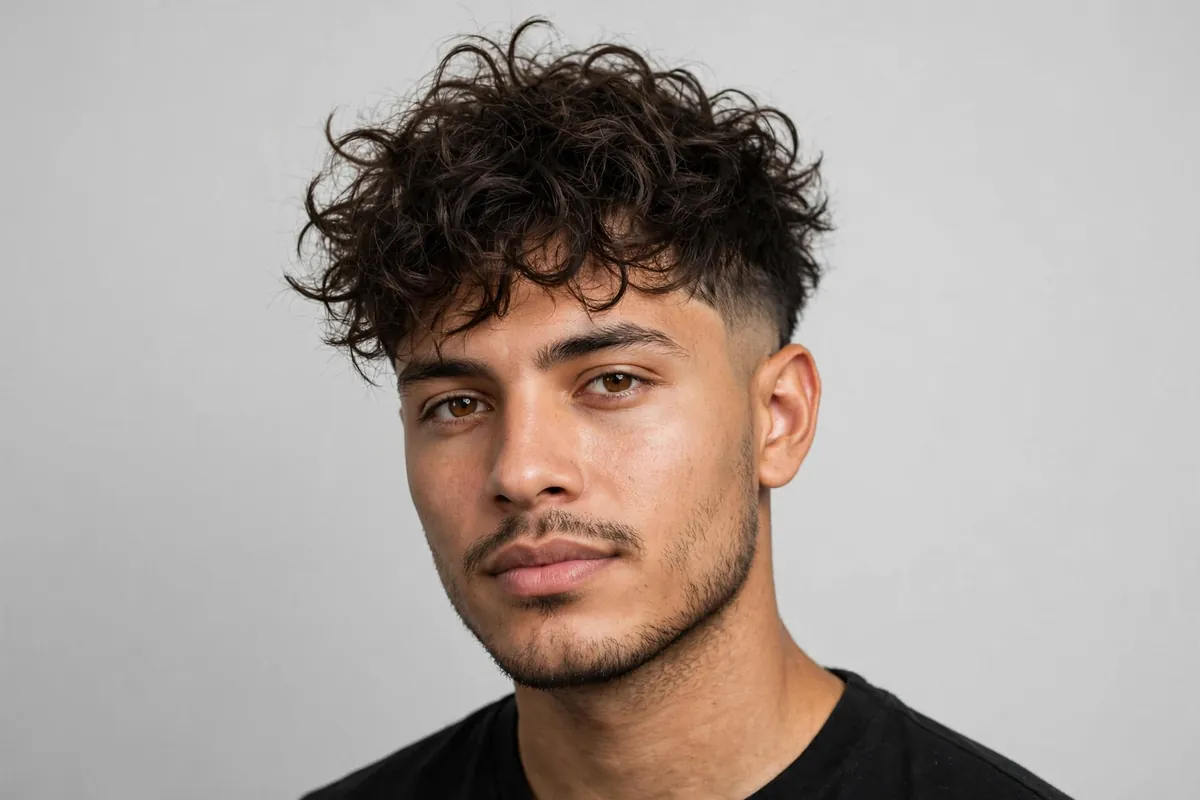
22. Wavy Top Taper Fade
The wavy top taper fade is perfect for guys with waves who want a clean, low-maintenance hairstyle. Leave the waves to air dry and they will fall into place better than anything you could do with a comb. A low taper underneath keeps it neat without taming the natural movement — this is one of the most effortless taper fade hairstyles for men.
What to ask for: “Low taper, number 2 at the sides, two to three inches of waves on top.”

23. 360 Waves Taper Fade
Deep, rippled 360 waves with a sharp taper fade is a look that commands respect. The taper keeps the edges and neckline razor-clean while the waves do the talking on top. Maintenance is the routine itself: brush, durag, repeat. The fade underneath means the waves always look fresh, even between brushing sessions.
What to ask for: “Low taper, zero at the sideburns and nape, line-up at the front, top kept at brushing length for waves.”

Bold Taper Fade Variations
Once you have the basics down, the taper fade becomes a canvas. These seven styles push further — retro revivals, edgy silhouettes, and smart solutions for hairlines and beards.
24. Afro Taper Fade
The afro taper fade gives a full, rounded afro a clean modern frame: the top keeps its height and shape while the taper around the temples, ears, and neckline adds definition. Pick it out in the morning for volume, and ask your barber to shape the taper with a lineup for extra sharpness. It celebrates natural texture instead of fighting it.
What to ask for: “Afro taper: low taper to skin at the temples and nape, top shaped round and left full.”

25. Faux Hawk Taper Fade
The faux hawk taper fade is a mohawk you can take to dinner. The center strip stays long and gets pushed up, while the sides fall away in a taper instead of being shaved to skin — so it reads edgy without reading extreme. Style the strip upward with a strong matte clay. It suits oval faces and guys who like attention (the good kind).
What to ask for: “Taper fade at the sides, keep a two-inch-wide strip on top at three inches for the faux hawk.”

26. Drop Taper Fade
In a drop taper fade, the fade line arcs downward behind the ear toward the nape instead of running straight around the head. That curve follows the natural shape of the skull and adds a layer of sophistication a standard fade does not have. Pair it with a textured top or a disconnected longer top for the full effect. It flatters round faces by drawing the eye downward and outward.
What to ask for: “Drop fade that curves down behind the ear, disconnected from a longer textured top.”
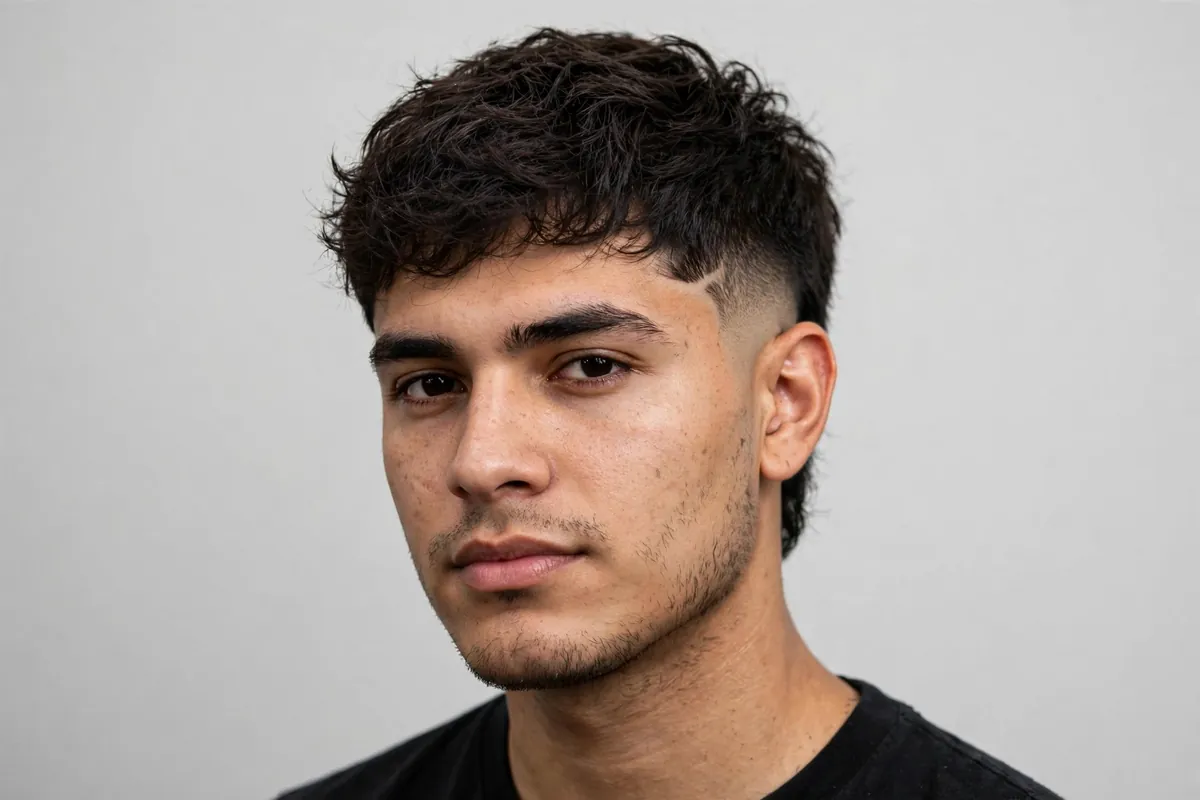
27. Flat Top Taper Fade
The flat top taper fade is pure retro confidence: the top is cut flat and square while a high taper keeps the sides tight. It is a precision cut — your barber earns their money on the corners — but the payoff is a silhouette nobody else in the room will have. Works best on coarse, coily hair that can hold the shape.
What to ask for: “Flat top cut level on the crown, high taper fade at the sides.”
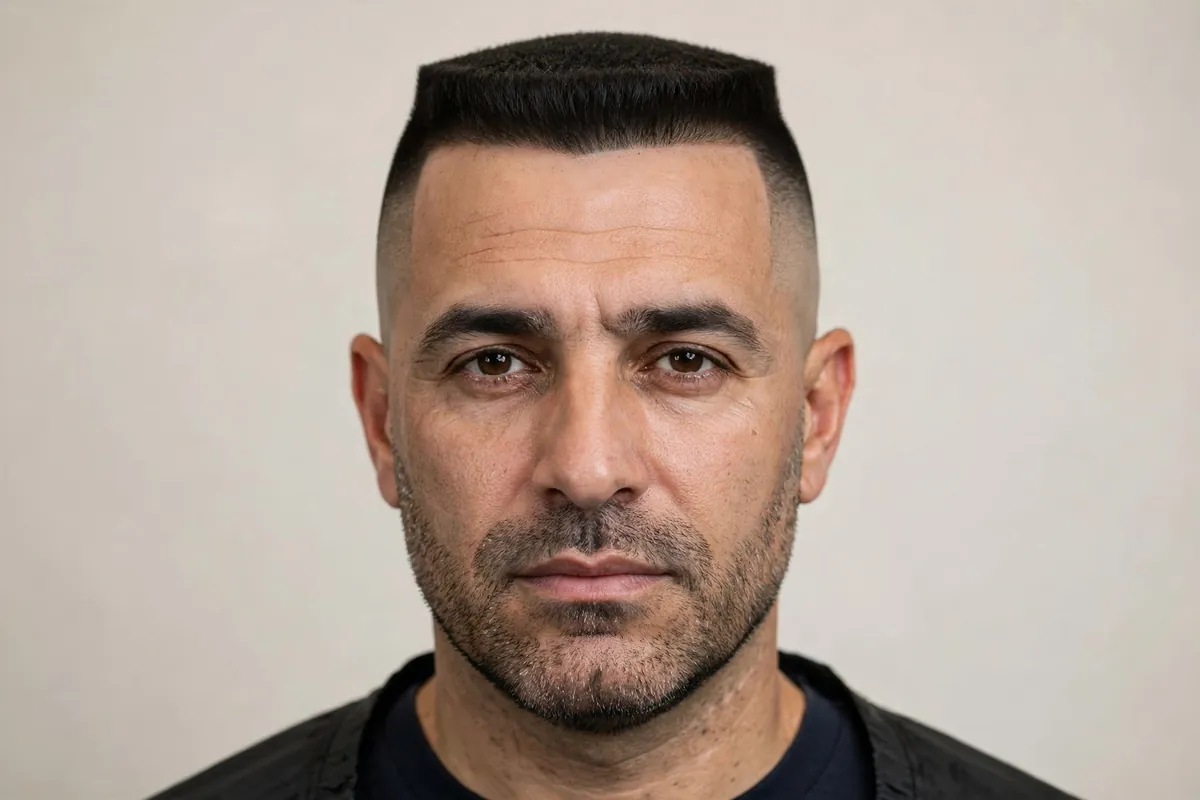
28. Caesar Taper Fade
The Caesar taper fade brushes the top forward into a short, straight fringe while the sides taper down clean. It is short, it is forward, and it needs little more than a towel in the morning — which makes it one of the lowest-maintenance taper fade haircuts for men. Bonus: the forward fringe is a quiet fix for a hairline that is starting to retreat.
What to ask for: “Caesar cut, top at an inch brushed forward with a straight short fringe, mid fade.”

29. Taper Fade with Beard Blend
A taper fade that flows straight into a shaped beard is one of the sharpest combinations in men’s grooming right now. The trick is in the transition: the fade on the sideburn should blend gradually into the cheek line of the beard, with no hard gap between them. Tell your barber you want the fade “connected” to the beard and let them sculpt the line. The result frames the whole face.
What to ask for: “Taper fade connected into the beard — blend the sideburns into the cheek line, shape the beard edges.”

30. Taper Fade for a Receding Hairline
A receding hairline is not a reason to avoid a taper fade — it is a reason to get one. Keeping the sides short draws attention away from the temples, and a textured top pushed slightly forward covers the corners without looking like a comb-over. Ask for a low taper (nothing aggressive) and keep the top at about two inches with texture. Confidence beats coverage every time.
What to ask for: “Low taper, number 2 on the sides, two inches on top pushed forward with texture.”

What to Tell Your Barber
Every great taper fade comes down to three things you tell your barber: the height, the depth, and the top. The height is where the blend starts — low (just above the ears), mid (temple level), or high (a couple of inches above the ears). The depth is how short it goes: down to skin, or kept at a little length. This is where guard numbers come in. A number 1 leaves an eighth of an inch, a number 2 a quarter of an inch, a 3 three-eighths, and a 4 half an inch. “Zero” means no guard at all. The top is simply the length you want to keep, in inches.
Put it together and you get a complete sentence your barber can actually use: “Low taper, number 2 on the sides, two inches on top, textured.” Bring photos too — front, side, and back — because a picture removes all guesswork. What you never want to say is “just clean it up a little.” That is how a man asks for a taper and walks out with a skin fade.
Which Taper Fade Suits Your Face Shape?
Almost any man with enough hair on top to hold a shape can wear a taper fade — but matching the height to your face shape takes the cut from good to great:
| Face shape | Best taper fade | Why it works |
|---|---|---|
| Oval | Mid taper fade | Balances the face and keeps its natural proportions |
| Round | High taper fade | Adds height on top and makes the face look longer |
| Square | Low or mid taper fade | Softens strong angles without hiding the jawline |
| Oblong | Low taper fade | Keeps the sides fuller so the face does not look longer |
| Heart / diamond | Mid taper with textured top | Volume on top balances a narrower chin |
How to Style a Taper Fade at Home
A taper fade looks best when the top gets a little daily attention. The whole routine takes five minutes:
- Start with damp hair. Towel-dry after a shower until the hair is damp, not dripping. Product grips damp hair far better than dry hair.
- Work in a small amount of product. For texture, use a pea-sized amount of matte clay; for shine and hold, a light pomade; for curls, a curl cream. Warm it between your palms first.
- Shape the top. Push textured tops forward or upward with your fingers, comb sleek styles back, or scrunch curls upward. Fingers give a natural finish; a comb gives a polished one.
- Set it with heat (optional). A quick blast with a hairdryer on medium heat locks in volume for blowouts, quiffs, and pompadours. Finish with cool air to set the shape.
- Check the edges. Run a clean finger along the hairline and neckline. If the taper is fresh, the edges will look crisp on their own — that is the beauty of the cut.
How Often Should You Get a Touch-Up?
The honest answer depends on the depth of your fade. A soft low taper can stretch four to six weeks between cuts because the change in length is gradual. A mid taper usually wants a trim every three to four weeks. A high fade or a skin taper fade needs a touch-up every two to three weeks, because the contrast is what makes it — and the contrast is the first thing to go as hair grows.
Hair grows about half an inch a month, so a number 2 on the sides (a quarter of an inch) has doubled in length in roughly two weeks. That is why fades soften from the bottom up. If you like your edges razor-clean between full cuts, ask your barber for a quick neckline and edge-up visit — many shops do it cheap or free for regulars.
5 Taper Fade Mistakes to Avoid
- Saying “fade” when you mean “taper.” The two words get swapped in the chair constantly. Saying “fade” can get you a skin fade when you wanted a subtle taper. Use the word “taper” and name the height.
- Skipping the guard numbers. “Short on the sides” means different things to different barbers. Numbers remove the guesswork — always give one.
- No reference photos. Bring two or three photos of the exact style you want, from the front, side, and back. It takes ten seconds and prevents ninety percent of bad surprises.
- Ignoring your hair type. A blowout taper needs thick hair and a hairdryer; a curly taper needs curls with enough length. Pick a style from this list that matches what you actually have.
- Waiting too long between cuts. A taper fade is a precision cut. Stretch it past its window and the blend disappears — the cut stops looking intentional and starts looking grown out.
Taper Fade Haircut FAQs
What is the difference between a taper and a fade?
A taper shortens the hair gradually around the sideburns, temples, and neckline while leaving more length through the sides. A fade takes the whole side and back down — often to skin — starting low, mid, or high. A taper fade combines the two: the smooth blending of a fade, kept low and concentrated at the edges like a taper.
How long does a taper fade last?
A low taper fade stays sharp for four to six weeks, a mid taper for three to four weeks, and a high or skin taper fade for two to three weeks. Hair grows about half an inch per month, so deeper fades show growth sooner. Regular edge-ups between full cuts keep it looking fresh.
Is a taper fade good for curly hair?
Yes — it is one of the best haircuts for curly hair. The taper keeps the sides and neckline clean while the curls on top keep their volume and shape. Leave at least two inches of curl on top and use a curl cream on damp hair for definition.
What should I ask for at the barber for a taper fade?
Give your barber three things: the height (low, mid, or high), the depth (a guard number like a number 1 or 2, or “to skin”), and the top (the length in inches and the style you want). For example: “Mid taper, number 2 on the sides, two inches on top, textured.” Bring reference photos too.
Can you get a taper fade with a beard?
Absolutely — a taper fade blended into a beard is one of the sharpest looks in men’s grooming. Ask your barber to connect the fade to the beard by blending the sideburns into the beard’s cheek line, with no gap between them.
Does a taper fade work for a receding hairline?
Yes. Keeping the sides short draws attention away from the temples, and a textured top pushed slightly forward covers the corners naturally. A low taper with about two inches of textured top is the safest, most flattering option.
The Bottom Line
The taper fade haircut earned its spot as the most requested cut in American barbershops by being the rare style that works for everyone: every hair type, every face shape, every dress code. Pick your height, pick your top, learn your guard numbers, and bring a photo. Whether you go with a whisper-quiet low taper or a statement-making high fade, you will walk out of the chair looking like the best version of yourself.
Ready for your next cut? Browse our guides to the fade haircut, the classic taper haircut, the low fade haircut, the mid fade haircut, the high fade haircut, the low taper fade, messy hairstyles for men, and the quiff haircut — and if you want to know how barbers themselves think about the craft, read up on the barber trade.