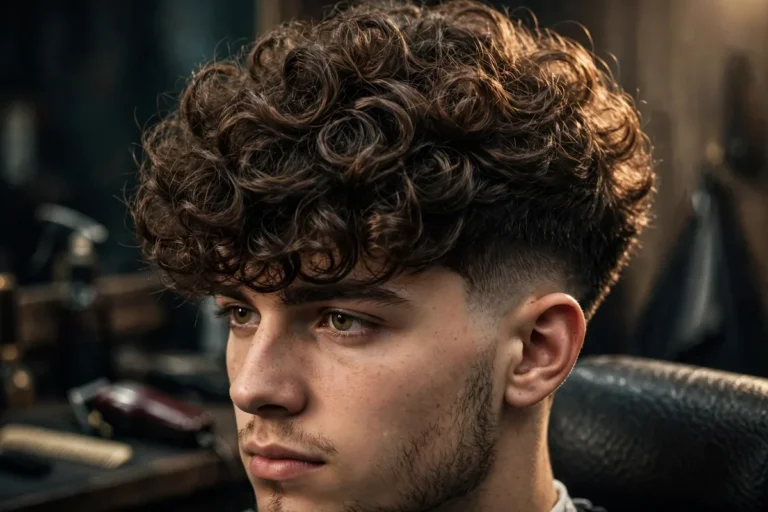
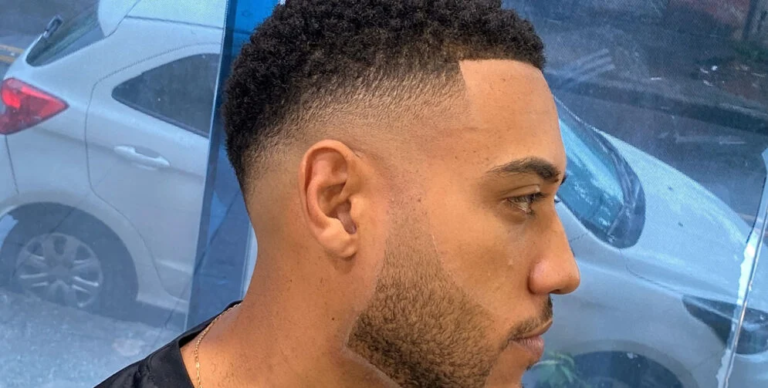
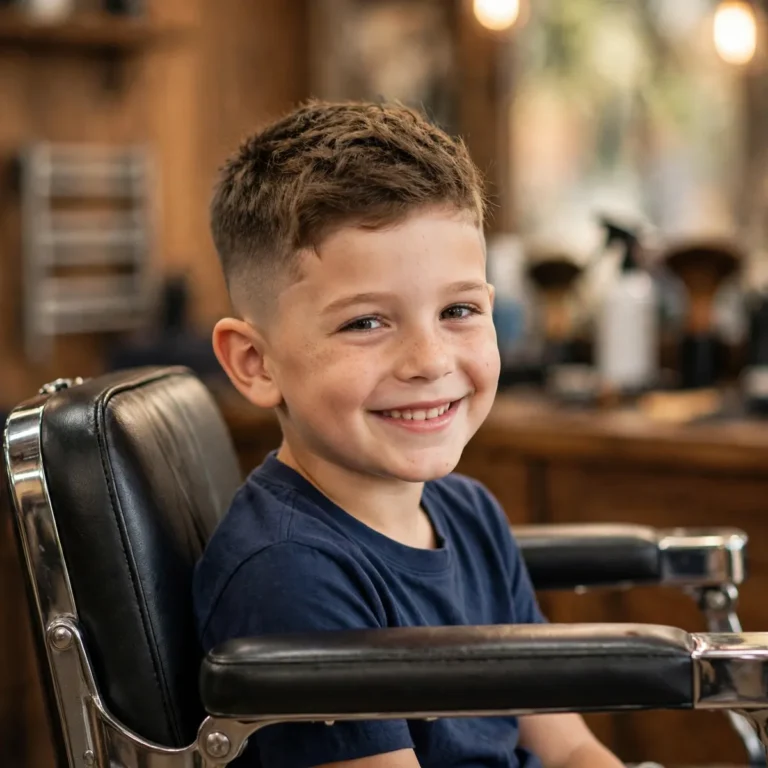
Quiff Haircut: 43 Modern Styles for Men
Growing out a quiff is easy. Making it look intentional every single morning is the hard part. Most guys who try this cut end up with a flat front by 10 a.m. because they skipped a step, used the wrong product, or asked their barber for the wrong length. A quiff haircut rewards a little technique and punishes shortcuts, which is exactly why it separates the guys who look put-together from the guys who just have longer hair on top.
This guide walks through 43 quiff variations from low-maintenance office cuts to bold, high-contrast statement styles so you can find the version that matches your hair type, face shape and daily routine. Barbers see the same five mistakes on repeat with this cut, and once you know them, they’re easy to avoid. By the end, you’ll know exactly what to say in the chair, how to style it at home, and how to keep it looking sharp between visits.
What Is a Quiff Haircut?
A quiff pairs a short back and sides with 3 to 5 inches of length on top, lifted upward and swept backward at the front hairline. The lift at the front is what defines the cut. A pompadour combs the entire top into one continuous sweep, while a quiff keeps its volume concentrated near the fringe, giving it a more textured, casual character. Hair type changes how much work the style needs: straight hair usually needs a blow-dry and product to build height, wavy hair holds a lift with less effort, and curly hair often provides its own natural volume.
Face shape plays a role too. Round and long faces tend to benefit from the extra height a quiff adds, while square and oval faces have more flexibility to wear it shorter or looser. The style has stuck around since the 1950s rockabilly era because it adapts: tight and low for the office, tall and textured for a night out, without changing the underlying haircut.
Best Quiff Hairstyles For Men
1. Classic Quiff

Difficulty: Medium Maintenance: Medium Styling Time: 5-7 minutes
Overview: The Classic Quiff keeps the front section swept upward and back in a smooth, rounded shape, with the sides tapered or lightly faded to keep the focus on the top. It’s the reference point every other variation on this list builds from.
Why It Works: Suits straight or wavy hair with medium density and flatters oval and round face shapes by adding vertical height without excess width.
Styling Tip: Apply a dime-sized amount of medium-hold pomade to towel-dried hair, then use a round brush while blow-drying to roll the front section up and slightly back.
Maintenance: Rinse with lukewarm water to protect the shine from pomade buildup, and use a boar-bristle brush between washes to redistribute natural oils through the length. Maintenance and styling times are estimates and may vary by hair type.
2. High Fade Quiff

Difficulty: Medium Maintenance: High Styling Time: 5-8 minutes
Overview: This version starts the fade just below the crown, leaving a wide band of exposed skin or very short hair that makes the top look noticeably taller by contrast.
Why It Works: Best suited to thick, straight hair that can support height, and it flatters square or round faces by drawing the eye upward and narrowing the sides visually.
Styling Tip: Use a matte texturizing clay worked into damp hair with your fingertips rather than a comb, so individual sections stay separated instead of blending into one flat mass.
Maintenance: Because the fade sits so high, regrowth becomes visible within two weeks, so budget for more frequent barber visits than lower fade placements require. Maintenance and styling times are estimates and may vary by hair type.
3. Low Fade Quiff
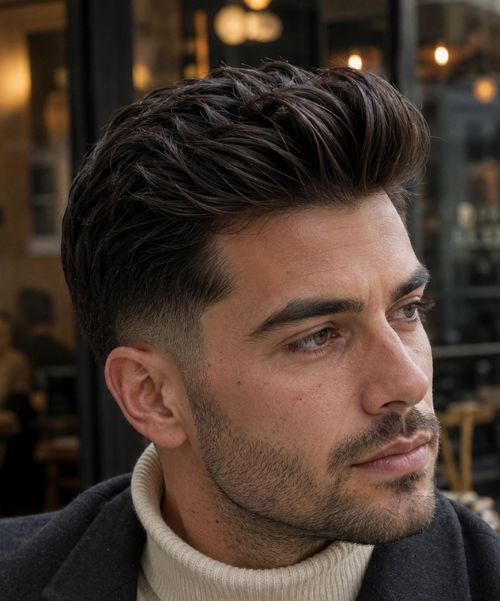
Difficulty: Easy Maintenance: Low Styling Time: 3-5 minutes
Overview: The fade sits just above the ears and along the neckline here, offering subtle contrast that stays mostly hidden under everyday viewing angles while the top keeps its lift.
Why It Works: A safe pick for any hair type and especially flattering on longer face shapes, since the low placement doesn’t compete visually with the height on top.
Styling Tip: Work a lightweight styling cream through damp hair before blow-drying upward, since a low fade pairs best with softer, less structured volume.
Maintenance: This placement grows out gracefully, often stretching to five weeks between trims before the line noticeably softens. Maintenance and styling times are estimates and may vary by hair type.
4. Mid Fade Quiff
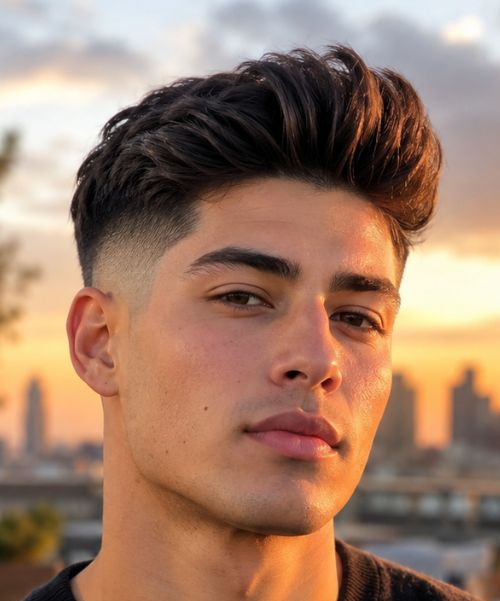
Difficulty: Medium Maintenance: Medium Styling Time: 4-6 minutes
Overview: Starting around the temple, the mid fade splits the difference between subtlety and boldness, giving the quiff a defined edge without the drama of a higher placement.
Why It Works: Versatile across hair types and particularly flattering on oval and square faces, where the moderate contrast complements rather than overwhelms the jawline.
Styling Tip: Use a vent brush while blow-drying to push air through the roots, building lift at the crown before shaping the front with a flexible-hold paste.
Maintenance: Trim every three to four weeks to keep the fade line crisp, since mid placements blur faster than low ones but slower than high or skin fades. Maintenance and styling times are estimates and may vary by hair type.
5. Skin Fade Quiff
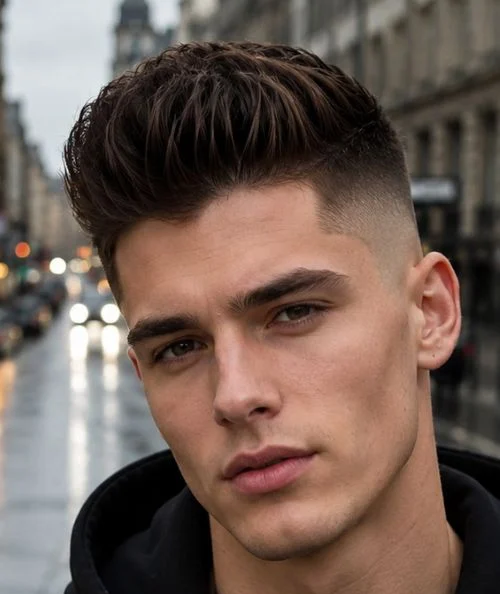
Difficulty: Advanced Maintenance: High Styling Time: 5-7 minutes
Overview: The sides are taken down to bare skin here, creating the sharpest possible contrast against the voluminous top and making this the boldest fade pairing on the list.
Why It Works: Works best on thick or wavy hair with enough density to stand out against the bare sides, and it flatters round or oval faces by maximizing vertical contrast.
Styling Tip: Keep product light on top — a small amount of styling cream is enough, since heavy clay competes visually with the precision of the skin fade below it.
Maintenance: Skin fades blur within two to three weeks, so this style demands the tightest trim schedule on this list if you want to keep the sharp look. Maintenance and styling times are estimates and may vary by hair type.
6. Burst Fade Quiff

Difficulty: Advanced Maintenance: High Styling Time: 5-7 minutes
Overview: Instead of a straight line, the fade curves around the ear in an arc, leaving more length at the nape while dropping to skin directly above the ear for a distinctive rounded silhouette.
Why It Works: Flatters straight or wavy hair and works especially well on square faces, where the rounded fade line softens sharper angles along the jaw.
Styling Tip: Apply sea salt spray to damp hair before blow-drying for airy texture, then set the front with a small amount of molding paste for definition.
Maintenance: Ask specifically for a barber experienced with burst fades, since the curved line is technically harder to maintain evenly than a straight fade. Maintenance and styling times are estimates and may vary by hair type.
7. Drop Fade Quiff

Difficulty: Medium Maintenance: Medium Styling Time: 4-6 minutes
Overview: The fade line dips downward behind the ear rather than staying straight, following the natural curve of the skull for a cleaner profile from the side and back.
Why It Works: A smart option for any hair type, particularly for guys whose head shape makes a straight fade line look uneven or boxy.
Styling Tip: Blow-dry with your fingers instead of a brush to keep the front section light and natural rather than sculpted.
Maintenance: Because the dropped line is more forgiving as it grows, this fade holds its shape a few days longer than a straight one before needing a refresh. Maintenance and styling times are estimates and may vary by hair type.
8. Taper Quiff

Difficulty: Easy Maintenance: Low Styling Time: 3-5 minutes
Overview: This version swaps a fade for a gradual scissor-and-clipper taper around the ears and neckline, leaving more length on the sides for a softer transition into the lifted top.
Why It Works: The lowest-maintenance side treatment on this list, well suited to long or square faces that don’t need the extra contrast a fade provides.
Styling Tip: Use a wide-tooth comb to guide the front upward while blow-drying, then finish with a light pomade for hold without heaviness.
Maintenance: Tapers hold their shape for four to six weeks between trims, making this the best choice for guys who can’t commit to a strict barber schedule. Maintenance and styling times are estimates and may vary by hair type.
9. Low Taper Quiff
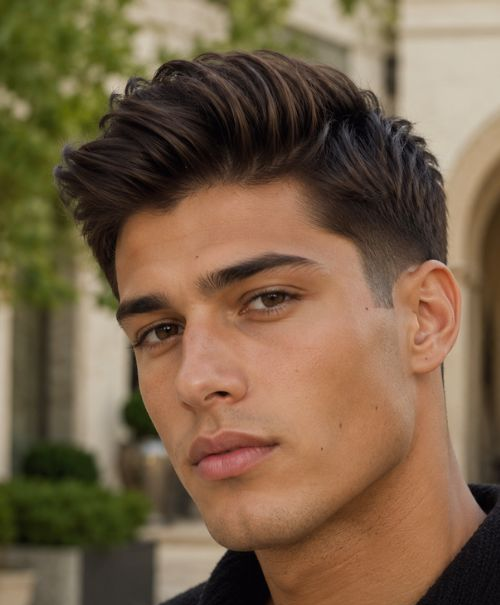
Difficulty: Easy Maintenance: Low Styling Time: 3-5 minutes
Overview: Combining the gentlest side treatment with a moderate front lift, this style keeps more length around the ears than any fade allows, for a soft and professional finish.
Why It Works: A strong option for fine or thin hair, since the fuller sides balance a top that might otherwise look sparse against skin.
Styling Tip: Use a volumizing mousse at the roots before blow-drying to add body that thin hair doesn’t generate on its own.
Maintenance: This is one of the most forgiving styles on the list as it grows out, since the soft taper line rarely looks unkempt even past the five-week mark. Maintenance and styling times are estimates and may vary by hair type.
10. Textured Quiff

Difficulty: Medium Maintenance: Medium Styling Time: 5-8 minutes
Overview: Choppy, point-cut layers replace a smooth top here, creating separation and movement that reads as more casual and less sculpted than a classic quiff.
Why It Works: Ideal for thick or wavy hair with enough density to support visible layering, and flattering on square or oval faces that can handle broken-up texture near the hairline.
Styling Tip: Scrunch a matte clay through damp hair with your fingers rather than combing, which preserves the separated, piece-y look the cut is designed for.
Maintenance: The layering itself is forgiving of imperfect styling, so this is a good entry point for guys new to product-based routines. Maintenance and styling times are estimates and may vary by hair type.
11. Messy Quiff

Difficulty: Easy Maintenance: Low Styling Time: 3-5 minutes
Overview: This relaxed take trades polish for a tousled, finger-styled finish that looks effortless despite a few deliberate steps behind it.
Why It Works: Works especially well with wavy or curly hair that already carries natural texture, and suits round or oval faces looking for casual height.
Styling Tip: Spray sea salt spray onto damp hair, then rough-dry with your fingers instead of a brush to keep the finish loose and undone.
Maintenance: Because precision isn’t the goal, this style hides a few extra days of growth better than most other entries on this list. Maintenance and styling times are estimates and may vary by hair type.
12. Short Quiff
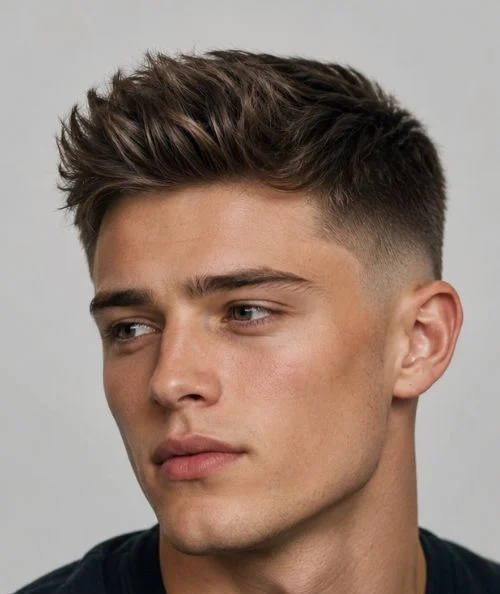
Difficulty: Easy Maintenance: Low Styling Time: 2-4 minutes
Overview: Keeping the top shorter than most variations here, this cut offers just enough length at the front to lift without the commitment of a taller silhouette.
Why It Works: The most office-friendly length on this list, suitable for any hair type and especially practical for long or oval faces that don’t need added height.
Styling Tip: A small amount of light clay worked in with your fingertips is enough, shorter hair needs far less product than longer versions of the cut.
Maintenance: The reduced length means less daily upkeep and a lower risk of the front collapsing by afternoon. Maintenance and styling times are estimates and may vary by hair type.
13. Long Quiff

Difficulty: Advanced Maintenance: High Styling Time: 7-10 minutes
Overview: This dramatic version keeps significant length on top, built into a tall, flowing shape that demands more structural styling than shorter variations.
Why It Works: Best suited to thick or straight hair with enough body to hold height, and flattering on long or oval faces that can carry the extra volume.
Styling Tip: Blow-dry in sections with a round brush, working from the back forward, then add a pinch of texture powder at the roots if the length needs extra lift.
Maintenance: Skipping the blow-dry on this length isn’t an option — without it, the hair falls forward rather than standing upright. Maintenance and styling times are estimates and may vary by hair type.
14. Medium Quiff

Difficulty: Medium Maintenance: Medium Styling Time: 5-7 minutes
Overview: Sitting between the short and long versions, this length offers noticeable volume and movement while staying easy to manage day to day.
Why It Works: A flexible choice for most hair types and face shapes, offering enough length to style multiple ways without heavy daily commitment.
Styling Tip: Work styling cream through towel-dried hair for flexible hold, then finger-shape the front for a natural rather than sculpted finish.
Maintenance: This length holds its shape well between trims, making it a practical middle ground for guys who want variety without extra upkeep. Maintenance and styling times are estimates and may vary by hair type.
15. Soft Quiff

Difficulty: Easy Maintenance: Low Styling Time: 3-5 minutes
Overview: Rather than a sharp peak, the top bends gently backward in a smooth wave here, giving the style a relaxed, understated character.
Why It Works: A strong option for fine or straight hair and flattering on square or round faces that don’t need dramatic height to look balanced.
Styling Tip: Smooth a light styling cream through the top with your fingers while lifting gently, avoiding a comb that can flatten the soft bend.
Maintenance: Because the shape doesn’t rely on sharp lines, this style is one of the most forgiving on this list as hair grows between cuts. Maintenance and styling times are estimates and may vary by hair type.
16. Loose Quiff

Difficulty: Medium Maintenance: Medium Styling Time: 4-6 minutes
Overview: This version keeps the top long and airy, prioritizing natural movement over a sculpted, held-in-place shape.
Why It Works: Ideal for wavy hair that provides its own texture, and flattering on oval or long faces that can carry the extra volume without looking heavy.
Styling Tip: Apply sea salt spray for grip, then blow-dry upward with a vent brush before working in a light cream that controls without stiffening.
Maintenance: The loose finish tolerates humidity and everyday movement better than tightly held styles, making it a solid choice for active days. Maintenance and styling times are estimates and may vary by hair type.
17. Spiky Quiff

Difficulty: Medium Maintenance: Medium Styling Time: 5-7 minutes
Overview: The front is separated into distinct, defined spikes here rather than one continuous sweep, giving the style sharper, higher-energy texture.
Why It Works: Works best on straight or thick hair that holds definition well, and suits round or square faces looking for a bolder finish.
Styling Tip: Use a strong-hold clay and pinch small sections between your fingers while blow-drying to define individual pieces rather than one solid mass.
Maintenance: Use product sparingly here, too much clay weighs the spikes down and turns definition into a flat, stiff mess. Maintenance and styling times are estimates and may vary by hair type.
18. Slick Back Quiff
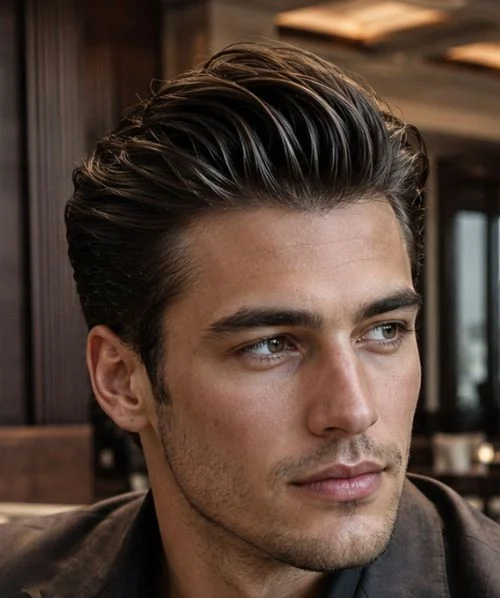
Difficulty: Medium Maintenance: Medium Styling Time: 5-7 minutes
Overview: This hybrid blends vintage polish with modern volume, sweeping the top backward with lift retained at the front hairline and a light sheen throughout.
Why It Works: Suits straight hair particularly well and flatters oval or square faces with its balanced, controlled silhouette.
Styling Tip: Use a medium-hold paste with a touch of shine, since this is one of the few quiff variations where a fully matte finish undersells the look.
Maintenance: A light comb-through midday keeps stray strands in place without requiring a full product reapplication. Maintenance and styling times are estimates and may vary by hair type.
19. Side Part Quiff

Difficulty: Medium Maintenance: Medium Styling Time: 4-6 minutes
Overview: A defined side part gives the lifted top clear architecture here, with the volume rising from one side rather than the center for a smart, polished look.
Why It Works: Flatters straight or wavy hair and works well on oval or long faces, where the diagonal line adds structure without excess width.
Styling Tip: Comb the part in first while hair is damp, then use a round brush to lift the heavier side up and over as you blow-dry.
Maintenance: Re-comb the part daily rather than relying on old product, since a stale part line looks noticeably less crisp than a fresh one. Maintenance and styling times are estimates and may vary by hair type.
20. Hard Part Quiff

Difficulty: Advanced Maintenance: High Styling Time: 5-7 minutes
Overview: This variation takes the side part further with a razor-shaved line carved into the scalp, adding sharp, deliberate definition against the volume above.
Why It Works: Best on straight hair with a clean growth pattern, and flatters square or oval faces that can handle the added geometric detail.
Styling Tip: Blow-dry up and over starting from the shaved line, then set with pomade for shine or paste for a matte finish depending on preference.
Maintenance: The shaved line needs refreshing every two to three weeks, since a grown-out hard part looks unintentional rather than sharp. Maintenance and styling times are estimates and may vary by hair type.
21. Curly Quiff

Difficulty: Easy Maintenance: Low Styling Time: 4-6 minutes
Overview: Natural curl pattern does much of the lifting here, letting texture create volume that straight hair typically needs a blow dryer to achieve.
Why It Works: Purpose-built for curly hair, and flattering on round or oval faces that benefit from the natural height curls provide.
Styling Tip: Dry with a diffuser on low heat while lifting at the roots, then work a curl-defining cream through to control frizz without disrupting the curl pattern.
Maintenance: Resist brushing the finished style, since brushing breaks up the curl clumps that give this version its shape. Maintenance and styling times are estimates and may vary by hair type.
22. Wavy Quiff

Difficulty: Easy Maintenance: Low Styling Time: 4-6 minutes
Overview: Soft waves carry the texture through the top here, giving the cut body and movement with comparatively little styling effort.
Why It Works: Naturally suited to wavy hair and flattering on oval or square faces that pair well with relaxed, natural-looking volume.
Styling Tip: Blow-dry with a vent brush while lifting gently, taking care not to flatten the wave pattern with too much tension.
Maintenance: Use product lightly, since overloading wavy hair drags out the wave and costs you the volume it builds for free. Maintenance and styling times are estimates and may vary by hair type.
23. Thick Hair Quiff
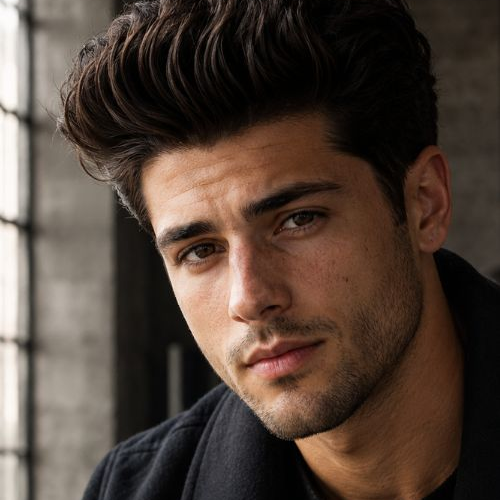
Difficulty: Medium Maintenance: Medium Styling Time: 6-8 minutes
Overview: Built specifically for dense hair, this version relies on internal thinning to remove bulk so the top lifts into shape rather than sitting heavy.
Why It Works: Designed for thick hair types and flattering on round or square faces that can carry substantial volume without looking overdone.
Styling Tip: Ask your barber to thin the interior layers first, then use a matte clay that grips dense strands better than lighter creams.
Maintenance: Thick hair holds a quiff shape longer through the day than finer textures, often needing just one product touch-up if any. Maintenance and styling times are estimates and may vary by hair type.
24. Fine Hair Quiff
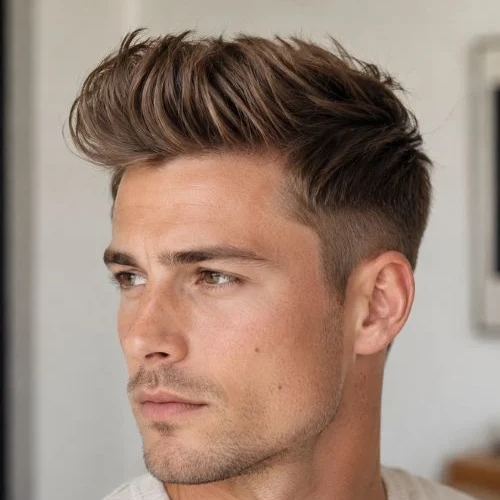
Difficulty: Medium Maintenance: Low Styling Time: 3-5 minutes
Overview: Cut shorter and denser than most variations, this style uses cropped length to give fine hair the support it needs to stand up on its own.
Why It Works: Specifically suited to fine or thin hair, and flattering on oval or long faces that don’t need extra visual weight.
Styling Tip: Dust texture powder at the roots before blow-drying upward, and avoid heavy pomades, which flatten fine strands and expose the scalp.
Maintenance: A volumizing shampoo used twice a week helps fine hair hold body between styling sessions. Maintenance and styling times are estimates and may vary by hair type.
25. Pompadour Quiff

Difficulty: Advanced Maintenance: High Styling Time: 7-9 minutes
Overview: This hybrid borrows the pompadour’s height and the quiff’s texture, rising taller than a standard quiff while keeping visible separation instead of a smooth, lacquered surface.
Why It Works: Best for thick or straight hair with enough length to build real height, and flattering on long or oval faces that suit the added volume.
Styling Tip: Roll the front section up and back with a round brush while blow-drying, then finish with styling cream followed by a small amount of pomade for structure.
Maintenance: This is one of the more demanding styles on this list, requiring a consistent daily blow-dry routine to hold its shape. Maintenance and styling times are estimates and may vary by hair type.
26. Quiff Undercut
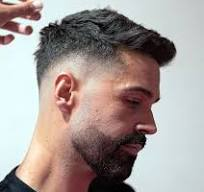
Difficulty: Advanced Maintenance: High Styling Time: 5-7 minutes
Overview: Short, disconnected sides pair with a tall, voluminous top here, skipping the gradual blend of a taper for a sharper, more intentional contrast.
Why It Works: Works well with straight or wavy hair that supports volume without collapsing, and flatters round or square faces that benefit from a bold silhouette.
Styling Tip: Blow-dry the front up and slightly back, then finish with a strong matte clay for separation and a clean, structured look.
Maintenance: The disconnection between top and sides grows out visibly fast, so this style needs trims closer to the two-week mark. Maintenance and styling times are estimates and may vary by hair type.
27. Quiff Fade
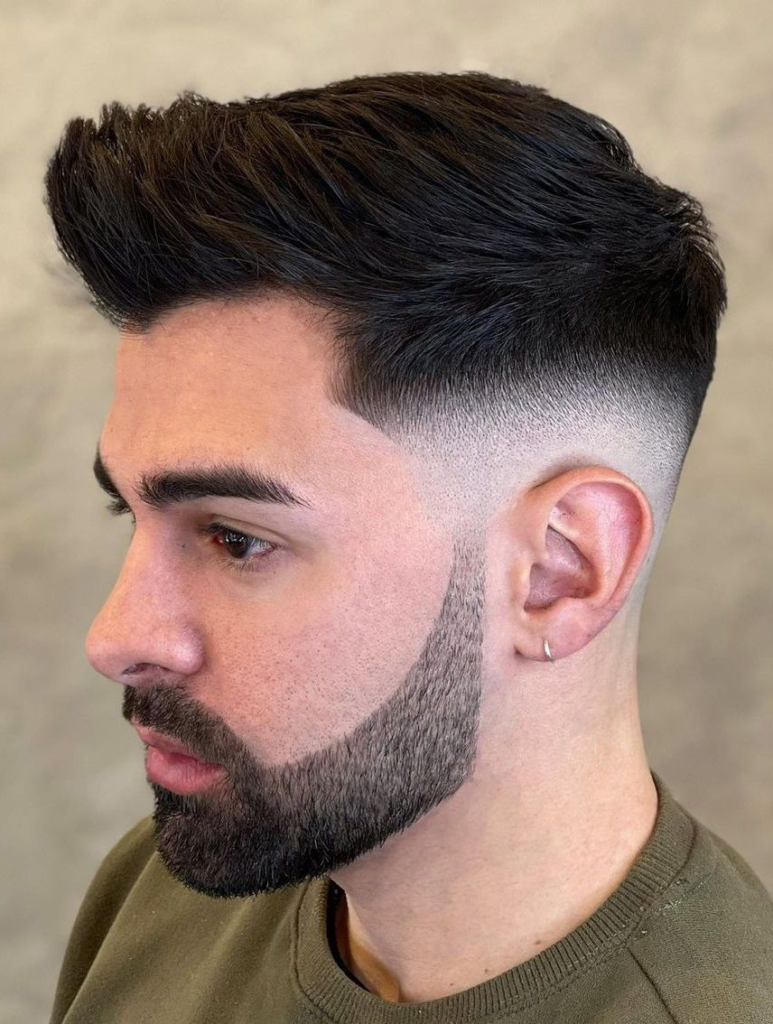
Difficulty: Medium Maintenance: Medium Styling Time: 4-6 minutes
Overview: This is the general pairing that defines most modern quiffs: a lifted top set against sides that gradually blend down, with the exact fade height left open to preference.
Why It Works: Adaptable across hair types, and the fade height itself can be tuned to whatever face shape or setting you need it for.
Styling Tip: Blow-dry for lift first, then shape with a molding paste for flexible hold that adjusts easily throughout the day.
Maintenance: Because this is a flexible base style, maintenance really depends on which fade height you and your barber settle on. Maintenance and styling times are estimates and may vary by hair type.
28. Quiff Mullet

Difficulty: Advanced Maintenance: Medium Styling Time: 5-7 minutes
Overview: Lifted volume at the front meets longer, textured length at the back in this bold pairing, with tapered sides keeping the overall shape intentional.
Why It Works: Suits wavy or thick hair with enough density to support both halves of the cut, and flatters long or oval faces.
Styling Tip: Blow-dry the front upward for lift, then work styling cream through the entire length for consistent movement and soft hold.
Maintenance: Because the back is meant to grow longer, trims focus mainly on the sides and front while letting the back length develop over time. Maintenance and styling times are estimates and may vary by hair type.
29. Rockabilly Quiff
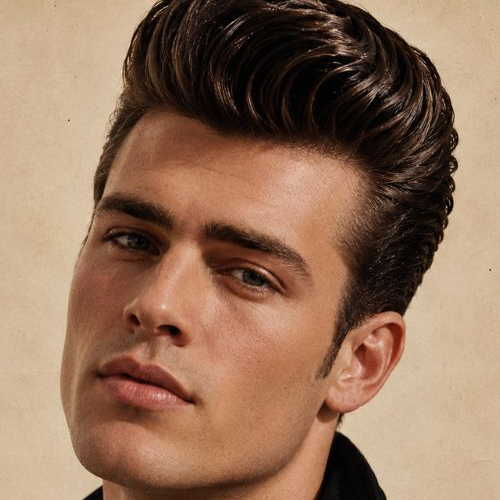
Difficulty: Advanced Maintenance: High Styling Time: 8-10 minutes
Overview: This heritage version features a high, rolled front with slicked sides and a deliberate shine, tracing directly back to the style’s 1950s origins.
Why It Works: Best suited to thick, straight hair that can hold a sculpted roll, and flattering on oval or square faces that suit a more formal silhouette.
Styling Tip: Work a traditional pomade through towel-dried hair, then comb the front up and over itself to build the signature rolled wave.
Maintenance: This is the most time-intensive style on this list to recreate daily, since it relies on precise combing rather than finger-styling. Maintenance and styling times are estimates and may vary by hair type.
30. Forward Quiff

Difficulty: Easy Maintenance: Low Styling Time: 3-5 minutes
Overview: Instead of sweeping straight back, this variation pushes the top forward before lifting the fringe, creating volume with a more casual, textured finish.
Why It Works: Works well for straight or slightly wavy hair, and flatters round or oval faces that benefit from softness near the forehead.
Styling Tip: Apply volumizing mousse to damp hair, then blow-dry the front forward and up with your fingers before setting with matte clay.
Maintenance: Because the style is finger-shaped rather than brushed, minor regrowth is easy to blend into the existing texture. Maintenance and styling times are estimates and may vary by hair type.
31. Side Swept Quiff

Difficulty: Medium Maintenance: Medium Styling Time: 4-6 minutes
Overview: The top volume combs smoothly to one side here rather than lifting straight up, creating a cleaner, more diplomatic shape than a standard quiff — essentially a side-swept fringe with extra lift.
Why It Works: Flatters straight or wavy hair and suits oval or long faces, with the diagonal sweep softening height while keeping fullness.
Styling Tip: Blow-dry with a vent brush, directing hair up and across in your preferred direction, then finish with styling cream for light shine.
Maintenance: This style adapts well to a natural side-lean in hair growth, working with the pattern rather than fighting it. Maintenance and styling times are estimates and may vary by hair type.
32. Layered Quiff

Difficulty: Medium Maintenance: Medium Styling Time: 5-7 minutes
Overview: Strategic layering through the top removes weight here, creating lift and movement without the bulk that uncut length can carry.
Why It Works: Ideal for thick or wavy hair that needs weight removed to lift properly, and flattering on square or oval faces.
Styling Tip: Blow-dry the front up and back, then finish with a matte clay or paste for controlled volume and a touchable finish.
Maintenance: The layering itself needs periodic refreshing to keep the movement looking deliberate rather than simply overgrown. Maintenance and styling times are estimates and may vary by hair type.
33. Long Textured Quiff

Difficulty: Advanced Maintenance: High Styling Time: 6-8 minutes
Overview: This version keeps significant length on top with choppy, irregular layers that prevent the extra length from sitting flat or looking heavy.
Why It Works: Suits thick or wavy hair looking for a bolder, more expressive silhouette, and flatters long or oval faces that can carry the added height.
Styling Tip: Apply volumizing mousse to damp hair, blow-dry the front section upward with a round brush, then finish with a medium-hold pomade.
Maintenance: The extra length requires more consistent product use than shorter variations to avoid the top collapsing by evening. Maintenance and styling times are estimates and may vary by hair type.
34. Mid Taper Quiff

Difficulty: Easy Maintenance: Low Styling Time: 4-6 minutes
Overview: Blending the sides starting near the midpoint of the ear, this cut sits between the subtlety of a low taper and the contrast of a fade.
Why It Works: A dependable middle path for most hair types, and flattering on oval or square faces that don’t need sharp contrast to look balanced.
Styling Tip: Blow-dry while lifting with your fingers, then work styling cream through the top to keep the shape soft and controlled.
Maintenance: This placement grows out more gracefully than a true fade, stretching comfortably to the five-week mark before needing attention. Maintenance and styling times are estimates and may vary by hair type.
35. Quiff With Beard
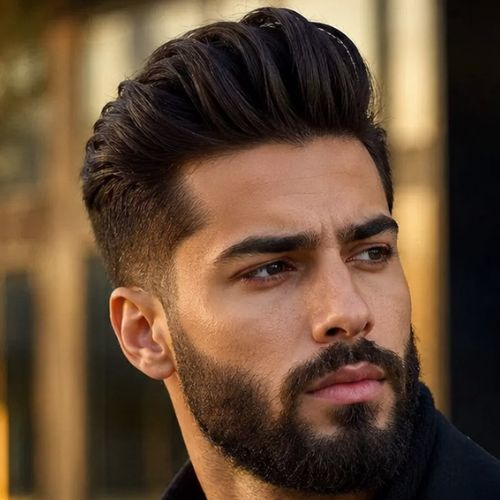
Difficulty: Medium Maintenance: Medium Styling Time: 5-7 minutes
Overview: This pairing balances volume on top against a full, shaped beard, framing the face from two directions for a complete, structured look.
Why It Works: Works across most hair types, and flatters square or oval faces where the beard’s density should roughly match the volume up top for balance.
Styling Tip: Style the top with styling cream for smooth control, then keep the beard conditioned with a few drops of beard oil daily.
Maintenance: Schedule the haircut and beard trim together so both halves are shaped to complement each other rather than competing for attention. Maintenance and styling times are estimates and may vary by hair type.
36. Quiff With Line Up

Difficulty: Medium Maintenance: High Styling Time: 4-6 minutes
Overview: A crisp line up at the forehead and temples frames this cut with sharp, defined edges, adding technical precision to the lifted top.
Why It Works: Suits straight or wavy hair with enough density to hold texture, and flatters round or square faces that benefit from clean, defined borders.
Styling Tip: Apply matte paste to damp hair and finger-style the front upward, being careful not to disturb the freshly cut line.
Maintenance: The line up needs refreshing roughly every two weeks to stay sharp, faster than most of the fade or taper pairings on this list. Maintenance and styling times are estimates and may vary by hair type.
37. Faux Hawk Quiff

Difficulty: Advanced Maintenance: Medium Styling Time: 5-7 minutes
Overview: This variation concentrates lift along a center strip running from forehead to crown rather than just at the front hairline, creating a bolder ridge of volume.
Why It Works: Best for thick or straight hair that can support a raised center section, and flattering on oval or round faces.
Styling Tip: Use a strong-hold gel or matte paste and work upward from the center outward to build a defined ridge rather than a single front peak.
Maintenance: This style needs consistent daily restyling since the center ridge doesn’t hold its shape as well overnight as a standard quiff. Maintenance and styling times are estimates and may vary by hair type.
38. Buzz Cut Quiff

Difficulty: Easy Maintenance: Low Styling Time: 2-3 minutes
Overview: This minimal version pairs a buzzed length on the sides and back with just enough length on top to create a subtle forward lift, rather than dramatic height.
Why It Works: Works for any hair type and is one of the most practical entries on this list for oval or square faces that want low commitment.
Styling Tip: A small amount of matte wax worked through with fingertips is all this length needs — heavier products will just look greasy on such short hair.
Maintenance: This is the lowest-maintenance style in the entire guide, since the buzzed sides barely show growth between trims. Maintenance and styling times are estimates and may vary by hair type.
39. Two Block Quiff

Difficulty: Medium Maintenance: Medium Styling Time: 5-7 minutes
Overview: Borrowed from Korean barbering trends, this style pairs a disconnected, buzzed lower section with a thick, voluminous quiff on top for sharp contrast.
Why It Works: Suits straight or thick hair that holds a defined shape, and flatters round or oval faces that benefit from the strong horizontal break.
Styling Tip: Blow-dry the top forward and up using a round brush, then finish with a light wax to keep separation without heaviness.
Maintenance: The disconnected line needs regular upkeep to stay crisp, similar in frequency to a quiff undercut. Maintenance and styling times are estimates and may vary by hair type.
40. Disconnected Quiff
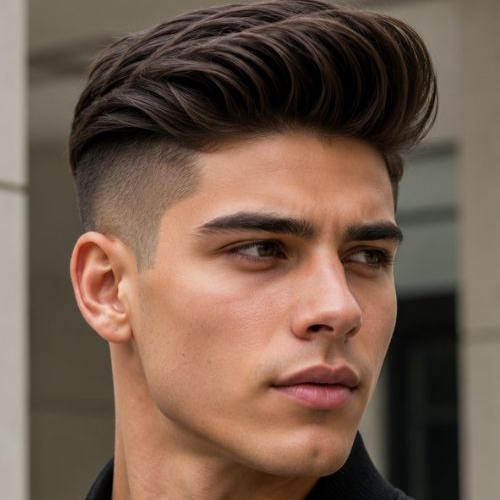
Difficulty: Advanced Maintenance: High Styling Time: 5-7 minutes
Overview: Similar to the undercut version but with an even sharper break between lengths, this cut skips any gradual blend entirely for maximum contrast.
Why It Works: Works best on straight or thick hair with a clean growth pattern, and flatters square or round faces looking for the boldest possible statement.
Styling Tip: Use a firm-hold clay and build the front section in layers, pressing each piece into place rather than brushing through in one motion.
Maintenance: This is one of the highest-upkeep cuts on the list, needing a trim roughly every two weeks to preserve the sharp disconnection. Maintenance and styling times are estimates and may vary by hair type.
41. Voluminous Quiff

Difficulty: Medium Maintenance: Medium Styling Time: 6-8 minutes
Overview: This version prioritizes maximum fullness across the entire top rather than height concentrated at the front, for a rounder, denser silhouette.
Why It Works: Best suited to thick or wavy hair with natural body, and flattering on long or oval faces that can carry extra width up top.
Styling Tip: Blow-dry with a large round brush, lifting from multiple angles rather than one direction, then set with a medium-hold mousse.
Maintenance: Regular trims keep the fullness looking shaped rather than shaggy, since uncontrolled growth can make this style look overgrown fast. Maintenance and styling times are estimates and may vary by hair type.
42. Ivy League Quiff

Difficulty: Easy Maintenance: Low Styling Time: 3-5 minutes
Overview: This preppy, conservative take keeps the top shorter and the sides neatly tapered, offering just enough lift to read as a quiff without drawing much attention.
Why It Works: Works for any hair type and is one of the most workplace-friendly options on this list, suiting oval or square faces without needing added drama.
Styling Tip: A light pomade combed through damp hair is enough to hold this understated shape all day without looking overstyled.
Maintenance: Ivy League Quiff is one of the easier styles to maintain between visits since the shorter length hides regrowth better than taller versions. Maintenance and styling times are estimates and may vary by hair type.
43. Modern Business Quiff

Difficulty: Easy Maintenance: Low Styling Time: 3-5 minutes
Overview: Designed with professional settings in mind, this style keeps the fade or taper subtle and the front lift moderate, striking a balance between polish and personality.
Why It Works: Adaptable across hair types and flattering on oval or long faces, this is a dependable choice for anyone who needs their haircut to work in a boardroom.
Styling Tip: Use a light styling cream and a comb rather than fingers for a neater, more controlled finish appropriate for the office.
Maintenance: Because the contrast is kept subtle, this style tolerates a few extra days of growth before it needs a trim compared to bolder fades. Maintenance and styling times are estimates and may vary by hair type.
How To Choose The Right Quiff Haircut
By Hair Type
- Thick hair: Ask for internal thinning so volume lifts instead of sitting heavy; matte clay holds density best.
- Thin/fine hair: Keep the top shorter, use texture powder at the roots, and avoid heavy pomades that expose the scalp.
- Curly hair: Let the natural curl pattern build volume; a diffuser and curl cream work better than a flat blow-dry.
- Straight hair: Needs a blow-dry and product to create lift it doesn’t have naturally; round brushes help build height.
- Wavy hair: The easiest texture to work with — natural bend builds body with minimal product or effort.
By Face Shape
- Oval: Wears nearly every quiff variation without adjustment.
- Round: Benefits from added height, which visually lengthens the face.
- Square: Suits softer, textured tops that ease strong jaw angles.
- Long: Should cap the height and keep some width through the sides to avoid stretching proportions further.
How To Ask Your Barber For A Quiff
- Bring a side-profile reference photo the lift and fade height are hardest to judge from the front alone.
- State your top length in inches “3 inches on top” gives your barber a concrete target.
- Name your side treatment specify fade (low, mid, high or skin) or taper.
- Describe your finish mention whether you’ll style with matte clay or a shinier pomade, since barbers cut layering differently for each.
- Mention your daily styling routine if you won’t blow-dry every morning, say so, so the cut is forgiving of air-drying.
- Confirm the shape before the final pass a quick check in the mirror before the last trim catches mismatched expectations early.
Product Recommendations
| Product | Best For | How To Use |
|---|---|---|
| Hair Cream | Soft, natural-looking lift on fine to medium hair | Work through damp hair before blow-drying for flexible, low-shine hold |
| Pomade | Classic and rockabilly styles needing shine and structure | Warm a small amount between palms, comb through for a polished finish |
| Wax | Short or buzzed quiffs needing light texture | Rub between fingertips and press into dry or towel-dried hair |
| Clay | Thick or textured quiffs needing matte hold | Work into damp hair with fingers for separation without shine |
| Shampoo (volumizing) | Fine or flat hair that needs body | Use two to three times weekly, focusing on the roots |
| Conditioner (lightweight) | Preventing top-heavy styles from falling flat | Apply mid-length to ends only, avoiding the roots |
E-E-A-T Note
Barbers see the same handful of quiff problems repeat weekly: a front that collapses by noon, a fade that’s outgrown the top, or product mismatched to hair density. Skipping the blow-dry is the single most common reason a quiff falls flat at home, since clay and paste hold a shape but can’t create one. None of the guidance above requires guesswork. It reflects standard barbering technique, not personal claims about guaranteed results.
Final Thoughts
A quiff haircut rewards the guy who’s willing to learn a five-minute routine, not the guy chasing a single “perfect” version of the cut. Whether you land on a low-maintenance taper for the office or a bold skin fade for the weekend, the fundamentals stay the same: the right length for your hair type, a fade or taper that suits your face shape, and a product that matches your hair’s density.
Don’t be afraid to try a few variations before settling on your go-to. A quiff is flexible enough to shift from conservative to bold with the same underlying cut, so use that to your advantage as your style — or your workplace — changes. Talk to your barber about which version fits your hair and your routine, and build from there.For more mens haircuts you can follow us on Pinterest.
FAQs
What’s the difference between a quiff and a pompadour?
A quiff concentrates textured volume at the front with a casual finish, while a pompadour sweeps the entire top back into a smoother, more uniform, formal shape.
Is a quiff professional enough for work?
Yes, in its short, tapered or soft forms. A short quiff over a low taper reads as clean and conservative in most workplace settings.
How long does my hair need to be for a quiff?
Aim for 3 to 5 inches on top for a standard quiff, or 2 to 3 inches for a short version. The front section matters most since that’s where the lift happens.
Is a quiff high maintenance?
Moderately. Expect a 3-to-8-minute daily styling routine and trims every 2 to 6 weeks depending on whether you choose a fade or a taper.
Can I get a quiff with curly hair?
Yes. Curly hair suits shorter, shaped versions styled with a diffuser and curl cream, letting the natural texture provide much of the volume.