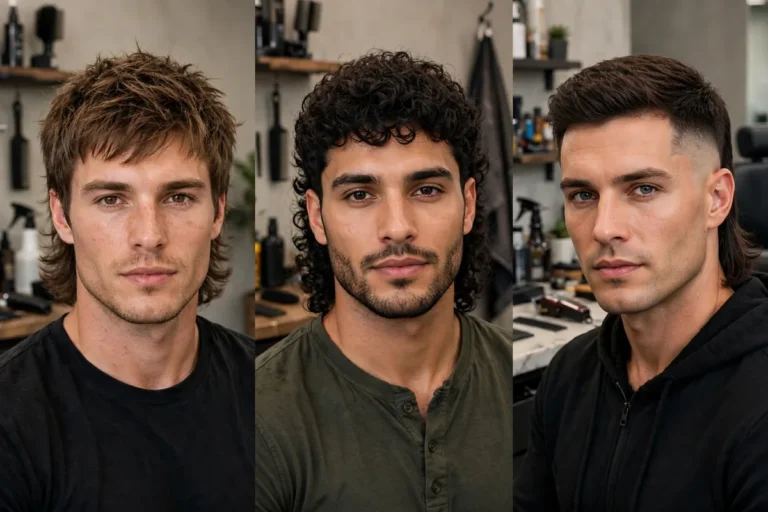
30 Best Short Mullet Haircuts for Men
The short mullet haircut is proof that a legendary hairstyle can grow up without losing its edge. It takes the famous front-short, back-long formula and shrinks it down into something you can wear to the office on Monday and a concert on Friday. Shorter on top and around the ears, with just a subtle kick of length at the nape, it reads clean from the front and quietly rebellious from the back.
If you have been curious about mullet hairstyles for men but the full-length version felt like too much commitment, this is your entry point. You can get there in a single barbershop visit from almost any short men’s cut, there is no awkward months-long grow-out, and the upkeep is honestly easier than most haircuts for men with this much personality. Below you will find 30 short mullet haircuts broken down by style, who each one suits, how to style it, and exactly what to say to your barber — so you walk out with the cut you pictured in your head.
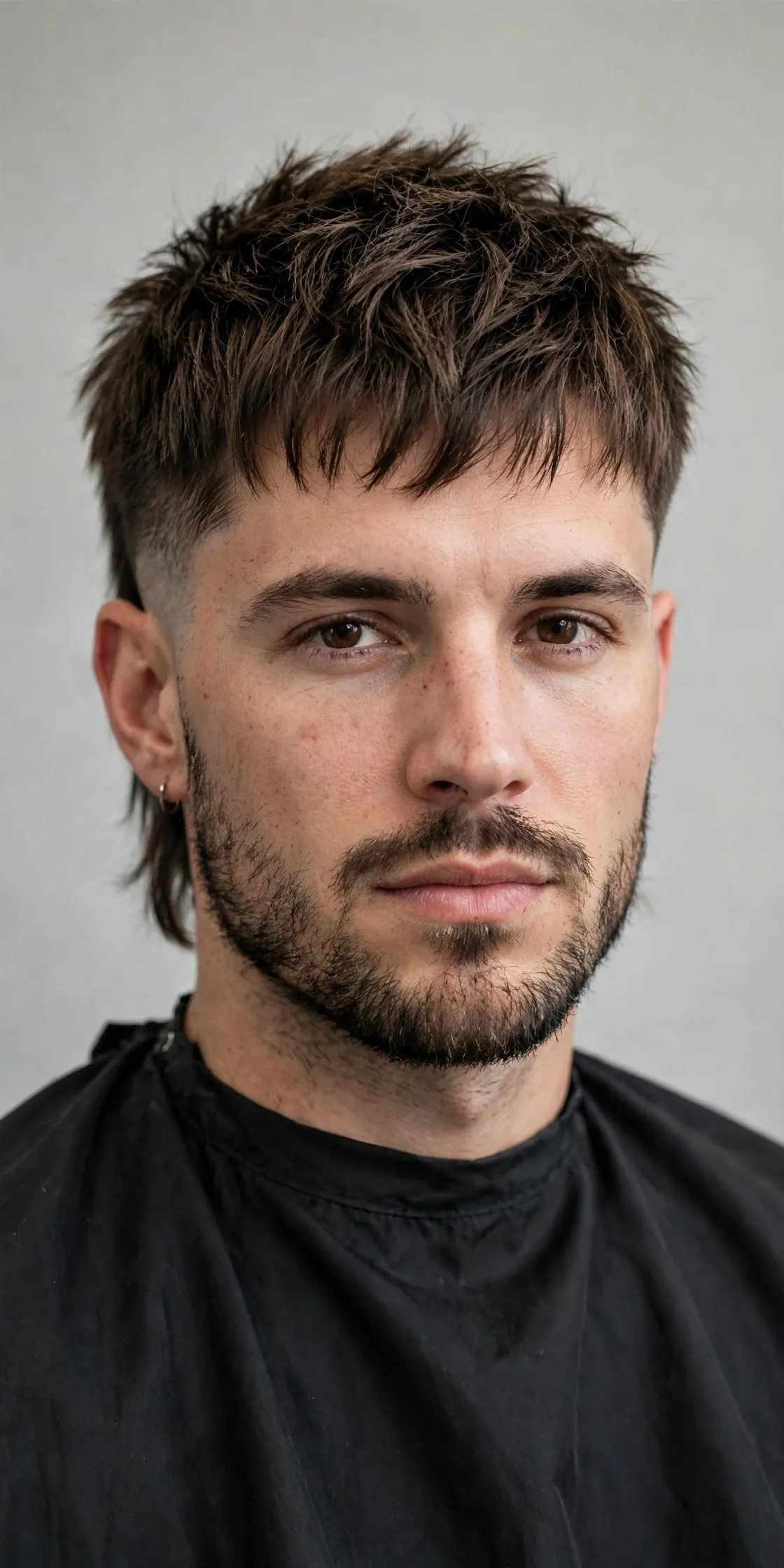
What Is a Short Mullet Haircut?
A short mullet haircut keeps the classic mullet blueprint — shorter hair in the front and on the sides, longer hair at the back — but compresses the whole thing. Instead of the flowing back length of the traditional mullet, the back section here usually sits right at or just below the nape, only an inch or two longer than the sides. The result is a compact, high-contrast shape: tight and controlled around the ears and temples, with a deliberate little tail of length at the back that gives the whole haircut its identity.
The style shares DNA with several modern mullet variations, but the short version is the easiest to wear day to day. It borrows fade techniques from the fade haircut world and layering tricks from the taper haircut world, which is why it photographs well from every angle and grows out more gracefully than most short cuts. For guys weighing their options, a men’s short mullet sits right between a standard fade and a full mullet in both commitment and attitude — which is exactly why it has become the default recommendation for first-timers. For a deeper dive into the history of the shape itself, the mullet’s encyclopedia entry is a fun read.
30 Best Short Mullet Haircuts for Men
1. Classic Short Mullet

The classic is where it all starts: scissor-cut sides with no hard fade, a neat tidy top, and a back section with a little more weight and roundness than today’s ultra-precise versions. It has a deliberate vintage feel without tipping into costume territory, because the back stays short.
Who it suits: Straight or slightly wavy hair; oval and square faces; guys who want the mullet idea without the fade.
Styling tip: Work a pea-sized amount of light pomade through the top and smooth the back section down with your fingers. The goal is controlled, not slicked flat.
What to tell your barber: “Short all over with scissors, no fade — keep the back noticeably longer than the sides with a soft, rounded nape.”
2. Modern Textured Short Mullet
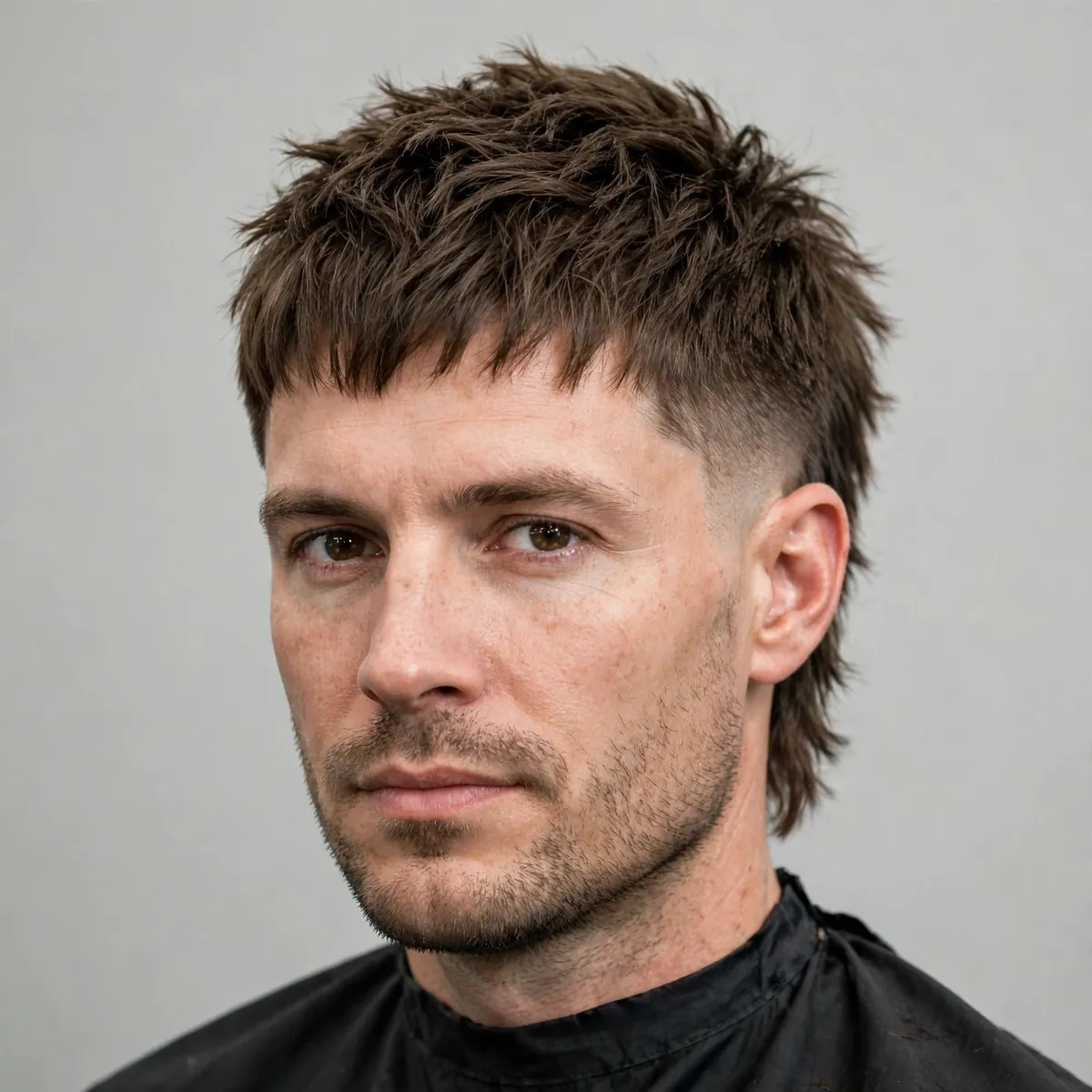
This is the short mullet most guys ask for right now: a choppy, point-cut top with visible separation, clean tapered sides, and a back that is textured rather than blunt. The texture does all the talking, so it looks intentional even on zero-effort days.
Who it suits: Medium to thick hair of any type; works on nearly every face shape. Great first short mullet for men.
Styling tip: Pinch small sections of the top with matte clay to break up the texture. Less product than you think — overdoing it flattens the whole point of the cut.
What to tell your barber: “Textured crop on top with point cutting, tapered sides, and keep a short textured back — about two inches past the nape.”
3. Low Fade Short Mullet
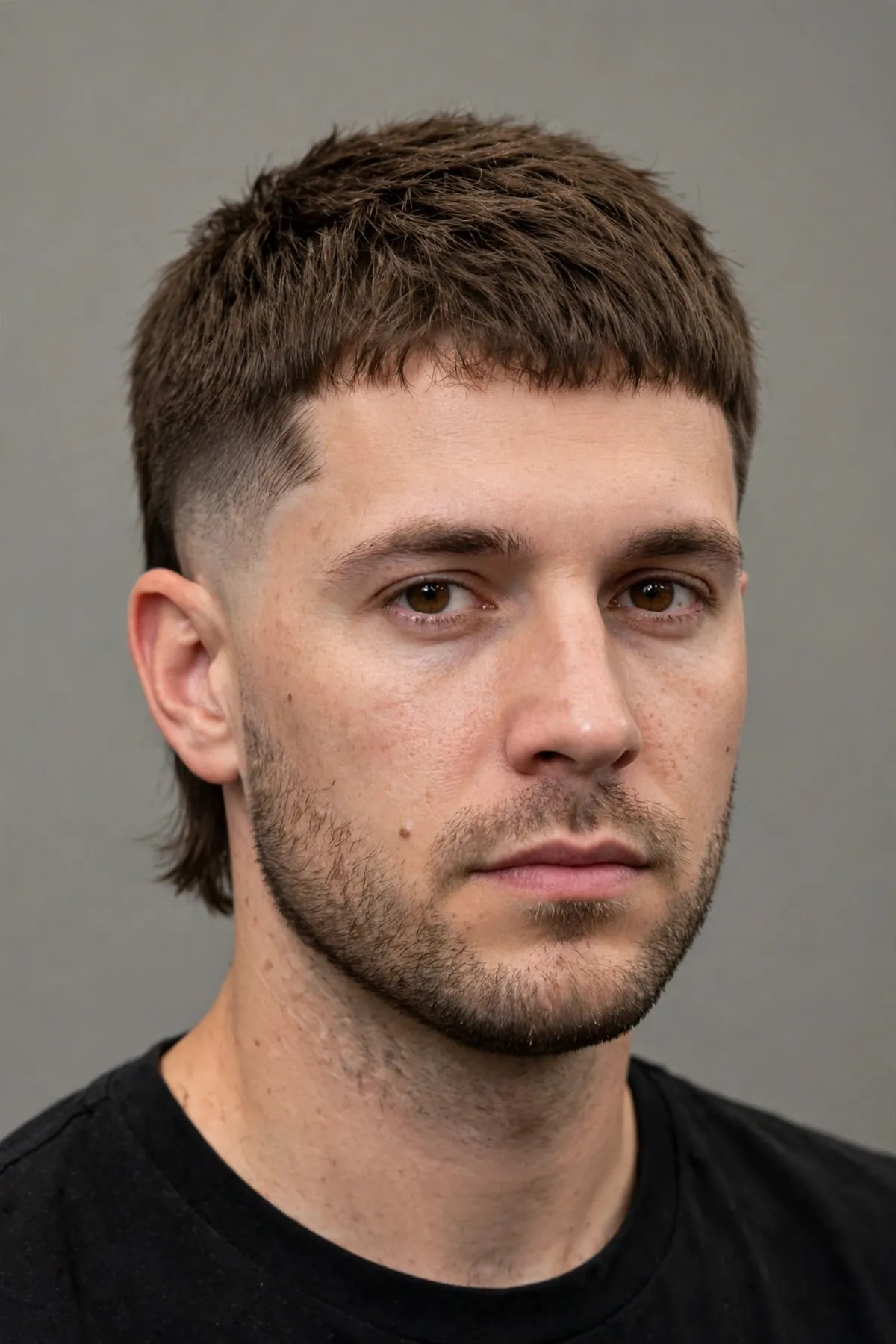
The fade starts low, right around the ear, which leaves more hair on the sides and gives the whole head a fuller shape. Of all the faded versions, this is the most subtle and the most office-friendly — you get the mullet silhouette without the sides looking dramatically shaved.
Who it suits: Narrower or longer faces (the extra side width balances them); guys who want the safest, most professional version.
Styling tip: Keep the top brushed forward or slightly to the side with a light cream. This is one of the low fade haircut family’s easiest styles to maintain.
What to tell your barber: “Low fade just above the ears, keep the sides fuller, and leave the back short with a clean neckline.”
4. Mid Fade Short Mullet

The mid fade sits at ear level and hits the sweet spot between subtle and bold. It gives you clear contrast between the sides and the top, which makes the mullet shape read instantly from across the room. Barbers cut this version more than any other fade height on short mullets.
Who it suits: Most face shapes; especially good for round faces because the tighter sides slim the silhouette.
Styling tip: Blow-dry the top upward with a vent brush for lift, then define with matte paste. Similar styling logic applies to many mid fade haircut styles.
What to tell your barber: “Mid fade on the sides, textured top, and a short back with enough length to read as a mullet.”
5. Skin Fade Short Mullet

Sides taken all the way down to the skin create maximum contrast with the top and back. The mullet outline becomes razor-sharp, which is exactly the point — this is the boldest version of the cut, and it demands confidence.
Who it suits: Guys who want high impact; works best with thick hair that holds contrast well. Needs frequent touch-ups to stay sharp.
Styling tip: The fade will blur within two weeks, so book your touch-up when you book the cut. A grooming powder at the roots keeps the top looking fresh between washes.
What to tell your barber: “Skin fade on the sides, keep the top short and textured, and leave the back just long enough for the mullet shape.”
6. Taper Fade Short Mullet

The taper fade blends gradually from very short at the base to natural length higher up, with no hard line. It is the most polished, professional way to wear a short mullet — the shape is there, but nothing about it screams for attention.
Who it suits: Conservative workplaces; men who want a short mullet for men they can wear to client meetings. Flattering on all face shapes.
Styling tip: Style the top with a light cream for a natural finish. The taper grows out softly, so this version forgives you if you stretch appointments a week or two.
What to tell your barber: “Natural taper around the ears and neckline — no hard fade line — with a short mullet shape in the back.”
7. Burst Fade Short Mullet
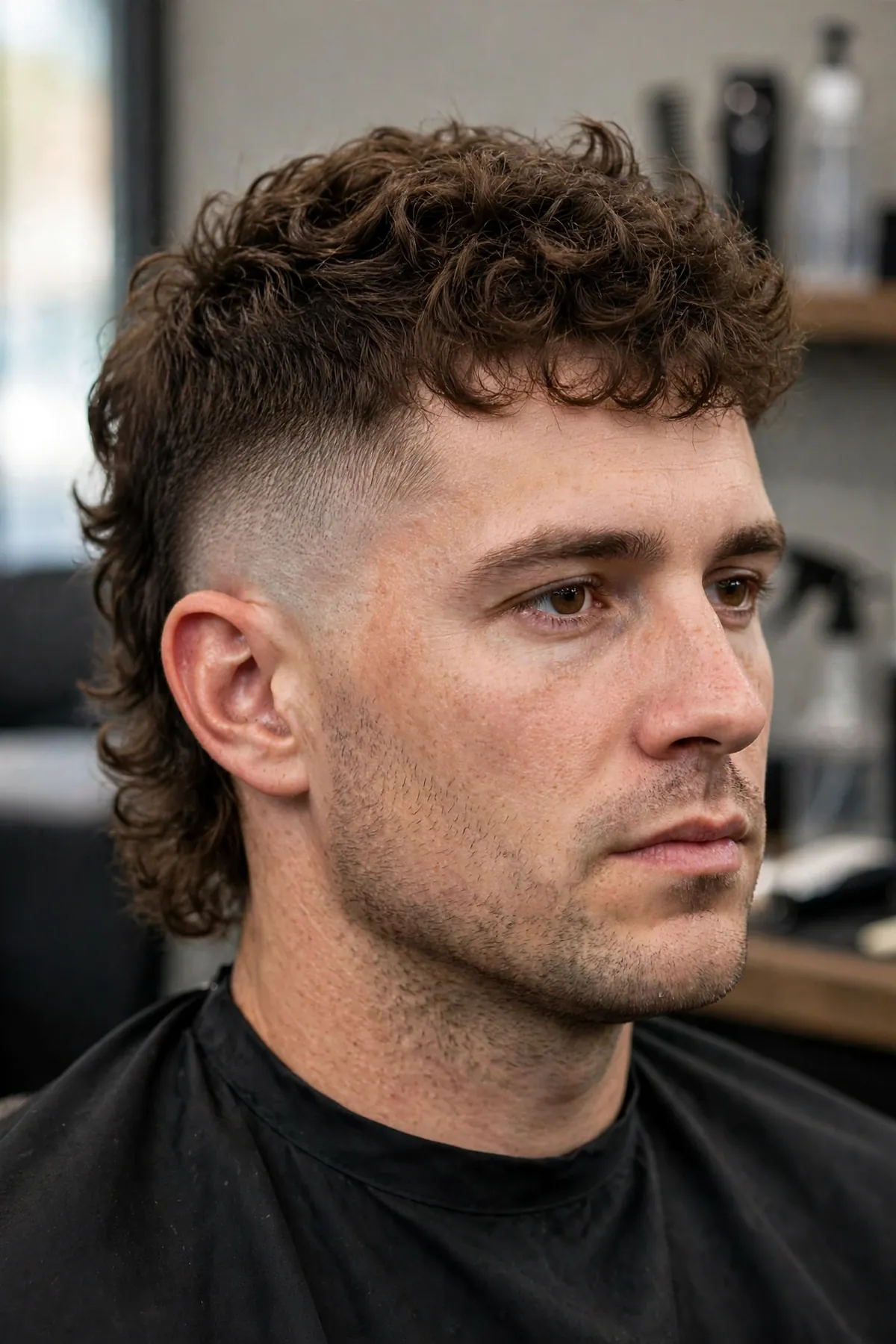
The burst fade arcs in a semicircle around the ear and flows straight into the back section, which makes the mullet silhouette look almost drawn on. It is artistic, distinctive, and easily the most complimented version at barbershops.
Who it suits: Curly and thick hair show off the burst pattern best; square and oval faces carry it well.
Styling tip: Define the top with curl cream or matte clay and keep the edges lined up — the burst pattern only looks intentional when the outline is crisp.
What to tell your barber: “Burst fade around the ear that blends into a short back — keep the top textured and the burst pattern clean and rounded.”
8. Drop Fade Short Mullet

The drop fade curves downward behind the ear instead of running straight, which follows the natural curve of the head and gives the cut a streetwear edge. The crown keeps some layered weight while the back stays soft and compact.
Who it suits: Round faces benefit from the way the fade frames the head; thick or wavy hair gives the layers room to move.
Styling tip: Use a texture cream and blow-dry the crown forward for lift. The dropped line behind the ear is the detail people notice, so keep it fresh.
What to tell your barber: “Drop fade that dips behind the ear, layered crown weight, and a soft short back — not too much length.”
9. Curly Short Mullet
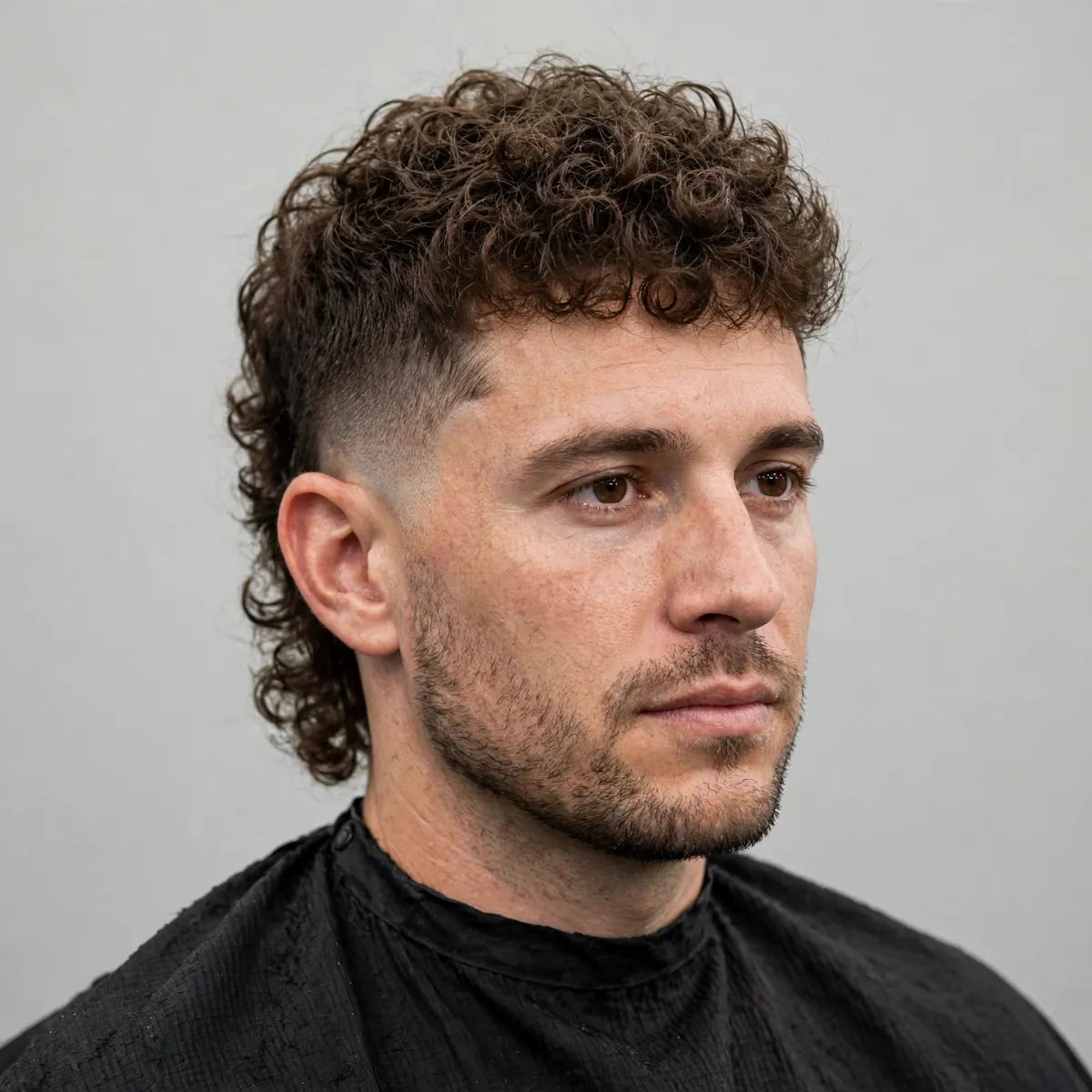
Curls might be the best hair type for this cut. Even at short back length, natural curl definition gives the mullet tons of personality, and the short length keeps the curls compact and controlled instead of wild. Shrinkage is barely a factor at this length, which makes planning the cut easy.
Who it suits: Natural curls and coils; the short back keeps everything manageable. Great volume without extra length.
Styling tip: Apply curl cream to damp hair and scrunch upward, then diffuse on low heat or air-dry. Curls need far less product at short length than you expect.
What to tell your barber: “Keep the curls rounded on top, fade the sides, and shape the back slightly longer so the curls form the mullet silhouette.”
10. Wavy Short Mullet

Natural waves do half the styling work for you. They give the back section organic movement and texture that straight hair needs product to fake, and the whole cut air-dries into shape with barely any effort.
Who it suits: Naturally wavy hair; low-maintenance guys who want a cut that looks styled without styling.
Styling tip: Scrunch the damp back section with your fingers to encourage the wave pattern, then leave it alone. A little wave cream adds definition on humid days.
What to tell your barber: “Soft layers that follow my natural wave, tapered sides, and a short back that lets the waves sit naturally.”
11. Straight Short Mullet
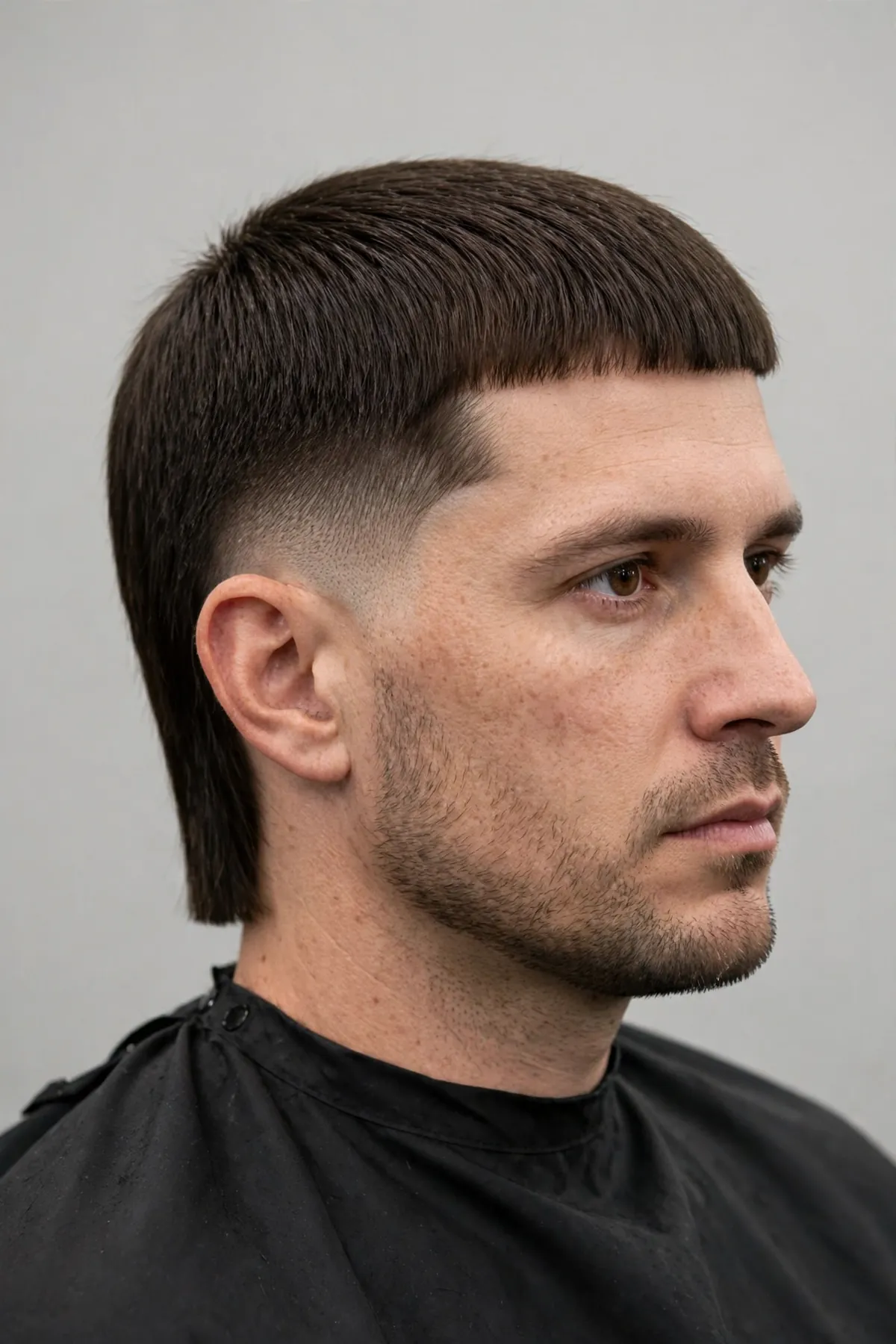
Straight hair makes the mullet’s architecture impossible to miss. The lines read crisp and graphic, so this version lives or dies on the precision of the cut — which is exactly why it looks so sharp when it’s done right.
Who it suits: Straight, fine-to-medium hair; guys who like clean, architectural haircuts.
Styling tip: Blow-dry the back section downward with a concentrator nozzle for a smooth finish, then press a small amount of light pomade through it. Keep the finish low-shine.
What to tell your barber: “Clean straight lines, tapered sides, and a precise short back — I want the edges sharp.”
12. Textured Crop Short Mullet
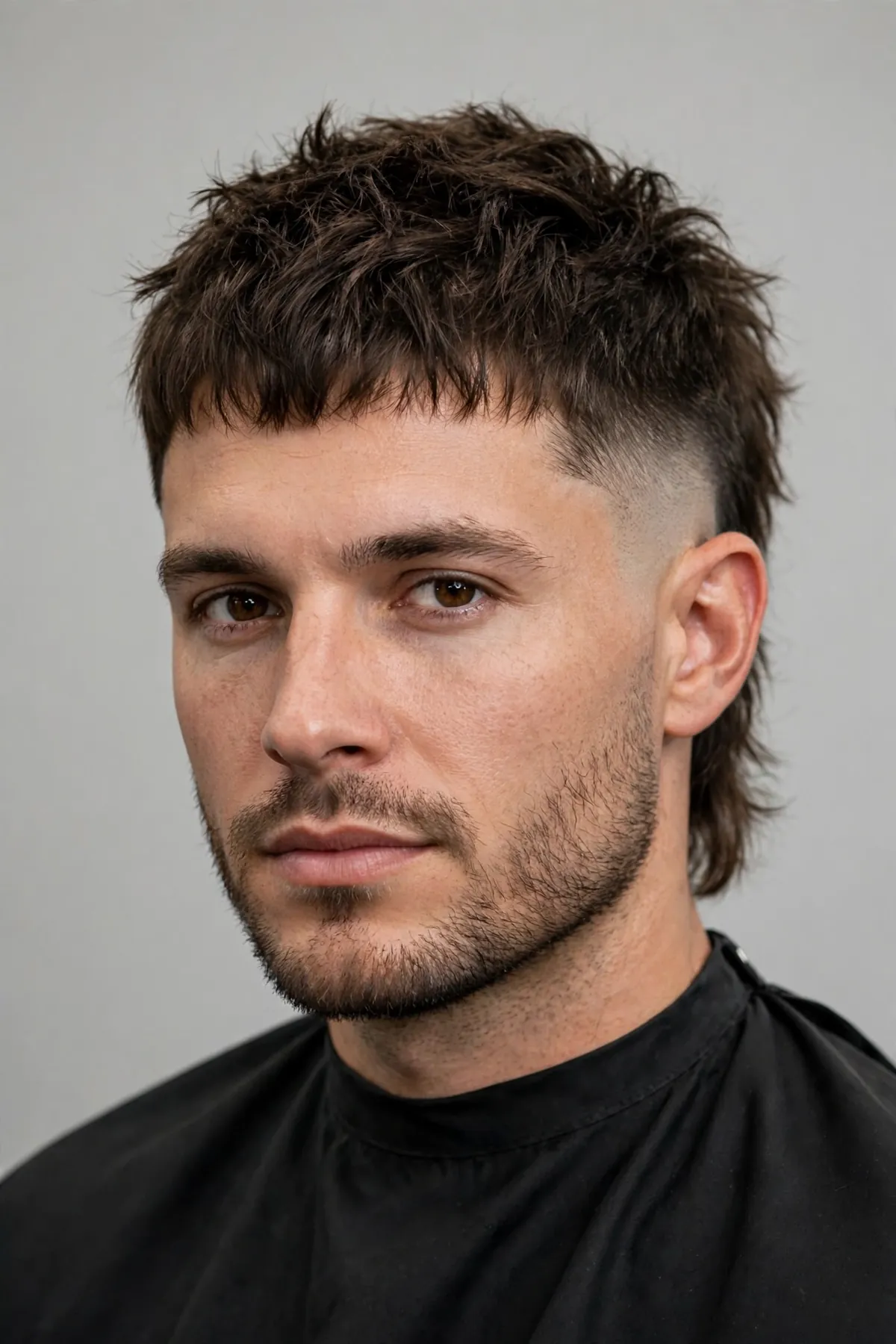
Take a modern textured crop and give it a whisper of extra length at the nape — that is this cut. The top stays compact and choppy, the sides go tight, and the back just barely hints at a mullet. Minimal, sharp, and extremely wearable.
Who it suits: Fine hair (the choppy texture fakes density); round faces (tight sides + height on top). Ideal low-maintenance option.
Styling tip: Work matte paste through dry hair with your fingers, pushing the texture forward and slightly up. Thirty seconds, done.
What to tell your barber: “Textured crop on top, tight faded sides, and just a hint of mullet length at the back — keep it minimal.”
13. Shag-Inspired Short Mullet
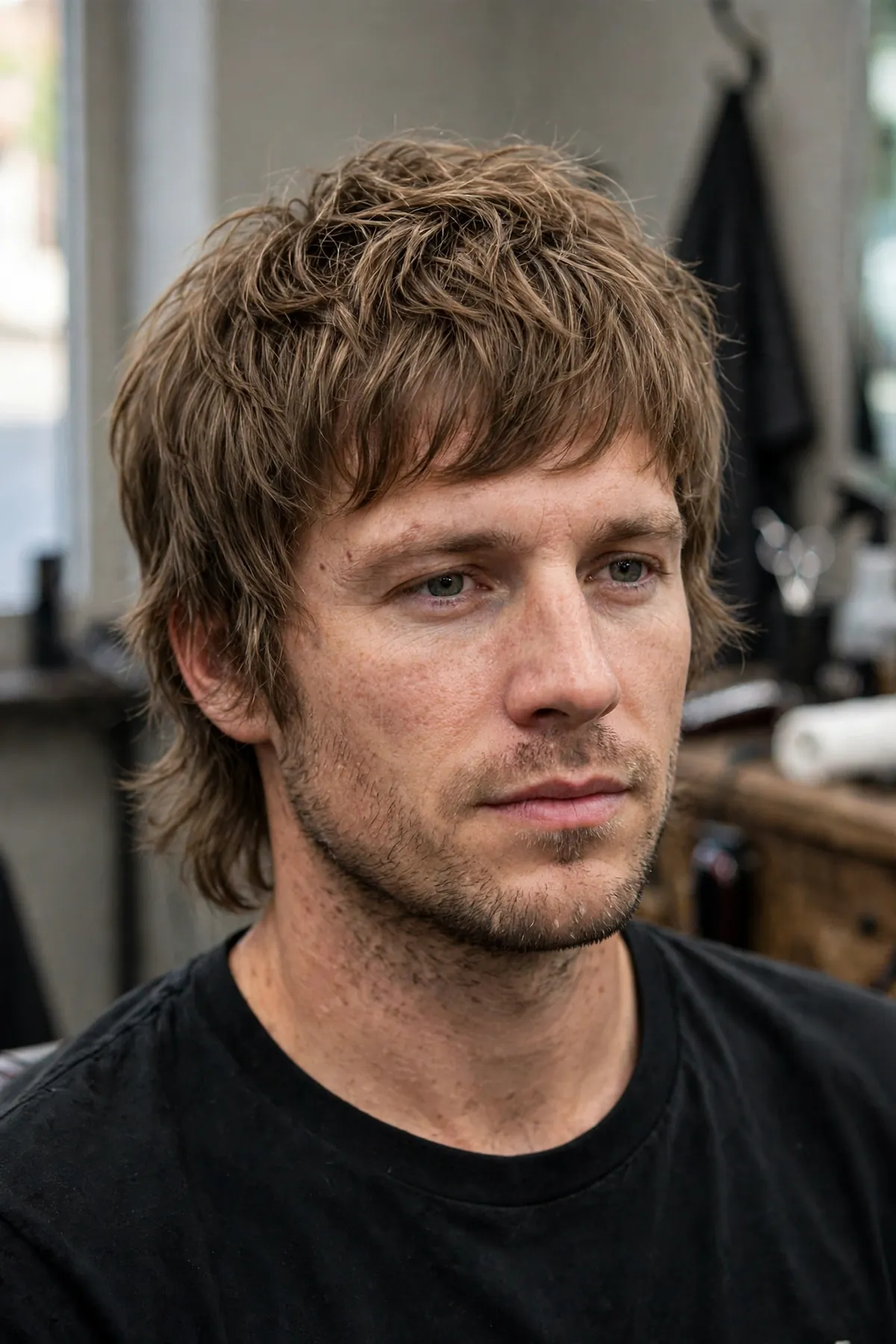
Borrowed from the 1970s shag, this version uses uneven, broken layers across the top that flow into a softly layered back. It is the most rock-and-roll of the short mullets — relaxed, a little undone, and full of movement.
Who it suits: Wavy to thick hair that can hold broken layers; creative types and anyone who wants the cut to look effortless.
Styling tip: Sea salt spray on damp hair, scrunch, and air-dry. The messier it looks, the better it works — resist the urge to over-smooth it.
What to tell your barber: “Choppy shag layers on top that blend into a short layered back — I want it to look intentionally undone.”
14. Messy Short Mullet
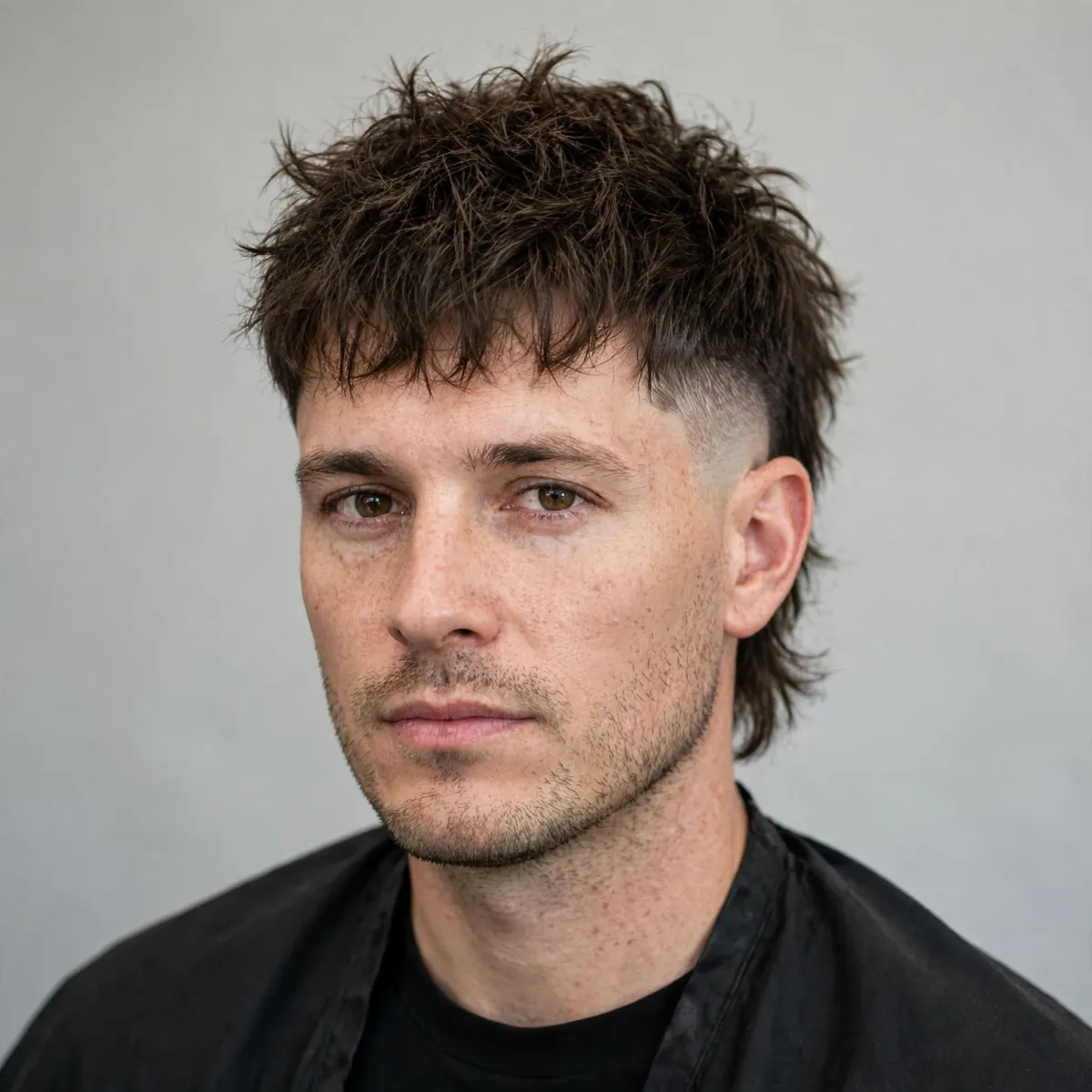
The messy short mullet is the bedhead version of the cut: tousled, piecey texture up top, faded sides to keep it from looking actually unkempt, and a back section that is styled loose instead of slicked down. If you liked our messy hairstyles for men roundup, this is the mullet entry in that family.
Who it suits: Guys who hate spending more than two minutes on their hair; wavy or thick hair holds the messy texture best.
Styling tip: Flip your head upside down, work a little texturizing powder through the roots, and shake it out. Finger-style only — combs are banned for this one.
What to tell your barber: “Lots of texture on top for a messy finish, faded sides, and a loose short back — nothing too polished.”
15. Spiky Short Mullet
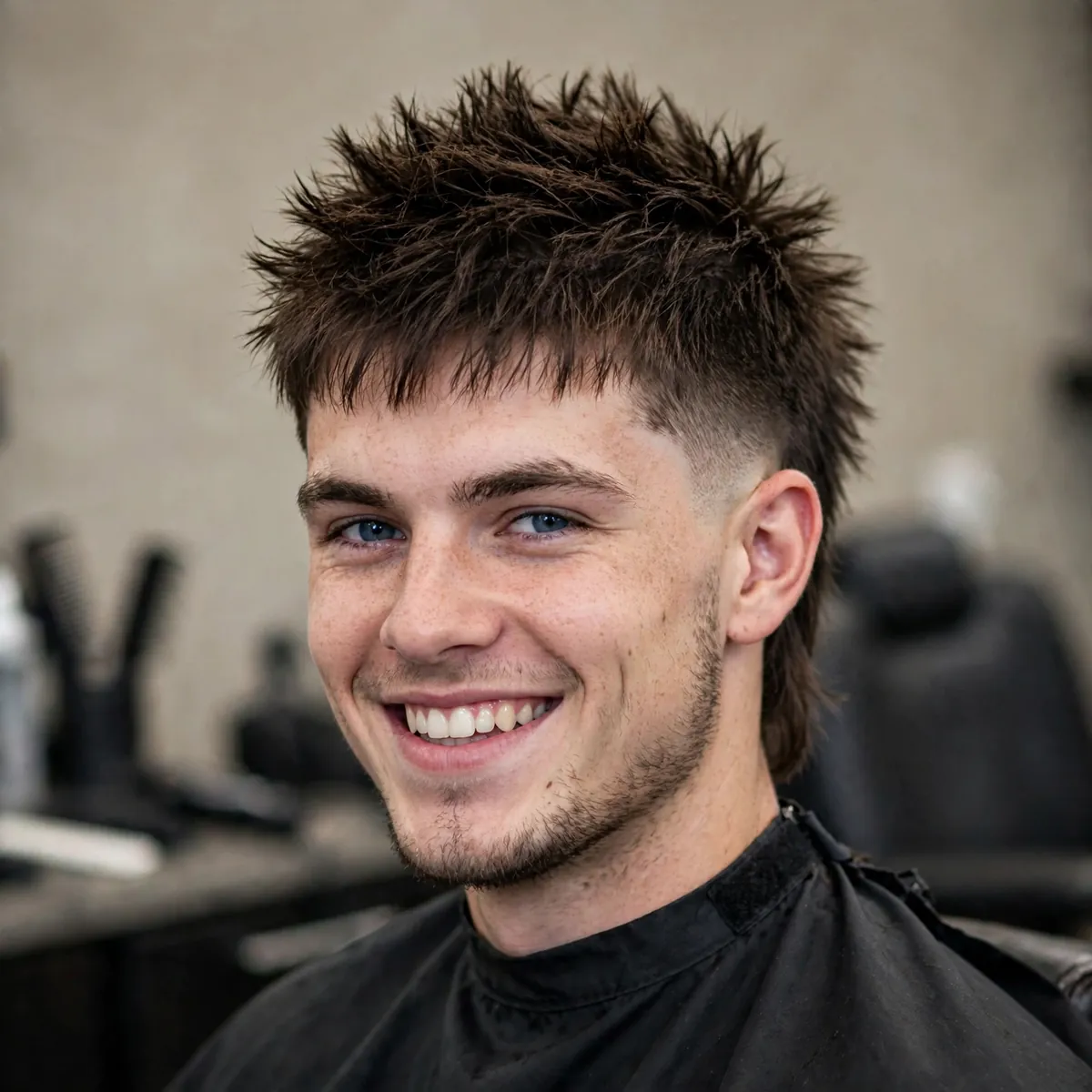
Short spikes on top give this version a youthful, high-energy feel, while the tapered sides and short back keep it grounded. It is a fun, slightly nostalgic cut that works surprisingly well on adult hair when the spikes are kept textured rather than gelled into points.
Who it suits: Straight to wavy hair with some thickness; younger guys or anyone who wants a playful edge.
Styling tip: Use a small amount of strong-hold matte clay and pinch the ends upward. Keep the spikes separated and piecey, not clumped.
What to tell your barber: “Short enough on top to spike with texture, tapered sides, and a short back with defined shape.”
16. Short Mullet with Fringe
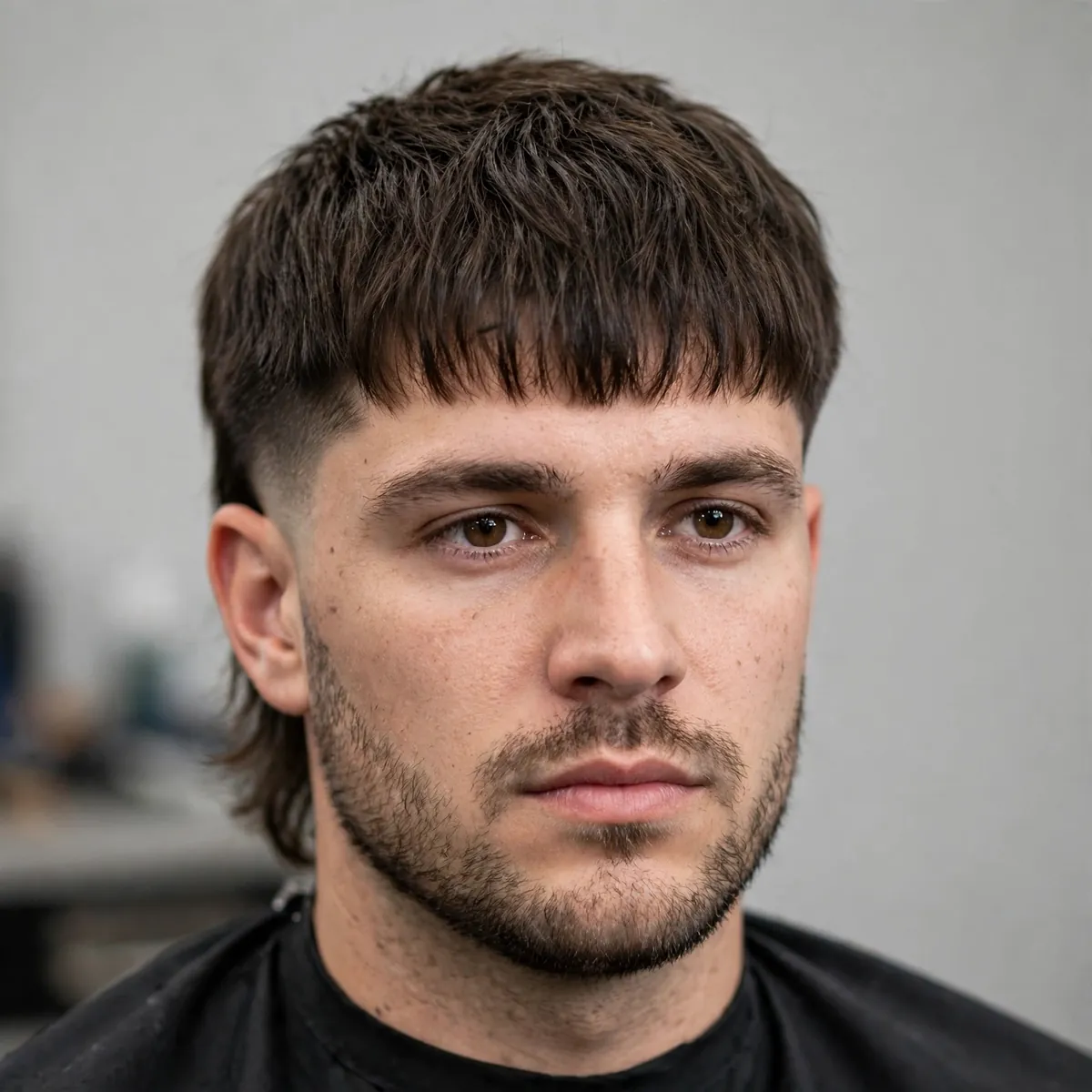
A fringe across the forehead adds a strong face-framing element that softens the whole cut. Wear it straight across for edge, swept to one side for softness, or split down the middle for the curtain effect. Our fringe haircut guide covers the full family this belongs to.
Who it suits: Oval, heart, and diamond faces — the fringe balances a wider forehead against a narrower chin.
Styling tip: Blow-dry the fringe forward and slightly down with your fingers, then pinch the ends with a little matte paste. Keep it textured, not blunt and heavy.
What to tell your barber: “Textured fringe in front, faded sides, and a short mullet back — the fringe should sit just above the eyebrows.”
17. Korean Short Mullet
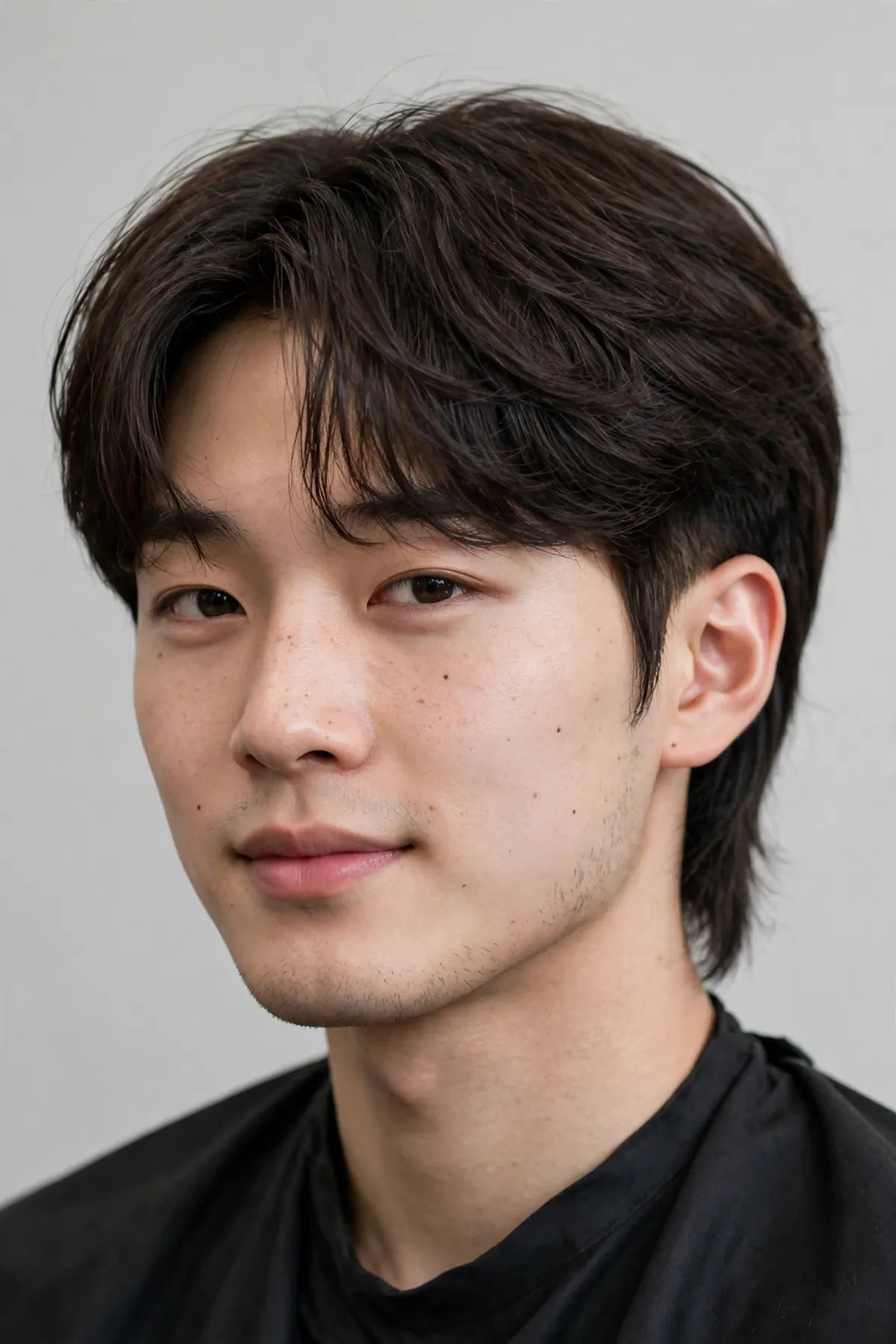
The Korean take is softer and more fluid than Western mullet traditions. The transition from front to back is gradual rather than abrupt, the fringe runs longer and more prominent, and the whole shape has a relaxed, layered quality that photographs beautifully.
Who it suits: Straight or slightly wavy hair; younger guys and anyone into K-style aesthetics. Flattering on oval and heart-shaped faces.
Styling tip: Use a light pomade and blow-dry the fringe forward for that soft, airy movement. The Korean version should never look stiff.
What to tell your barber: “Soft Korean-style mullet — longer layered fringe, gentle taper on the sides, and a fluid short back with no harsh lines.”
18. Micro Mullet
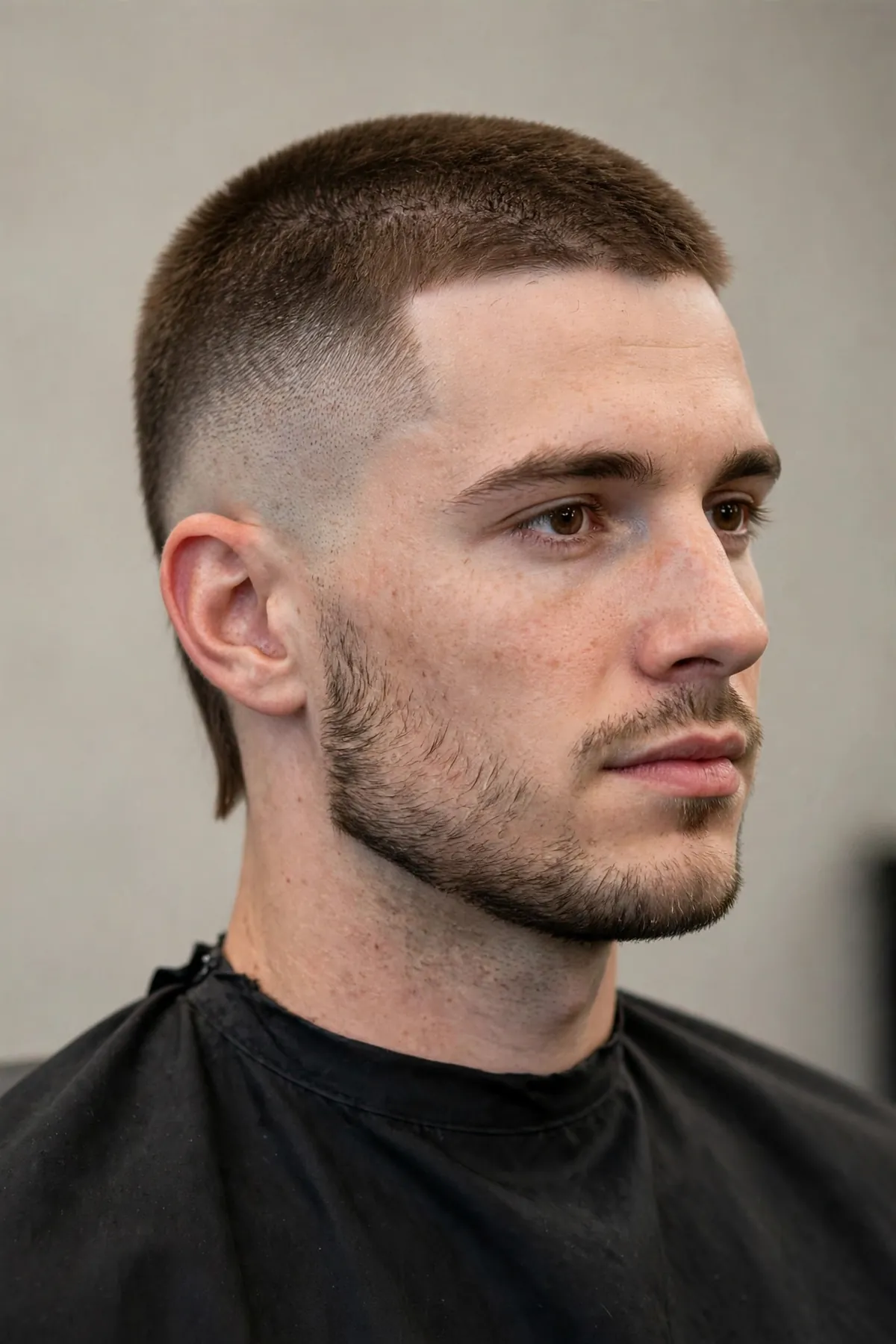
The micro mullet is the absolute minimum version of the cut: the top is cropped almost military-short, the sides are faded tight, and the only mullet evidence is a small, sharp V-taper carved at the nape. It is a statement cut for minimalists.
Who it suits: Guys who want the mullet idea with the lowest possible maintenance; works on all hair types and face shapes.
Styling tip: There is almost nothing to style — a little grooming cream on the top if you want. The nape shape is the whole haircut, so keep it edged up every two to three weeks.
What to tell your barber: “Very short all over with a fade, but carve a small V-shape at the nape — I want just a hint of mullet length.”
19. Buzzed Short Mullet

A buzz cut on top with faded sides and a back that is left just a touch longer than everything else. It is bold, brutally simple, and pairs naturally with a beard since the short hair lets facial hair do the talking.
Who it suits: Thick straight hair; guys who want maximum edge with minimum morning effort. Looks strong with a full beard.
Styling tip: No product needed most days. A moisturizer or light oil on the scalp keeps the buzzed top from looking dry.
What to tell your barber: “Buzz the top short, fade the sides, and leave the back one guard longer so the mullet shape shows.”
20. Disconnected Short Mullet

A visible disconnect — a sharp line where the longer top meets the faded sides — gives this version a rugged, high-contrast personality. The top stays messy and choppy while the back is trimmed with jagged edges for extra attitude.
Who it suits: Thick hair that can hold the contrast; fashion-forward guys who want the cut to look deliberate and edgy.
Styling tip: The disconnect needs the top to look intentionally textured, so use matte clay and style it away from the disconnect line. Keep the fade line sharp with regular touch-ups.
What to tell your barber: “Disconnected top — don’t blend it into the sides — with a hard fade and a jagged short back.”
21. Undercut Short Mullet

The undercut version keeps the sides clipped short and uniform (no fade gradient), which makes the longer top and back look even more dramatic by comparison. It is one of the boldest ways to wear a short mullet.
Who it suits: Thick, straight, or wavy hair; guys who already like undercuts and want to push the shape further.
Styling tip: Style the top with volume — pushed back or swept to the side — because flat hair kills the contrast this cut depends on.
What to tell your barber: “Undercut the sides to one short length, keep the top long and textured, and leave a short mullet back.”
22. Short Mullet with Middle Part
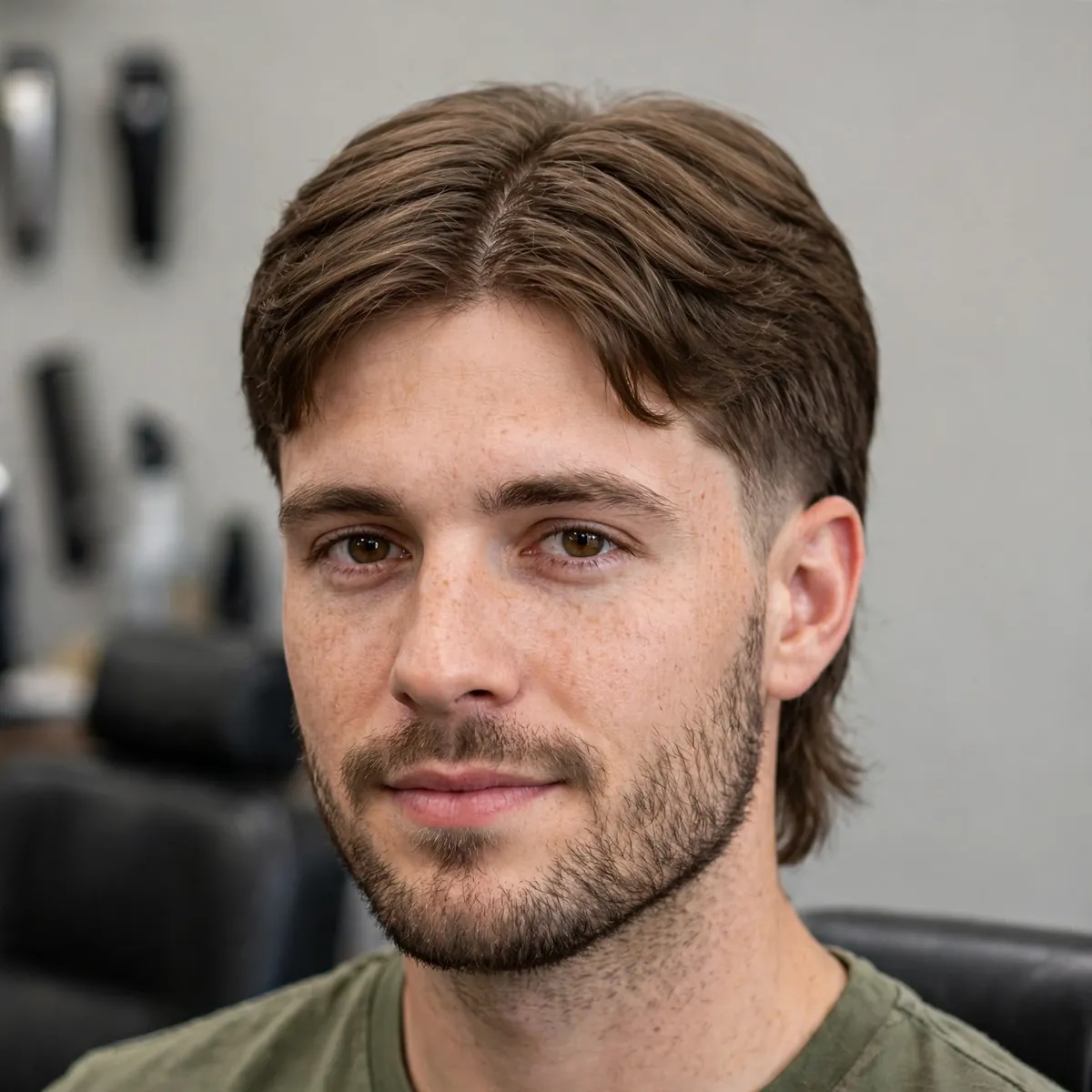
The middle part gives the short mullet a relaxed, skater-adjacent feel. The crown is gently volumized, the part splits the top into two soft wings, and the back stays short and neat. It is casual and cool without trying hard.
Who it suits: Wavy hair is ideal for the middle part; oval and oblong faces carry the symmetry well.
Styling tip: Part damp hair down the center with your fingers, add a little cream, and let it air-dry. The part will settle into place on its own.
What to tell your barber: “Middle part on top with soft layers, tapered sides, and a short back — I want it to look relaxed.”
23. Short Mullet with Side Part
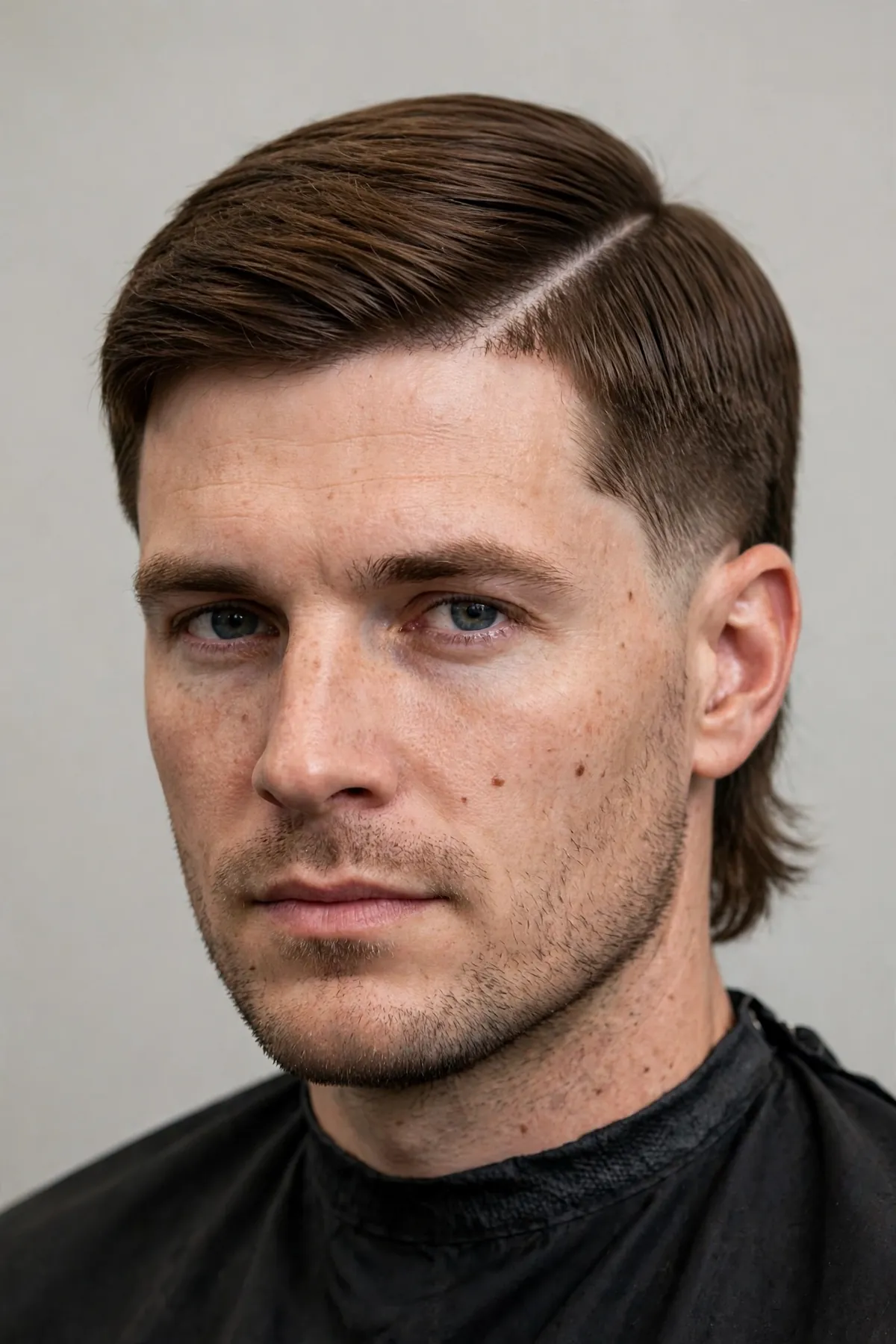
The side part is the grown-up version: the top sweeps cleanly to one side, the sides taper neatly, and the back stays short and tidy. It borrows classic barbering structure and adds just enough mullet attitude at the back.
Who it suits: Straight to wavy hair; professional settings where you want polish with a quiet edge. Great on square and oval faces.
Styling tip: Comb the top to the side while damp, then set it with a light pomade. A defined part line keeps this version looking sharp.
What to tell your barber: “Side part on top with a clean part line, tapered sides, and a short back with a tidy neckline.”
24. Curtain Bangs Short Mullet
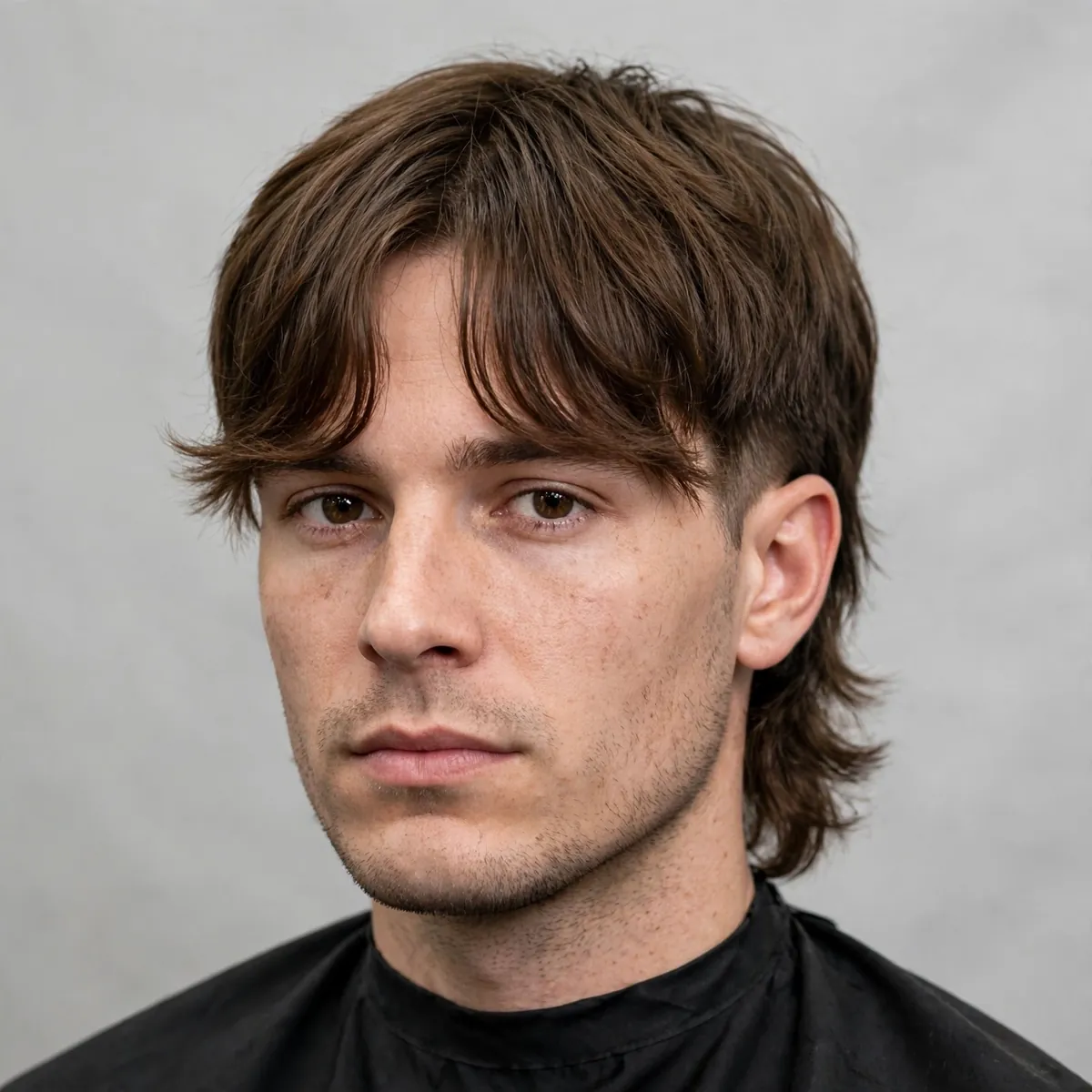
Longer parted fringe falls naturally on both sides of the forehead while the layered back keeps the mullet profile subtle and fluid. No hard fade here — just scissor tapering for softness. It has a vintage-rock feel with modern balance, and it sits close to the textured fringe haircut family.
Who it suits: Straight or slightly wavy hair; diamond and oblong faces benefit from the face-framing fringe.
Styling tip: Round-brush blow-dry the curtain sections away from the face for that split-fringe control. A light styling cream keeps the part from collapsing.
What to tell your barber: “Curtain bangs blended into a short layered mullet, soft scissor taper on the sides — no harsh fade.”
25. Slicked Back Short Mullet

The top is combed straight back with defined direction while the back stays short and deliberate. It is the most formal version of the cut — classic barber precision with the mullet’s signature length at the back.
Who it suits: Straight or thick hair that can hold direction; formal or creative workplaces. Strong on oval and oblong faces.
Styling tip: Blow-dry the top backward with a vent brush, then lock it in with a lightweight pomade. Comb through once more after the product sets.
What to tell your barber: “Long enough on top to slick back, tapered sides, and a short back with clean edges.”
26. Wet Look Short Mullet
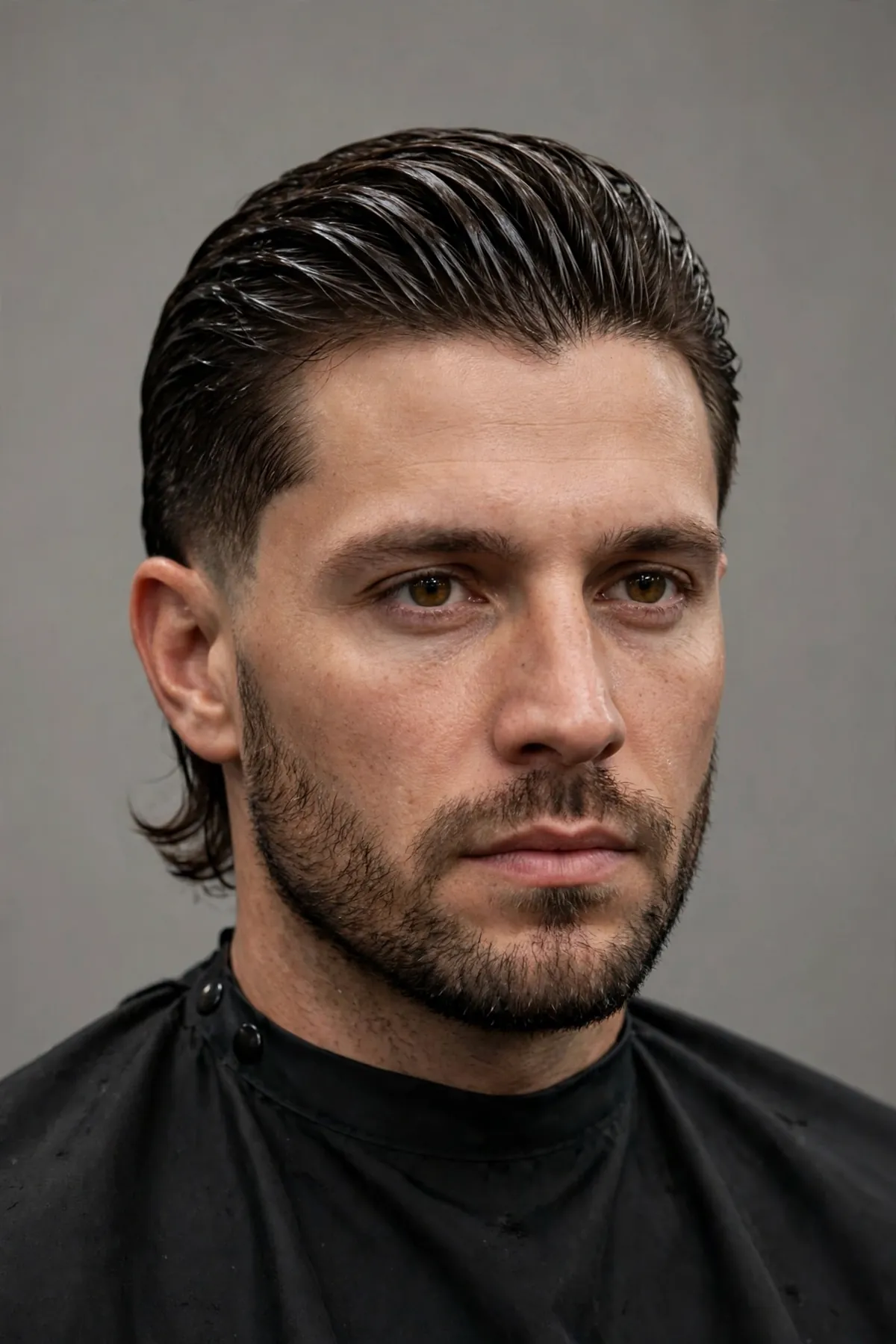
High-shine product combed through the whole head gives the short mullet a glossy, editorial finish. The wet look sharpens every line of the cut and makes the back section look deliberately sculpted.
Who it suits: Straight or wavy hair; evening looks, events, and anyone who wants the cut to look high-fashion for a night.
Styling tip: Work a wet-look gel or high-shine pomade through damp hair and comb it into place. This is a sometimes look, not a daily driver — clarify with a good shampoo the next morning.
What to tell your barber: “Same as a slicked back mullet, but I want enough length on top to wear it with a wet finish.”
27. Feathered Short Mullet

The back section is softly layered — feathered — so it flows lightly from the crown to the neckline instead of sitting heavy. The transition feels smooth and natural, which makes this one of the most flattering versions for guys worried about the back looking blocky.
Who it suits: Medium to thick straight hair; anyone whose back section tends to look heavy or shelf-like.
Styling tip: Blow-dry the back section with a round brush, flipping the ends slightly outward. A light texturizing spray keeps the feathering airy.
What to tell your barber: “Feathered layers in the back so it sits light, tapered sides, and a textured top.”
28. Wolf-Inspired Short Mullet
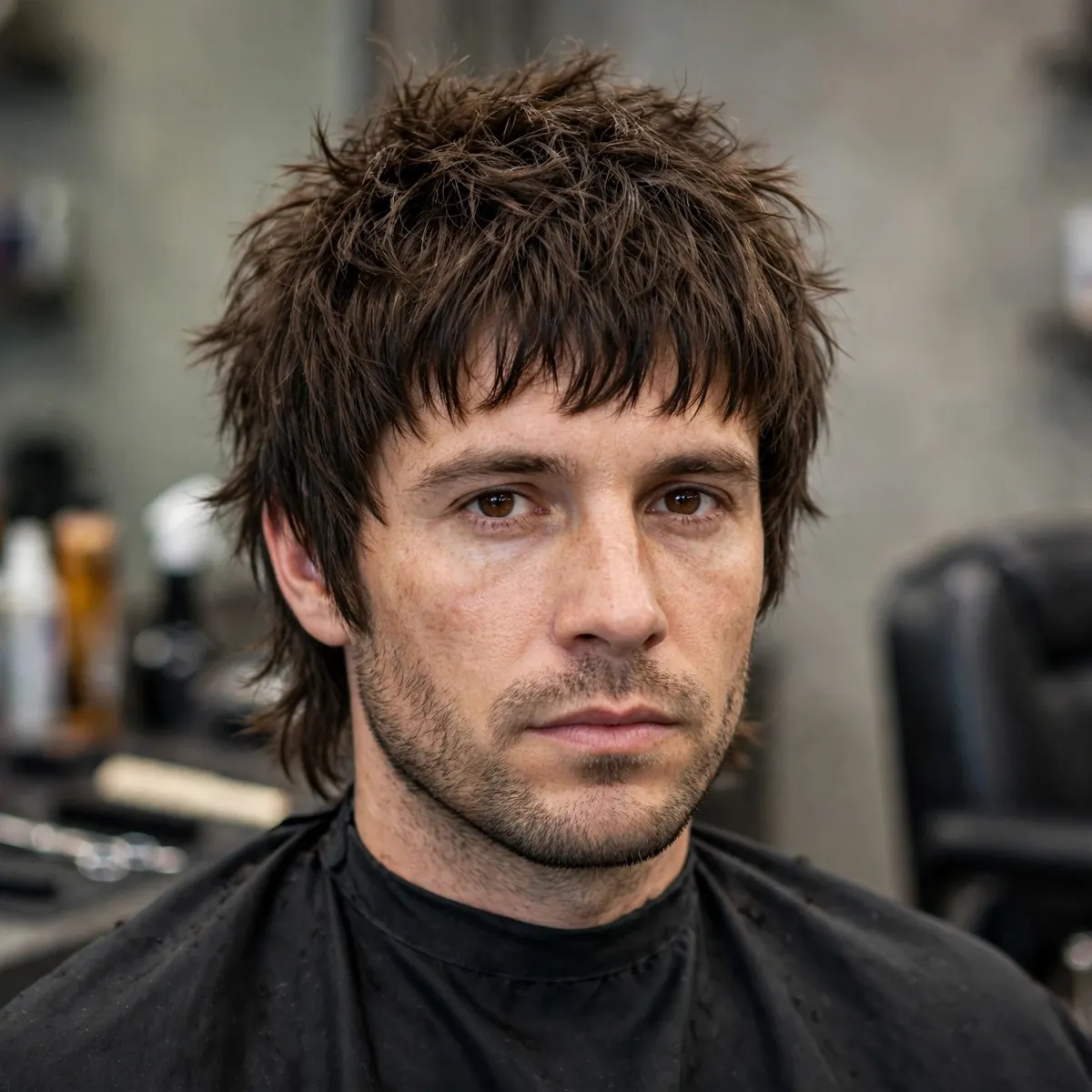
The wolf cut’s heavy, wild layering shrunk down to short-mullet length: lots of choppy layers from the fringe to the nape, tons of movement, and an untamed finish that still reads as a mullet thanks to the shorter front and longer back.
Who it suits: Thick or wavy hair that can support heavy layering; bold personalities who want maximum texture.
Styling tip: Sea salt spray plus texture cream on damp hair, then scrunch and air-dry. The wilder it dries, the better it looks.
What to tell your barber: “Wolf-cut layering — heavy choppy layers all through — but keep the overall length short with a mullet shape.”
29. Temple Fade Short Mullet

A sharp temple fade cleans up the front hairline and temples while the rest of the sides keep more length. The result is crisp and architectural up front with the mullet doing its thing in the back.
Who it suits: Straight or dense hair; square and oval faces. A strong pick for corporate environments where you want edge without chaos.
Styling tip: Keep the temple line edged up between cuts — it is the detail that makes this version work. Matte clay on top for texture.
What to tell your barber: “Temple fade around the hairline, keep the sides a bit longer, and finish with a short mullet back.”
30. Short Mullet for Fine or Thinning Hair
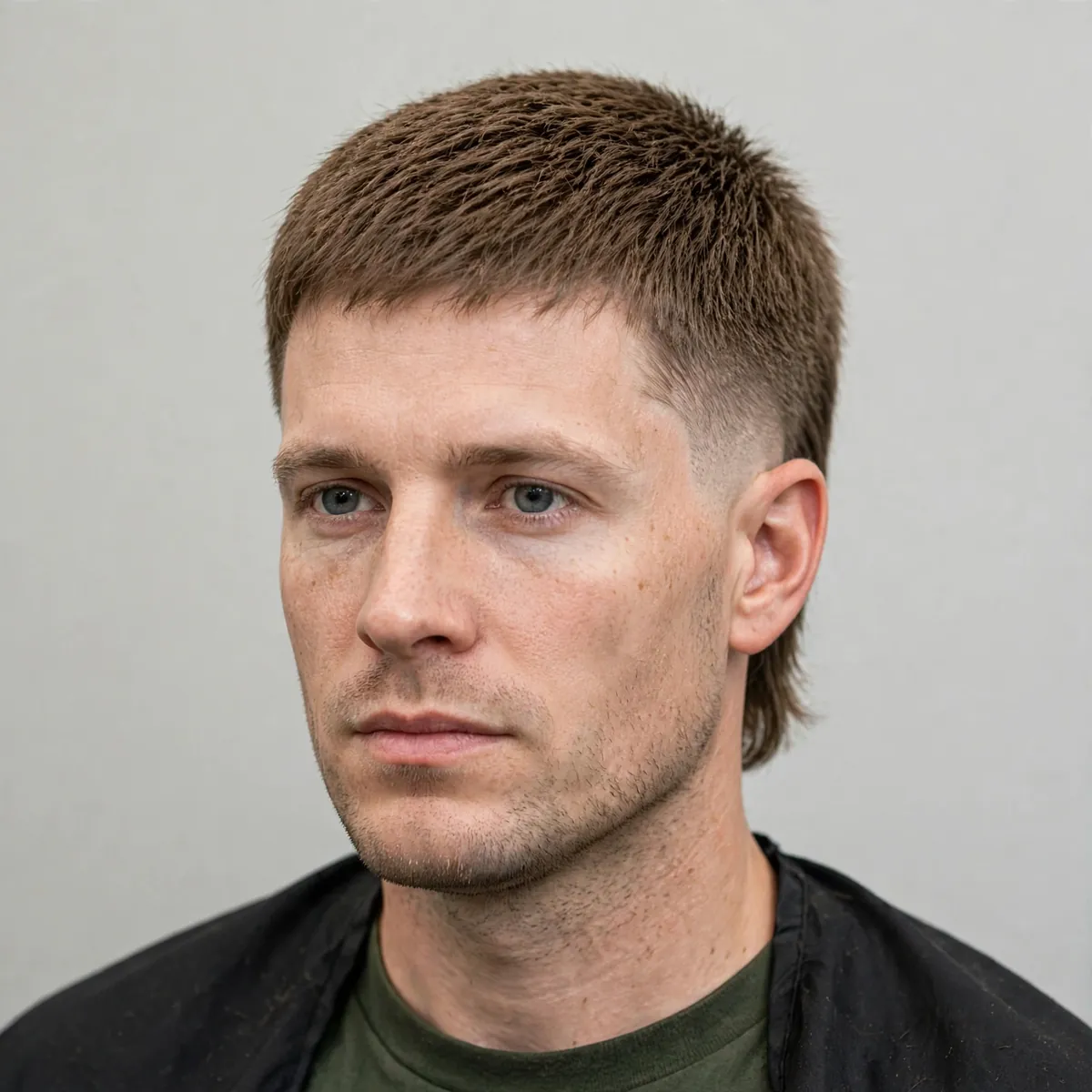
Here is the version nobody talks about enough: the short mullet is genuinely good for fine or thinning hair. The short back puts no weight on fragile strands, the cropped top with texture creates the illusion of density, and the fade on the sides makes whatever hair you have look deliberate and sharp.
Who it suits: Fine, thin, or early-thinning hair. The whole cut is designed to maximize the look of fullness.
Styling tip: Use texturizing powder at the roots — it is the single best product for fine hair because it adds grip and volume with zero weight. Blow-dry the top upward, and never let the back grow past the nape, where thin hair starts to look stringy.
What to tell your barber: “Short textured top for the illusion of thickness, tight sides, and keep the back short — I want everything looking as full as possible.”
Short Mullet Haircut by Face Shape
Picking the right version for your face shape is half the battle. Here is the quick guide:
- Oval: The lucky ones — nearly every short mullet works. Let personal style decide.
- Round: Go for height on top and tighter sides (mid fade, textured crop). The vertical lift slims the face.
- Square: Softer versions balance a strong jaw — wavy, shag-inspired, or feathered styles work best.
- Oblong/long: Keep the back shorter and choose a low fade or taper to preserve side width. Avoid extra height on top.
- Heart: A fringe or curtain bangs adds weight at the forehead, balancing a wider upper face against a narrower chin.
- Diamond: Fringe versions add fullness at the forehead and temples, balancing wide cheekbones.
If you wear glasses, a fringe or curtain version pairs best — the fringe bridges the gap between the frames and the haircut. With a beard, match the fade intensity: a sharp skin fade pairs with a sharply lined beard, while a soft taper pairs with a natural, fuller beard.
Short Mullet Haircut by Hair Type
Straight hair: Your lines will read with perfect clarity, so invest in a precise cut. Light pomade or wax keeps the back neat without shine. Avoid heavy products that drag straight hair flat.
Wavy hair: You have the easiest version — natural wave movement does the styling for you. Wave cream on damp hair is usually all you need.
Curly hair: Keep the back short enough that curls stay compact. Curl cream + scrunch + diffuse is the whole routine. Moisture matters more than hold for curls.
Coily hair: The short mullet works beautifully, but remember shrinkage — the back will look shorter dry than it does wet, so cut with that in mind. A light oil keeps coils defined.
Thick hair: Internal layering in the back section is non-negotiable. Without it, the back sits outward and looks shelf-like. The layered, textured, and wolf-inspired versions are your best friends.
Fine or thinning hair: The short mullet is actually one of the smarter short mullet for men choices for thin hair — short length means no weight pulling strands flat, and texture fakes density. Use texturizing powder, keep the back at the nape (never longer), and consider style #30 above as your starting point.
What to Tell Your Barber (and What It Should Cost)
Bring two or three reference photos — ideally from the front, side, and back. Photos beat words every time with this cut, because “short in the back” means wildly different things to different barbers. Then say these three things out loud:
- Exactly how much length you want at the back (point at your nape — “about this long”).
- Your fade style: low, mid, skin, taper, or burst.
- How you plan to style the front: fringe, swept, spiked, or slicked.
Pricing: A short mullet typically costs the same as a standard men’s cut with a fade — expect roughly $30–$60 at a good barbershop, more in major cities or at premium shops. You are paying for fade work, so a skin fade or burst fade may run slightly higher than a simple taper. Beard shaping bundled in usually adds $10–$20. If a shop quotes you double the normal price “because it’s a mullet,” walk out — the cut is not exotic, it is just a fade with a longer back.
How to Style a Short Mullet Haircut
The daily routine is simpler than the cut looks. Here is the full sequence:
- Start with clean, damp hair. Wash with a shampoo suited to your hair type. At this length, a light conditioner is enough for the back section — heavy conditioning flattens the texture.
- Towel-dry gently. Pat, don’t rub. Rubbing roughs up the cuticle and creates frizz, especially in the back section.
- Apply product to damp hair. Match the product to your hair type: matte clay or paste for texture, light pomade for smoothness, curl cream for curls, texturizing powder for fine hair. Use less than you think — at short mullet length, excess product is immediately visible.
- Blow-dry with direction. Straight hair: dry the back section downward with a concentrator nozzle for smoothness. Wavy hair: scrunch while damp and diffuse on low heat. Curly hair: scrunch upward with curl cream and diffuse or air-dry. Always finish by directing the front the way you want it to sit — pushed back, swept aside, or forward into a fringe.
- Detail the back. Check the back section in a hand mirror. Smooth flyaways with a tiny amount of product and make sure the transition zone between the faded sides and the back looks clean.
- Set it lightly. A mist of light-hold spray keeps the shape through the day without stiffness. Skip this step if you like a softer finish.
Second-day refresh: You rarely need a full restyle. Dampen your hands, work a pea-sized amount of product through the top, reshape with your fingers, and smooth the back section down. Thirty seconds and you are out the door. A little dry shampoo at the roots on day two or three absorbs oil and revives volume.
Short Mullet Maintenance Schedule
The short mullet’s contrast depends on the sides staying shorter than the back, so it needs more frequent attention than a uniform short cut. Here is the schedule that keeps every version sharp:
- Skin fade or burst fade sides: touch up every 2–3 weeks — the fade blur shows fast.
- Mid fade sides: every 3–4 weeks.
- Low fade or taper sides: every 4–6 weeks — these grow out the most gracefully.
- Back section: trim every 4–6 weeks to hold the mullet shape before it drifts into “just long hair.”
- Neckline and edges: clean up every 2 weeks (many barbers do this free or cheap between full cuts).
- Top: reshape every 4–6 weeks, or whenever the texture starts sitting flat.
Grow-Out Roadmap: From Short Mullet to Longer Mullet
One of the best things about starting with a mens short mullet is that it is the perfect launchpad for a longer mullet later. Here is how to grow it out without an awkward phase:
Months 1–2: Keep trimming the sides and top on your normal schedule but tell your barber to leave the back section completely alone. The contrast will start to deepen.
Months 2–4: The back reaches the collar. This is the danger zone where it can look accidental — keep the sides faded tight so the shape stays deliberate. A little extra product in the back keeps it styled, not straggly.
Months 4–6: You now have a legitimate medium mullet. Ask your barber to reshape the back with layers so it flows instead of hanging, and keep the top textured so the proportions stay balanced.
The golden rule of the grow-out: never let the sides grow with the back. The mullet only reads as a mullet when the contrast is maintained. Trim the sides, grow the back — that is the entire roadmap.
Common Mistakes to Avoid
A short mullet looks sharp when the balance is right, but small errors change the whole vibe fast:
- Too big a gap between the top and back length. If the back dwarfs everything else, the cut looks disconnected instead of designed.
- Heavy product. Too much pomade or wax flattens the texture and makes the short back look greasy. Less is more.
- Patchy fade lines. A blurry or uneven fade ruins the contrast the whole cut depends on. If your barber’s fades look choppy, find a new barber — this cut is fade-heavy.
- Letting the back grow too long too fast. An extra inch at the back turns “short mullet” into “unplanned mullet.” Trim on schedule.
- Skipping trims. The grow-out loses its structure within weeks, not months. Book the next appointment before you leave the chair.
- Too much heat. High heat on short hair makes it look stiff and fried. Keep the dryer on low to medium and always use heat protectant.
- Ignoring your hair type. Asking for a sleek straight-back version when you have tight curls (or vice versa) fights your hair instead of working with it.
Short Mullet Haircut FAQs
Is a short mullet haircut good for a first-time mullet?
It is the best first mullet you can get. A short mullet haircut for men needs no grow-out period — you can get it in one visit from almost any short cut — and if you decide the mullet life is not for you, growing it out or cutting it off takes weeks, not months. It is also the most workplace-friendly version of the style.
How long does the back need to be for a short mullet?
The back section typically sits at or just below the nape — roughly one to three inches longer than the sides. That modest difference is the whole trick: it is enough to create the unmistakable mullet silhouette without the commitment of a long back.
Can you get a short mullet with straight hair?
Absolutely. Straight hair gives the cleanest, most architectural version of the cut (see style #11). The lines read with perfect clarity, so choose a barber with strong fade skills and keep the back section neat with a light pomade.
How often should I trim a short mullet?
Plan on a full trim every 4–6 weeks, with fade touch-ups every 2–3 weeks if you wear a skin or burst fade. The contrast between the sides and the back is the entire haircut, so the schedule matters more here than with most men’s haircuts of uniform length.
Will a short mullet work in a professional office?
The subtle versions — low fade, taper fade, side part, or the classic scissor-cut — read as a sharp modern haircut in most workplaces. Save the skin fade, disconnected, and undercut versions for creative fields or weekends if your office is conservative.
What is the difference between a short mullet and a mini mullet?
They are essentially the same idea — “mini mullet” is just another name for the short version. Both mean a compact mullet with the back kept at or near the nape. If a barber uses one term and you use the other, show a photo and you will be on the same page instantly.
Final Thoughts
The short mullet haircut earns its popularity honestly. It takes one of the most recognizable mullet hairstyles for men and distills it into something low-commitment, genuinely easy to maintain, and flexible enough for the office and the weekend. With 30 variations to choose from — from the quiet polish of a taper fade to the full personality of a wolf-inspired shag — there is a version for every face shape, hair type, and comfort level.
Pick your style, save your reference photos, use the barber script from your favorite section above, and book the cut. For the bolder take on the shape, see our fade mullet haircuts guide. And if you catch yourself eyeing the mirror a month later wondering what a longer back would look like — well, the grow-out roadmap is right up there waiting for you.