30 Modern Mullet Haircuts for Men That Look Sharp Right Now

The modern mullet haircut is the comeback nobody saw coming — and the cut every barbershop is booked solid for right now. Short and controlled through the front, faded or tapered through the sides, and flowing with real length down the back, this is not the dated mullet your uncle wore to a wedding in the eighties. Today’s modern mullet for men is sharper, more technical, and built on genuine barber craft: crisp fades, soft tapers, razor texture, and length that looks intentional instead of accidental.
What makes modern mullets so magnetic is the contrast. The front says polished; the back says personality. You get the clean lines of a fade haircut around the ears with the freedom of longer hair at the nape, and the two halves balance each other in a way that looks deliberate from every angle. Among today’s mullet haircuts, the modern versions win because they borrow structure from classic barbering while keeping the rebellious soul that made the style famous.
Below you will find 30 original modern mullet hairstyles for men — fade family, texture family, edgy and classy alike — each with a one-line script for your barber and a styling tip you can actually use. Whether you want a subtle office-safe version or a full statement piece, there is a men’s modern mullet here with your name on it. Screenshot your favorites, bring them to your appointment, and let’s build yours.
What Is a Modern Mullet Haircut?
A modern mullet haircut keeps the classic mullet formula — shorter through the front and sides, longer down the back — but rebuilds it with today’s techniques. Instead of the bowl-cut front and ratty tail of the old days, the modern version uses fades, tapers, and layered texture to create a shape that looks sculpted. The top usually runs two to four inches, the sides get faded or tapered for a clean finish, and the back keeps three to six inches of length that flows instead of flopping.
The real difference is intention. A classic mullet happened because nobody touched the back; a modern mullet happens because your barber sculpts the back on purpose, texturizes the crown, and blends the sides so the whole thing reads as one design. That is why mullets for men have crossed over from joke haircut to legitimate trend — the shape now flatters real head shapes, works with real hair textures from straight to coily, and photographs like a premium cut. If you have ever wanted a haircut with actual character, this is the one that delivers it.
30 Modern Mullet Haircut Styles for Men
Thirty ways to wear the modern mullet — from boardroom-safe tapers to full rock-star statements. Every style below includes exactly what to say in the chair and how to style it at home.
1. Taper Fade Modern Mullet

The taper fade modern mullet is the gentleman’s entry point — a soft, gradual taper through the sides instead of a hard fade, so the front reads clean and professional while the back keeps its attitude. The transition is smooth and natural, which makes it one of the most wearable modern mullet hairstyles for guys trying the shape for the first time.
Ask your barber: “A classic taper on the sides, textured length on top, and keep the back long with soft layers.”
Style it: Work a dime of matte clay through the top and let the back fall naturally — two minutes, done.
2. Burst Fade Modern Mullet

The burst fade modern mullet wraps the fade in a rounded arc around the ear, leaving the neckline fuller so the tail flows straight out of the curve. It is softer than a straight fade line and gives the whole cut a rounded, sculpted silhouette that photographs beautifully. Round and square faces love this one because the arc visually lengthens the profile.
Ask your barber: “Burst fade around the ears following the curve, textured top, and keep the nape long and full.”
Style it: Finger-style with a light paste, pushing the top slightly forward for a lived-in finish.
3. Drop Fade Modern Mullet

The drop fade modern mullet lets the fade line dip lower behind the ear instead of running straight across, which creates a rounded, organic shape that melts into the longer back. The result looks custom-cut rather than clipper-stamped, and it is one of the smoothest mullet haircuts for guys who hate harsh lines.
Ask your barber: “Drop fade that dips behind the ear, blended into a textured top with a longer flowing back.”
Style it: Sea-salt spray on damp hair, scrunch, and air-dry for effortless movement.
4. Low Fade Modern Mullet
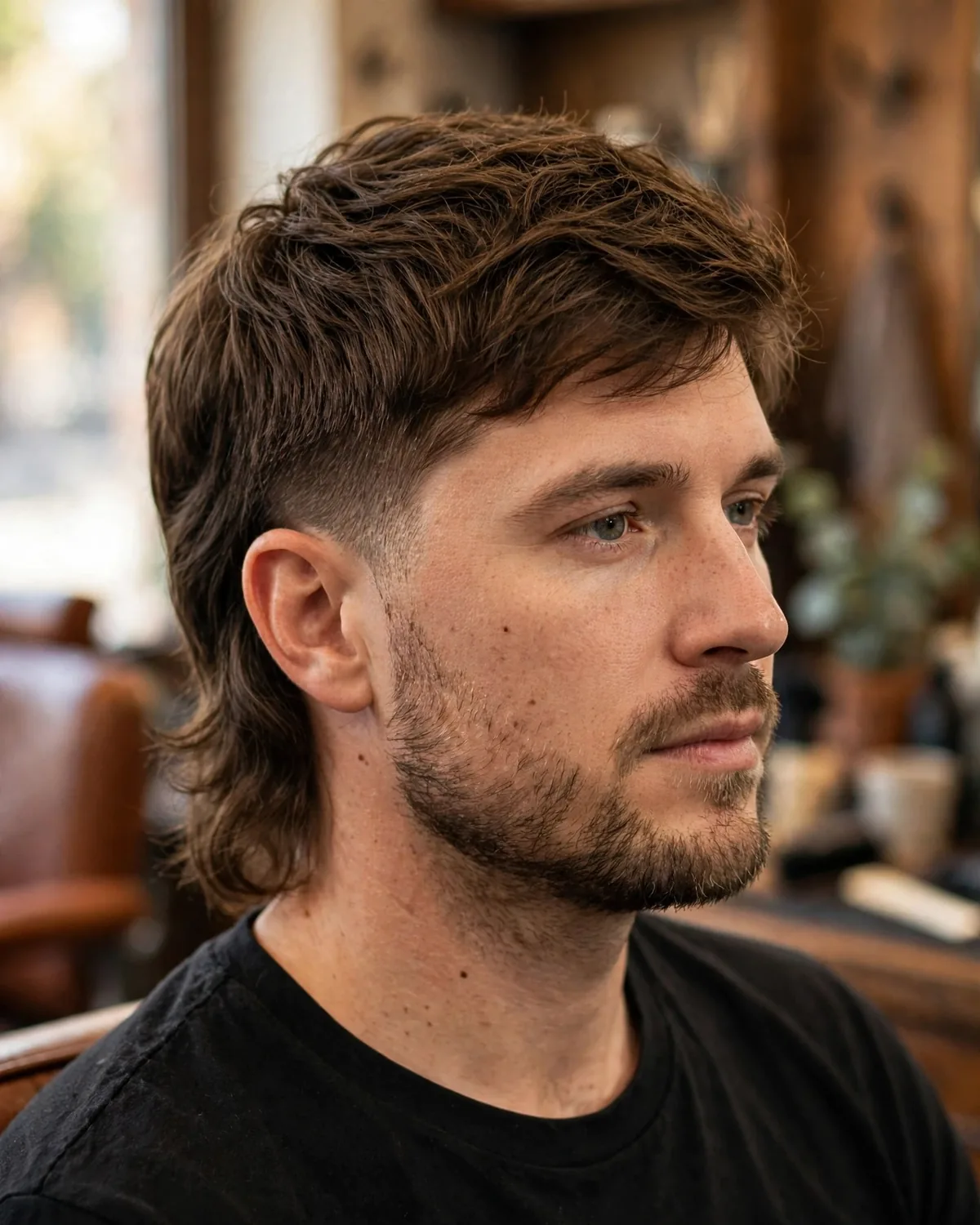
The low fade modern mullet keeps the fade hugging the ears and neckline, so most of the side stays full and the front looks downright conservative. From the front it reads like a tidy textured cut; from the back, the mullet reveals itself. It is the ultimate stealth option among modern mullets for guys who need flexibility.
Ask your barber: “Low fade just above the ears, keep the sides full, textured top, long natural back.”
Style it: Matte paste through the top, combed slightly forward; leave the back untouched for contrast.
5. Mid Fade Modern Mullet
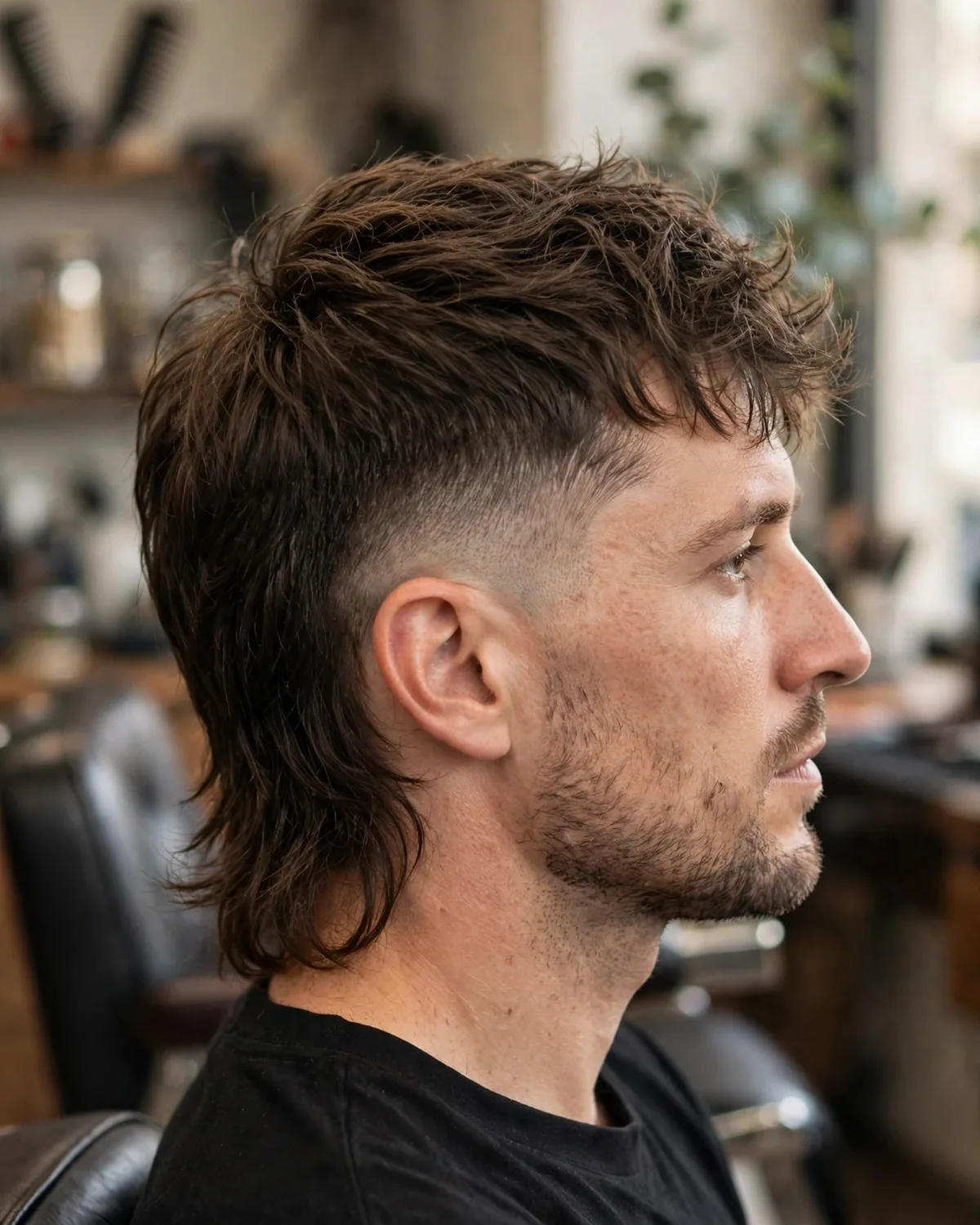
The mid fade modern mullet is the balanced middle ground — the fade starts halfway up the side, giving you real contrast without going extreme. It frames the face cleanly, keeps the silhouette tight, and lets the longer back do the talking. This is the version most barbers recommend first because it suits almost every head shape.
Ask your barber: “Mid fade on the sides, textured length on top, and a defined longer back with soft layers.”
Style it: Blow-dry the top back with a vent brush, then pinch in texture powder for grip.
6. High Fade Modern Mullet

The high fade modern mullet goes bold — the fade climbs high on the sides for maximum contrast against the long back, creating that dramatic short-to-long punch the style is famous for. It is loud, confident, and unapologetic, and it pairs perfectly with sharp outfits and sharper attitudes. Not for the faint of heart.
Ask your barber: “High fade up the sides, keep the top textured, and leave the back long and heavy.”
Style it: Matte clay on the top for separation; let the tail hang free and natural.
7. Skin Fade Modern Mullet

The skin fade modern mullet takes the contrast to the limit — sides faded all the way down to skin, so the long back erupts out of nowhere like a plot twist. The blend needs real skill to look seamless, so bring a reference photo and book with a barber who fades daily. The payoff is a cut that turns heads in every room.
Ask your barber: “Skin fade on the sides with a clean blend, textured top, long back — bring the length forward from the crown.”
Style it: Light hold cream on top; the fade itself needs zero daily work.
8. Temple Fade Modern Mullet

The temple fade modern mullet concentrates the fade around the temples and sideburns, sharpening the hairline while leaving the rest of the shape full. It is surgical and precise — the kind of detail that makes the whole cut look expensive. Guys with strong jawlines look especially sharp with this framing.
Ask your barber: “Temple fade at the sideburns, clean up the hairline, keep the top textured and the back long.”
Style it: Edge-control or light pomade along the hairline; keep the back soft with leave-in conditioner.
9. Shadow Fade Modern Mullet
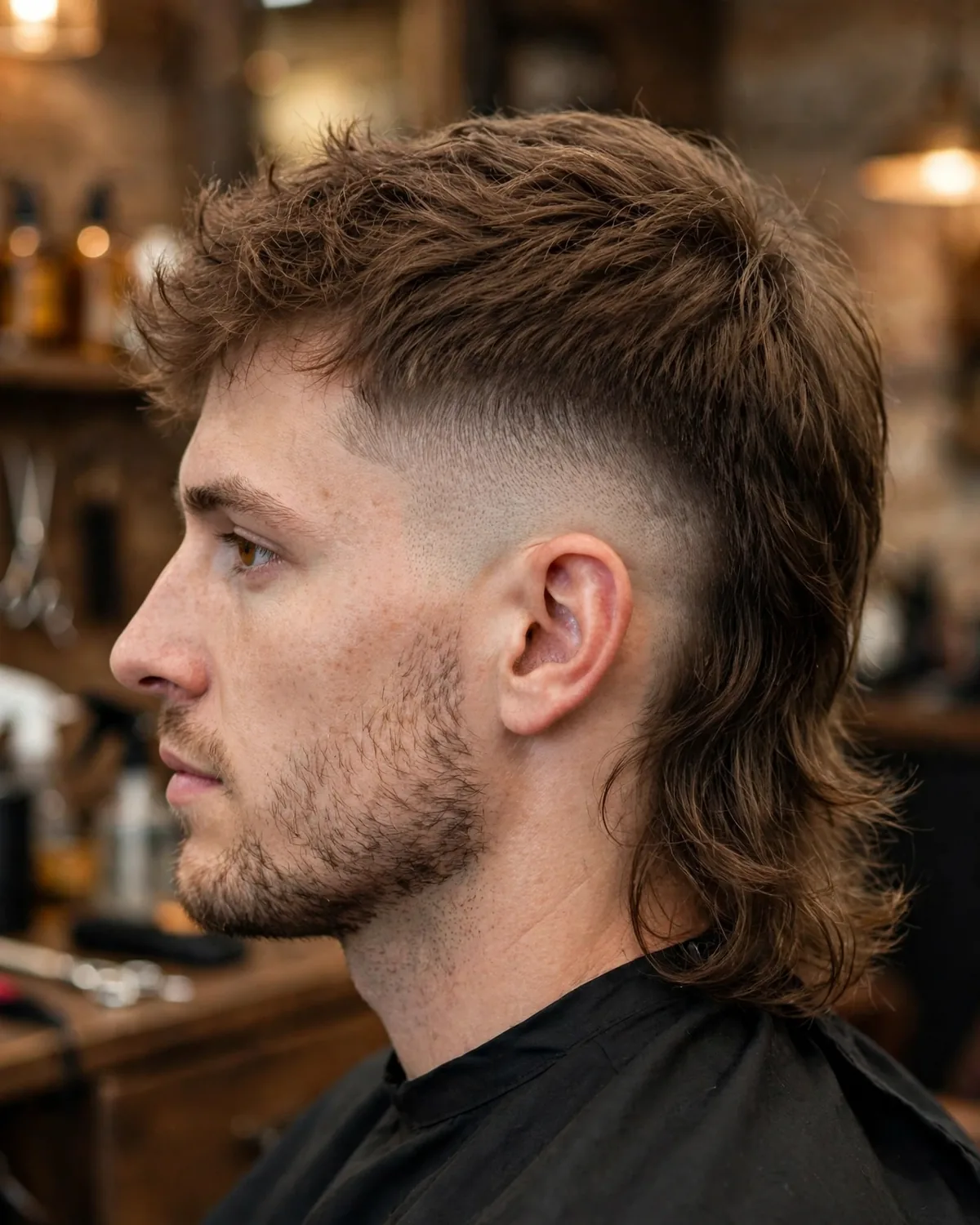
The shadow fade modern mullet skips the skin-tight blend for a soft, smoky gradient that looks like it grew that way. There are no harsh lines anywhere — just a seamless dark-to-light melt that flows into the longer back. It grows out gracefully too, which means fewer emergency touch-ups between appointments.
Ask your barber: “Soft shadow fade, no harsh lines, textured top, and a natural flowing back.”
Style it: A pea of styling cream, worked in with fingers for a soft, touchable finish.
10. Scissor-Cut Taper Modern Mullet

The scissor-cut taper modern mullet is old-school craft meeting new-school shape — no clippers on the sides, just shears creating a soft, natural taper with zero harsh lines. It is the most organic-looking of all modern mullet hairstyles, and it suits guys who want the silhouette without the barbershop-sharp edges.
Ask your barber: “Scissor taper only, no clippers on the sides, natural soft edges, textured longer back.”
Style it: Cream or light oil for a healthy sheen; this cut looks better slightly lived-in.
11. Curly Modern Mullet

The curly modern mullet might be the best version of the style, full stop — natural curls give you volume on top for free and a bouncy, defined tail in the back that no straight-hair cut can fake. Keep the sides tighter so the shape stays deliberate, and cut curls dry so the true length shows. This is one of the most complimented modern mullet hairstyles in existence.
Ask your barber: “Cut my curls dry, tighter on the sides, full on top, and let the back grow into a defined curly tail.”
Style it: Leave-in conditioner plus curl cream, scrunched in — never brush curls dry.
12. Wavy Modern Mullet

The wavy modern mullet is pure beach-meets-barbershop — loose waves on top that roll naturally into a relaxed, flowing back. Waves give the cut built-in movement, so it never looks stiff or over-styled. It is the easiest men’s modern mullet to grow out because every stage of the grow-out looks intentional.
Ask your barber: “Enhance my natural wave with layers, keep the sides neat, and let the back flow.”
Style it: Sea-salt spray on damp hair and scrunch — waves do the rest themselves.
13. Straight Modern Mullet

The straight modern mullet is precision work — sleek, clean lines where every layer has a job and the back falls in a smooth sheet. Straight hair shows every flaw, so the cut has to be exact, but when it is, the result looks razor-sharp and almost architectural. It is the minimalist’s modern mullet haircut.
Ask your barber: “Precise layered cut, clean lines throughout, smooth longer back with no bulk at the ends.”
Style it: Flat-iron the back lightly if needed, finish with a light serum for glass-like shine.
14. Textured Modern Mullet
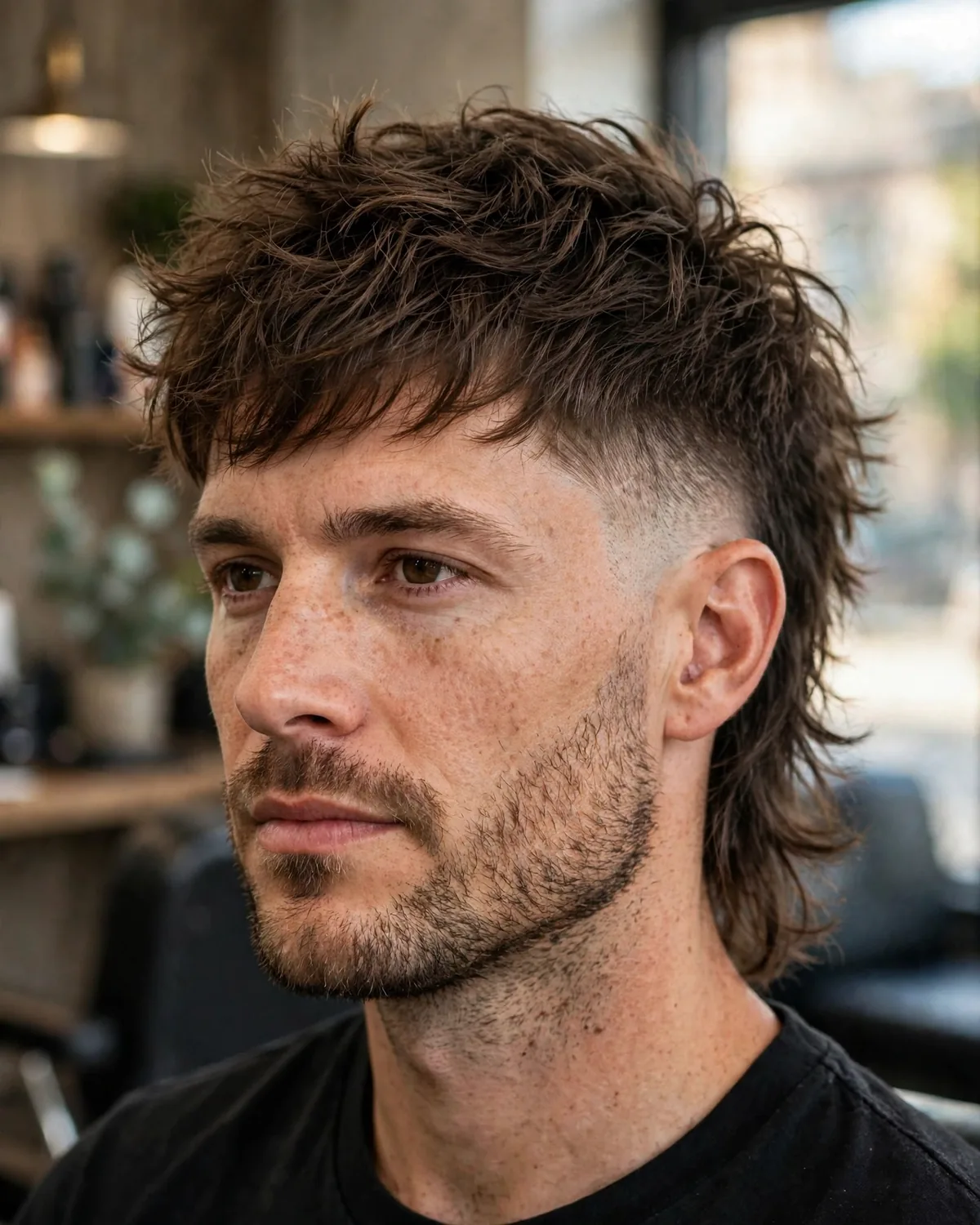
The textured modern mullet runs on choppy, piece-y layers through the crown that give the whole cut grip and movement. Texture hides cowlicks, forgives uneven growth, and makes thin hair look twice as thick. If you only remember one styling word for modern mullets, make it this: texture.
Ask your barber: “Heavy point-cut texture on top, feathered layers into the back, nothing blunt anywhere.”
Style it: Texture powder at the roots, rough it up with your fingers, and walk out.
15. Shaggy Modern Mullet

The shaggy modern mullet borrows the feathered layers of a classic shag and stretches them into a full mullet silhouette — wispy ends, tons of movement, and edges so soft they blur. It is the rock-and-roll romantic of modern mullet hairstyles, and it looks better the less you fuss with it. Great for guys growing out shorter hair.
Ask your barber: “Long feathered shag layers throughout, wispy ends, stretched into a mullet shape with a long back.”
Style it: Air-dry with a little cream; the messier it looks, the better it works.
16. Mohawk Mullet

The mohawk mullet — sometimes called the mullhawk — runs a bold central strip from forehead to nape with the sides faded tight. It is two statement cuts in one, and it is not trying to be subtle. This is the modern mullet for men who want maximum impact; pair it with confidence and let the cut do the talking.
Ask your barber: “A defined strip down the center from front to back, faded sides, and let the strip run long at the nape.”
Style it: Strong-hold clay spiked up through the strip; the tail stays natural.
17. Slicked-Back Modern Mullet

The slicked-back modern mullet is the boardroom version — the top sweeps back smooth and polished while the length stays hidden in plain sight at the back. From the front it reads classic and controlled; the edge only shows when you turn around. It is proof that modern mullets can play in professional settings.
Ask your barber: “Enough length on top to slick back, clean tapered sides, and keep the back long but neat.”
Style it: Pomade on damp hair, combed straight back, and let it set as it dries.
18. Long Modern Mullet

The long modern mullet commits fully — the back flows well past the collar with layered movement that keeps it from looking heavy. This is the version for guys who have been growing for months and want the payoff. Layers are non-negotiable here; without them the back turns into a curtain instead of a cascade.
Ask your barber: “Keep all the length in the back, add long layers for movement, and clean up the front and sides.”
Style it: Leave-in conditioner to prevent tangles; a loose low ponytail works for workouts.
19. Short Micro Mullet
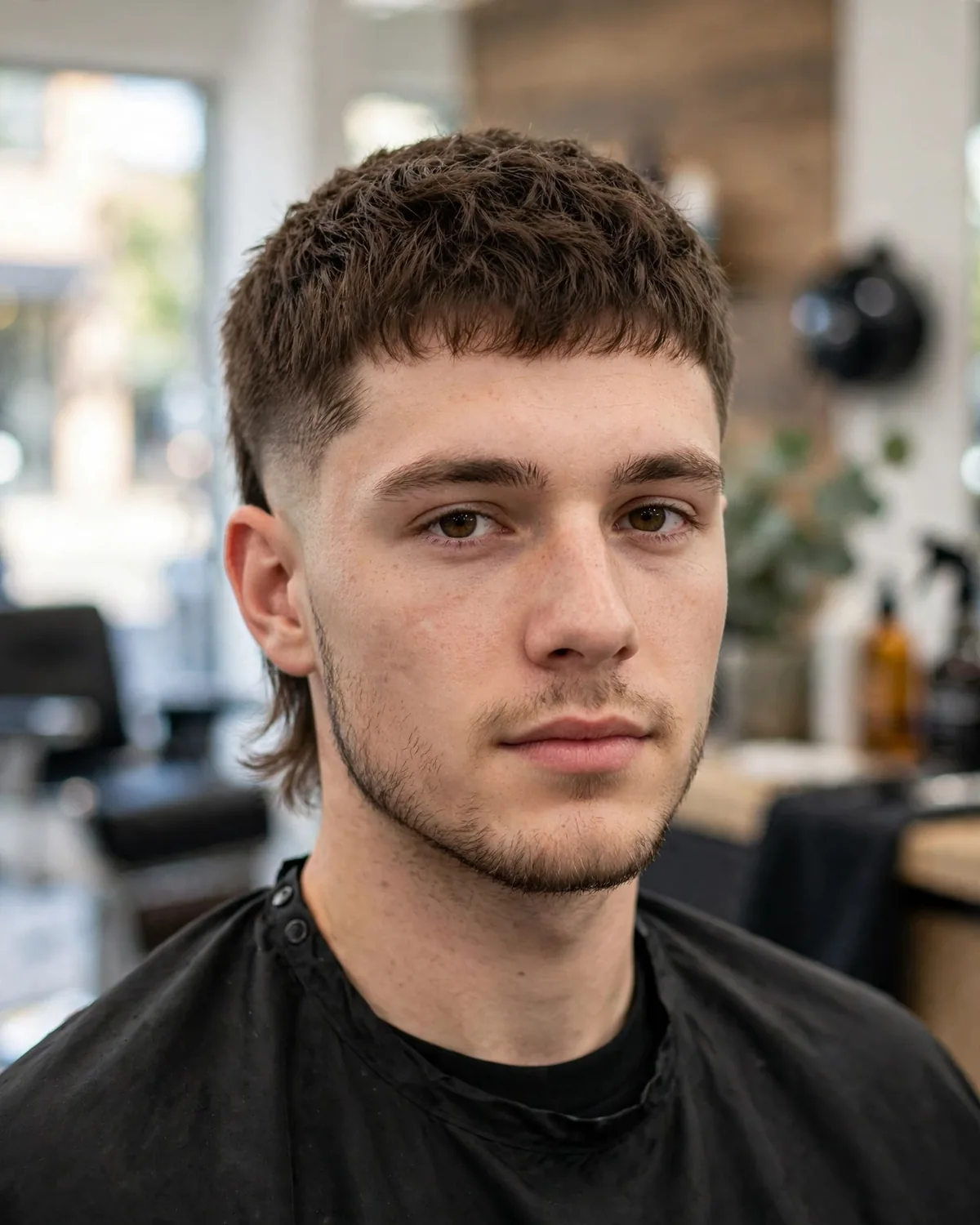
The short micro mullet is the training-wheels version — a cropped front, tidy sides, and just a whisper of extra length at the nape. It hints at the shape without committing to it, which makes it perfect for first-timers, conservative workplaces, or guys growing a longer mullet in stages. Small cut, big personality.
Ask your barber: “Short textured crop on top, neat sides, and leave the nape just a couple of inches longer.”
Style it: Tiny amount of matte paste, pushed forward — the whole routine takes sixty seconds.
20. Fringe Modern Mullet

The fringe modern mullet pairs a textured fringe falling over the forehead with the signature long back — two focal points that frame the face from both directions. It is youthful and fashion-forward, and the fringe hides a high hairline beautifully. Keep the fringe piece-y, never blunt, so it moves instead of sitting like a shelf.
Ask your barber: “Textured fringe up front with movement, tapered sides, and a longer flowing back.”
Style it: Small amount of paste, fringe pushed slightly to one side for an effortless look.
21. Middle Part Modern Mullet

The middle part modern mullet splits the top down the center for a symmetrical, curtain-like front that flows into the longer back. It is clean, balanced, and oddly elegant — the kind of modern mullet haircut that looks intentional from the first glance. Works best on straight to wavy hair with some natural fall.
Ask your barber: “Center part with curtain-like fall on top, neat tapered sides, and a defined longer back.”
Style it: Blow-dry the part in place with a center nozzle direction, then light cream to hold.
22. Curtain Fringe Modern Mullet
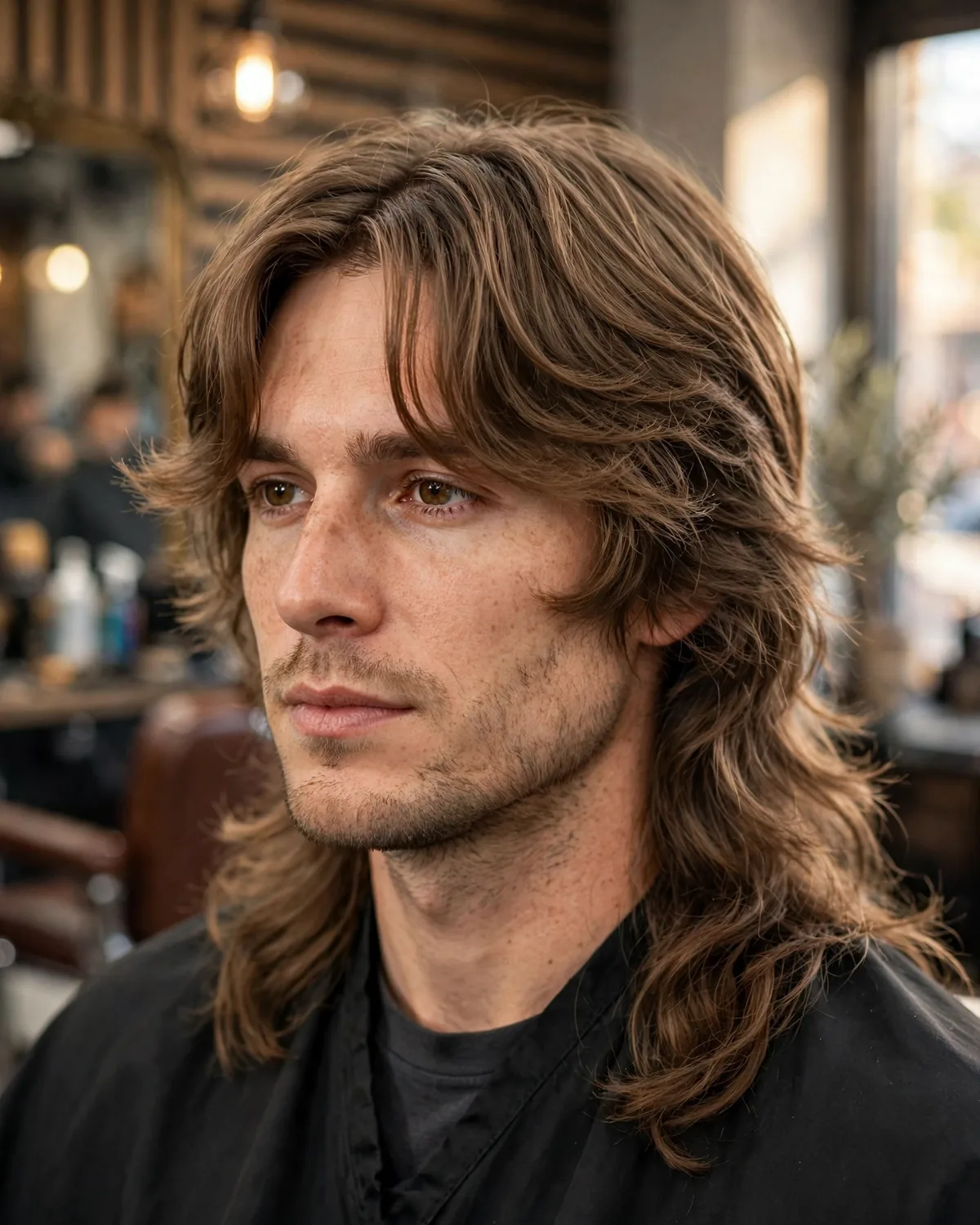
The curtain fringe modern mullet softens the front with a parted fringe that curtains around the face while the back keeps its length. It is romantic, a little retro, and incredibly flattering on longer face shapes. Among modern mullet hairstyles, this one photographs the softest — all flow, no hard edges.
Ask your barber: “Soft curtain fringe parted in the middle, longer layers around the face, and a flowing back.”
Style it: Round-brush the fringe away from the face while blow-drying for that curtain swoop.
23. French Crop Modern Mullet

The French crop modern mullet is the minimalist’s rebellion — a short, blunt crop on top with a neat tapered tail at the back. The contrast between the severe front and the soft tail is what makes it work. It is low-maintenance, office-friendly from the front, and quietly bold from behind.
Ask your barber: “Short blunt French crop on top, clean edges, and taper the back into a neat short tail.”
Style it: Matte clay pushed forward; the crop basically styles itself.
24. Edgar-Style Modern Mullet

The Edgar-style modern mullet fuses the straight, blunt Edgar fringe with mullet length in the back — sharp geometry up front, flowing freedom behind. The straight fringe line demands precision, so this cut lives or dies by your barber’s clipper work. It is one of the edgiest mullet haircuts on this list and a favorite with younger guys.
Ask your barber: “Straight blunt Edgar fringe, faded sides with a clean blend, and keep the back long.”
Style it: Flat-iron the fringe straight down, light hold spray to lock the line.
25. Line-Up Modern Mullet
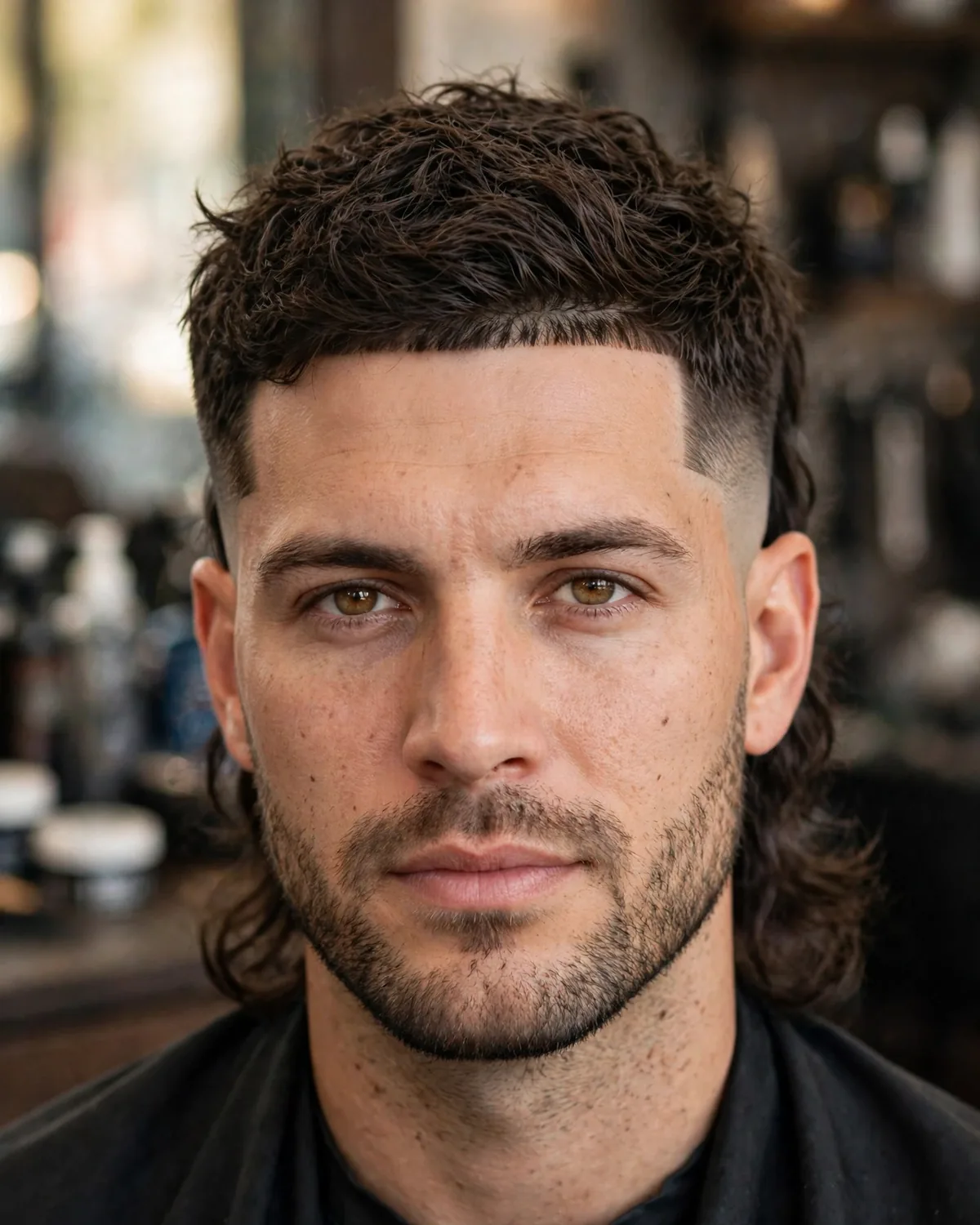
The line-up modern mullet puts the hairline front and center — razor-sharp edges along the forehead and temples, faded sides, and the long back flowing behind. The crisp geometry up front makes the whole cut look deliberate and fresh. This modern mullet haircut needs a barber with steady hands and a sharp blade.
Ask your barber: “Sharp line-up on the hairline and temples, faded sides, textured top, long back.”
Style it: Edge control along the hairline; the lines do the heavy lifting.
26. Hair Design Modern Mullet

The hair design modern mullet carves shaved line art into the faded sides — geometric lines, curves, or whatever your barber dreams up — while the top and back keep their length. It is wearable art, and it turns a great cut into a conversation starter. The design grows out in about two weeks, so it is a fun temporary flex.
Ask your barber: “Fade the sides and carve a clean line design into them; keep the top textured and the back long.”
Style it: Keep the design crisp with weekly touch-ups; style the top as usual.
27. Brush-Back Modern Mullet
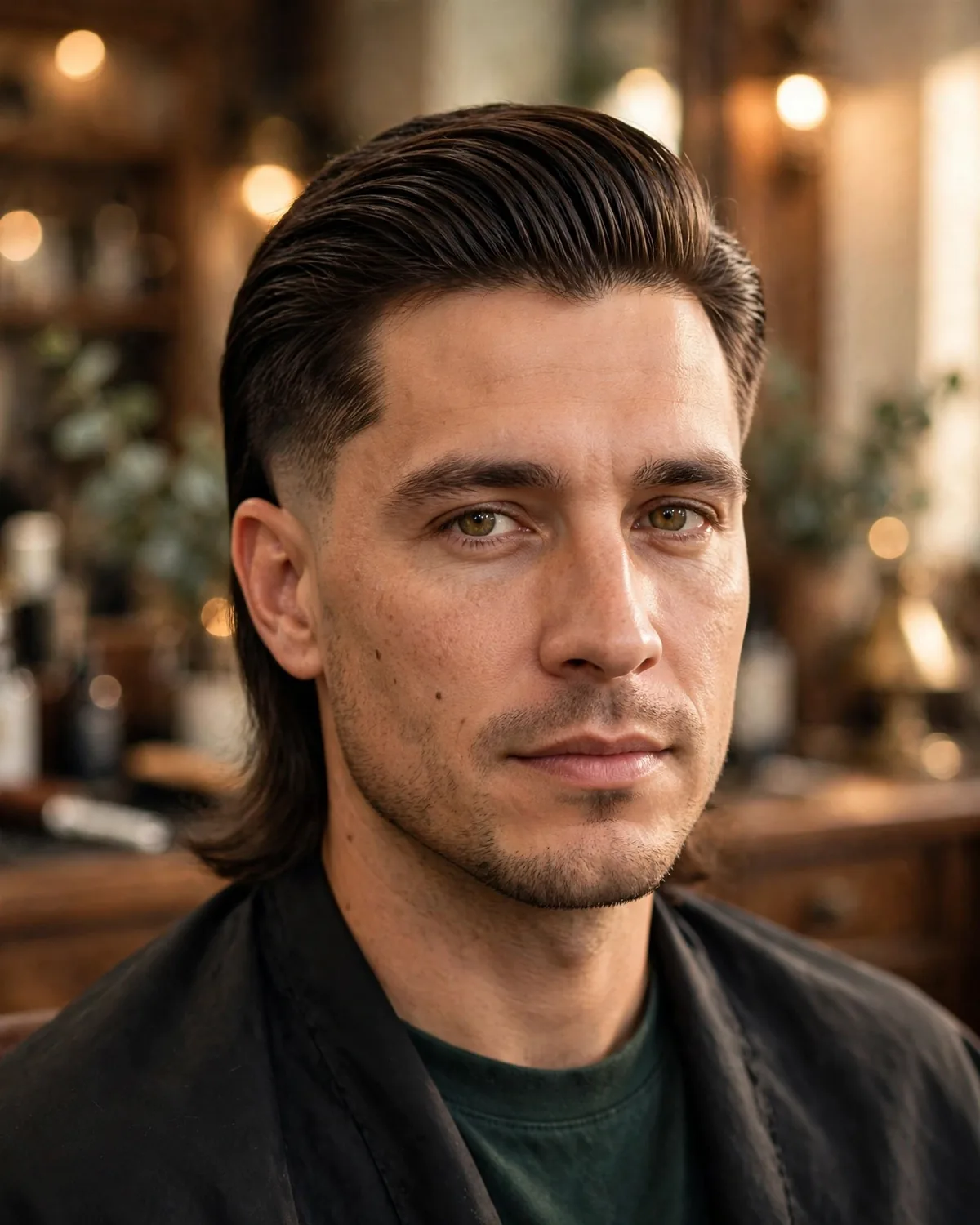
The brush-back modern mullet sweeps everything straight back off the face — no part, no fringe, just clean backward flow from forehead to nape. It is simple, masculine, and shows off the full shape of the cut. Guys with strong foreheads and good hairlines wear this one best.
Ask your barber: “Length on top to brush straight back, clean tapered sides, and a smooth longer back.”
Style it: Blow-dry back with a paddle brush, finish with medium-hold cream.
28. Beard Modern Mullet

The beard modern mullet connects the dots — a full beard blended into faded sides with the mullet flowing behind creates one continuous frame around the face. The beard adds weight and maturity that balances the playfulness of the mullet. Together they are one of the boldest modern mullet hairstyles a man can wear.
Ask your barber: “Blend my beard into a fade on the sides, textured top, and keep the back long.”
Style it: Beard oil daily, and keep the cheek lines clean between appointments.
29. Hard Part Modern Mullet

The hard part modern mullet etches a crisp shaved part line into the side, giving the cut a defined, almost architectural structure. The hard part adds formality to the front while the back stays wild — the ultimate business-in-front contrast. It grows out in about ten days, so plan touch-ups.
Ask your barber: “Shaved hard part on the side, fade below it, textured top, and a longer back.”
Style it: Comb the top away from the part with medium-hold pomade for definition.
30. Wolf-Inspired Modern Mullet

The wolf-inspired modern mullet goes full volume — heavy choppy layers, wild lift at the crown, and a shaggy tail that looks untamed in the best way. It borrows the wolf cut’s feral energy and stretches it into mullet territory. This is the men’s modern mullet for guys who want their hair to have a personality of its own.
Ask your barber: “Heavy choppy layers with big volume on top, thinned ends, and a wild shaggy back.”
Style it: Diffuse upside-down for maximum volume, then texture spray to lock the chaos.
How to Ask Your Barber for a Modern Mullet: The 4 Specs
Walking in and saying “give me a mullet” is how you end up with a surprise. A modern mullet haircut has four decisions your barber needs from you — nail these and you will walk out with exactly the cut you pictured:
1. Side treatment. Fade, taper, or scissor-cut? Pick your fade height (low, mid, high, skin) or ask for a soft scissor taper if you want the most natural look. This one choice sets the whole attitude of the cut.
2. Top length and texture. Two to four inches is the sweet spot. Tell your barber how much texture you want — heavy point-cutting for a lived-in finish, or cleaner layers for a sharper look.
3. Back length. This is the mullet’s signature, so be specific: “about four inches at the nape” beats “long in the back” every time. Bring a photo showing the exact tail length you want.
4. The blend. Ask how the sides transition into the back — a smooth fade blend, a burst curve around the ear, or a disconnected drop. The blend is where a good modern mullet for men becomes a great one.
Pro tip: save three reference photos of modern mullet hairstyles you like and one you hate. Showing your barber what to avoid is just as valuable as showing what you want.
How to Style a Modern Mullet
A great modern mullet haircut should take five minutes or less in the morning. Follow this routine and the cut does most of the work:
Step 1 — Start damp. Towel-dry after your shower until the hair is damp, not dripping. Product grips damp hair far better than dry hair.
Step 2 — Foundation product. Work your main styler (see the matrix below) through the top and crown first, roots to mid-length.
Step 3 — Shape the front. Push the top in your chosen direction — forward, back, or to the side — using fingers for texture or a comb for polish.
Step 4 — Set the back. Smooth the tail down with your palms and a touch of leave-in conditioner. Let it fall naturally; never force it.
Step 5 — Lock it in. A pinch of texture powder at the roots for lift, or a light mist of flexible hairspray if your hair is stubborn.
Product-by-Hair-Type Matrix
Using the wrong product is the number one reason a modern mullet looks flat. Match your styler to your hair type:
| Hair type | Best product | Why it works |
|---|---|---|
| Straight | Matte clay or texture powder | Adds grip and separation straight hair lacks on its own |
| Wavy | Sea-salt spray + light paste | Enhances natural wave without weighing it down |
| Curly | Curl cream + leave-in conditioner | Defines curls and fights the frizz that ruins the shape |
| Thick / coarse | Medium-hold pomade | Tames bulk and keeps heavy hair controlled all day |
| Fine / thin | Volumizing mousse or texture powder | Builds lift at the roots so the cut looks twice as full |
What Does a Modern Mullet Cost? Barber Pricing Guide
A modern mullet haircut typically runs $35 to $70 at a quality barbershop in the US, with premium shops in big cities charging $75 and up. The price sits slightly above a standard cut because the style demands real technical work — precision fading, detailed texturizing, and sculpting the back, which takes most barbers 45 minutes to a full hour.
Here is what the appointment usually involves: a consultation on your four specs (side treatment, top texture, back length, blend), the fade or taper work on the sides, scissor texturizing through the top and crown, shaping and layering the back, detailing the hairline and neckline, and a styling lesson so you can recreate the look at home. If your hair is not long enough yet, ask about a “shape-up cut” ($20–$30) to tidy the sides while the back grows — it keeps you looking sharp during the grow-out phase.
Modern Mullet Maintenance Schedule
The secret to a modern mullet that always looks intentional is timing your trims. The sides grow out faster than the back, and a mullet lives or dies by that contrast:
Every 2–3 weeks: Clean up the fade or taper on the sides and detail the hairline and neckline. This is the non-negotiable appointment — fresh sides are what separate a styled mullet from an overgrown one.
Every 6–8 weeks: Reshape the top and back — refresh the layers, texturize the crown, and trim split ends off the tail. The back keeps growing; you are just keeping it healthy and intentional.
Daily: Condition the longer back section every wash day. Long hair dries out faster, and dry ends make any men’s modern mullet look tired.
Grow-Out Roadmap: From First Cut to Full Modern Mullet
Starting from short hair? A modern mullet haircut takes patience, but every stage can look good if you plan it. Here is the realistic timeline:
Months 1–2: The foundation. Keep the top and sides trimmed neat while leaving the back completely alone. Get a short textured crop or micro mullet shape so the grow-out looks deliberate, not neglected.
Months 3–4: The awkward middle. The back starts flipping out at the collar. This is where most guys quit — do not. Book a shape-up appointment: your barber cleans the sides and lightly layers the back without removing length.
Months 5–6: The payoff. The back now has real flow. Get your first full mullet cut — fade or taper the sides, texture the top, and sculpt the tail into its final shape. From here, follow the maintenance schedule above.
The golden rule: never trim the back during grow-out except for split-end dusting. Every inch you cut adds a month to the timeline.
Best Modern Mullet for Your Face Shape
The right modern mullet for men flatters your bone structure instead of fighting it. Use this cheat sheet:
Oval: You won the lottery — every version works. Try the mid fade or textured mullet first.
Round: Add height, not width. The burst fade, high fade, or mohawk mullet elongates the face; avoid heavy curtain fringes that widen the cheeks.
Square: Soften the jaw with the shaggy, wavy, or curtain fringe mullet. The rounded burst fade also balances strong angles.
Oblong: Keep the top controlled and add width at the sides — the low fade or middle part mullet keeps the face from looking longer.
Heart: Balance a wider forehead with volume at the back and sides. The long mullet or beard mullet fills out the lower face beautifully.
Diamond: The textured or fringe mullet softens sharp cheekbones while keeping the edgy vibe intact.
Modern Mullet vs Classic Mullet: What Changed?
If the old mullet gives you flashbacks, here is exactly what the modern rebuild fixed:
| Classic mullet | Modern mullet | |
|---|---|---|
| Sides | Untouched, often bulky | Faded, tapered, or scissor-cut with precision |
| Top | Bowl-cut or flat | Textured, layered, styled with intention |
| Back | Grown out by neglect | Sculpted, layered, shaped on purpose |
| Blend | Harsh disconnected lines | Seamless fade or soft natural transition |
| Vibe | Accidental | Deliberate — a designed haircut, not a grown-out one |
The takeaway: everything the classic version left to chance, the modern mullet haircut puts under the barber’s control. That is the entire difference — and it is a big one.
Where Can You Wear a Modern Mullet? Workplace Wearability Guide
Not every mullet fits every office. Here is an honest tiered guide so you pick a version that matches your work life:
Tier 1 — Conservative offices (finance, law, corporate): Stick with the taper fade, scissor-cut taper, slicked-back, or short micro mullet. From the front these read as clean professional cuts; the length stays subtle and tucked. Keep the tail neat and the sides fresh.
Tier 2 — Business-casual (tech, sales, education): You have room to play. The low fade, mid fade, textured, fringe, or French crop mullet all pass here — visible personality, still polished. Just keep the fade maintained so it never looks overgrown.
Tier 3 — Creative workplaces (design, media, hospitality, trades): Go bold. The high fade, skin fade, mohawk mullet, hair design, or wolf-inspired mullet fit right in where self-expression is the dress code. These versions are statements — wear them like you mean them.
When in doubt, start one tier safer than you think and grow bolder. A modern mullet is easy to edge up at your next appointment and impossible to un-edge the same day.
Common Modern Mullet Mistakes to Avoid
Skipping the side maintenance. A mullet with grown-out sides stops looking like a mullet and starts looking like neglect. The 2–3 week side cleanup is sacred.
Cutting the back too soon. Impatience during grow-out is the number one mullet killer. Leave the tail alone and let the shape develop.
Wrong product for your hair type. Heavy pomade on fine hair, dry clay on curls — check the matrix above and match the product to the hair, not the hype.
No reference photos. “Mullet” means ten different things to ten barbers. Always bring photos, including one of what you do not want.
Forgetting the back exists. You cannot see it, but everyone else can. Condition it, trim the split ends, and check it in a hand mirror weekly.
Modern Mullet Haircut FAQs
What is a modern mullet haircut?
A modern mullet haircut is the rebuilt version of the classic mullet: shorter through the front and sides, longer down the back, but constructed with today’s barber techniques. Instead of the dated bowl-cut front and neglected tail, the modern version uses fades, tapers, and layered texture for a sculpted, intentional shape. If you want the full backstory on the style’s roots, our guide to mullet haircuts for men covers the classic side of the family.
How do I ask my barber for a modern mullet?
Give your barber four specs: your side treatment (fade height or taper), top length and texture level, exact back length in inches, and how the sides blend into the back. Bring three reference photos of modern mullet hairstyles you like and one you dislike — the “do not want” photo prevents more bad cuts than any description.
How long does my hair need to be for a modern mullet?
You need at least three to four inches at the back of the head for the tail to read as a mullet. The top can start at two inches. Growing from a short cut takes roughly five to six months of leaving the back alone while keeping the sides tidy — follow the grow-out roadmap above and every stage will look intentional.
Is a modern mullet good for curly or wavy hair?
It is one of the best haircut styles for natural texture. Curls and waves give you free volume on top and a defined, bouncy tail that straight hair cannot fake. Ask your barber to cut curls dry so the true length shows, keep the sides tighter for shape, and lean on curl cream and leave-in conditioner. For more on working with fades and texture, see our fade haircut guide.
How often should I trim a modern mullet?
Clean up the fade or taper every two to three weeks — fresh sides are what keep a modern mullet for men looking sharp instead of overgrown. Reshape the top and back every six to eight weeks to refresh layers and trim split ends. The back itself should only lose length when you decide the tail has gone far enough.
Can I wear a modern mullet to a professional job?
Yes — if you pick the right tier. The taper fade, scissor-cut taper, slicked-back, and micro versions read as clean professional cuts from the front and pass in conservative offices. Save the skin fade, mohawk, and hair-design versions for creative workplaces. Check the workplace wearability guide above and start one tier safer than you think. Our taper haircut guide has more office-safe inspiration.
The Bottom Line
The modern mullet haircut earned its comeback the hard way — by getting better. Sharper fades, smarter texture, and a sculpted back turned a punchline into one of the most versatile modern mullet hairstyles a man can wear right now. Whether you go subtle with a taper or bold with a skin fade, the formula works: clean in the front, character in the back, and a cut that is unmistakably yours.
Ready to explore the wider world of men’s haircuts? Compare notes with our guides to men’s haircuts, mohawk haircuts, burst fade haircuts, and messy hairstyles for men — then book the chair and make it happen. — and compare the sibling variations: fade mullet haircuts and short mullet haircuts to find your version. Then book the chair and make it happen. For the style’s full history, Wikipedia’s mullet entry is a fun rabbit hole.