30 Best Wolf Cut Haircuts for Men
The wolf cut haircut has gone from underground favorite to one of the most requested cuts in barbershops across the country, and it is easy to see why. It is wild, textured, and full of attitude — but underneath the chaos there is real technique. If you are hunting for a haircut for men that stands out from the usual fade-and-comb routine, this layered, shaggy style might be exactly what your mirror has been missing.
In this guide: 30 takes on the wolf haircut for men — plus how to style it, what to tell your barber, what it costs, and whether it works on thinning hair.

What Is a Wolf Cut
A wolf cut is a high-contrast layered haircut that blends the volume of a shag with the attitude of a mullet. The top is cut short and full, the layers fall away sharply through the mid-lengths, and the back grows longer into a soft, tapered tail. That short-to-long drop is what gives the cut its signature “wild” silhouette — like the ruff of fur around a wolf’s face.
The masculine take keeps the neckline and sideburns cleaner, pairs the layers with fades or tapers, and styles the crown with lift. It works on straight, wavy, and curly hair because the whole point of the cut is movement — the layers do the styling work for you.
This is a forgiving cut: the choppy layers grow out gracefully, hide bad hair days, and look better slightly messy than perfectly neat — which is why it keeps topping men’s hairstyles lists right now.
The 30 Best Wolf Cut Haircuts for Men
Thirty variations of the men’s wolf cut, from the timeless original to the newest fade hybrids — each with the exact chair script and one styling tip.
1. Classic Wolf Cut

The original: short, piecey layers up top, a longer tapered back, and a face-framing fringe — the benchmark every version builds on.
Ask your barber: “Give me a classic wolf cut — short layered crown, longer tapered back, and a textured fringe around the forehead.”
Style it: Blow-dry forward with your fingers for lift, then pinch the ends with matte clay for separation.
2. Short Wolf Cut

All the wild texture of the original, kept above the collar — the no-commitment entry point.
Ask your barber: “Short wolf cut — choppy layers on top, but keep the back above the collar and the neckline tidy.”
Style it: A pea-sized amount of texture paste scrunched in while damp gives instant definition.
3. Medium Wolf Cut

The sweet spot: enough length for real movement, short enough for professional settings — the most versatile version of the cut.
Ask your barber: “Medium wolf cut — mid-length layers, shorter crown with volume, back reaching just past the ears.”
Style it: Sea-salt spray on damp hair, then air-dry or diffuse for effortless texture.
4. Long Wolf Cut
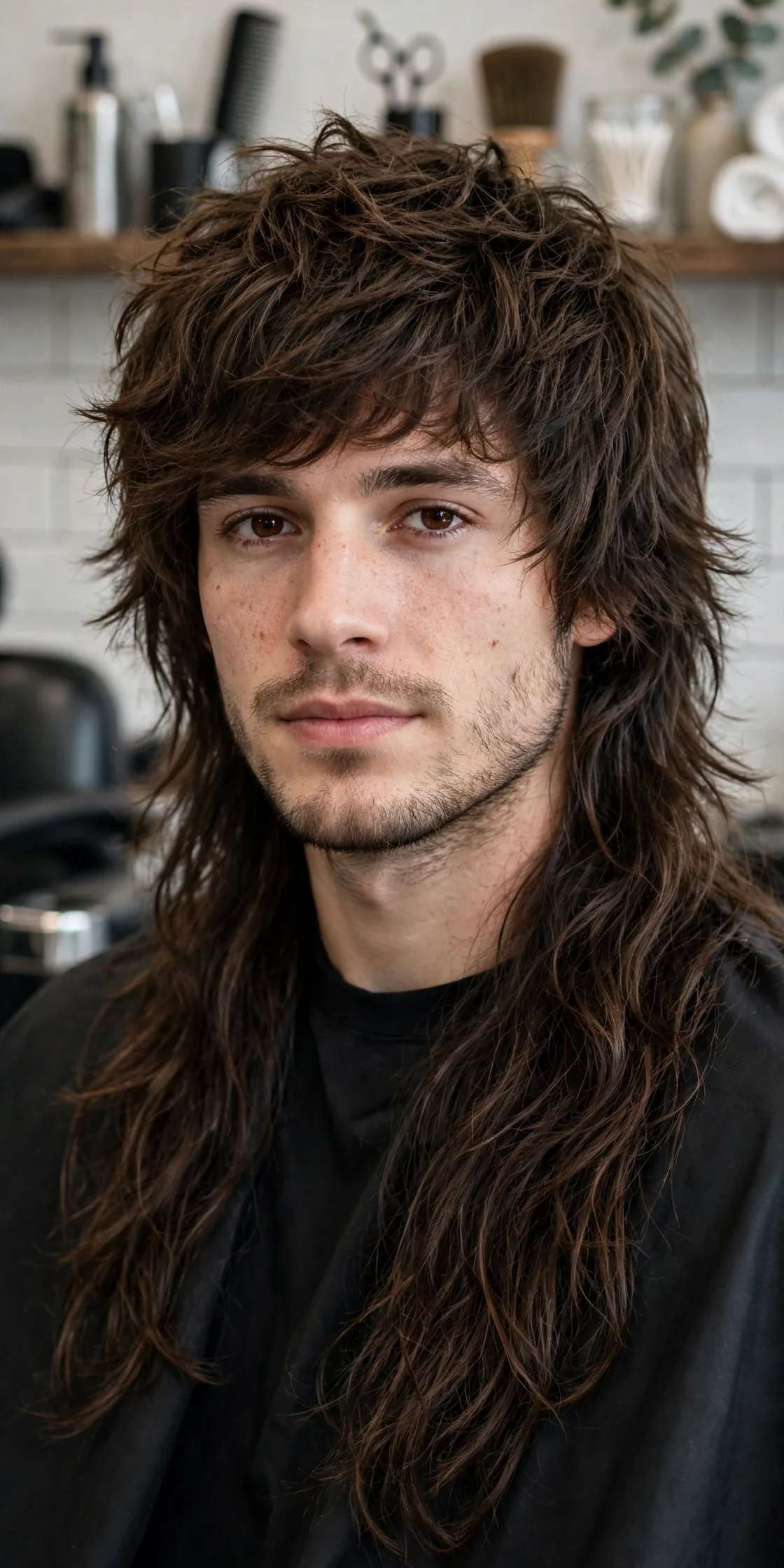
Maximum drama: long back layers for serious flow, a short crown for volume — never flat or stringy.
Ask your barber: “Long wolf cut — keep the back layers long with heavy texture, short disconnected layers on top.”
Style it: Layer a light leave-in cream before blow-drying with a diffuser to keep long layers from tangling.
5. Curly Wolf Cut
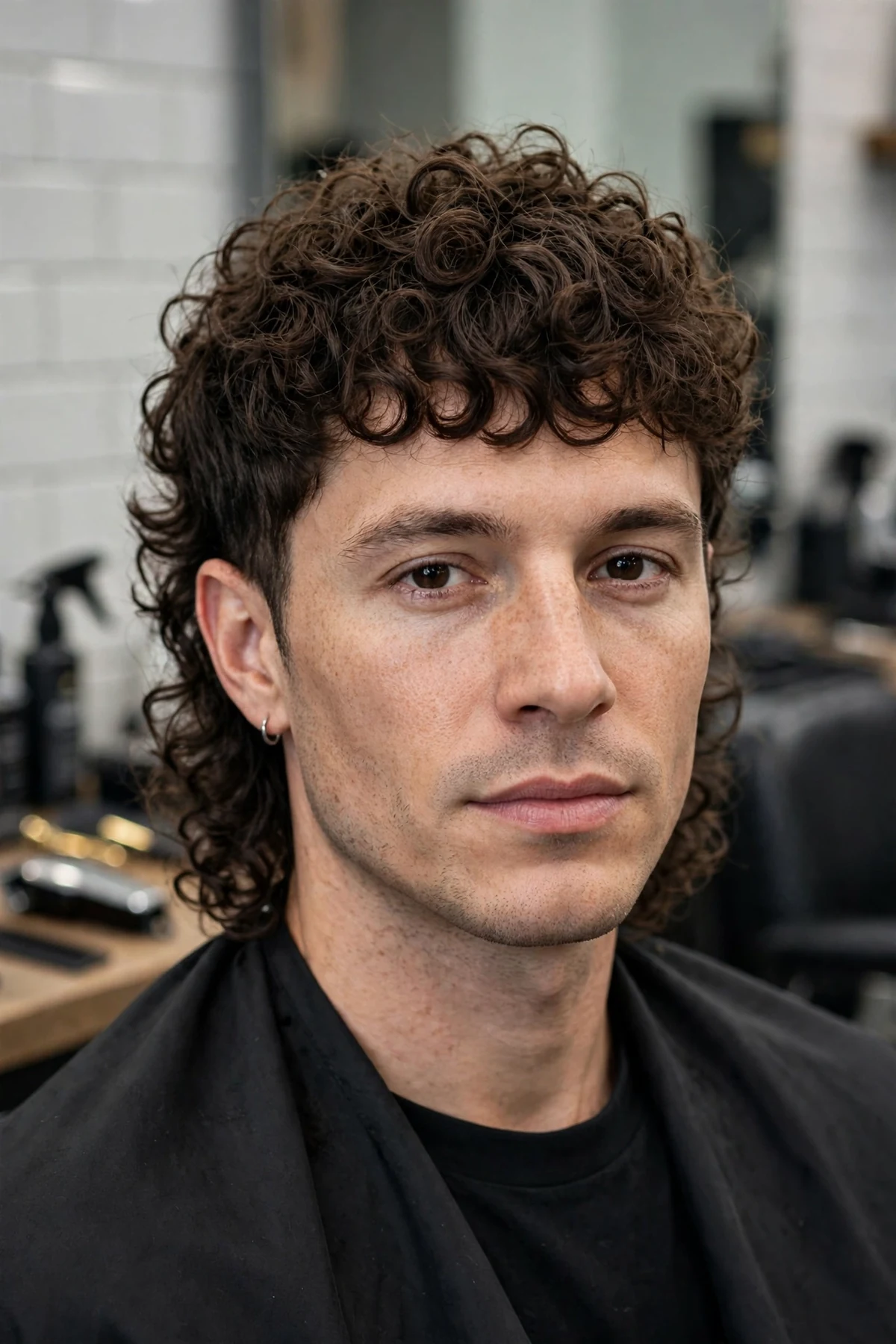
Possibly the best pairing on this list: every curl sits at a different length, creating built-in volume and shape.
Ask your barber: “Curly wolf cut — dry-cut if possible, round out the crown, and leave the back curls long with point-cut texture.”
Style it: Curl cream on soaking-wet hair, scrunch upward, and do not touch it until it is fully dry.
6. Wavy Wolf Cut

Effortless beachy movement: the layers amplify your natural wave pattern, and second-day hair looks even better.
Ask your barber: “Wavy wolf cut — long layers to encourage the waves, textured fringe, light thinning so it does not puff out.”
Style it: Scrunch sea-salt spray into damp hair and twist a few random pieces for extra wave definition.
7. Straight Wolf Cut

The sharpest version of the layering: clean, defined separation between layers, best done with a razor.
Ask your barber: “Straight wolf cut with a razor — sharp disconnected layers, textured fringe, and a tapered back.”
Style it: A tiny bit of fiber cream on the ends only, to sharpen the separation between layers.
8. Thick-Hair Wolf Cut
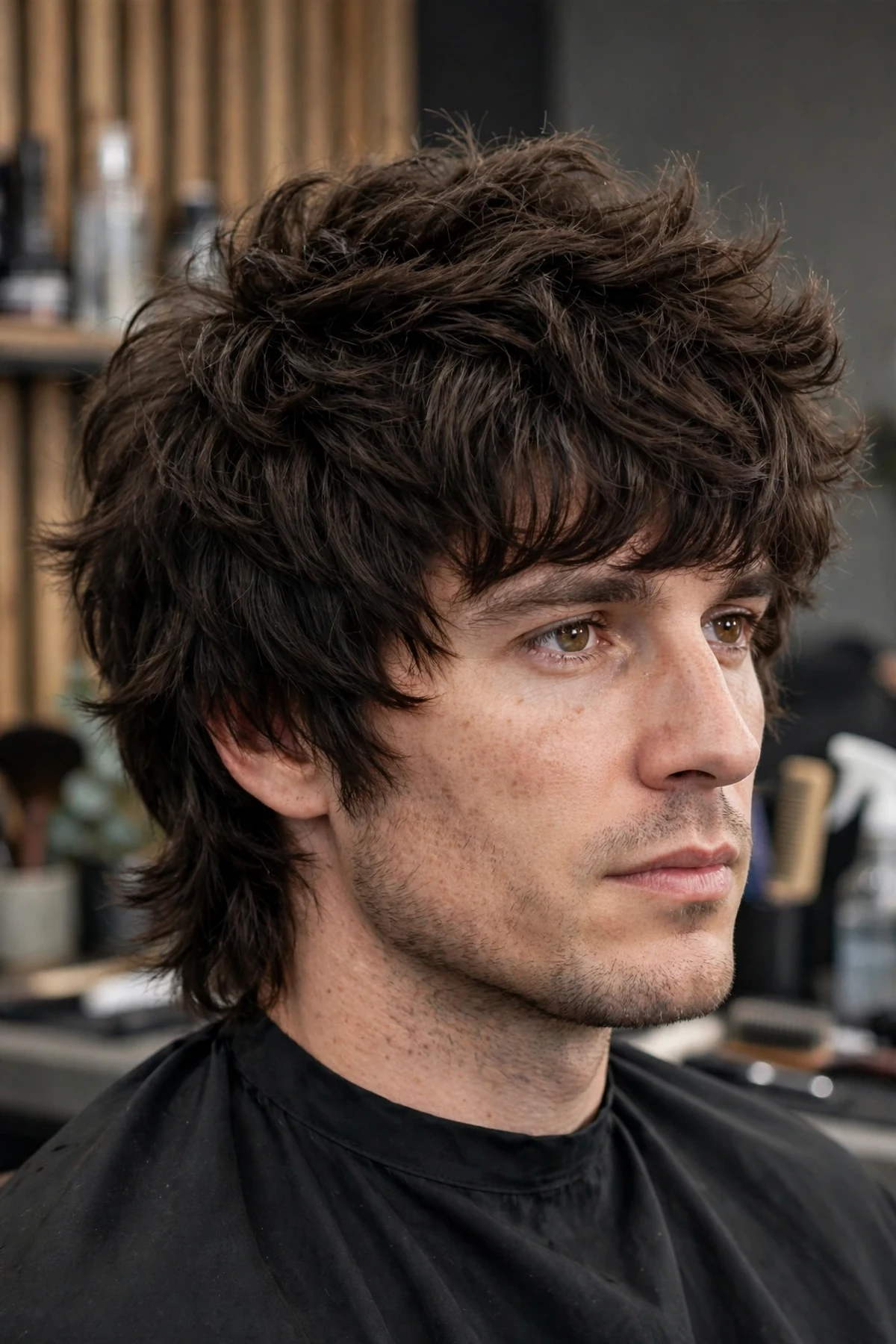
A gift for this cut, as long as the barber removes enough bulk — deep point-cutting keeps volume intentional, not triangular.
Ask your barber: “Wolf cut for thick hair — debulk the sides and crown with thinning shears, keep the layer shape.”
Style it: Matte paste with strong hold tames thickness without looking stiff; apply to dry hair in layers.
9. Korean K-Pop Wolf Cut
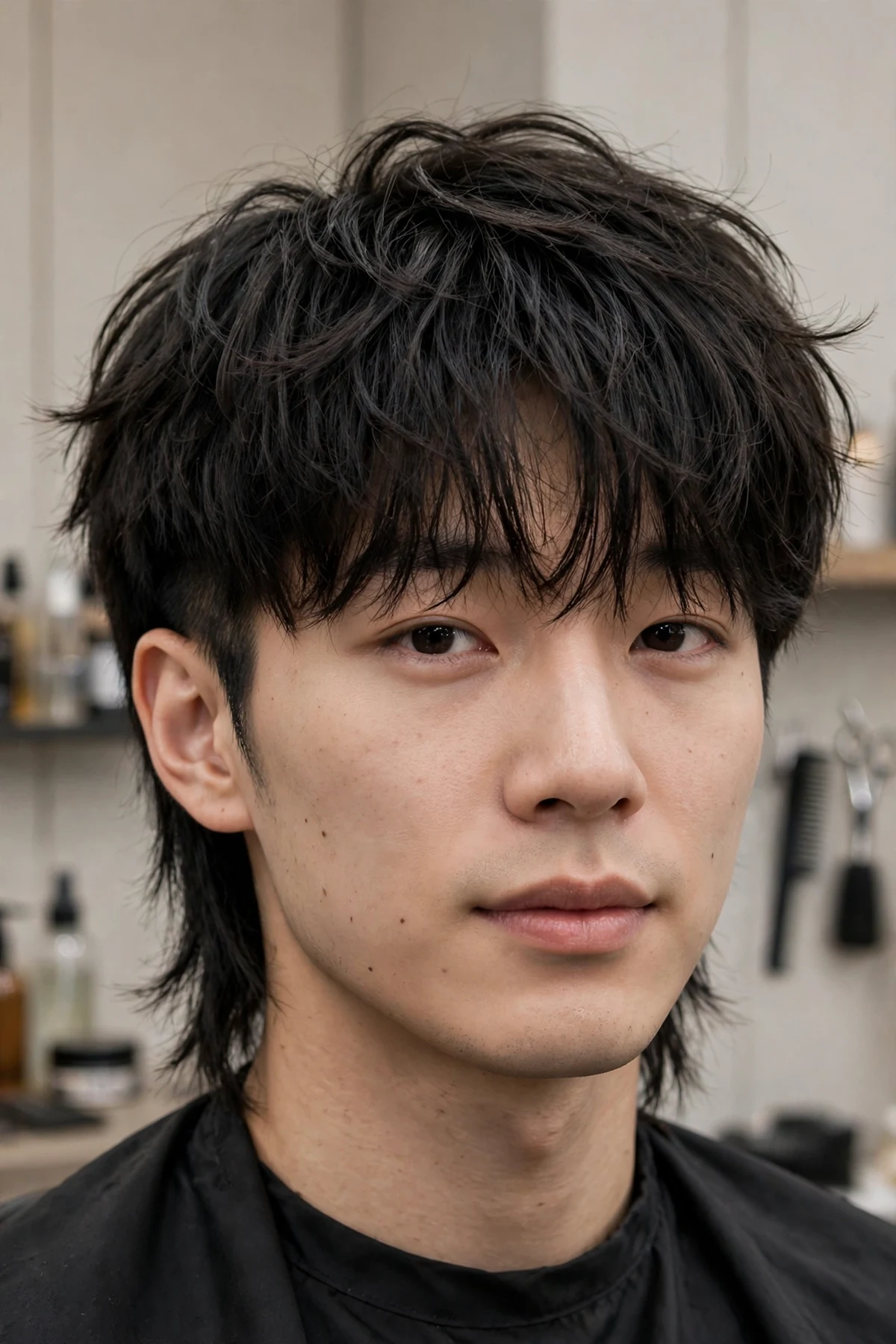
The Korean wolf cut is the refined cousin of the classic: softer layers, airier bangs, and a silhouette that stays neat around the ears.
Ask your barber: “Korean-style wolf cut — soft layered crown with see-through bangs, keep the sides neat, longer flow at the back.”
Style it: Lightweight wax on the fringe only; the goal is soft movement, not spikes.
10. Burst Fade Wolf Cut

Streetwear energy meets layered texture: the burst fade curves around the ear while long layers spill over it.
Ask your barber: “Wolf cut with a burst fade — fade it around the ears and down the neckline, leave the top layers long and disconnected.”
Style it: Keep the fade crisp with a line-up every two weeks; texture spray on the top for contrast.
11. Mid Fade Wolf Cut
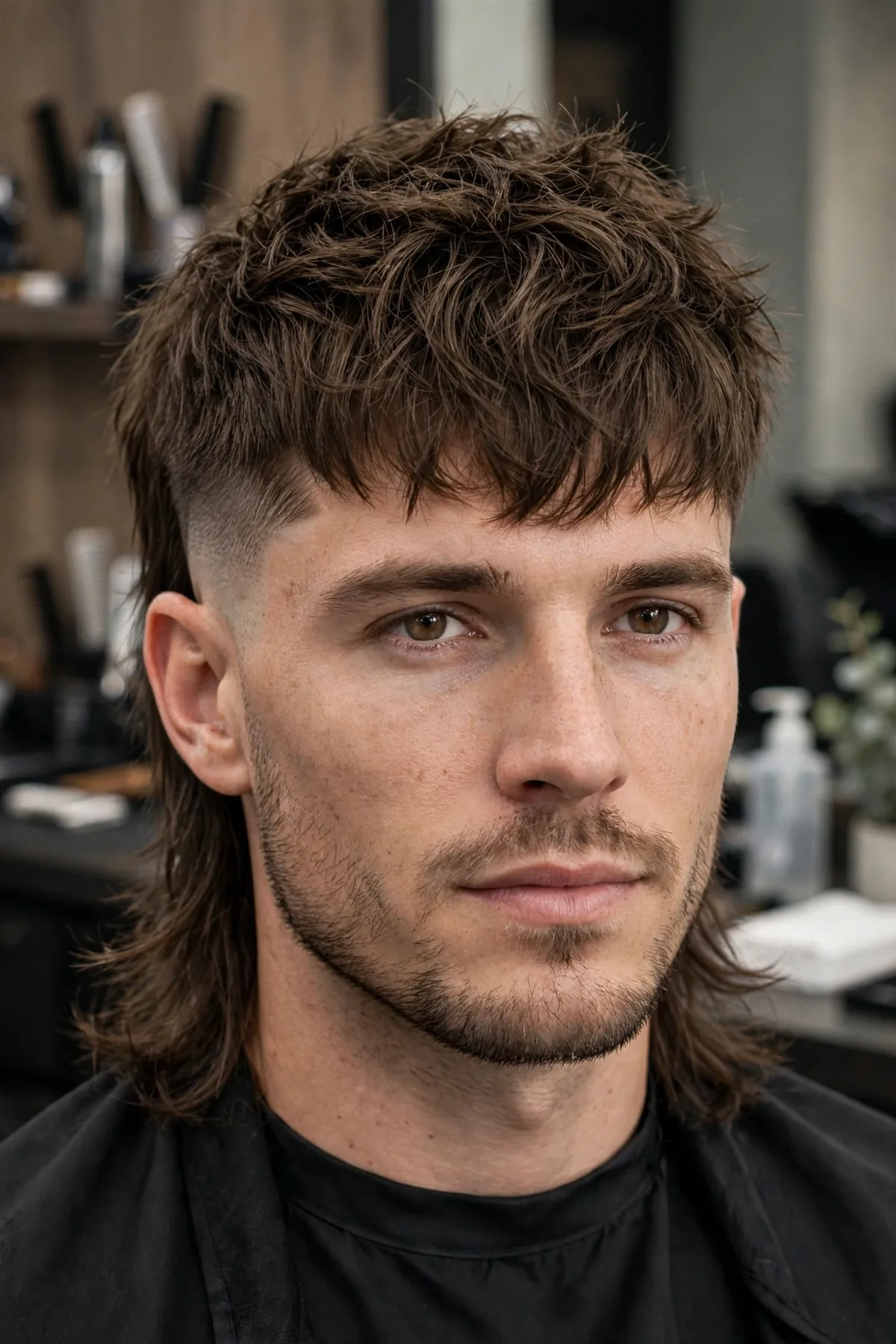
A sharper, more modern frame: the blend sits at the temple line, making the layered top look even wilder.
Ask your barber: “Wolf cut with a mid fade — blended fade at the temples, long textured layers on top and at the back.”
Style it: Matte clay for the top; the fade does its own work. Refresh the fade every 2–3 weeks to keep the contrast sharp. For more blended-side inspiration, see our guide to the fade haircut.
12. Low Taper Wolf Cut
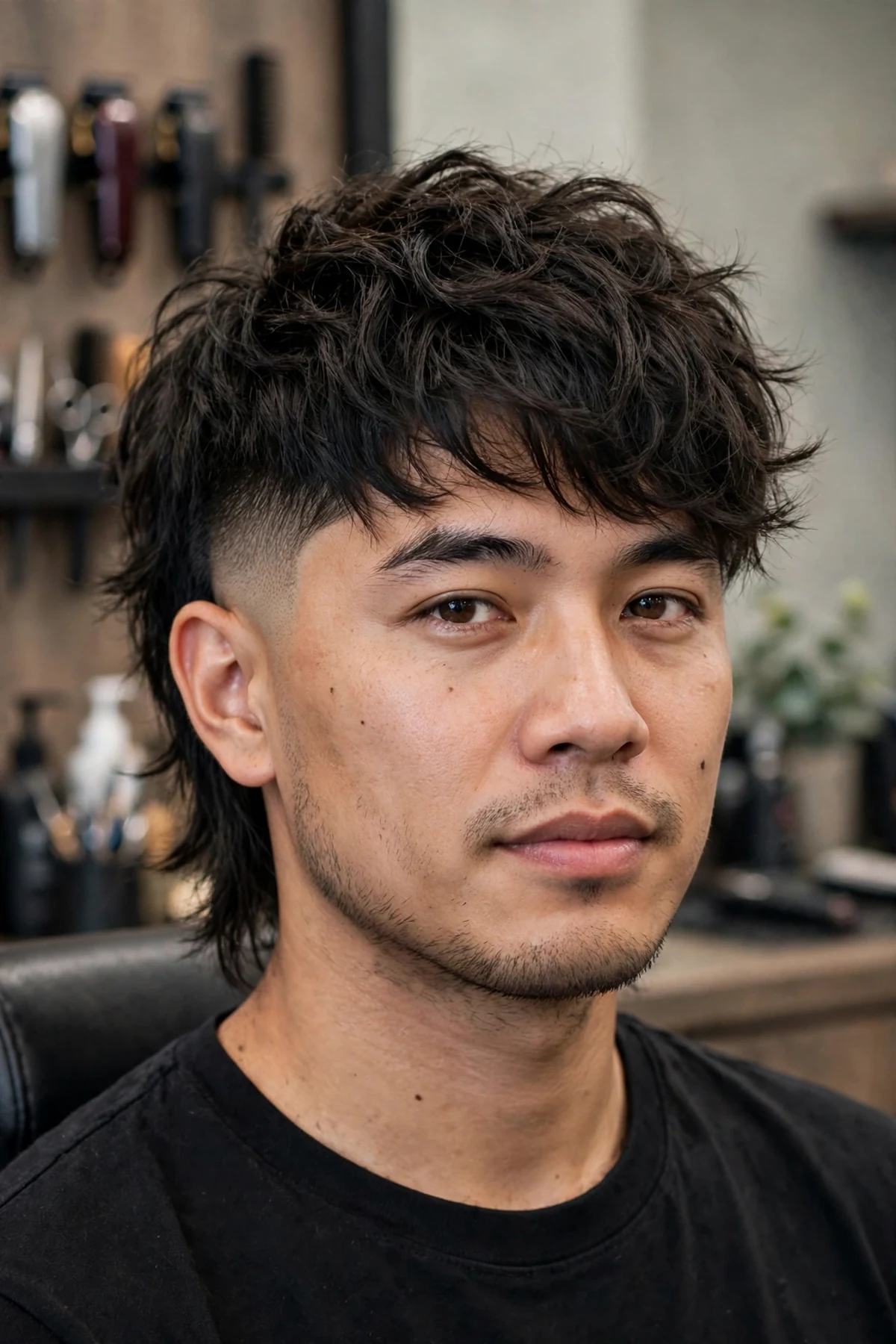
Quiet luxury: it cleans up the edges without announcing itself — ideal if you need to fly under the radar.
Ask your barber: “Wolf cut with a low taper — just taper the sideburns and neckline, keep everything else long and layered.”
Style it: Cream-based product for a soft, natural finish that matches the subtle sides.
13. Undercut Wolf Cut
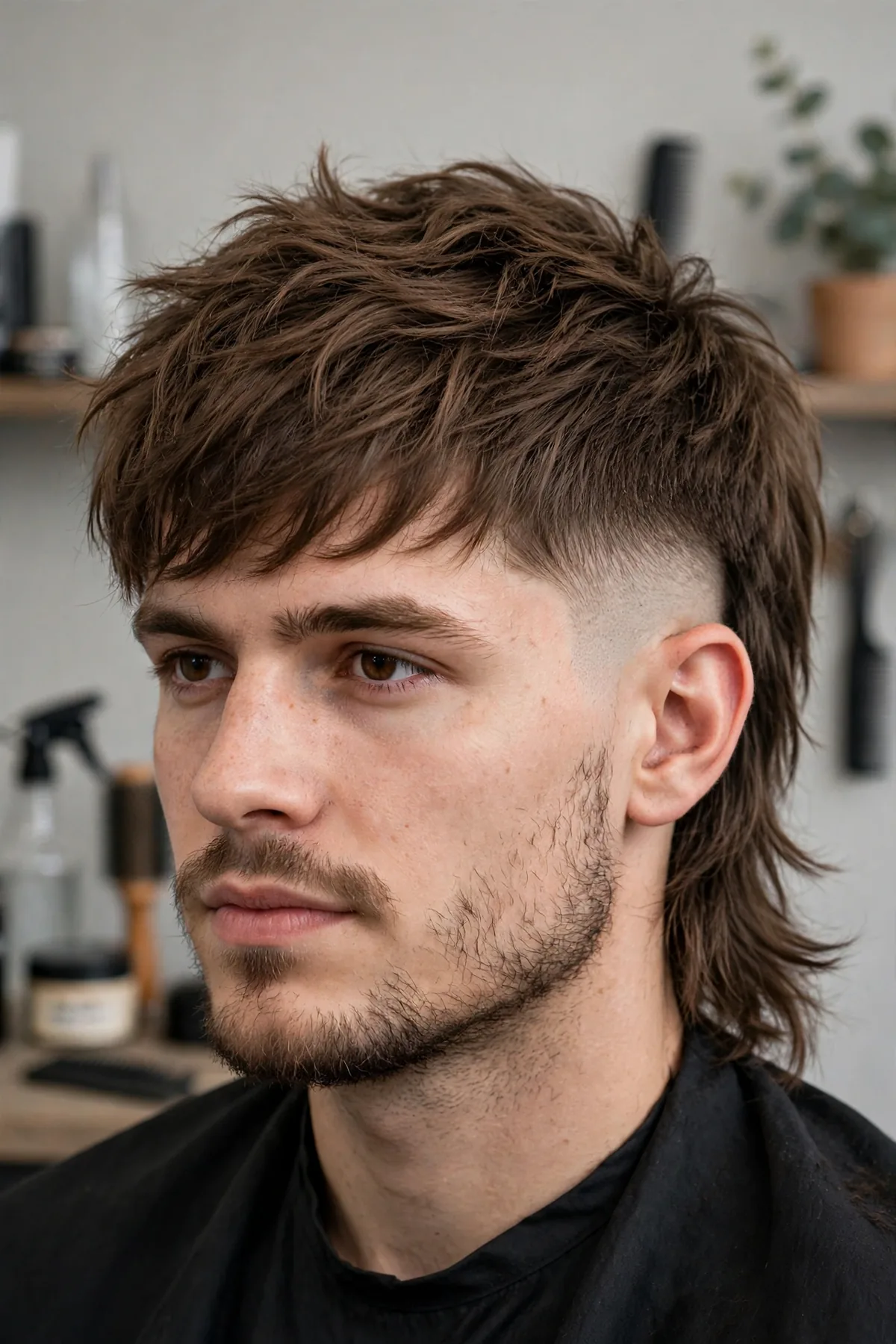
Maximum contrast: clipped sides with heavy layers crashing over them — bold and impossible to ignore.
Ask your barber: “Wolf cut with a disconnected undercut — clip the sides short, leave the top and back long with heavy layers.”
Style it: Sweep the longer layers forward over the disconnect for that dramatic overhang.
14. Curtain Bangs Wolf Cut

Curtain bangs split down the middle to frame the cheekbones — a softer, face-slimming take on the cut.
Ask your barber: “Wolf cut with curtain bangs — longer fringe parted in the middle, layered to blend into the sides.”
Style it: Blow-dry the fringe away from the center part with a round brush for that perfect swoop. If you like fringe-forward styles, the fringe haircut roundup has more ideas.
15. Choppy Bangs Wolf Cut
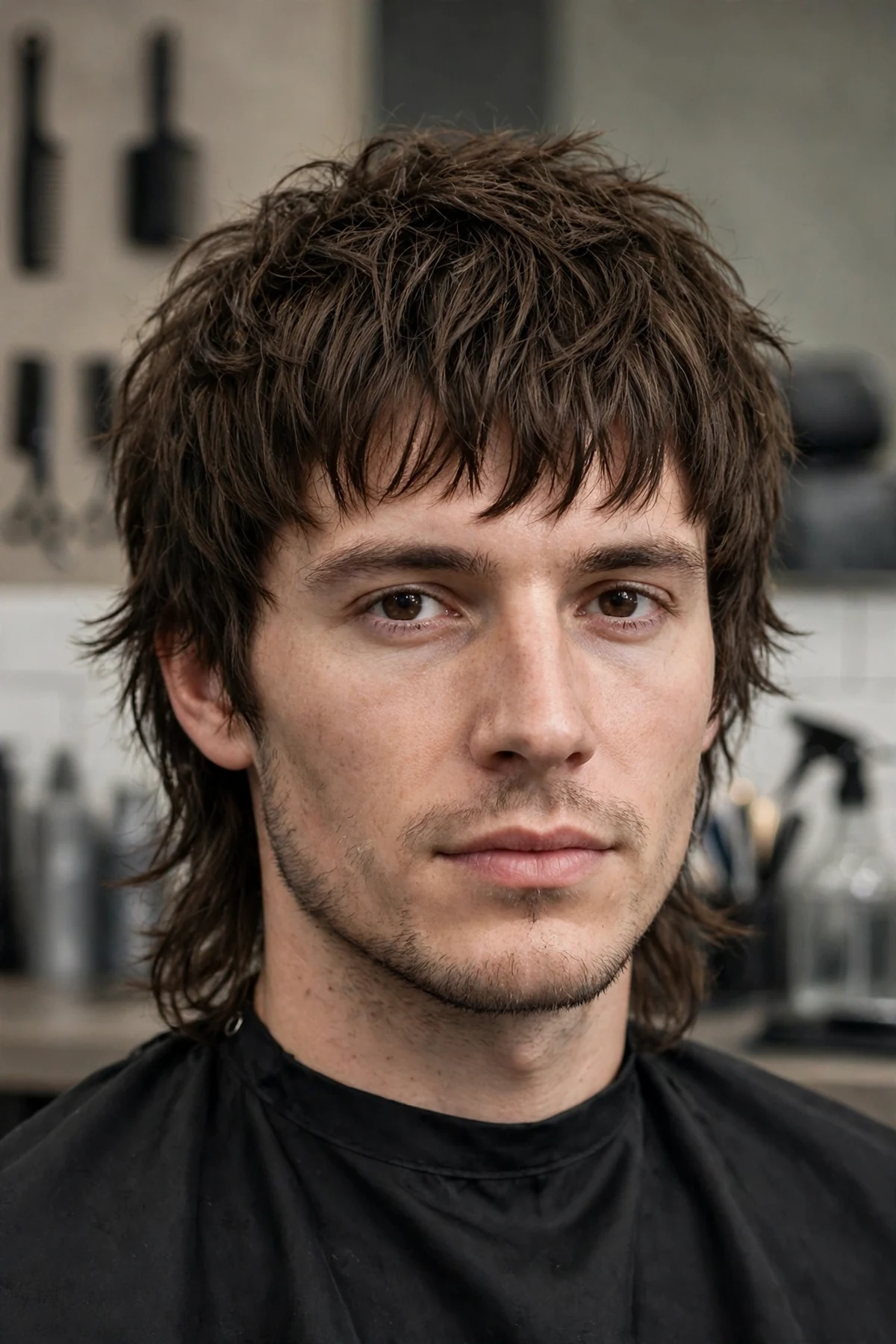
The rebellious option: jagged, piecey bangs that look intentional and undone at the same time.
Ask your barber: “Wolf cut with choppy bangs — point-cut the fringe so it is jagged, keep the crown layers heavy.”
Style it: Pinch small sections of the fringe with pomade to sharpen the jagged pieces.
16. Mullet-Hybrid Wolf Cut
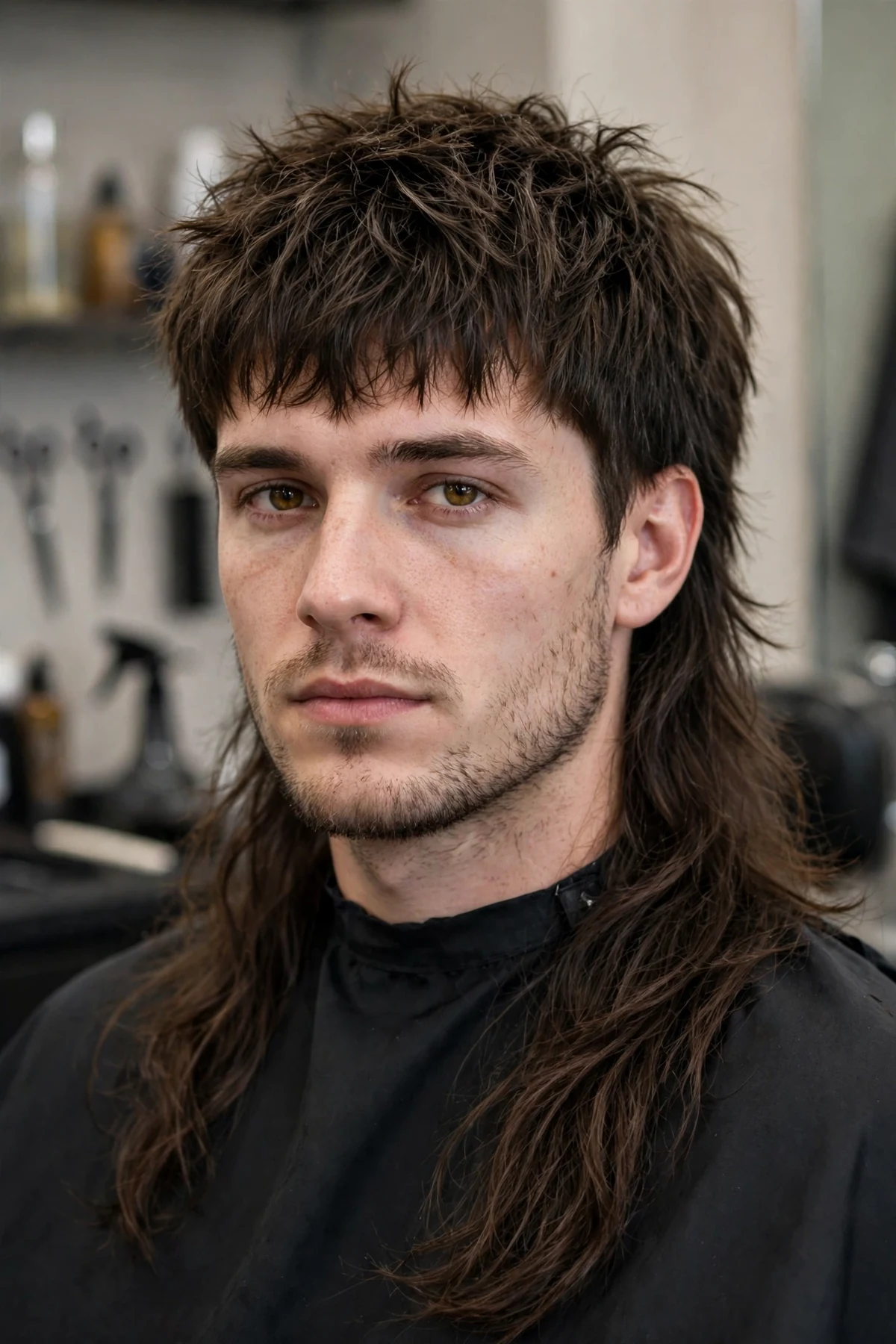
Leans hard into the mullet side of the family: a longer, more dramatic back tail with a shorter crown.
Ask your barber: “Mullet-wolf hybrid — short layered top, long textured tail in the back, blended through the sides.”
Style it: Keep the tail piecey with sea-salt spray; tuck it behind the ears for a cleaner daytime look. Compare more variations in our mullet haircut guide.
17. 70s Shaggy Wolf Cut

A 70s soul: feathered layers, curtain fringe, and rockstar fullness through the crown — retro without the costume.
Ask your barber: “70s-inspired shaggy wolf cut — feathered layers throughout, full crown, curtain fringe, tapered back.”
Style it: A round brush and blow-dryer are your best friends here — lift the crown for that vintage fullness.
18. Textured Wolf Cut
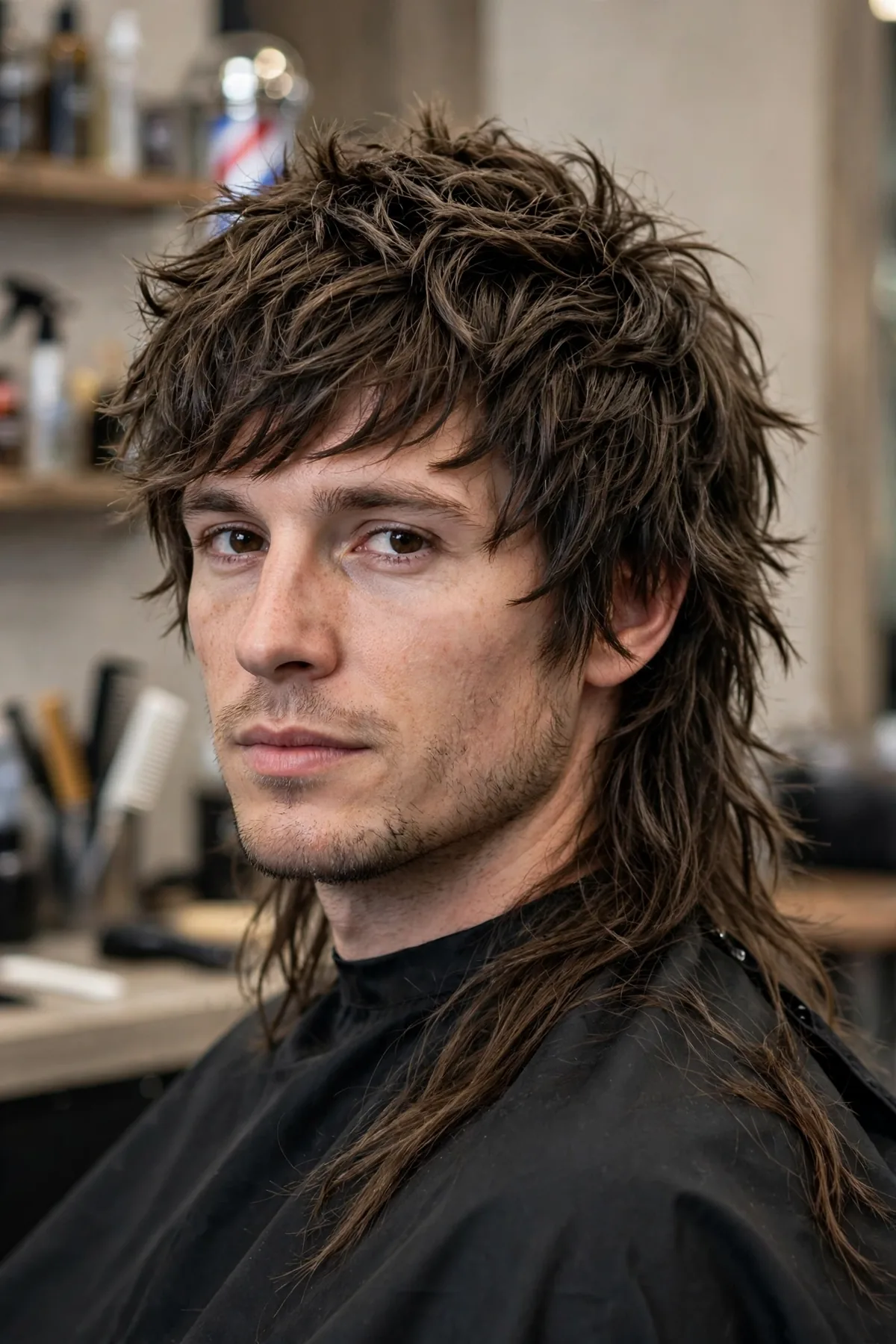
Every layer point-cut for maximum separation — the version to ask for when you want the cut to look deliberate, not grown-out.
Ask your barber: “Heavily textured wolf cut — point-cut and slice every layer so the separation is really visible.”
Style it: Dry texture spray from root to tip, then shake it out — the cut does the rest. The textured crop haircut guide covers similar separation techniques.
19. Messy Wolf Cut

The official “I woke up like this” cut: uneven texture and flyaways — the less perfect, the better.
Ask your barber: “Messy wolf cut — choppy layers all over, as much texture as you can give me, nothing too polished.”
Style it: Dry shampoo at the roots for grit, then mess it up with your hands and leave it alone.
20. Wet-Look Wolf Cut

The same layers with high-shine gel for a slick, editorial finish — wild cut, night-out polish.
Ask your barber: “Wolf cut, but I want to wear it wet-look — keep the layers long enough to slick back.”
Style it: Wet hair + strong-hold gel, comb the layers back and let them set glossy.
21. Two-Tone Wolf Cut

Two colors, one cut: dark roots melting into bleached ends, so every layer boundary pops.
Ask your barber: “Wolf cut with two-tone color — dark roots, bleached ends on the layers, so the separation shows.”
Style it: Purple shampoo once a week keeps the bleached sections from going brassy.
22. Platinum Blonde Wolf Cut
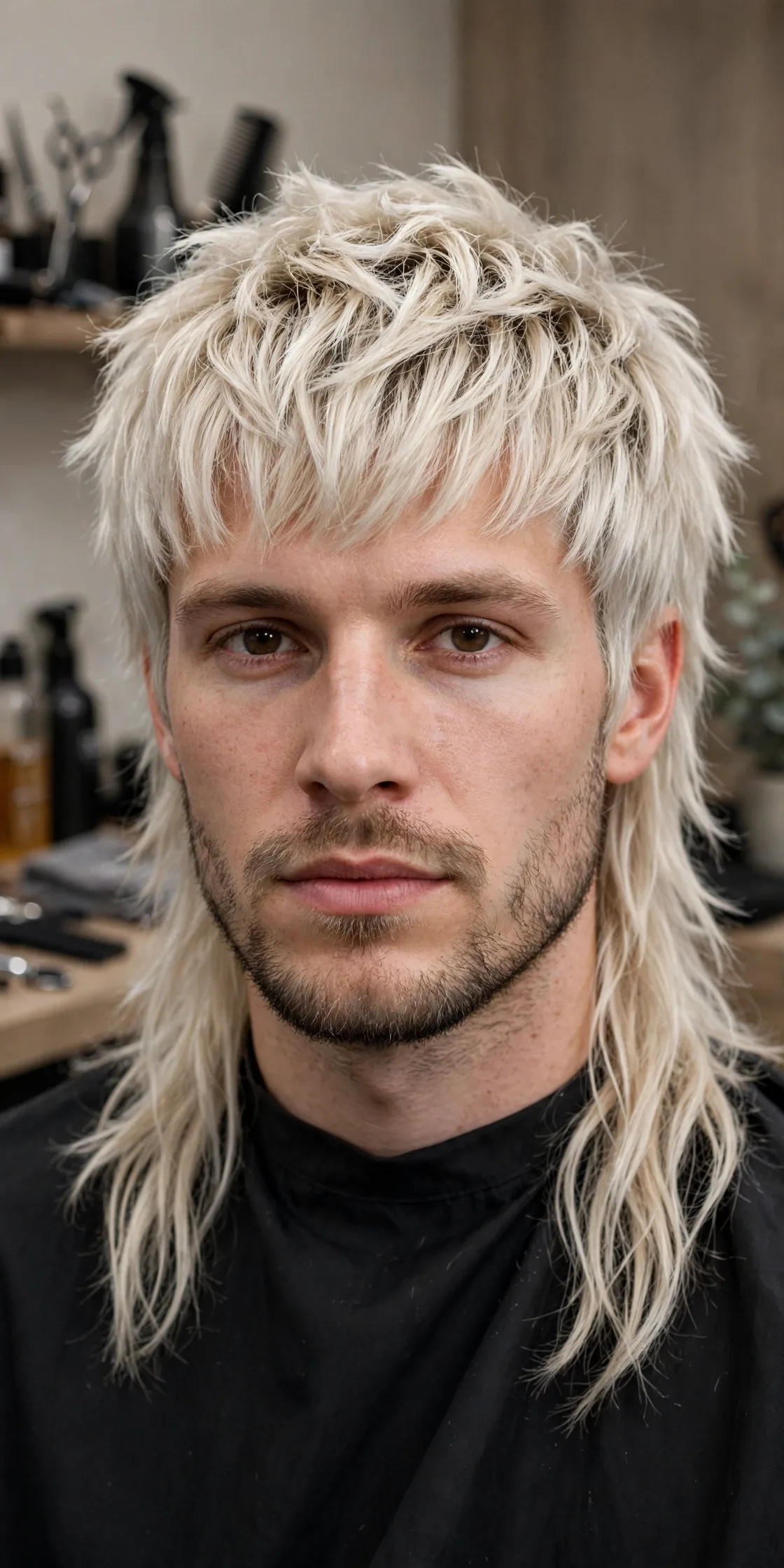
Maximum visibility: bleach makes every layer edge glow — the loudest version of this cut.
Ask your barber: “Platinum wolf cut — full bleach, then cut the layers so the texture really shows.”
Style it: Olaplex-style bond treatment weekly; bleached layers get fragile fast. Deep-condition every wash.
23. Permed Wolf Cut

The cheat code for pin-straight hair: a perm manufactures the wave and curl this wolf cut hairstyle was designed to show off.
Ask your barber: “Wolf cut with a perm — cut the layers first, then perm the top and mid-lengths for wave, leave the tail softer.”
Style it: Curl-defining cream on damp hair, diffuse on low heat, and never brush it dry. (Full perm costs and upkeep are covered below.)
24. Fine and Thin-Hair Wolf Cut

Yes, thin hair can wear it — layers create the illusion of fullness, as long as they stay short with blunt-ish ends. (Read the honest section below first.)
Ask your barber: “Wolf cut for fine hair — shorter layers for density, no aggressive thinning, keep the ends blunt-ish.”
Style it: Volumizing mousse at the roots before blow-drying upside down for maximum lift.
25. Middle-Part Wolf Cut

A clean center part brings symmetry and polish — the layers still move, but the overall read is controlled.
Ask your barber: “Middle-part wolf cut — center parting, balanced layers on both sides, textured length at the back.”
Style it: Part it wet, train it with a little cream, and let it set as it dries.
26. Natural Low-Maintenance Wolf Cut

Shaped to your natural texture with zero product needed — wash, towel-dry, go.
Ask your barber: “Low-maintenance wolf cut — shape it to my natural texture, I don’t want to use product daily.”
Style it: Honestly? Nothing. Maybe a light cream on humid days.
27. Edgy Mohawk Wolf Cut
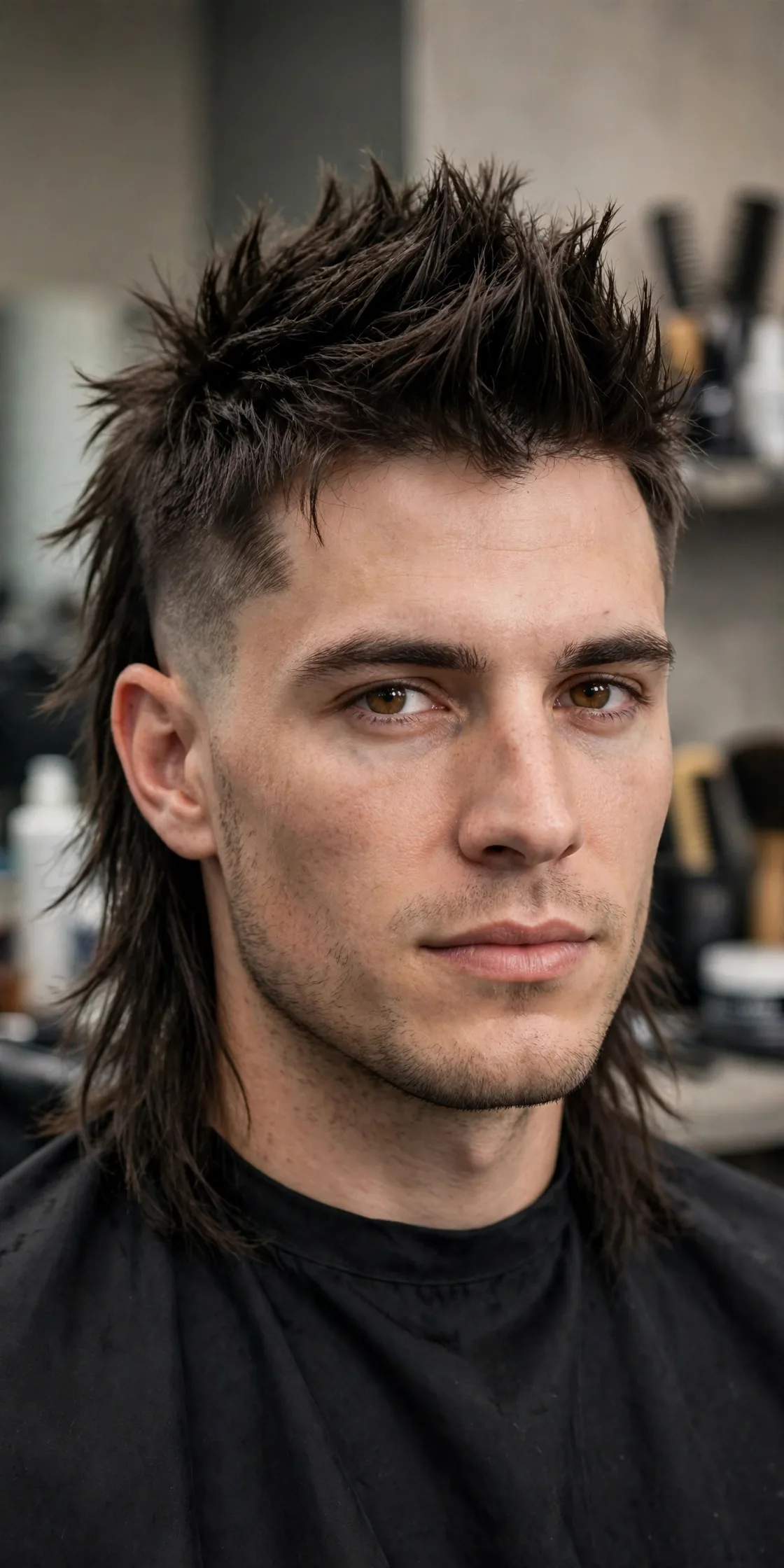
A fauxhawk strip of wolf layers down the center, sides faded tight — mohawk rebellion, wolf texture.
Ask your barber: “Mohawk-wolf — faded sides, keep a wide strip of layered wolf texture down the middle.”
Style it: Strong-hold clay spiked upward through the center strip for the full effect.
28. Retro Wolf Cut

Glam-rock throwback: rounded crown, feathered wings, soft tail — timeless enough to outlast any trend.
Ask your barber: “Retro wolf cut — rounded feathered layers, fuller at the crown, soft length in the back.”
Style it: Blow-dry with a vent brush, flicking the layers outward for that vintage wing.
29. Wolf Cut with Highlights
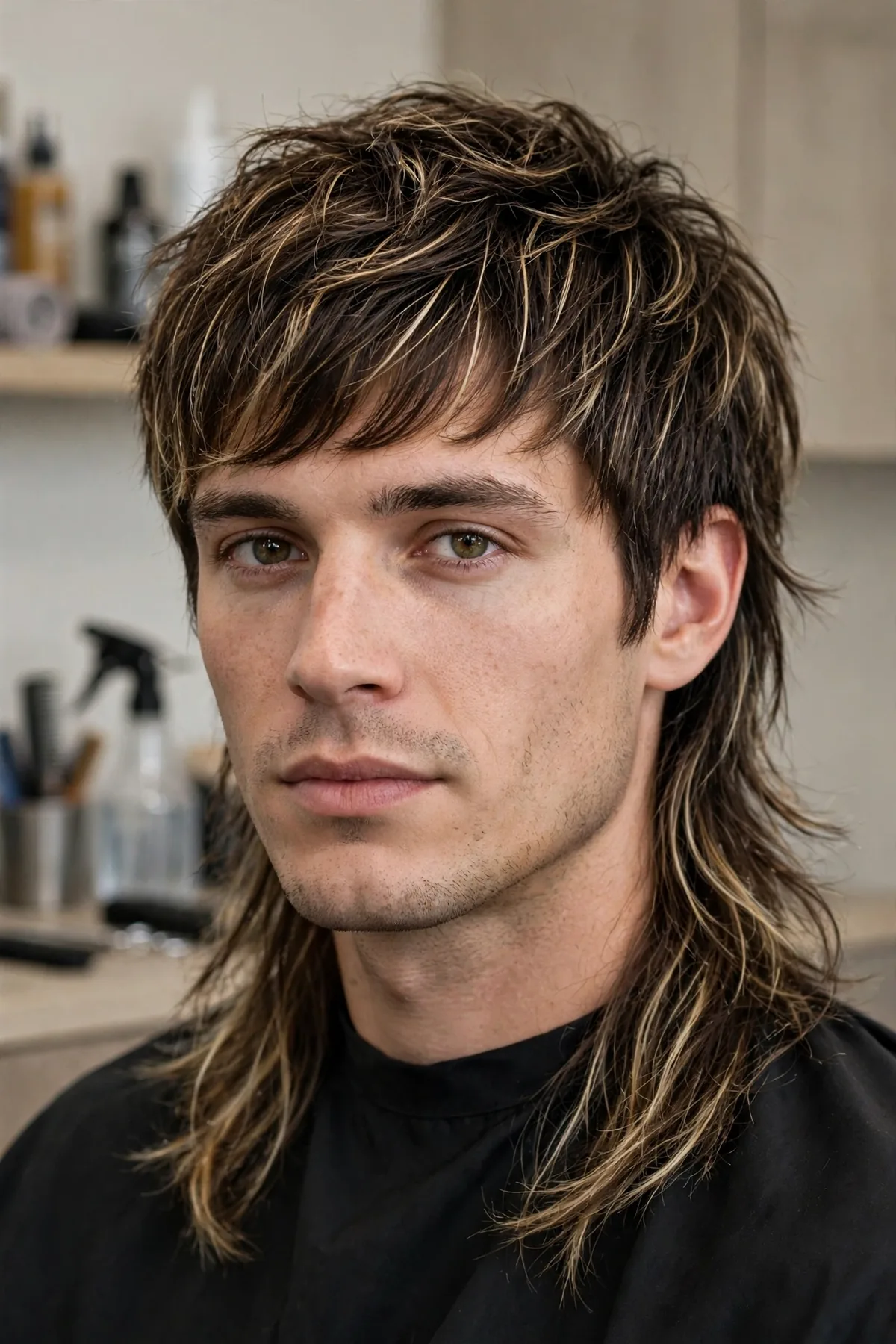
Strategic highlights add dimension without full-bleach commitment — lighter pieces make the texture look twice as deep.
Ask your barber: “Wolf cut with face-framing and crown highlights — just enough to show off the layers.”
Style it: Color-safe shampoo and a gloss treatment every couple of months keeps highlights fresh.
30. Asian Flow Wolf Cut

Built for straight, thick hair: long flowing layers that move as one, with a clean shape around the face.
Ask your barber: “Asian flow wolf cut — long smooth layers, natural fall, clean around the ears and neckline.”
Style it: Lightweight serum on the ends keeps the flow smooth and frizz-free. More length inspiration lives in our flow haircut guide.
Wolf Cut vs Shag vs Mullet
These three get confused constantly, so here is the straight answer. A wolfcut (one word or two — same thing) sits right between the other two: it has the shag’s all-over layering and the mullet’s short-front-long-back contrast, but turned up louder than either. The shag is the softest and most even of the three. The mullet is the most extreme, with the starkest difference between the short top and the long back.
| Feature | Wolf Cut | Shag | Mullet |
|---|---|---|---|
| Layering | Heavy, choppy, high-contrast | Soft, even, feathered | Minimal on top, long back |
| Front-to-back contrast | Strong | Mild | Extreme |
| Fringe | Almost always (curtain or choppy) | Usually, softer | Optional |
| Sides | Often faded or tapered | Left natural | Short or shaved |
| Vibe | Wild, modern, edgy | Relaxed, retro | Rebellious, bold |
| Maintenance | Medium | Low | Low–medium |
If you love the mullet’s attitude but want something more wearable day to day, the wolf cut is your answer — and the modern takes are covered in our modern mullet haircut guide too.
Which Wolf Cut Suits Your Face Shape and Hair Type
Round faces: Go for height on top (classic, mid fade, or textured wolf) and keep the sides tighter — vertical volume slims the face. Oval faces: You can wear almost anything; the curtain-bangs and middle-part versions look especially balanced. Square faces: Soften the jaw with curtain bangs or longer fringe pieces; avoid ultra-short crops that emphasize angles. Heart-shaped faces: Volume at the sides and back (medium or long wolf) balances a wider forehead. Long faces: Skip extreme crown height — choose wider, flatter layers like the Korean K-pop or 70s shaggy versions.
Straight hair: Razor-cut layers and texture products are essential or the cut can look flat — consider a perm if you want real movement. Wavy hair: The ideal match; layers amplify your natural pattern with almost no effort. Curly hair: The cut was practically made for curls, but insist on a dry cut so the barber sees the true length. Thick hair: Ask for serious debulking or the silhouette goes triangular. Fine hair: Shorter layers, blunt-ish ends, and volume products — details in the honest section below.
How to Style a Wolf Cut
The routine is simple — follow these steps for piecey, lived-in texture every time:
- Start with damp, towel-dried hair. The cut styles best from damp, not soaking wet and not dry.
- Work in a volumizing mousse or sea-salt spray. Distribute it evenly from roots to ends with your fingers — this is what activates the layers.
- Blow-dry with a diffuser (or your fingers). Lift at the roots and scrunch the mid-lengths upward. For curly versions, diffuse on low heat and do not touch the curls until dry.
- Pinch and separate. Take a pea-sized amount of matte clay or texture paste, rub it between your palms, and pinch the ends of random sections to sharpen the separation between layers.
- Set the fringe. Direct the bangs with your fingers or a vent brush — forward for choppy bangs, split from the center for curtain bangs.
- Finish with dry texture spray. A light mist adds grit and hold without stiffness. Shake your head once and walk out.
On non-wash days, dry shampoo at the roots brings back the grit. The whole routine takes about five minutes — one of the lowest-effort statement cuts you can wear.
What to Tell Your Barber: Exact Consultation Script
Most bad wolf cuts happen because of a vague consultation. Use this script word for word and you will walk out with what you actually pictured:
Bring 2–3 photos of the same style from different angles and say: “I want a wolf cut — here is the exact version I am going for.” Words mean different things to different barbers; photos do not.
Specify the layers: “I want short, disconnected layers on the crown with a lot of texture, falling into longer layers at the back. Please point-cut the layers — do not blunt-cut them.”
Specify the sides: “For the sides, I want [a mid fade / a burst fade / a low taper / left natural and blended] — ” and pick one. Naming the exact side treatment removes the biggest source of surprises.
Specify the fringe: “The fringe should be [curtain / choppy / textured] and hit around [eyebrow level / just above the eyes].”
Specify the back: “Keep the back at [collar length / mid-neck / shoulder length] with a tapered, textured finish — not blunt.”
Red flags — walk away or redirect if your barber: reaches for thinning shears on the entire head in the first five minutes (that is bulk removal, not layering); says “so basically a mullet?” and starts cutting without looking at your photos; refuses to point-cut or razor-cut and only blunt-cuts; or has never cut a layered style and admits it. A wolf cut is a layering cut — if the barber cannot explain how they will build the layers, find one who can.
Wolf Cut Grow-Out Timeline: From Fade to Wolf
Coming from a short fade or buzz? You cannot cut a wolf cut into short hair — you have to grow into it. Here is the honest timeline:
Minimum starting length: You need roughly 3–4 inches on top and 2+ inches at the back before a barber can shape real layers. From a fresh fade, that is typically 4–6 months of growing.
Weeks 1–8: The awkward phase. Hair looks puffy and shapeless. Fix: get the sides cleaned up every 3–4 weeks while leaving the top and back alone, and wear a little texture product to fake shape.
Months 3–4: Enough length to start. Book the cut when the top hits about 3 inches — the barber can now build the crown layers and begin the taper at the back.
Months 5–6: The cut hits its stride. Layers settle, the silhouette reads clearly, and styling gets easier every week as length increases.
Maintenance rhythm: Once you have it, trim every 4–8 weeks. Shorter versions need the 4-week end of that range (the shape collapses faster); longer versions can stretch to 8. Between trims, keep the neckline and sideburns tidy yourself or with a quick barber cleanup.
How Much Does a Wolf Cut Cost in the US
Prices vary by city and barber experience, but here is what to expect for a wolf cut across the country:
| Service | Typical US Price Range |
|---|---|
| Standard wolf cut (barbershop) | $35 – $65 |
| Wolf cut with fade detail (barbershop) | $45 – $75 |
| Wolf cut at a salon (stylist) | $60 – $120 |
| Wolf cut + full color/bleach | $120 – $250+ |
| Wolf cut + perm | $100 – $200+ |
| Maintenance trim (4–8 weeks) | $25 – $50 |
Big-city shops and senior stylists sit at the top of each range. Technique matters more than price, though — check the shop’s portfolio for layered cuts before you book.
Wolf Cut on Thinning Hair: An Honest Take
Here is the truth most style blogs skip: the wolf cut is not ideal for significant thinning, and you deserve to hear why. The cut’s whole identity is heavy layering and texture — and layers remove weight, which is the opposite of what thinning hair needs. On a thinning crown, aggressive layers can expose the scalp and make hair look sparser than it is.
When it can still work: If your thinning is mild and mostly at the temples (not the crown), a shorter wolf cut with blunt-ish ends can create the illusion of density. The texture distracts the eye, and keeping layers short preserves what fullness you have.
When to skip it: If the crown is visibly thinning or you are dealing with real hair loss on top, choose a cut that keeps weight instead — a textured crop or a classic taper haircut will serve you far better. No haircut fixes thinning; the right one just does not advertise it.
If you are on the fence, ask your barber directly: “Be honest — is my density enough for heavy layers?” A good barber will tell you the truth, and that answer is worth more than any article.
Permed Wolf Cut: Cost and Upkeep
A perm is the most popular add-on for this cut among guys with straight hair, because it manufactures the wave the layers were designed to show off. Here is what you are signing up for:
Cost: Expect $100–$200+ at a salon, depending on your city and hair length. Longer hair costs more because it needs more rods and solution. Some barbershops offer perms cheaper ($70–$120), but make sure they do them regularly — a bad perm is months of regret.
Upkeep: The perm lasts roughly 2–4 months as it gradually loosens. Use sulfate-free shampoo, condition every wash, and never brush it dry — brushing destroys the wave pattern and creates frizz. Curl cream on damp hair, then diffuse or air-dry. Re-perm when the roots grow out straight and the contrast starts looking odd, usually around month 3.
The honest math: A perm adds real maintenance and real money. If you are not ready for sulfate-free products and hands-off drying, skip the perm and choose a version that suits your natural texture — the wavy, messy, or natural low-maintenance wolf cuts all work beautifully on straighter hair with the right products.
Wolf Cuts in the Workplace
Can you wear a wolf cut to the office? It depends on the version — and the office. Here is a realistic breakdown:
Usually office-safe: Short wolf cut, low taper wolf cut, middle-part wolf cut, Korean K-pop wolf cut, natural low-maintenance wolf cut. These read as “stylish textured haircut” rather than “statement.” Keep the fringe neat and the neckline clean and most managers will not blink.
Borderline — know your workplace: Medium wolf cut, curtain bangs wolf cut, textured wolf cut. Fine in creative fields, agencies, tech, and retail; risky in finance, law, or client-facing corporate roles with strict grooming codes.
Probably not for conservative offices: Long wolf cut, mullet-hybrid, undercut wolf, edgy mohawk wolf, platinum blonde, two-tone. These are weekend and creative-industry cuts — wear them proudly, just not to the partner meeting.
The universal rule: Neatness matters more than the cut itself. A well-kept medium wolf cut reads more professional than a sloppy “safe” haircut. Clean neckline, controlled fringe, no visible product buildup — that is what separates stylish from unkempt in any workplace.
7 Wolf Cut Mistakes to Avoid
- Getting it cut too short. A wolf cut needs length to layer — under 2 inches on top, there is nothing to texture.
- Skipping the reference photos. “Wolf cut” means five different things to five different barbers. No photos, no guarantee.
- Letting the barber thin it to death. Over-thinning destroys the layer structure and leaves wispy, see-through ends.
- Using too much product. Heavy product collapses the layers and kills the airy texture. Start with half what you think you need.
- Ignoring the grow-out trims. The shape dies without maintenance — a quick cleanup every 6 weeks keeps the silhouette alive.
- Choosing the wrong version for your hair type. Pin-straight hair plus long layers with no product plan equals a flat curtain — match the version to your texture.
- Forgetting the back. Everyone styles the front and forgets the tail — the back is half the haircut. Sea-salt spray and a scrunch back there too.
Frequently Asked Questions
Is the wolf cut still trending?
Yes — the wolf cut remains one of the most requested layered cuts in barbershops right now. It has moved past flash-trend status into a modern staple because it suits so many hair types and grows out gracefully.
What is the difference between a wolf cut, a shag, and a mullet?
The wolf cut sits between the two: it has the shag’s all-over layering with stronger front-to-back contrast, and the mullet’s short-top-long-back attitude with softer blending. Think of it as a shag turned up louder and a mullet smoothed out — wilder than the shag, more wearable than the mullet.
Does the wolf cut work on curly hair?
It is one of the best cuts for curly hair. The layers give each curl room to form at a different length, building natural volume and shape. Ask for a dry cut so the barber sees your true curl length.
Can I get a wolf cut with thin hair?
It depends on the degree of thinning. Mild thinning at the temples can work with a shorter wolf cut that keeps blunt-ish ends for density. But significant crown thinning and heavy layering do not mix — the layers expose the scalp. Be honest with your barber about your density before committing.
How often should I get a wolf cut re-cut?
Every 4–8 weeks. Shorter, high-contrast versions need reshaping around week 4–5, while longer versions can stretch to 8 weeks. Between full cuts, a quick neckline and sideburn cleanup every 2–3 weeks keeps it looking intentional.
How do I ask my barber for a wolf cut?
Bring 2–3 reference photos of the exact version you want, then say: “I want a wolf cut with short disconnected layers on the crown, longer textured layers at the back, and [curtain/choppy] bangs.” Specify the sides (fade, taper, or natural) and the back length. Photos plus specifics beat vague descriptions every time.
Conclusion
The wolf cut haircut earned its place as a modern classic for a simple reason: it is one of the few bold men’s hairstyles that actually makes your life easier. The layers create volume and movement on their own, it forgives skipped styling days, and it grows out better than almost any other statement cut.
Whether you go short and office-safe, long and dramatic, or faded and edgy, the formula is the same — great reference photos, a barber who understands layering, and five minutes of texture product in the morning. Pick your version from the 30 above, book the chair, and let the layers do the talking.