30 Best Old Money Haircuts for Men

An old money haircut for men never shouts. It whispers. While trendy cuts fight for attention, the old money look wins with quiet confidence — clean lines, soft finishes, and a shape that looks expensive without trying.
Think of the men who seem polished without effort. Boardroom leaders. Ivy League graduates. Classic film stars. Their hair is always neat, always sharp, never overdone. That is the old money haircut.
An old money men’s haircut is really just a classy haircut done right — a sophisticated haircut with soft edges and natural movement. Many men search for “men’s old money haircut” styles because they want that quiet, wealthy look without saying a word.
This guide to the old money haircut men everywhere are asking for gives you 30 styles. Each one comes with an exact barber script — guard numbers, lengths, and wording — so you leave the chair with the cut you pictured.
What Makes a Haircut “Old Money”?
Old money haircuts share a few clear traits. The sides are neat and tapered, never skin-bald and harsh. The top has some length — enough to part, brush, or sweep. The finish is natural, with a light product sheen instead of a wet, crunchy look.
These cuts sit between very short and long. Most old money styles keep 2 to 4 inches on top. They grow out gracefully. A trim every 4 to 6 weeks keeps the shape tight.
They work on straight and wavy hair best. But with the right tweaks, thick, fine, and curly hair can wear the look too. We cover that below.
The Classics: Timeless Old Money Foundations
Start with the legends. These are the cuts that built the old money name. If you want safe, proven, and sharp, pick from this group.
1. The Ivy League Cut
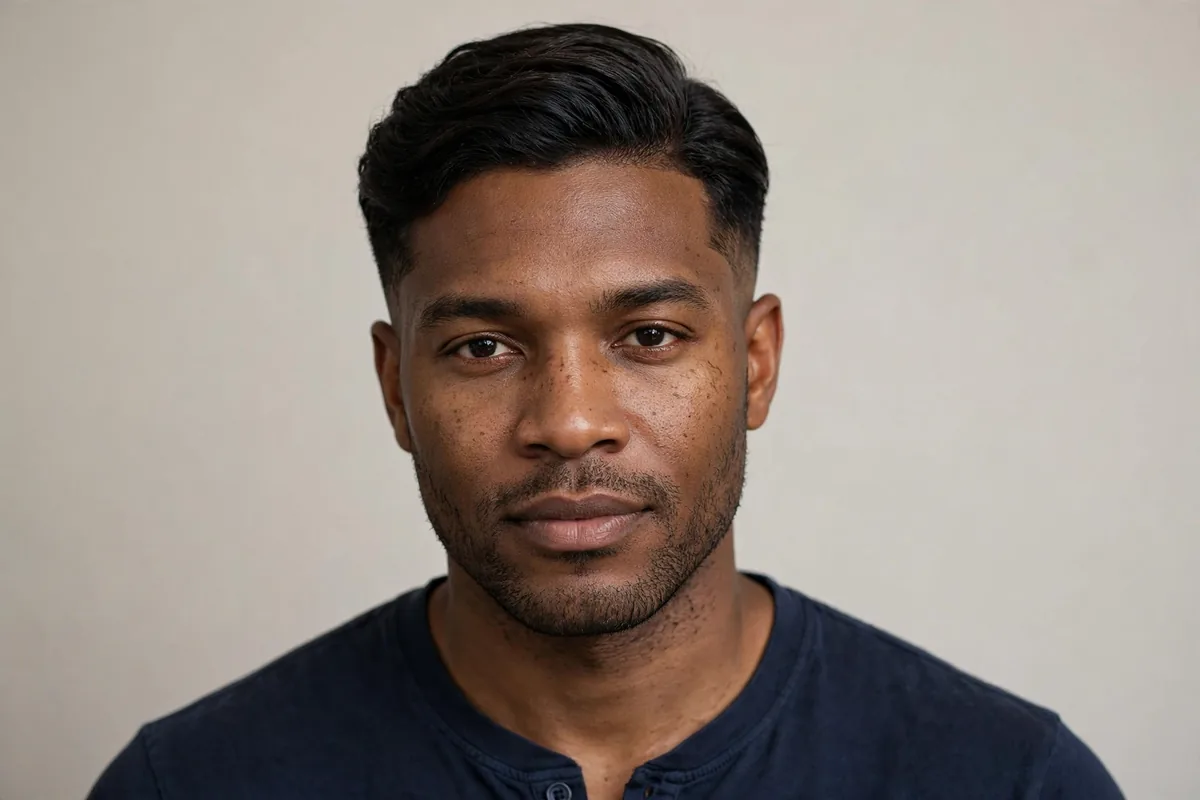
What it is: The most famous old money haircut. A longer crew cut with tapered sides and 1.5 to 2 inches on top. It sweeps softly to one side. Clean, preppy, and works almost everywhere.
Best for: Straight or slightly wavy hair. Oval, rectangular, and round face shapes.
Ask your barber: “Ivy League cut — keep 1.5 to 2 inches on top, textured and swept to the side. Sides a number 3 fading to a 2 at the hairline, tapered clean with no hard lines.”
Style it: A dime-size drop of matte clay on damp hair. Brush to the side with your fingers. Done in two minutes.
2. The Classic Side Part
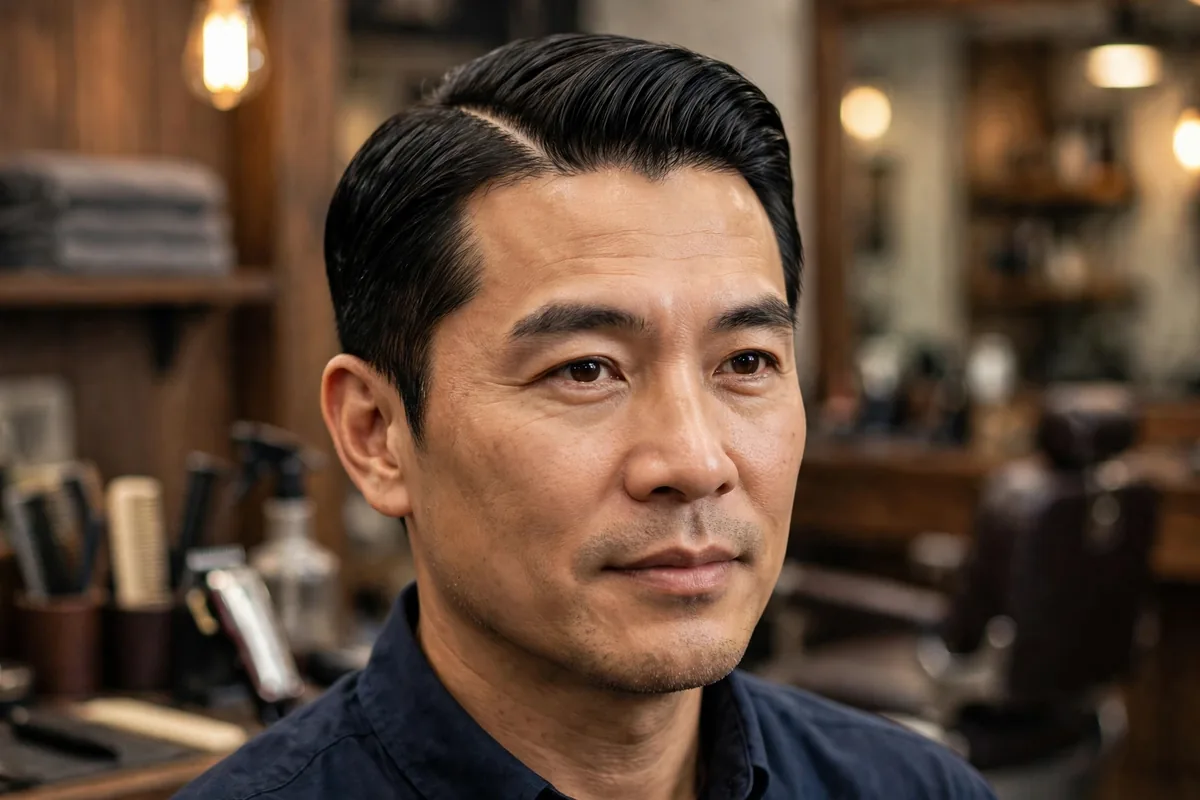
What it is: The symbol of old money grooming. A clean part line, hair combed smoothly to each side. Orderly, mature, and balanced.
Best for: Straight hair and any face shape. Great for office workers and formal events.
Ask your barber: “Classic side part — 2.5 to 3 inches on top so it combs flat, sides a scissor-cut taper keeping about 1 inch, natural neckline. Define the part with the corner of the comb.”
Style it: Pomade with medium hold on damp hair. Comb from the part outward. Finish with a light hairspray if the day is long.
3. The Gentleman’s Slick-Back
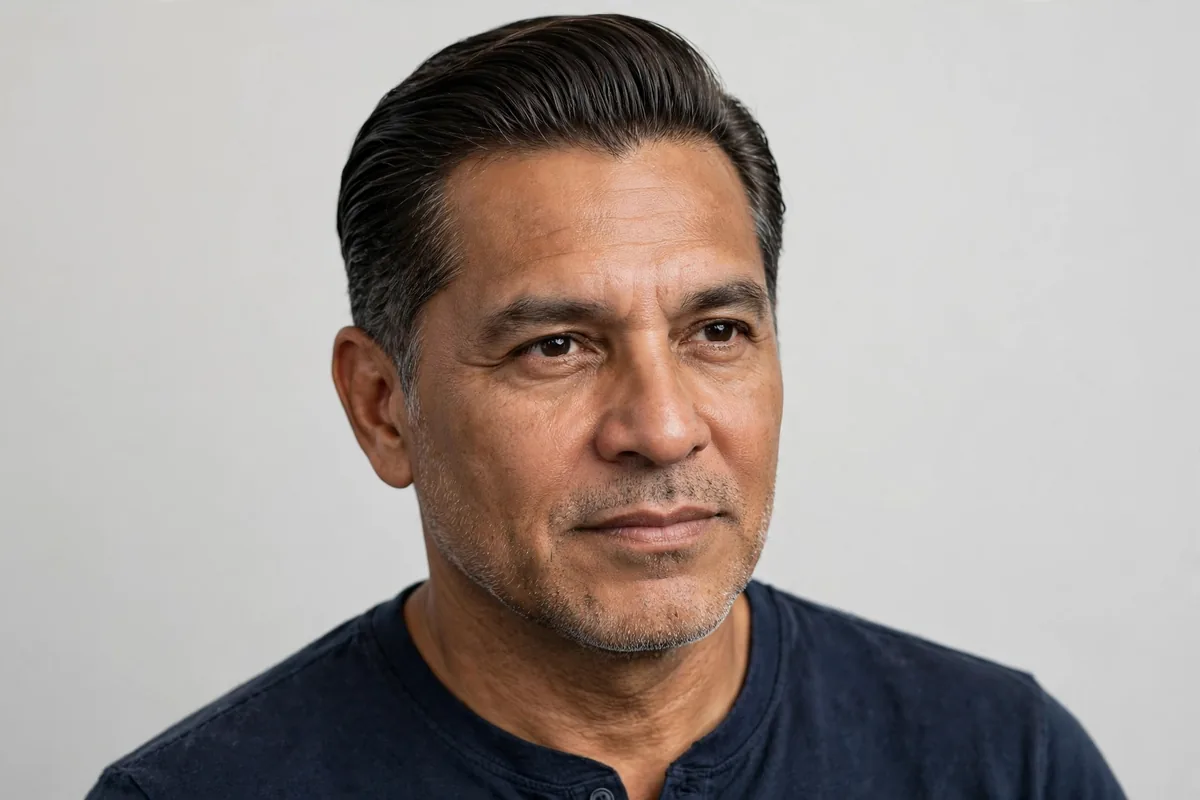
What it is: Hair brushed straight back from the forehead. Smooth, full, and commanding. It shows confidence without a single harsh line.
Best for: Medium to thick hair. Square and oval faces. Men who like a bold, polished finish.
Ask your barber: “Slick-back — 3 to 4 inches on top, layered so it lies flat. Sides faded from a 3 down to a 2, blended smooth. Keep the top one length at the back.”
Style it: Styling cream on towel-dried hair. Brush back with a vented brush while blow-drying. Add pomade for hold.
4. Short Back and Sides with Tapered Top
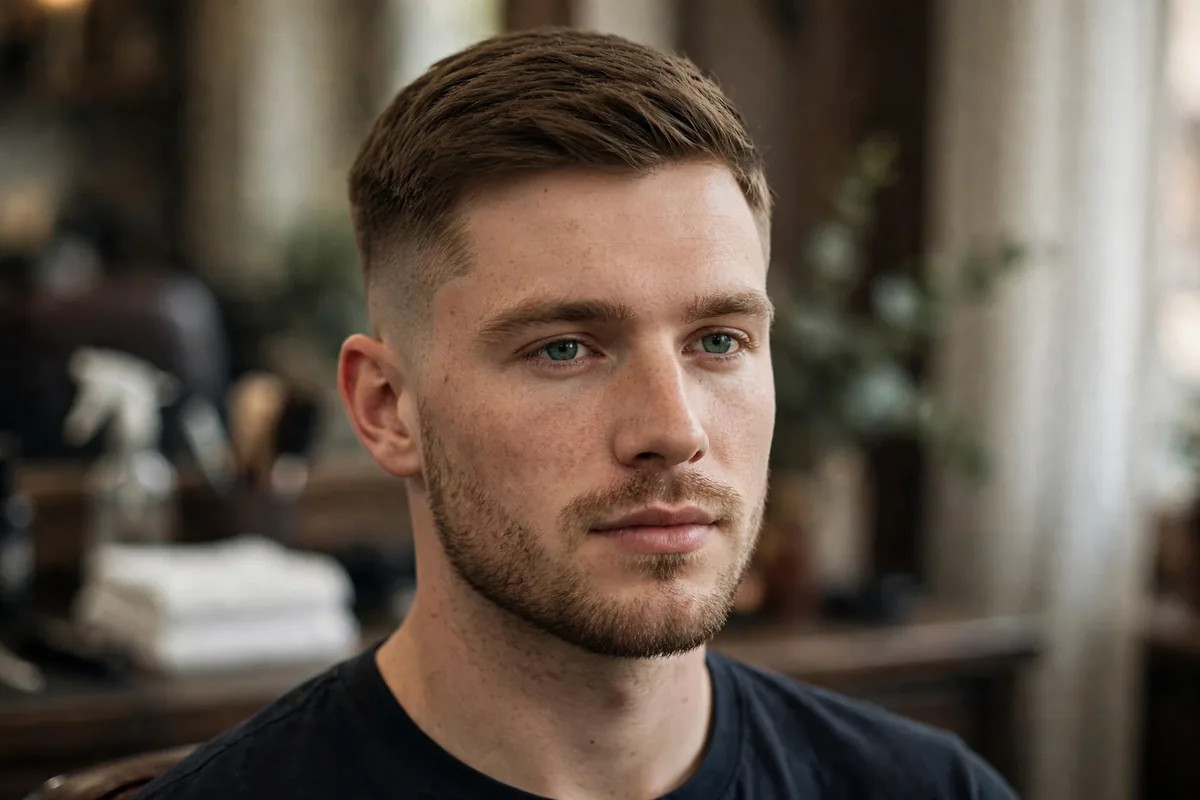
What it is: The quiet workhorse of old money cuts. Short, neat sides with a soft tapered top. It always looks controlled, even on day two.
Best for: Men who want low effort. Works on straight, wavy, and thick hair.
Ask your barber: “Short back and sides — top scissor-cut to 1.5 inches with light texture, sides a number 2 tapering to a 1 at the edges. Square the neckline, soft.”
Style it: A pea-size amount of matte paste. Push the top forward and slightly up. It holds all day.
5. The Tapered Executive Contour
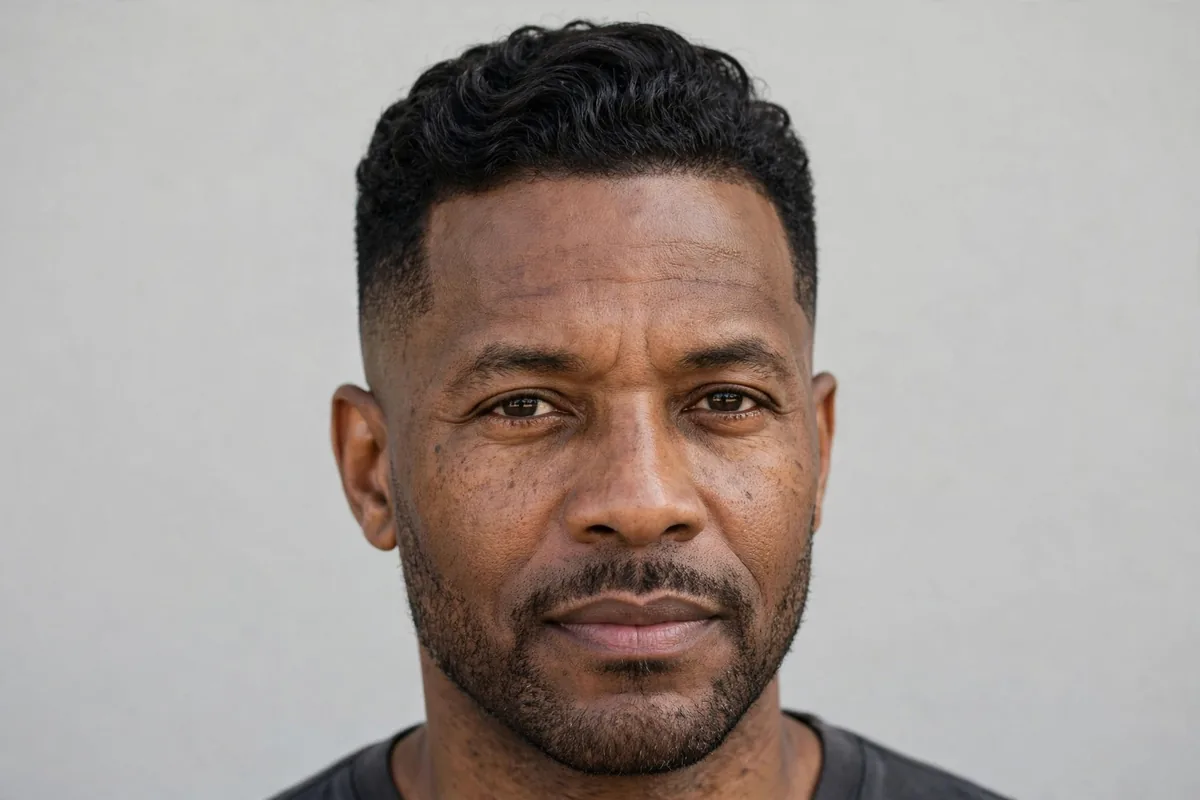
What it is: A boardroom classic. Gradual taper on the sides, longer top that contours to the head. Sharp edges, soft middle.
Best for: Professionals. Straight hair. Round faces — the contour adds height.
Ask your barber: “Executive contour — 2 inches on top, sides tapered from a 4 at the crown to a 2 at the sideburns. Blend the crown smooth, keep a natural part.”
Style it: Light-hold cream, combed back and slightly to the side. The contour should show.
Modern Old Money Fades and Tapers
Old money haircuts do not use skin fades or hard designs. But a soft taper keeps the cut fresh. This group pairs classic tops with clean, quiet tapers.
6. The Preppy Taper
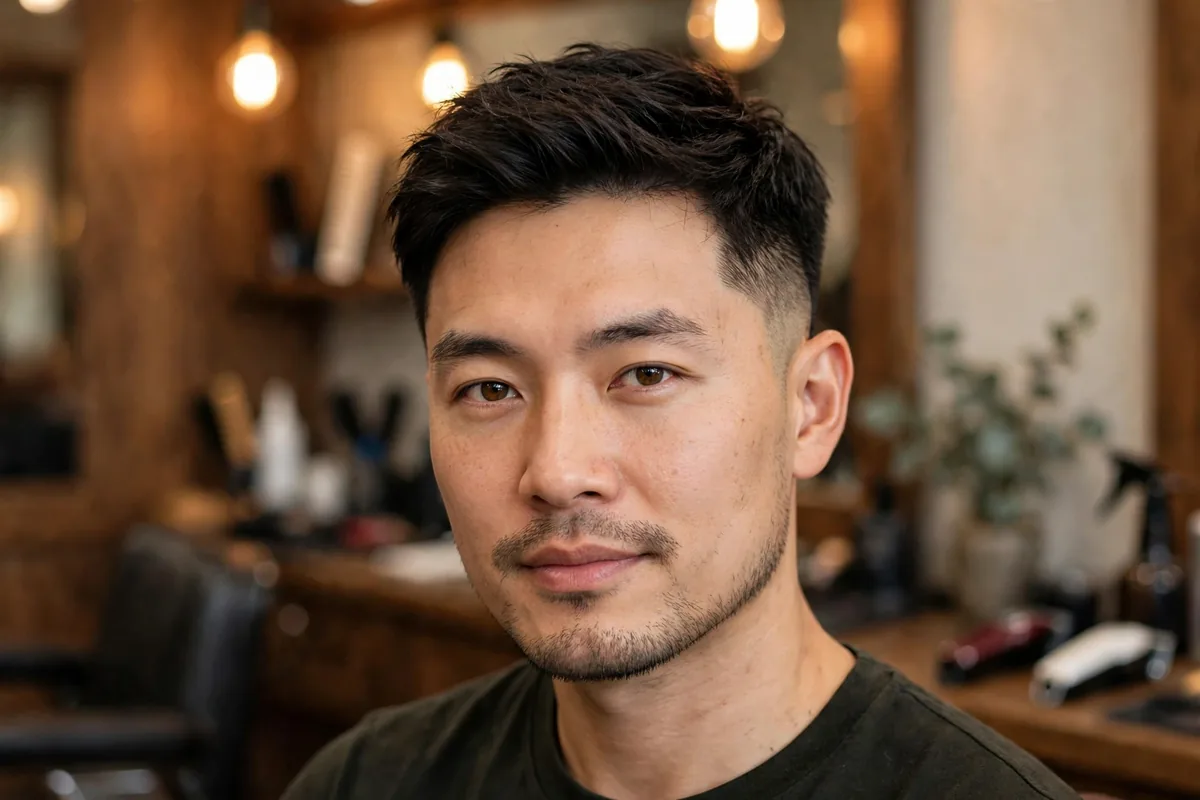
What it is: The modern classic. A smooth taper on the sides with a neat, slightly longer top. It bridges college and career.
Best for: Young professionals. Wavy or straight hair. Oval and heart faces.
Ask your barber: “Preppy taper — 2 to 2.5 inches on top with texture, sides tapered from a 3 down to a 0.5 at the nape. No harsh lines, keep it soft.”
Style it: Sea salt spray on damp hair for wave, then a touch of cream. Brush to the side.
7. The Low Taper Old Money
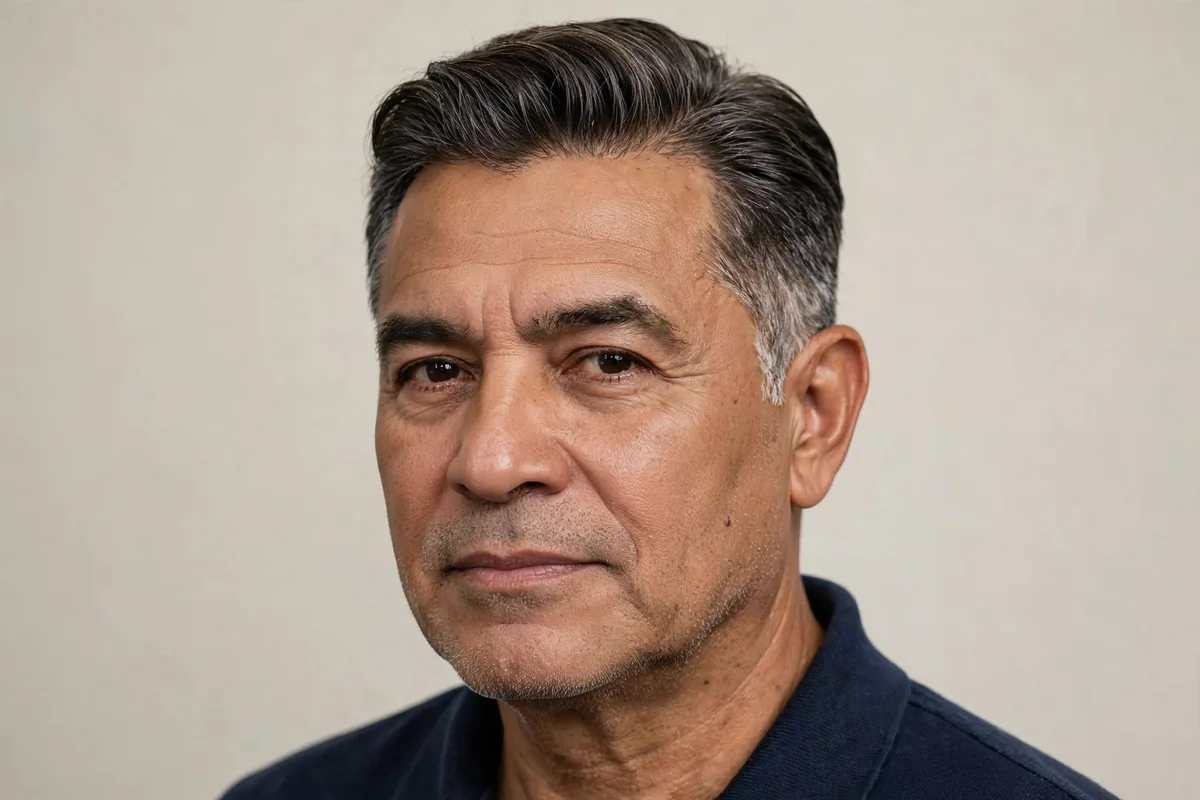
What it is: The taper stays low, near the ears and neckline. The top keeps its full, classic shape. Subtle and sharp.
Best for: Men growing out their hair. Anyone who wants a taper without a “faded” look.
Ask your barber: “Low taper only — clean up around the ears and nape with a 1 guard, fading up half an inch. Leave the sides long, about 2 inches, blended with scissors.”
Style it: Pomade, side part. The low taper shows in profile, not from the front.
8. The Side Part with Tapered Sides
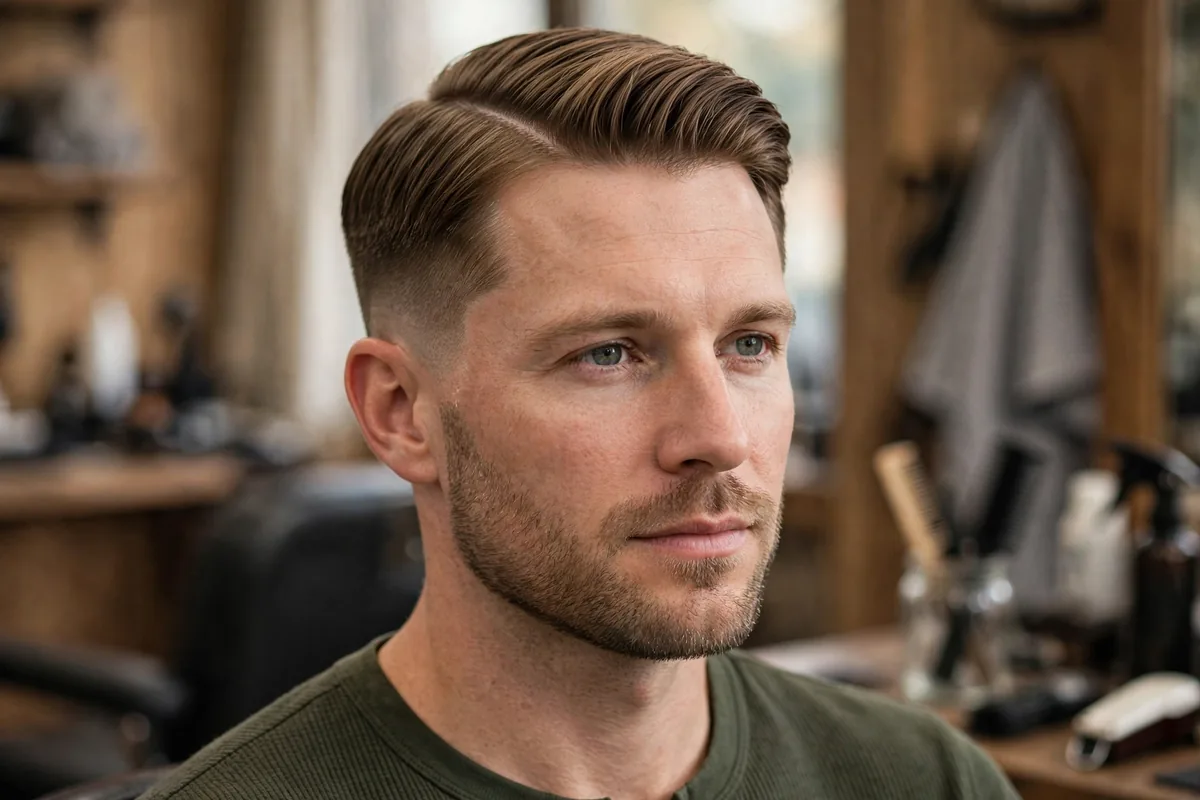
What it is: The classic side part, updated. Same sharp part line, but the sides taper down instead of staying long. Fresher, same class.
Best for: Straight and wavy hair. Square faces — the taper softens the jaw.
Ask your barber: “Side part on top, 2.5 inches, combed to the right. Sides a mid taper from a 3 to a 1. Keep the part line sharp.”
Style it: Pomade on damp hair, comb along the part. A round brush adds volume if your hair is flat.
9. The Scissor-Cut Taper
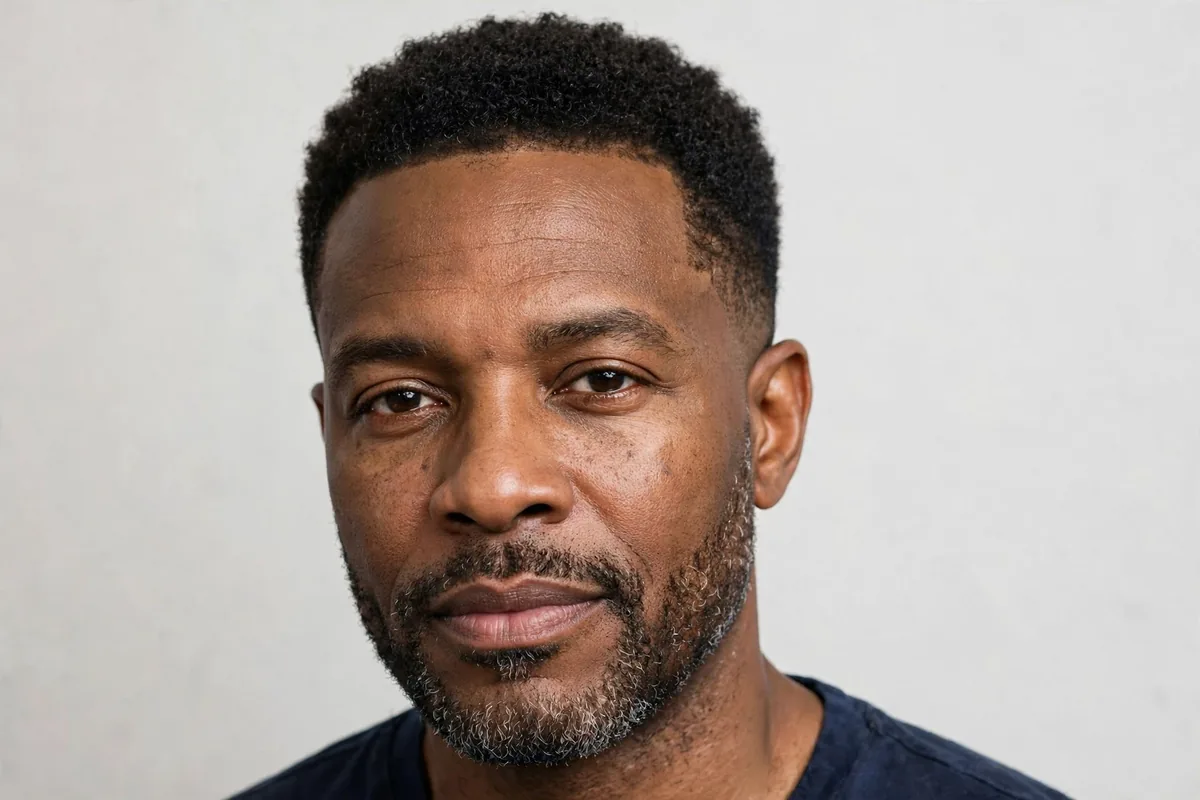
What it is: No clippers on the sides at all. The whole cut is done with scissors. The softest, most natural taper money can buy.
Best for: Fine hair. Men who hate the “just faded” look. Longer grow-outs.
Ask your barber: “Scissor taper all over — sides blended from 1.5 inches at the top of the ear to 0.75 at the bottom, no clippers. Top 2.5 inches, natural flow.”
Style it: Light cream. Finger-comb back. It should look like you woke up well-groomed.
10. The Brush-Back with Tapered Sides

What it is: Everything brushed away from the face over neat tapered sides. Simple, strong, and very old money.
Best for: Straight hair with some thickness. Oval and square faces.
Ask your barber: “Brush-back — 3 inches on top, one length. Sides tapered from a 2.5 to a 1. Keep weight at the crown so it brushes flat.”
Style it: Cream on damp hair. Brush straight back while blow-drying down. One pass of pomade seals it.
Polished Texture and Volume
Old money hair is never flat and lifeless. But the volume is soft, never spiky. This group adds natural lift while keeping everything neat.
11. The Textured Brush-Up
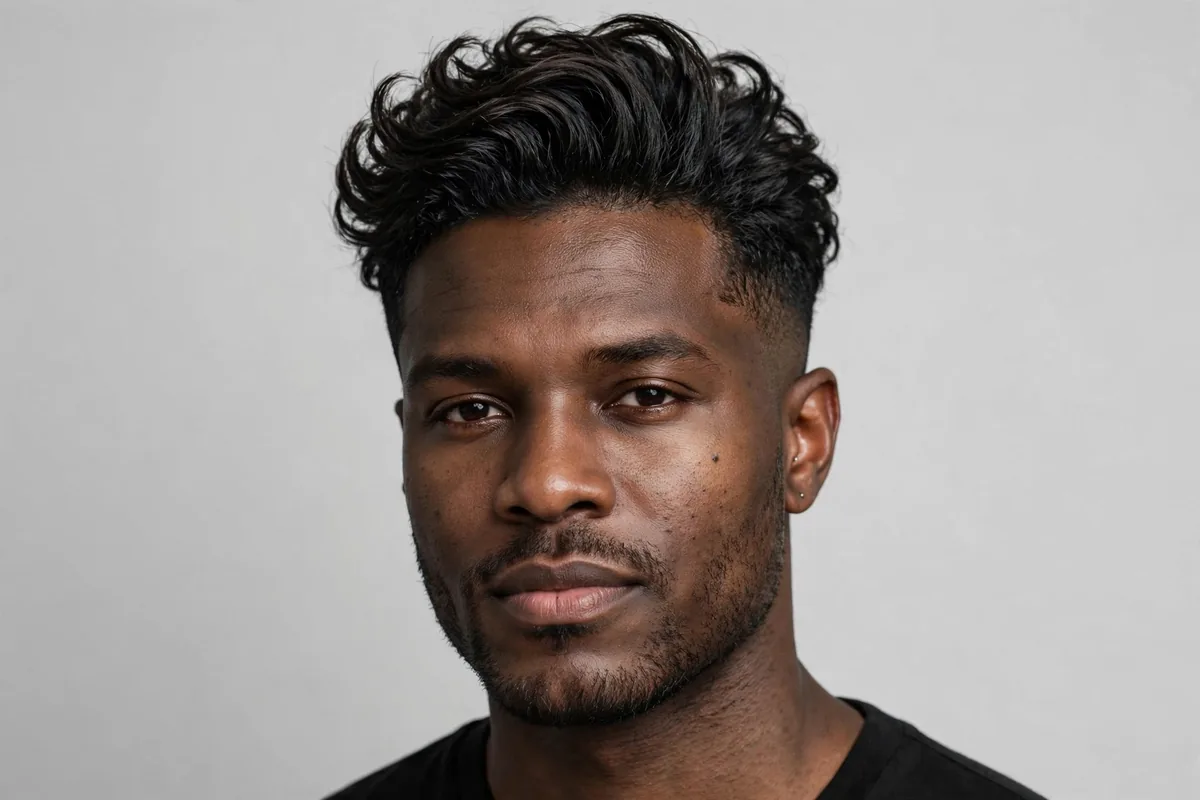
What it is: The top lifted up and back with light texture. Volume without mess. It reads youthful but still refined.
Best for: Straight and wavy hair. Round faces — the height adds length to the face.
Ask your barber: “Textured brush-up — 2.5 to 3 inches on top with point-cut texture, sides a number 2 with a soft taper. Keep the front longest so it lifts.”
Style it: Matte clay on dry hair. Push up and back with your fingers. Let the texture show.
12. The Side-Swept Ivy
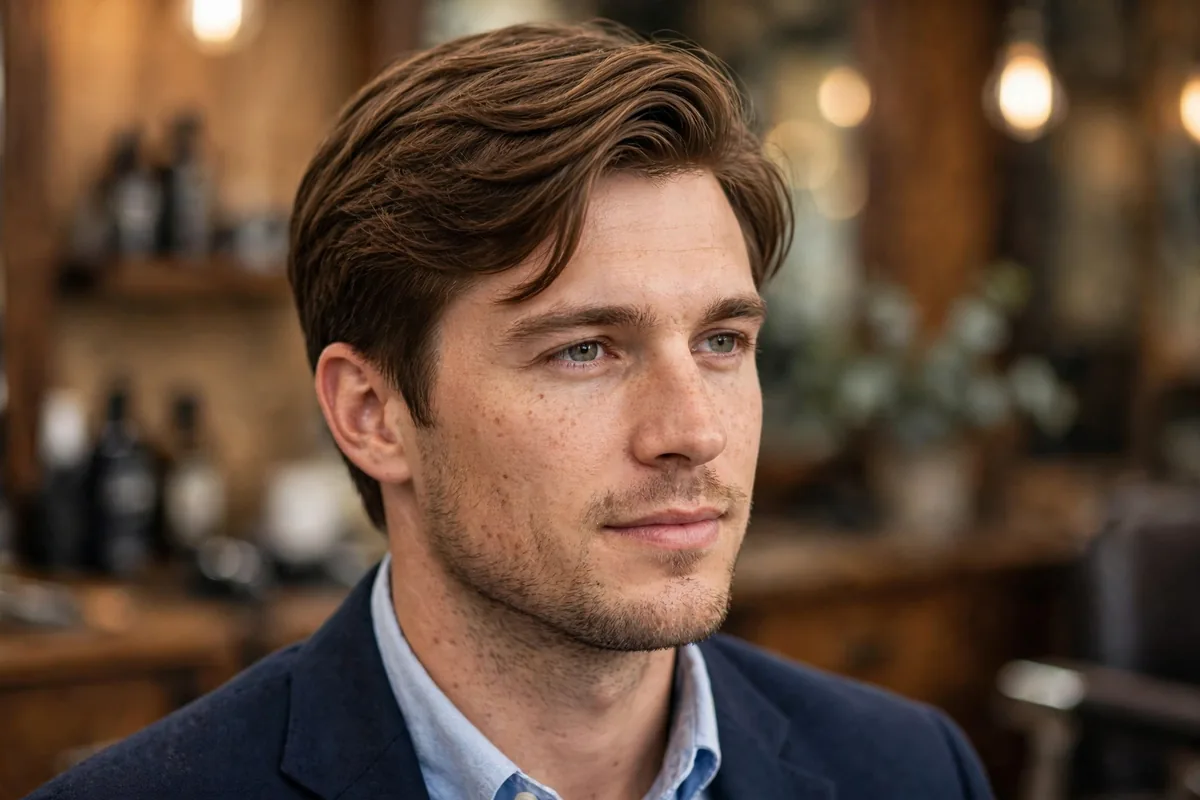
What it is: The Ivy League’s relaxed cousin. Same shape, but the top sweeps loosely instead of lying flat. Effortless polish.
Best for: Wavy hair. Heart and oval faces. Men who hate stiff styles.
Ask your barber: “Ivy with a loose sweep — 2 inches on top, sides a 3 tapering to a 2. Thin the top slightly so it sweeps without bulk.”
Style it: Sea salt spray on damp hair. Sweep across with fingers. No comb needed.
13. The Soft Quiff

What it is: A gentle lift at the front, brushed back. Not the tall rockabilly quiff — a quiet, grown-up version.
Best for: Thick hair. Long and oval faces. Adds presence without flash.
Ask your barber: “Soft quiff — 3 inches at the front, 2 inches at the crown. Sides a scissor taper keeping 1.25 inches. Blend so the quiff flows back.”
Style it: Pre-styler on damp hair, blow-dry the front up and back. Finish with light-hold cream.
14. The Textured Slick-Back
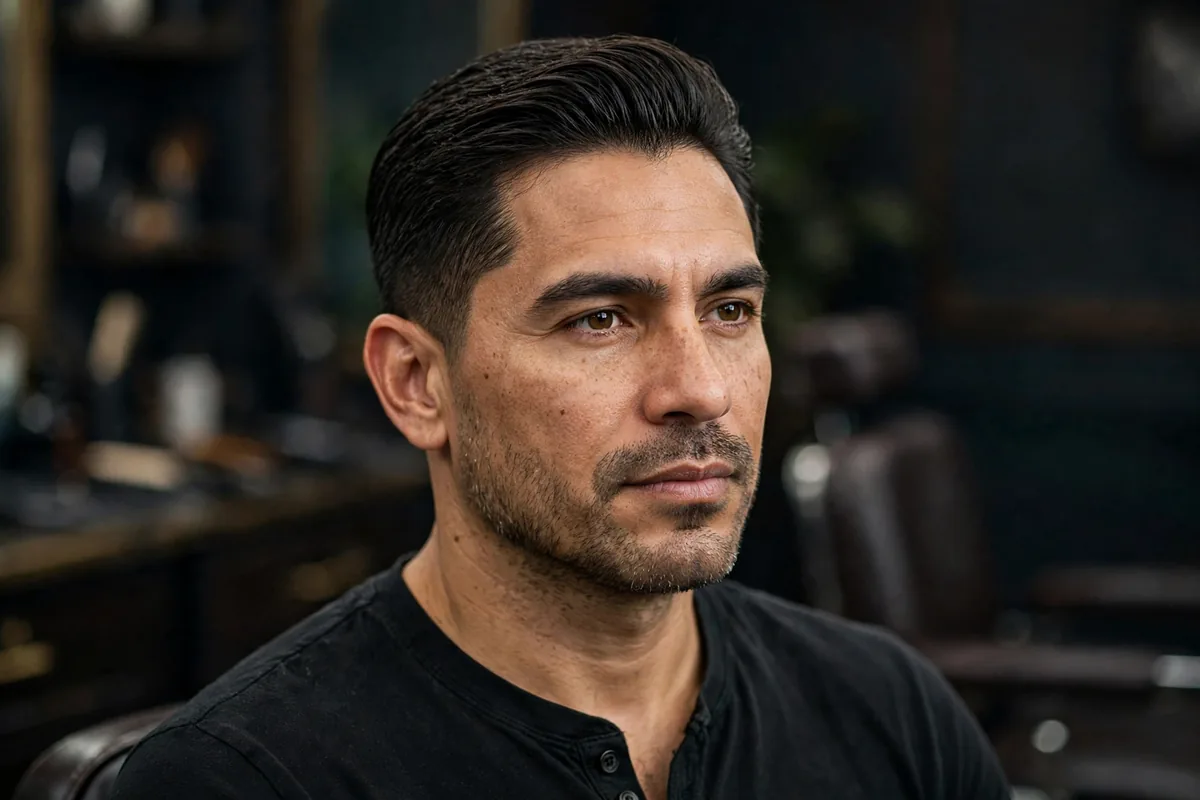
What it is: The slick-back’s easygoing brother. Same brushed-back shape, but with matte texture instead of high shine.
Best for: Wavy and thick hair. Men who want the slick-back shape without the wet look.
Ask your barber: “Textured slick-back — 3 to 3.5 inches on top, heavily textured. Sides a 2 fading to a 1. Keep it matte.”
Style it: Matte paste on dry hair. Push back with fingers. The texture does the work.
15. The Natural Wave Cut
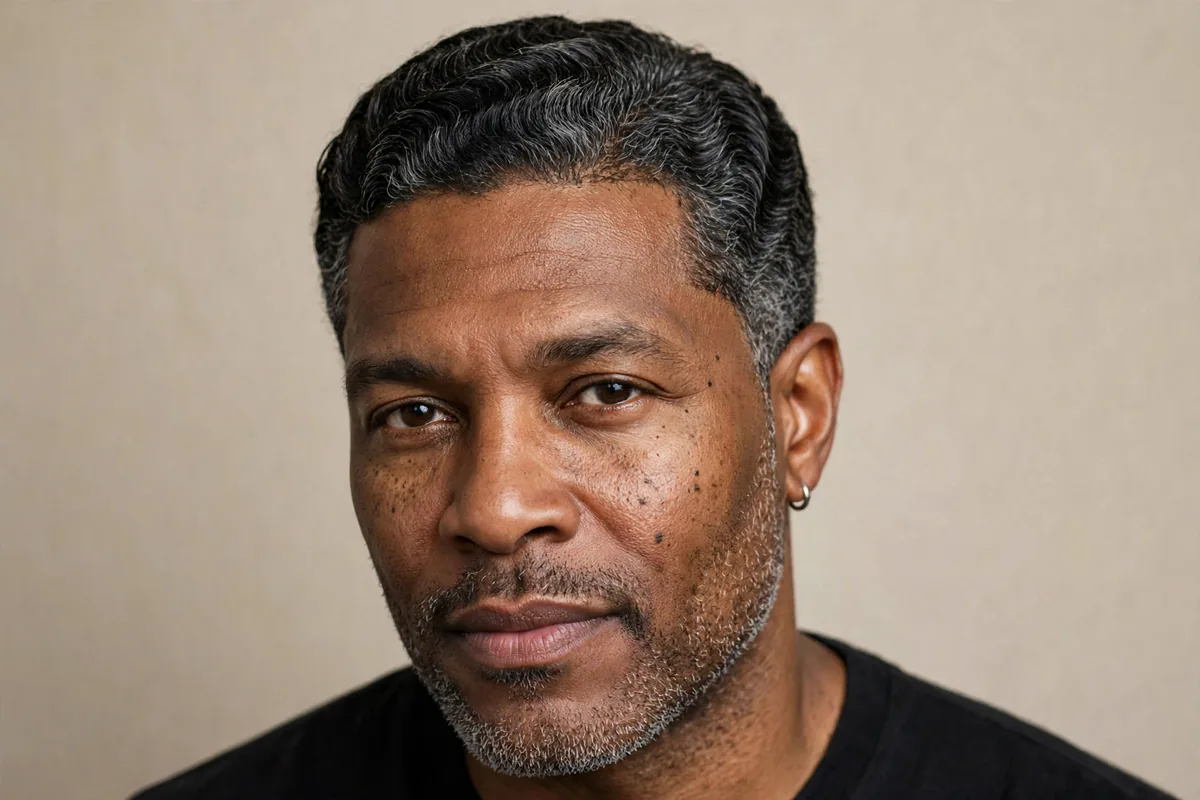
What it is: Works with your waves instead of fighting them. Medium length, shaped so the wave pattern looks intentional.
Best for: Naturally wavy hair. Any face shape. The easiest old money cut if you have waves.
Ask your barber: “Shape my waves — 3 inches on top, layered to control bulk. Sides tapered from a 3 to a 2. Cut with the wave pattern, not against it.”
Style it: Curl cream on damp hair. Scrunch lightly. Let it air-dry or diffuse.
Refined Length: Longer Old Money Styles
Longer hair can still be old money. The key is shape and grooming. These cuts keep length but stay neat — no straggly ends, no wild volume.
16. The Longer Slick-Back
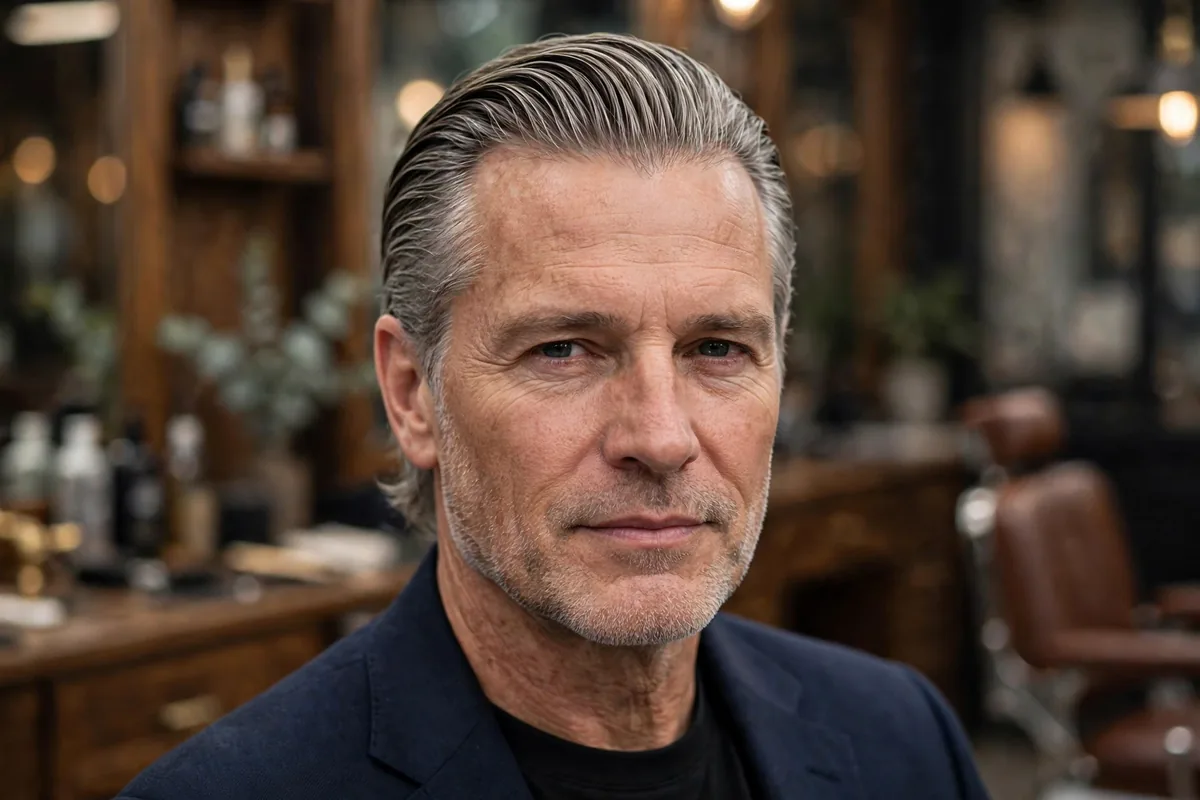
What it is: The classic slick-back with extra length. Four to five inches swept back. Dignified and striking.
Best for: Thick, straight hair. Men with the patience to grow it out.
Ask your barber: “Longer slick-back — 4 to 5 inches on top, one length, layered at the ends. Sides a 3 blending into the top. Thin the bulk underneath.”
Style it: Cream on damp hair, blow-dry back with a brush. Pomade adds the soft sheen.
17. The Polished Flow
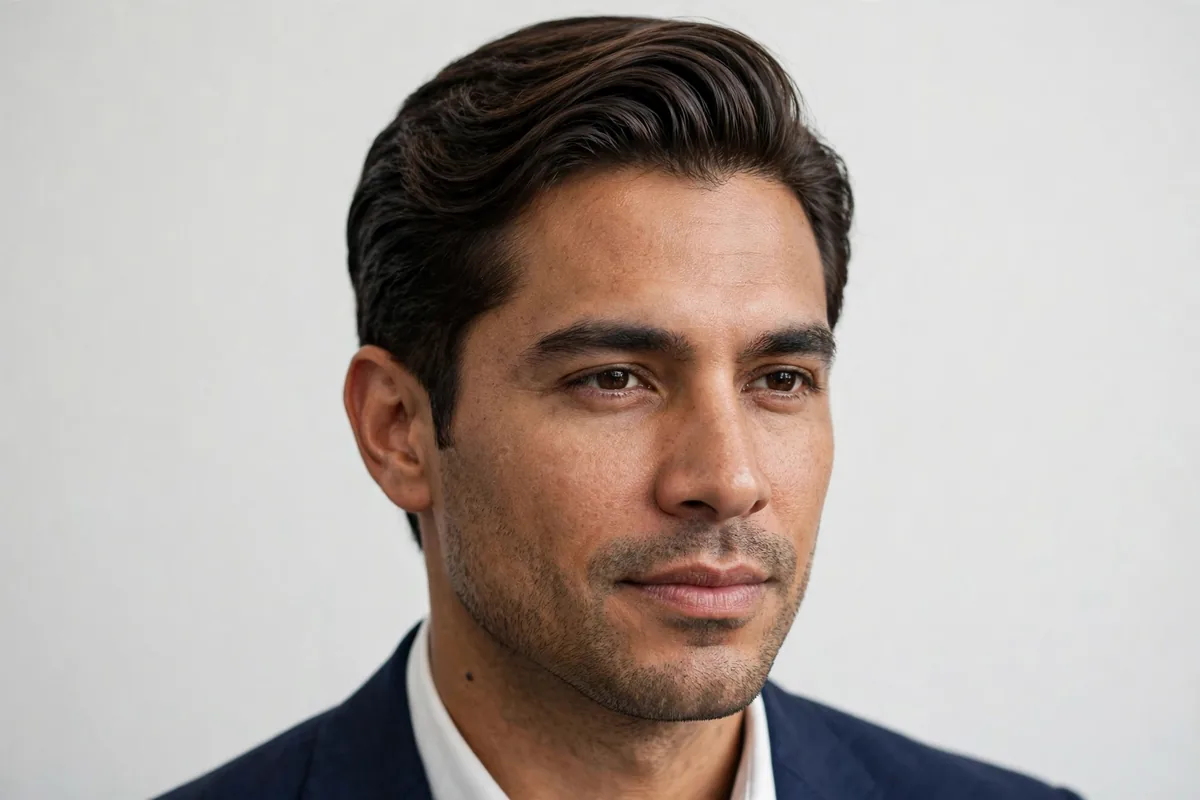
What it is: Medium length swept back in a smooth flow. Not the messy surfer flow — a groomed, held-together version.
Best for: Wavy and straight hair. Oval faces. Men between short and long.
Ask your barber: “Polished flow — 4 inches all over on top, sides 2.5 inches blended up. Layer the ends so it moves but stays neat.”
Style it: Styling cream on damp hair. Brush back and let it set. A little hairspray keeps flyaways down.
18. The Side-Parted Flow
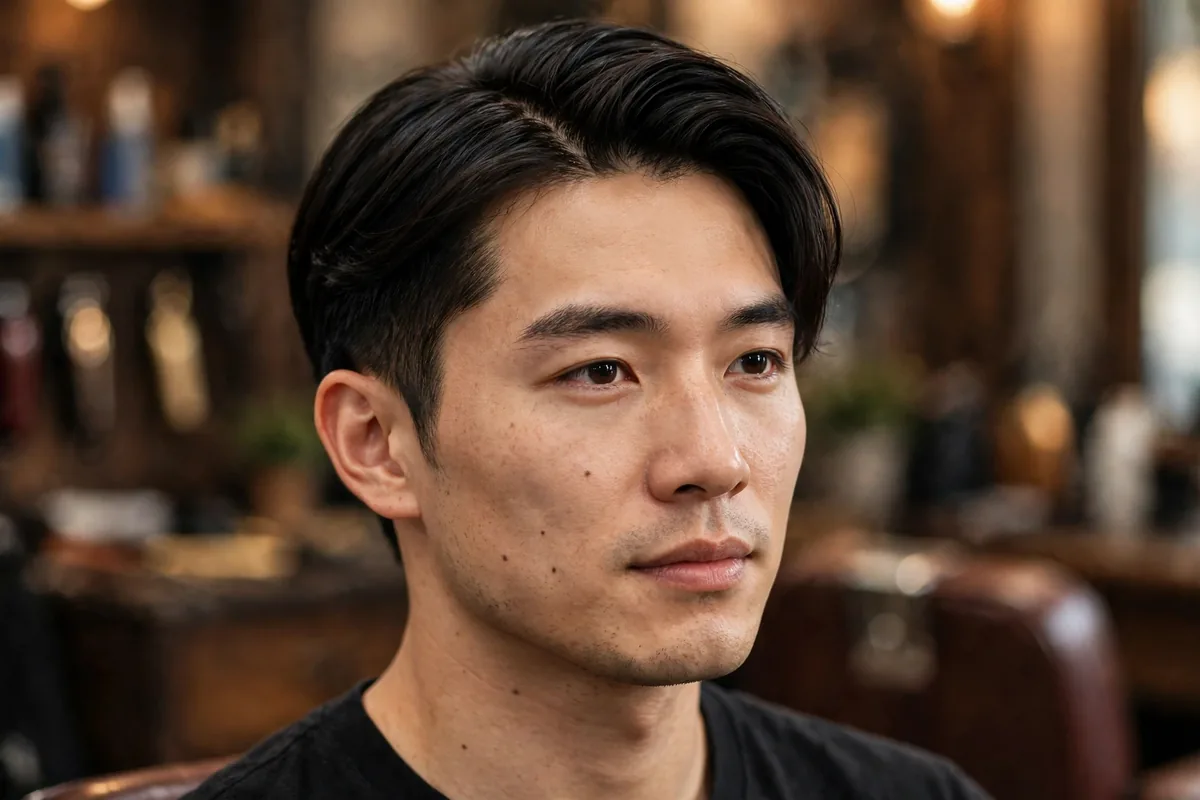
What it is: Longer hair with a defined side part. The part gives structure; the length gives movement. Very classic, very rich.
Best for: Straight to wavy hair. Square and oval faces.
Ask your barber: “Side-parted flow — 4 inches on top with a hard part combed right, sides 2 inches scissor-tapered. Keep the part sharp.”
Style it: Pomade on damp hair. Comb along the part, then sweep the length back. The part line is the star.
19. The Brushed-Back Mid-Length

What it is: All the hair brushed straight back at medium length. Simple, clean, and timeless.
Best for: Straight hair. Men who want one easy style every day.
Ask your barber: “Mid-length brush-back — 3.5 to 4 inches on top, sides 2 inches tapered. Remove weight underneath so it lies flat.”
Style it: Cream, brush back while damp. It dries into place. Re-brush after a workout.
20. The Wavy Princeton
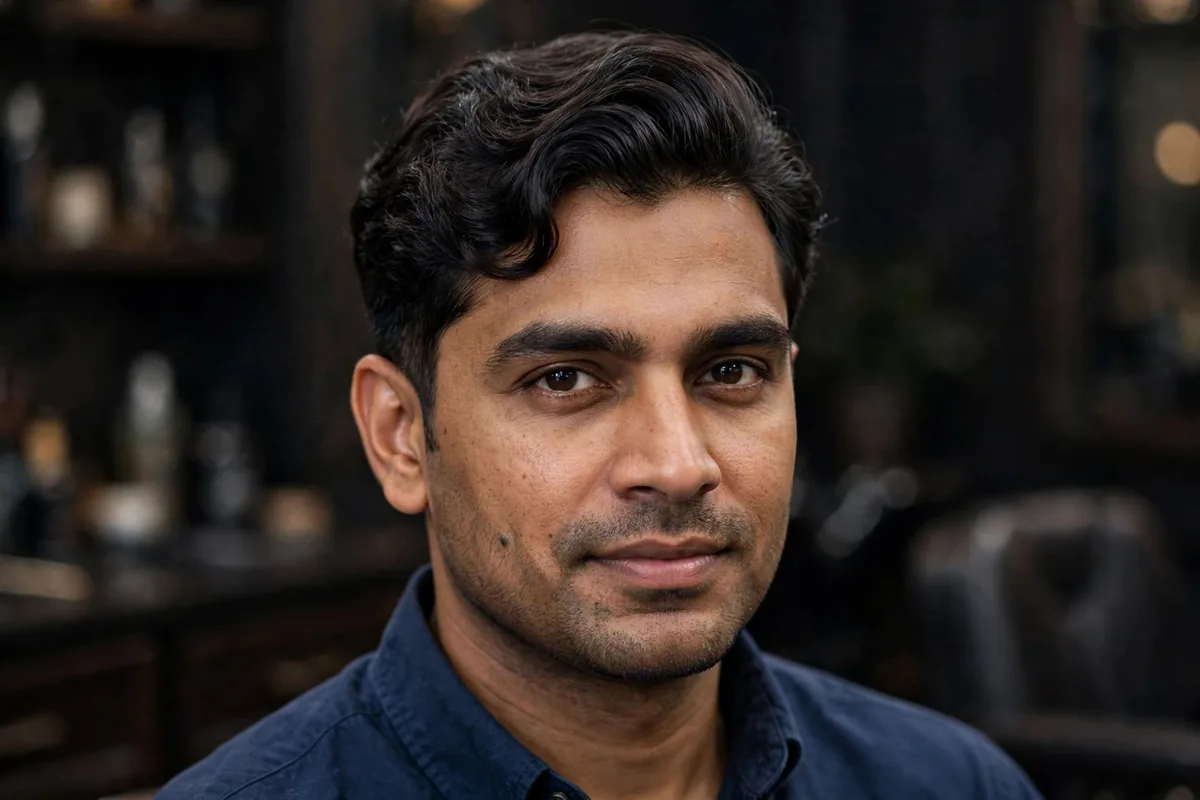
What it is: The Ivy League grown out. Waves shaped into a soft side sweep. Preppy with personality.
Best for: Wavy hair. Heart and oval faces. Young men who want classic with character.
Ask your barber: “Wavy Princeton — 3 to 3.5 inches on top shaped to my wave pattern, sides a 3 to a 2 taper. Keep the front long enough to sweep.”
Style it: Curl cream, side-sweep with fingers. Let the waves form naturally.
Sharp Details: Old Money for Every Hair Type
The best old money haircuts are adapted, not copied. These styles solve real problems — thin hair, thick hair, curls, receding hairlines, and beards.
21. The Old Money Cut with a Beard

What it is: A classic old money top paired with a tidy beard. The beard must be groomed — faded at the sides, shaped at the cheek line.
Best for: Men who keep facial hair. The cut stays classic; the beard adds edge.
Ask your barber: “Old money top — 2.5 inches side-swept, sides tapered 3 to 2. And shape the beard: fade the sides into the hair, keep the cheek line natural, trim the length even.”
Style it: Beard oil daily. Style the top with cream. Keep the neckline of the beard clean.
22. The Fine-Hair Side Part
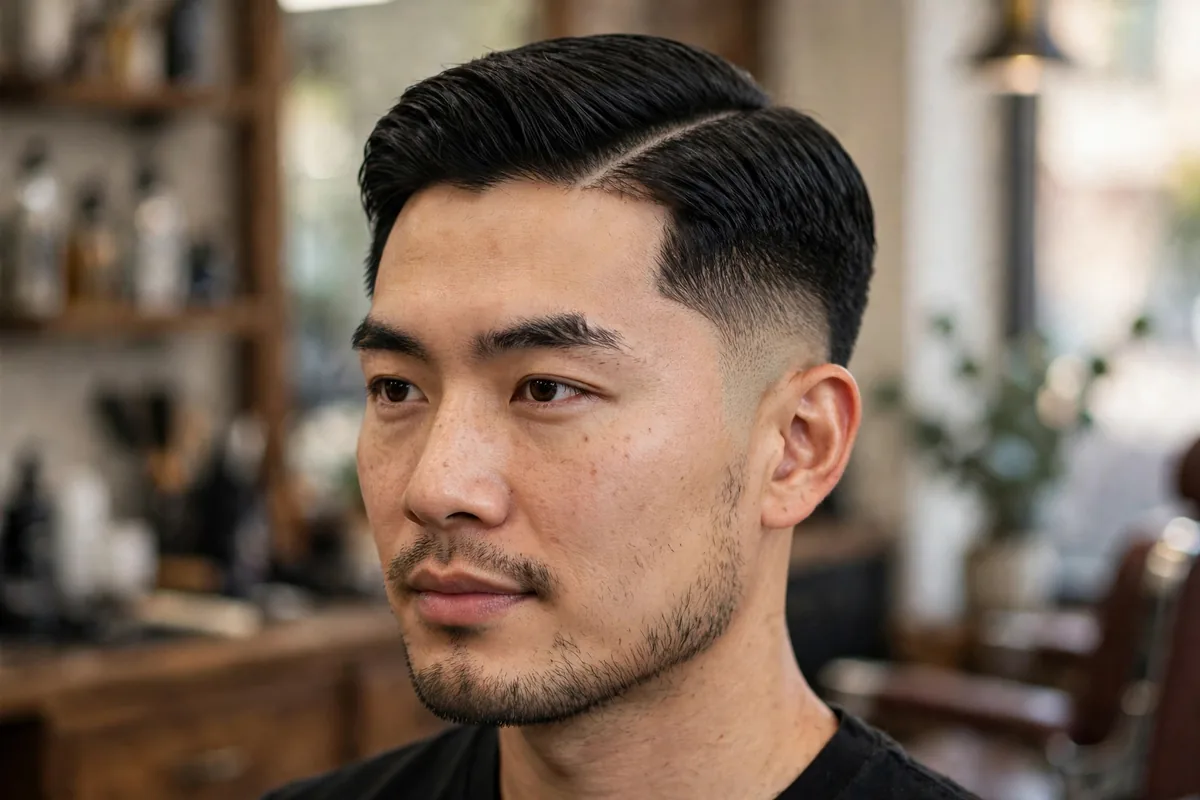
What it is: A side part built for fine hair. Shorter length, clean lines, and styling that adds fullness instead of flattening.
Best for: Fine or thinning hair. Creates the look of density.
Ask your barber: “Side part for fine hair — 2 inches on top, blunt-cut ends so it looks thicker. Sides a 2 tapered to a 1.5. No thinning shears on top.”
Style it: Volumizing mousse at the roots, blow-dry up and over. Matte product — shine shows the scalp.
23. The Thick-Hair Ivy League
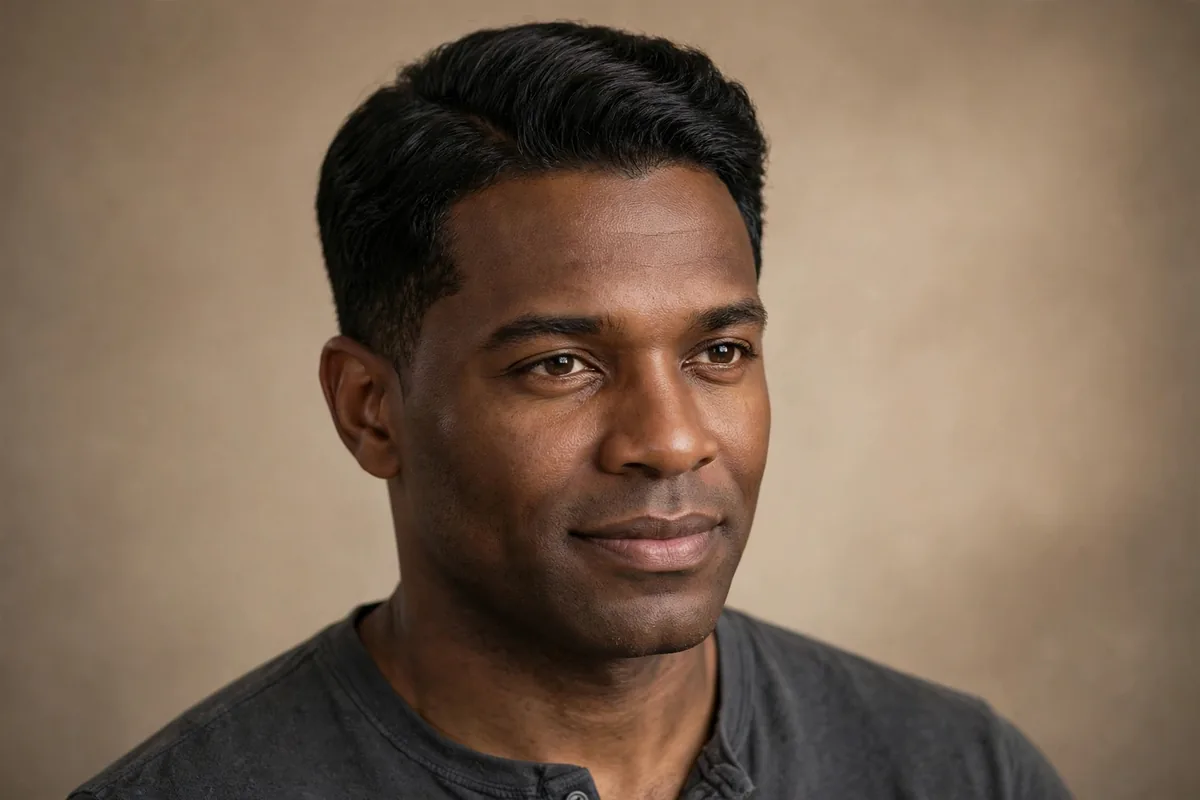
What it is: The Ivy League with the bulk managed. Internal layers remove weight so thick hair sits flat and neat.
Best for: Thick, heavy hair. Men whose hair puffs out if left alone.
Ask your barber: “Ivy League for thick hair — 2 inches on top, thin the interior so it lies flat. Sides a 3 to a 2. Take out bulk, keep the shape.”
Style it: Strong-hold cream on damp hair. Comb flat while drying. The thinning does most of the work.
24. The Curly Old Money Cut
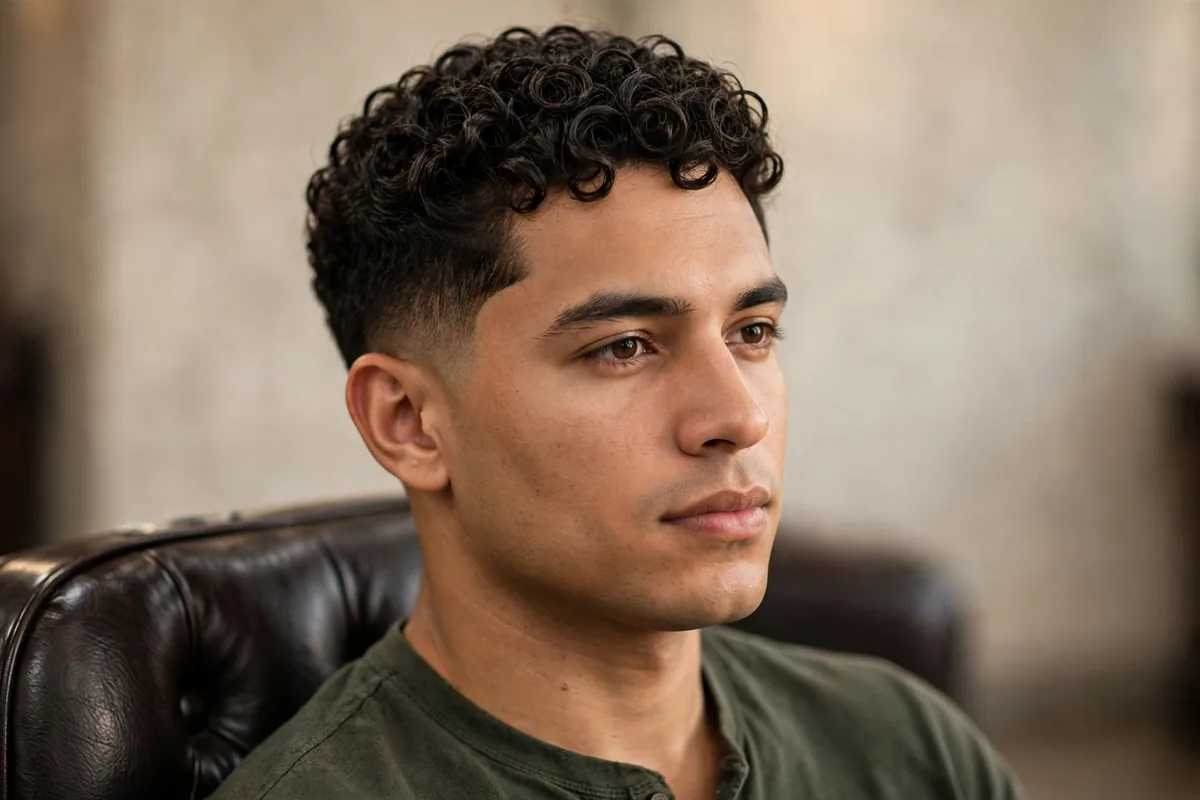
What it is: Curls kept short and shaped. The silhouette stays neat; the curls add texture. Classic shape, modern texture.
Best for: Curly and coily hair. A refined way to wear curls short.
Ask your barber: “Curly old money — 2 to 2.5 inches on top shaped round, sides tapered from a 2.5 to a 1.5. Cut dry so the curl pattern stays true.”
Style it: Curl cream on damp hair. Define curls with fingers. Keep the sides neat with light pomade.
25. The Receding-Hairline Classic

What it is: A cut that works with a higher hairline, not against it. Shorter top, forward texture, and a shape that draws eyes to the style.
Best for: Receding hairlines. Keeps you looking sharp at any stage.
Ask your barber: “Classic for a receding hairline — 1.5 inches on top with forward texture, sides a 2 to a 1. Keep the front edge soft, no hard fringe line.”
Style it: Matte paste, push forward and slightly to the side. Texture hides the hairline.
Occasion and Modern Old Money Twists
The same classic base can shift for the setting. These final styles show how old money haircuts flex — from the country club to a night out.
26. The Country-Club Contour
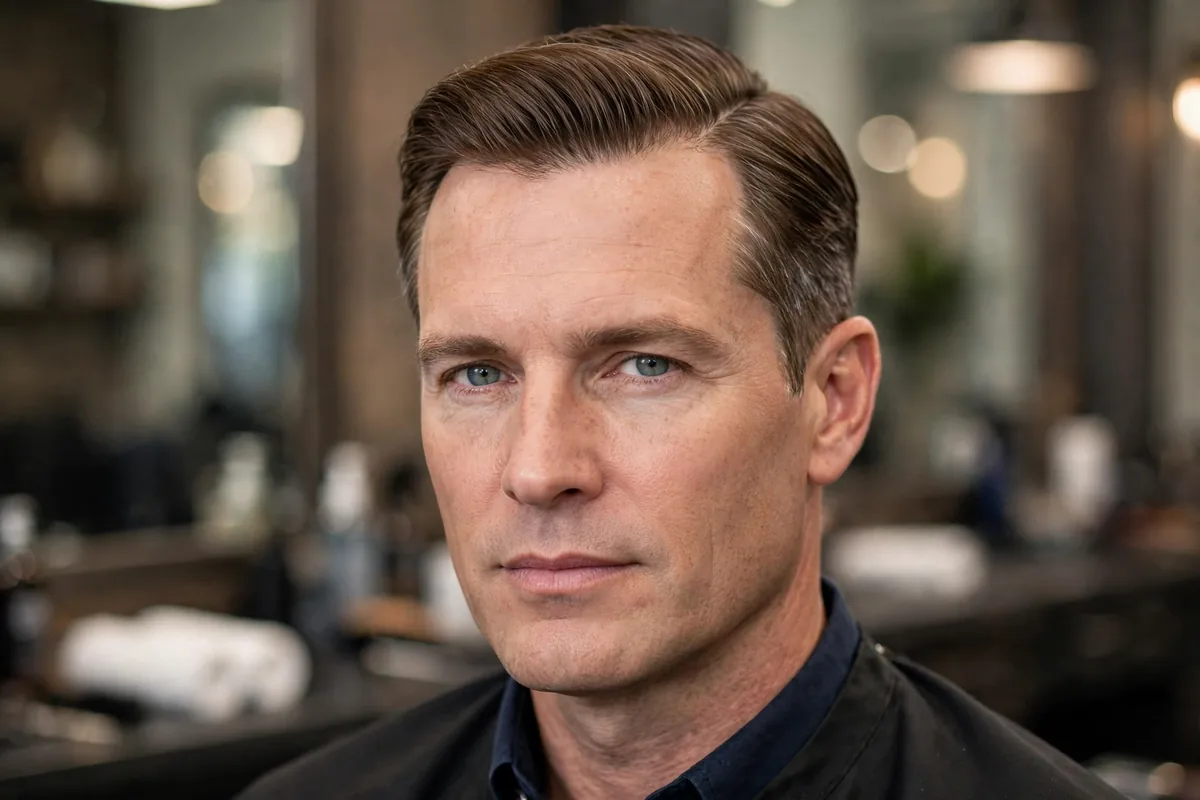
What it is: The most groomed cut on this list. Every edge precise, every hair in place. Made for events and photos.
Best for: Weddings, golf days, and family events. Straight hair.
Ask your barber: “Country-club contour — 2.5 inches on top, side part, sides scissor-tapered to 1 inch. Crisp hairline, crisp sideburns, natural neckline.”
Style it: Pomade, comb every section into place. This cut rewards effort.
27. The Boardroom Side Part
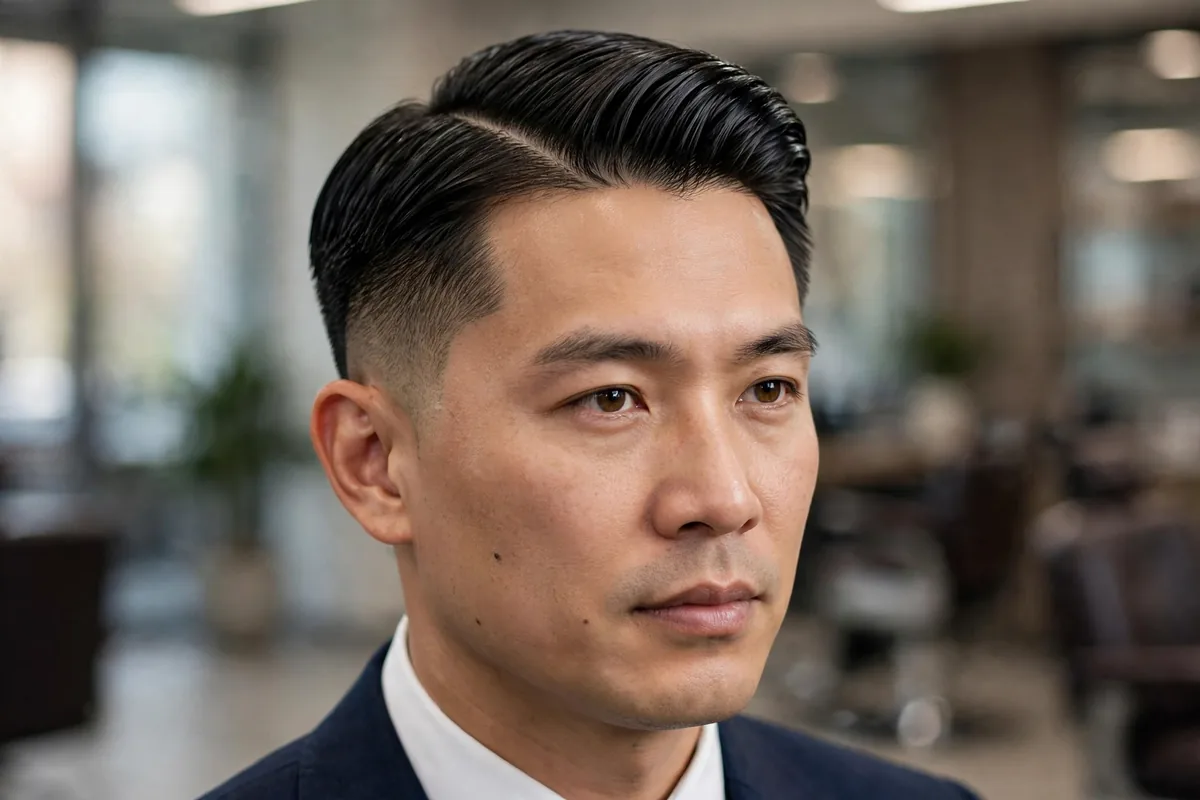
What it is: The sharpest side part. Hard part line, high sheen, zero stray hairs. It means business.
Best for: Executives and interviews. Any face shape.
Ask your barber: “Boardroom side part — 2.5 inches on top, hard part cut in with clippers. Sides a 2 blended up. Tight and clean.”
Style it: High-hold pomade on damp hair. Comb the part line razor-sharp. Hairspray locks it in.
28. The Evening High-Shine Slick-Back
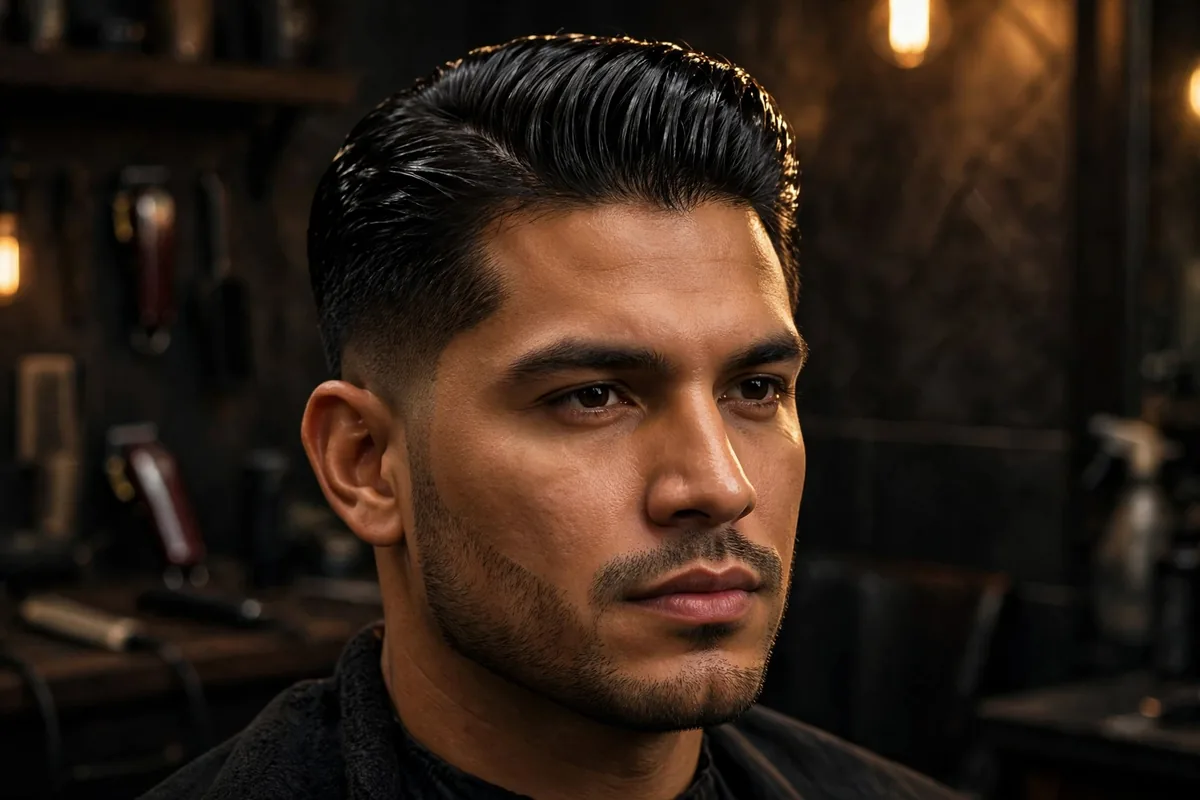
What it is: The slick-back dressed up. More shine, more hold, more presence. For nights that matter.
Best for: Dinners, dates, and events. Thick and straight hair.
Ask your barber: “Evening slick-back — 3.5 inches on top, sides a 2.5 to a 2. Keep the top long enough to shine.”
Style it: Oil-based pomade for real shine. Comb back in clean rows. It should catch the light.
29. The Low-Effort Weekend Classic
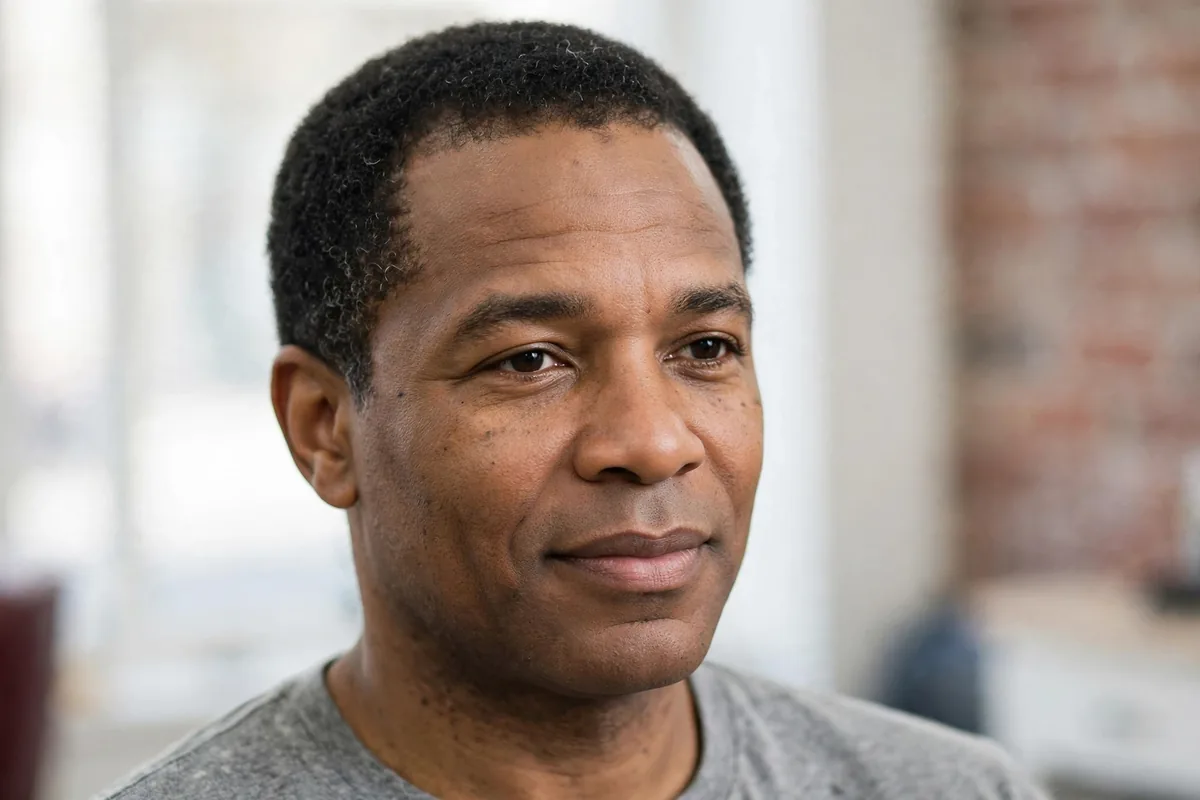
What it is: The old money cut that styles itself. A shape so good it looks fine with almost no product.
Best for: Busy men. Travel. Anyone who wants to look good with zero effort.
Ask your barber: “Low-effort classic — 2 inches on top, natural fall. Sides a 3 to a 2. Cut it so it falls into place on its own.”
Style it: A tiny bit of cream, or nothing at all. Towel-dry, go.
30. The Ivy League Crew Cut
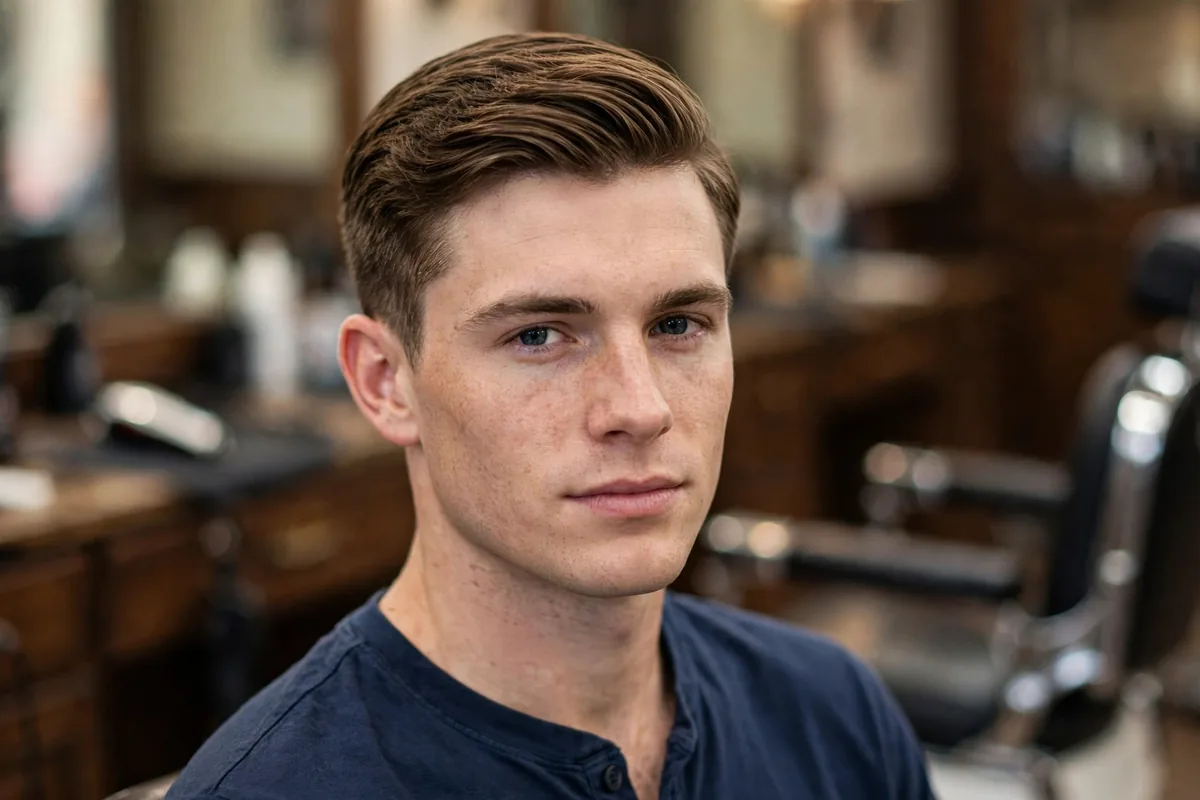
What it is: The shortest old money cut. A crew cut with Ivy League shaping — short, but with a side sweep and tapered edges.
Best for: Athletes. Summer. Men who want short but not military.
Ask your barber: “Ivy crew — top a 4 guard with scissor texture, swept to the side. Sides a 2 tapering to a 1. Keep the collegiate shape.”
Style it: Almost nothing. A dab of matte paste if you want the sweep to hold.
Pick Your Old Money Cut in 60 Seconds
Match your face shape to the right styles. This quick table does the work.
| Face shape | Best old money styles | Avoid |
|---|---|---|
| Oval | Anything — Ivy League, side part, slick-back | Nothing, you are lucky |
| Square | Side part with taper, natural wave cut, textured slick-back | Buzz-short sides that sharpen the jaw |
| Round | Textured brush-up, executive contour, soft quiff | Flat, wide styles with full sides |
| Heart | Side-swept Ivy, wavy Princeton, low-effort weekend classic | High volume on top only |
| Long | Side part, scissor-cut taper, country-club contour | Too much height on top |
| Receding hairline | Receding-hairline classic, Ivy League crew, fine-hair side part | Long slick-backs that expose the hairline |
How to Style an Old Money Haircut
Old money styling is simple. Five minutes, three products max. Follow these steps every morning.
- Start with damp hair. Towel-dry after your shower. Product spreads evenly on damp hair, not soaking wet or bone dry.
- Use less product than you think. A dime-size amount of cream, clay, or pomade. Too much product kills the natural look.
- Work it through evenly. Rub the product between your palms. Run your fingers from roots to ends so every strand is coated.
- Shape with a brush or comb. Comb along your part, or brush everything back. A round brush adds soft volume while blow-drying.
- Set it lightly. A quick pass of light-hold hairspray keeps the shape through the day without stiffness. Skip it on casual days.
- Touch up at night, not in the morning. If it still looks good from yesterday, just re-brush. Over-washing strips the natural oils that keep old money hair soft.
Trim Cadence and Cost
Old money haircuts look best with regular upkeep. The shape is the style — let it grow too long and it turns ordinary.
Every 4 weeks: shorter cuts (Ivy crew, executive contour, boardroom side part). Every 5 to 6 weeks: medium cuts (Ivy League, side part, slick-back). Every 6 to 8 weeks: longer cuts (polished flow, longer slick-back).
A quality cut costs $35 to $60 in most US cities. At 10 to 12 cuts a year, budget $400 to $700 yearly. That is the real price of always looking sharp.
7 Mistakes That Ruin the Old Money Look
1. Going too short on the sides. A skin fade is not old money. Keep tapers soft and blended.
2. Too much shine. Wet-look gel reads cheap. Aim for a soft, natural sheen.
3. Ignoring the neckline. A fuzzy neckline ruins a $50 cut. Clean it up between visits or ask for a natural finish that grows out well.
4. Copying a photo exactly. Your hair type and face shape are different from the model’s. Use photos as a guide, then let your barber adapt.
5. Skipping trims. Old money hair is maintained hair. A 6-week-old cut is not an old money cut anymore.
6. Over-styling. If it takes 20 minutes and five products, it is not old money. Keep it simple.
7. Wrong product for your hair. Fine hair needs matte and light. Thick hair needs hold. Match the product to the hair.
Frequently Asked Questions
What is an old money haircut for men?
An old money haircut is a classic, understated men’s cut — the old money haircut men ask for is defined by restraint, not trends — neat tapered sides, a longer top that parts, brushes, or sweeps naturally, and a soft finish. Think side parts, Ivy League cuts, and slick-backs. The look signals quiet confidence, not trends.
Which old money haircut is best for a job interview?
The boardroom side part or the classic Ivy League. Both are clean, professional, and work on almost every face shape. They photograph well and never look overdone.
Can men with curly hair get an old money haircut?
Yes. The curly old money cut keeps curls short and shaped with tapered sides. Ask your barber to cut dry so the curl pattern stays true, and use curl cream for definition.
How often should I trim an old money haircut?
Every 4 to 6 weeks for most cuts. Shorter styles need 4 weeks; longer flows can go 6 to 8. Regular trims are what keep the cut looking expensive.
What products do I need for old money hair?
Three at most: a styling cream or clay for hold, a pomade for shine on dressier days, and light-hold hairspray. Fine hair should stick to matte products; thick hair needs stronger hold.
Is the old money haircut good for older men?
It is one of the best choices for older men. The classic shapes — side part, Ivy League, tapered contour — look distinguished at any age and work well with gray hair.
Keep exploring: side part haircut, Ivy League haircut, slick back haircut, taper fade haircut, low taper fade, crew cut haircut, mid taper fade haircut, high taper haircut. Learn more about hair care on Wikipedia’s hair care guide and the history of the haircut.
Final Word
The old money haircut is not about money at all. It is about care. A neat shape, a good barber, regular trims, and simple styling. That is the whole secret.
The old money haircut men love never goes out of style. Pick the style that fits your hair and your life. Bring the barber script to your appointment. Whether you call them old money haircuts for men or simply timeless men’s hairstyles, these cuts share one promise — they never go out of style. And remember — true style whispers. Let the cut do the talking.