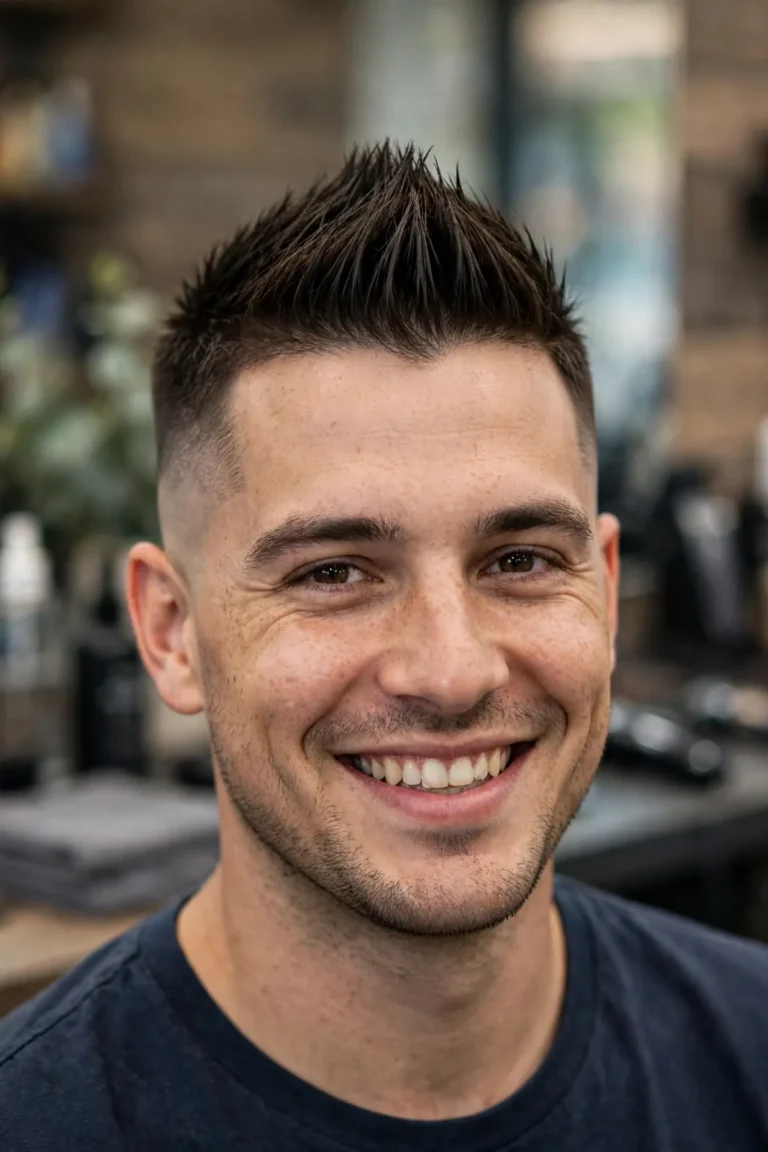
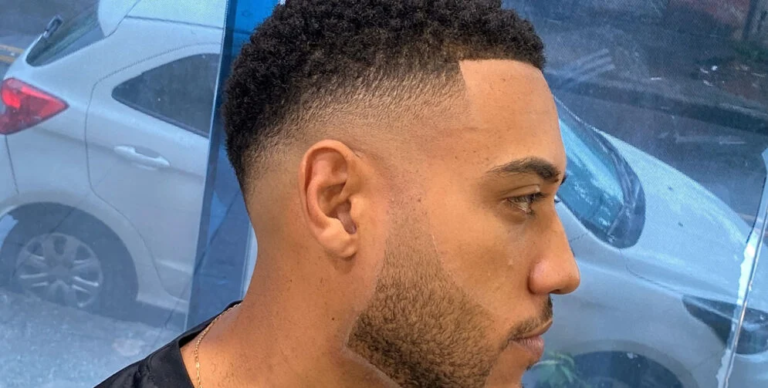
30 Best Beard Fade Haircuts for Men
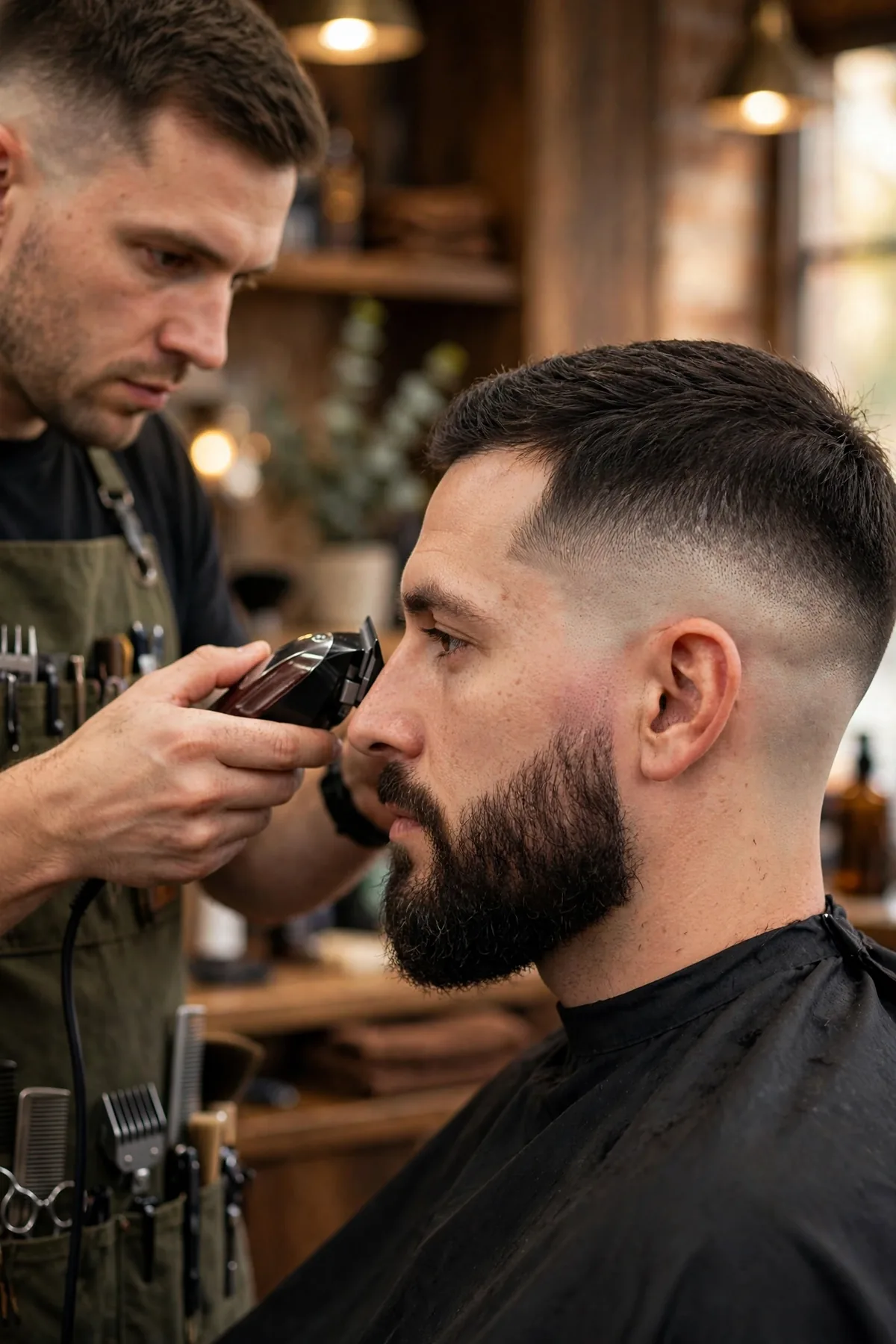
A beard fade haircut is the single sharpest upgrade a bearded man can make right now. Instead of a hard line where your haircut stops and your beard starts, a beard fade blends the two into one smooth, continuous gradient — from skin or short stubble at the sideburns down into full, thick beard at the jaw and chin. It makes even a grown-out beard look designed, not just grown.
Below you’ll find 30 beard fade styles for every beard length, face shape, and haircut — each with the exact words to say to your barber and a quick styling tip — plus a step-by-step guide on how to fade your beard yourself and answers to the six questions men ask most.
30 Best Beard Fade Styles for Men
1. The Low Beard Fade

The low beard fade is the friendliest entry point into faded beards — the blend starts just above the ear, so the beard keeps its fullness while the top inch graduates down toward the sideburns. It pairs beautifully with a low fade haircut, so the head and the beard share the same language.
Ask your barber: “Give me a low beard fade — start the blend just above my ear with a #3, and take it down to a #1 at the sideburn. Keep the cheek line natural.”
Style it: Work a pea-sized drop of beard oil through the beard every morning and brush downward so the gradient stays smooth instead of puffy.
2. The Mid Beard Fade
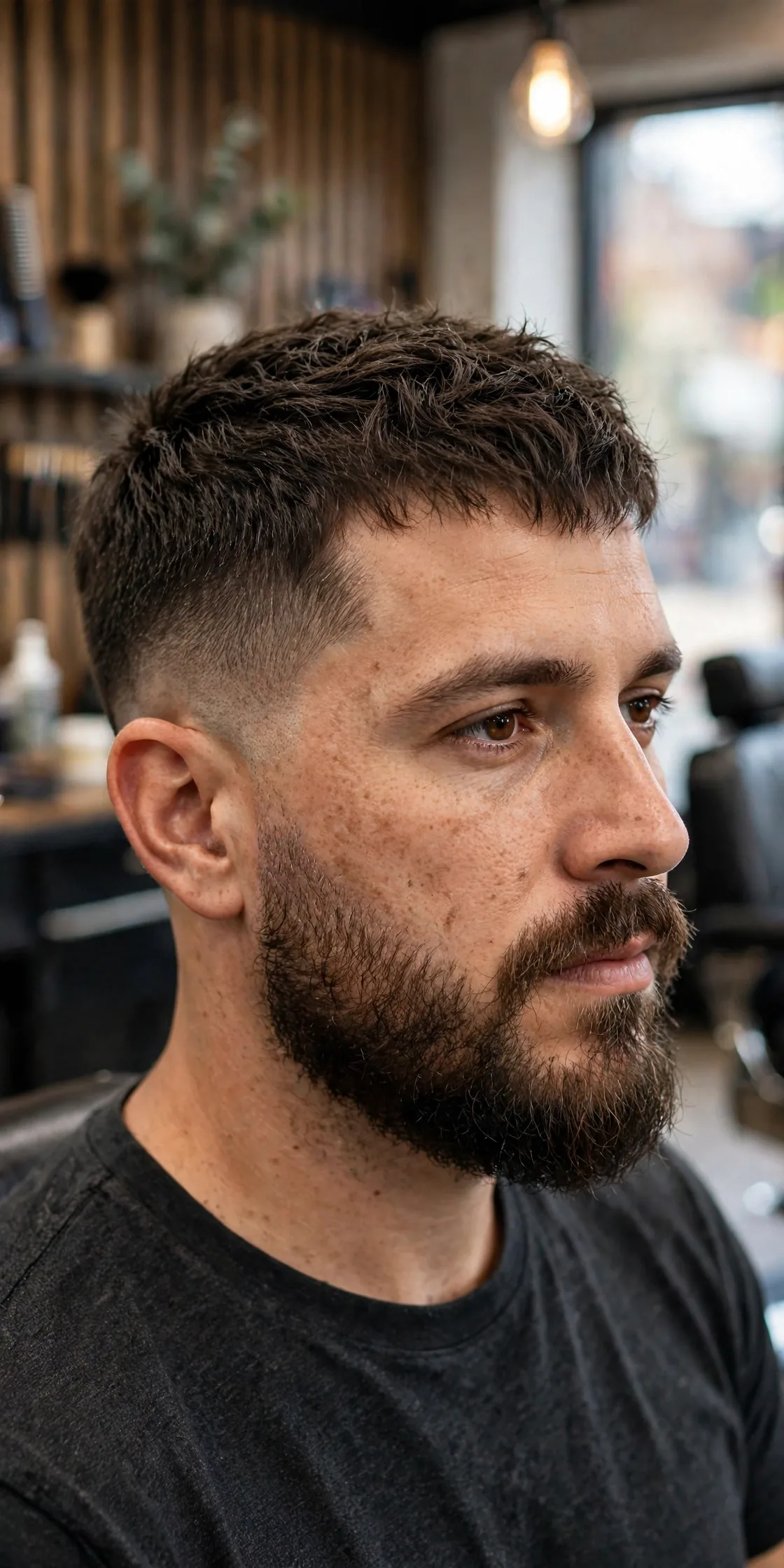
The mid beard fade starts its blend around the middle of the ear, giving you a more visible gradient than the low version. This is the workhorse of beard fade styles — balanced, modern, and flattering on most face shapes, especially round and heart-shaped faces where a little extra vertical line helps slim things down.
Ask your barber: “I want a mid beard fade. Start blending around mid-ear — #4 into #2 into a #0.5 at the sideburn — and line up the cheeks sharp.”
Style it: A light beard balm keeps the medium lengths lying flat over the fade; blow-dry downward on low heat after washing for the cleanest line.
3. The High Beard Fade

The high beard fade starts near the temple and drops fast, creating bold contrast between the short blend and the full beard below. It’s the most dramatic of the beard fade styles — strong, fashion-forward, and made for men who want their grooming to be noticed.
Ask your barber: “High beard fade, please — take the fade up to the temple with a #2, then melt it down into the full beard with a #0.5 at the sideburn.”
Style it: Because the contrast is high, keep the cheek lines razor-sharp — touch them up with a trimmer every three or four days.
4. The Skin Fade Beard Blend
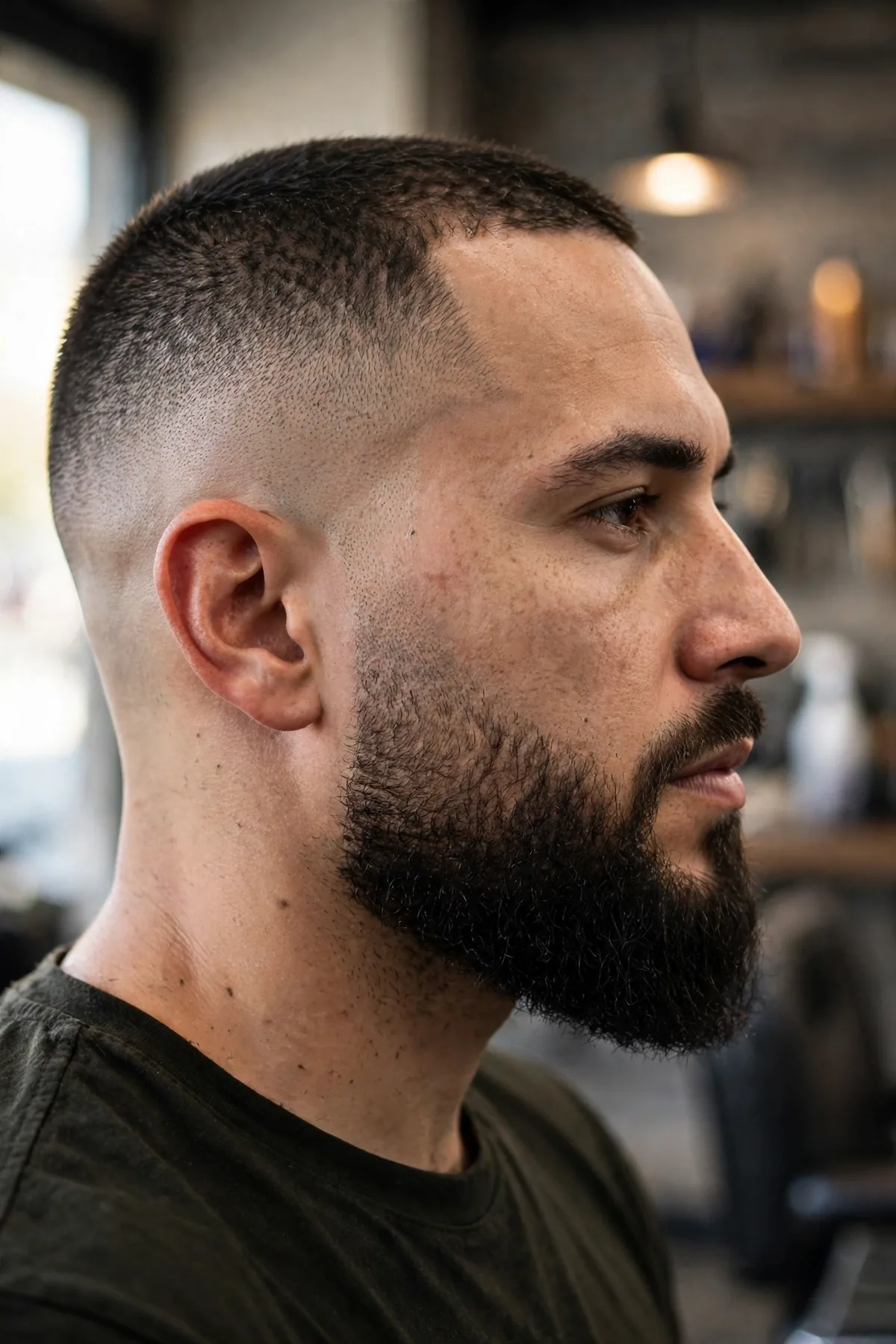
The skin fade beard blend takes the fade all the way to bare skin at the sideburn, then grows it back through stubble into a full beard. It’s the cleanest, highest-contrast men’s beard fade you can get, and it makes jawlines look carved.
Ask your barber: “Skin fade on the sideburns blending straight into my beard — foil-shaver clean at the top, then #0.5 and #1 stepping down into full length.”
Style it: Moisturize the faded skin zone daily; clipper rash shows up fast on freshly faded skin, and a calm skin line keeps the whole blend looking premium.
5. The Soft Taper Beard Fade

The soft taper beard fade trades drama for a gentle, natural-looking graduation that just looks like really good genetics. The sideburn area thins softly instead of cutting to skin, making this the most office-friendly faded beard on the list.
Ask your barber: “Just a soft taper on the beard — take the sideburns down one guard at a time, no skin, keep it natural. I want it subtle.”
Style it: Because there’s no hard line to preserve, a quick weekly pass with a #2 guard over the sideburn zone is all the upkeep it needs.
6. The Faded Sideburn Blend

Sometimes the whole beard doesn’t need fading — just the handshake between haircut and beard. The faded sideburn blend keeps the beard full while the sideburn strip melts from the haircut’s fade into the beard’s length.
Ask your barber: “Blend my sideburns into the beard — match the sideburn fade to whatever guard my haircut ends at, and feather it down into the beard.”
Style it: Ask your barber to show you the exact guard sequence he used; repeating it once a week at home keeps the blend invisible between visits.
7. The Cheek Fade Beard

The cheek fade beard focuses the fade on the upper cheeks, trimming bulk where the beard meets the cheekbone so the face looks slimmer and longer. Your barber follows your natural cheek growth line — never carve it lower than your cheeks naturally grow.
Ask your barber: “Fade my upper cheeks down — start with a #3 at the cheek line and blend to skin at the top, following my natural growth.”
Style it: Cheek fades grow out fastest; a trimmer pass over the upper cheeks every four to five days keeps the slimming effect alive.
8. The Neckline Fade Beard
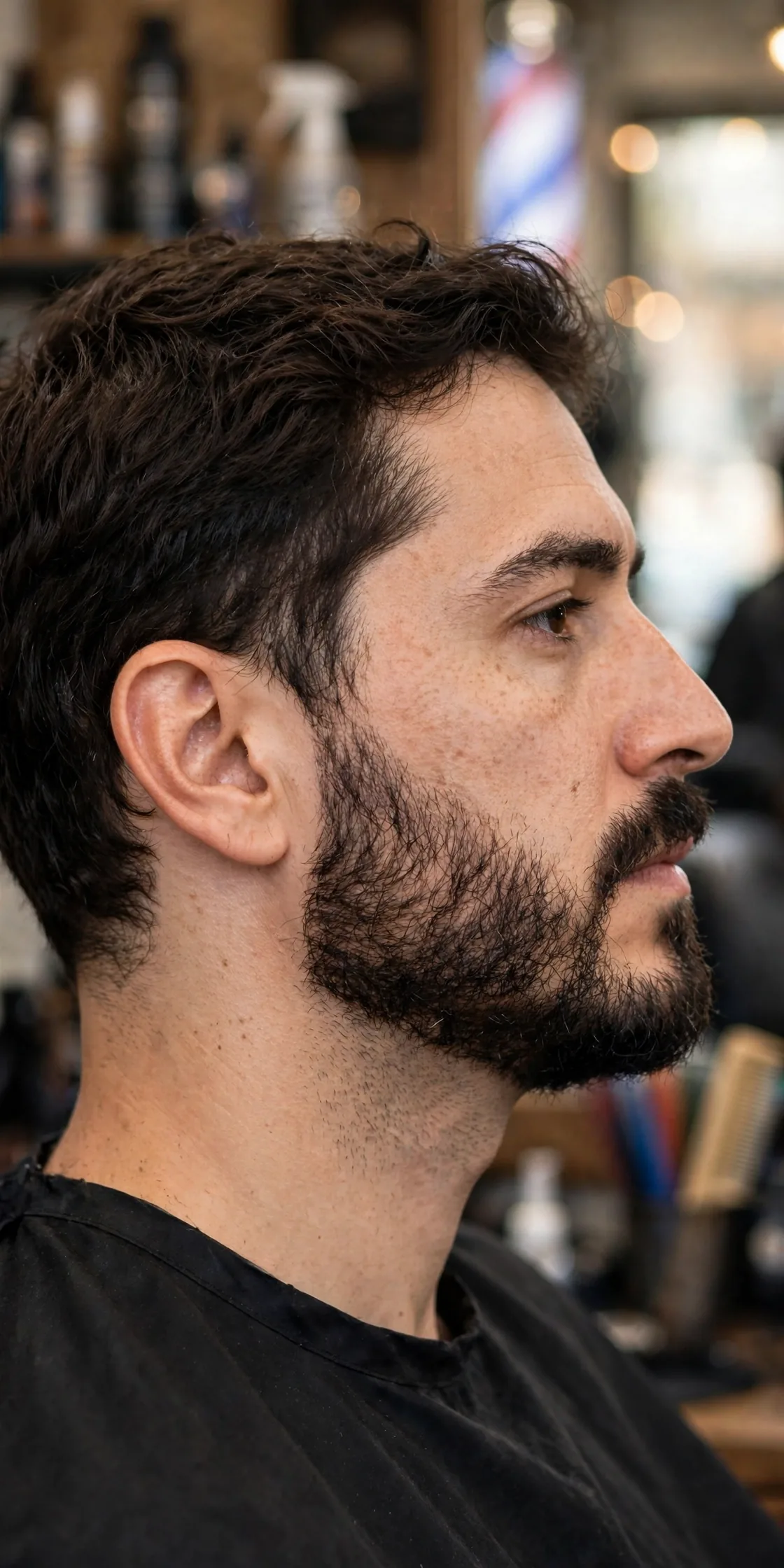
The neckline fade beard graduates the hair below the jaw — from full beard length down to bare skin at the neck — instead of leaving a blunt line. It keeps longer beards from looking heavy at the throat. Start the fade a finger’s width above the Adam’s apple.
Ask your barber: “Fade my neckline — full length at the jaw, then #3, #2, #1 stepping down to skin at the Adam’s apple. No hard line.”
Style it: Comb the beard down over the neckline after oiling; if the fade is hidden under chin hair, the gradient won’t read.
9. The Short Boxed Beard Fade

The short boxed beard fade is the corporate classic: crisp cheek lines, a defined jaw outline, and a tight fade where the beard meets the sideburns. It pairs perfectly with a taper fade haircut for a head-to-beard system that looks engineered.
Ask your barber: “Box my beard short — sharp cheek line, defined jaw, and fade the sideburns from a #2 into the beard. Keep it tight and square.”
Style it: Edge the cheek and jaw lines with a trimmer every other day; boxed shapes lose their punch the moment the lines go fuzzy.
10. The Faded Stubble Beard

The faded stubble beard takes five-day growth and graduates it from nearly bare at the sideburns into full stubble at the chin, turning lazy stubble into a deliberate style. Ideal for workplaces that frown on big beards.
Ask your barber: “Fade my stubble — #1 at the sideburns graduating into a #3 at the chin. Keep the whole thing short and tidy.”
Style it: Stubble fades grow out in days, not weeks — refresh the sideburn zone with a #1 guard twice a week and it never looks unkempt.
11. The Long Beard Fade
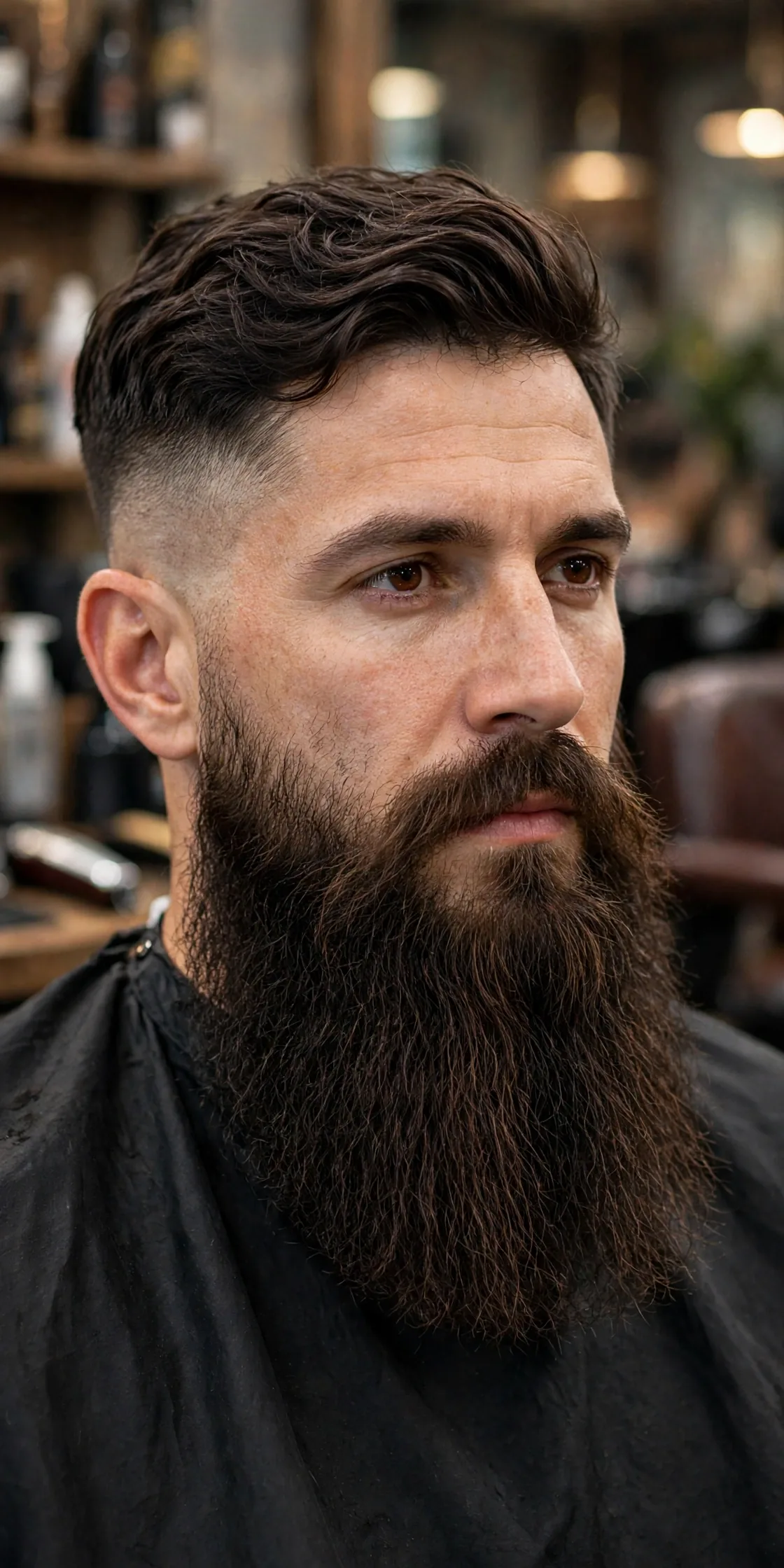
The long beard fade keeps three to six inches of length at the chin and only fades the top zone — sideburns and upper cheeks — so the beard stays dramatic while the top stays clean. Have a barber set the first fade; the gradient is hard to see in the mirror on long hair.
Ask your barber: “Keep my length, but fade the top — sideburns from skin into the beard, and thin the upper cheeks with a #3. Don’t touch the chin length.”
Style it: Beard oil is non-negotiable at this length; oiled hair lies flat over the fade instead of floating and hiding it.
12. The Italian Beard Fade

The Italian beard fade is all about tailored elegance — sharp, sculpted cheek lines, a neatly tapered beard following the jaw, and a seamless sideburn fade tying into a polished haircut. It’s the men’s beard fade for men who dress well and want their face to match the wardrobe.
Ask your barber: “Italian style — sculpted high cheek lines, taper the beard to follow my jaw, and fade the sideburns clean into a #1. Keep it elegant.”
Style it: A boar-bristle brush and a touch of styling balm train the beard into that smooth, molded Italian silhouette — brush everything toward the chin.
13. The Corporate Beard Fade

The corporate beard fade is built for boardrooms: short, neat, and conservative, with a whisper-soft fade that reads as “well-groomed” rather than “barbershop-fresh.” The blend stays deliberately subtle — low fade, natural cheek line, no skin showing.
Ask your barber: “Conservative beard fade — keep it short, fade the sideburns softly with no skin, natural cheek line. Nothing dramatic.”
Style it: Trim the whole beard to one guard length weekly and re-fade the sideburns; consistency is what makes this style look professional.
14. The Faded Goatee

The faded goatee melts the classic chin-and-mustache combo into the skin at the sideburns and cheeks, so it sits on a clean-shaven canvas with soft, intentional transitions. A strong choice for patchy cheeks — the fade erases thin zones and puts all the density on the chin.
Ask your barber: “Goatee with faded edges — keep the chin full, and fade the sides from the goatee down to skin at the sideburns.”
Style it: Keep everything outside the goatee shaved daily or every other day; the style’s impact comes from the clean contrast around it.
15. The Faded Van Dyke
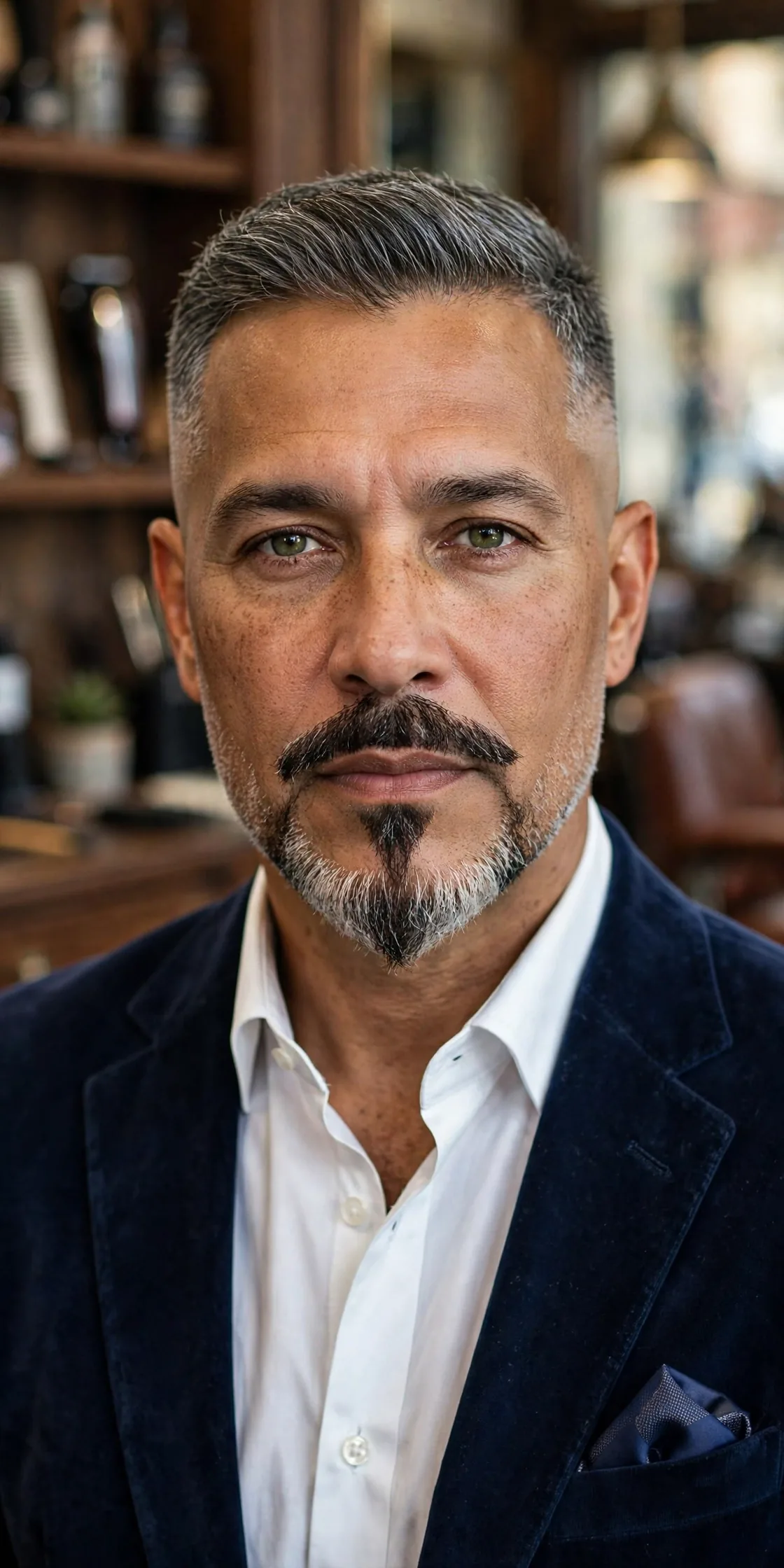
The faded Van Dyke combines a pointed chin beard with a distinct mustache, then fades the cheeks to clean skin for maximum contrast. An artistic, old-soul style for oval and square faces — the pointed chin visually lengthens the face.
Ask your barber: “Van Dyke with faded cheeks — keep the chin pointed, shape the mustache, and fade the cheeks down to skin.”
Style it: Mustache wax on the ends of the mustache and a detail trimmer for the Van Dyke’s edges twice a week keep this dapper look dialed in.
16. The Faded Chinstrap

The faded chinstrap is a thin strip of beard tracing the jawline from ear to ear, with the sideburns faded softly into it so there’s no blunt starting point. Keep the strap about an inch wide and symmetrical on both sides.
Ask your barber: “Chinstrap along the jaw, about an inch wide, and fade the sideburns gently into it — no hard corner at the ear.”
Style it: Shave the cheeks and neck clean every day or two; the chinstrap only works when everything around it is spotless.
17. The Faded Balbo

The faded Balbo — a disconnected, sculpted chin beard paired with a separate mustache — gets a modern upgrade when the chin piece’s sides fade softly into the skin instead of ending in a hard line. It suits round faces well, since the chin focus adds length.
Ask your barber: “Balbo with faded sides on the chin piece — keep the mustache disconnected, and soften the chin beard’s edges with a #1 fade.”
Style it: Sculpt the chin piece with a trimmer without a guard every three days; the Balbo’s charm is in its carved, deliberate shape.
18. The Drop Fade Beard

The drop fade beard follows the curve of the head — the fade dips behind the ear before rising back up, and the beard picks up that same arc at the sideburns. Ask for it with a matching drop fade haircut so the head and beard arcs mirror each other.
Ask your barber: “Drop fade into the beard — dip the fade behind my ear and blend it into the beard’s top edge. Match it to my drop fade on top.”
Style it: The curved blend hides regrowth better than a straight fade, so you can stretch touch-ups to every three weeks without it looking messy.
19. The Burst Fade Beard

The burst fade beard wraps a rounded burst of fade around the ear, and the beard catches the blend right where the burst meets the sideburn. A trendy, eye-catching combination — the circular fade frames the beard like a vignette.
Ask your barber: “Burst fade around the ear blending into my beard — keep the burst tight and round, and feather it down into the beard.”
Style it: The burst’s shape is everything; don’t try to maintain it at home beyond the beard — see your barber every two to three weeks to keep the arc clean.
20. The Faded Ducktail
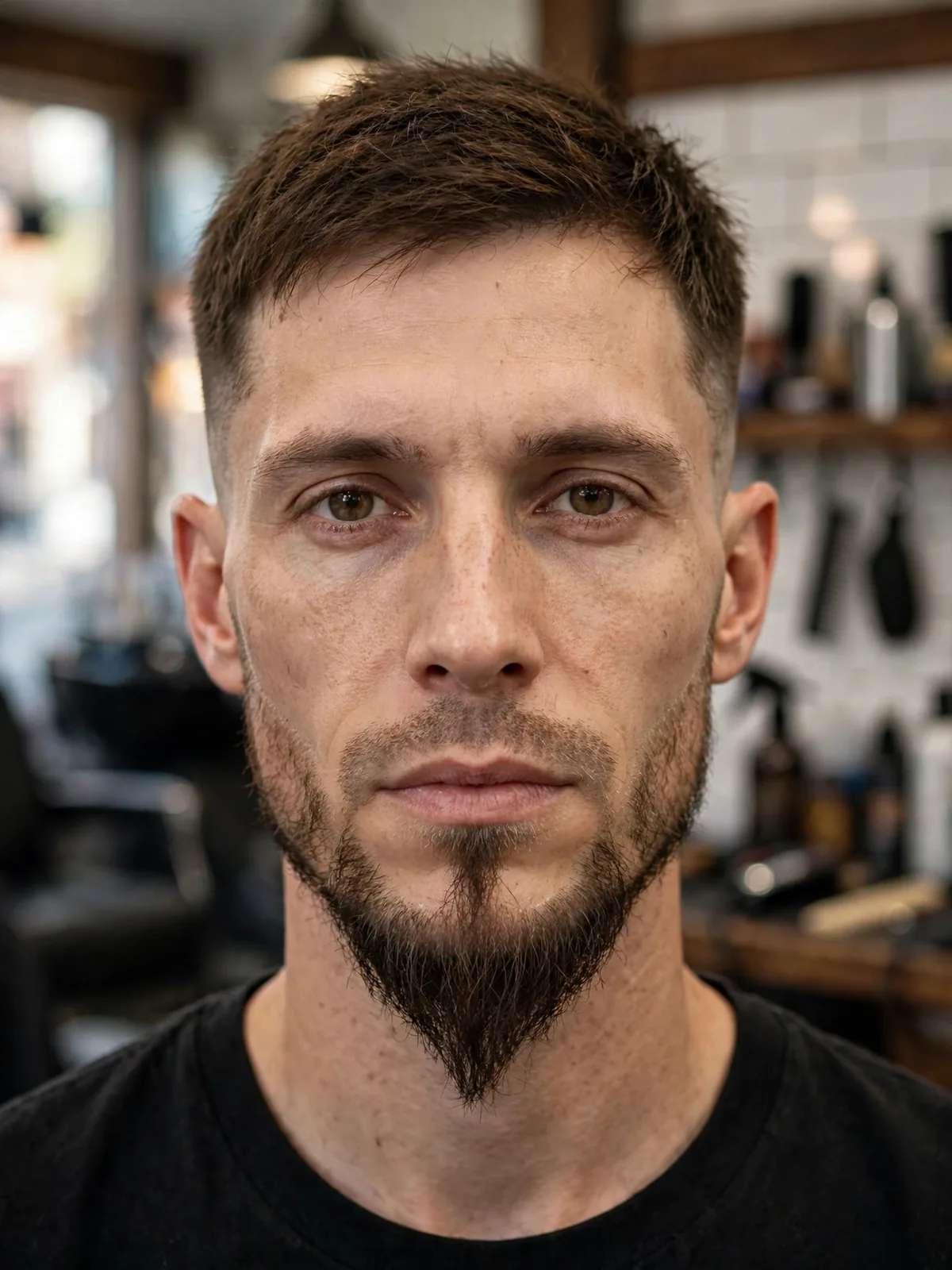
The faded ducktail keeps the beard’s signature pointed chin while the upper cheeks and sideburns fade down, which slims the face and stops the ducktail from looking top-heavy. Keep the point centered and symmetrical.
Ask your barber: “Ducktail shape — fade the upper cheeks and sideburns down, keep the chin long and pointed. Thin the cheeks, not the chin.”
Style it: Twist the chin point with a little balm after combing downward; a defined point is the whole point of the ducktail.
21. The Faded Garibaldi
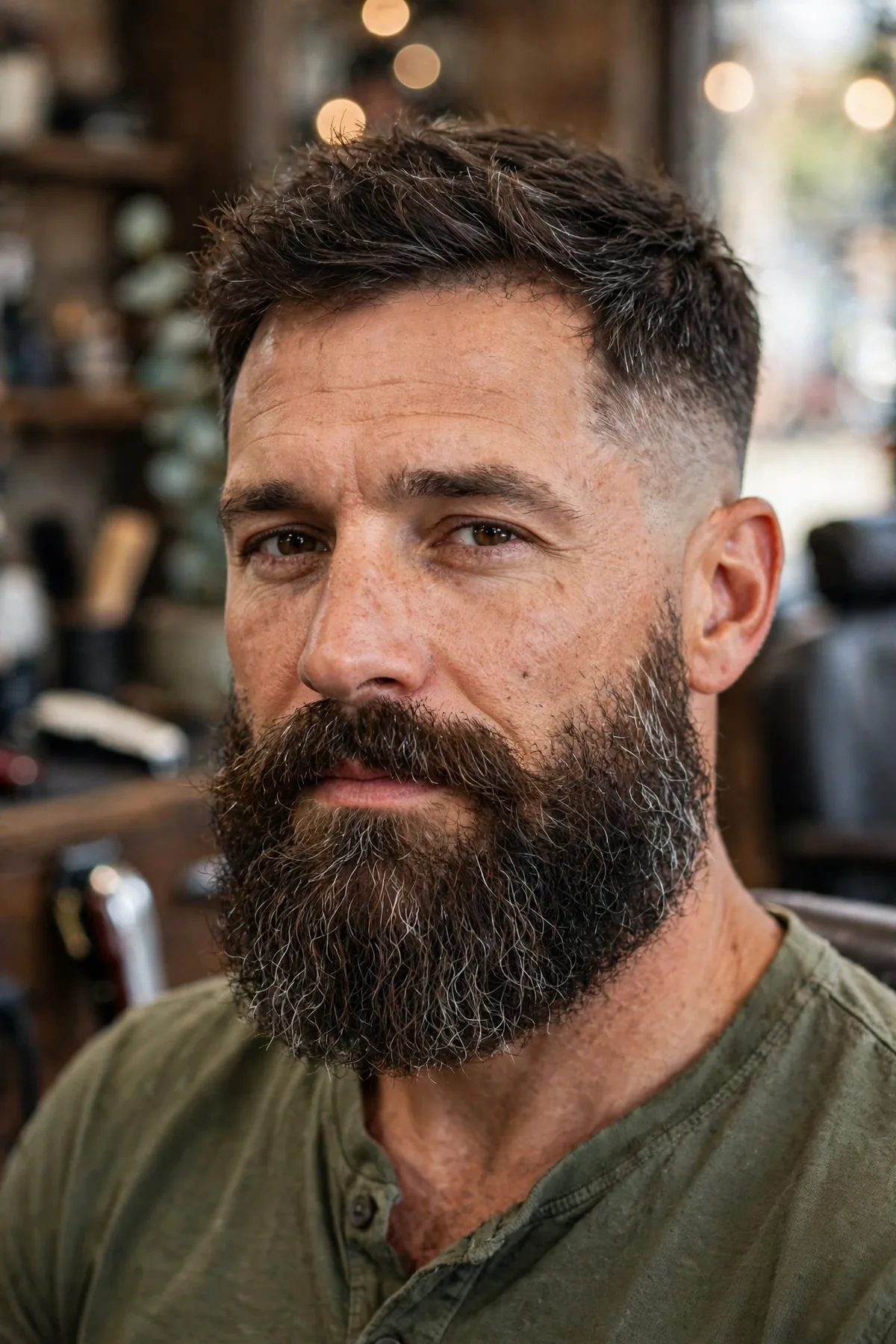
The Garibaldi is a wide, rounded, full beard with a natural bottom — and fading its sideburns softly gives it structure without losing its relaxed, rugged charm. Ideal for men who want a substantial beard that still looks groomed rather than wild.
Ask your barber: “Garibaldi shape with faded sideburns — keep it full and rounded at the bottom, just clean up and fade the top into the sideburns.”
Style it: Let the bottom grow natural but brush it into shape daily; the contrast between the faded top and the full bottom is what makes this style.
22. The Patchy-Cheek Beard Fade
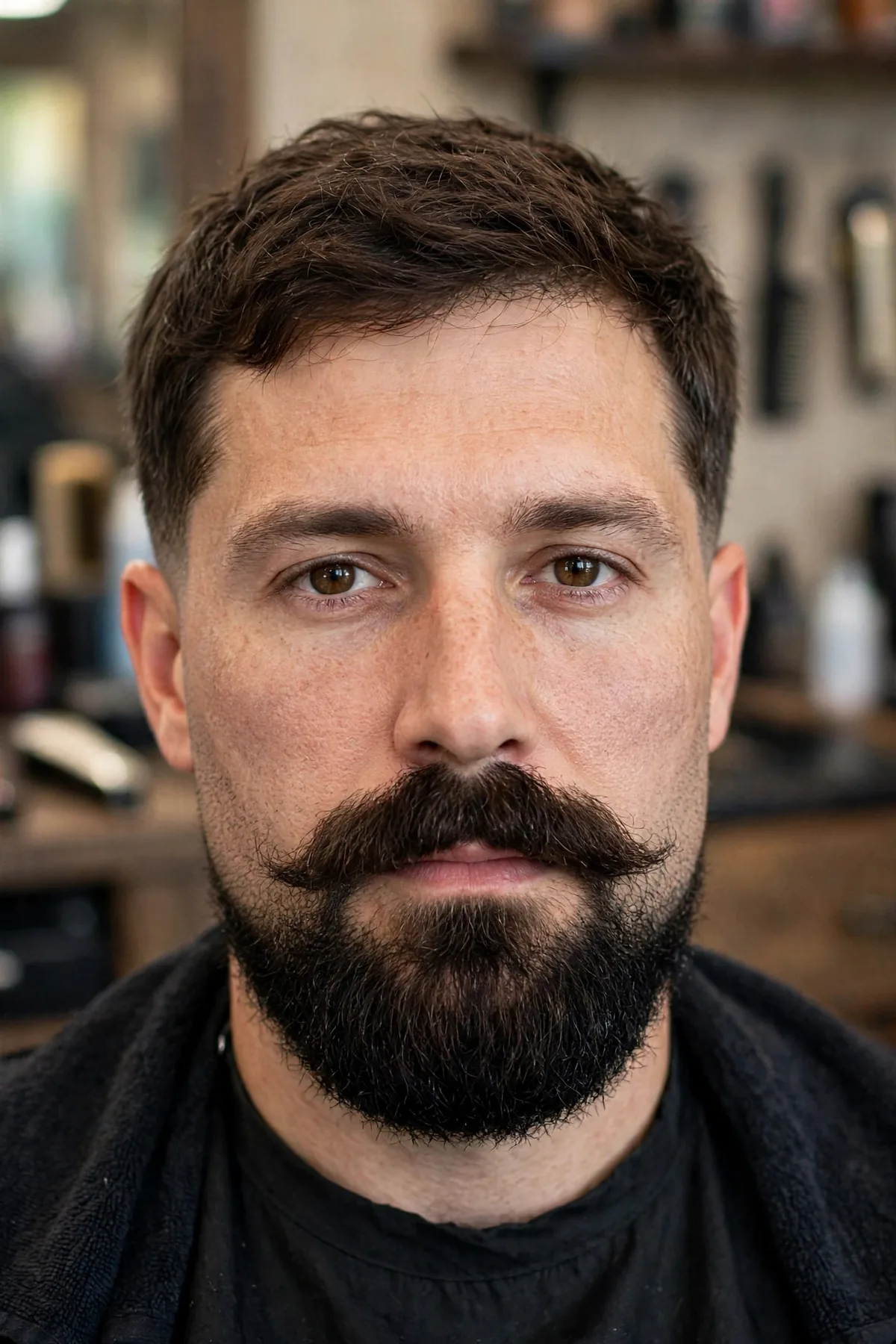
Patchy cheeks are one of the most common beard complaints, and the beard fade is one of the best fixes. Fading the thin cheek zones to short stubble turns patchiness into a gradient — the eye reads it as intentional blend instead of thin growth, while the chin and mustache stay full.
Ask your barber: “My cheeks are patchy — fade them down short, keep the chin and mustache full. Make the fade hide the thin spots.”
Style it: Beard fibers or a tinted beard filler can darken the faded cheek zone on special occasions, making the gradient look even denser.
23. The Faded Anchored Beard
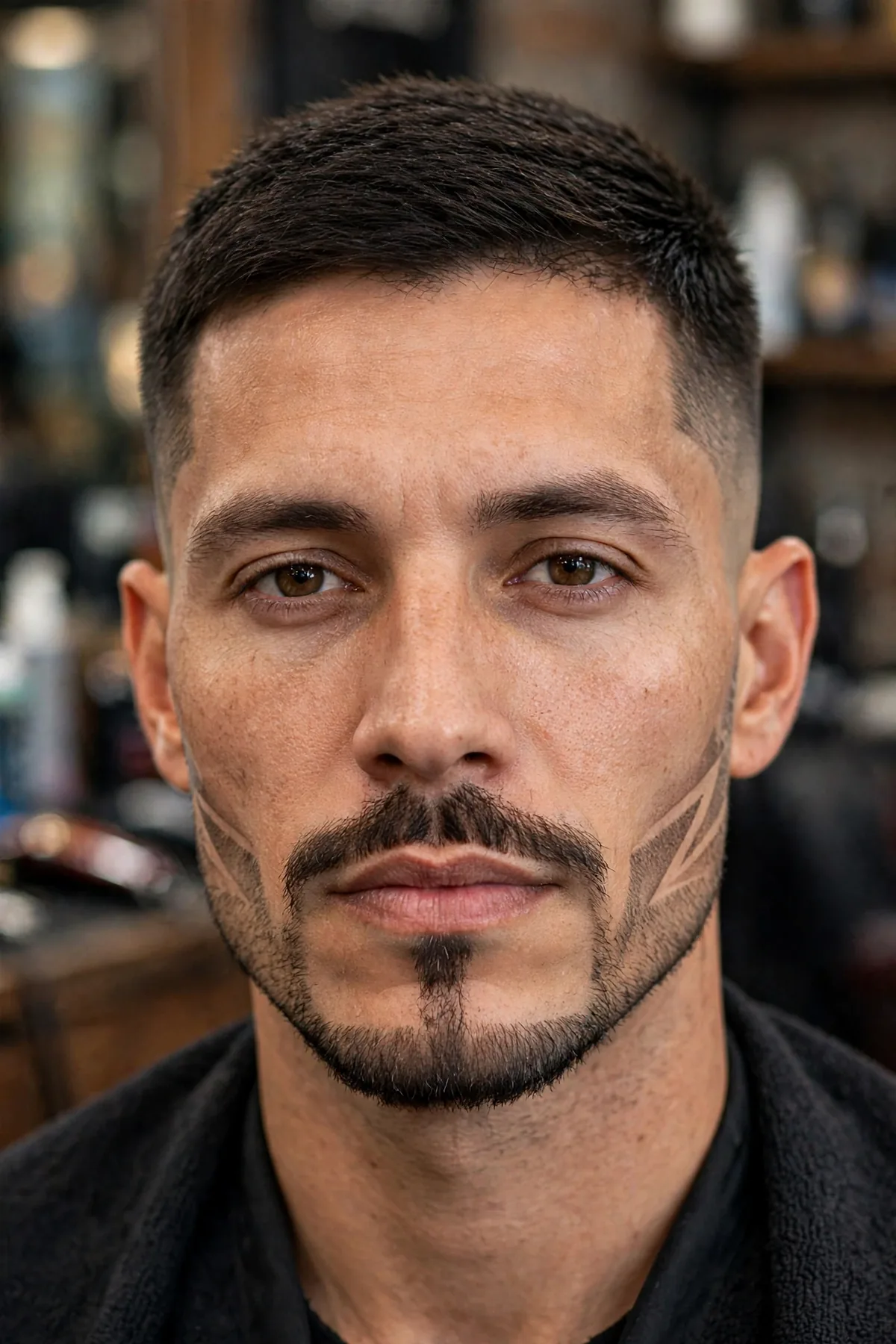
The anchored beard runs a strip from the chin up to the mustache, anchored by a thin jaw line — and fading its outer edges gives it a softer, more modern finish than the hard-lined original. Symmetry is critical: check both sides in the mirror before you leave the chair.
Ask your barber: “Anchored beard — chin strip connected to the mustache, jaw line included — with the outer edges faded softly instead of hard-lined.”
Style it: Outline the anchor with a precision trimmer weekly; the style’s geometry only reads when the edges are clean.
24. The Hollywoodian Beard Fade

The Hollywoodian lowers the cheek line and pushes fullness toward the jaw and chin — and fading the sideburn connection keeps it from looking like a costume. A strong pick for weaker chins or rounder faces, since it builds visual structure along the jawline.
Ask your barber: “Hollywoodian — low cheek line, fullness on the jaw and chin — and fade the sideburns into it so the connection blends.”
Style it: Keep the neckline clean and slightly lower than usual; the Hollywoodian’s jawline illusion depends on a tidy neck.
25. The Faded Mutton Chops
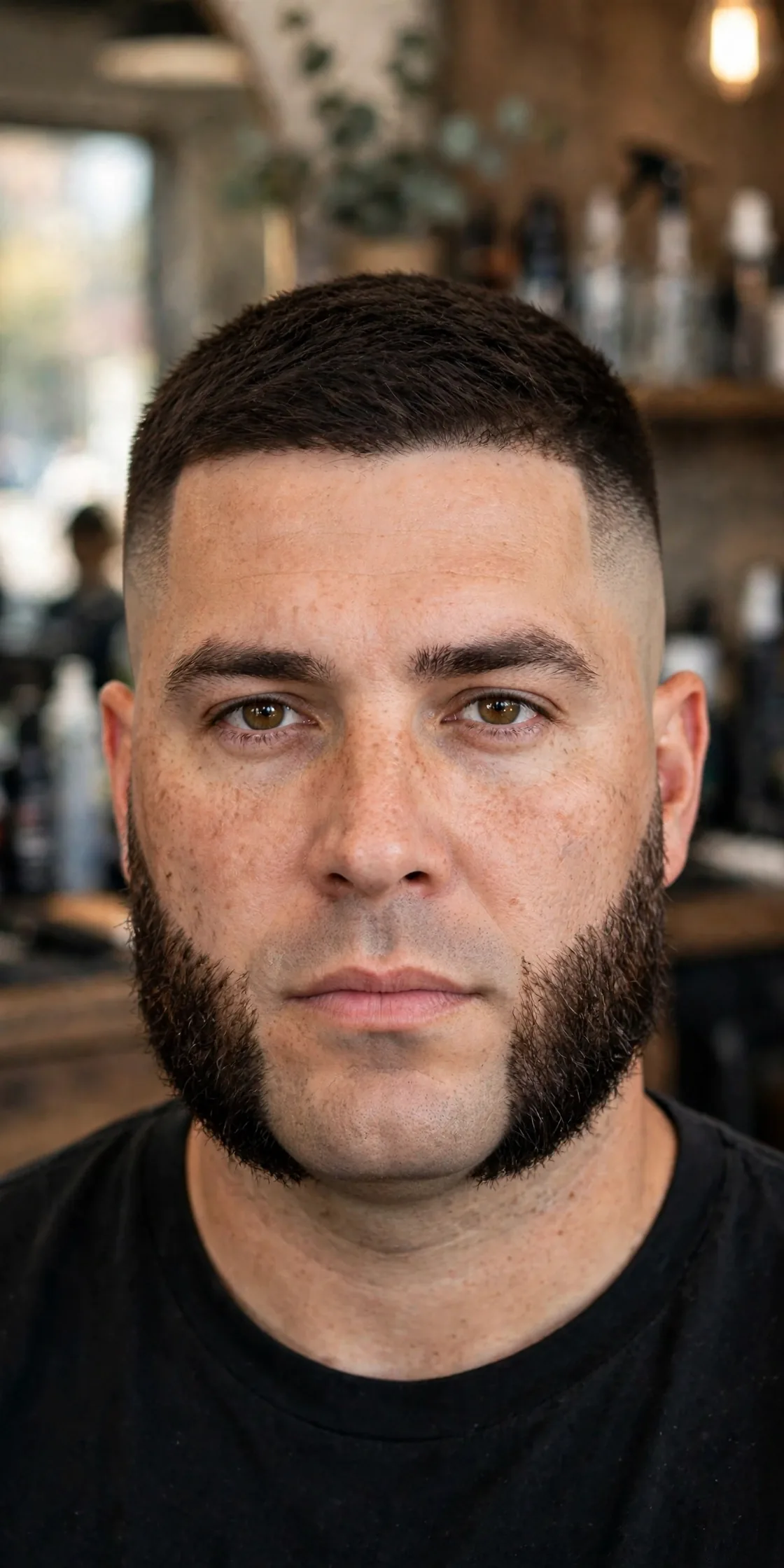
Mutton chops are back, and the faded version is how modern men wear them — the wide sideburns grow down the cheeks while the chin stays clean-shaven, and fading the tops into the haircut’s fade keeps them from looking like a period costume.
Ask your barber: “Modern mutton chops — wide on the cheeks, chin clean — and fade the tops into my haircut. Keep them blended, not blocky.”
Style it: Shave the chin and neck daily; the chops only make sense against a clean canvas, and stubble ruins the effect.
26. The Quiff + Beard Fade
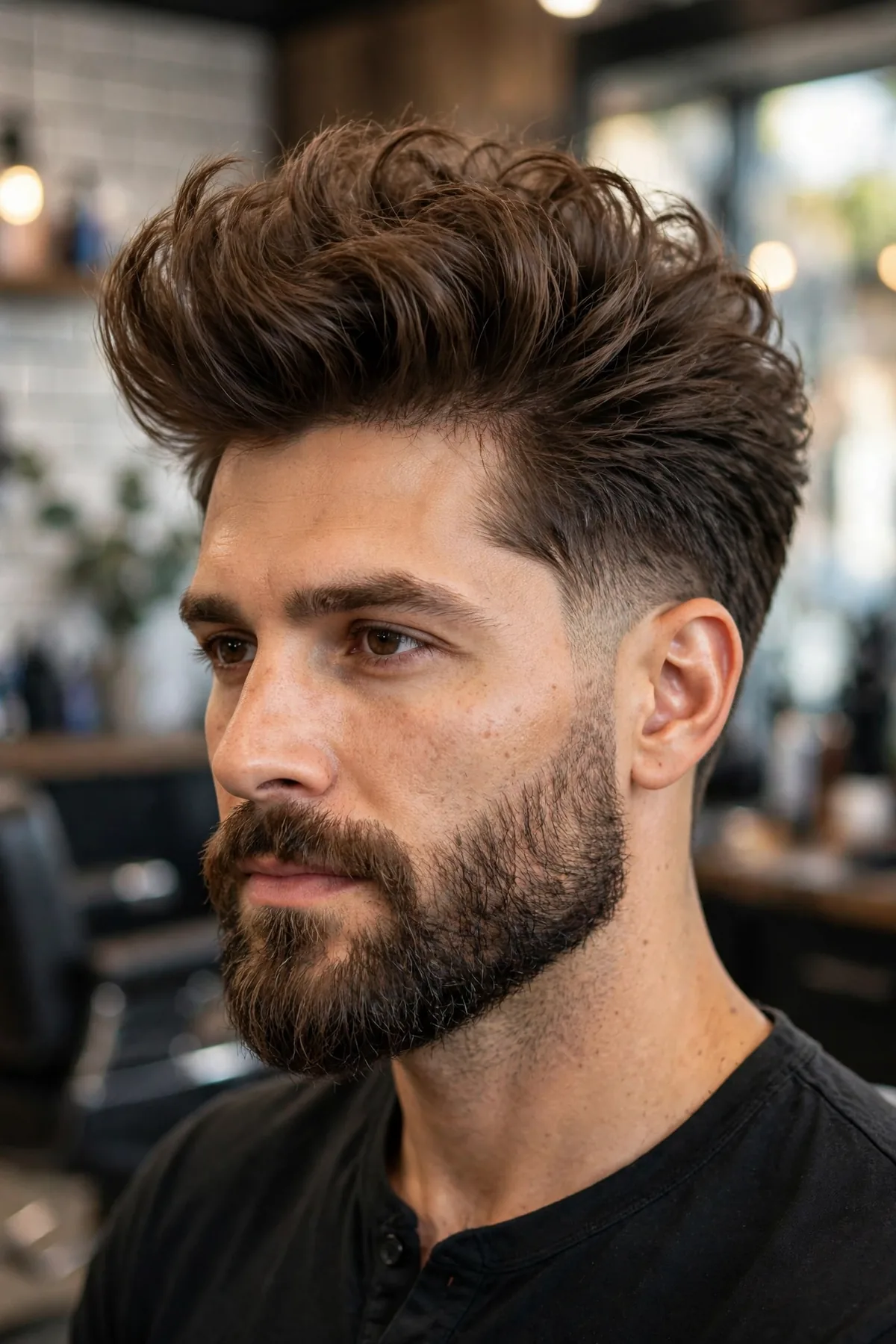
Height on top, precision below. The quiff’s volume pairs beautifully with a beard fade — ask your barber to match the fade heights, so a quiff with a mid fade on top gets a mid beard fade below. One of the most requested combos in barbershops right now.
Ask your barber: “Quiff on top with a mid fade, and match the beard — mid beard fade blending into a medium-length beard. Keep the heights consistent.”
Style it: Matte clay in the quiff, beard oil below; the matte-on-top and conditioned-beard combo keeps the two textures from competing.
27. The Pompadour + Beard Fade
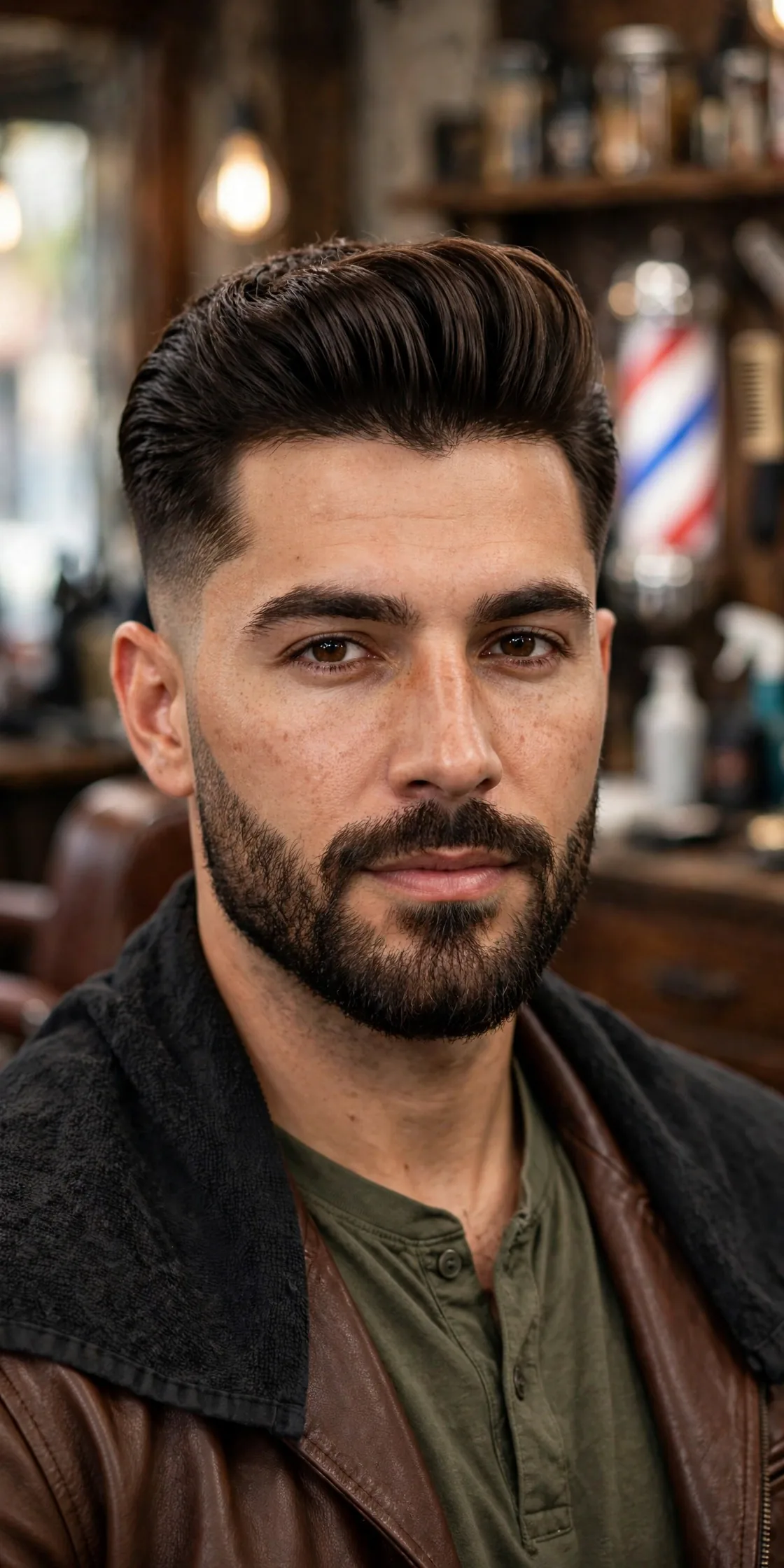
The pompadour brings classic volume and swagger, and a beard fade grounds it with modern edge. The trick is balance: the bigger the pomp, the more structure the beard needs — go with a defined mid or high fade and sharp cheek lines.
Ask your barber: “Pompadour up top, and a structured beard fade to match — mid fade on the beard, sharp cheek lines, keep the beard medium.”
Style it: Blow-dry the pomp with a round brush for height, and brush the beard downward; opposing directions create the balance this combo needs.
28. The Buzz Cut + Beard Fade

The buzz cut plus a full beard is one of the most masculine pairings in grooming, and the beard fade is the glue that makes it work — the fade at the sideburns bridges the two into one continuous silhouette. A buzz cut with a skin or mid fade on the sides is all it takes.
Ask your barber: “Buzz it — #2 on top with a mid skin fade on the sides — and blend the fade straight into my full beard. No visible seam.”
Style it: Sunscreen on the faded scalp zone; freshly faded skin burns fast, and a sunburned sideburn ruins the whole blend.
29. The Curly Hair + Beard Fade
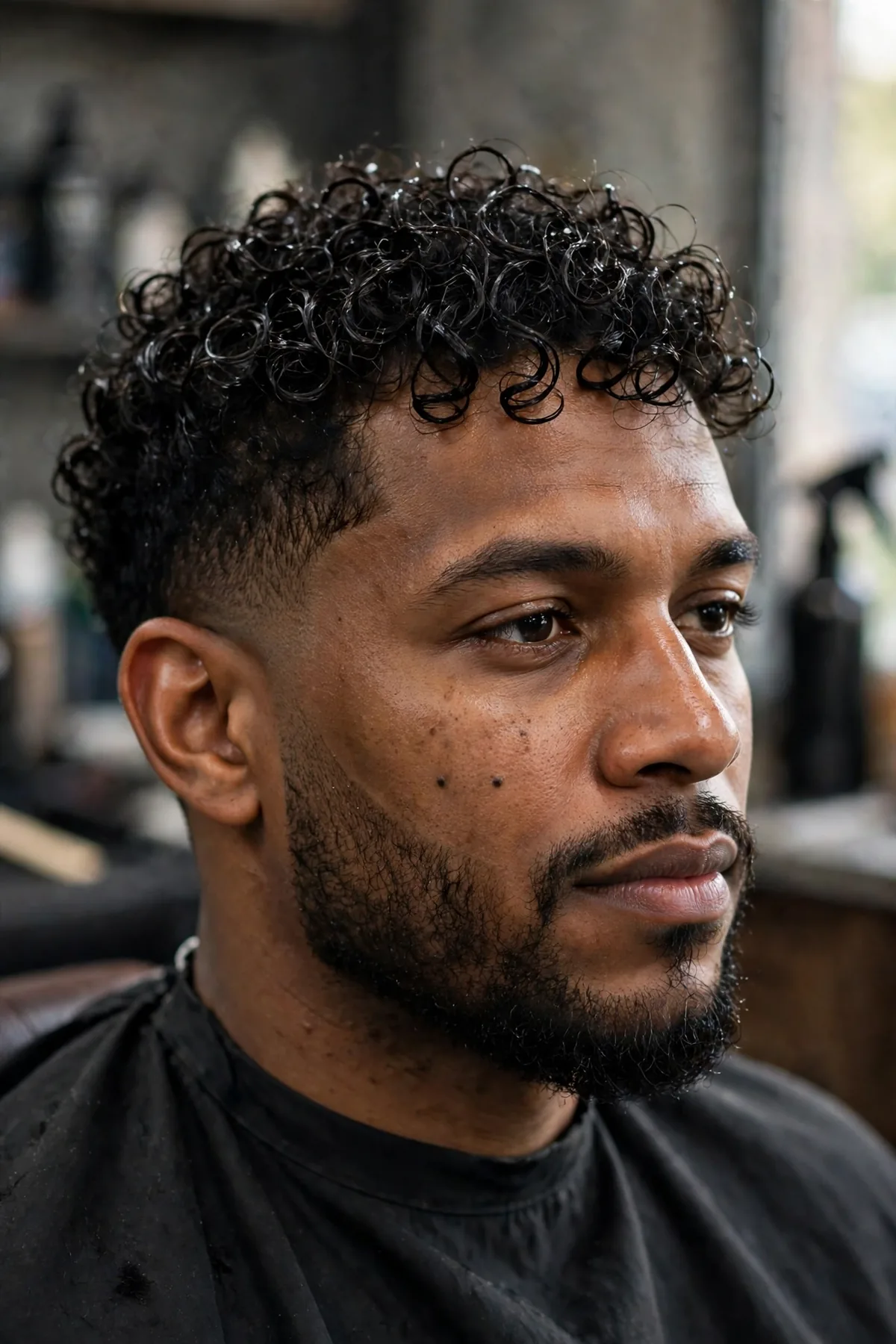
Curls on top and a faded beard below is a texture-lover’s dream — tight curls give height and movement while the fade keeps the lower face neat. The sideburn fade needs slightly longer, softer guards than on straight hair to avoid a puffy disconnect.
Ask your barber: “Keep my curls, fade the sides down into a soft beard fade — use longer guards on the sideburns so it doesn’t puff out. Blend, don’t chop.”
Style it: Curl cream on top, beard oil below, applied to damp hair; defined curls plus a conditioned beard make the whole look intentional.
30. The Salt-and-Pepper Beard Fade
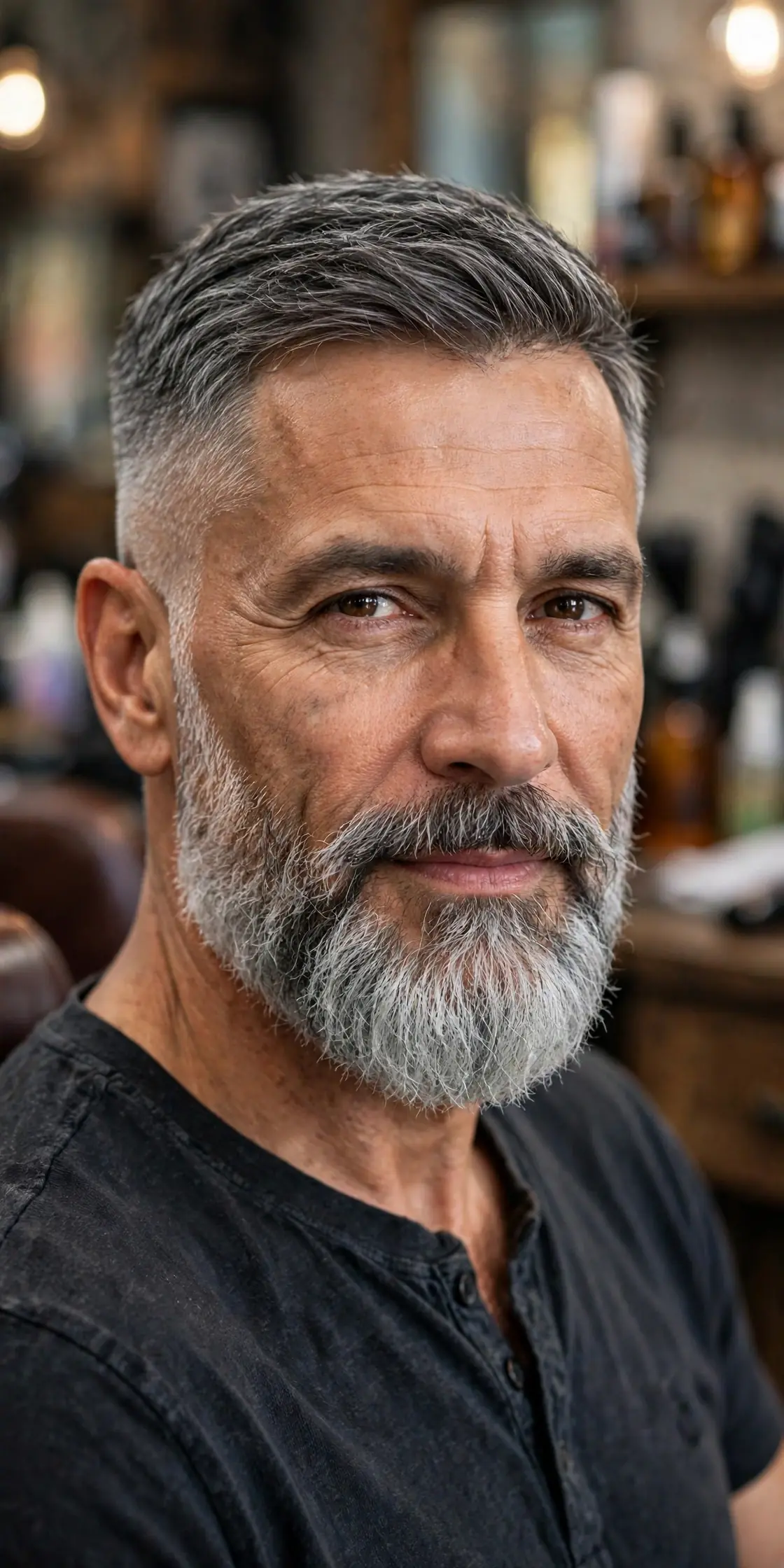
Gray in the beard is distinguished — and a beard fade makes it look deliberate instead of accidental. The fade adds structure that keeps a graying beard sharp, while the salt-and-pepper coloring makes the gradient more visible and interesting.
Ask your barber: “Beard fade that works with my gray — mid fade on the sideburns, keep the beard medium length, sharp cheek lines. Clean and distinguished.”
Style it: A purple-tinted beard wash once a week keeps gray from yellowing; yellowed gray dulls the fade’s contrast fast.
How to Fade Your Beard: The Step-by-Step Method
Fading your own beard is a learnable skill — here’s how to fade a beard at home without butchering it.
What you’ll need: clippers with guards from #0.5 to #4, a detail trimmer, a beard comb, scissors, and beard oil. Start with the oil — it helps wild hairs pop out so you cut what you actually see.
- Prep clean and dry. Wash, dry fully, and comb everything downward. Never fade a wet beard — wet hair looks longer than it is.
- Set your neckline first. Find the line under the corner of your jawbone, then place two fingers above your Adam’s apple — the top of the upper finger is your neckline. Connect the two points.
- Start with the longest guard. If your beard is a #4 at the jaw, begin with a #3 and trim about an inch up from the neckline. Starting long is your safety net — you can take more off, but you can’t put hair back.
- Work down in guard sizes, halving the area each time. Switch to a #2 and cover half the area you just did with the #3. Then a #1 over half of that. Then a #0.5 to clean the perimeter. Think of it as a staircase shrinking toward the skin.
- Fade with flicking strokes. Going against the grain removes bulk; going with the grain blends. Use light, outward flicks at the top of each stroke so you never carve a hard line between guard lengths.
- Fade the cheeks the same way. Draw a guide from where your sideburn curves into the cheek to the corner of your mouth, then fade upward toward the sideburn with the grain (clippers pointed downward).
- Detail and line up. Use the trimmer without a guard to sharpen the cheek line and neckline, then snip strays with scissors. Check both sides in the mirror — asymmetry is the most common home-fade mistake.
- Oil and verify the blend. Work oil through the beard and brush downward. The fade should read as one smooth gradient with no visible steps. If you see a line, go back one guard longer and flick over it.
Common mistakes to avoid: fading too high into the cheek (stick to your natural growth line), rushing (go slowly), and fading a beard too short to show a gradient (give it three weeks of growth first). When in doubt, have a barber set the first fade, then maintain it at home.
Beard Fade FAQs
What is a beard fade haircut?
A beard fade haircut blends the haircut gradually into the beard — usually from skin or short stubble at the sideburns into full beard length at the jaw and chin — connecting the two into one continuous look. Read more in our fade haircut guide.
How long does my beard need to be for a beard fade?
Three to four weeks of growth is the sweet spot — roughly half an inch to an inch at the jaw, enough length to build a visible gradient. Much longer beards can still be faded, but have a barber set it first since long hair hides the blend lines.
Can I fade my own beard at home?
Yes, with clippers, guards (#0.5 to #4), a detail trimmer, and a good mirror. Start with a longer guard than you think you need and work slowly. If you’re nervous, get one professional fade first and just maintain it at home between barber visits.
How often do I need to touch up a beard fade?
Every two to three weeks for most beard fade styles — skin fades closer to every two, soft tapers up to four. Stubble fades need weekly sideburn touch-ups. A quick at-home pass with the same guard sequence keeps it fresh between visits.
Does a beard fade work on patchy or thin beards?
It’s one of the best styles for patchy growth. Fading thin zones to stubble turns patchiness into an intentional-looking gradient, while the fuller chin and mustache stay long as the focal point. Be honest with your barber about density — lighter growth suits a low to mid fade.
What face shapes suit a beard fade best?
Beard fades flatter oval, round, square, and diamond faces — the fade slims the upper cheeks and sharpens the jawline. With a long, narrow face, fading can elongate further and look drawn, so ask for a low, subtle fade and keep fullness in the cheeks.
The Bottom Line
The beard fade haircut works for almost every man with facial hair — it sharpens the jawline, connects the haircut to the beard, and turns everyday growth into something designed. Grow it out, fade it down in steps, keep the lines clean. Pick your favorite of these 30 beard fade styles, bring the “ask your barber” line to your next appointment, and enjoy the sharpest version of your beard you’ve ever worn.