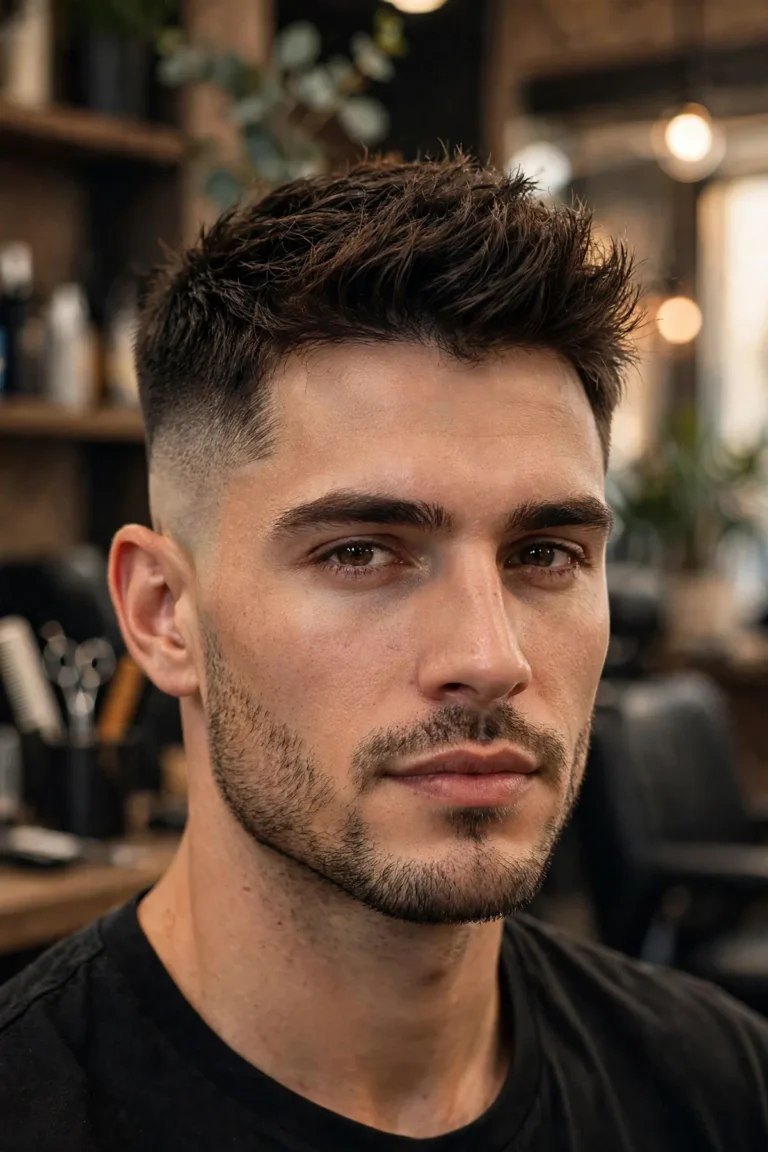
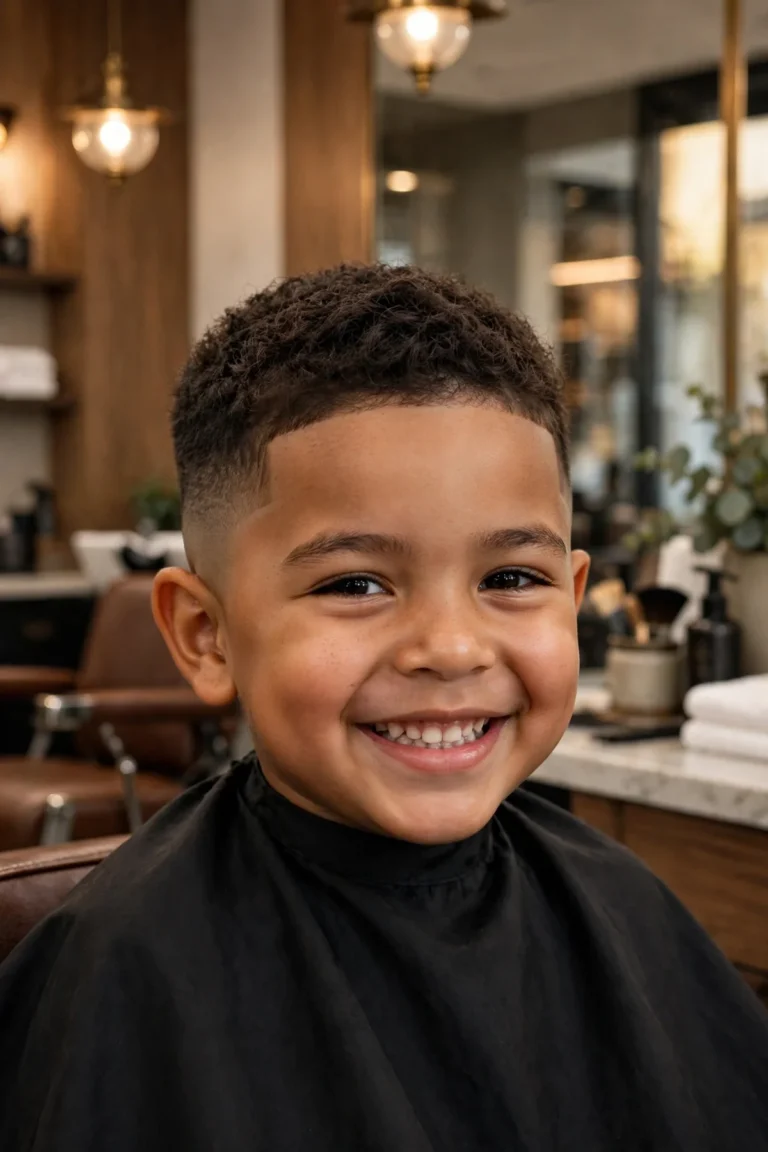
30 Best Drop Fade Haircuts for Men
A drop fade haircut is the kind of cut that makes people stop you on the street and ask where you get your hair done. It looks like a regular fade at first glance, but then you notice the difference: instead of running straight around your head, the fade line arcs downward behind your ear, hugging the natural curve of your skull and finishing lower at the nape of your neck. That one detail changes everything. It makes your head look rounder, your top look fuller, and your whole style look like it was cut by someone who actually knows what they’re doing.
Right now, the drop fade is one of the most requested men’s haircuts in barbershops across the country — and for good reason. It works with curly hair, coily hair, straight hair, thick hair, and thinning hair. It pairs with a buzz cut, a textured crop, a pompadour, twists, waves, and even a full beard. It’s sharp enough for the office, clean enough for a wedding, and cool enough for everywhere in between. Below you’ll find 30 of the best drop fade haircuts for men, each one explained in plain language, with exactly what to tell your barber and how to style it every morning.

1. Low Drop Fade

If you’ve never had a drop fade before, start here. The low drop fade sits just above your ears and dips gently at the nape, so the blend is subtle rather than dramatic. It’s the most forgiving drop fade for men trying the style for the first time — the grow-out is graceful, it suits almost every hair type, and it reads clean without shouting. Keep the top long enough to show some texture and let the sides do the quiet work.
Ask your barber: “Can I get a low drop fade? Take it to about a number one at the ears, drop the line behind them, and keep the top long enough to texture.”
Style it: A pea-sized amount of matte paste through dry hair, pushed forward with your fingers — thirty seconds, done.
2. Mid Drop Fade
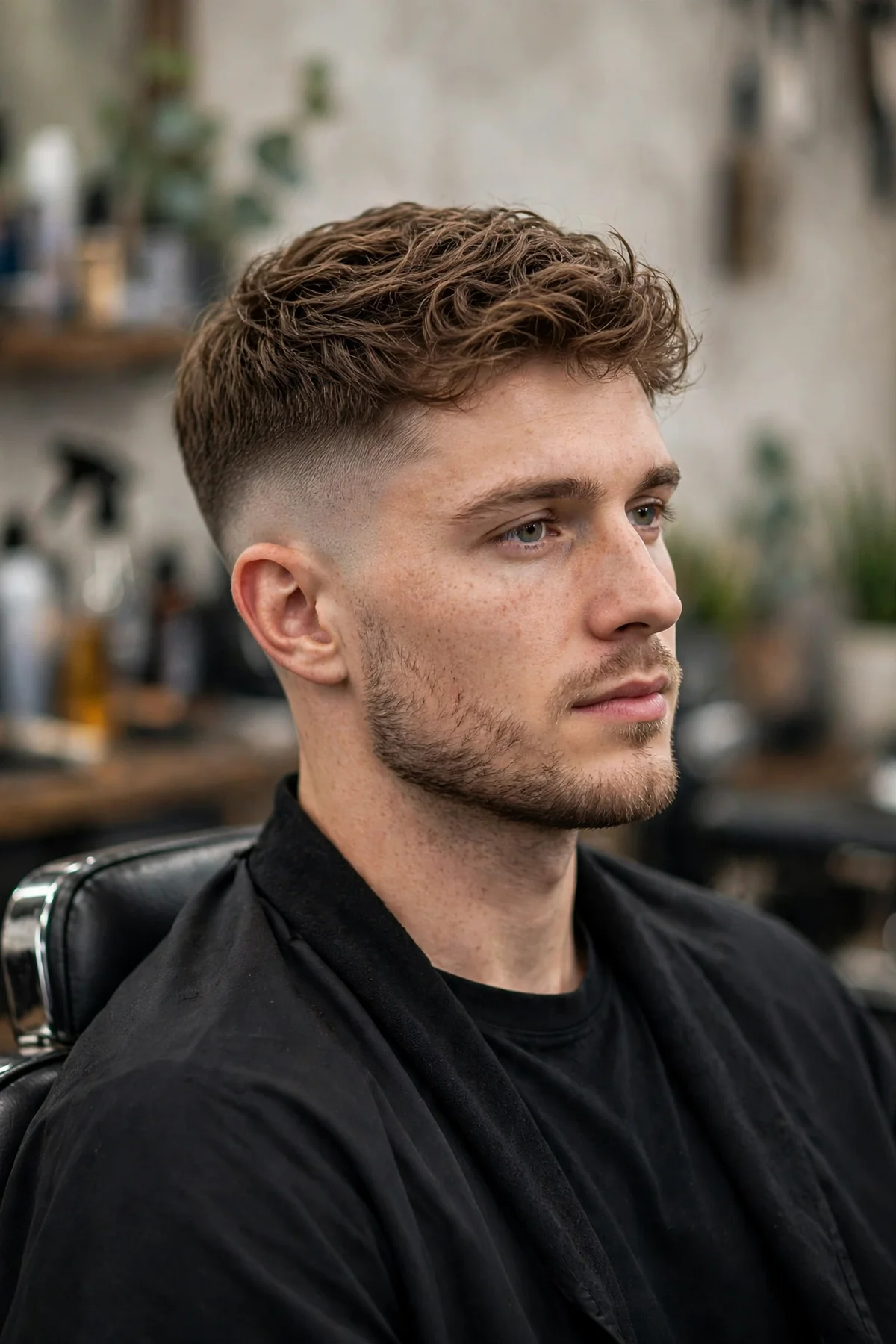
The mid drop fade is the sweet spot — not as subtle as the low version, not as bold as the high one. The blend starts around the middle of your sides and follows the signature downward arc, giving you a visible fade that still reads clean and professional. Most barbers will tell you this is the drop fade they cut most often, because it flatters the widest range of face shapes and hair types. It gives short sides a real sense of design while keeping enough coverage that your head never looks bare.
Ask your barber: “Give me a mid drop fade — start the blend around a number two halfway up the sides and drop it lower behind the ears. Leave the top long enough to texture.”
Style it: Sea salt spray on damp hair, rough-dry with your fingers, then pinch in a little clay for separation.
3. High Drop Fade

Ready to turn heads? The high drop fade takes the blend up toward the temples and drops it sharply behind the ears, creating a bold arc with real drama. Because so much of the side is faded, the top becomes the star — this is the version to pick if you’ve got thick, wavy, or curly hair you want to show off. Fair warning: it grows out faster than a low fade, so budget for touch-ups every couple of weeks.
Ask your barber: “I want a high drop fade — take it up near the temples, down to skin at the ears, and drop the line hard behind them. Keep the top full.”
Style it: Blow-dry the top upward and back for volume, then lock it in with a medium-hold pomade.
4. Bald Drop Fade
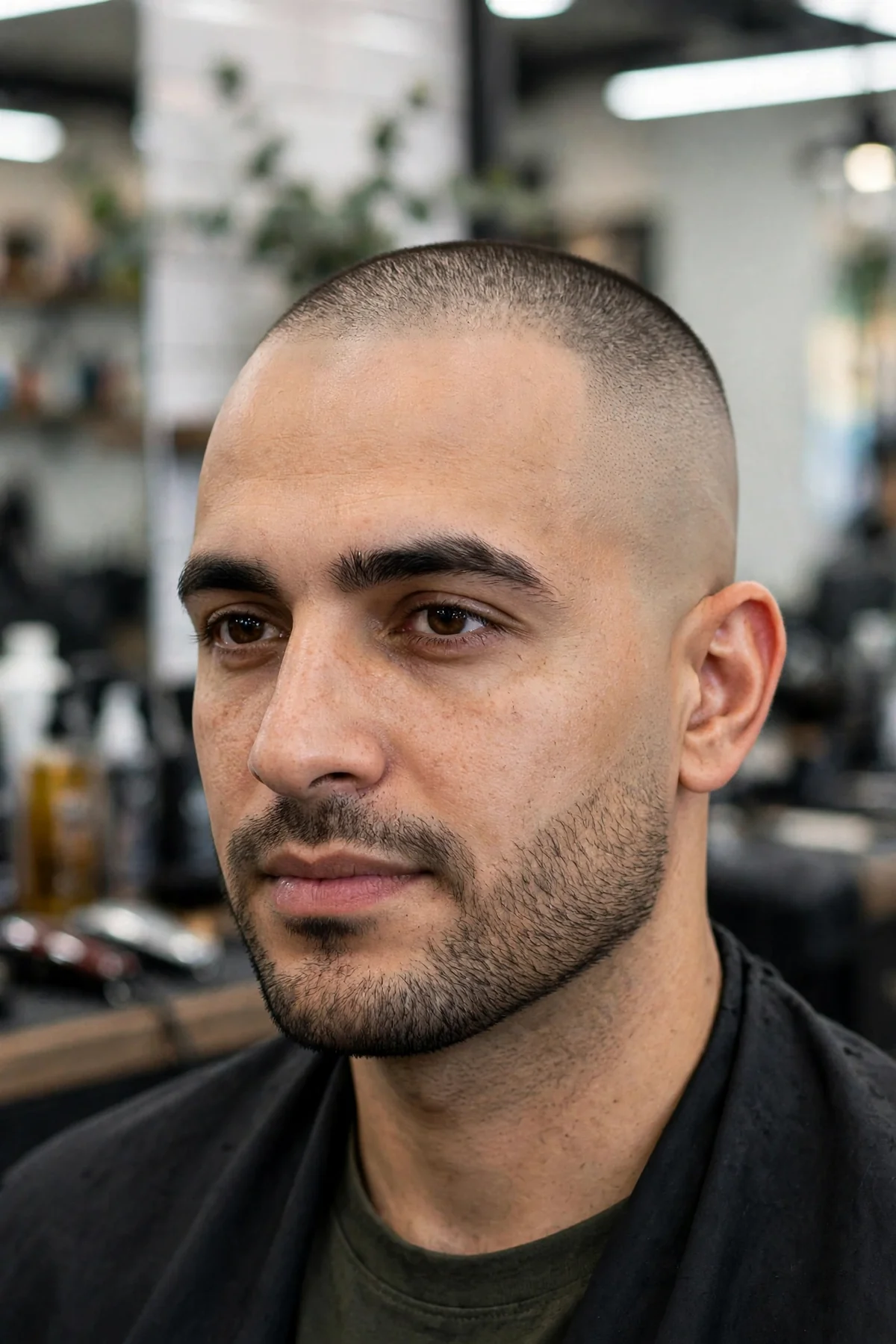
The bald drop fade takes the blend all the way down to bare skin along that signature curved drop line. The result is the crispest, cleanest version of this cut — the contrast between skin and hair makes the drop shape impossible to miss. This is a precision cut, so find a barber who’s sharp with a razor and keeps the line consistent on both sides. It grows out a little faster than a standard fade, but the first week looks so sharp most guys consider the maintenance worth it.
Ask your barber: “Bald drop fade, please — razor-sharp skin blend along the drop line, and keep the transition tight and even all the way around.”
Style it: Keep the top simple with a dab of styling cream, and maintain the edges with a trimmer between visits.
5. Skin Drop Fade

The skin drop fade melts the blend into the skin for a seamless, almost airbrushed transition. Where the bald version leans bold, the skin drop fade leans polished — the gradient is longer and smoother, which flatters straight and wavy hair especially well, since every line shows on those textures. Ask your barber to take their time on the blend, because a rushed skin fade shows every mistake. Pair it with a textured fringe and you’ve got one of the most modern men’s haircuts you can wear today.
Ask your barber: “Skin drop fade with a long, smooth blend — melt it into the skin, keep the drop line clean, and leave the top textured and forward.”
Style it: Push the top forward with matte clay for texture, or add a little shine cream for a dressier finish.
6. Drop Taper Fade

Think of the drop taper fade as the drop fade’s relaxed cousin. Instead of a bold contrast blend, the taper keeps the sides longer and gradually shortens them along the dropped curve — no skin, no harsh lines, just a clean, natural transition. This is the version for guys who want the shape of a drop fade but need something office-safe. It grows out gracefully, so you can stretch appointments to four or five weeks without looking scruffy.
Ask your barber: “Drop taper fade — keep the sides long with a soft taper, drop it behind the ears, no skin. I want it natural.”
Style it: A little grooming cream through the top and a quick comb — this cut does most of the work itself.
7. Drop Fade Buzz Cut

A buzz cut with a drop fade proves short hair doesn’t have to be boring. The top stays uniform and low — a number two or three — while the sides follow the drop fade’s curved blend. That arc behind the ear separates this from every other buzz cut in the room; it adds shape and intention to a haircut that otherwise takes ten minutes. It’s also one of the easiest men’s haircuts to maintain: wash, dry, done. If your summers run hot and humid, you won’t find a cooler, lower-fuss option.
Ask your barber: “Buzz cut on top with a drop fade on the sides — number two up top, fade the sides with the line dropping behind the ears.”
Style it: Honestly, nothing — maybe sunscreen on the scalp if it’s very short. That’s the whole routine.
8. Curly Top Drop Fade
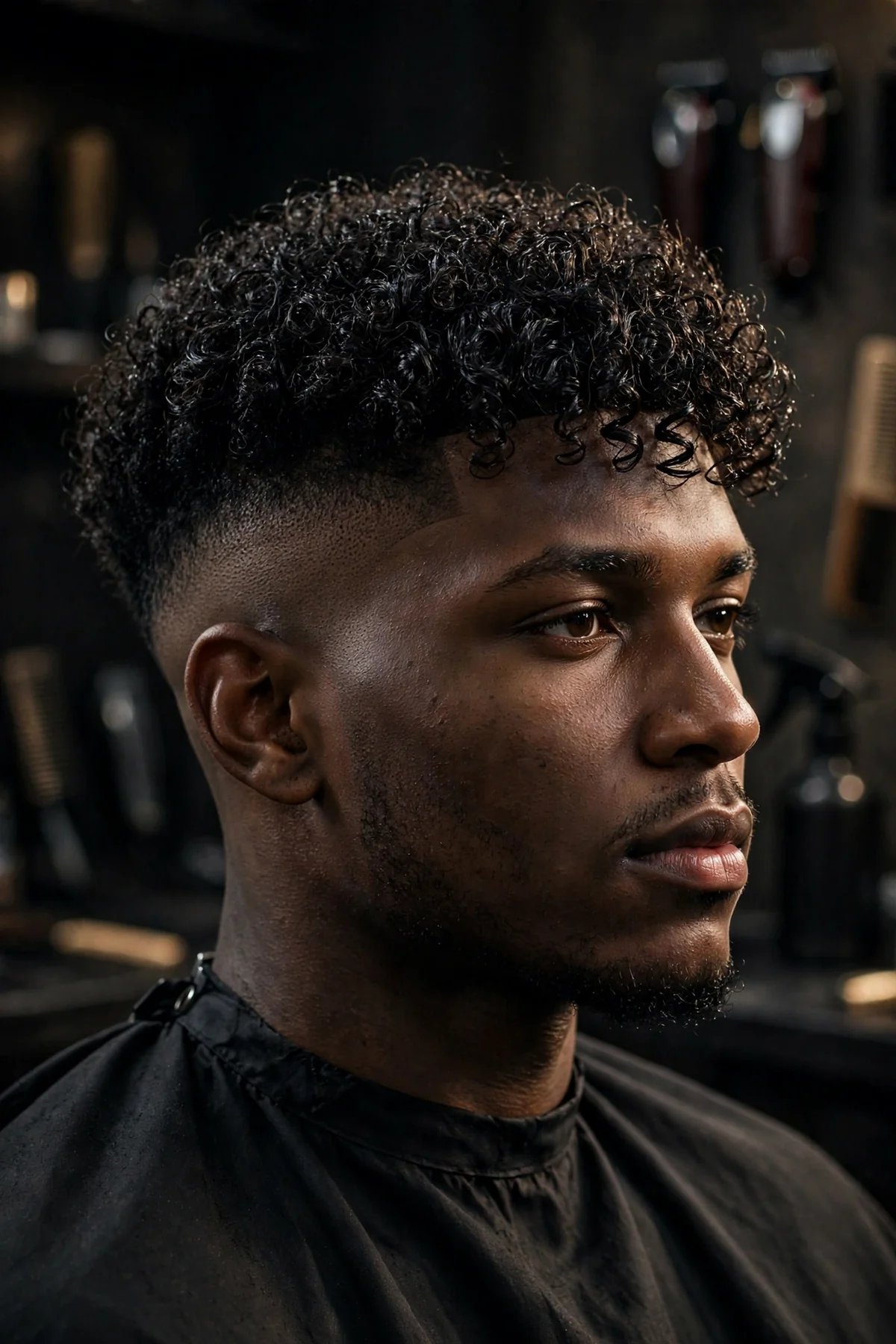
The curly top drop fade is one of the most popular pairings in the game: the sculpted sides make your natural curls the undisputed star. The drop line arcs under the bulk of the curls, giving the cut a rounded silhouette that flatters round and square faces especially well. Leave enough length on top for the curls to form — too short and you lose the texture that makes this work.
Ask your barber: “Keep the curls long on top — two to three inches — with a drop fade on the sides curving down behind the ears. Shape the top, don’t thin it out.”
Style it: Curl cream on damp hair, scrunch upward, air-dry or diffuse — defined curls, zero frizz.
9. Drop Fade with Waves
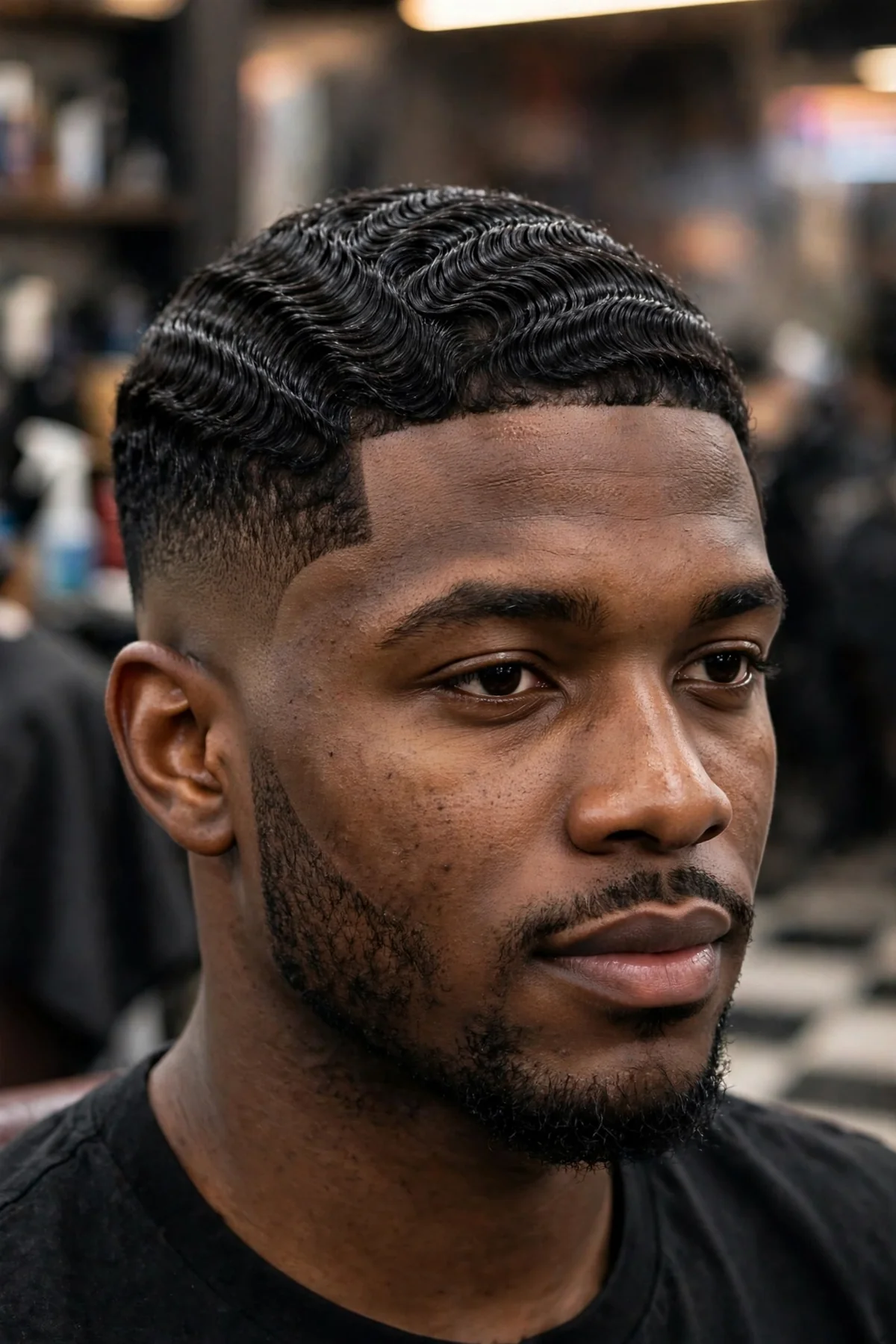
Waves and a drop fade are a legendary combination — the 360 wave pattern flows right into the faded sides, and the drop line frames the waves so the whole cut looks deliberate. The drop fade actually makes the wave journey easier: the faded sides remove the bulk that fights your wave pattern at the edges. Ask your barber to keep the top at your wave length — usually a two to four — and to blend carefully so the fade doesn’t eat into your crown.
Ask your barber: “I’m growing waves — keep the top at my wave length and give me a clean drop fade on the sides. Don’t cut into the pattern at the crown.”
Style it: Brush in the wave pattern, moisturize, durag at night — consistency is the whole secret.
10. Drop Fade with Twists

Two-strand twists over a drop fade is a standout look — the texture of the twists against the smooth, curved blend creates contrast that looks even better in person than in photos. It shows off length and texture while keeping the edges razor-clean, and the drop fade’s arc follows the head’s curve so the cut never looks boxy.
Ask your barber: “Drop fade on the sides — medium height, clean curve behind the ears — and leave the top long enough for twists. Line up the hairline.”
Style it: A light oil on the twists, and a quick trimmer pass along the edges to keep the fade fresh.
11. Drop Fade Afro

A drop fade afro is all about silhouette. The faded sides remove weight at the edges, letting the afro sit rounder and more sculpted — and the drop line follows the head’s curve so the cut looks intentional, not overgrown. Have your barber shape the afro with the fade in mind, keeping the top’s edges tight enough that the transition looks seamless. A pick and a little moisturizer are the only tools you need.
Ask your barber: “Shape my afro round on top with a drop fade on the sides — blend the edges into the fade so there’s no harsh line.”
Style it: Pick it out from the roots each morning and smooth the edges with a little edge control.
12. High Top Drop Fade
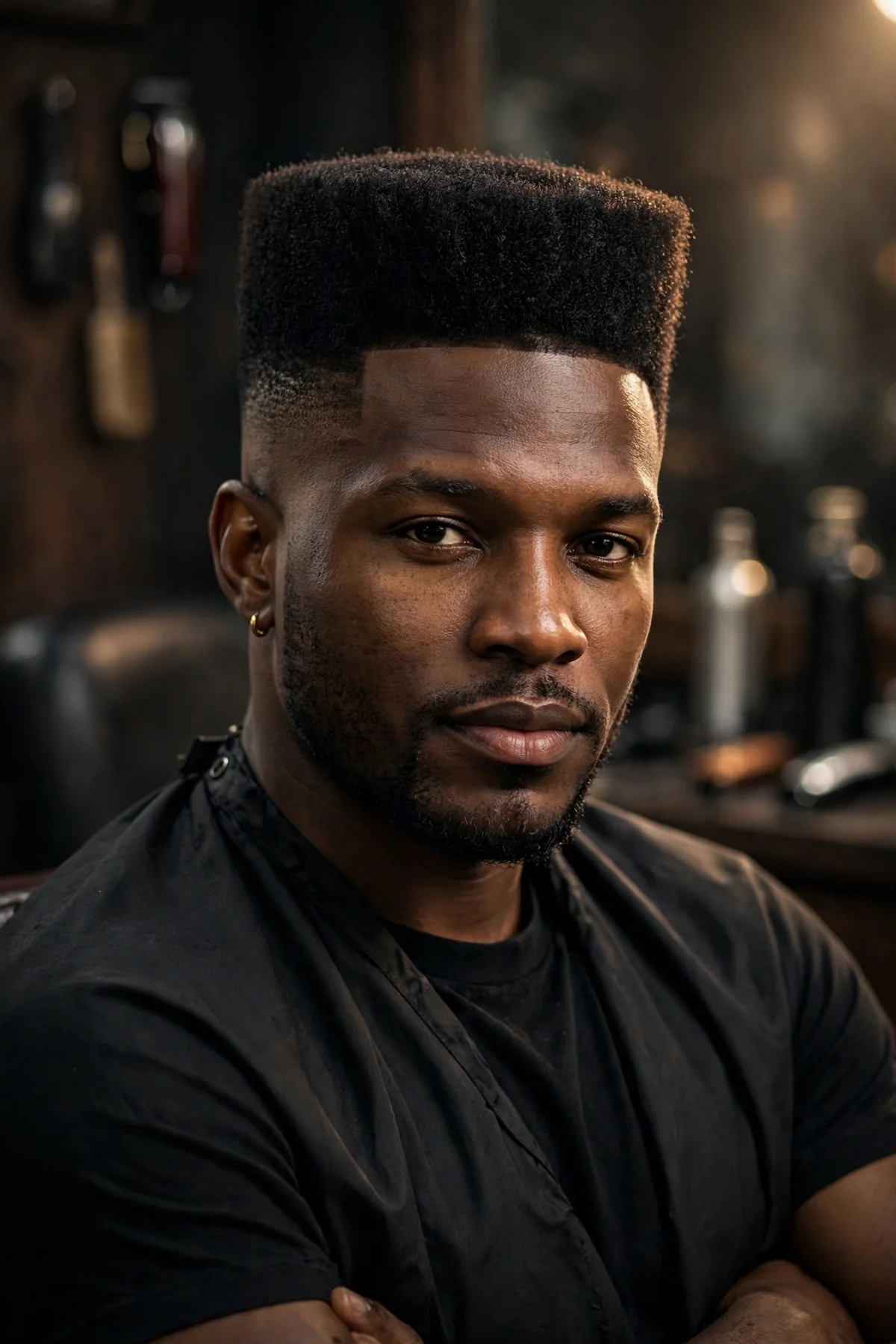
The high top drop fade brings a classic silhouette into the modern era. The tall, squared-off top gets a contemporary edge from the drop fade’s curved blend — today’s version is usually softer and more textured than the originals, which makes it more wearable day to day. This cut demands a barber who can shape the top precisely; the fade is the easy part, the geometry of the high top is the art.
Ask your barber: “High top with a drop fade — square up the top, keep it tall, and drop the fade behind the ears. I want the shape crisp.”
Style it: Firm-hold product and a flat brush to lift the top; keep a pick handy for touch-ups.
13. Textured Crop Drop Fade

The textured crop with a drop fade is the haircut that quietly dominates right now. The choppy, layered top gives you movement and volume with almost no effort, while the drop fade keeps the sides tight and the silhouette rounded. It’s one of the most forgiving men’s haircuts — bedhead looks intentional, second-day hair looks fine, and it works on straight, wavy, and thick hair alike. Ask for point-cutting through the top to build texture, and let the drop fade handle the structure underneath.
Ask your barber: “Textured crop on top — choppy layers, point-cut for texture — with a mid drop fade on the sides. Fringe just above the brows.”
Style it: A little matte paste, tousled with your fingers — the messier it looks, the better.
14. Messy Top Drop Fade

The messy top drop fade is the cool-older-brother version of the textured crop: longer on top, more movement, deliberate “I woke up like this” energy. The contrast does the work — controlled chaos on top against the precision of the drop fade. It suits wavy or thick hair with natural volume best, and it’s forgiving as it grows out since the texture hides uneven growth. Keep the top four to six inches so it can move, and tell your barber to cut for texture, not neatness.
Ask your barber: “Keep the top long and messy — layers for movement — with a drop fade on the sides. Cut it for texture, not neatness.”
Style it: Scrunch sea salt spray into damp hair and air-dry — the less you do, the better.
15. Side Part Drop Fade

The side part drop fade is what happens when a classic gentlemen’s cut meets a modern barbershop fade. The defined part and swept-over top bring polish, while the drop fade keeps the sides fresh and current. It’s one of the most versatile drop fade haircuts for men — boardroom, wedding, weekend, all without changing a thing. The key detail: have your barber blend the fade into the part cleanly, so the transition from the longer top to the faded sides looks seamless.
Ask your barber: “Side part on top with enough length to sweep over, and a clean drop fade on the sides. Define the part but keep it natural.”
Style it: Comb the top to the side while damp with a little pomade, then set the part with a quick pass.
16. Comb Over Drop Fade
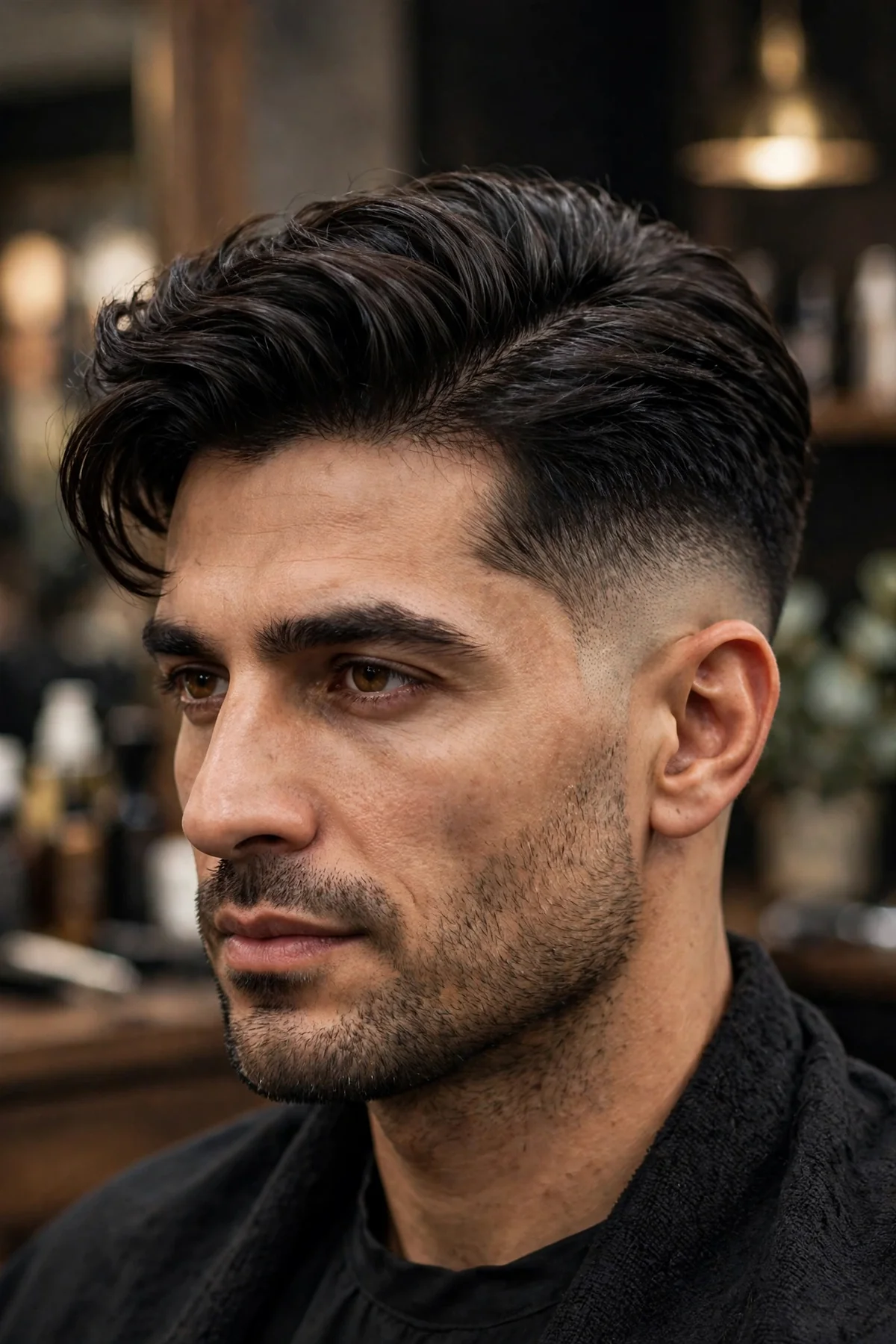
Forget the old jokes — the modern comb over with a drop fade is a genuinely sharp haircut. The longer top sweeps across with real volume and flow, and the drop fade gives the sides a clean, curved finish that keeps it current. It’s an excellent choice for a receding hairline, because the volume on top and sharp sides draw attention to the cut, not the hairline. Ask for at least three inches on top for real movement, and a tight drop fade so the contrast stays strong.
Ask your barber: “Comb over with real length on top — at least three inches — and a tight drop fade on the sides. I want volume in the sweep.”
Style it: Blow-dry across with a round brush for volume, then smooth into place with a medium-hold cream.
17. Slick Back Drop Fade
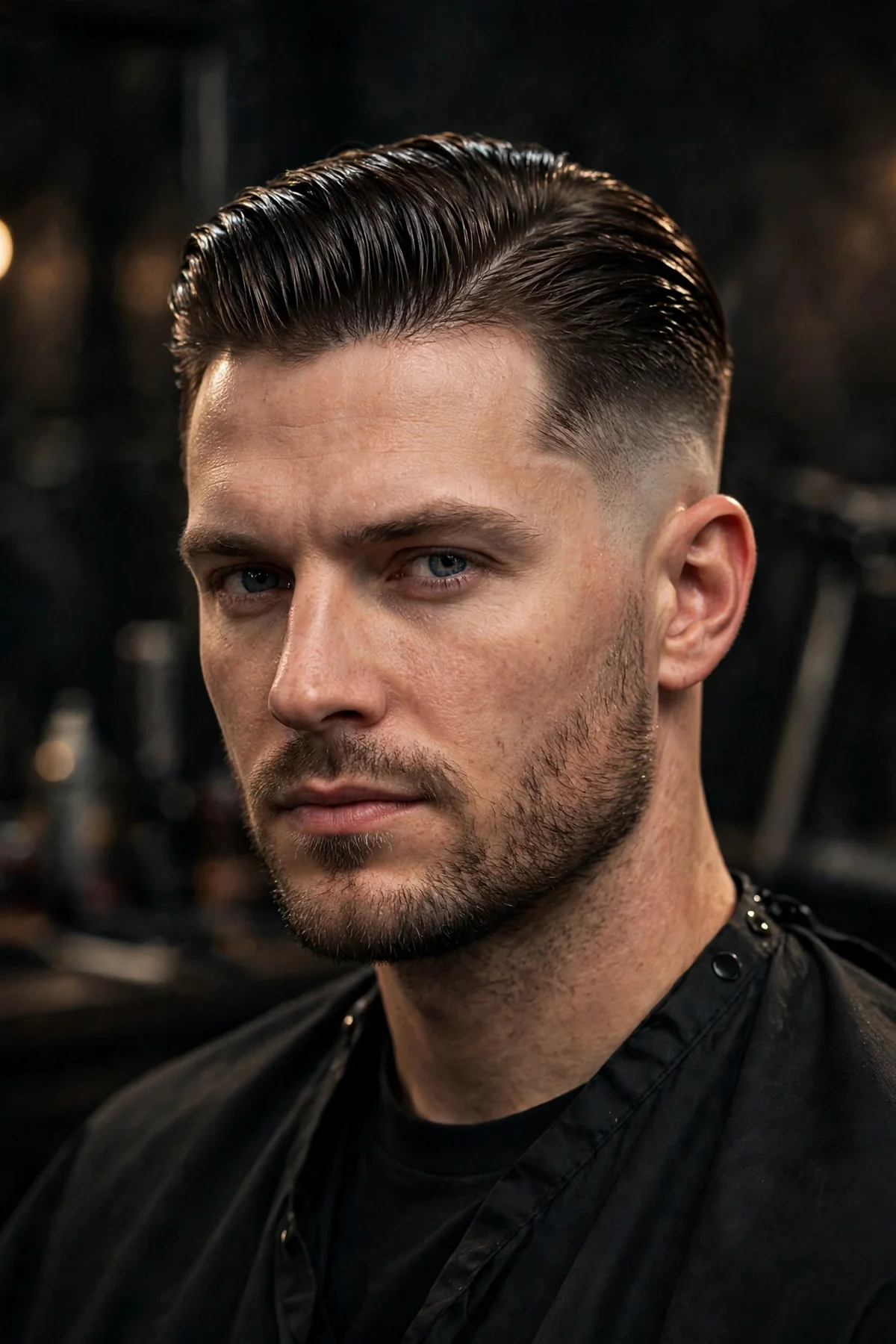
The slick back drop fade is pure confidence. All the length goes backward in one smooth motion, and the drop fade carves a clean curve through the sides that makes the whole cut look expensive. It suits straight or slightly wavy hair with some density — you need enough hair to lay flat and stay put. It’s also great for longer faces, since the backward flow doesn’t add height the way a quiff would. Either way, the drop fade keeps the sides immaculate while the top does the talking.
Ask your barber: “Slick back on top — long enough to lay flat — with a clean drop fade on the sides. Taper the very back into the neckline.”
Style it: Pomade on damp hair, combed straight back; a second pass when nearly dry for all-day hold.
18. Quiff Drop Fade

The quiff is one of the most flattering styles a man can wear, and the drop fade is its perfect partner. The volume sweeping up at the front gives you height and movement, while the drop fade’s curved blend keeps the sides tight and the silhouette balanced. It works on straight, wavy, and thick hair — if your hair has any natural lift, the quiff will find it. The secret is the blow-dry: directing the front upward builds the volume that makes a quiff a quiff. For more volume ideas, our quiff haircut guide breaks down every variation.
Ask your barber: “Quiff on top — length in front to sweep up and back — with a mid drop fade on the sides. Keep the front the longest part.”
Style it: Blow-dry the front up and back with a round brush, then lock it with a medium-hold pomade.
19. Pompadour Drop Fade

The pompadour drop fade is the boldest volume play on this list. The tall, swept-back pomp commands attention, and the drop fade gives it a modern foundation — the curved blend keeps it firmly in today’s style instead of looking like a costume. You’ll need real length on top (four inches minimum in front) and hair with enough body to hold the shape. This isn’t wash-and-go; the blow-dry is the haircut, honestly.
Ask your barber: “Pompadour up top — long in front, shorter toward the crown — with a clean drop fade on the sides. I want real height.”
Style it: Blow-dry up and back with a round brush and heat protectant, then set with a strong-hold pomade.
20. Faux Hawk Drop Fade
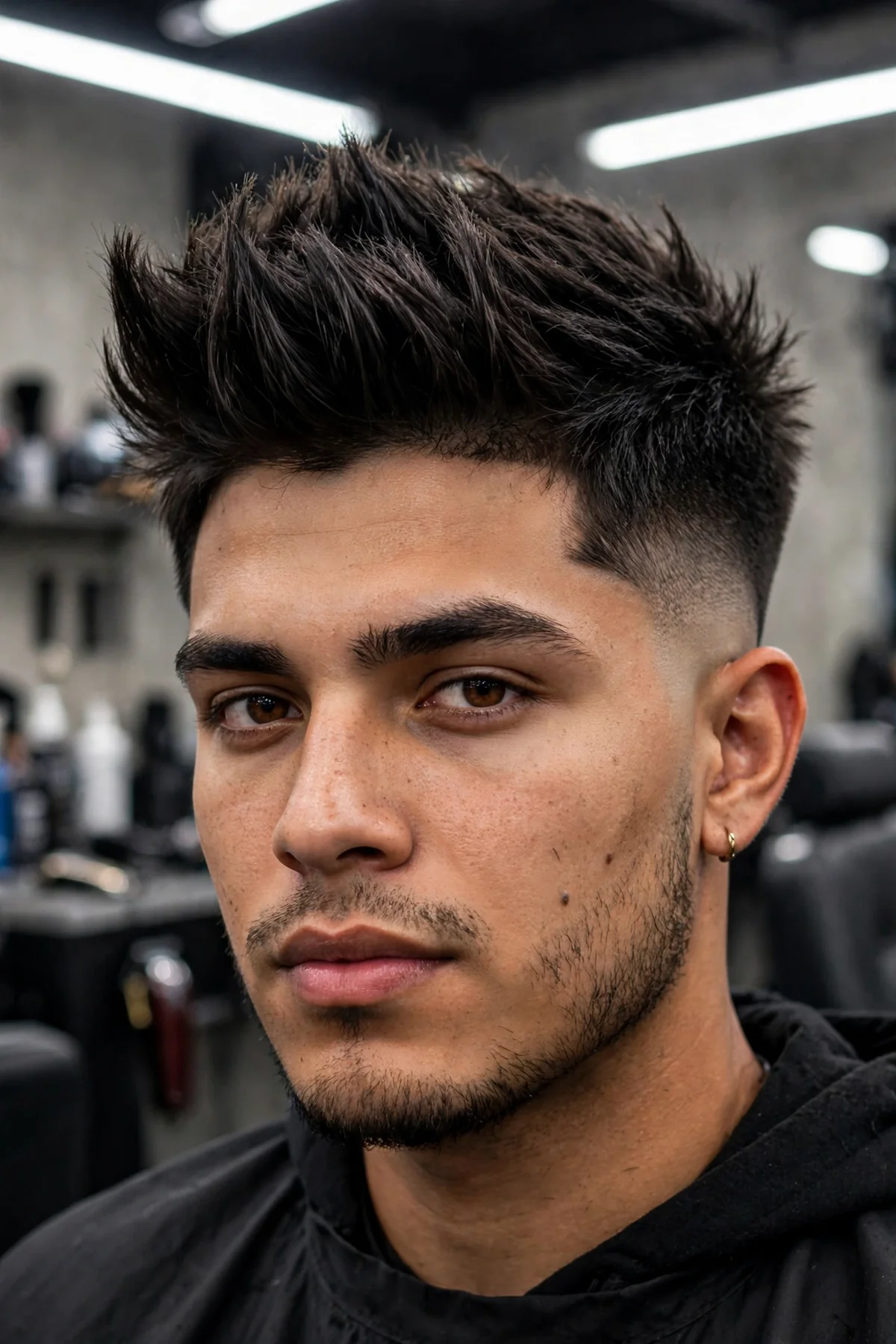
The faux hawk with a drop fade is edgy without going full punk. The center strip pushes upward, the sides fade away along the drop curve, and the result has real attitude you can still wear to work on Monday.
Ask your barber: “Faux hawk — a strip of length down the center, sides faded with a drop. Keep the drop line clean so the shape stays sharp.”
Style it: Strong-hold wax through the center strip, pushed upward and slightly forward with your fingers.
21. Drop Fade Mohawk
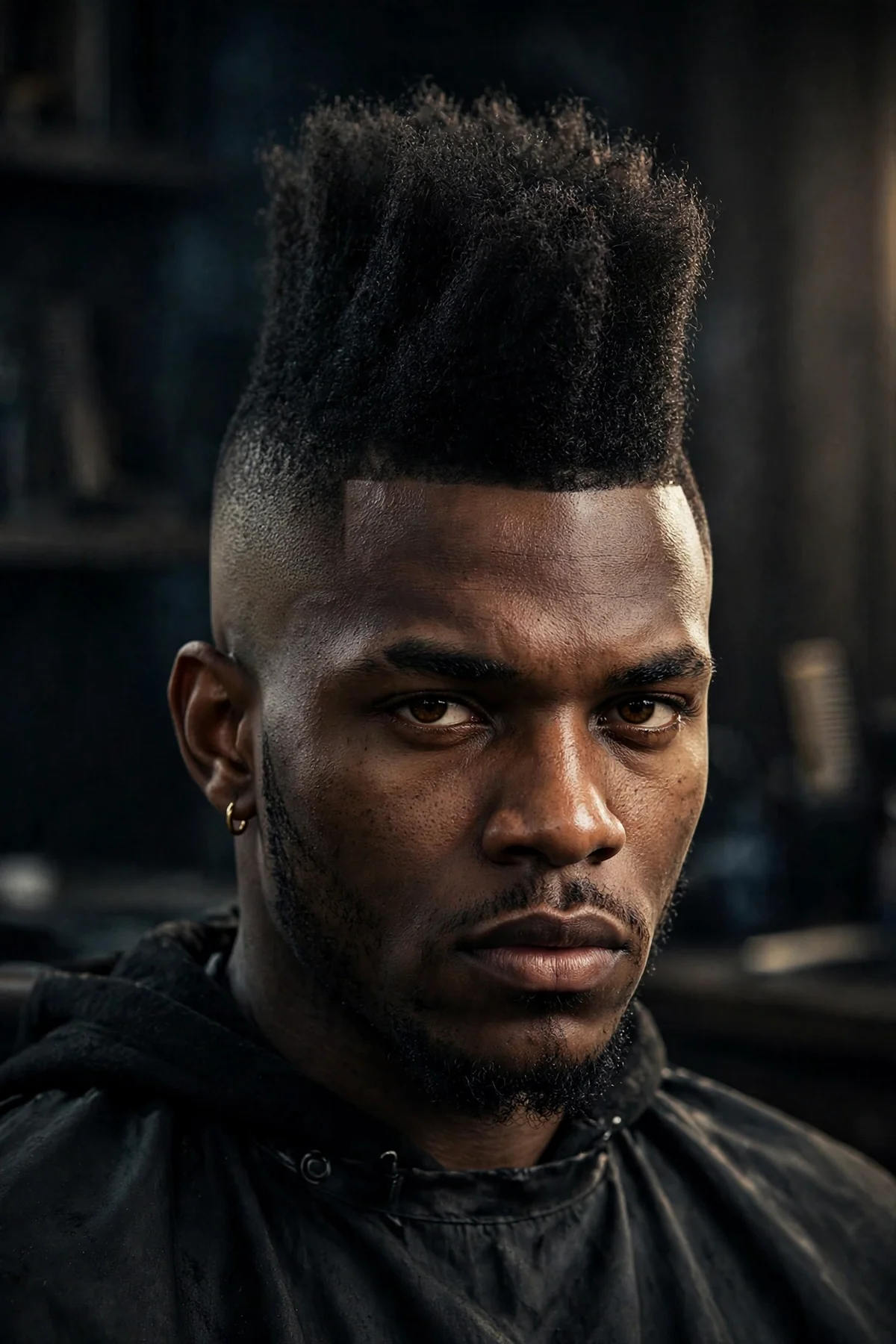
The drop fade mohawk is the full-commitment version of the faux hawk — a wider, taller center strip with the sides faded tight along the drop curve. It’s not for everyone, and that’s the point. What keeps it wearable is the drop fade: the curved blend gives the sides shape and polish instead of the harsh shaved look of a traditional mohawk. This is a statement haircut, so own it. And find a barber who genuinely enjoys creative cuts, because the details matter here.
Ask your barber: “Mohawk with a drop fade — wide center strip, tall, sides faded along the drop curve. Keep the edges sharp.”
Style it: Strong-hold gel or wax through the strip, pushed straight up — this needs product with backbone.
22. Edgar Drop Fade

The Edgar — straight, blunt fringe with faded sides — gets a serious upgrade from the drop fade. The curved drop line softens the Edgar’s normally boxy silhouette, giving it a rounder, more modern shape that flatters more face types. The fringe stays the star: cut straight across with sharp, clean lines. Ask your barber to keep the fringe crisp — the whole look depends on that straight edge. For the full breakdown, see our Edgar haircut guide.
Ask your barber: “Edgar cut — blunt straight fringe — with a drop fade on the sides instead of a straight fade. Keep the fringe edge sharp.”
Style it: Flat-iron the fringe if needed and smooth it forward with a light pomade — the straighter, the better.
23. Blowout Drop Fade

The blowout drop fade is maximum volume meets maximum clean. The top gets blown up and back into a big, airy shape while the drop fade carves a precise curve through the sides. It’s dramatic and fun — the contrast between the huge top and the tight sides is what makes it work. You’ll need three to four inches on top and a blow dryer; there’s no shortcut to blowout volume. Our blowout haircut guide covers the technique in detail.
Ask your barber: “Blowout on top — keep it long with layers for volume — with a drop fade on the sides. Don’t thin the top too much.”
Style it: Blow-dry upside down for root lift, then direct up and back with a vent brush and volumizing mousse.
24. Brush Up Drop Fade

The brush up drop fade is the blowout’s more wearable sibling — all the upward movement, but controlled and tidy instead of wild. The top brushes up and slightly back for height and texture, while the drop fade keeps everything below immaculate. It’s excellent for thick or wavy hair that naturally wants to go up; you’re working with your hair’s instincts. A round brush and blow dryer build the lift, and a medium-hold product keeps it in place without looking stiff.
Ask your barber: “Brush up on top — texture through the layers so it lifts easily — with a clean drop fade on the sides.”
Style it: Blow-dry upward with a round brush, then work a medium-hold cream through for natural lift.
25. French Crop Drop Fade

The French crop is the thinking man’s short haircut — textured top, short fringe, minimal fuss — and the drop fade gives it a modern edge. The curved fade line rounds out the crop’s silhouette, which flatters longer faces especially well. This is one of the easiest drop fade haircuts to live with: the top needs almost no styling, and the fade keeps it looking deliberate.
Ask your barber: “French crop — short textured top with a fringe — and a drop fade on the sides. Keep the fringe textured, not blunt.”
Style it: A tiny bit of matte paste pushed forward with your fingers — twenty seconds, done.
26. Undercut Drop Fade
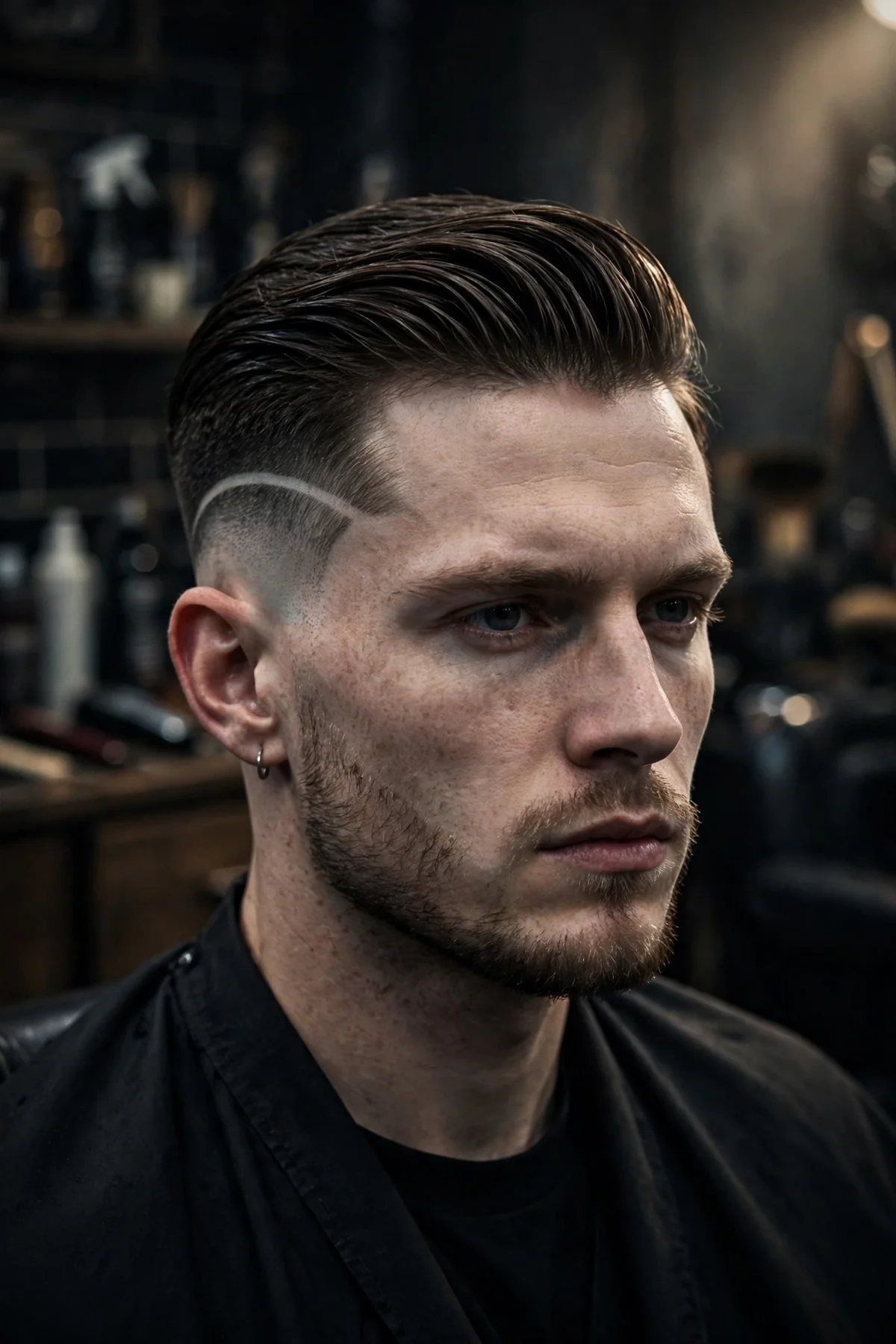
The undercut drop fade combines two bold ideas: the undercut’s dramatic disconnect with the drop fade’s curved blend softening the transition. The result is less severe than a classic undercut but more interesting than a standard fade — the drop line gives the disconnect a shape instead of a cliff. It works best with real length on top (four-plus inches) that you can slick back or tie up. It’s a high-contrast cut that rewards guys who enjoy styling.
Ask your barber: “Undercut with a drop fade — disconnect the long top from the sides, fade along the drop curve. Keep the top long.”
Style it: Slick back with pomade for polish, or tie it up — the undercut base handles both.
27. V-Neckline Drop Fade

Here’s a detail most guys never think about: the neckline. The V-neckline drop fade finishes the back in a sharp V point at the nape, and combined with the drop fade’s downward arc, the back view is genuinely striking. It’s the cut for guys who care about details — the V adds a custom, tailored feel a standard neckline can’t match. Fair warning: the V grows out into a point that needs reshaping, so this commits you to regular touch-ups.
Ask your barber: “Drop fade with a V neckline — bring the nape to a clean V point, and let the drop line flow into it smoothly.”
Style it: The top is your choice — just keep a trimmer handy to clean the V’s edges between visits.
28. Drop Fade with Beard Blend
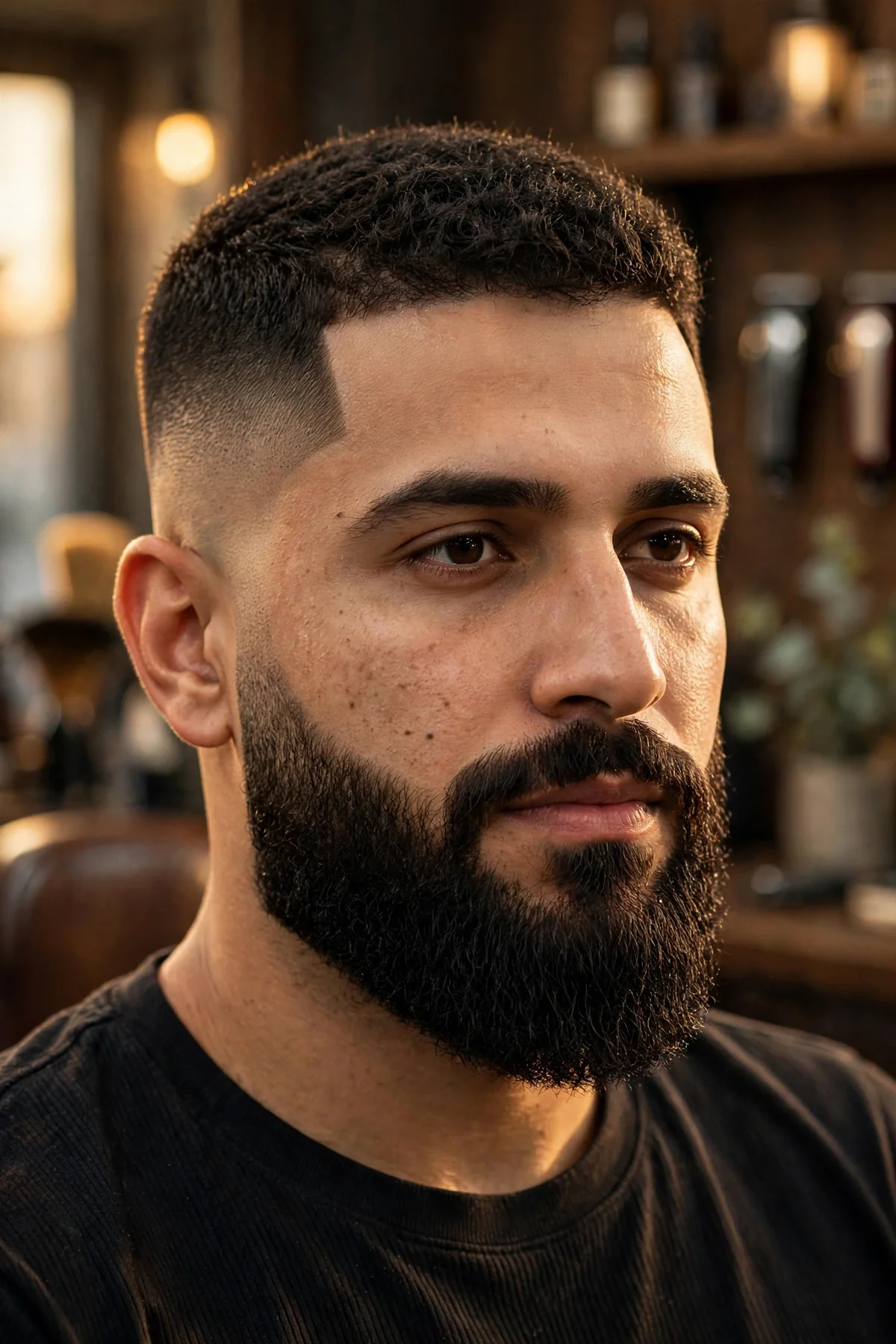
A drop fade with a beard blend is the complete package — the fade flows into the beard, creating one continuous sculpted shape from temple to chin. This is where a great barber earns their money: the blend between the sideburn area and the beard has to be gradual, or the whole thing looks disconnected. Done right, it’s incredibly sharp — the drop fade’s curve mirrors the beard’s jawline, making your whole head look designed. The two have to match in effort.
Ask your barber: “Drop fade that blends into my beard — fade the sideburn area gradually into the beard’s cheek line. Shape the beard to match.”
Style it: Beard oil daily, brush downward, and keep the fade’s edges crisp with touch-ups every two weeks.
29. Drop Fade with Line Up

The line up — razor-sharp detailing along the hairline and temples — takes any drop fade from clean to surgical. The crisp geometric lines contrast beautifully with the smooth curve of the drop fade, and the combination is one of the sharpest looks in modern barbering. The catch: a lineup softens within a week, so plan on weekly edge-ups to keep it razor-sharp — or ask your barber to teach you safe trimmer touch-ups at home.
Ask your barber: “Drop fade with a sharp line up — clean up the hairline and temples, and keep the drop curve smooth behind the ears.”
Style it: The cut does the work — just keep the lineup fresh with weekly touch-ups, at the shop or at home.
30. Drop Fade with Hair Design

For the grand finale: a drop fade with a hair design etched into the faded sides. Lines, curves, geometric patterns — the faded canvas of a drop fade is perfect for it, and the drop curve gives the design a natural flow to follow. This is pure self-expression, and it’s temporary by nature: designs grow out in one to two weeks, so you can change it up constantly. Find a barber who specializes in designs (check their portfolio — not everyone does this well), bring a reference photo, and keep the rest of the cut clean so the artwork gets the spotlight.
Ask your barber: “Drop fade with a hair design — I want [describe your design] etched into the fade. Keep the top clean so the design stands out.”
Style it: Keep the top simple and let the design shine — and book your next appointment now, because designs fade fast.
Drop Fade vs. Regular Fade vs. Taper Fade
These three get mixed up constantly, so let’s settle it. A regular fade runs in a straight line at the same height all the way around your head. A drop fade uses the same blending technique, but the fade line drops in an arc behind your ear, finishing lower at the nape. A taper fade is the subtlest of the three — it gradually shortens the hair around the edges without the dramatic contrast of a full fade.
| Feature | Drop Fade | Regular Fade | Taper Fade |
|---|---|---|---|
| Fade line shape | Curved — arcs down behind the ear | Straight — same height all around | Gradual — softens edges only |
| Boldness | Medium to high | Medium to high | Low — most conservative |
| Best for | Rounded silhouette, showing off the cut’s shape | Classic, even look from every angle | Office-safe, natural grow-out |
| Grow-out | 2–3 weeks before it softens | 2–3 weeks before it softens | 4–5 weeks — very forgiving |
| Works with | Curly, wavy, straight, thick hair | All hair types | All hair types, longer tops |
If you’re torn, here’s the simple rule: pick the drop fade when you want the haircut itself to have a visible shape and personality. Pick the regular fade when you want a classic, even blend. Pick the taper when you want the cleanest, most conservative option. And if you want to see the regular version in detail, our fade haircut guide covers the classic version in detail.
Which Drop Fade Height Suits Your Face Shape
The height of your drop fade — low, mid, or high — changes how your face reads, so it’s worth matching it to your face shape rather than picking at random.
Round faces: Go for a mid or high drop fade. The higher blend elongates your face visually, and keeping volume on top (a quiff, a brush up, a textured crop) adds height that balances the roundness. Avoid a low drop fade with a flat top — it can make a round face look rounder. Our mid fade haircut guide has more ideas for adding that elongating effect.
Square faces: You’ve got the jawline everyone wants — show it off. A low or mid drop fade keeps the sides clean without adding width, and the curved drop line softens the angles of a strong jaw in a flattering way. A low fade haircut is the classic pairing for square faces.
Oval faces: The lucky ones — almost every drop fade height works. Experiment freely: try a high drop fade with volume for drama, or a low drop fade for something understated. Just keep proportions balanced and you can’t go wrong.
Oblong or long faces: Stick with a low or mid drop fade and avoid too much height on top. The goal is width, not length — a textured crop or French crop with a low drop fade keeps everything in proportion. A high fade with a tall top is the one combination to be careful with here.
Drop Fade for Different Hair Types
One of the best things about the drop fade haircut is how adaptable it is. Here’s how to make it work for your hair:
Fine or thinning hair: Yes, a drop fade works — and it can actually help. The faded sides remove the wispy, thin areas at the edges and concentrate visual density on top. A skin fade haircut taken too high is the main thing to avoid; a low or mid drop fade is the safer play.
Thick hair: The drop fade was practically made for thick hair. The faded sides remove the bulk that makes thick hair puff out, while the top keeps all the volume you want.
Curly hair: The curly top drop fade (style #8 above) is a top-tier choice. Keep two to three inches on top for curl formation, moisturize religiously, and let the drop fade handle the shape underneath. The curved drop line follows the curl’s natural rounded silhouette beautifully.
Coily hair: Drop fades pair beautifully with coily textures — twists, afros, high tops, and 360 waves all sit perfectly on a drop fade base. Our fade haircuts for Black men guide goes deeper on texture-specific techniques.
Straight hair: Straight hair shows every line, so precision matters — find a barber with a steady hand.
Wavy hair: Arguably the easiest hair type for a drop fade. Sea salt spray is your best friend.
How Much a Drop Fade Costs and How Often to Refresh It
A drop fade typically costs between $30 and $60 depending on your city, the shop, and the barber’s experience level. Designs, lineups, and beard blends usually add $5–$15 each, so budget accordingly if you want the extras.
Plan on refreshing the fade every 2–3 weeks to keep it looking sharp. The drop line is a curved, precise shape, and it softens visibly as it grows — a low drop fade can stretch to three or even four weeks, while a high or bald drop fade starts losing its edge after two. Between visits, a quick pass with a trimmer around the ears and neckline buys you a few extra days. After a month, it just looks like a shorter haircut — not a grown-out mistake.
7 Mistakes to Avoid When Asking for a Drop Fade
1. Showing up with no reference photo. “Drop fade” means slightly different things to different barbers. A photo of the exact cut you want eliminates the guesswork — it’s the single most important thing you can bring.
2. Just saying “give me a fade.” A generic fade request gets you a generic straight fade, not a drop. Say the words “drop fade” explicitly, and point to where you want the line to drop.
3. Setting the drop point too high. If the arc drops too aggressively, the cut looks lopsided instead of curved.
4. Ignoring the neckline. The drop fade finishes at the nape, so a sloppy neckline ruins the whole effect. Decide in advance: tapered natural, squared, rounded, or a V — and make sure your barber finishes it clean.
5. Getting the wrong length on top. The top has to balance the faded sides. Too short on top with a high drop fade looks severe; too long with a low drop fade looks disconnected.
6. Forgetting the beard blend. If you have facial hair, the transition from fade to beard needs to be blended — a harsh line between them looks unfinished. Always mention the beard when you describe the cut.
7. Copying a celebrity cut that doesn’t fit your hair. That drop fade on your favorite athlete was cut for his hair type, density, and face shape.
Can You Cut a Drop Fade Yourself?
Honest answer: a drop fade is harder to cut yourself than a straight fade, and that’s entirely because of the curve. A straight fade follows one consistent line around your head — you can do it with mirrors and patience. A drop fade requires you to blend along an arc that dips behind your ear, which means cutting at angles you can’t see well, on both sides symmetrically, behind your own head.
If you’re determined to try, you’ll need: quality clippers with guards (0–4 at minimum), a detail trimmer for edging, at least two mirrors (a handheld plus a wall mirror), good lighting, and a lot of patience. Start with a low drop fade — the most forgiving version — and work slowly, checking symmetry constantly. But our real recommendation: get the drop fade cut professionally, and handle only the maintenance yourself (cleaning up the neckline and around the ears with a trimmer between visits). The $30–$60 every few weeks buys you a curve you simply can’t see well enough to cut yourself. Some cuts are worth paying for, and this is one of them.
How to Style Your Drop Fade Every Morning
The drop fade looks sharpest when the top is styled with intention — but “intention” doesn’t have to mean twenty minutes. Here’s a simple morning routine that works for most drop fade haircuts:
Step 1 — Start with clean, towel-dried hair. Your hair should be damp, not dripping. If you shower at night, just mist your hair with water in the morning — product grips damp hair far better than dry hair.
Step 2 — Apply a pre-styler. Work a small amount of sea salt spray or volumizing mousse through your hair. This builds the texture and body that make the top look full rather than flat. Comb it through for even distribution.
Step 3 — Blow-dry with direction. Dry your hair in the direction you want it to sit — forward for crops and fringes, up and back for quiffs and brush-ups, to the side for parts and comb-overs. Use your fingers for texture or a brush for smoothness.
Step 4 — Add your finishing product. Matte clay or paste for texture and a natural finish; pomade for shine and sleek styles; cream for a soft, touchable hold.
Step 5 — Detail the edges. Check your hairline, the area around your ears, and the neckline. A quick pass with a trimmer keeps the drop fade looking fresh between barber visits. Finish with a light mist of hairspray if your style needs all-day hold.
And here’s a quick primer on haircut fundamentals if you ever want to understand what your barber is actually doing back there.
Frequently Asked Questions
What is the difference between a drop fade and a regular fade?
A regular fade blends the hair in a straight line at the same height all the way around your head. A drop fade uses the same blending technique, but the fade line arcs downward behind your ear and finishes lower at the nape of your neck. That curved drop is the entire difference — it gives the cut a rounder silhouette, makes the top look fuller, and adds a visible sense of shape that a straight fade doesn’t have.
How do I ask my barber for a drop fade?
Say the words “drop fade” explicitly — don’t just ask for “a fade.” Then specify three things: the height (low, mid, or high), how short you want the shortest part (skin, bald, or a number guard), and what you want on top (show a photo — this matters more than anything). A good script: “Can I get a mid drop fade, down to skin at the ears, with the line dropping behind them?
How often do I need to get a drop fade touched up?
Every 2–3 weeks for most guys. The drop fade’s curved line softens visibly as it grows, so it needs refreshing more often than a taper. A low drop fade can stretch to three or four weeks; a high or bald drop fade starts losing its sharpness after about two. Between visits, clean up around the ears and the neckline with a trimmer to extend the life of the cut by several days.
Does a drop fade work with curly or coily hair?
Absolutely — it’s one of the best fades for curly and coily hair. The faded sides remove bulk at the edges while the top keeps all the texture, and the drop fade’s curved line follows the natural rounded shape of curls beautifully. Keep two to three inches of length on top so the curls can form properly, moisturize well, and find a barber experienced with your hair texture.
Is a drop fade good for thinning hair?
Yes, with the right approach. The faded sides eliminate the thin, wispy areas around the edges and concentrate visual density where your hair is thickest — on top. Keep the fade low or mid (a very high fade can expose too much scalp), wear the top textured and forward like a French crop or textured crop, and avoid styles that pull the hair back tightly. The contrast of the fade actually makes the top look thicker by comparison.
Can I cut a drop fade myself?
It’s possible but genuinely difficult — harder than a straight fade, because the curved drop line behind the ear is tough to cut symmetrically on your own head without being able to see it well. If you try, start with a low drop fade, use two mirrors, and work slowly. Our honest recommendation: get it cut professionally and handle only the touch-ups yourself (neckline and around the ears with a trimmer). The curve is worth paying a barber for.
Final Thoughts
The drop fade haircut earns its popularity honestly. The curved drop line gives every version a sense of shape and intention that a straight fade just doesn’t have, and with 30 styles to choose from, there’s genuinely a drop fade for every man.
If you’re browsing for your next cut, start with our complete men’s haircuts guide to see how the drop fade fits into the bigger picture — or dive into the taper fade haircut guide if you want something a little more conservative. And if you’re curious about the craft behind the clippers, the history of barbering is a fascinating read. Book the appointment, bring a reference photo, say the words “drop fade” with confidence — and enjoy the compliments.